
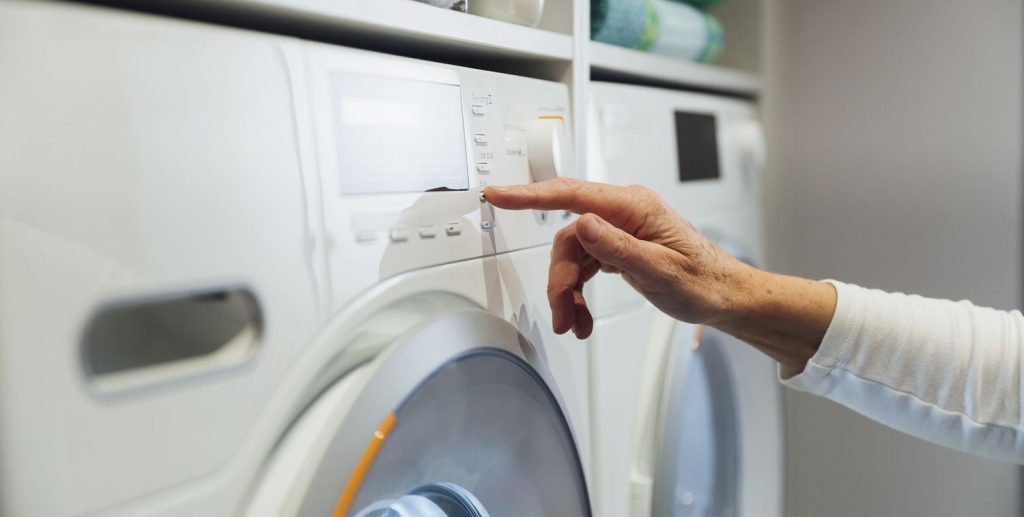
This section covers everyday washing machine use – from understanding wash symbols and loading correctly, to dealing with poor wash results, detergent choices, and keeping your machine in good condition. If your machine has a fault or is displaying an error code, see the fault diagnosis section instead.

Most washing machine problems with laundry results – including poor cleaning, white streaks, bad smells, and holes in clothes – are caused by incorrect use rather than a machine fault. Checking detergent type and dosage, wash temperature, loading habits, and filter cleanliness resolves the majority of issues without calling an engineer.
Safety and General Guidance
Before getting into specifics, these are the most important general articles about using a washing machine safely and sensibly.
 Safe to leave on when out?
The genuine fire risk from unattended washing machines, what the statistics show, and how to weigh the risk practically.
 Turn off the taps between washes?
Whether leaving the water supply connected between washes carries any flood risk, and what best practice is.
 Turn off the wall socket?
Whether it is necessary or beneficial to switch off the socket at the wall between washes.
 Drying laundry indoors
The effect of drying laundry indoors on humidity, mould risk, and air quality – and when it matters most.
 What do wash symbols mean?
A complete guide to the care label symbols found on clothing, including temperature, spin speed, and special care instructions.
 Instruction manuals and user guides
Links to manufacturer websites where you can download a replacement instruction manual for most washing machine brands.
Function, Care and Maintenance
These articles cover how to use a washing machine correctly, how to look after it, and the maintenance tasks that keep it running efficiently and extend its lifespan.
 Loading a washing machine correctly
How much to put in, how to sort laundry, and why overloading causes poor results, increased wear, and mechanical faults.
 Get rid of washing machine smells
What causes a washing machine to smell, including mould, detergent build-up, and stagnant water, and how to clean it effectively.
 What causes black mould?
Why mould grows on the door seal and inside the drum, and the simple habits that prevent it from developing.
 How to remove the soap drawer
How to remove, clean, and refit the detergent dispenser drawer on most washing machine models.
 Black jelly in the soap drawer
What the black residue in the detergent drawer is, why it builds up, and how to clean it properly.
 Greyish white coating in the drum
What causes a white or grey coating to appear on the drum interior and how to remove it.
 Limescale in washing machines
How limescale builds up in hard water areas, the components it affects most, and the best ways to prevent and remove it.
 Why does the wash take so long?
Why modern washing machines – particularly eco programmes – can take 2-3 hours, and whether this is normal or a fault.
 Too much foam in the machine
Why excessive foam builds up, the most common causes, and whether it is causing a problem for the machine.
 Protect a bra in the wash
Why bra underwires are one of the most common causes of drum damage and clothing holes, and how to wash bras safely.
 Can you wash trainers?
When it is safe to machine wash trainers and footwear, what temperature to use, and how to protect the drum.
 What temperature for bed sheets?
The recommended wash temperature for bed linen to clean effectively while protecting the fabric.
 Detergent in the dispenser or drum?
When to use the dispenser versus placing detergent directly in the drum, and which is correct for different detergent types.
 Taking in enough water?
How much water modern washing machines use and whether what looks like too little water is actually normal operation.
Problems with Wash Results
If your laundry is coming out dirty, discoloured, damaged, or with marks on it after washing, the cause is usually one of the issues covered below. In most cases the fix does not require an engineer.
 Washing not getting clean
The most common reasons laundry is not being properly cleaned, including low temperatures, detergent dosing, and overloading.
 White streaks on laundry
What causes white powder or streaky marks on clothing after a wash, and how to prevent them.
 Holes in clothes after washing
The many causes of holes appearing in clothing after washing – including drum damage, bra wires, and fabric wear during use.
 Grease marks on clothes
Why greasy marks appear on laundry after a wash, the likely causes, and how to prevent them.
 Whites grey or colours fading
Why white laundry gradually loses brightness and colours fade, and the washing habits that cause it.
 Rust-coloured spots on laundry
What causes orange or rust-coloured stains to appear on laundry after washing, and the drum damage or water supply issue behind it.
 Laundry coming out creased
Why clothes come out heavily creased and what changes to loading, spin speed, and cycle selection can improve it.
 Clothes coming out too hot
Why laundry sometimes feels very hot at the end of a cycle and whether this indicates a fault.
 Stop bobbling or pilling
Why fabrics develop bobbles and pills in the wash, and how to reduce it through cycle choice and laundry bags.
 Why are clothes getting stretched?
The common causes of clothing – particularly sleeves and necklines – stretching in the wash.
How to remove stainsPractical stain removal guidance covering common stain types and the best pre-treatment approaches before washing.
 Holes in clothes photos
Reader-submitted photographs of holes in clothing after washing, showing different types of damage to help identify the cause.
Detergents and Fabric Softener
Choosing and using the right detergent makes a significant difference to wash results, fabric longevity, and the long-term condition of the machine itself. Many laundry problems trace back to incorrect detergent type or overdosing.
 Best type of detergent?
A comparison of powder, liquid, capsule, and concentrated detergents – covering performance, cost, and compatibility with different machines.
Bio detergents can damage wool and silkWhy biological detergents cause holes and damage in wool and silk fabrics, and when to use non-biological instead.
 Bio detergent and skin irritation
Whether biological detergents cause skin irritation and allergies, and what the evidence actually shows.
Washing at 30 degreesWhat happens at 30°C, whether it actually cleans effectively, and when you do and do not need a higher temperature.
 Is Calgon worth using?
Whether Calgon and similar water softener products genuinely protect washing machines, and when they are and are not worth the cost.
 Soda crystals and washing machines
How soda crystals can be used as a washing machine cleaning agent and laundry aid, and whether they are safe for all machines.
 Softener not taken from drawer
Why fabric softener remains in the dispenser drawer after the cycle, and the blocked hose or incorrect compartment use that usually causes it.
Softener compartment full of waterWhat causes water to remain in the softener section of the drawer after the cycle has finished.
 Softener taken out too early
Why softener is released at the wrong point in the cycle and the pressure siphon or dispenser fault that causes it.
 Save on fabric softener
A practical tip for reducing fabric softener consumption without affecting wash results.
 Detergent from the past
How washing machine detergents have changed over the decades, and why older advice about dosing and product choice no longer applies.
 Washing dog bedding
How to wash dog bedding safely in a washing machine, including temperature, detergent, and drum protection.
Need to diagnose a fault?
If your washing machine has stopped working, is displaying an error code, or has a mechanical problem, see the dedicated fault guides section.
Frequently Asked Questions
How much detergent should I use in a washing machine?
Most people use significantly more detergent than is actually needed. Modern concentrated detergents require much smaller doses than older formulations, and the dosing guides on packaging are often larger than necessary. Too much detergent leaves residue in fabric, causes poor rinsing, and contributes to mould and smell build-up in the machine. As a starting point, use half the recommended dose and increase only if results are poor. Read: which is the best type of detergent?
Why does my washing machine smell bad?
The most common causes are mould growth on the door seal and inside the drum, detergent and fabric softener residue in the dispenser drawer and drum, and stagnant water in the pump filter or hoses. Running a hot maintenance wash at 60°C or 90°C monthly with no laundry, cleaning the door seal and drawer regularly, and leaving the door ajar between washes resolves the majority of smell problems. Read: how to get rid of washing machine smells.
Is it safe to leave the washing machine on when I go out?
Whitegoods Help advises against it. Washing machine fires, while relatively rare, do occur and can be severe. The risk is low but real, and it is entirely avoidable by simply running the machine when you are at home. If you need to run cycles overnight or while out due to time-of-use tariffs, ensure smoke alarms are fitted and tested, particularly near the utility area. Read the full guide: is it safe to leave the washing machine on?
Why is my laundry not getting clean?
The most common causes are washing at too low a temperature for the soil level, using too little detergent, overloading the drum so clothes cannot move freely, and a dirty or blocked pump filter affecting rinsing performance. Check each of these before assuming the machine has a fault. Read: washing not getting clean.
Should I use biological or non-biological detergent?
Biological detergents contain enzymes that are highly effective at removing protein-based stains at lower temperatures. However, they can damage wool and silk, and some people with sensitive skin find them irritating. Non-biological detergents are a safer choice for delicate fabrics and households with skin sensitivities, though the evidence for widespread skin irritation from biological detergents is less clear-cut than often claimed. Read: biological detergent and skin irritation.
Why do my washing machine programmes take so long?
Modern washing machines – particularly eco programmes – are designed to use less energy by washing at lower temperatures for longer periods. A 40°C eco cycle may take 2.5 to 3 hours where an older machine took 45 minutes. This is normal and intentional. If a programme is taking longer than usual compared to its normal duration, that can indicate a fault – but long programmes on modern machines are usually by design. Read: why does the washing machine take so long?