
How to remove a greyish white coating in drum
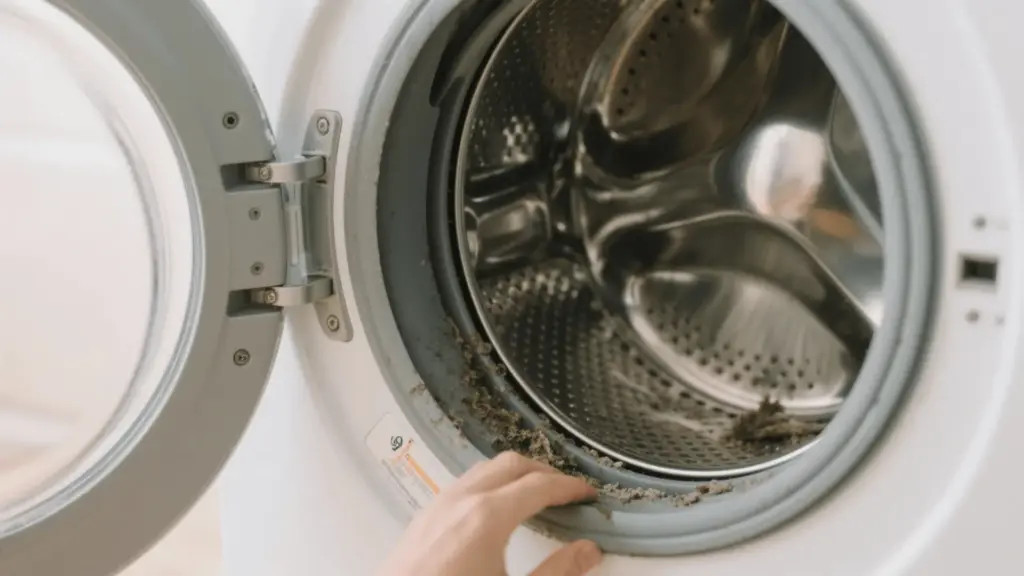

A white or grey coating on the inside of a washing machine drum is almost always limescale. Add around 20 grams of citric acid directly into the drum (not the detergent drawer) and run a 90°C cycle with no laundry. Repeat if necessary for heavier build-up.
A greyish or white coating on the inside of a washing machine drum is most commonly caused by limescale build-up. This can usually be removed with citric acid, but the method of adding it matters.
How to Remove the White Coating
Add around 20 grams of citric acid to the drum and run a 90°C cycle with no laundry inside. One treatment may be sufficient, but the process may need repeating for heavier build-up. Dedicated washing machine limescale removal products are also available as an alternative.

If added this way, it can run through into the sump hose before the wash has started and become diluted before reaching the drum. Instead, start the 90°C cycle and wait until the machine has been filling with water for around 10 seconds, then add the citric acid directly into the drum.
Why Limescale Is a Problem
If limescale is visible on the drum, it is very likely building up inside the machine in areas that cannot be seen – around hoses, on the heating element, and on internal components. Over time, this can shorten the lifespan of the machine by damaging hoses, corroding parts, and reducing heating element efficiency.
In theory, correct detergent usage should prevent limescale build-up, but many households still experience it. Incorrect detergent dosing is a common contributing factor. See: how limescale affects washing machines and is Calgon worth using?
Tumble Dryer Drums Can Also Be Affected
Limescale deposits can form on tumble dryer drums too, though it does not penetrate the machine in the same way as in a washing machine. On tumble dryers, limescale build-up can affect the moisture sensors that determine when laundry is dry, potentially causing over or under-drying. See: tumble dryer not drying properly.
Frequently Asked Questions
What causes the white or grey coating on a washing machine drum?
This is almost always limescale – mineral deposits left behind by hard water. Limescale accumulates on any surface that comes into contact with water repeatedly. The drum surface is particularly susceptible because it heats up during washes, which encourages limescale to precipitate out of the water and bond to surfaces.
How much citric acid do I use to clean the drum?
Around 20 grams added directly into the drum at the start of a 90°C cycle with no laundry inside. Do not put it in the detergent drawer – it should be added once the machine has started filling with water, after about 10 seconds, to prevent it from being diluted in the sump before the main wash begins.
Will one treatment remove all the limescale?
For light build-up, a single treatment is often sufficient. Heavier deposits may require the process to be repeated more than once. If citric acid alone is not producing results, a dedicated washing machine descaler product may be more effective for severe cases.
Ask the repair forum
Post the make, model and symptoms and get help from the Whitegoods Help community.
2 Comments
Grouped into 1 comment thread.
Do ALL machines seal the first few seconds of water off? If so, this must be very wasteful on detergent!
This would explain why my Miele W865 seems to post the first few seconds of water into the prewash compartment, even when no prewash is required.
Likely replying to Riccardo
Hi Riccardo. The practice is designed to save detergent. Yes they take water into a different compartment first before washing the detergent into the drum. In the past they used to always just flush the water straight onto the detergent washing it into the drum. Then someone realised that the water which goes into the sump hose containing some of the detergent stays there and this detergent is wasted.
Now sump hoses usually have a plastic ball inside them and the first bit of water runs into the sump and the ball floats up sealing it off. Then the detergent is flushed in.