
Can you wash trainers in a washing machine?
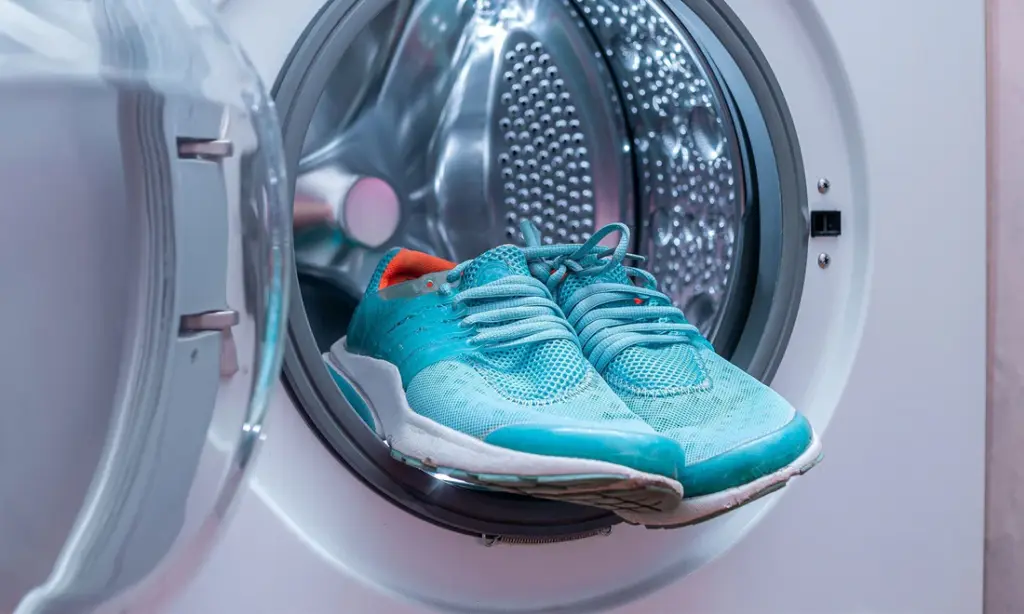

Trainers can be washed in a washing machine and will come out clean, but heavy footwear being tossed around the drum risks breaking or loosening the plastic drum paddles (lifters). On modern machines where the drum or paddles cannot be replaced, a broken paddle can write off the machine. If the machine has a dedicated trainer programme, use it – and if the paddles break as a result, the manufacturer is responsible. Otherwise, reduce the risk by washing with old towels and using a gentle, slow-spin programme.
The Risk: Drum Paddle Damage
Drum paddles (also called drum lifters or drum baffles) are the raised plastic fins inside the drum that lift laundry up as the drum rotates, allowing it to tumble. When trainers are washed, they get carried up to the top of the drum and then fall back down – directly onto the paddles. Heavy footwear falling repeatedly onto plastic paddles can crack, break, or work them loose from their fixings.
 What happens when a drum paddle breaks
- The broken paddle leaves a sharp-edged hole in the drum surface where it detached – subsequent laundry can snag on this and be torn or damaged
- On many modern machines, drum paddles are not replaceable as spare parts
- On some machines the drum itself cannot be removed due to a sealed outer tub design – a broken non-replaceable paddle in a sealed tub renders the machine effectively unrepairable and beyond economical repair
- Budget machines with cheaper plastic paddles are most at risk – but the problem can occur on any machine with trainers that are heavy enough
If the Machine Has a Trainer Wash Programme
Some washing machines include a dedicated trainer or sports shoe programme. If the machine has this feature and the drum paddles break as a direct result of using it, the manufacturer is responsible for the damage. A machine that advertises a trainer wash programme must be capable of completing that programme without damage to itself.
Under the Consumer Rights Act 2015, a product must be fit for purpose – including all purposes advertised by the manufacturer. If using the dedicated trainer programme causes drum paddle damage, raise the issue with the manufacturer first and the retailer second. See our guide on consumer rights and faulty appliances.
How to Reduce the Risk When Washing Trainers
-

Add old towels to the drum with the trainers. Several old towels alongside the trainers cushion the impact as the footwear tumbles. This is the most effective risk reduction measure – the towels fill the drum space and prevent the trainers from dropping freely onto the paddles from height. -
Use a slow, gentle programme. A slower drum rotation means the trainers are not carried as high before falling. Lower spin speeds reduce the overall force of impact. Use the coolest and slowest programme available – a 30 degree delicate or sports programme rather than a standard cotton cycle. -
Check the drum paddles before and after each trainer wash. Look for any movement, cracking, or looseness in the paddles. Push each one firmly – a securely fitted paddle should not flex or move. If a paddle is already working loose, stop washing trainers in that machine. -
Only wash lighter trainer styles. Heavier, bulkier footwear (thick-soled boots, heavy-duty sports shoes) carries significantly more risk than lightweight fabric trainers. Assess the weight before deciding whether to machine wash. -
Remove the laces and insoles first. Laces can tangle around the drum paddle fixings and cause damage independently of the impact risk. Wash laces and insoles separately or in a mesh bag.
Mesh bags marketed for washing trainers provide some containment but are unlikely to significantly reduce drum paddle impact risk. Placing both trainers together in one bag may actually increase the combined weight hitting the paddles. They may be more useful for protecting the trainers’ exterior and preventing laces from tangling than for protecting the machine.
If a Drum Paddle Has Already Broken
Check whether the paddle is available as a spare part for the specific machine model. Search by model number at Spares4Appliances – drum paddles and lifters are stocked for many models. If the paddle is available, replacement is a straightforward DIY repair on most machines – the paddle clips or screws into position from inside the drum.
If the paddle is not available as a spare part, the machine may need an engineer assessment to determine whether the drum assembly can be replaced or repaired.
Need Parts or a Repair?
Related Guides
 How to Load a Washing Machine
Correct loading technique to protect the machine and get the best wash results.
 Washing Machine Drum Not Turning
Diagnosing drum faults – including issues caused by damaged drum components.
 Washing Machine Is Noisy
Identifying drum and mechanical noises – including sounds caused by damaged or loose paddles.
 Washing Dog Bedding
Similar considerations for heavy or bulky items – balancing the load and protecting the drum.
Frequently Asked Questions
Can washing trainers break a washing machine?
Yes – heavy trainers being carried around the drum and falling onto the plastic drum paddles (lifters) can break or loosen them. On machines where the paddles cannot be replaced, or where the drum is sealed and cannot be accessed, a broken paddle can make the machine uneconomical to repair. The risk is real but can be reduced by washing with old towels, using a slow gentle programme, and checking the paddles regularly.
What are drum paddles / drum lifters?
Drum paddles (also called drum lifters or drum baffles) are the raised plastic fins inside the drum of a front-loading washing machine. They lift laundry as the drum rotates, allowing items to tumble through the water rather than just sliding around the bottom. They are typically made of plastic and are the most vulnerable part of the drum to impact from heavy items.
Should I use a trainer wash bag?
Trainer wash bags provide some benefit – they prevent laces from tangling and contain the shoes to some extent. However, they are unlikely to significantly reduce the risk of drum paddle damage from impact. Placing both trainers in one bag increases the combined weight and may make impact worse rather than better. Adding old towels to the drum alongside the trainers is more effective at cushioning the impact.
Ask the repair forum
Post the make, model and symptoms and get help from the Whitegoods Help community.
7 Comments
Grouped into 6 comment threads.
0 replies Just put my RocketDogs in for a wash ( very smelly ) & some slippers & a hand towel to buffer hopefully some of the banging around in the drum. The cycle is an easy care wash in at 40*, 1200 spin cycle, 1 hour & 35 mins wash cycle. I hope my thing's & washing machine survives the cycle! It's also extremely late now so will see in the morning if everything's ok!... I've also shut my kitchen door to try & help prevent the sound banging around everywhere. Will post update tomorrow to tell you all how well the slippers & trainers/plimsolls have washed.
0 replies In a Hotpoint washing machine this can be achieved by using the Wool cycle, as the machine runs at distribution speed throughout!
In a Hotpoint washing machine this can be achieved by using the Wool cycle, as the machine runs at distribution speed throughout!
0 replies The Indesit washing machine is one of the cheapest available and the paddles (or lifters) commonly come loose. Trainers could cause problems particularly in cheap washing machines with plastic drum paddles (lifters) and most engineers would advise against washing them in a washing machine. However, I'm sure there are plenty of people who might say they wash trainers without incident. If any washing machine does have a special wash program for trainers then at least they can't charge you for repairs to the lifters under guarantee as it's clearly an endorsement to do so. However, I believe the programmes are more a response to public demand and a potential sales advantage to people wanting to wash trainers in the machine. They may not really care that trainers are likely to loosen or even cause the lifters to come away over time because they can sell plenty of replacements.
The Indesit washing machine is one of the cheapest available and the paddles (or lifters) commonly come loose. Trainers could cause problems particularly in cheap washing machines with plastic drum paddles (lifters) and most engineers would advise against washing them in a washing machine. However, I’m sure there are plenty of people who might say they wash trainers without incident.
If any washing machine does have a special wash program for trainers then at least they can’t charge you for repairs to the lifters under guarantee as it’s clearly an endorsement to do so. However, I believe the programmes are more a response to public demand and a potential sales advantage to people wanting to wash trainers in the machine. They may not really care that trainers are likely to loosen or even cause the lifters to come away over time because they can sell plenty of replacements.
0 replies Many indesit washing machines come with a programme for your trainers - I know because, as a keen runner, this is important to me! check this one out you can wash your trainers easily; [ link removed as it no longer worked - model seems to have been discontinued ]
Many indesit washing machines come with a programme for your trainers – I know because, as a keen runner, this is important to me!
check this one out you can wash your trainers easily;
[ link removed as it no longer worked – model seems to have been discontinued ]
1 reply are big american style washing machines and dryers better than uk models
are big american style washing machines and dryers better than uk models
Likely replying to sara
Hello Sara: I’ve never heard of these boots but a quick check online shows they look mostly bigger and heavier than trainers so they are even more likely to damage the plastic paddles in the drum.
They can’t physically cause a drum to go off centre permanently but they may be impossible to distribute round the drum evenly so the washing machine could go out of balance and bang around on spin, either that or with modern washing machines fitted with out of balance detection software they may just not spin at all.
American washing machines tend to be top loaders, which aren’t as good as front loaders in many ways although they are probably a bit more reliable Which is best, a top loader or a front loader? (washing machine)
0 replies can washing ugg boots in a washing machine cause the washing machine drum to go off centre? my husband says it can cause the drum to go offline? is this true
can washing ugg boots in a washing machine cause the washing machine drum to go off centre? my husband says it can cause the drum to go offline? is this true
Just put my RocketDogs in for a wash ( very smelly ) & some slippers & a hand towel to buffer hopefully some of the banging around in the drum.
The cycle is an easy care wash in at 40*, 1200 spin cycle, 1 hour & 35 mins wash cycle. I hope my thing’s & washing machine survives the cycle! It’s also extremely late now so will see in the morning if everything’s ok!… I’ve also shut my kitchen door to try & help prevent the sound banging around everywhere. Will post update tomorrow to tell you all how well the slippers & trainers/plimsolls have washed.