
What do the wash label symbols mean?
Complete UK guide to washing symbols on care labels in 2026. Every wash, dry, bleach, iron and dry-clean symbol explained by Whitegoods Help engineers.
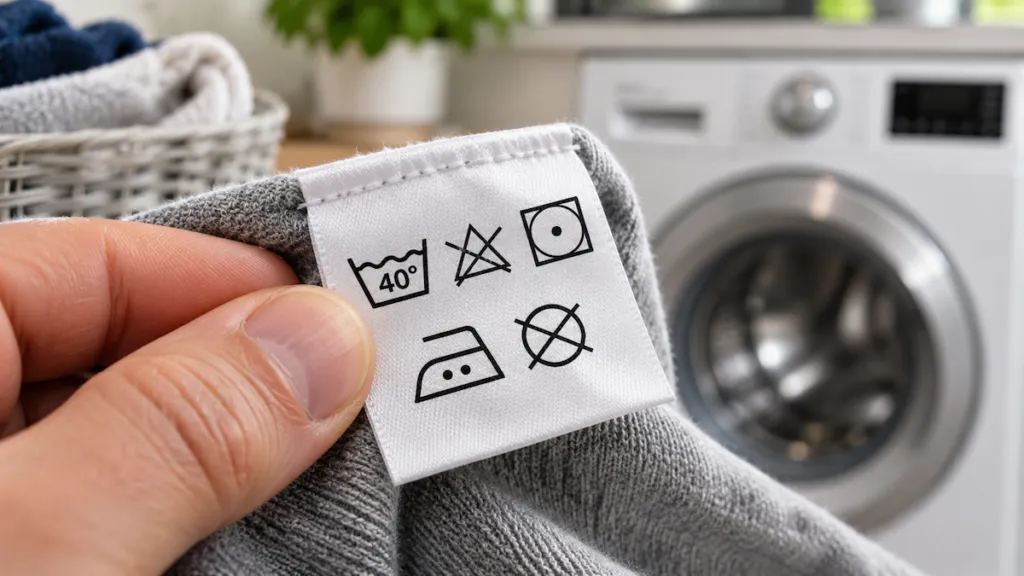
Guidance compiled by Whitegoods Help. Symbol meanings follow the international ISO 3758 textile care labelling standard used across the UK and EU. Reviewed November 2026.
01What do the washing symbols on clothes mean?
Every item of clothing sold in the UK carries a care label with washing symbols that tell you how to launder it safely. The symbols are standardised internationally under ISO 3758, so once you know the five basic shapes, you can read any label on any UK garment.
The five basic shapes map to five care operations. Everything else is a modifier added to those shapes: numbers for temperatures, dots for heat levels, bars for gentler treatment, and crosses for prohibitions. Once you can read the shape, the modifier tells you the detail.
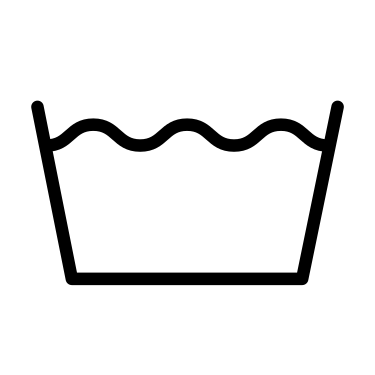 Washtub = Washing
The number inside shows the maximum temperature in degrees Celsius. Bars underneath show gentler agitation. A hand inside means hand wash only.
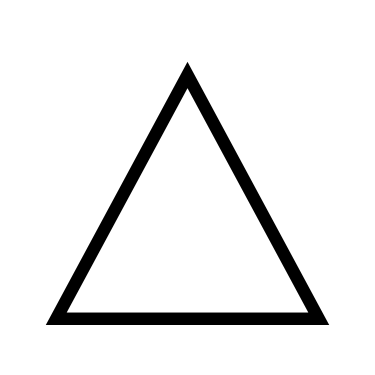 Triangle = Bleaching
A plain triangle allows any bleach. Two diagonal lines inside restrict you to non-chlorine bleach only. A cross through means no bleach of any kind.
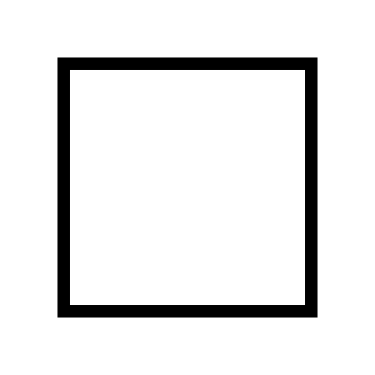 Square = Drying
A circle inside the square means tumble dry allowed, with dots for heat level. Horizontal or vertical lines inside give natural drying instructions.
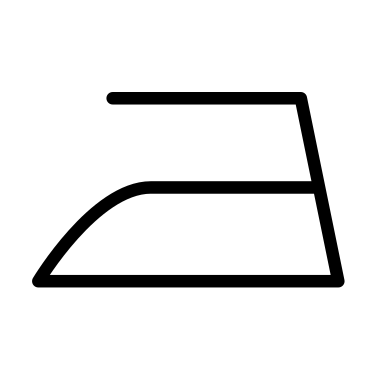 Iron shape = Ironing
Dots inside show the maximum temperature. One dot is cool, two is warm, three is hot. A cross through means do not iron at all.
 Circle = Professional care
A letter inside tells the dry cleaner which solvent to use. A W inside means professional wet cleaning. A cross through means do not dry clean.
First, a cross (X) through any symbol means the treatment is prohibited. Never do that treatment regardless of what else the label says.
Second, a bar underneath any symbol means gentler treatment is required. Two bars means even gentler. The washing machine should be set to a reduced spin and reduced mechanical action cycle.
Third, numbers and dots give the maximum allowed. A 40 degree washtub means you can wash at 40 degrees or below. Three dots on an iron means you can iron at any temperature up to and including the hot setting.
02What do the washing temperature symbols mean?
The washtub is the symbol that governs the actual wash cycle. Everything about how to wash the garment - temperature, agitation, hand-wash requirement - is contained in or around this symbol.
| Symbol | Name | What it means | Practical advice |
|---|---|---|---|
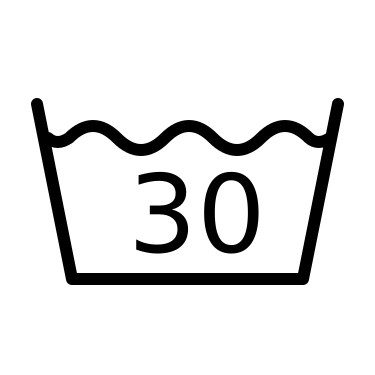 |
Wash at 30 degrees | Maximum wash temperature 30 degrees Celsius | Delicates, bright colours, modern energy-saving washes. Most modern UK washing machines wash effectively at 30 degrees with the right detergent. |
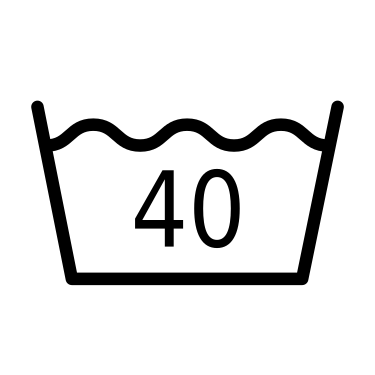 |
Wash at 40 degrees | Maximum wash temperature 40 degrees Celsius | Standard wash temperature for most everyday UK laundry, including coloured cottons, mixed fabrics and synthetics. |
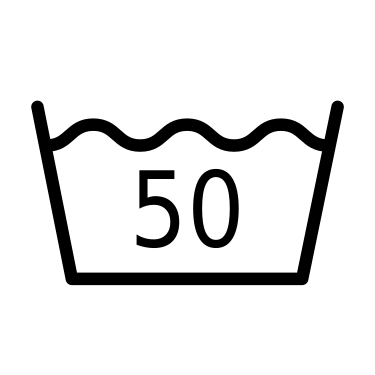 |
Wash at 50 degrees | Maximum wash temperature 50 degrees Celsius | Less common. Occasionally seen on synthetic workwear and some technical fabrics. |
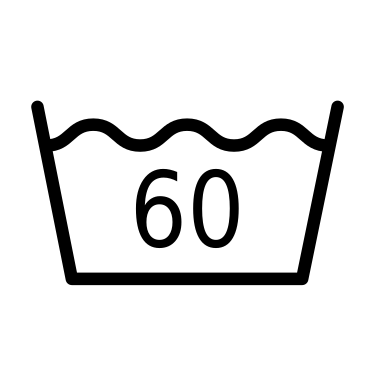 |
Wash at 60 degrees | Maximum wash temperature 60 degrees Celsius | Whites, bedding, towels, heavily soiled items, hygienic washes. 60 degrees kills most household bacteria. |
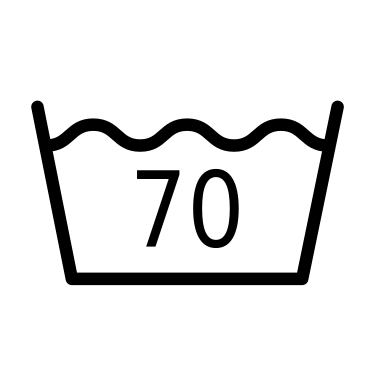 |
Wash at 70 degrees | Maximum wash temperature 70 degrees Celsius | Uncommon on domestic labels. Most UK machines do not offer a 70 degree programme. Use the next lower setting available. |
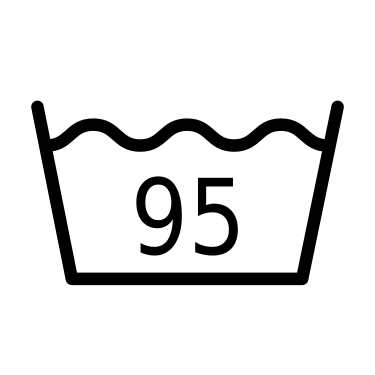 |
Wash at 95 degrees | Maximum wash temperature 95 degrees Celsius | Heavily soiled whites, nappies, items requiring sanitisation. Very few modern garments require this. |
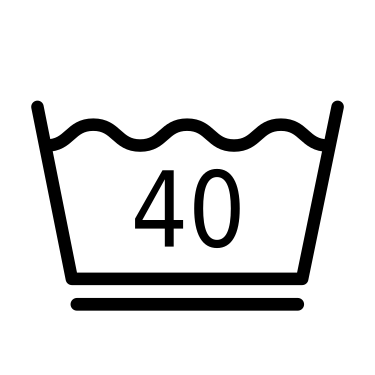 |
Gentle wash (one bar) | Reduced mechanical action and reduced spin speed | Use the delicates or synthetics cycle on your machine. Reduce the spin to 800 rpm or below. |
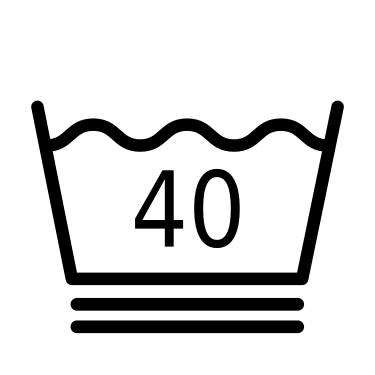 |
Very gentle wash (two bars) | Significantly reduced mechanical action and spin | Use the wool or hand-wash cycle. Reduce the spin to 600 rpm or below. Many premium machines have a dedicated silk or very delicates programme. |
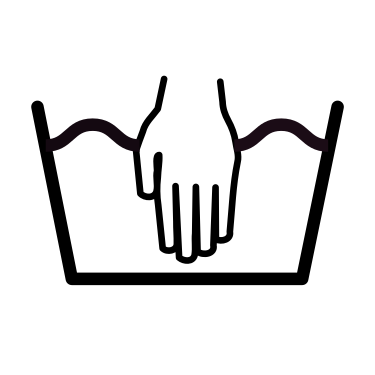 |
Hand wash only | Hand wash in water no hotter than 40 degrees | Some UK washing machines have a Hand Wash cycle that satisfies this symbol. Check your manual. If in doubt, wash by hand in a basin with gentle detergent. |
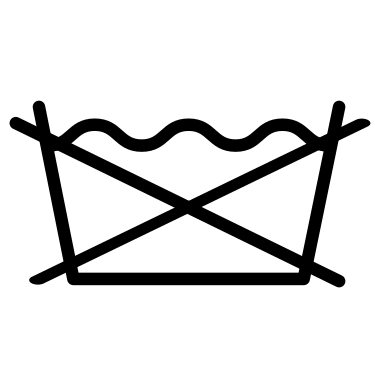 |
Do not wash | Do not use water-based cleaning at all | Professional dry cleaning only. See the professional care symbols section for the specific solvent required. |
What do the lines under a wash symbol mean?
The horizontal bars underneath a washtub symbol are one of the most misread features on UK care labels. They do not mean anything about the water, the detergent or the temperature. They are a mechanical-action instruction.
A single bar tells the washing machine to use a reduced mechanical action cycle, which usually means the delicates or synthetics programme on a modern UK machine. Two bars means use the wool, hand-wash or very delicates programme. The spin speed should also be reduced in both cases.
If your machine does not have a cycle name that matches, choose any programme that reduces the drum rotation speed and the spin speed compared to the standard cottons cycle. On many modern UK machines this is labelled Synthetics, Mixed Fabrics, Easy Care or Delicates.
03What do the bleaching symbols mean?
The triangle symbol governs bleaching. It is one of the simpler families on UK care labels, with only three states: any bleach allowed, non-chlorine bleach only, or no bleach at all.
| Symbol | Name | What it means | Practical advice |
|---|---|---|---|
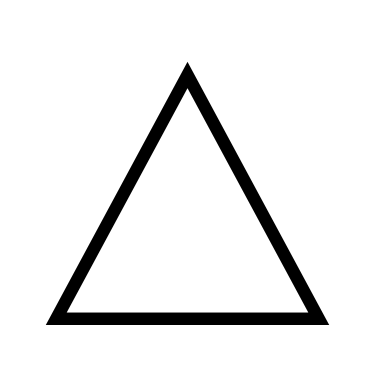 |
Any bleach allowed | Chlorine and oxygen bleaches both permitted | Safe to use household chlorine bleach or any oxygen-based (colour-safe) bleach. Follow the bleach manufacturer’s dilution instructions. |
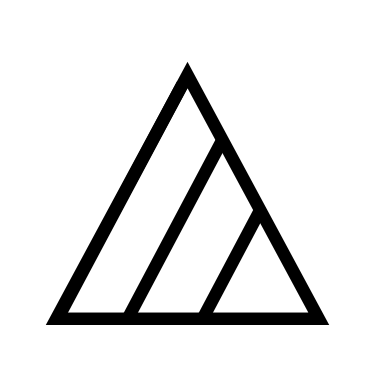 |
Non-chlorine bleach only | Oxygen bleach allowed, chlorine bleach prohibited | Use a colour-safe or oxygen-based bleach. Chlorine bleach will damage the fabric or cause fading. |
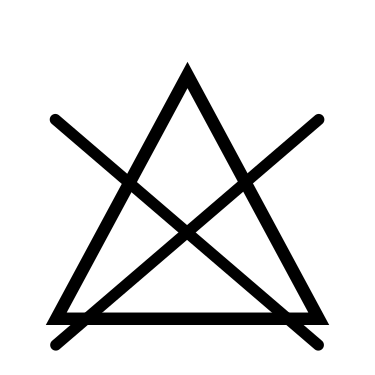 |
Do not bleach | No bleach of any kind | Bleaching will damage the fabric or compromise the colour. Use bleach-free detergents and avoid bleach-containing stain removers. |
The vast majority of UK laundry detergents do not contain chlorine bleach. The bleaching symbol is relevant mainly when you are using a separate stain remover or a dedicated bleach product. Standard biological or non-biological detergents can be used on any garment regardless of the bleach symbol.
04What do the drying symbols mean?
The square symbol governs drying. It is the richest and most varied of the five symbol families, because it covers both tumble drying and natural drying methods. A circle inside the square means tumble drying is allowed. Horizontal, vertical or corner lines inside the square give natural drying instructions.
Tumble drying symbols
| Symbol | Name | What it means | Practical advice |
|---|---|---|---|
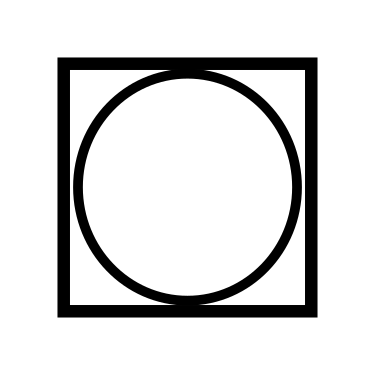 |
Tumble dry allowed, any heat | Tumble drying permitted at any temperature | Use whatever cycle suits the fabric and load. Cottons on high heat, mixed fabrics on medium. |
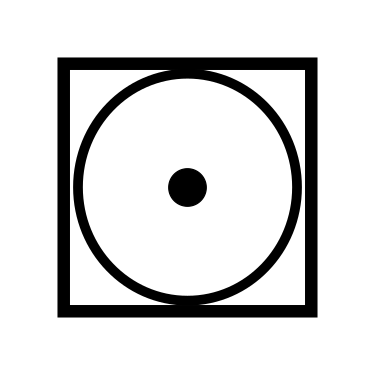 |
Tumble dry low heat (one dot) | Tumble drying permitted at low heat only (up to 60 degrees) | Use the delicates, synthetics or low-heat setting on your tumble dryer. Avoid the cottons or high-heat cycle. |
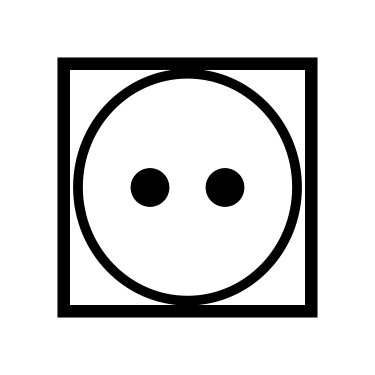 |
Tumble dry medium heat (two dots) | Tumble drying permitted at medium heat (up to 70 degrees) | Use the mixed fabrics or medium-heat setting. Suits most everyday UK laundry. |
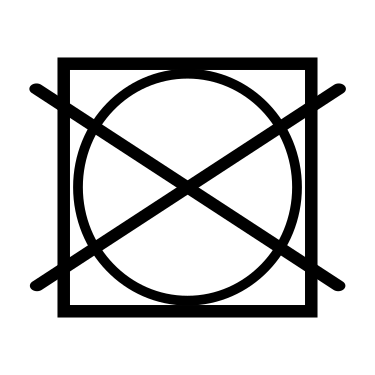 |
Do not tumble dry | Tumble drying not permitted | Air dry only. See the natural drying symbols below for the specific method required. |
Natural drying symbols
| Symbol | Name | What it means | Practical advice |
|---|---|---|---|
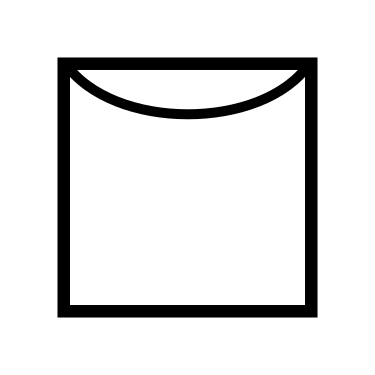 |
Line dry | Hang on a line or airer to dry | Outside line or indoor airer. Avoid direct sunlight for bright colours. |
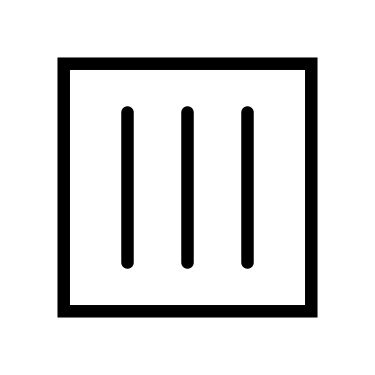 |
Drip dry | Hang to dry without wringing or spinning | Do not spin or wring. Hang while still dripping wet. Common for delicates and hand-washed items. |
 |
Dry flat | Lay flat to dry, not hung | Lay on a flat drying rack or clean towel. Essential for woollens and knitwear that would stretch on a line. |
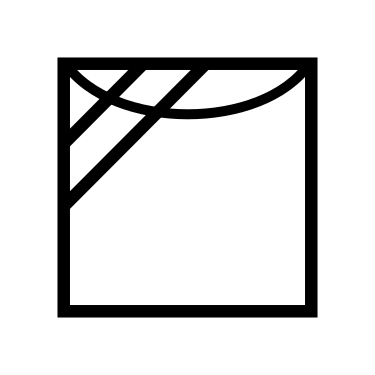 |
Line dry in shade | Hang to dry away from direct sunlight | Diagonal lines in the top-left corner mean dry out of direct sunlight. Protects colours from fading. |
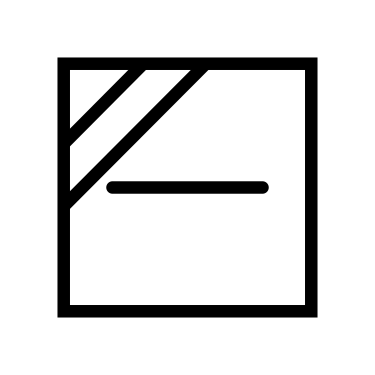 |
Dry flat in shade | Lay flat to dry away from direct sunlight | Combines the flat-dry and shade-dry instructions. For delicate dark colours and knitwear. |
See our related content on how to dry clothes without a tumble dryer for the practical options available to UK households, including heated airers and dehumidifiers: drying clothes without a tumble dryer.
05What do the ironing symbols mean?
The iron shape governs ironing. The number of dots inside the iron tells you the maximum safe temperature. A plain iron with no dots allows any temperature. A cross through means no ironing at all.
| Symbol | Name | What it means | Practical advice |
|---|---|---|---|
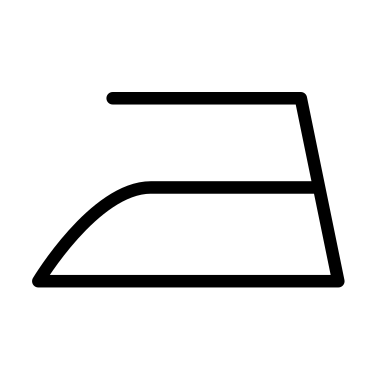 |
Any temperature | Iron at any temperature | Safe at any heat setting. Use a steam setting if the fabric benefits from it. |
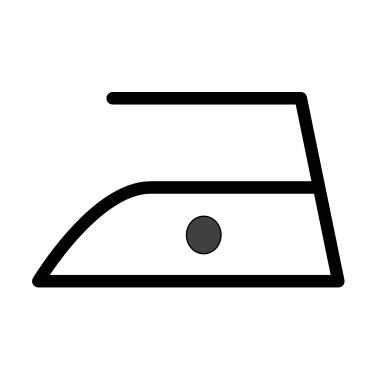 |
Low temperature (one dot) | Maximum 110 degrees Celsius | Low or Cool setting on most UK irons. For acrylic, nylon, acetate and other synthetics. |
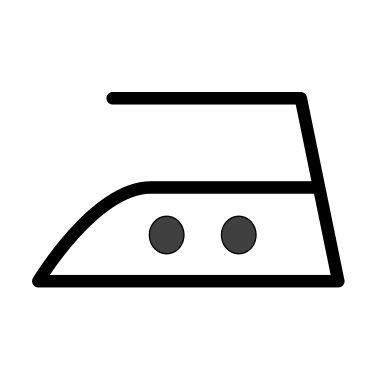 |
Medium temperature (two dots) | Maximum 150 degrees Celsius | Medium or Wool setting. For polyester, wool, silk and blends. |
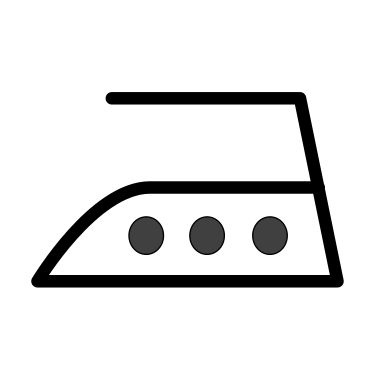 |
High temperature (three dots) | Maximum 200 degrees Celsius | High or Cotton setting. For cotton, linen and viscose. Steam setting typically safe. |
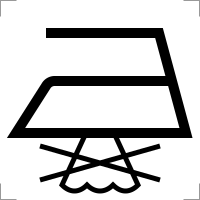 |
No steam | Ironing allowed, but no steam | Switch off the steam function on your iron. The water can mark heat-sensitive fabrics. |
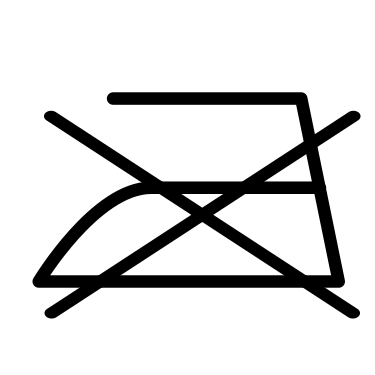 |
Do not iron | Do not iron at all | The fabric will melt, scorch or lose its finish. Hang garments to reduce creases instead. |
06What do the dry cleaning and professional care symbols mean?
The circle symbol governs professional care, which includes both dry cleaning (solvent-based) and professional wet cleaning (water-based, done at a cleaner rather than at home). The letter inside the circle tells the professional cleaner which solvent or process to use. For UK consumers, the practical takeaway is simply whether dry cleaning is required at all, and whether domestic washing is also permitted.
| Symbol | Name | What it means | Practical advice |
|---|---|---|---|
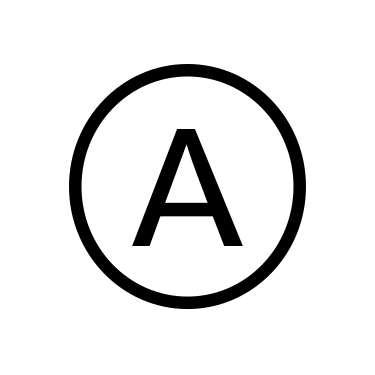 |
Dry clean | Professional dry cleaning permitted | Take to a dry cleaner. Any solvent process is acceptable. May be combined with a washing symbol permitting home washing as an alternative. |
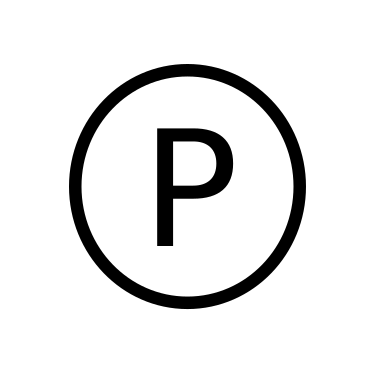 |
Dry clean (P) | Perchloroethylene (PCE) or other petroleum-based solvent | Standard high-street dry cleaning in the UK. Tell the cleaner the garment is P-coded if not visible. |
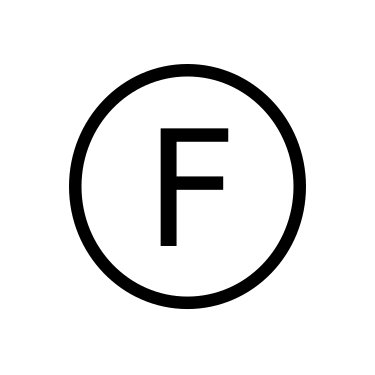 |
Dry clean (F) | Petroleum solvents only | Specialist process. Fewer UK cleaners offer F-coded cleaning. Ask before booking. |
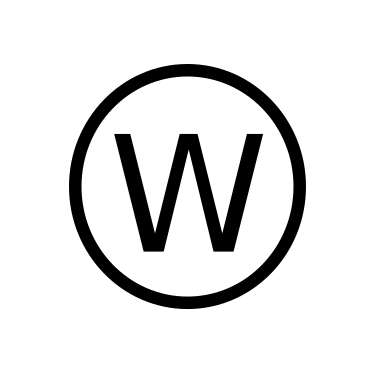 |
Professional wet cleaning (W) | Professional wet (water-based) cleaning permitted | A gentler professional water-based alternative to dry cleaning. Not the same as home washing. |
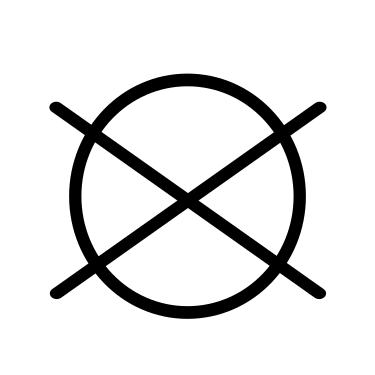 |
Do not dry clean | Dry cleaning not permitted | Solvents will damage the garment. Follow the home washing symbol instead. |
07Written instructions on care labels
Alongside the symbols, many UK care labels include written instructions in English. These are supplementary to the symbols, not instead of them. Common phrases and what they mean in practice are covered below.
The dye in the garment may run during the first few washes. Wash on its own or with similar colours until the dye has stopped bleeding. Common on new jeans and bright dark colours.
Turn the garment inside out before washing. Protects the outer surface from abrasion against other garments and the drum. Common on printed t-shirts and dark jeans.
Use the coldest water setting available on your machine. On modern UK machines this is usually the 20 or 30 degree setting. Reduces colour fading and energy use.
Fabric softener will damage the technical finish of the garment. Common on sportswear, waterproofs, microfibre cloths and towels marketed as highly absorbent.
Do not dry on a radiator, near a fire or in direct summer sun. Common on knitwear, silks and dark colours. Equivalent to the shade-dry symbols covered above.
Reshape the garment to its correct form while still wet, before drying. Essential for woollens and loose knitwear that lose their form if dried in a bunched-up state.
08What if the care label is missing, faded or in a foreign language?
Missing or damaged care labels are a common UK household problem, particularly on older items, secondhand clothes and items bought on holiday. Our engineers offer the following practical guidance when the label cannot be read.
-
Identify the fabric by feel and appearance. Cotton, linen, wool, silk and synthetics each have distinctive characteristics. If uncertain, a composition label (often separate from the care label) may still be readable.
-
Treat it as the most delicate reasonable option. Wash at 30 degrees on a delicates or synthetics cycle. Air dry. Iron on a low setting if ironing is needed. If the garment survives this, you can gradually increase the temperature on subsequent washes.
-
Test a small area first with any bleach or stain remover. Apply to a hidden seam or hem and wait 10 minutes. If the colour runs or the fabric changes, do not use the product on the whole garment.
-
For high-value or irreplaceable items, consult a dry cleaner. A professional can identify the fabric and recommend the correct process. Most UK dry cleaners will give free advice on any item brought in.
-
Foreign language labels usually still carry the ISO symbols. The symbols are international. If the garment is labelled in French, German, Italian or any other language, the shapes and numbers are identical. Translate the written instructions with any translation app.
09Matching symbols to your washing machine cycles
UK washing machines label their cycles with a wide variety of names: Cottons, Mixed Fabrics, Synthetics, Delicates, Easy Care, Hand Wash, Wool, Quick Wash, Eco 40-60, and many others. Translating a care label symbol to a specific cycle on your machine is one of the most common consumer confusions.
The practical approach is to match the temperature first, then the mechanical action. The table below shows the usual mapping on modern UK washing machines. Your specific machine may use different cycle names, so consult your manual if unsure.
| Care label symbol | Typical UK cycle name | Approx spin speed |
|---|---|---|
| 30 degree washtub, no bars | Cottons at 30, Mixed Fabrics at 30, or Quick Wash | 1200 to 1400 rpm |
| 40 degree washtub, no bars | Cottons at 40, Mixed Fabrics at 40, or Eco 40-60 | 1200 to 1400 rpm |
| 60 degree washtub, no bars | Cottons at 60, Whites at 60, or Hygiene | 1400 to 1600 rpm |
| 30 or 40 degree washtub with one bar | Synthetics, Easy Care, or Delicates | 600 to 1000 rpm |
| 30 degree washtub with two bars | Wool, Hand Wash, or Silk | 400 to 800 rpm |
| Hand wash symbol | Hand Wash cycle, or wash by hand | 400 to 600 rpm |
See our related guides on why does my washing machine smell and how to clean a washing machine for the wider maintenance routine that helps every wash cycle perform properly.
Washing machine not following the cycle correctly?
If your washing machine is not reaching the temperature shown on the display, not changing cycle speed between fabrics, or showing an error code, our nationwide engineer service and Help Forum cover every major UK brand.
10The new UK and EU symbol standard: what changed?
The symbols currently used on UK care labels follow the international ISO 3758 standard, most recently updated in 2012 and adopted across the EU and UK. The main changes from older UK symbols that you may still see on older garments are as follows.
Older UK labels used descriptors like “Cool”, “Warm”, “Hot” inside the washtub. Modern labels use the maximum degrees in Celsius: 30, 40, 60, 95. The symbol itself is otherwise identical.
Older UK care labels sometimes used bars underneath the washtub to indicate reduced temperature. Under modern ISO 3758, the bars mean reduced mechanical action only. Temperature is shown by the number inside the tub.

The W-coded circle for professional wet cleaning was added as a new symbol in the 2012 revision. Older labels only showed dry cleaning (solvent) symbols.

Garments imported from the US use the ASTM D5489 standard, which is close to ISO 3758 but has some notable differences. The washtub is the same but US labels sometimes use a different bleach triangle variation. Interpret US symbols with slight caution.
11Our engineer’s practical advice on reading wash labels
After years of diagnosing laundry problems in UK homes, our engineers consistently see the same misreadings and shortcuts. The practical guidance below avoids most of them.
What to do
- Read the symbols in order: wash, then bleach, then dry, then iron, then professional care
- Treat a bar under the washtub as a cycle instruction, not a temperature instruction
- Separate laundry by the most restrictive symbol in the load
- Follow the lowest temperature when symbols on different garments conflict
- Check care labels on new items before the first wash
- Save care label photos for favourite items in case the label fades or detaches
What not to do
- Do not assume a cross through a symbol is optional advice. It is mandatory
- Do not wash gentle-wash items on a standard cottons cycle because the temperature is the same. The mechanical action will damage them
- Do not tumble dry items with a crossed tumble symbol even on a cool cycle
- Do not use fabric softener on items marked for sportswear or microfibre cleaning
- Do not iron directly on a print or embroidery regardless of the symbol temperature
- Do not wash a new deep-colour garment with whites until you know whether it bleeds
Need more washing machine help?
Our full washing machine content covers common faults, maintenance routines, detergent choices and the honest 2026 UK economics of repair versus replacement.
12Frequently asked questions
What do the washing symbols on clothes mean?
Washing symbols on UK clothes follow the international ISO 3758 standard. Five basic shapes cover five care operations: a washtub for washing, a triangle for bleaching, a square for drying, an iron shape for ironing, and a circle for professional care. Numbers inside the washtub give the maximum temperature. Dots inside the iron give the maximum ironing temperature. A cross through any symbol means do not do that treatment.
What does the washing symbol with a cross through it mean?
A cross through any care symbol means the treatment is prohibited. A crossed washtub means do not wash (dry clean only). A crossed triangle means do not bleach. A crossed square means do not tumble dry. A crossed iron means do not iron. A crossed circle means do not dry clean. The prohibition applies absolutely regardless of what other symbols are on the label.
What do the lines (bars) under a wash symbol mean?
One bar underneath a washtub means use reduced mechanical action and reduced spin, typically a delicates or synthetics cycle. Two bars means use the gentlest cycle available, typically a wool or hand-wash programme with a very low spin. The bars do not affect temperature. Temperature is shown by the number inside the tub.
What does the dot on the iron symbol mean?
The number of dots inside an iron symbol indicates the maximum safe ironing temperature. One dot is low (up to 110 degrees), two dots is medium (up to 150 degrees), three dots is high (up to 200 degrees). A plain iron with no dots allows any temperature. A cross through the iron means do not iron at all.
What temperature should I wash coloured clothes at?
Follow the number inside the washtub symbol on each individual garment. For most everyday UK colours, 30 or 40 degrees is both the care-label requirement and the right balance of cleaning power versus energy cost. Separate darker colours from lights for the first few washes until dyes are stable. See our guide on cleaning your washing machine to maintain performance at lower temperatures.
What does the tumble dry symbol look like?
The tumble dry symbol is a square with a circle inside it. Dots inside the circle indicate the heat level: one dot for low heat, two dots for medium, three dots for high. A filled or shaded circle means tumble dry on air only (no heat). A square with the circle but a cross through the whole symbol means do not tumble dry at all. See our guide on how heat pump tumble dryers work for the wider context on modern UK tumble dryers.
What if my clothes label says Wash Cold or Wash Cool?
Wash Cold or Wash Cool means use the coldest water setting available on your washing machine. On modern UK machines this is typically the 20 or 30 degree setting. Cold washing is energy-efficient and reduces colour fading, but may require a specialised cold-water detergent for best cleaning results on heavily soiled items.
Can I ignore the symbols on clothes labels?
Not safely. Ignoring care symbols is the single most common cause of accidentally damaged garments. Shrunk wool jumpers, bled colours on whites, and melted synthetics are all usually a care label symbol that was not followed. The cost of following the symbols is minimal. The cost of replacing a damaged favourite garment is not. When in doubt, follow the most restrictive symbol on the label.
Still not fixed?
Here’s where to go next.