
Washing not getting clean in washing machine
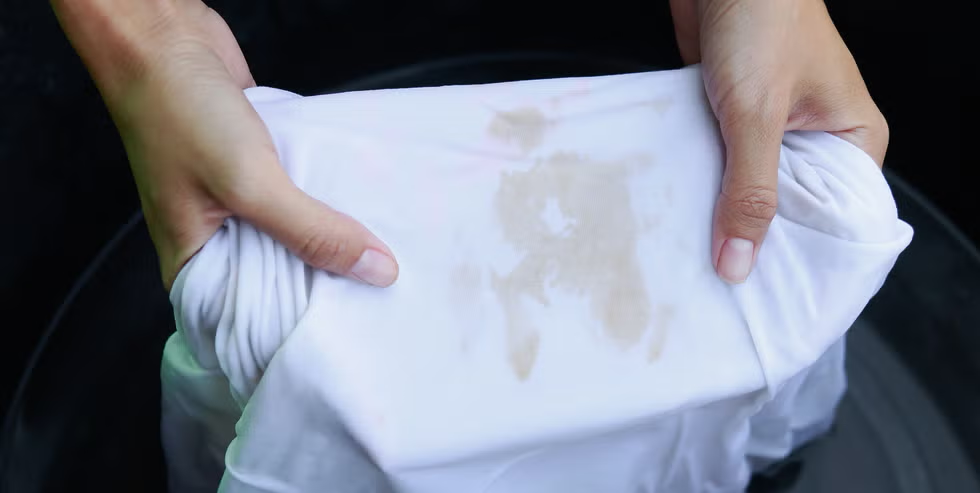

Most cases of poor wash results are caused by user factors rather than machine faults – overloading, insufficient detergent, the wrong programme, or the wrong detergent type. Actual machine faults that cause poor cleaning while the cycle appears to complete normally are uncommon, but do occur. Work through the user factors first before concluding the machine is at fault.
When laundry comes out dirty, marked, or poorly rinsed, the washing machine is the obvious suspect. But in the majority of cases the machine is working correctly and the cause lies elsewhere. Eliminating the user factors below takes minutes and may resolve the problem immediately.
Possible Machine Faults Causing Poor Wash Results
There are relatively few washing machine faults that allow the cycle to complete apparently normally while producing poor results. These are the main ones to check if user factors have been eliminated.

Machine heavily contaminated internally
A significant build-up of grease, black mould, or slime inside the drum and drum seal can deposit marks on laundry during the wash cycle. If laundry is coming out with greasy or dark marks that were not present before washing, the machine itself may be the source. See our guide on grease, slime, and black mould inside washing machines.

Drum not turning
If the drum is stationary or barely moving during the wash cycle, laundry will not be agitated and cleaning will be very poor. A drum that is not turning visibly during wash is a clear sign of a belt or motor fault. See our guide on washing machine drum not turning.

Heater not working
Some machines will continue to wash and complete the cycle normally even if the heating element has failed – without displaying an error code. The wash runs at cold temperature, producing noticeably poorer results, particularly on heavily soiled items. See our guide on washing machine not heating up water.

Partial drain blockage affecting rinsing
A partial blockage in the pump or filter may allow the machine to drain slowly enough to appear complete, while leaving enough dirty water to compromise the rinse cycles. Laundry comes out feeling soapy or with residue. See our guide on washing machine not draining properly.
User Factors: Check These Before Assuming a Machine Fault

Overloading the drum
A full drum prevents laundry from moving freely against itself and from circulating through the detergent solution. Cleaning depends on physical agitation and contact – an overloaded machine cannot provide this. See our guide on how to load a washing machine correctly.

Insufficient or poor quality detergent
Using too little detergent is one of the most common causes of poor results – particularly in hard water areas where the water itself works against the detergent. Use good quality detergent at the dose recommended on the packet for the soiling level and water hardness.

Using the wrong programme
Quick wash and economy programmes use lower temperatures and shorter cycle times – they are designed for lightly soiled or fresh laundry only. Using them for dirty clothes will produce poor results. For genuinely dirty laundry, a full cotton programme at the appropriate temperature is needed. See our guide on washing at 30 degrees – what you need to know.
Option buttons reducing water or temperature
Economy or water-saving options reduce cleaning effectiveness and are designed for light soiling and smaller loads – not for a full drum of dirty laundry. Read the instruction manual to understand what each option does before using it. Related guide: washing machines not rinsing properly.

Using the wrong type of detergent
Biological detergent works best at lower temperatures – its enzymes are deactivated by heat – but needs adequate cycle time. Non-biological detergent is less effective at low temperatures. Liquid and colour-safe detergents contain no bleaching agents, so whites washed exclusively in these will gradually turn grey. See our guide on choosing the right type of detergent.

Detergent in the wrong compartment
If powder or liquid is placed in the pre-wash or fabric softener compartment rather than the main wash compartment, it is released at the wrong point in the cycle – either too early or only on the rinse. This also exposes the heating element to limescale build-up if the detergent that normally inhibits it is absent at the correct stage. See our guide on soap dispenser or drum: where to put the detergent.
What If the Machine Is Simply Not Very Good at Washing?
Independent testing has found meaningful variation in washing performance between different washing machine models and brands. Some machines genuinely wash significantly better than others, even at equivalent price points. If all user factors have been checked and the machine is working mechanically – completing cycles at normal speed with no error codes, heating the water, and draining properly – but results are still poor, the machine itself may simply perform below average.
This is particularly likely when switching from one machine to another. A previous machine may have produced better results not because of any user error, but because it washed more effectively.
Which? carries out standardised washing performance testing across a wide range of machines (full results require a subscription). This kind of comparative data is the most useful guide when considering whether a machine is genuinely underperforming.
Need a Repair or Diagnosis?
If machine faults rather than user factors appear to be the cause, an engineer visit may be needed to confirm whether the heater, pump, or drum mechanism is at fault.
Related Guides
Which Is the Best Type of Washing Machine Detergent?Powder, liquid, biological, non-biological – which works best and when to use each type.
White Streaks on Laundry After WashingCauses of white residue or powder left on clothing – including detergent and rinsing issues.
Grease Marks on Clothes After WashingWhy greasy marks sometimes appear on laundry after washing – and whether the machine or detergent is the cause.
 How to Load a Washing Machine Correctly
Correct loading technique for the best cleaning results and avoiding out-of-balance spin loads.
Frequently Asked Questions
Why is my washing machine not cleaning clothes properly?
The most common causes are user factors: overloading the drum, using too little or poor quality detergent, selecting an inappropriate programme (such as a quick wash for heavily soiled items), or using the wrong type of detergent for the wash temperature. Machine faults that affect cleaning while the cycle appears normal include a failed heater, a drum that is not turning, or internal contamination depositing marks on laundry.
Could the heater not working cause poor wash results?
Yes. Some machines continue the wash cycle at cold water temperature without displaying an error code if the heating element fails. The cycle completes in normal time but produces noticeably poor results, particularly on greasy or heavily soiled items. If results have suddenly deteriorated without any other obvious change, the heater is worth checking.
My new machine doesn’t wash as well as my old one – is something wrong?
Not necessarily a fault, but possibly genuine underperformance. Independent testing has found significant variation in washing performance between machines. It is also worth checking whether anything else has changed – detergent brand, dosage, programme selection, or load type. If all these match the previous routine and results are still worse, the machine may simply be a less effective washer than the previous one.
Can overloading really cause poor wash results?
Yes, significantly. Laundry needs room to move freely through the wash water, and items need to rub against each other for mechanical cleaning action. An overloaded drum prevents this movement. Detergent also needs space to dissolve and circulate. An overloaded machine may appear to wash normally but produces measurably worse cleaning results.
Ask the repair forum
Post the make, model and symptoms and get help from the Whitegoods Help community.
33 Comments
Grouped into 20 comment threads.
0 replies That's mentioned in the article Robert, under the possible washing machine faults, there's a link to further info too.
0 replies When running a wash in my indesit machine it does,nt seem to heat the water. Then the clothes come out at the end still smelling. How,s this?.....Bob
When running a wash in my indesit machine it does,nt seem to heat the water. Then the clothes come out at the end still smelling. How,s this?…..Bob
0 replies That's good news Jean. I would suspect leaving it for 2 weeks might have allowed the gunge to dry out and flake off during the proceeding washes.
That’s good news Jean. I would suspect leaving it for 2 weeks might have allowed the gunge to dry out and flake off during the proceeding washes.
7 replies Hi, hoping someone can assist because I'm going crazy with this issue, sorry for the long post. Ok I've always done my own washing, drying, and ironing and never in 20 yrs had an issue with clothes not washing properly using a variety of washing machines over the years, whether they have been cheap, expensive, old, or new. I moved in with my girlfriend about 2 yrs ago and within a week I noticed when I came to iron my work shirts there were two types of stains appearing. Some had black marks on, like smears or splodges, not like ink but personally I thought like mascara (cue domestic incident!), other shirts had marks on that I can only describe as clear grease spots and patches ranging from a few mm diameter to an inch diameter. Occasionally the washes were fine but only maybe 3 out of 10 times, I put this down to my girlfriends 8 yr old washer and coped with it and replaced the shirts as necessary. Three months ago we moved into our newbuild home, very expensive kitchen and utility room with top of the line (price-wise anyway) integrated Zanussi appliances. Within a couple of washes the same issue! All new drains/pipes/washer, really dirty clothes are never washed e.g. muddy/heavily soiled, things like tea towels, bath towels are washed separately, colours are washed separately to white/delicates, the missus uses 40 degrees, and fairy non bio liquid in the little cup. I always used 30 degrees and various top brand powdered detergents and never in 20 yrs had a problem, since we moved the issue is a lot worse, this year I've actually gone through 9 shirts, almost one a month! It's that bad that last weekend I bought two new shirts, washed them and they're both ruined with black marks. What can this be? The missus swears blind its not makeup, I have no idea what it could be but its driving me crazy and costing me a fortune! We've always both done monthly maintenance cycles, leave the washing machine door open for the evening after use, and check the seal/door for grime/gunk build-up. Any ideas what this could be?
Hi, hoping someone can assist because I’m going crazy with this issue, sorry for the long post.
Ok I’ve always done my own washing, drying, and ironing and never in 20 yrs had an issue with clothes not washing properly using a variety of washing machines over the years, whether they have been cheap, expensive, old, or new. I moved in with my girlfriend about 2 yrs ago and within a week I noticed when I came to iron my work shirts there were two types of stains appearing. Some had black marks on, like smears or splodges, not like ink but personally I thought like mascara (cue domestic incident!), other shirts had marks on that I can only describe as clear grease spots and patches ranging from a few mm diameter to an inch diameter. Occasionally the washes were fine but only maybe 3 out of 10 times, I put this down to my girlfriends 8 yr old washer and coped with it and replaced the shirts as necessary.
Three months ago we moved into our newbuild home, very expensive kitchen and utility room with top of the line (price-wise anyway) integrated Zanussi appliances. Within a couple of washes the same issue! All new drains/pipes/washer, really dirty clothes are never washed e.g. muddy/heavily soiled, things like tea towels, bath towels are washed separately, colours are washed separately to white/delicates, the missus uses 40 degrees, and fairy non bio liquid in the little cup. I always used 30 degrees and various top brand powdered detergents and never in 20 yrs had a problem, since we moved the issue is a lot worse, this year I’ve actually gone through 9 shirts, almost one a month! It’s that bad that last weekend I bought two new shirts, washed them and they’re both ruined with black marks. What can this be? The missus swears blind its not makeup, I have no idea what it could be but its driving me crazy and costing me a fortune!
We’ve always both done monthly maintenance cycles, leave the washing machine door open for the evening after use, and check the seal/door for grime/gunk build-up. Any ideas what this could be?
Likely replying to Matt
Hello Matt. If the problems have been on multiple washing machines it’s fairly safe to assume it’s something to do with how you use the washing machines. Two things you mention jump out at me as explanations, “I always used 30 degrees” and, “the missus uses 40 degrees, and fairy non bio liquid “. These are the two most common causes of a nasty build up of slime, grease, gunge and bacteria inside a washing machine. You need to wash towels and cotton bedding on 60 degree washes to kill bacteria, underwear should be washed exactly as advised on their wash labels. 30 and 40 degrees aren’t hot enough. Regular maintenance washes will help but they can only do so much against a relentless build up.
Also, liquid detergent contains no bleaching agents, that’s fine for being kind to colours but combines with mostly low temperature washes it can be disastrous for washing machines.
Try to find time to read all of the related articles I’ve linked to on this article and some of the links within them to get a full understanding.
Likely replying to Andy Trigg (Whitegoodshelp)
Hi Andy, thanks for your reply and I’ve since read through the articles. Some things I’ve never really though about to be honest So yes I’ll be trying out your suggestions, also we’ve just ordered some washing powder, the missus finally caved in since I showed her your articles on liquid! Hopefully I’ll start to see an improvement, thanks a lot.
Likely replying to Andy Trigg (Whitegoodshelp)
Dear Andy,
I’ve a Bosch Logixx9 Vario Perfect. It’s fairly new – possibly less than a year old. It’s been working fine, without any problem. We came back from 2 weeks holiday (always leaving the door of the washing machine open) and since then the washing machine doesn’t wash the clothes clean and leaves a smell on the clothes. I haven’t changed anything about how we wash our clothes – same setting, same detergent. The drum turns and it obviously spins as the clothes come out as normal on the 1600 spin. I’ve done an empty 90 degrees wash and used household white vinegar to do a clean but the next wash was just the same. Any thoughts? I’m now at a loss what to do.
Likely replying to Jean
Hello Jean, I’ve put all possibilities I can think of in the article above. Sometimes cleaning a dirty washing machine can loosen gunge and make things worse at first. Related washing machine smells | smells from washing machine plumbing
Likely replying to Andy Trigg (Whitegoodshelp)
Hi Andy,
I can try to do more high temperature empty washes again. The machine itself (from what I can see) doesn’t have mold or grease in the rubber area of the front opening or in the soap dispenser. Is there somewhere I can open to have a look – I don’t know where the filter is try that – it’s obviously not accessible from the front.
I also did pour some drain cleaner down the u-bend to see if that helped.
I don’t see anything other than more hot washes to try to clean it which relate to my problem. It’s more the fact that the clothes aren’t getting clean than a problem of a smelly washing machine. I’ll try more hot washes and let you know. Any other thoughts in the meantime would be appreciated.
Many thanks Andy – it’s great to be able to put such problems to someone with experience…and actually get fast responses – much appreciated! Thank you!
Likely replying to Jean
Thanks Jean. The only other thing I can suggest is to slowly go through all the points in my article above, I can’t think of anything else other than some fault on the machine. Make sure no option buttons have accidentally been selected such as economy or half load, quick wash etc. which may impact on wash cycle’s efficiency.
Likely replying to Andy Trigg (Whitegoodshelp)
Dear Andy,
I persevered with hot washes and bough soda crystals and specialist cleaning powder for washing machines and it seems to be getting better. I still don’t understand why it happened so quickly – could it have been because we didn’t use the machine for 2 weeks (although leaving the door open)?
Many thanks for your help – much appreciated.
0 replies Hi there. I have the same problem as the person above regarding the wool cycle on my indesit (2 yrs old). We use powder detergent and maintenance wash the machin regularly. The wash usually works fine. But when I do a wool/handwashing cycle with Ecover wool and silk liquid, clothes come out covered in bits of gunk and flakes. Gross! Any advice?
Hi there. I have the same problem as the person above regarding the wool cycle on my indesit (2 yrs old). We use powder detergent and maintenance wash the machin regularly. The wash usually works fine. But when I do a wool/handwashing cycle with Ecover wool and silk liquid, clothes come out covered in bits of gunk and flakes. Gross! Any advice?
1 reply I have a Beko washing machine which I've had for a few years now. My clothes aren't clean, just normal dirt not tough stains. I always use a 30 deg wash and a non bio liquid detergent. There is barely any soap/bubbles apparent when washing and the clothes feel and look like they've just been rinsed through in cold water. I clean it regularly with either white vinegar or Dr Beckman on a hot wash cycle. Also a constant drain smell when I think it is filling up though the machine itself doesn't smell. Help!
I have a Beko washing machine which I’ve had for a few years now. My clothes aren’t clean, just normal dirt not tough stains. I always use a 30 deg wash and a non bio liquid detergent. There is barely any soap/bubbles apparent when washing and the clothes feel and look like they’ve just been rinsed through in cold water. I clean it regularly with either white vinegar or Dr Beckman on a hot wash cycle. Also a constant drain smell when I think it is filling up though the machine itself doesn’t smell. Help!
Likely replying to Lesley Payne
Hi Lesley. Always using 30 degree washes and liquid detergent is perfect for making a very smelly washing machine. The chances are it’s covered in horrible slime and gunge inside, which may be very difficult to remove. I would ditch the liquid detergent, and use 40 degree washes unless extremely lightly soiled, wash towels and cotton bedding at 60 degrees and do the boil maintenance wash every several weeks.
2 replies on going problem since June clothes smell as though they have been washed in a sewer i have had senior engineers out 5 times i have had a new drum a new pump new circuit board put in changed to powder in all i have used 10 washer cleansers (hotpoints own) and still the washing stinks what other thing can cause the horrible smell at my wits end now.
on going problem since June clothes smell as though they have been washed in a sewer i have had senior engineers out 5 times i have had a new drum a new pump new circuit board put in changed to powder in all i have used 10 washer cleansers (hotpoints own) and still the washing stinks what other thing can cause the horrible smell at my wits end now.
Likely replying to mark chetwynd
Hello Mark, you don’t say how old the machine is. If it’s quite old it could be just covered in gunge everywhere – in all the hoses and all over inside. If it isn’t too old, and it’s had new pump and new drum it’s less easy to explain away. See if these articles help – Get rid of washing machine smells | Smells caused by plumbing
Likely replying to Andy Trigg (Whitegoodshelp)
Hi Andy,
My Indesit washing machine is A rating, so saves water and energy. However, I find the quality of wash quite awful. The machine is 3 years old now. On the first year of having it I called the engineer out and he said nothing was wrong. I do monthly 90 degree washes using a limescale remover, I have no issues with bad smells. Wash at 40/60 degrees and clothing still comes out stained.I don’t overfill. I have to hand wash all stained before putting into the machine. Baby and toddler clothes with stubborn orange stains. When I bought it I checked customer reviews and everyone says how brilliant it is whilst I would give a 1/5 rating. Could it be plumbing issues, but it spins and drains well.
1 reply I have a Miele washing machine - worked perfected for years, but lately whites washed at 60 degrees are coming out with yellow staining.
I have a Miele washing machine – worked perfected for years, but lately whites washed at 60 degrees are coming out with yellow staining.
0 replies Black mould doesn't come off, it eats into the door seal. Check out these articles - What causes black mould on washing machines? Washing machine smells Washing machine not heating up water
Black mould doesn’t come off, it eats into the door seal. Check out these articles –
What causes black mould on washing machines?
Washing machine smells
Washing machine not heating up water
0 replies Hi there, I have a Zanussi washing machine which is 5 years old. There is black mould spotted under the lip of the seal which will not come off no matter what i use to scrub. I have tried doing hot washes with soda crystals to clean it out but some of our washing still comes out smelly. I suspect that the water isn't heating up as the machine never feels warm - the glass is always cold too even on a 90 wash. My daughters clothes and the towels always come out smelling fine but anything of myself or my partners just smells musty and horrible. It seems that anything with a bit of sweat on ( my partner has stinky feet and i go to the gym!) just won't clean - which is why i suspect the heating problem. I have never used calgon or anything in my machine - could the heating element be caked with limescale? If so how can i descale it? I want to at least try descaling before calling an engineer - can't really afford it! Thanks in advance!
Hi there, I have a Zanussi washing machine which is 5 years old. There is black mould spotted under the lip of the seal which will not come off no matter what i use to scrub. I have tried doing hot washes with soda crystals to clean it out but some of our washing still comes out smelly. I suspect that the water isn’t heating up as the machine never feels warm – the glass is always cold too even on a 90 wash. My daughters clothes and the towels always come out smelling fine but anything of myself or my partners just smells musty and horrible. It seems that anything with a bit of sweat on ( my partner has stinky feet and i go to the gym!) just won’t clean – which is why i suspect the heating problem. I have never used calgon or anything in my machine – could the heating element be caked with limescale? If so how can i descale it? I want to at least try descaling before calling an engineer – can’t really afford it! Thanks in advance!
Leave a comment
1 reply Hi I have an integrated Hotpoint washing machine 6 months old. My problem is ONLY on the wool wash it is leaving flaky bits/ soap residue on the clothes. Even if I put the extra rinse button on, it doesn,t solve it, I have to wait until end of cycle and re-rinse, very frustrating. I don't have this problem with any of the other programmes. The machine is cleaned regularly and I am not overloading it. Can anyone shed any light on this?
Hi I have an integrated Hotpoint washing machine 6 months old. My problem is ONLY on the wool wash it is leaving flaky bits/ soap residue on the clothes. Even if I put the extra rinse button on, it doesn,t solve it, I have to wait until end of cycle and re-rinse, very frustrating. I don’t have this problem with any of the other programmes. The machine is cleaned regularly and I am not overloading it. Can anyone shed any light on this?
Likely replying to Angela Winter
Hi Angela. I’m assuming you are using the woollens wash cycle and not just referring to when you wash the woollens? It’s very unusual to have problems with just one type of laundry, especially woollens. The woollens wash should have a slower spin, make sure you aren’t spinning them faster than they should be spun. Also make sure the detergent used is appropriate for woollens and that the wash labels say they can be washed in a washing machine as many modern garments have very restrictive wash instructions and many are hand wash only.
0 replies Black marks are commonly caused by black mould on the door seal but 4 months is very young to suspect mould in the washing machine. Just double check under the lip of the door seal just in front of the drum.
Black marks are commonly caused by black mould on the door seal but 4 months is very young to suspect mould in the washing machine. Just double check under the lip of the door seal just in front of the drum.
0 replies Black lines on white shirt from the miele washing machine not mould or gurney once I get the black lines out and put on the washing machine it keep coming out the same black mark washing machine is 4 month old do maintenance wash once a month do you think I need the engineer out so frustrating
Black lines on white shirt from the miele washing machine not mould or gurney once I get the black lines out and put on the washing machine it keep coming out the same black mark washing machine is 4 month old do maintenance wash once a month do you think I need the engineer out so frustrating
1 reply Hi I have a hotpoint washing machine. I have been using it for over a year now and still haven't had a wash where all the clothes have been cleaned correctly. At first I bough it was he washing powder I was using so I have tried various different brands. This didn't help. I have changed the type of wash cycle and still no different. The last 3 washes I have changed the spin to the intense option and although the clothes are now smelling fresher the stains are still there (although I think the clothes are fresher as I have added freshening balls to the drum). A new problem we are now having is the smell of sulphur coming from the washing machine pipes but I don't know how to get rid of it.
Hi I have a hotpoint washing machine. I have been using it for over a year now and still haven’t had a wash where all the clothes have been cleaned correctly. At first I bough it was he washing powder I was using so I have tried various different brands. This didn’t help. I have changed the type of wash cycle and still no different. The last 3 washes I have changed the spin to the intense option and although the clothes are now smelling fresher the stains are still there (although I think the clothes are fresher as I have added freshening balls to the drum). A new problem we are now having is the smell of sulphur coming from the washing machine pipes but I don’t know how to get rid of it.
Likely replying to Claire
Hello Claire. A smell of sulphur coming from the washing machine pipes would imply that it is very dirty inside with an accumulation of grease gunge. This is caused as described in my article above by low-temperature washes and especially if combined with liquid detergents which contain no bleaching agents. Which wash cycle have you mostly used and which detergent?
Check this article too washing machine smells
0 replies If the heater isn't working it could definitely affect wash results. However, most washing machines should time out on heat and abort with an error if the water temperature isn't raised after a set time. There are exceptions to this but again I'd expect at the very least for the washer to take a lot longer to wash (as described in the following article). Have a good read of my article here which should help Washing machine not heating up water
If the heater isn’t working it could definitely affect wash results. However, most washing machines should time out on heat and abort with an error if the water temperature isn’t raised after a set time. There are exceptions to this but again I’d expect at the very least for the washer to take a lot longer to wash (as described in the following article). Have a good read of my article here which should help Washing machine not heating up water
0 replies Really useful article that reinforces what I told my wife who says machine not wahing properly. Thanks. But none of your user issues apply so what could it be? Is it possible that the heater element has gone? That's not inbuilt list and cold water wouldn't wash clean. It's a mid market John Lewis machine.
Really useful article that reinforces what I told my wife who says machine not wahing properly. Thanks.
But none of your user issues apply so what could it be?
Is it possible that the heater element has gone? That’s not inbuilt list and cold water wouldn’t wash clean.
It’s a mid market John Lewis machine.
0 replies Try this article Sam - Do you use just use one type of detergent?
Try this article Sam – Do you use just use one type of detergent?
0 replies Thanks a lot for all your tips I use liquid detergent along with 50 mark cup of soda crystals, on 40 temp with a 125 min in total program and still things are not clean enough specially with white which I use temp 60 any more advice please I also noticed that this bosch washing machine doesnt use a lot of water I dont seem to see water at all, and dont see the soap as well bubbling I know it shouldnt be much but I see none, help please thanks a lot
Thanks a lot for all your tips
I use liquid detergent along with 50 mark cup of soda crystals, on 40 temp with a 125 min in total program and still things are not clean enough
specially with white which I use temp 60
any more advice please
I also noticed that this bosch washing machine doesnt use a lot of water I dont seem to see water at all, and dont see the soap as well bubbling I know it shouldnt be much but I see none, help please thanks a lot
0 replies Cutting down on detergent (or not using enough) is one of the causes of this problem listed in my article. The cause of mould, smells and grease and gunge are user related which is why they won't send anyone to look. Sometimes, a washing machine can get so gunged up inside it's impossible to clean it properly but check out my article causes of washing machine smells
Cutting down on detergent (or not using enough) is one of the causes of this problem listed in my article. The cause of mould, smells and grease and gunge are user related which is why they won’t send anyone to look.
Sometimes, a washing machine can get so gunged up inside it’s impossible to clean it properly but check out my article
causes of washing machine smells
0 replies I have a hot point wmud 962 ultima 9kg, My problem is a smelly washing machine all my clothes smell when they come out as well, the seal is mouldy to. when speaking to the hot point service people all they can say is its maintenance problems they have suggested bleach, cleaners, do the cleaning once a month i have to do it more than that. Ive cut down on the soap powder the comfort, stop using liquid tabs liquid soap as I've been told they leave a residue I'am a my wits end and the service company wont send anyone out to look.
I have a hot point wmud 962 ultima 9kg, My problem is a smelly washing machine all my clothes smell when they come out as well, the seal is mouldy to. when speaking to the hot point service people all they can say is its maintenance problems they have suggested bleach, cleaners, do the cleaning once a month i have to do it more than that. Ive cut down on the soap powder the comfort, stop using liquid tabs liquid soap as I’ve been told they leave a residue I’am a my wits end and the service company wont send anyone out to look.
That’s mentioned in the article Robert, under the possible washing machine faults, there’s a link to further info too.