
What causes black mould on washing machines?
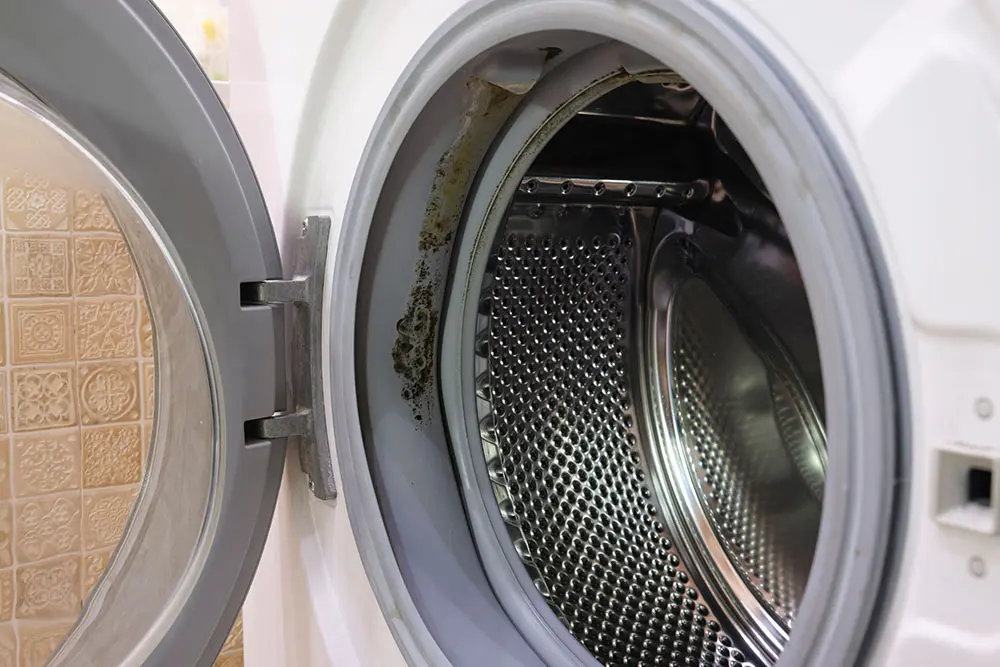
Black mould in washing machines is caused by a combination of low wash temperatures, underdosing detergent, and leaving the door closed between washes. This creates a warm, damp environment lined with detergent and fabric residue – ideal conditions for mould growth. The solution is regular hot washes, correct detergent dosing, and leaving the door ajar after every wash.
Black mould inside a washing machine is a common problem and almost always preventable. It tends to build up gradually and is usually well established before it is noticed. Understanding what causes it makes it straightforward to stop it coming back.
Why Do Washing Machines Get Black Mould?
A washing machine is warm, damp, and regularly coated in detergent residue and grease from clothing. Left at low temperatures without adequate cleaning, the interior becomes an ideal environment for mould and bacteria. The problem has become more common as wash temperatures have fallen – a trend driven by energy efficiency standards and the growth of quick wash and cool wash cycles.
Low temperature washing
Washing consistently at 30°C or below does not get hot enough to kill bacteria or dissolve the greasy deposits that mould feeds on. Modern machines wash at lower temperatures than older ones, and the interior never gets a proper hot clean unless a high temperature cycle is run deliberately.
Quick wash cycles used too often
Short, cool cycles are useful for lightly soiled items but provide no cleaning benefit for the machine itself. Using quick washes as the primary cycle means the drum, seal, pipes, and drawer never receive the temperature or cycle length needed to remove built-up residue.
Incorrect detergent dosing
Using too little detergent leaves grease and soiling on drum surfaces. Using too much – particularly liquid detergent or capsules – can leave undissolved residue in the drum and pipes that provides food for mould and bacteria. Always follow dosing instructions for the water hardness in the local area.
Door kept closed between washes
A closed door after a wash traps moisture inside the drum and door seal. Combined with residual warmth and detergent residue, this creates exactly the conditions mould needs to establish. Leaving the door slightly open after every wash allows the interior to dry out between uses.
Liquid detergent and capsules
Powder detergent dissolves more completely and is less likely to leave residue. Liquid detergent and capsules – particularly multi-tab products – are more prone to leaving waxy, greasy deposits on drum surfaces and pipes over time, especially at lower temperatures.
Fabric softener build-up
Fabric softener used in excess, or used in machines that are not regularly cleaned at high temperatures, can leave a residue in the drum and soap drawer that contributes to mould and bacterial growth.
Where Does Black Mould Appear?
Black mould tends to accumulate in the areas of the machine that stay damp and are not exposed to the full wash action:
- Door seal (rubber gasket) – the folds of the rubber seal around the door trap water and lint after every wash and are the most common location for black mould growth.
- Soap dispenser drawer and housing – detergent and fabric softener residue builds up in the drawer and the recess it sits in, providing an ideal surface for mould. See: black jelly in the soap drawer.
- Drum interior – particularly in the areas behind the door seal and around the drum paddles where water collects.
- Internal pipes and sump hose – mould and biofilm can accumulate inside pipes where it is invisible but contributes to bad smells and transfers onto laundry.
How to Treat Existing Black Mould
Visible mould on the door seal and drawer can be treated directly. Internal build-up requires a maintenance wash.
-
Clean the door seal. Pull back the folds of the rubber gasket and wipe away any visible mould with a damp cloth and a small amount of washing machine cleaner or a dilute bleach solution. Rinse thoroughly. A soft-bristled brush helps reach into the folds.
-
Remove and clean the soap drawer. Pull the drawer fully out and wash it in warm soapy water. Clean the housing recess with a cloth or brush to remove detergent build-up. Leave both to dry before replacing.
-
Run a maintenance wash. Run an empty drum cycle at 60°C or 90°C with a purpose-made washing machine cleaner, or with a scoop of washing soda crystals in the drum. This cleans the drum, pipes, and internal components that cannot be reached manually. Do this at least once a month if low temperature cycles are used regularly.
-
Leave the door open after every wash. After removing the laundry, leave the door slightly ajar and pull the soap drawer out a few centimetres to allow air to circulate. This significantly reduces moisture build-up between washes.
Once black mould is well established in internal pipes and hoses, it can be very difficult to fully eliminate. Running regular hot maintenance washes from the start avoids this problem entirely.
How to Prevent Black Mould Coming Back
- Run at least one 60°C or 90°C wash cycle per week – this is the most effective single preventive measure.
- Leave the door and drawer open between washes.
- Use powder detergent rather than liquid where possible, and dose correctly for the water hardness in the area.
- Avoid overusing fabric softener.
- Run a monthly maintenance wash with a washing machine cleaner or soda crystals.
- Wipe down the door seal after the last wash of the day.
Still getting smells after cleaning?
Frequently Asked Questions
What causes black mould in a washing machine?
The main causes are consistently low wash temperatures, frequent use of quick wash cycles, incorrect detergent dosing, and keeping the door closed between washes. These conditions create a warm, damp, residue-lined environment that mould thrives in. The problem has become more common as modern machines wash at lower temperatures and shorter cycle times.
How do I get rid of black mould in my washing machine?
Clean the door seal manually by pulling back the rubber folds and wiping away visible mould. Remove and clean the soap drawer and its housing. Then run an empty 60°C or 90°C wash with a washing machine cleaner or soda crystals to clean internal pipes and components. Repeat monthly to prevent it returning.
How do I stop black mould coming back?
Run at least one hot wash per week at 60°C or above. Leave the door and soap drawer slightly open between washes to allow the interior to dry out. Use powder detergent correctly dosed for local water hardness. Run a monthly maintenance wash with a washing machine cleaner or soda crystals.
Is black mould in a washing machine harmful?
Black mould and the bacteria that accompanies it can transfer onto laundry, causing musty smells on clothing even after washing. Some types of mould can cause skin irritation or aggravate respiratory conditions in sensitive individuals. Treating and preventing mould build-up is important both for appliance performance and for the hygiene of the laundry washed in it.
Still not fixed?
Here’s where to go next.
Ask the repair forum
Post the make, model and symptoms and get help from the Whitegoods Help community.
“Machine is 15 years old, but very light usage. Please see video…”
✓ Solved · LG · 4 replies
0 Comments