
Should you turn off appliances at the socket when not in use?
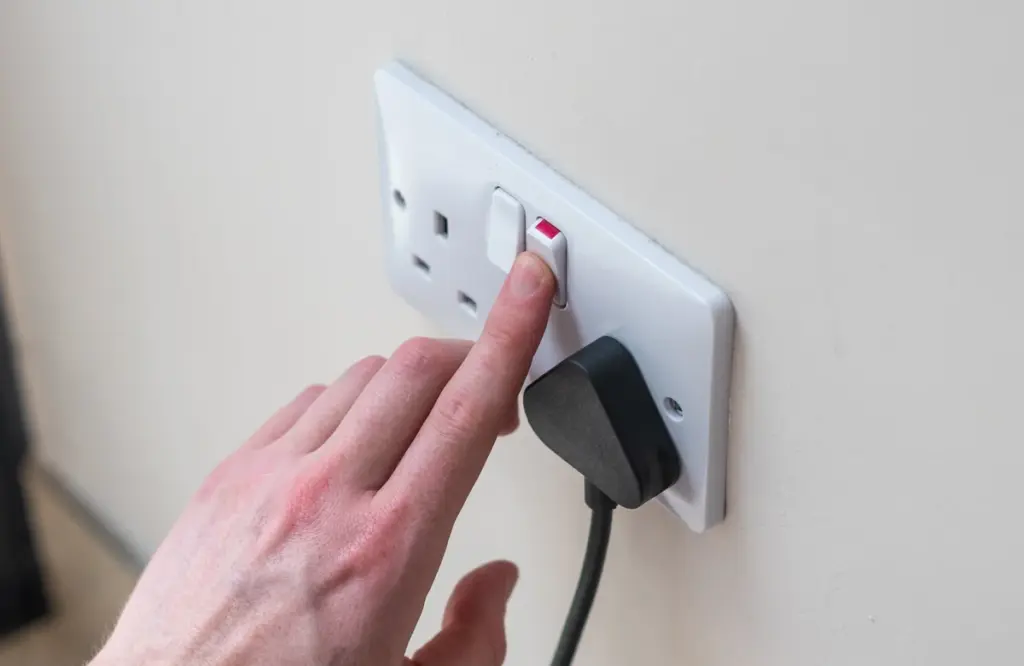

Turning a washing machine, tumble dryer, or dishwasher off at the wall socket when it is not in use is a sensible precaution that reduces risk. It matters most for tumble dryers and washing machines. The risk from leaving appliances plugged in is low but not zero – and if the socket is easy to reach, there is little reason not to. If the socket is hidden behind the appliance or inside a cupboard, making it more accessible is worth considering.
Should you switch your washing machine, dishwasher, or tumble dryer off at the wall socket when you have finished using it? The risk of leaving an appliance plugged in is small but real. This guide from Whitegoods Help explains why the risk exists, what is actually happening inside the appliance, and how to make a practical decision for your own kitchen.
Is there really a risk from a switched-off appliance?
When an appliance is switched off but still plugged in, electricity continues to flow through part of the appliance. The plug is live, the cable is live, and voltage is present throughout the early stages of the appliance’s internal circuitry – including the mains suppressor (filter), and in many cases the control PCB, door lock, and display.
The risk of something going wrong while the appliance is not running is much lower than when it is in use – but it is not zero. Mains suppressors can degrade and fail, and there are documented cases of tumble dryers and washing machines starting fires or producing electrical incidents while plugged in but switched off. We cover one striking example in our guide on whether a tumble dryer can catch fire when unplugged.

Most standby-state incidents are very minor – a small electrical fault rather than a fire. But because the appliance is unattended, even a small fault can develop into something more serious before anyone notices. That is the core argument for switching off at the socket whenever it is convenient to do so.
Where does electricity go inside a plugged-in appliance?
Understanding what “switched off but plugged in” actually means electrically helps clarify the risk – and why switching off at the wall is more thorough than using the appliance’s own on/off button.
 Plug and mains cable
Electricity flows from the socket through the plug and along the mains cable any time the socket is live – whether or not the appliance itself is switched on. Damaged cables or worn plug pins remain a live hazard.
 Mains suppressor (filter)
The first component electricity reaches inside the appliance. Its job is to reduce electrical interference and it remains live as long as the appliance is plugged in. Suppressors can fail over time and have, in rare cases, caused localised electrical incidents.
 Control PCB and display
On most modern appliances, power reaches the main control board and display panel even when the on/off button is set to off. That is what makes features like programme memory and standby mode possible – but it means more live components.
 Door lock and sensors
The door interlock on washing machines and dishwashers is typically energised even when the machine is off, so the door can remain locked after a cycle. Another component that stays live while plugged in.
How should you decide for your own home?
Millions of appliances are left plugged in permanently without incident – the risk per appliance per day is very low. But it is worth making a conscious decision rather than leaving it to chance, and the decision really comes down to how accessible the socket is.
 Socket is easy to reach
If the wall socket is clearly visible and easy to switch off after every use – such as a socket above the worktop or on an easily accessible wall – there is very little reason not to turn it off. It takes a second and reduces risk at no real cost of effort. This is particularly worthwhile for washing machines and tumble dryers.
 Socket is hard to access
Many integrated dishwashers and washing machines are plumbed in with the socket located behind the appliance or inside a sealed cupboard – awkward or impossible to reach routinely. In this case the practical question is whether the socket location can be improved, rather than just accepting permanent standby.
If a dishwasher or washing machine socket is hidden behind a back panel or buried inside a cupboard, a qualified electrician can often relocate or add a fused spur in a more convenient position – above the worktop, inside an adjacent unit with an easy-access door, or anywhere it can be reached without pulling the appliance out. It is a small job that pays back every day the appliance is used.
What is the right advice for each appliance?
Different appliances carry different levels of inherent risk and have different practical constraints. The general principle – switch off at the socket when easy to do so – applies more strongly to some than others.

Switch off at the socket after every use where it is accessible. Washing machines have relatively complex electrical systems, can hold pressurised water, and are not designed to run unattended for extended periods. See also our guide on whether it is safe to leave a washing machine on when out or asleep.

Switching off at the socket when not in use is strongly advisable. Tumble dryers are one of the more common sources of household appliance fires, largely due to lint accumulation in the heating circuit. Never leave a dryer running unattended, and check our list of tumble dryer fire-risk safety notices if you have a Hotpoint, Indesit, or Creda model.

If the socket is accessible, switch off after each cycle. If it is buried behind a back panel, consider whether it can be relocated. At minimum, make sure the cycle has finished and the appliance has cooled before leaving the house or going to bed.

These must stay plugged in at all times to preserve food safety. The risk calculation is different for refrigeration: they run continuously and there is no practical option to switch them off routinely. Use a working RCD on the circuit and a smoke alarm in the kitchen instead.
Worried about leaving an appliance running?
If you regularly need to run a washing machine or dishwasher overnight or while out, these guides cover the real risks and the most practical ways to reduce them.
What safety checks should you make on the socket itself?
The socket and plug feeding the appliance are part of the same safety picture. A high-current appliance plugged into a damaged or overloaded socket is a fire risk in itself – independent of anything happening inside the machine.

Each of these appliances draws close to the full 13A capacity of a standard UK socket during the heating stage. Plugging them into an extension lead, a multi-way adaptor, or a daisy-chained socket strip is a well-known cause of overheating and house fires. We cover the reasoning in detail in our guide on extension sockets and adaptors with high-load appliances.
Check the plug and socket periodically – if you can see scorch marks, smell anything hot, or feel that the plug or socket is unusually warm, stop using the appliance and have the wiring inspected by a qualified electrician. Make sure the circuit is protected by a working RCD.
Frequently asked questions
Is it safe to leave a washing machine or tumble dryer plugged in when not in use?
The risk is low but not zero. Electricity continues to flow through part of the appliance even when switched off, and components like the mains suppressor and control board stay live. Most appliances left plugged in have no problems at all, but switching off at the socket when easy to do is a sensible precaution – particularly for tumble dryers, which carry a higher inherent fire risk.
Does switching an appliance off at its own button make it completely safe?
No. Switching off at the appliance’s own on/off button reduces risk but does not eliminate it – electricity still reaches the early internal circuitry, including the mains suppressor and often the control board. Switching off at the wall socket removes all voltage from the appliance and is the most complete way to eliminate standby risk. Unplugging entirely is equivalent.
What if the wall socket is behind the appliance or inside a cupboard?
This is a common situation with integrated dishwashers in particular. If the socket genuinely cannot be reached routinely, the practical options are to accept the residual risk, or to consult a qualified electrician about relocating the socket to a more accessible position. The latter is often straightforward and worthwhile for an appliance used every day.
Is a tumble dryer more risky to leave plugged in than a washing machine?
Tumble dryers are generally considered higher risk than washing machines for fire, mainly due to lint accumulation in the heating system and exhaust path. That risk is highest during operation, but the general advice to switch off at the socket when not in use applies at least as strongly to dryers. Never leave a tumble dryer running while out or asleep.
Should I unplug the dishwasher after each cycle?
If the socket is accessible, yes – this is good practice. If the socket is behind a back panel or hard to reach, at minimum make sure the cycle has finished and the dishwasher has cooled before leaving the house. If you run a timed programme overnight, consider whether the socket location can be improved.
Does turning off at the socket save much electricity?
Standby consumption on modern washing machines, dishwashers, and tumble dryers is very small – usually a watt or two. The reason to switch off at the socket is safety rather than energy saving. The energy benefit on its own would not normally justify the effort, but combined with the small reduction in fault risk it is worth doing where convenient.
Ask the repair forum
Post the make, model and symptoms and get help from the Whitegoods Help community.
14 Comments
Grouped into 8 comment threads.
0 replies Turning off household appliances at the wall switch is highly recommended to eliminate the risk of electrical issues affecting internal components—such as mains suppressors—that remain energized during standby mode. For an Electrical Engineering student at Telkom University Surabaya, this practice of physical power isolation serves as an effective preventive measure against component failure caused by thermal degradation when devices are left unattended.
1 reply My fridge stays on after the socket is switched off I tried the fridge in another socket which turned the fridge off when it was turned off
1 reply My son's washing machine plug is near outlet pipe behind washing machine and inaccessible without removing worktop above it .Is this just bad electrical work or what???
My son’s washing machine plug is near outlet pipe behind washing machine and inaccessible without removing worktop above it .Is this just bad electrical work or what???
Likely replying to Richard
Hello Richard. As you can imagine I’ve seen many very poor examples, with mains sockets directly underneath parts of the plumbing that could easily leak and run water straight into the socket. But in many houses some thought has been given to the position of wall sockets that the builders know will be used for a washing machine. They may still have the wall sockets behind the washing machine or inside a cupboard, but they usually install a separate switch above the worktop somewhere that is easily accessible and often even labelled.
But generally speaking, especially in older houses, wall sockets are just badly placed and totally inaccessible far too often. Often tradesmen will have an overriding goal of what is easier for them. A perfect example of this is in my son’s brand new house where the mains socket for the washing machine was attached to the 1 mm thin ply board at the back of the under sink cupboard. As soon as you start pushing and pulling on the main socket it just came completely loose. I had to relocate it to the side of the cupboard and was able to screw it firmly into a proper surface.
1 reply It’s been a long time since the last comment so hoping you’re still around. ;). What I’m understanding is that it’s ok to unplug a washing machine and dryer when not in use for 5-6 days? Our outlets are quite old as well as dryer, washer is 3 years old. I’d like to use the available outlet in the garage for my pet heater at night for our stray cat. Low voltage for the heater btw. Please advise if I’m correct. We’re in the U.S. so also have a special circuit just for those 2 appliances. Thank you very much.
It’s been a long time since the last comment so hoping you’re still around. ;). What I’m understanding is that it’s ok to unplug a washing machine and dryer when not in use for 5-6 days? Our outlets are quite old as well as dryer, washer is 3 years old. I’d like to use the available outlet in the garage for my pet heater at night for our stray cat. Low voltage for the heater btw. Please advise if I’m correct. We’re in the U.S. so also have a special circuit just for those 2 appliances. Thank you very much.
Likely replying to Shani
Hello Shani. I don’t know of any washing machine that needs to be left plugged in. We turn our washing machine off at the socket every time we have finished using it. However, it is very easy for us because the wall socket is just above the washing machine and very easy to access.
The chances of anything going wrong if the washing machine is turned off but still left plugged in are very remote. But if it is convenient to switch off at the socket it is definitely best practice.
0 replies Many thanks Roger. I need to step up a few gears :)
Many thanks Roger. I need to step up a few gears :)
0 replies You could turn everything off and then there is never any danger, however what you are really trying to do is to mitigate a possible hazard. If you break down the various parts I don't think that the hazards usually are as dangerous as many think. Many household electrics you just cannot get to easily and many items run during the night. When I was in IT our servers, IT switches, routers etc were running 24/7 all year round and much of that time nobody was in attendance. That's the same as your fridge and freezer Probably the biggest issue is when we overload a socket or plug, or when the cable becomes defective. That will normally show up during use rather than when out of use other than a defective cable. Normally as long as you have circuit breakers they will trip. When you come to the washer, drier, or dish washer it all depends if you have a hard or soft power switch. With the hard switch the power is switched off completely this may be via a power switch or indirectly via the programme control. With a soft switch you are toggling it off and on electronically so there is power going to that part of the circuit board continuously that normally implies a transformer, voltage regulation/conversion and AC to DC conversion. Anything that is timer or remotely controlled normally needs soft switching. Most time issues with the circuit board, motors, etc appear when the item is actually running and therefore we would never leave it running when we were not there. This is totally contrary to how modern equipment is intended to be used and modern households work. The big issue is down to manufacturing or design flaws and though there will always some problems there appear to be too many, particularly with washers and driers. This leads me to believe that some manufacturers are so keen to keep prices down that they don't put enough thought into the design, what temperatures, both ambient and generated, they product will need to handle over a given time, and movement causing abrasion, loose connectors, etc. Due to the fact these do not appear to be picked up during testing that this is either insufficient or comprehensive testing is not undertaken. What would be interesting is to know what had been discovered in their own tests.
You could turn everything off and then there is never any danger, however what you are really trying to do is to mitigate a possible hazard. If you break down the various parts I don’t think that the hazards usually are as dangerous as many think. Many household electrics you just cannot get to easily and many items run during the night. When I was in IT our servers, IT switches, routers etc were running 24/7 all year round and much of that time nobody was in attendance. That’s the same as your fridge and freezer
Probably the biggest issue is when we overload a socket or plug, or when the cable becomes defective. That will normally show up during use rather than when out of use other than a defective cable. Normally as long as you have circuit breakers they will trip.
When you come to the washer, drier, or dish washer it all depends if you have a hard or soft power switch. With the hard switch the power is switched off completely this may be via a power switch or indirectly via the programme control. With a soft switch you are toggling it off and on electronically so there is power going to that part of the circuit board continuously that normally implies a transformer, voltage regulation/conversion and AC to DC conversion. Anything that is timer or remotely controlled normally needs soft switching. Most time issues with the circuit board, motors, etc appear when the item is actually running and therefore we would never leave it running when we were not there. This is totally contrary to how modern equipment is intended to be used and modern households work.
The big issue is down to manufacturing or design flaws and though there will always some problems there appear to be too many, particularly with washers and driers. This leads me to believe that some manufacturers are so keen to keep prices down that they don’t put enough thought into the design, what temperatures, both ambient and generated, they product will need to handle over a given time, and movement causing abrasion, loose connectors, etc. Due to the fact these do not appear to be picked up during testing that this is either insufficient or comprehensive testing is not undertaken. What would be interesting is to know what had been discovered in their own tests.
2 replies In India I stayed at a 'expat's condo for a while and every plug had a switch to control it. I thought maybe they thought that would save energy, I didn't think of possible fires. My question to you is would it save energy to put switches on plugs and switch them off when not in use. It wouldn't be a hassle to turn a switch on when I want to use the Microwave if it were easy to reach, same for dishwashers. I could do without all those little green lights on all day and I have other clocks. I can see how to do this with appliances that run on regular voltage but could I put a switch on the dryer? the stove? Thanks for all that you do. I find your articles very interesting and I always learn something.
In India I stayed at a ‘expat’s condo for a while and every plug had a switch to control it. I thought maybe they thought that would save energy, I didn’t think of possible fires.
My question to you is would it save energy to put switches on plugs and switch them off when not in use. It wouldn’t be a hassle to turn a switch on when I want to use the Microwave if it were easy to reach, same for dishwashers. I could do without all those little green lights on all day and I have other clocks.
I can see how to do this with appliances that run on regular voltage but could I put a switch on the dryer? the stove?
Thanks for all that you do. I find your articles very interesting and I always learn something.
Likely replying to Miriam Kearney
Thanks Miriam. Although the electricity runs into the appliance, if nothing is operating then no electricity is used. It’s the same principal as water running through pipework in our house. If no tap is turned on the water just stays there under pressure. If an appliance has a neon light or clock then yes it will be using small amounts of electricity but very small. So small as to be hardly noticeable unless quite obsessive about it.
1 reply What am I not understanding here..you say that " With my own dishwasher I could, with a fair bit of effort, rearrange everything so that the microwave is plugged into this socket and the dishwasher into a separate one above the worktop. This, is something I need to do" but then you'd have microwave plugged in all the time instead of dishwasher.. is that better? Seems to me you're just switching one out for other. Explain?
What am I not understanding here..you say that ” With my own dishwasher I could, with a fair bit of effort, rearrange everything so that the microwave is plugged into this socket and the dishwasher into a separate one above the worktop. This, is something I need to do” but then you’d have microwave plugged in all the time instead of dishwasher.. is that better? Seems to me you’re just switching one out for other. Explain?
Likely replying to Elles
Hello Elles. It’s a less of two evils type of thing, but there is an argument that both could / should be turned off. Microwaves are one of our appliances that are meant to be left switched on – although that doesn’t mean there is no risk. They have a clock, plus it’s something that’s in use many times a day. Ideally it could be switched off. But I’d rather switch off the dishwasher if it’s down to choosing one of the two.
Essentially there are many appliances that are left permanently on. Fridges in particular are a genuine concern of mine after many have caught fire (including the flat at Grenfill). But there’s nothing we can do about fridges and freezers, they have to be left on. So that’s a risk we have no option about. Other things like clock radios, kettle, PVR recorders and many other products are all usually left plugged in all the time.
There is a theoretical risk to them all but we can’t become paranoid about it. So certain things like the TV, washing machines, dishwashers, tumble dryers etc can be turned off to reduce risk because it’s not usually much trouble to do so.
Turning off household appliances at the wall switch is highly recommended to eliminate the risk of electrical issues affecting internal components—such as mains suppressors—that remain energized during standby mode. For an Electrical Engineering student at Telkom University Surabaya, this practice of physical power isolation serves as an effective preventive measure against component failure caused by thermal degradation when devices are left unattended.