
Tumble Dryer Ban – 2027 UK?
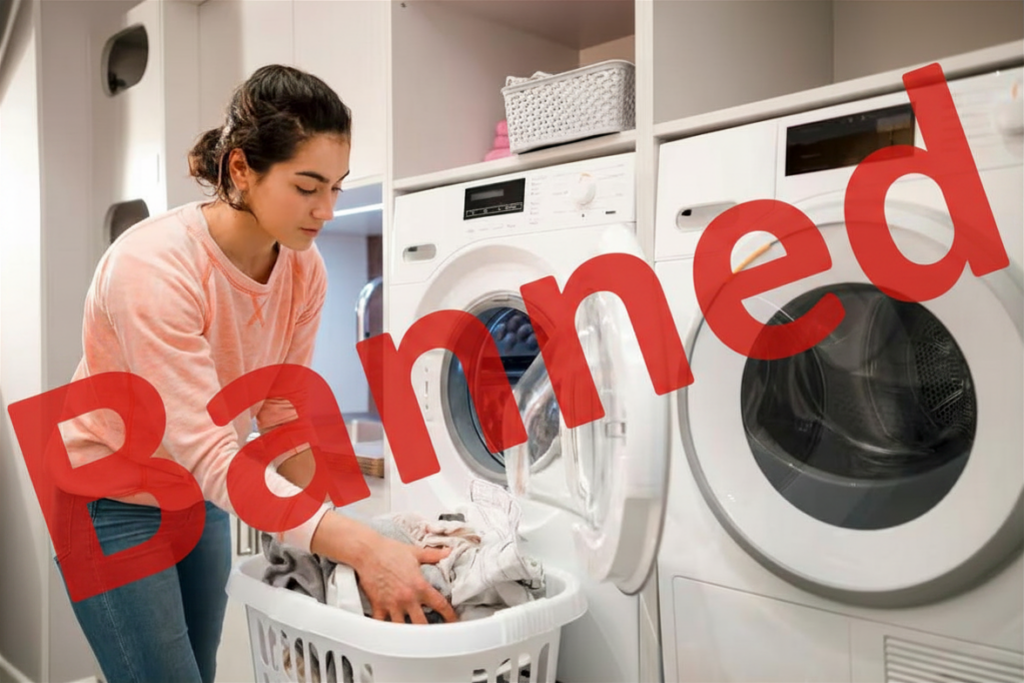

From 19 January 2027, vented, condenser, and gas-fired tumble dryers can no longer be sold as new products in Great Britain. Only heat pump tumble dryers meeting the new minimum energy performance standard will be permitted for sale. This does not affect machines already owned, does not prevent second-hand sales, and does not affect repair or servicing of existing appliances. The regulation is already law, having come into force on 10 April 2026, with a 10-month transition period running to 18 January 2027.
What has actually changed?
Reports in late April 2026 described traditional tumble dryers as being “banned” under new net zero rules. The reality is more precise than that framing suggests, and understanding exactly what the regulation does and does not say is important for consumers and engineers alike.
The Ecodesign for Energy-Related Products and Energy Information (Household Tumble Dryers) Regulations 2026, statutory instrument 2026 No. 318, was made by the Department for Energy Security and Net Zero on 19 March 2026 and came into force on 10 April 2026. The regulations set new minimum energy performance standards for tumble dryers placed on the Great Britain market, and those standards are set at a level that only heat pump tumble dryers can meet.
The practical effect is that from 19 January 2027, new vented tumble dryers, new condenser tumble dryers, and new gas-fired tumble dryers cannot legally be placed on the GB market. New heat pump tumble dryers that meet the performance standard can continue to be sold. This is a change to what can be sold as new, not a change to what can be owned, used, repaired, or traded second-hand.
The key dates
17 July 2025: Consultation launched
DESNZ publishes its consultation on proposed updated ecodesign and energy labelling requirements for household tumble dryers in Great Britain. The consultation runs until 14 August 2025 and receives 12 responses from manufacturers, retailers, trade associations, academics, and consumers.
1 July 2025: EU equivalent rules come into force
The European Union’s equivalent regulations under EU Regulation 2023/2533 take effect across EU member states. From this date, only heat pump tumble dryers meeting the EU minimum energy performance standard may be sold as new products in EU markets. Great Britain’s regulations align with these EU requirements, bringing the GB and EU frameworks into close harmony.
19 March 2026: Government response and Regulations made
DESNZ publishes its consultation response, confirming the policy decisions. The Regulations are made on the same day. Key adjustment from the consultation proposal: the transition period is extended from six months to ten months, following stakeholder feedback requesting more time for industry adjustment.
10 April 2026: Regulations come into force
The Ecodesign for Energy-Related Products and Energy Information (Household Tumble Dryers) Regulations 2026 (SI 2026/318) come into force. The 10-month transition period begins. Vented and condenser dryers can still be placed on the market during this period.
19 January 2027: New minimum performance standards apply
The 10-month transition period ends. From this date, only heat pump tumble dryers meeting the new minimum energy performance standard may be placed on the GB market as new products. Vented, condenser, and gas-fired tumble dryers may no longer be sold as new. The rescaled A to G energy label, including the new repairability index, becomes mandatory from this date.
9 December 2032: Post-implementation review
The government has set this date for a formal review of the regulations’ impact and effectiveness.
What exactly will no longer be sold after 19 January 2027?
The regulation phases out the sale of new tumble dryers that cannot meet the new minimum energy performance standard. The DESNZ consultation document is explicit: this “will phase out less efficient air-vented, gas-fired and condenser household tumble dryers and enable only the most efficient heat pump household tumble dryers.”
Vented tumble dryers (traditional drum dryers that exhaust hot moist air through a hose or vent). Condenser tumble dryers (machines that collect moisture in a reservoir or drain it away without needing external venting). Gas-fired tumble dryers (rare in UK domestic use but included in the regulation). Any dryer that does not meet the new minimum energy performance standard.
Heat pump tumble dryers that meet the new minimum energy performance standard. These use a refrigerant circuit to recycle warm air and extract moisture at lower temperatures (approximately 50°C compared with 70°C for conventional dryers), using significantly less electricity per cycle.
Existing vented and condenser tumble dryers already owned by consumers — these can continue to be used indefinitely. Second-hand sales of existing models. Repair and servicing of any tumble dryer type. Spare parts supply for existing models (the regulations actually strengthen spare parts availability requirements).
What is a heat pump tumble dryer and how does it differ?
Heat pump tumble dryers work on a fundamentally different principle from conventional vented and condenser machines. Instead of generating new heat with an electric element and exhausting or condensing the moisture-laden air, a heat pump dryer uses a refrigerant circuit to recycle the warm air already inside the drum, extracting moisture and returning the dried, warmed air back to the drum continuously.
This recycling of energy is what makes heat pump dryers significantly more efficient. A conventional vented or condenser dryer uses a heating element that runs at approximately 70°C and consumes 2 to 3 kWh per drying cycle. A heat pump dryer runs at approximately 50°C and uses approximately 1 to 1.5 kWh per cycle, a reduction of around 50 to 60% in energy consumption per load. The government’s figure of up to £910 in savings over a 20-year machine lifetime reflects this difference in energy use.
Heat pump technology is not new to UK homes. The first heat pump tumble dryers became available in the UK from around 2010, and by the time these regulations were being developed, three-quarters of new tumble dryers sold in the UK were already heat pump models. The regulation therefore codifies a market shift that was already largely underway rather than forcing consumers towards a technology they have been avoiding.
For a detailed guide to how heat pump dryers work, their running costs, and what to look for when buying one, see our full guide to heat pump tumble dryers.
The running cost case for heat pump dryers
Energy used per cycle by a heat pump tumble dryer
Energy used per cycle by a conventional vented or condenser tumble dryer
Government estimate of lifetime savings from an energy efficient dryer over 20 years (DESNZ, 2026)
Approximate cost per cycle for a heat pump dryer at current UK electricity rates (April 2026)
The upfront cost of heat pump tumble dryers has fallen significantly since they were first introduced and continues to fall as the technology matures and volume production increases. Entry-level heat pump dryers are available from major UK retailers from around £300 to £400, with mid-range models from £400 to £600 and premium models above that. The gap between heat pump and equivalent condenser models has narrowed considerably.
The political debate: is this the right approach?
The regulations have attracted political comment, particularly from opposition parties. Shadow energy secretary Claire Coutinho described the measure as part of a pattern of government legislation dictating consumer choices, including planned changes to petrol and diesel vehicles and gas boilers, and accused the Government of “Soviet levels of control.” Reform UK’s Richard Tice described it as “tone-deaf green ideology” at a time when families are struggling with household costs.
The Government’s position, as set out in the DESNZ consultation response and accompanying impact assessment, is that the regulations deliver genuine financial benefit to consumers through lower running costs, reduce energy consumption in line with the UK’s fifth and sixth carbon budget commitments, and align the UK with equivalent EU measures that have already been in force since July 2025. The DESNZ spokesperson’s statement that “energy efficient tumble dryers will save households up to £910 over their machine’s 20-year lifetime” frames the measure as financially beneficial rather than restrictive.
The factual position is that the market was already moving in this direction. Three-quarters of new tumble dryers sold were already heat pump models before the regulation was made. The regulation effectively confirms and accelerates a commercial transition that was largely underway, rather than imposing a technology on a resistant market.
Whether the legislation is the right policy instrument, and whether the pace is appropriate, are legitimate questions for debate. What is not accurate is to suggest that consumers are being forced to discard their existing machines, or that the change takes effect immediately. Existing machines can continue to be used for as long as they remain functional.
What about the heat pump dryer safety concern?
The GB News article referenced a December 2025 safety warning affecting approximately 85,000 heat pump tumble dryers in the UK. This is worth addressing clearly.
In December 2025, owners of certain heat pump tumble dryer models were notified of a potential safety concern that could constitute a fire risk. This is a product-specific safety notice rather than a general concern about heat pump dryer technology. DESNZ has stated explicitly: “Every tumble dryer model on the British market must comply with stringent safety regulations. There are no current specific safety concerns with heat pump tumble dryers.”
Product safety notices affecting specific dryer models are not unusual and have affected conventional tumble dryers extensively in recent years. The Whirlpool-related tumble dryer fire risk safety programme, which ran for several years and affected millions of machines under the Hotpoint, Indesit, and Creda brands, was a much larger safety intervention involving conventional vented and condenser machines. A product-specific safety notice affecting 85,000 heat pump dryers does not represent a systemic safety problem with heat pump technology.
If you own a heat pump tumble dryer and have not confirmed whether your model is subject to any safety notice, check the manufacturer’s website using your model number. Our guide to appliance safety notices covers the major UK recalls and safety programmes currently active.
What do the regulations mean for UK appliance repair engineers?
For engineers working on tumble dryers, the regulations have several practical dimensions worth understanding.
Existing machines continue to need repair
The prohibition on new sales does not affect repair demand for existing machines. There are millions of vented and condenser tumble dryers currently in UK homes. These machines will continue to be used, will continue to develop faults, and will continue to need repair and spare parts for many years after January 2027. The regulation does not reduce the repair market for existing machines — if anything, extending the useful life of existing appliances through repair is exactly the outcome the sustainability-focused Ecodesign framework is designed to encourage.
New repairability requirements in the regulations
The regulations introduce new circular economy measures including a repairability index on the energy label and new requirements on spare parts availability. Manufacturers must make a broader range of spare parts available for tumble dryers placed on the market under the new regulations, which strengthens the supply chain for repair engineers. The regulations specifically expand the list of spare parts that manufacturers must make available, providing a longer and more reliable parts supply for the heat pump dryer models that will make up the entire new market from January 2027.
Heat pump dryer skills development
As the installed base of heat pump tumble dryers grows and the proportion of conventional machines declines over time, engineers who are not already confident working on heat pump models should consider adding this capability. Heat pump dryers have a different internal architecture from conventional machines, using a sealed refrigerant circuit alongside the conventional drum, motor, and control board systems. Diagnosis and repair requires familiarity with both the conventional and heat pump-specific components.
The NAC National Training Centre offers online and hands-on training specifically covering heat pump tumble dryers at appliance-repair-training.co.uk/courses/. Engineers who invest in this training now are positioning themselves well for a market that will be predominantly heat pump by the end of the decade.
The seasonal repair pattern will be unaffected
As discussed in our article on the annual appliance repair demand cycle, tumble dryers are the single largest driver of seasonal repair demand in the UK, falling out of use in spring and summer and re-entering service in September and October to generate a predictable surge of call-outs. This seasonal pattern will continue regardless of which technology powers the drum. Heat pump dryers sit idle through summer and re-enter service in autumn, and the dormancy-related faults that generate September and October call-outs apply to heat pump models just as they do to conventional machines.
What does this mean if you own a conventional tumble dryer right now?
Nothing changes. Your vented or condenser tumble dryer can continue to be used for as long as it remains functional. There is no requirement to replace it, no date by which it must be disposed of, and no penalty for continuing to use it. Repair it if it develops a fault and keep using it. The regulation affects new sales only.
Repair it. The regulations explicitly support repair through new spare parts availability requirements. Repairing and extending the life of an existing appliance is exactly the behaviour the Ecodesign framework is designed to encourage, and is more sustainable than replacing it with a new machine. Genuine spare parts remain available for most vented and condenser dryer models. See our spare parts section for help finding the right part.
During the transition period (10 April 2026 to 18 January 2027), vented and condenser dryers can still be purchased as new. After 19 January 2027, only heat pump models will be available as new products. If you are considering replacing your dryer before then, it is worth researching heat pump options alongside conventional models, as the price difference has narrowed and the running cost saving is real and ongoing.
Only heat pump dryers meeting the new minimum performance standard will be available as new products. Second-hand conventional machines will still be available through the used appliance market. Our full guide to heat pump tumble dryers covers everything you need to know about choosing and using a heat pump model.
Key facts at a glance
| Question | Answer |
|---|---|
| What regulation is this? | The Ecodesign for Energy-Related Products and Energy Information (Household Tumble Dryers) Regulations 2026 (SI 2026/318) |
| When did the regulations come into force? | 10 April 2026 |
| When do new sales restrictions apply? | 19 January 2027, after the 10-month transition period |
| What cannot be sold as new after 19 January 2027? | Vented, condenser, and gas-fired tumble dryers; any dryer not meeting the new minimum energy performance standard |
| What can still be sold after 19 January 2027? | Heat pump tumble dryers meeting the new minimum energy performance standard |
| Can I still use my existing conventional dryer? | Yes, indefinitely. The regulations affect new sales only, not existing ownership or use |
| Can existing conventional dryers be repaired? | Yes. Repair is unaffected and actively supported by the regulations’ spare parts requirements |
| Can second-hand conventional dryers be sold? | Yes. Second-hand sales are not restricted |
| Does this apply to Northern Ireland? | The GB regulations cover England, Wales, and Scotland. Northern Ireland applies EU regulations directly under the Windsor Framework; EU equivalent rules have been in force since 1 July 2025 |
| What was the EU position? | Equivalent EU regulations under EU Regulation 2023/2533 came into force across EU member states on 1 July 2025 |
Thinking about your tumble dryer options?
Whether you need to repair your existing dryer, are researching heat pump models ahead of the 2027 deadline, or need help understanding a fault, Whitegoods Help has guides covering all tumble dryer types and the most common faults.
Frequently asked questions about the tumble dryer regulations 2026
Are tumble dryers being banned in the UK?
Not banned in the sense of being prohibited from use. The Ecodesign for Energy-Related Products and Energy Information (Household Tumble Dryers) Regulations 2026 set a new minimum energy performance standard that, from 19 January 2027, only heat pump tumble dryers can meet. This means that new vented and condenser tumble dryers can no longer be placed on the GB market after that date. Existing machines can continue to be used, repaired, and sold second-hand without restriction. It is a change to what can be sold as new, not a change to what can be owned or used.
When do the new rules actually take effect?
The regulations came into force on 10 April 2026 but include a 10-month transition period during which vented and condenser dryers can still be sold as new. The transition period runs from 10 April 2026 to 18 January 2027 inclusive. From 19 January 2027, only heat pump tumble dryers meeting the new minimum energy performance standard may be sold as new products on the GB market.
Do I have to get rid of my existing vented or condenser tumble dryer?
No. The regulations apply only to the placement of new products on the market, meaning new sales. They do not require existing owners to dispose of their machines, stop using them, or replace them by any date. Your existing vented or condenser tumble dryer can continue to be used for as long as it remains functional. If it develops a fault, it can be repaired. Repair is not restricted by these regulations.
Can I still buy a vented or condenser tumble dryer?
During the transition period, which runs until 18 January 2027, yes. After that date, only new heat pump tumble dryers meeting the minimum performance standard can be sold as new products. Second-hand vented and condenser machines will continue to be available through the used appliance market. If you specifically want a new conventional dryer, you have until 18 January 2027 to buy one from current stock.
Are heat pump tumble dryers actually better?
Heat pump dryers use approximately 50 to 60% less electricity per cycle than conventional vented or condenser dryers, which translates to a meaningful reduction in running costs over the machine’s life. The government estimates savings of up to £910 over a 20-year lifetime. The trade-off is that heat pump dryers typically cost more to buy, can take slightly longer per cycle, and require the condenser system to be cleaned regularly. The technology has matured significantly since it was introduced around 2010 and three-quarters of new tumble dryers sold in the UK were already heat pump models before these regulations were made. For more detail, see our guide to heat pump tumble dryers.
Does this apply in Northern Ireland?
The GB regulations cover England, Wales, and Scotland. Northern Ireland applies EU product regulations directly under the Windsor Framework, and equivalent EU regulations under EU Regulation 2023/2533 came into force across EU member states including for Northern Ireland purposes on 1 July 2025. The practical outcome is broadly the same, with Northern Ireland’s date of application being approximately six months ahead of the GB date.
What about the fire safety concern with heat pump dryers?
In December 2025, owners of approximately 85,000 heat pump tumble dryers in specific models were notified of a potential safety concern. This was a model-specific product safety notice, not a general concern about heat pump technology. DESNZ confirmed at the time: “There are no current specific safety concerns with heat pump tumble dryers.” Every tumble dryer sold in the UK must comply with UK product safety regulations regardless of its technology type. If you own a heat pump dryer and want to check whether your model is subject to any safety notice, check the manufacturer’s website using your model number.
Sources: The Ecodesign for Energy-Related Products and Energy Information (Household Tumble Dryers) Regulations 2026 (SI 2026/318), legislation.gov.uk; DESNZ Raising Product Standards for Household Tumble Dryers: Government Response, March 2026, gov.uk; DESNZ Regulation 15(1) clarification note, 10 April 2026; GB News report dated 29 April 2026. All sources accessed April 2026.
Content disclaimer: This article summarises legislation that was current at April 2026. Regulations are subject to amendment. Always refer to the official legislation at legislation.gov.uk and gov.uk for the definitive position. This article does not constitute legal advice.
Ask the repair forum
Post the make, model and symptoms and get help from the Whitegoods Help community.
0 Comments