
Which is the best type of washing machine detergent?
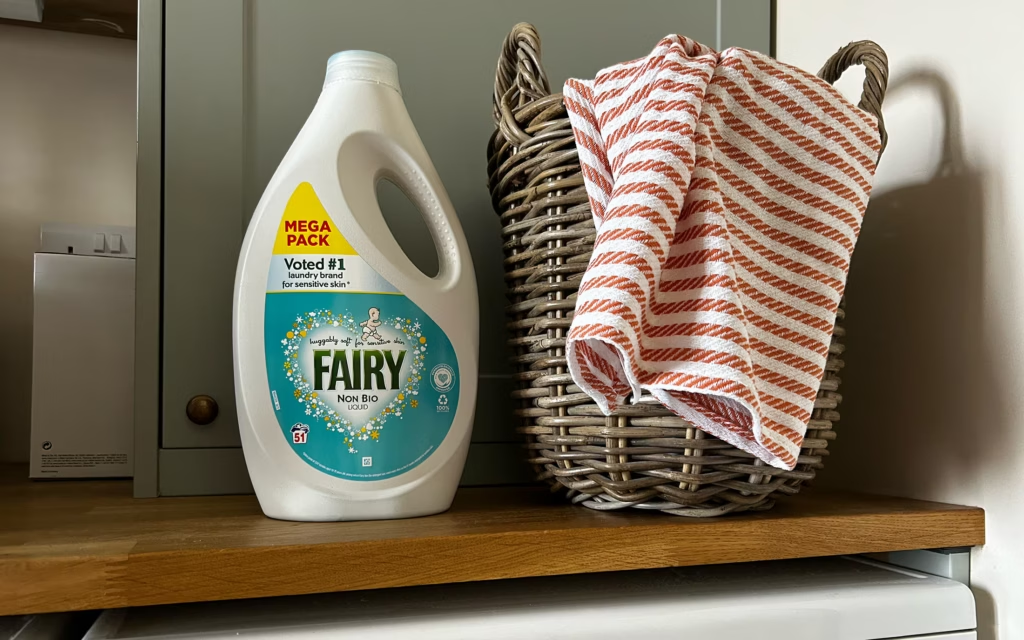

No single detergent type is best for every wash. Powder is the most versatile and contains bleaching agents that keep whites bright and help prevent mould inside the machine. Liquid is better for colours but should not be used exclusively, as it lacks these bleaching agents and can contribute to smells and build-up over time. For best results, use different detergents for different types of load.
Washing powder, liquid, tablets, capsules, and eco formats all have a place – but they are not interchangeable. Understanding what each type does and does not contain helps you choose the right one for each wash, protect your clothing, and keep your washing machine in good condition.
Washing Powder: The Reliable Standard
Washing powder has been used successfully for decades and remains the most versatile option. It contains bleaching agents – typically optical brighteners and oxygen bleach – that help keep white laundry bright and also play a role in keeping the inside of the washing machine free from bacteria and black mould.
The main practical limitation of powder is that it can clump or fail to dissolve completely in very cold water or where water pressure through the dispenser drawer is low. If powder is consistently being left in the drawer after a wash, switching to liquid or a tablet may solve the problem – though the dispenser drawer itself should also be checked for blockages.
Liquid Detergent: Good for Colours, Not for Everything
Liquid detergent is pre-dissolved and flushes through the dispenser drawer more reliably than powder, making it a useful alternative if powder is not being dispensed correctly. Its key advantage for laundry is that it does not contain bleaching agents, making it safer for coloured and dark clothing where fading is a concern.
However, the absence of bleaching agents is also liquid detergent’s most significant limitation for the machine itself.

Using liquid detergent for all washes – especially combined with consistently low wash temperatures – can cause serious grease, slime, and black mould to build up inside the machine over time. This is unpleasant, shortens the life of the machine, and is difficult to remove once established. Regular washes with a powder or biological detergent at higher temperatures are the most effective preventive measure. See our guide on washing machine smells, grease, and mould.
Tablets and Capsules: Convenient but More Expensive
Detergent tablets and capsules offer a pre-measured dose, eliminating the risk of under or over-dosing. They are primarily a convenience product – the detergent inside does not perform differently to loose detergent of the same type, but they remove the need for measuring and reduce the mess of powder or liquid spills.
The main drawbacks are cost – tablets typically cost more per wash than loose powder or liquid – and the lack of flexibility. With loose detergent, the dose can be adjusted up or down for load size, soiling level, or water hardness. With tablets, the dose is fixed.
Liquid detergent capsules and tabs carry specific safety risks around young children. See our guide on detergent capsule danger to children for important safety information.
Why Using More Than One Type of Detergent Makes Sense
Most households buy a single box of detergent and use it for everything. But whites and colours have genuinely different requirements, and using one product for both means compromising on one or the other.
 For Whites and Light Laundry
Use a detergent containing bleaching agents – typically a full-strength biological or non-biological powder. This keeps whites bright, prevents greyness, and is needed for maintenance washes to keep the machine clean.
 For Colours and Darks
Use a colour-safe detergent – liquid or a colour-specific powder such as Ariel Colour. These do not contain bleaching agents and will not fade or dull coloured fabrics over repeated washes.
 For Silks and Woollens
Use a specialist delicates or wool wash detergent. Biological detergents contain enzymes that can damage silk and wool fibres over time. See our guide on biological detergents and fabric damage.
 For Lightly Soiled Loads
An eco-friendly or 30-degree detergent works well for lightly soiled items. These are not as effective for heavy soiling, bedding, or underwear, but are a reasonable choice for a light refresh wash.
Stocking two or three types of detergent does not mean using more overall – the same total amount is divided between different products for different jobs. The additional cost of having more than one product on the shelf is offset by better results for both the laundry and the machine.
The Bleaching Agent Question
Understanding which detergents contain bleaching agents and which do not is the most important distinction when choosing between products.
| Detergent Type | Contains Bleaching Agents? | Best For |
|---|---|---|
| Full-strength powder (bio or non-bio) | Yes | Whites, maintenance washes, heavy soiling |
| Colour powder (e.g. Ariel Colour) | No | Coloured and dark laundry |
| Liquid detergent | No | Colours, delicates, low-temperature washes |
| Biological detergent (any format) | Yes (plus enzymes) | Stains, general washing – not silk or wool |
| Non-biological detergent | Yes (no enzymes) | Sensitive skin, silk, wool |
| Eco / 30-degree detergent | Typically no, or reduced | Lightly soiled loads, environmental preference |
Related Guides on Detergent and Machine Care
Getting detergent right is one of the biggest factors in keeping both laundry and the machine in good condition.
Related Guides
 Do Biological Detergents Damage Laundry?
How biological enzymes work and why they can cause holes or damage in silk and wool garments.
 Biological Detergent and Skin Irritation
Whether biological detergents cause skin reactions and what the evidence actually shows.
Eco-Friendly Green DetergentsHow plant-based and environmentally friendly detergents compare to conventional products.
 Soap Dispenser or Drum: Where to Put Detergent
When to use the dispenser drawer and when putting detergent directly in the drum makes more sense.
Frequently Asked Questions
Is washing powder better than liquid detergent?
For most households, powder is the more versatile choice because it contains bleaching agents that help keep whites bright and prevent mould inside the machine. Liquid has no bleaching agents, making it kinder to colours but less effective for whites and not suitable for use as the only detergent long term. The best approach is to use both – powder for whites and maintenance washes, liquid for colours and darks.
Can I use liquid detergent for every wash?
It is not recommended. Liquid detergent does not contain the bleaching agents that inhibit bacterial growth and mould inside the machine. Using it exclusively – especially at low wash temperatures – can lead to grease, slime, and black mould accumulating over time, causing unpleasant smells and shortening the machine’s life.
Are detergent tablets worth the extra cost?
They offer genuine convenience through pre-measured doses, which prevents under-dosing. However, they are typically more expensive per wash than loose powder or liquid and offer no performance advantage. For households where correct dosing is already consistent, the extra cost is hard to justify. For those who regularly under-dose, tablets may actually save money through better wash results and fewer machine problems.
Should I use biological or non-biological detergent?
Biological detergent contains enzymes that break down proteins, fats, and starches, making it more effective at stain removal at lower temperatures. It should not be used on silk or wool, as the enzymes can damage these fibres. Non-biological detergent is enzyme-free and safer for delicates, though it is less effective on protein-based stains. For households with mixed laundry types, keeping both is the most practical approach.
Do I need a separate detergent for colours?
Ideally, yes. Detergents containing bleaching agents – which includes most standard powder products – can gradually fade coloured and dark laundry over repeated washes. A colour-safe detergent without bleaching agents will preserve colours for much longer. The overall cost is similar since you are dividing the same total wash load between two products.
Ask the repair forum
Post the make, model and symptoms and get help from the Whitegoods Help community.
2 Comments
Grouped into 2 comment threads.
0 replies Yes it's horrible stuff that liquid detergent Carole. Especially if it's the only detergent used and combined with only using low temperature wash cycles. I wrote this article to warn about that because it never crosses most people's minds to use more than one type of detergent. Glad you managed to get rid of the horrible gunge and smell.
0 replies Having used a liquid detergent for about a year & experienced the horrible black mould & slime that built up, I have now returned to using a powder with bleaching agent. So far so good & the whites are much whiter too!
Having used a liquid detergent for about a year & experienced the horrible black mould & slime that built up, I have now returned to using a powder with bleaching agent. So far so good & the whites are much whiter too!
Yes it’s horrible stuff that liquid detergent Carole. Especially if it’s the only detergent used and combined with only using low temperature wash cycles. I wrote this article to warn about that because it never crosses most people’s minds to use more than one type of detergent. Glad you managed to get rid of the horrible gunge and smell.