
Is it OK to dry laundry indoors?
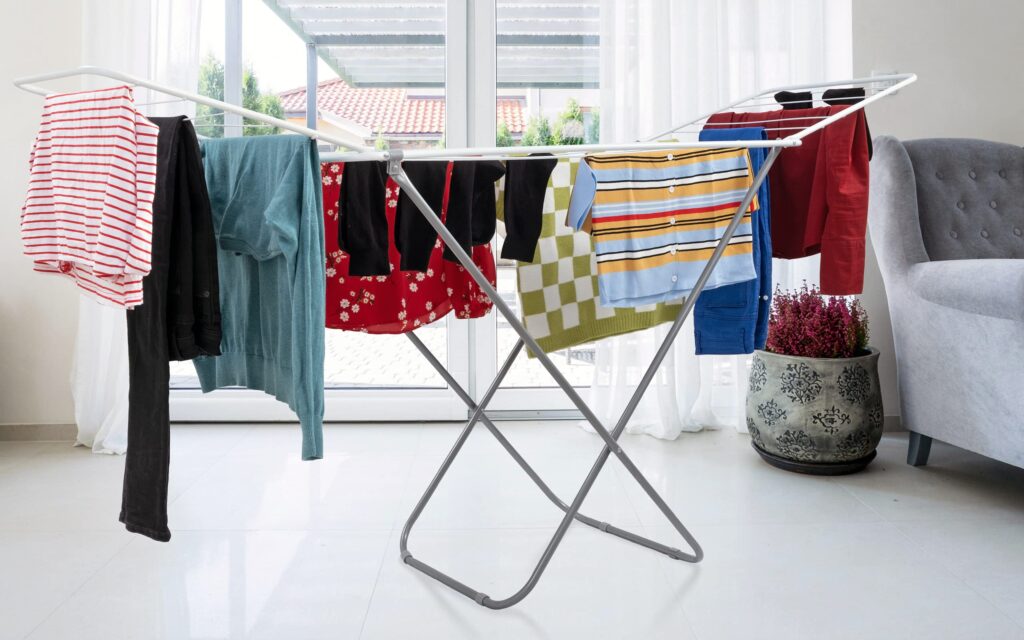

Drying laundry indoors releases around 2 litres of moisture per load into the air, contributing to condensation, damp, and mould. If indoor drying is unavoidable, use a warm ventilated room, dry near rather than on a radiator, and keep a window slightly open. A dehumidifier with a laundry setting is the most effective solution.
Drying laundry indoors is not ideal. It can create excess moisture, condensation, and damp – and poses health risks for people prone to asthma, hay fever, and other allergies. If drying clothes indoors is unavoidable, there are steps that can reduce the impact.

There is also a strong link between indoor drying and mould spore growth.
How Much Moisture Does Drying Laundry Indoors Release?
Drying a single load of washing indoors can release around 2 litres of water into the air. This moisture accumulates slowly and often goes unnoticed, but over time it contributes to condensation on windows, damp patches on walls, and conditions that encourage dust mites and mould.
Alternatives to Drying on a Clothes Airer
In the UK climate, indoor drying is often unavoidable, particularly during colder months. A tumble dryer releases significantly less moisture into the room than an indoor airer, though it comes with higher running costs and energy consumption to consider.
If Drying Clothes Inside Is Unavoidable
Where possible, dry clothes near a radiator rather than directly on one – placing items directly on a radiator traps heat and can increase humidity more rapidly in that immediate area. A warm, sunny room is preferable to a cold, enclosed one.
Keep a window slightly open to allow moisture to escape. Even a small amount of ventilation significantly reduces condensation build-up. In cold or wet weather when opening a window is impractical, leaving the room door open allows moisture to disperse through the house rather than accumulating in one space.
Using a Dehumidifier
If drying laundry indoors is a regular necessity, a dehumidifier is worth considering. Many models include a dedicated laundry drying setting that speeds up drying while extracting excess moisture from the air. This reduces drying time, helps prevent condensation and damp, and lowers the risk of mould growth.
Which type of tumble dryer is best? – Black mould in washing machines
Frequently Asked Questions
Is it bad to dry clothes indoors?
It is not ideal. Drying a single load of washing indoors can release around 2 litres of water into the air. Over time this contributes to condensation, damp, mould growth, and elevated dust mite populations – all of which can worsen symptoms for people with asthma, hay fever, or other respiratory conditions. Where possible, drying outdoors or using a tumble dryer is preferable.
What is the safest way to dry clothes indoors?
Dry near rather than directly on a radiator. Use a warm room with some ventilation – a slightly open window is ideal. If opening a window is not practical, leave the room door open to allow moisture to disperse. A dehumidifier with a laundry setting is particularly effective at reducing moisture while speeding up drying.
Does a tumble dryer solve the problem?
A tumble dryer releases significantly less moisture into the living space than an indoor airer, making it a better option from a damp and air quality perspective. Condenser and heat pump dryers in particular retain most of the extracted moisture internally. The trade-off is higher running costs and energy use compared to air drying. See: which type of tumble dryer is best?
Ask the repair forum
Post the make, model and symptoms and get help from the Whitegoods Help community.