
Practical fridge, fridge-freezer, and freezer guidance from an engineer with over 40 years of hands-on appliance experience. From installation and siting to common faults, official safety notices, and buying advice, the guides below cover everything you need to know about UK refrigeration appliances.
Fridge and Freezer Types: Understanding Your Options
Refrigeration appliances come in a wide range of configurations. Understanding the differences helps you choose the right type for your household, kitchen layout, and the environment where the appliance will be installed.
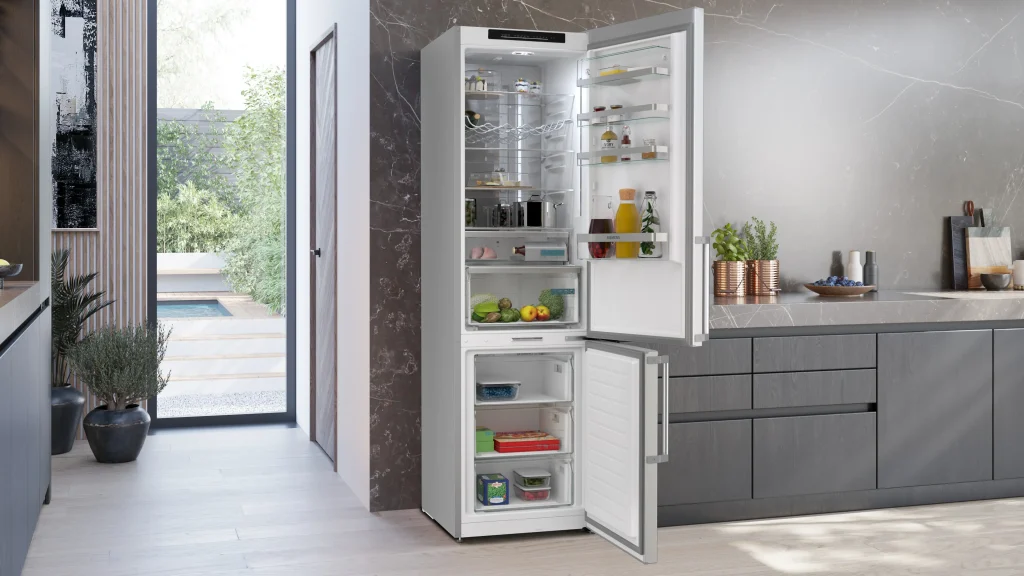
 Fridge freezers
The most common type in UK homes. A single appliance with a fridge section and a separate freezer compartment, available in a wide range of sizes. Frost-free models are more convenient but slightly more expensive to buy and repair than manual defrost versions.
 American-style fridge freezers
Wide side-by-side models with large capacity. They require more space, are heavier to deliver and install, and are more expensive to repair. Read the delivery warning before buying – getting a large American-style model into a typical UK kitchen can be significantly more complicated than expected.
 Larder fridges and upright freezers
Separate fridge-only or freezer-only appliances. Useful when more capacity is needed than a combined fridge freezer provides, or when replacing just one half of an existing setup. Easier to install and replace individually than a combined unit.
 Under-counter and integrated models
Smaller fridges or freezers that fit under a worktop or behind a cabinet door. Integrated models offer a seamless kitchen aesthetic but are more expensive to replace and require cabinetry adjustments when the appliance needs changing.
Installation and Siting
Fridges and freezers must be installed in a suitable environment. They are designed to operate within defined temperature ranges, and placing them somewhere too cold, too hot, or with insufficient ventilation causes them to work harder, use more energy, and fail earlier. Getting siting right from the start is one of the most effective ways to extend the life of a refrigeration appliance.
 Can you put a fridge freezer in a garage?
Why most standard fridge freezers are not suitable for UK garages, particularly in winter, and what to look for if you need a garage-rated model.
 How room temperature affects fridges and freezers
How ambient temperature influences performance and efficiency, and the temperature range within which refrigeration appliances are designed to operate.
 Climate classes explained
What climate class ratings mean, which class you need for different environments, and why it matters when choosing a fridge freezer for an outbuilding or garage.
 How long to leave a fridge or freezer to stand after delivery
Why you should not plug in a new or moved appliance immediately, how long to wait, and what happens if you switch on too early.
 Can you lay a fridge or freezer on its side when moving it?
The risks of transporting a refrigeration appliance on its side or back, and the minimum standing time required before switching on again.
 American-style fridge freezers: delivery warning
Why delivering a large American-style fridge freezer into a typical UK home is more complicated than it looks – read before buying.
Common Faults and DIY Help
Refrigeration appliances require specialist knowledge and equipment to repair properly. Sealed refrigeration systems – the compressor, refrigerant gas, and associated pipework – must only be worked on by a qualified engineer with F-Gas certification. For most faults beyond straightforward component replacements such as a broken shelf, drawer, or door seal, booking an engineer is the safest and most cost-effective route.

Never attempt to repair a compressor, condenser, or anything involving refrigerant gas yourself. These repairs require specialist tools and F-Gas certification. Book a qualified engineer for any fault affecting cooling performance.
What temperature should a fridge be?The correct fridge temperature for food safety, how to check it, and what to do if the temperature is too high or too low.
Frosting up in fridge or freezerWhy frost builds up inside fridges and freezers, what causes excessive frosting, and when it indicates a fault that needs attention.
 Fridge or freezer making strange noises
What different types of noise from a refrigeration appliance mean – from normal operational sounds to noises that indicate a developing fault.
 Water in the base of the fridge
Why water collects at the bottom of the fridge compartment, the blocked drain channel that usually causes it, and how to clear it.
Ice in the base of the freezerWhy ice accumulates in the base of the freezer section, the likely cause, and how to resolve it without replacing the appliance.
 How to save food if the freezer stops working
What to do when a freezer breaks down – how long food stays safe, how to prioritise what to save, and what must be discarded.
 Can I claim compensation for spoiled food?
Whether you can recover the cost of food lost when a freezer breaks down, via home insurance or the Consumer Rights Act.
 Freezer drawer broken
How to source a replacement freezer drawer or basket, and what information you need to find the correct compatible part.
Safety and Safety Notices
Refrigeration appliances have been responsible for some of the most serious domestic fires in the UK, including the Grenfell Tower fire. Unlike other white goods, fridges and freezers run 24 hours a day and cannot be switched off when you go out – making awareness of safety notices and good maintenance habits especially important.

1. Install in an appropriate environment so the appliance is not overworking.
2. Allow plenty of space all around for air to circulate – never push flush against a wall.
3. Regularly pull the appliance out to clean behind it and remove dust and debris from the condenser coils.
4. Do not place items on top that could fall down the back and become wedged against hot components.
5. Check the official safety notices below in case your appliance is affected.
 Beko frost-free fridge freezers – safety notice
Official safety notice covering specific Beko frost-free fridge freezer models. Check whether your model is included.
Hoover frost-free fridge freezers – safety noticeOfficial safety notice covering specific Hoover frost-free fridge freezer models and what action to take.
Hotpoint fridge freezer – safety noticeOfficial safety notice for specific Hotpoint fridge freezer models. Affected model numbers and required action.
Samsung RS21 and RS60 fridge freezers – safety noticeOfficial safety notice covering Samsung RS21 and RS60 series fridge freezers. Check if your model is listed.
CDA PC62SS American fridge freezers – safety noticeOfficial safety notice for the CDA PC62SS American-style fridge freezer model.
LEC TF2304W fridge freezer – safety noticeOfficial safety notice for the LEC TF2304W fridge freezer model.
Caple fridges – safety noticeOfficial safety notice covering specific Caple fridge models identified as carrying a safety risk.
Gorenje fridge freezers – safety noticeOfficial safety notice covering specific Gorenje fridge freezer models. Affected models and required action.
This is not a comprehensive list
These are the safety notices that Whitegoods Help has written about and is not a complete list of every notice ever issued. For the most current information, check the OPSS product safety database on GOV.UK. Register your appliance at registermyappliance.org.uk to be notified directly if a notice is issued for your model. For safety notices on other appliances, see the pages for washing machines, tumble dryers, dishwashers, and cookers and ovens.
Buying Advice
Our buying articles cover the practical issues most retailers do not mention – from climate class requirements to delivery complications and the frost-free versus manual defrost decision.
Frost-free and automatic defrosting: what is the difference?A clear explanation of the difference between frost-free and auto-defrost, which is more convenient, and what each means for running costs and maintenance.
American-style fridge freezers: read this before buyingWhy delivery and installation of large American-style models into typical UK homes is more complicated than it appears, and what to check before ordering.
Can you put a fridge freezer in a garage?What you need to know before siting a fridge freezer in a garage, outbuilding, or other unheated space.
Climate classes: why they matter when buyingWhat climate class ratings mean in practice and why choosing the wrong class for your environment leads to poor performance and early failure.
Spare Parts
Common fridge and freezer spare parts – including door seals, shelves, drawers, thermostats, and light bulbs – are available for most mainstream brands. You will need the full model number from the rating plate, usually found inside the fridge compartment on the rear wall or side panel, to order the correct part. Always verify compatibility before ordering.
Book a Repair
If your fridge or freezer has a fault that needs professional attention, NAC Repair provides same-day and next-day nationwide appliance repairs with transparent pricing and a guarantee on all work carried out. For sealed system faults involving the compressor or refrigerant, always use an engineer with F-Gas certification.
Nationwide fridge and freezer repairs
Same day and next day availability across the UK. Qualified engineers, no hidden charges, all repairs guaranteed.