
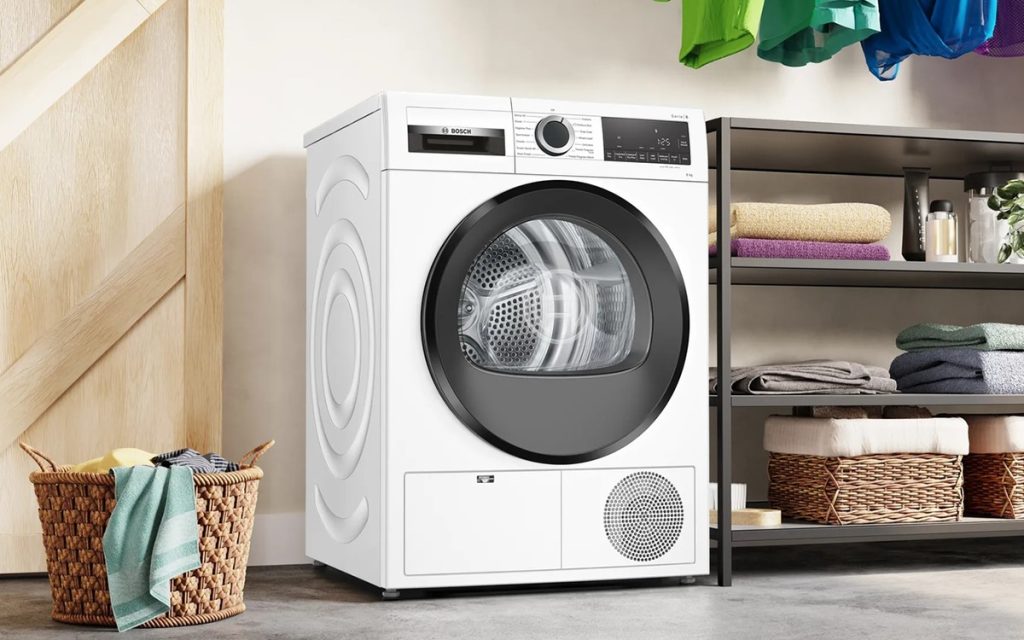
Practical tumble dryer guidance from an engineer with over 40 years of hands-on appliance experience. Whether your dryer has stopped heating, is leaving clothes damp, or you need help choosing between vented, condenser, and heat pump models, the guides below cover everything you need to know.
Tumble Dryer Types: Understanding Your Options
The most important decision when buying a tumble dryer is choosing the right type for your home. Each has genuine practical advantages and real-world drawbacks that matter more than headline energy ratings once you are living with the machine day to day.
 Vented tumble dryers
The simplest and usually cheapest type. Hot, moist air is expelled through a vent hose to the outside. They dry faster than condenser models and have fewer components to fail, but they must be positioned near an exterior wall or window for venting. They cannot be used effectively in a sealed room without ventilation.
 Condenser tumble dryers
Condense moisture from the air into a reservoir tank that is emptied after each use, or drained continuously via a hose. No external venting is required, giving flexibility on placement. They tend to take slightly longer to dry than vented models and require the water tank to be emptied regularly. The condenser unit itself needs periodic cleaning to maintain efficiency.
 Heat pump tumble dryers
Use a heat pump to recycle warm air through the drum, using significantly less electricity than conventional heating elements. They carry a higher purchase price but lower running costs, and they are gentler on fabrics. They take longer per cycle than vented or condenser models. The most energy-efficient option if you dry frequently and have a higher upfront budget.
 Washer-dryers
Combine washing and drying in a single machine. Useful where space is very limited, but with genuine limitations: drying capacity is typically half the wash capacity, drying times are considerably longer than a dedicated dryer, and if either function fails the whole machine is out of action. Best suited to light usage in space-constrained situations.
Installation and Setup
Condenser and heat pump dryers can be placed almost anywhere with a power socket, making installation very straightforward. Vented dryers need a route for the exhaust hose, ideally to an exterior wall through a purpose-made vent kit, though there are situations where using the hose without permanent venting is acceptable for short periods.
Getting the installation right from the start avoids a number of the most common ongoing problems with tumble dryers, particularly damp rooms, poor drying performance, and lint accumulation.
 Can you use a tumble dryer without a vent hose?
When it is and is not acceptable to run a vented dryer without connecting the exhaust hose, and what the consequences are for the room and the machine.
 Can you extend a tumble dryer vent hose?
The practical and performance implications of using a longer vent hose than the standard, and the maximum length that is workable.
 Stacking kits
How stacking kits work, which dryers can be safely stacked on a washing machine, and what to check before buying a kit.
Common Faults and DIY Help
Tumble dryers are generally more difficult to work on than washing machines. Many repairs that are straightforward on a washing machine, such as fitting a drive belt, require almost complete disassembly on a tumble dryer, and some manufacturers use proprietary tools that make belt replacement impossible without specialist equipment.
For this reason, the fault guides below are primarily diagnostic rather than step-by-step repair instructions. Understanding what is most likely causing a fault is still valuable: it tells you whether a repair is worth pursuing, what to tell an engineer, and whether a simple check might resolve the problem before calling anyone out.

Never work on a tumble dryer that is connected to the mains electricity supply. Always disconnect from the wall socket before opening any panels or accessing internal components. Tumble dryers accumulate significant amounts of lint internally, which is highly flammable. If you can see or smell burning, stop using the machine immediately and have it inspected.
 Not drying as well as it used to
The most common causes of gradually worsening drying performance, from blocked filters and condenser units to failing heating elements and faulty thermostats.
 Dryer not heating up
Why a tumble dryer stops producing heat, covering the heating element, thermal cutout, thermistor, and the safety thermostat that trips on overheating.
 Dryer won’t start
Working through the reasons a tumble dryer fails to start at all, from door switch faults and tripped thermal fuses to control board problems.
 Drum not turning
A drum that stops rotating usually means a broken drive belt, a failed motor, or a seized drum bearing. How to identify which is the likely cause.
 Dryer is noisy
Different types of noise from a tumble dryer point to different causes: rumbling suggests worn drum bearings or rollers, squealing suggests a worn belt or idler pulley, rattling suggests a foreign object or loose component.
 Condenser dryer causing condensation in the room
Why a condenser dryer sometimes vents moist air into the room rather than collecting it, and whether the machine or the installation is the cause.
Condenser water container cracked or leakingWhat to do when the water reservoir or door container on a condenser dryer develops a crack or starts leaking, including sourcing a replacement.
Tumble Dryer Safety
Tumble dryers are one of the most common causes of house fires in the UK. The combination of heat, large volumes of flammable lint, and the tendency to leave machines running unattended makes them a genuine fire risk if not properly maintained and used. This is not a theoretical concern: thousands of dryer fires are recorded in the UK every year.
The most important single action you can take is to clean the lint filter after every use. A blocked filter restricts airflow, causes the machine to overheat, and creates a concentrated accumulation of flammable material close to a heat source. Beyond this, annual checks of the internal lint accumulation by a competent engineer significantly reduce long-term risk.

The majority of dryer fires occur when the machine is running without anyone present to respond. Run the dryer only when you are at home, and ideally when you are in or near the room.
 Tumble dryer safety notices
Tumble dryer recall: have you checked yours?
Several major tumble dryer recalls have been issued in the UK in recent years, most notably covering millions of Hotpoint, Indesit, Creda, Swan, and Proline models manufactured between 2004 and 2015. If you own a dryer in this age range from any of these brands, check the manufacturer’s recall website or contact the manufacturer directly with your model and serial number to confirm whether your machine is affected. Do not ignore a recall notice.
Buying Advice
The most important thing most buyers underestimate when choosing a tumble dryer is the running cost. A dryer used several times a week over its lifespan will cost considerably more in electricity than it cost to buy. Choosing between types and models with running costs in mind, rather than just purchase price, often points to a different decision than the headline price comparison suggests.
 Condenser or vented tumble dryer?
A practical comparison of both types covering installation requirements, running costs, drying times, maintenance needs, and which suits different households.
 Running costs of tumble dryers: what you need to know
How much different types of tumble dryer actually cost to run, how to calculate the annual cost for your usage, and which type offers the best long-term value.
 Electrolux Iron Aid tumble dryer review
A hands-on look at the Electrolux Iron Aid, which uses steam to reduce creasing and cut ironing time, and whether the technology delivers in practice.
Spare Parts
Common tumble dryer spare parts such as drive belts, heating elements, door seals, and lint filters are generally available through independent spare parts suppliers for most mainstream brands. You will need the exact model number from the rating plate, usually found inside the door aperture or on the back panel, to order correctly. A drive belt ordered for the wrong model will not fit, and return policies on used parts vary.
Book a Repair
If your tumble dryer has a fault that is beyond a straightforward DIY fix, or if you are not confident working on electrical appliances, a qualified engineer is the right next step. NAC Repair provides same-day and next-day nationwide appliance repairs with transparent pricing and a guarantee on all work carried out.
Nationwide tumble dryer repairs
Same day and next day availability across the UK. Qualified engineers, no hidden charges, all repairs guaranteed.