
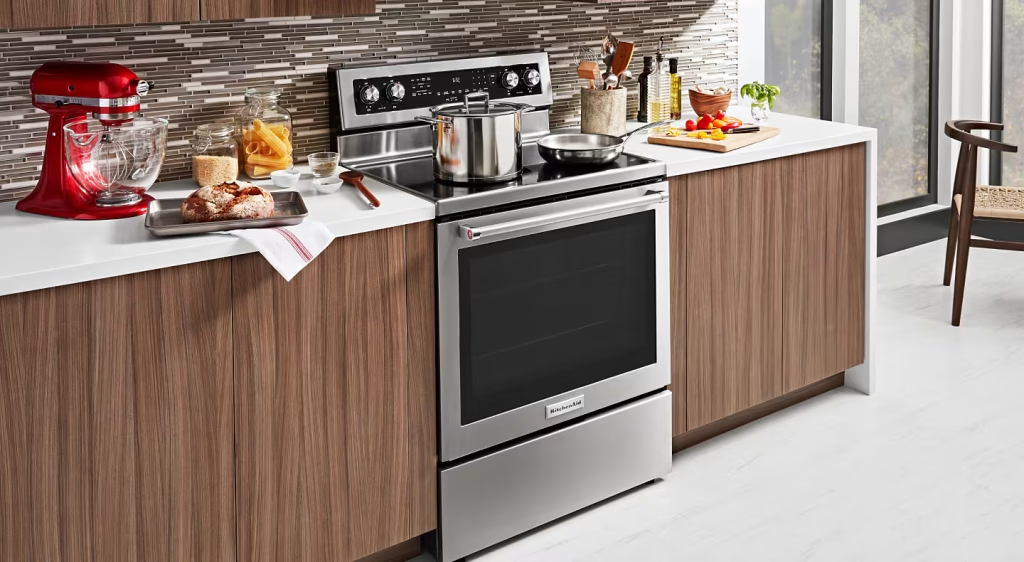
Practical guidance on cookers and ovens from an engineer with over 40 years of hands-on appliance experience. From installation regulations and common faults to official safety notices and spare parts, the guides below cover everything you need to know about gas and electric cookers, ovens, and hobs.

All gas cooker and hob installation, repair, and disconnection work must be carried out by a Gas Safe registered engineer. Electrical cooker installation requires a qualified electrician. Never attempt gas work yourself under any circumstances. If you smell gas, call the National Gas Emergency Service on 0800 111 999 immediately.
Cooker and Oven Types: Understanding Your Options
Choosing the right type of cooker or oven involves decisions about fuel type, installation requirements, and how you cook. Each type has practical implications beyond the headline specifications that matter once you are living with the appliance.
 Freestanding gas cookers
The most common type in UK homes with a gas supply. All gas work including connection, disconnection and repair must be carried out by a Gas Safe registered engineer. Modern models use a bayonet fitting, but this does not make the connection legal to carry out yourself.
 Freestanding electric cookers
Require a dedicated 45-amp circuit and should be connected by a qualified electrician. More straightforward to install than gas and simpler to repair. Fan-assisted models heat more evenly and typically cook faster than conventional ovens.
 Built-in ovens and separate hobs
Integrated into kitchen cabinetry with a separate oven and hob. More expensive to buy and install, but flexible in terms of positioning and offer a cleaner aesthetic. Replacement is more disruptive than a freestanding model as cabinetry may need adjusting.
 Range cookers
Large freestanding cookers with multiple ovens and a wide hob. Available in gas, electric, or dual fuel. They are the most expensive option to buy, install, and repair, and require sufficient kitchen space. Popular for their cooking capacity in larger households.
Installation: What the Law Requires
Cooker and oven installation is more tightly regulated than most domestic appliance installation because it involves high-current electrical connections, gas supplies, or both. Getting this wrong is not just a warranty issue – it is a legal and safety matter.
Electric cookers and ovensElectric cookers typically require a dedicated 45-amp circuit and should be connected by a qualified electrician. Connecting a high-current appliance to an unsuitable circuit is a fire risk. Any work on the electrical installation must comply with Part P of the Building Regulations.
 Gas cookers and hobs
All gas cooker and hob installation, including the initial connection and any disconnection for cleaning or replacement, must be carried out by a Gas Safe registered engineer. It is illegal to work on gas appliances without Gas Safe registration. Read the full guide: gas cooker installation, what is and is not permitted.
Gas Safety: Find a registered engineer
Always verify that any engineer working on a gas appliance is registered with Gas Safe, the official gas registration body for the UK. You can check any engineer’s registration and see which types of gas work they are qualified to carry out. Find and check a Gas Safe registered engineer.
Common Faults and DIY Help
Cookers and ovens have fewer moving parts than washing machines, but they still develop faults – most commonly related to heating elements, thermostats, ignition systems, or electronic controls. The guides below cover the most common electric oven fault, the maintenance routine that prevents many faults in the first place, and the essential prep work before any DIY repair. Gas oven and hob faults must always be assessed by a Gas Safe engineer.

If you smell gas, do not attempt to investigate or repair the appliance yourself. Turn off the gas supply at the meter, open windows and doors, do not use any electrical switches, and call the National Gas Emergency Service on 0800 111 999. Only contact a Gas Safe engineer once the immediate emergency has been resolved.
 Oven not heating up
The most common electric oven fault. Usually caused by a failed heating element, a faulty thermostat, or on a fan oven a failed fan motor. Our guide walks through the diagnostic steps and what an engineer will check before ordering parts.
 How to clean an oven safely
Regular cleaning prevents the burnt-on residues that cause smoke, smells, and uneven cooking. Our guide covers what works, what to avoid (steel wool on enamel, harsh chemicals on self-cleaning surfaces), and how to clean the door glass without damaging the seal.
 3 good pre-repair tips
Three quick checks every owner should make before calling an engineer or ordering parts. Often saves the cost of a callout entirely – and where it does not, helps the engineer narrow the diagnosis straight away.
 DIY repair safety advice
Cooker and oven repair work involves mains electricity and, on gas models, gas supplies. Our DIY safety advice covers how to isolate the appliance correctly, when DIY is appropriate, and when the job must be handed to a qualified engineer.
Safety and Safety Notices
Several cookers and ovens have had official safety notices or product recalls issued after serious safety risks were identified, including fire risks and confirmed deaths. If you own a cooker or oven, check the notices below. If your appliance is listed, stop using it and follow the manufacturer’s instructions immediately.
Safety notices are issued when a genuine risk of fire, gas leak, or injury has been identified in specific models. If your appliance is affected, stop using it immediately.
 Hotpoint and Indesit gas cookers safety notice
Official safety notice covering specific Hotpoint and Indesit gas cooker models. Check if your model is affected and what action to take.
Cookers with a separate grill implicated in 6 deathsA serious safety issue linked to a specific cooker design involving a separate grill, and the investigation into the deaths associated with it.
Built-in ovens safety notice: potential fire riskOfficial safety notice for specific built-in oven models identified as carrying a potential fire risk. Check if your model is included.
Gas leak risk with some Bosch and Neff gas hobsSafety notice covering specific Bosch and Neff gas hob models where a gas leak risk was identified. Affected model numbers and what to do.
Candy Trio safety notice: fire riskOfficial safety notice for the Candy Trio combined appliance, issued because of an identified fire risk in specific models.
This is not a comprehensive list
These are the safety notices that Whitegoods Help has written about and is not a complete list of every notice ever issued. For the most current information on all UK product safety alerts, check the OPSS product safety database on GOV.UK. For safety notices on other appliances, see the pages for washing machines, tumble dryers, dishwashers, and fridges and freezers.
Reviews and Buying Advice
Our reviews and buying articles take an engineer’s perspective – looking at build quality, reliability, and real-world performance rather than headline features and energy ratings.
 Candy U-See ovens
A look at Candy’s U-See oven range, which uses a transparent door design for improved visibility, and how it performs in practice.
 Candy Trio: combined oven, hob, and dishwasher
The Candy Trio combines an oven, hob, and dishwasher in a single unit. A review of whether the concept works in a real kitchen.
 High quality hob only lasted 4 years
A real case study showing how a premium hob failing well before its expected lifespan can still result in a successful consumer rights claim even out of guarantee.
 Gas cooker installation: what is and is not permitted
A clear guide to what UK law requires for gas cooker installation, what a Gas Safe engineer must do, and what owners can and cannot do themselves.
Spare Parts
Common cooker and oven spare parts – including elements, bulbs, door seals, and control knobs – are available for most mainstream brands through independent spare parts suppliers. You will need the exact model number from the rating plate, usually found inside the oven door frame or on the back of the appliance, to order the correct part. Oven elements and bulbs vary considerably between models even within the same brand range.
Book a Repair
If your oven or electric cooker has a fault that needs professional attention, NAC Repair provides same-day and next-day nationwide appliance repairs with transparent pricing and a guarantee on all work carried out. For gas appliance faults, always use a Gas Safe registered engineer.
Nationwide cooker and oven repairs
Same day and next day availability across the UK. Qualified engineers, no hidden charges, all repairs guaranteed. For gas work, always verify Gas Safe registration before any engineer starts work.