
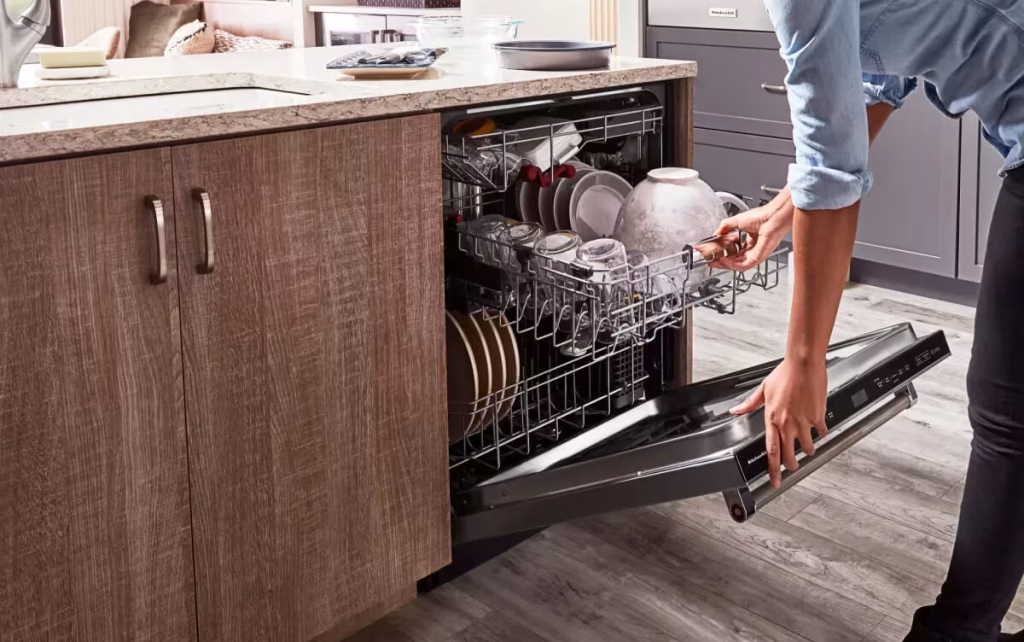
Practical dishwasher guidance from an engineer with over 40 years of hands-on appliance experience. From installation and connection to common faults, error codes, official safety notices, and buying advice, the guides below cover everything you need to know about UK dishwashers.
Dishwasher Types: Understanding Your Options
Dishwashers come in a range of sizes and configurations. Choosing the right type for your household depends on the space available, the number of people you are catering for, and whether you need a freestanding or integrated model.
 Freestanding dishwashers
The most common type. They stand independently, connect to the water supply and drain under the kitchen sink, and can be repositioned if needed. The most practical choice for most households and typically less expensive to repair or replace than integrated models.
 Integrated dishwashers
Built behind a kitchen cabinet door for a seamless finish. They function identically to freestanding models but are more expensive, harder to repair, and more disruptive to replace. When an integrated dishwasher fails, cabinetry may need adjusting to fit a replacement.
 Slimline dishwashers
450mm wide rather than the standard 600mm, with a reduced capacity of around 9 place settings versus 12-14. A good option for smaller households or kitchens where space is limited. Available in both freestanding and integrated versions.
 Table top dishwashers
Compact countertop units with a very small capacity. They connect to the kitchen tap rather than a permanent plumbing connection. Best suited to single-person households with minimal space. Not recommended for frequent use or larger loads.
Installation and Connection
A dishwasher needs to be plumbed in to both the water supply and the drain. Most connect to the cold water supply, but some models allow connection to hot water instead. Getting the installation right from the start avoids a number of common problems with drainage, flooding, and performance.
 Can you connect a dishwasher to the hot water supply?
The pros and cons of hot versus cold fill connection, which dishwashers support it, and why connecting to hot water can damage machines not designed for it.
 How to calibrate for multi-tab detergent
How to set up a dishwasher correctly when using all-in-one multi-tab detergent, and why incorrect calibration affects cleaning results.
Common Faults and DIY Help
Dishwashers are not straightforward to work on yourself – all the components are packed tightly underneath and difficult to access. For most mechanical faults, booking an engineer is the right call. However, many dishwasher problems are not faults at all – they are caused by incorrect detergent use, water softener settings, or loading habits. The guides below help you distinguish between the two before spending money on a call-out.

Dishwashers involve both electricity and water in close proximity. Never attempt internal repairs unless you are confident and competent to do so, and have disconnected the appliance from the mains. If in doubt, book a qualified engineer.
 Not cleaning dishes properly
Blocked spray arms, a dirty filter, incorrect detergent dosing, and low rinse aid are the most common causes – often resolved without calling an engineer.
 Making a whistling noise
What causes a whistling sound during a cycle, the components typically involved, and whether it is likely to be a serious fault.
 Streaks, water drops, and lime spots on dishes
White streaks and spots after a cycle are almost always caused by incorrect rinse aid settings or hard water – not a machine fault.
 Using all-in-one multi-tab detergent
How to use multi-tab detergent correctly, whether it is suitable for all machines, and when separate salt and rinse aid are still needed.
Error Codes
 10 appears in the digital display
What this code means on common dishwasher brands and how to resolve it.
20 appears in the digital displayWhat error code 20 indicates and the most likely causes.
30 displayed in the digital displayWhat error code 30 means on dishwashers that display it and how to diagnose the underlying fault.
 Hotpoint error code E10
What the E10 error code means on Hotpoint dishwashers and the steps to resolve it.
Safety and Safety Notices
Dishwashers are one of the most common causes of domestic appliance fires in the UK. Several manufacturers have issued official safety notices covering specific models with an identified fire risk. If you own a dishwasher made before 2015, check the notices below.

Dishwasher fires are well documented and have caused deaths. Do not run your dishwasher when you are out of the house or asleep. Never leave pets in a room with a running dishwasher.
Dishwasher fires – causes and risksHow dishwasher fires start, which components are most commonly involved, and what you can do to reduce the risk in your home.
 Bosch, Neff and Siemens dishwashers – fire risk
Official fire risk safety notice covering specific Bosch, Neff and Siemens dishwasher models. Check if your model is affected.
Hotpoint DWF and DC dishwashers – fire riskOfficial fire risk notice covering Hotpoint DWF and DC series dishwashers. Model numbers and what to do if affected.
Hotpoint dishwasher – further fire risk noticeA separate Hotpoint dishwasher fire risk notice covering additional models not included in the DWF notice above.
AEG-Electrolux and Zanussi-Electrolux – fire scareFire scare notice covering AEG-Electrolux and Zanussi-Electrolux dishwasher models. Details and affected model numbers.
Electrolux, AEG and Zanussi – safety noticeA further official safety notice covering Electrolux, AEG and Zanussi dishwasher models issued separately from the fire scare notice above.
John Lewis JLDWW1201 dishwasher safety noticeOfficial safety recall notice for the John Lewis JLDWW1201 dishwasher model.
 Detergent capsules – danger to children
The serious risk that dishwasher detergent capsules pose to young children, and how to store and use them safely.
This is not a comprehensive list
These are the safety notices that Whitegoods Help has written about and is not a complete list of every notice ever issued. For the most current information on all UK product safety alerts, check the OPSS product safety database on GOV.UK. For safety notices on other appliances, see the pages for washing machines, tumble dryers, fridges and freezers, and cookers and ovens.
Buying Advice
Our buying articles cover what actually matters when choosing a dishwasher – water and energy efficiency, build quality, noise levels, and the real-world implications of integrated versus freestanding models.
Dishwasher vs washing by hand: which uses more water?The honest answer to a question many people ask before buying a dishwasher, with real figures on water consumption for both methods.
 Which is the best dishwasher detergent?
A comparison of detergent types – powder, tablet, liquid, and all-in-one pods – covering performance, cost, and compatibility.
 Dishwasher fire risks – a real account
A documented real-world case of a dishwasher fire and its consequences – important context for every dishwasher owner and buyer.
Spare Parts
Common dishwasher spare parts – including spray arms, door seals, pump assemblies, baskets, and detergent dispensers – are available for most mainstream brands. You will need the full model number from the rating plate, usually found inside the door on the top or left-hand edge, to order the correct part. Always confirm compatibility before ordering.
Book a Repair
If your dishwasher has a fault that is beyond a simple check or setting issue, a qualified engineer is the right next step. NAC Repair provides same-day and next-day nationwide appliance repairs with transparent pricing and a guarantee on all work carried out.
Nationwide dishwasher repairs
Same day and next day availability across the UK. Qualified engineers, no hidden charges, all repairs guaranteed.