
How to save food if your freezer isn’t working

Keep the freezer door closed – a full freezer can stay frozen for up to 48 hours if left sealed. Check for simple electrical causes first. Food that is still frozen or contains ice crystals is generally safe to keep or refreeze. Food that has fully defrosted above refrigeration temperature should be cooked immediately or discarded. When in doubt, throw it out.

A freezer breakdown can quickly become expensive, but acting fast and correctly can save a significant proportion of your food. This guide sets out exactly what to do, in the right order: keep the door closed, check for simple electrical causes, assess the food safely, rescue what you can, and arrange a repair.
Step one: do not open the freezer door
This is the single most important thing you can do right now. Modern freezers are well insulated and, if left completely closed, can typically keep food frozen for:
 Full freezer
Up to 48 hours if the door is kept shut. A packed freezer acts as a thermal mass, with the frozen food helping keep everything cold.
Half-full freezerAround 24 hours before food begins to thaw, assuming the door stays closed throughout.

Every time you open the freezer door, cold air escapes and warm air enters, accelerating thawing significantly. Only open it when you are ready to take immediate action.
Step two: check for simple electrical causes first
Before assuming the freezer itself has failed, carry out these basic checks. In many cases, a freezer can be restored to working order quickly, and if food is still frozen when it restarts, it is generally safe to keep.
-
Check other appliances nearby. If nothing in the same area has power, the issue is likely electrical rather than a fault with the freezer.
-
Check your fuse board. A tripped circuit breaker is one of the most common causes of a freezer suddenly stopping. Reset any tripped switches and check whether the freezer restarts.
-
Test the socket. Plug another device into the same socket to confirm it has power. If the socket is dead, try a different one.
-
Check the fuse in the plug. A blown fuse is a simple and inexpensive fix. Replace it and try again.
-
Check the freezer controls. Ensure the temperature control has not been accidentally turned down or switched off.
If the freezer restarts after any of these checks, inspect the contents carefully before assuming everything is safe. See the food safety guidance below.
If the appliance still has power but is not cooling, this indicates a mechanical or refrigeration fault. See our fridge freezer fault guides or book a repair engineer.
What food is safe to keep?
UK food safety guidance, including advice from the Food Standards Agency, makes a clear distinction based on the temperature and condition of the food when you assess it.
| Food condition | What to do |
|---|---|
| Still fully frozen – solid, no thawing | Safe to keep or transfer to another freezer |
| Partially thawed – ice crystals still present, below 5°C | Can be safely refrozen or moved to the fridge and used promptly |
| Fully defrosted but still cold – above 0°C but below 5°C | Move to the fridge and use within 24 hours, or cook immediately |
| Fully defrosted and warm – above 5°C | Discard – do not refreeze or eat without cooking thoroughly first |

Harmful bacteria do not always produce obvious signs. If there is any doubt at all about high-risk foods such as raw meat, fish, poultry, or dairy, discard them. Food safety must always take priority over cost.
How do you rescue the contents?
If food is still largely frozen, the priority is to transfer it to a working freezer as quickly as possible. Work through these options in order:
Transfer to another freezer
Friends, neighbours, or family members may be able to offer temporary storage. This is the best option for preserving food safely, particularly for high-value or high-risk items.
Use cool boxes and ice packs
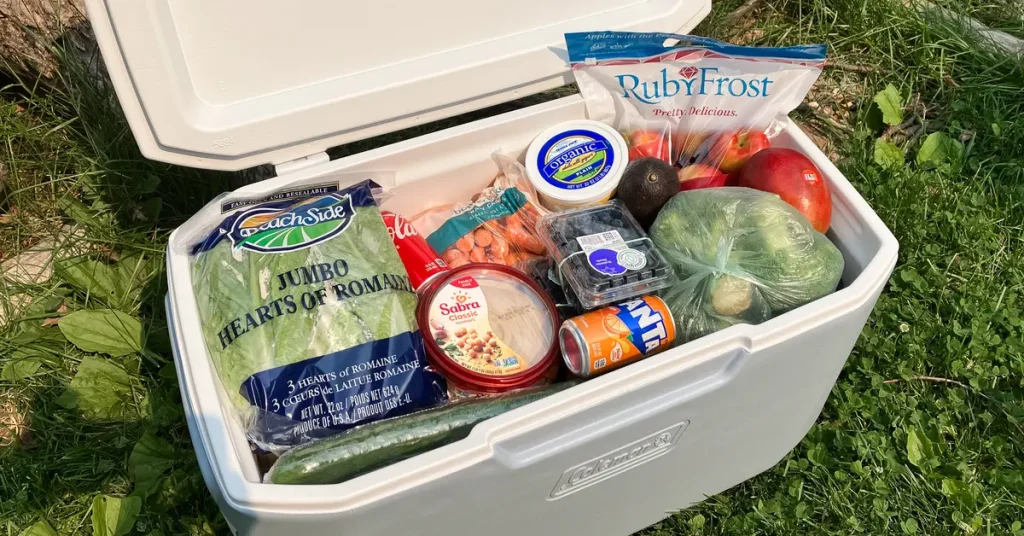
Insulated cool boxes with ice packs can significantly slow down thawing if another freezer is not immediately available. Pack food tightly to maximise insulation and minimise air gaps.
Move partially defrosted food to the fridge
Food that has begun to defrost but is still cold should be moved to a refrigerator and used as soon as possible. Cooking it extends its safe use, but it must not be refrozen unless cooked first.
Prioritise high-value and high-risk items
If space is limited, prioritise raw meat, fish, and poultry, both because of their cost and their food safety risk. Bread, vegetables, and prepared meals are generally lower risk and may be able to wait slightly longer.
Give food away rather than waste it
If you cannot store or use food quickly enough, offering it to neighbours or family is a practical way to avoid unnecessary waste.
What food should you throw away?
 Discard immediately
Any food that has fully defrosted and is no longer cold, particularly raw meat, fish, poultry, and shellfish. Do not refreeze without cooking first.
Do not rely on your senses
Food can look and smell fine but still be unsafe. Harmful bacteria are invisible and odourless. When in doubt, throw it out.
Never refreeze food that has fully thawed unless it has been thoroughly cooked first. Cooking kills harmful bacteria; refreezing raw thawed food does not.
Can you claim for lost food?
Many people assume a freezer breakdown automatically entitles them to compensation for lost food, but this is rarely straightforward.
 Consumer Rights Act 2015
If the freezer developed a fault within a reasonable period, you may have grounds to pursue the retailer or manufacturer. However, compensation for food loss is separate from the appliance remedy and is not guaranteed. See our consumer rights guide for full details.
 Home insurance
Many home insurance policies include freezer contents cover, but limits, excesses, and conditions vary significantly. Check your policy documents and contact your insurer promptly, as many require you to report the claim quickly.
 Warranty cover
If the appliance is still under manufacturer warranty or an extended warranty, contact the warranty provider. Some cover consequential losses such as food spoilage, but this depends entirely on the policy terms.
 Keep records
If you intend to make any kind of claim, document what was lost. Photograph the contents, note the approximate value of items, and keep any receipts. This will support your case regardless of which route you pursue.
For more detail on your rights when an appliance breaks down, read our consumer rights and appliances guide, including information about claiming from retailers and what the law requires.
How do you get the freezer repaired?
Once you have dealt with the food, the next step is diagnosing and fixing the appliance. Common causes of a freezer stopping include a failed thermostat, compressor fault, refrigerant issue, or a blocked defrost drain.
Need help getting your freezer fixed?
Our engineers can diagnose the fault and arrange a repair. Alternatively, browse our fridge freezer guides to investigate the problem yourself.
Frequently asked questions about a freezer breakdown
How long will food stay frozen if the freezer breaks down?
A fully loaded freezer that remains sealed can typically keep food frozen for up to 48 hours. A half-full freezer will last around 24 hours. The key is to keep the door completely closed until you are ready to act – every time it is opened, cold air escapes and thawing accelerates.
Can I refreeze food that has started to thaw?
Food that is still partially frozen and contains ice crystals can generally be safely refrozen. Food that has fully defrosted should not be refrozen unless it is thoroughly cooked first. Cooking kills harmful bacteria; refreezing thawed raw food does not.
Is it safe to eat food that has defrosted in a broken freezer?
It depends on how long it has been defrosted and the type of food. High-risk foods such as raw meat, fish, poultry, and shellfish should be discarded if they have fully defrosted and are no longer cold. Other foods may be safe if cooked promptly. Never rely on smell or appearance alone. If in doubt, throw it out.
Will my home insurance cover the cost of lost food?
Many home insurance policies include freezer contents cover, but limits and conditions vary. Check your policy documents and contact your insurer as soon as possible. Most require you to report losses promptly. Photograph and document everything you are discarding as evidence for your claim.
My freezer is working again after a power cut – is the food safe?
If the freezer restarted quickly and food is still completely frozen with no signs of thawing, it is generally safe to keep. If any items show signs of partial thawing, assess each one individually using the food safety table above. High-risk items that have partially thawed should be used promptly or discarded.
Can I claim compensation from the manufacturer if my freezer breaks and I lose food?
Possibly, but it is not straightforward. Under the Consumer Rights Act 2015, you may have grounds to pursue the retailer if the appliance developed a fault within a reasonable time. However, compensation specifically for food loss is not guaranteed and is often disputed. Read our full consumer rights guide for more information, and also check whether you have cover under your home insurance for spoiled freezer food.
Can I prevent this from happening again in future?
Several practical steps can reduce both the risk and the impact of a future freezer breakdown. Keep your freezer well stocked – a full freezer holds its temperature far longer in a breakdown than a half-empty one. Check the door seal periodically for damage and clean the dust from the condenser coils at the back of the appliance once or twice a year, as restricted airflow shortens compressor life. Check your home insurance policy to confirm whether freezer contents cover is included, and consider keeping a separate inventory or rough photo of contents for any future claim. For older appliances, our repair or replace guide can help you decide whether the freezer is worth keeping.
If in doubt, throw it out. Never rely on smell or appearance alone for raw meat, fish, or poultry.
Ask the repair forum
Post the make, model and symptoms and get help from the Whitegoods Help community.
0 Comments