
LG Washing Machine Error Codes
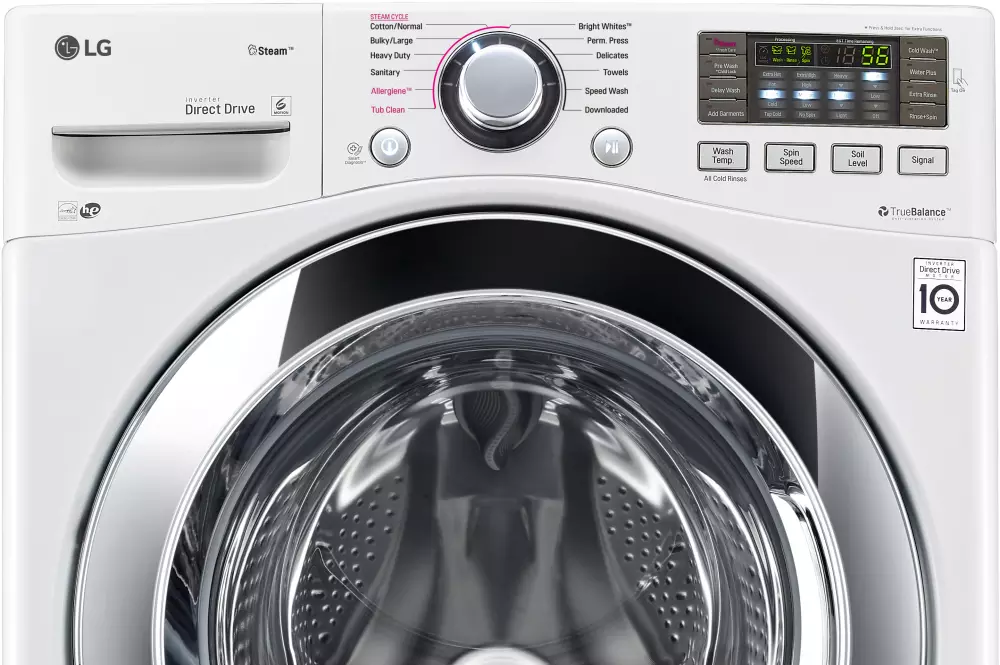

LG washing machines display error codes as two-letter combinations – OE, IE, UE, dE, tE, LE, SE, AE, FE, PE, CE, and CL among others. Older LG models without a digital display use indicator light combinations instead. Find your code in the tables below. Before assuming a component has failed, always work through the simple checks first – the majority of LG error codes are caused by straightforward issues that do not require an engineer.
Codes covered on this page
tCL – Tub clean
OE – Drain
IE – Fill
UE / UB – Unbalanced
dE – Door
tE – Temp sensor
PE – Pressure sensor
LE – Motor locked
SE – Hall sensor
CE – Motor current
AE – Anti-flood
FE – Overflow
PF – Power failure
Older E1 – E6
LED light codes
Why is LG motor error diagnosis different?
Before looking up individual codes, one important technical point applies specifically to LG washing machines – LG uses Direct Drive motor technology on the vast majority of its washing machines. The motor drives the drum directly without a belt, and there are no carbon brushes to wear out. For broader brand context see our LG home appliances overview.
This matters for diagnosis. On conventional washing machines, motor fault codes most commonly point to worn carbon brushes as the first thing to check – see our carbon brushes diagnostics guide for context. On an LG Direct Drive machine, there are no brushes. Motor-related error codes on LG machines (LE, SE, CE) instead point primarily to the hall sensor (rotor position sensor), the inverter control board, or a mechanical obstruction preventing the drum from turning. Understanding this before you start saves significant diagnostic time.

LG Direct Drive washing machines do not have motor carbon brushes. If an LG motor error code leads you to check the motor, do not look for brushes – they are not present. Check the hall sensor (rotor position sensor), the inverter board, and for drum obstructions instead.
Which LG codes are seen most often?
Across the field, four LG code groups account for the majority of fault callouts. Knowing which they are helps narrow the diagnosis before you open anything up.
Drain fault – almost always a blocked filter
Motor locked – most often overloading
Unbalanced – redistribute the load
Fill – tap, hose, or inlet filter
LG washing machine error codes – complete reference
CL – Child lock
| Code | Description | Cause | Fix |
|---|---|---|---|
| CL | Child lock activated | Child lock has been switched on, either deliberately or accidentally. CL is not a fault – it is a feature indicating the controls are locked. | Press and hold the Child Lock button (or button combination as specified in your model’s manual) for approximately 3 seconds to deactivate. On most LG models the Child Lock button is clearly labelled. See our dedicated guide – LG CL error code. |
tCL – Tub Clean reminder
| Code | Description | Cause | Fix |
|---|---|---|---|
| tCL | Tub Clean programme reminder | The machine is prompting you to run the Tub Clean programme to maintain drum hygiene. tCL is not a fault – it is a scheduled maintenance reminder. | Run the Tub Clean programme on an empty drum. The reminder typically appears after a set number of wash cycles. Add a washing machine cleaner or a cup of white vinegar to the drum. Once the programme has completed, the tCL reminder will clear. See our guides on how to clean a washing machine, causes of black mould in washing machines, and washing machine smells. |
OE – Drain fault
| Code | Description | Most likely causes | Check first |
|---|---|---|---|
| OE (also 0E) |
Drain error – machine unable to drain water within the expected time | Blocked pump filter (most common cause). Kinked or obstructed drain hose. Standpipe too high. Foreign object blocking the pump impeller. Failed drain pump motor. Clogged sump hose connecting drum to pump. | Clean the pump filter behind the small access panel at the bottom front of the machine. Place towels and a shallow tray in front before opening as water will flow out. Unscrew the filter anticlockwise, remove all debris including coins and buttons, check the pump cavity for obstructions, and refit firmly. Check the drain hose is not kinked and the standpipe height is no more than one metre from the floor. See our dedicated guide – LG OE error code – plus washing machine not draining and no blockage and still not draining. |
IE – Water fill fault
| Code | Description | Most likely causes | Check first |
|---|---|---|---|
| IE (also 1E) |
Water inlet error – machine cannot fill with water within the expected time (typically 4 minutes from cycle start) | Water tap closed or partially closed. Kinked or trapped inlet hose. Blocked inlet hose filter mesh. Low mains water pressure. Frozen inlet hose or tap in cold weather. Failed inlet valve solenoid. | Confirm the tap is fully open. Straighten the inlet hose. Unscrew the inlet hose from the back of the machine and clean the small mesh filter inside the inlet port. Check household water pressure. In cold weather, confirm the inlet hose and tap have not frozen. If all supply checks are correct and IE persists, the inlet valve solenoid has likely failed. |
UE / UB – Unbalanced load
| Code | Description | Most likely causes | Check first |
|---|---|---|---|
| UE UB |
Unbalanced error – machine has detected the load is not evenly distributed and has paused the spin cycle | Load piled on one side of the drum. Single heavy item (duvet, large towel, jeans) creating an imbalance. Machine not level on all four feet. Worn shock absorbers on older machines allowing excessive drum movement. | Open the door and manually redistribute the laundry evenly around the drum. Adding a towel or two alongside a single heavy item helps balance the load. Confirm the machine is level on all four feet and adjust if necessary. UE is a safety feature, not a machine fault in most cases. Persistent UE on balanced loads may indicate worn shock absorbers requiring inspection. |
dE – Door fault
| Code | Description | Most likely causes | Check first |
|---|---|---|---|
| dE dE1 dE2 |
Door error – machine not detecting the door is properly closed and locked | Door not fully closed. Obstruction in door seal preventing full closure. Failed door interlock mechanism. Wiring fault to the interlock. Broken door handle or catch preventing the door from latching properly. dE1 and dE2 are sub-variants indicating slightly different aspects of the door lock circuit fault on applicable models. | Open and firmly close the door, ensuring no clothing is trapped in the door seal. If the door closes correctly and dE persists, test the door interlock for continuity with a multimeter. Door interlock replacement is a common LG repair – genuine parts available through our spare parts section. See also washing machine door won’t open. |
tE – Temperature sensor fault
| Code | Description | Most likely causes | Check first |
|---|---|---|---|
| tE (also TE) |
Temperature sensor error – thermistor not reading water temperature correctly | Failed NTC thermistor. Loose or corroded wiring connector to the thermistor. Limescale on thermistor causing incorrect readings in hard water areas. Control board fault generating false temperature readings. | Test the NTC thermistor with a multimeter (approximately 30,000 ohms at room temperature, falling as temperature rises). Open circuit confirms failure. Check wiring connectors at both the thermistor and the control board before replacing the component. In hard water areas, run a descaling cycle before testing as limescale on the sensor can produce this code – see how to descale a washing machine. |
PE – Pressure sensor fault
| Code | Description | Most likely causes | Check first |
|---|---|---|---|
| PE | Pressure sensor error – water level sensor not reading correctly | Failed pressure switch or pressure sensor. Blocked or kinked pressure switch hose. Soap suds or residue blocking the pressure chamber. Wiring fault to the pressure sensor. | Check the pressure switch hose – a narrow pipe running from the drum to the pressure switch – for blockage or kinks. Clear any blockage. Run a hot service wash to clear soap residue from the pressure system. If the hose is clear and PE persists, test the pressure switch. Engineer diagnosis is typically required for a failed pressure sensor on LG machines. |
LE – Motor locked
| Code | Description | Most likely causes | Check first |
|---|---|---|---|
| LE LE1 |
Locked motor error – motor cannot operate correctly | Machine overloaded with too much laundry (most common cause). Foreign object (bra underwire, coins, buttons) trapped between the drum and the door seal, jamming the drum. Failed hall sensor (rotor position sensor). Failed inverter control board. Motor winding failure. Excessive suds preventing drum movement. | First, remove items from the drum to reduce the load and try restarting – overloading is the most common cause of LE. Check the drum gap around the door seal for any trapped foreign object. With the machine unplugged, check that the drum rotates freely by hand. If it does not rotate freely, a foreign object is jamming it. If it rotates freely and LE persists, the hall sensor or inverter board requires diagnosis by an engineer. |
SE – Hall sensor fault
| Code | Description | Most likely causes | Check first |
|---|---|---|---|
| SE | Hall sensor error – motor speed sensor not reading correctly | Failed hall sensor (rotor position sensor) on the Direct Drive motor. Wiring fault between the hall sensor and the control board. Failed motor. Failed inverter board. | Check that the drum rotates freely by hand with the machine unplugged. The hall sensor is located on the motor and monitors drum rotation via the rotor’s magnetic field. Testing the hall sensor requires a multimeter and access to the motor assembly – engineer diagnosis is typically required. See our dedicated guide – LG SE error code. |
CE – Motor current error
| Code | Description | Most likely causes | Check first |
|---|---|---|---|
| CE | Current error – motor current exceeding expected level | Machine significantly overloaded with laundry. Foreign object jamming the drum and causing the motor to draw excessive current. Short circuit in the motor winding. Failed PCB or inverter board causing incorrect current supply to the motor. | Remove items from the drum to reduce the load and restart. Check for foreign objects jamming the drum. With the machine unplugged, check the drum rotates freely by hand. If overloading and obstruction checks are clear and CE persists, a motor or board fault requires engineer diagnosis – CE indicates the motor is either being driven too hard or the drive circuit has developed a fault. |
AE – Anti-flood fault
| Code | Description | Most likely causes | Check first |
|---|---|---|---|
| AE | Anti-flood error – water detected in the machine base | Water has entered the base tray of the machine, triggering the flood protection float switch. Possible internal leak sources include a failed door seal, cracked internal hose, leaking pump, or failing inlet valve. Over-sudsing on some models can trigger AE. | Tilt the machine slightly backward to drain any water from the base tray, then return to upright. Investigate the source of the leak – check the door seal for cracks or gaps, and check internal hose connections and the pump housing. Do not use the machine again until the leak source has been identified and resolved. |
FE – Overflow fault
| Code | Description | Most likely causes | Check first |
|---|---|---|---|
| FE | Overflow error – water level in the drum exceeding the expected maximum | Inlet valve not closing fully, allowing water to continue entering after the fill is complete. Failed pressure switch reading the level incorrectly. Excessive suds from too much detergent causing a false high water level reading. | Check whether water is visibly overflowing above the door seal level. If overfilling is confirmed, the inlet valve solenoid has likely failed. If foam is visible, reduce detergent and run an empty rinse-and-spin cycle to clear suds – see too much foam in washing machines. If the level appears normal but FE shows, test the pressure switch. |
PF – Power failure
| Code | Description | Cause | Fix |
|---|---|---|---|
| PF | Power failure – mains power was interrupted during the cycle | The machine detected that mains power was lost and then restored during a cycle. PF is not a machine fault – it is a record of an interrupted power supply. | Switch the machine off at the mains for 30 seconds, then switch back on. Select the programme again and restart. If PF appears frequently, check the wall socket and plug for poor contact or overheating. Ensure the machine is plugged directly into a wall socket rather than an extension lead. |
Older LG models – indicator lights instead of error codes
Older LG washing machines without a digital display communicate faults through combinations of indicator lights rather than alphanumeric codes. The most common light combinations and their meanings are listed below.
| Light combination | Fault equivalent | Meaning |
|---|---|---|
| Pre-wash and main wash lights on or flashing | IE | Water fill timeout – check water supply, tap, inlet hose, and filter |
| Door lock light on or flashing | dE | Door not detected as closed or locked |
| 800, 500, and no spin lights illuminated | OE | Drain fault – clean pump filter first |
Older LG E-number codes
Some older LG washing machines use E-number codes similar to the Zanussi and Electrolux systems. These correspond to the modern two-letter codes as follows.
| Old E code | Modern equivalent | Fault type |
|---|---|---|
| E1 | IE | Water fill timeout |
| E2 | OE | Drain fault |
| E3 | tE / heating issue | Overheating or temperature sensor fault |
| E4 | FE | Overflow – water level too high |
| E5 | dE | Door fault |
| E6 | LE / CE | Clutch or motor fault – drum or motor resistance |
A note on LG Smart Diagnosis
Many modern LG machines include a “Smart Diagnosis” feature that allows the machine to play an audio signal through a phone microphone, intended to help LG support staff identify the fault. In practice the feature has limitations and is not a substitute for hands-on diagnosis. For a fuller view of what Smart Diagnosis can and cannot do see our analysis – LG Smart Diagnosis – advancement or con?
What should you check before calling an engineer?
-
Power cycle the machine. Switch off at the wall socket, wait 60 seconds, and switch back on. Transient error codes including PF (power failure) and some AE and CE codes will clear on restart if the underlying cause was temporary.
-
Clean the pump filter (OE drain code). This resolves the majority of LG OE drain errors. The filter is behind the small access panel at the bottom front of the machine. Place towels and a tray in front before opening. Unscrew anticlockwise, remove all debris including coins, check the pump cavity, and refit firmly.
-
Check the water supply (IE fill code). Confirm the tap is fully open. Straighten the inlet hose. Clean the small mesh filter inside the inlet port at the back of the machine. In cold weather check the hose has not frozen.
-
Redistribute the load (UE unbalanced code). Open the door, spread the laundry evenly around the drum, and restart the spin. This is not a machine fault – it is a safety feature operating correctly.
-
Reduce the load (LE, CE motor codes). Remove items from the drum to reduce the load and retry. Overloading is the most common cause of LE and CE on LG machines and is resolved instantly by removing laundry.
-
Check the door closes correctly (dE door code). Open and firmly close the door, ensuring no clothing is caught in the seal. If the code persists, test the door interlock.
-
Check for drum obstruction (LE, CE motor codes). With the machine unplugged, check the drum rotates freely by hand. Check the gap between the drum and door seal for any trapped foreign object such as a bra underwire.
-
Check for excess suds (FE, AE codes). If foam is visible through the door glass, reduce detergent and run an empty rinse-and-spin cycle to clear it. Use only HE-rated detergent in modern LG machines.
Safety notice
Always switch the machine off at the wall socket and unplug it before accessing the pump filter, opening any panels, or checking drum rotation. Never work on any electrical components with the machine connected to the mains. Isolate the water supply at the inlet valve before disconnecting hoses.
A washing machine combines mains electricity with mains water – two of the most unforgiving things in a domestic setting. If you are not confident with electrical work or have any doubt about a fault, book a qualified engineer rather than attempt the repair yourself. See our full DIY appliance repair safety guide.
LG has been subject to a UK safety notice affecting certain Direct Drive washing machine models – see our coverage of the LG Direct Drive safety notice. Always check the OPSS product safety database for any active recall on your specific model and serial number before continuing to use the machine.
Can you fix an LG error code yourself?
 Straightforward to check or fix yourself
- Deactivating child lock (CL)
- Running Tub Clean programme (tCL)
- Cleaning the pump filter (OE drain code)
- Checking and cleaning the inlet hose filter (IE fill code)
- Redistributing the load (UE unbalanced)
- Reducing the load to resolve overloading (LE, CE motor codes)
- Checking drum rotation for obstruction (LE)
- Power cycling to clear PF and transient codes
- Checking the door closes correctly and replacing the door interlock (dE)
- Clearing excess suds (FE on some models)
 Requires an engineer or advanced competence
- Hall sensor (rotor position sensor) testing and replacement (SE, LE persisting)
- Inverter board diagnosis and replacement (LE, CE persisting)
- Pressure sensor testing (PE)
- Anti-flood investigation and leak source repair (AE)
- Inlet valve replacement (IE, FE persisting)
- NTC thermistor replacement (tE if basic checks do not resolve)
- Any fault that persists after all basic checks have been completed
LG error code pointing to a fault you cannot resolve?
If basic checks have not cleared the fault, a qualified engineer is the right next step. We cover LG washing machine repairs nationwide with genuine LG spare parts available for most models including door interlocks, drain pumps, thermistors, and hall sensors.
LG dedicated fault code guides
We have individual deeper-dive guides for the most common LG error codes and Direct Drive topics.
 LG OE error code
Drain fault – blocked pump filter, drain hose, and pump motor checks.
 LG SE error code
Hall sensor / motor speed sensor fault on Direct Drive motors.
 LG CL code
Child lock – how to identify and deactivate the lock.
LG Direct Drive safety noticeUK safety notice affecting certain LG Direct Drive washing machine models.
 LG Smart Diagnosis review
What LG Smart Diagnosis actually does, and where it falls short in real fault-finding.
 LG brand hub
Background on LG as an appliance brand, the Direct Drive platform, and product positioning.
Looking for error codes on a different brand?
We have error code references for the other major UK washing machine brands. Use the cards below to jump to the relevant guide.
 Samsung error codes
Samsung washing machine error code reference – the other major Korean brand.
Bosch error codesBosch washing machine E-code reference.
AEG error codesAEG Lavamat E-code reference.
Beko error codesBeko / Blomberg / Grundig error code reference.
Hotpoint error codesHotpoint F-code and flashing-light fault reference.
Indesit error codesIndesit F-code reference – identical to Hotpoint codes.
Want to learn appliance fault diagnosis properly?
Reading error codes is one of the more basic skills in appliance repair. For anyone wanting to develop the full skill set – whether for a career, a side business, or just to repair their own appliances confidently – the NAC National Training Centre offers practical hands-on courses and online training delivered by working engineers.
Frequently asked questions about LG washing machine error codes
What does OE mean on an LG washing machine?
OE is a drain error – the machine has been unable to drain water within the expected time. In the majority of cases this is caused by a blocked pump filter rather than a failed pump. The filter is behind the small access panel at the bottom front of the machine. Cleaning it takes around five minutes and resolves most OE faults without any parts or engineer visit. If the filter is clear and OE persists, check the drain hose for kinks and confirm the standpipe height, then test the drain pump motor. See our dedicated guide – LG OE error code.
What does LE mean on an LG washing machine?
LE stands for Locked Motor Error – the motor cannot operate correctly. The most common cause is overloading – too much laundry prevents the motor from developing enough torque to spin the drum. Remove some items from the drum and retry. If LE appears on a lightly loaded machine, check the drum rotates freely by hand with the machine unplugged, and check for a foreign object trapped between the drum and door seal. If the drum rotates freely and LE persists, the hall sensor (rotor position sensor) or the inverter board is the likely cause – both require engineer diagnosis. Note that LG uses Direct Drive motors without carbon brushes, so brush wear is not relevant to LG LE diagnosis.
What does IE mean on an LG washing machine?
IE indicates a water inlet error – the machine cannot fill with enough water within the expected time (typically 4 minutes from cycle start). Check that the tap supplying the machine is fully open, that the inlet hose is not kinked, and that the small mesh filter inside the inlet port at the back of the machine is clean. In cold weather, the inlet hose or tap may have frozen. If the water supply is confirmed correct and IE persists, the inlet valve solenoid has likely failed and requires replacement.
What does SE mean on an LG washing machine?
SE indicates a hall sensor error – the motor speed sensor is not reading drum rotation correctly. The hall sensor (also called the rotor position sensor) monitors the movement of the Direct Drive motor’s rotor through its magnetic field. A failed hall sensor, a wiring fault between the sensor and the control board, or a failed inverter board can all produce the SE code. Check that the drum rotates freely by hand with the machine unplugged. Engineer diagnosis is typically required to test and replace the hall sensor. See our dedicated guide – LG SE error code.
What does UE mean on an LG washing machine?
UE indicates an unbalanced load – the machine has detected that the laundry is unevenly distributed and has paused the spin cycle for safety. Open the door and redistribute the laundry evenly around the drum before restarting the spin. Adding a towel alongside a single heavy item such as a duvet or jeans helps balance the load. UE is a safety feature, not a machine fault in most cases. If UE appears consistently on balanced loads, check that the machine is level on all four feet, and on older machines check whether the shock absorbers are worn.
What does CL mean on an LG washing machine?
CL indicates that the child lock is activated. It is not a fault. The child lock prevents any button presses from changing or stopping the programme, which is useful if children might interfere with the machine. To deactivate it, press and hold the Child Lock button for approximately 3 seconds. The exact button varies by model – consult your machine’s manual or look up your model number with “child lock deactivate” if you are unsure which button to use. See our dedicated guide – LG CL code.
Does LG use carbon brushes in its washing machines?
No. LG uses Direct Drive motor technology on the vast majority of its washing machines, which means the motor drives the drum directly without a belt and without carbon brushes. This is a significant advantage in terms of reliability, as there are no brushes to wear out. However, it means that LG motor error codes (LE, SE, CE) should not lead you to check for carbon brushes – they are not present. Motor-related faults on LG Direct Drive machines are typically related to the hall sensor, the inverter board, or a mechanical obstruction.
Ask the repair forum
Post the make, model and symptoms and get help from the Whitegoods Help community.
0 Comments