
Hotpoint dishwasher error code E10
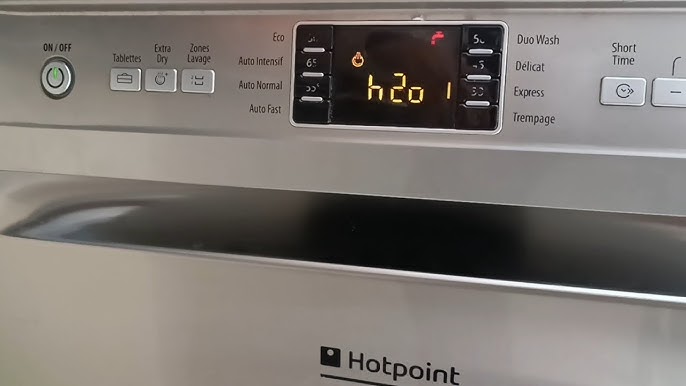

E10 appears at the start of the cycle – suspect a fill fault: check the tap is open, the hose is not kinked, and water pressure is adequate. E10 appearing at the end of the cycle or during draining – suspect a drain fault: check for a blockage in the filter or pump. Dishwasher internal repairs are difficult due to how they are designed – a blocked filter is a straightforward check, but pump or control faults are better left to an engineer.

Error E10 on a Hotpoint dishwasher indicates a timeout on either the fill or drain stage. The machine has waited longer than the allowed time for the dishwasher to reach the correct water level (fill timeout) or to empty fully (drain timeout). The position in the cycle where the error appears helps identify which is the cause.
What E10 Means
The E10 error is a timeout code. The dishwasher’s control system allows a fixed time for each fill and drain stage. If the correct water level is not detected within the fill time limit, or if the machine has not fully emptied within the drain time limit, E10 is displayed and the cycle aborts.
 E10 at the start of the cycle – fill timeout
The machine is not reaching the correct water level in time. Causes include the water supply tap being closed or partially closed, a kinked or blocked fill hose, a faulty inlet valve, or water pressure too low to fill within the allowed time.
 E10 during or at the end of the cycle – drain timeout
The machine is not emptying the water within the allowed time. Causes include a blocked pump filter, a blockage inside the pump itself, a pump fault, or a drain hose that is blocked or incorrectly routed causing a siphoning issue.
Checking for a Fill Fault
-
Confirm the water supply tap is fully open.
The tap supplying the dishwasher fill hose must be fully open. Quarter-turn lever taps can appear fully open but be partially seized internally – caked with lime or mineral deposits inside, or with a cracked plastic lever that looks open but is not. If in doubt, turn the tap fully and check again.
-
Check the fill hose for kinks.
A kinked fill hose restricts water flow significantly. This is most likely if the dishwasher has recently been moved or reinstalled. Gently pull the machine forward and check the hose runs smoothly without sharp bends.
-
Check the water flow at the tap.
Self-tapping saddle clamp taps (the type that pierce a small hole in the copper pipe) often provide a restricted flow – particularly on older fittings where the pierced hole is small or partially blocked with scale. If one of these taps is fitted, replacing it with a proper isolation valve may significantly improve flow rate. Hot water taps are particularly prone to scaling inside.
-
Check water pressure is adequate.
If water pressure throughout the property is low, the dishwasher may not fill within the programmed time limit. See our guide on low water pressure and appliances.
Checking for a Drain Fault
Dishwasher drain faults are more difficult to diagnose and access than washing machine drain faults due to the way dishwashers are designed internally. Start with the checks that can be done without disassembly:
-
Clean the dishwasher filter. Most dishwashers have a removable filter assembly in the base of the wash cabinet. Remove and rinse it under running water. Fine debris, glass fragments, and food residue can accumulate here and restrict flow to the pump. This is the most common and most accessible cause of drain problems. -
Check the drain hose routing. The drain hose must form a high loop or connect to a standpipe at a sufficient height to prevent siphoning – where water drains back into the machine after the pump stops. If the drain hose hangs low without a loop, water may be siphoning back, triggering the drain timeout on the next cycle. -
If the filter is clear and hose routing is correct – consider an engineer. A blocked or failed pump, a blocked pump chamber, or a control fault causing the drain signal to not register are the remaining causes. Accessing the dishwasher pump typically requires removing panels and working in a confined space. These repairs are better handled by a qualified engineer.
Unlike washing machines, where the pump filter is accessible at the front and the pump itself is relatively straightforward to reach, dishwashers are designed in a way that makes internal component access considerably more difficult. Glass and crockery fragments frequently end up inside the pump and jam the impeller – this is a common cause of E10 drain timeouts – but reaching the pump to clear it requires significant disassembly on many models.
Book a Repair
Related Guides
 Won’t Fill With Water
Detailed fill fault diagnosis for washing machines – much of the same logic applies to dishwasher fill problems.
 Won’t Drain Water
Drain fault diagnosis – pump, filter, blockages, and electrical causes explained.
 Dishwasher Not Cleaning Properly
Why dishes come out dirty or with residue – detergent, spray arm, and water temperature causes.
 Low Water Pressure and Appliances
How low mains pressure affects fill timeouts – and what to do about it.
Frequently Asked Questions
What does E10 mean on a Hotpoint dishwasher?
E10 is a timeout error – the machine did not complete a fill or drain stage within the allowed time. If it appears at the start of the cycle, the dishwasher is not filling correctly (check the water supply tap, hose, and pressure). If it appears during or at the end of the cycle, the dishwasher is not draining correctly (check the filter and drain hose routing first).
Can I fix a Hotpoint dishwasher E10 error myself?
The accessible checks – confirming the tap is open, checking for a kinked hose, cleaning the filter, and checking the drain hose routing – can all be done without specialist knowledge. If none of these resolve the error, the fault is likely inside the pump or with a control component. Dishwasher internal repairs are difficult due to how the machines are designed, and an engineer is the appropriate route for pump or control faults.
Why would a self-tapping tap cause a dishwasher fill error?
Self-tapping saddle clamp taps pierce a small hole in the copper pipe rather than using a proper valve fitting. The hole is often small and can become partially blocked with limescale over time, especially on hot water connections. The resulting restricted flow may be sufficient for normal tap use but insufficient to fill a dishwasher within the machine’s programmed fill time limit, causing E10.
Ask the repair forum
Post the make, model and symptoms and get help from the Whitegoods Help community.
0 Comments