
Appliance Running Costs
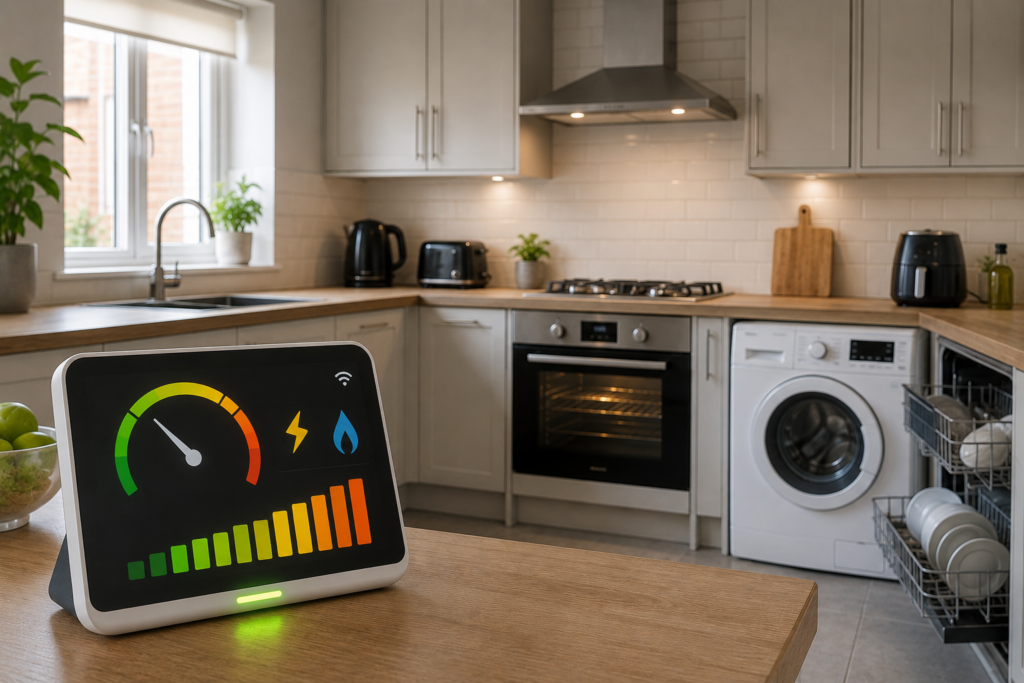

A typical UK household spends approximately £350 to £600 a year running its major domestic appliances at current Ofgem-capped electricity rates. The split varies sharply by appliance: a fridge-freezer runs continuously and costs £55 to £110 a year, a washing machine running 200 cycles a year costs £40 to £100, a conventional tumble dryer running 150 cycles a year costs £155 to £210, a heat pump dryer running the same loads costs £60 to £95, and a dishwasher running 250 cycles a year costs £55 to £100. The largest savings available to most households come from upgrading the tumble dryer to a heat pump model and adjusting habits on the washing machine (cooler cycles, full loads). This guide breaks down the honest cost of running every common UK domestic appliance, with the assumptions and energy rates clearly stated so the figures stay useful as prices change.
How appliance running costs are calculated
Before getting to the numbers for each appliance, it is worth understanding where they actually come from. A lot of the running cost figures published by retailers, energy companies, and lifestyle sites are produced without showing their working, which makes them difficult to verify and impossible to update as prices change. The figures in this article are calculated from three openly-stated inputs that you can check against your own situation.

The unit cost of electricity
The current UK Ofgem price cap for the standard variable tariff is approximately 27p per kWh at time of writing. Households on fixed tariffs, dual-fuel deals, or Economy 7 may pay slightly less or more. The calculations in this article assume 27p per kWh as a representative figure. If your unit rate is significantly different, scale the figures accordingly. The Ofgem cap is reviewed quarterly, so always check the current figure for the most accurate calculation.

The energy consumption of the appliance
Every modern appliance sold in the UK carries an energy label that includes its annual or per-cycle energy consumption in kWh. For older appliances without clear labels, manufacturers publish technical specifications online by model number. The figures in this article use typical mid-range modern appliance consumption rates. Older or less efficient models use more; the most efficient new models use less.

How often you actually use it
The single biggest source of variation between published running cost figures and what your bill actually says is usage. A family of four runs roughly twice as many wash cycles per year as a single-person household. A household that uses the tumble dryer daily spends three times what an occasional user spends. The figures in this article use representative UK usage patterns from manufacturer research, but your actual cost depends entirely on your actual use.
The simple formula behind every figure below is: (kWh per use) × (uses per year) × (electricity unit cost) = annual running cost. With that, you can recalculate any of the figures in this article for your own household and your own tariff at any time.
Running cost at a glance — every common UK appliance
The table below gives a single-glance reference for typical annual running costs at current UK electricity rates and representative household usage. The ranges reflect the difference between an entry-level model used moderately and a premium-efficient model used the same way, or between a low-use household and a high-use household using the same model.
| Appliance | Typical annual cost | Notes |
|---|---|---|
| Fridge-freezer (combined) | £55 to £110 | Runs 24/7, energy rating matters most |
| Chest or upright freezer (standalone) | £40 to £80 | Chest freezers typically cheaper than upright |
| Washing machine | £40 to £100 | Heavily dependent on cycle temperature |
| Conventional tumble dryer (vented or condenser) | £155 to £210 | The single most expensive appliance to run |
| Heat pump tumble dryer | £60 to £95 | Around half the running cost of conventional |
| Dishwasher | £55 to £100 | Eco cycles meaningfully cheaper than intensive |
| Electric oven | £40 to £80 | Depends heavily on cooking frequency |
| Gas hob | £55 to £90 | Gas unit rates lower than electric per kWh |
| Ceramic electric hob | £80 to £130 | Less efficient than induction |
| Induction hob | £55 to £85 | Most efficient electric option |
| Microwave | £15 to £30 | Short use, modest power, cheap overall |
| Kettle | £25 to £50 | Depends heavily on use frequency |
| Toaster | £8 to £15 | Brief use, low overall cost |
| Cooker hood / extractor | £5 to £15 | Used only while cooking |
| Dehumidifier (continuous use) | £40 to £120 | Use pattern matters enormously |
| Air fryer | £25 to £60 | Replaces electric oven for many meals |
Add the typical figures together for a representative household, and the total comes to approximately £450 to £650 a year for the appliance portion of the electricity bill. The remaining electricity costs (lighting, electronics, hot water if electric, heating if electric) sit on top of that. For a typical UK household, kitchen and laundry appliances account for around 20% to 30% of the total electricity bill.
Washing machines: what determines the cost
Washing machine running costs are dominated by two factors: how often you wash, and at what temperature. Spin speed and load size matter, but less than people often think.

Temperature is the biggest single factor
The vast majority of a washing machine’s electricity goes into heating the water. A 30°C cycle uses approximately 0.5 to 0.7 kWh per load (around 14p to 19p per wash). A 40°C cycle uses 0.7 to 1.0 kWh (around 19p to 27p). A 60°C cycle uses 1.2 to 1.6 kWh (32p to 43p). A 90°C cycle can use 2.0 kWh or more (54p+). The difference between routinely washing at 40°C and routinely washing at 30°C is around £20 to £30 per year for a typical household, with no meaningful difference in cleanliness for normal everyday laundry. See our piece on washing at 30 degrees for the full case.
Cycle frequency matters as much as cycle cost
UK households run an average of approximately 135 cycles per person per year, according to industry research. A single-person household therefore averages around 135 cycles, a couple around 270, a family of four around 540. The annual running cost scales directly with the number of cycles. Running full loads less often is one of the most effective ways to reduce the total.

Energy rating matters but less than people assume
The shift from B-rated to A-rated washing machines saves typically 10% to 15% on energy use per cycle, which translates to around £5 to £15 per year for a typical household. The saving is real but modest compared to the impact of cycle temperature and frequency. A cheap A-rated machine washed at 60°C costs more to run than a B-rated machine washed at 30°C. Habits matter more than the label.

Water cost on top of electricity
Water and sewerage charges add a small but real cost on top of the electricity. A typical UK washing machine uses around 50 litres per cycle. At average UK water charges, that adds approximately £5 to £15 a year on top of the electricity for a typical household. Higher-efficiency machines use less water; older machines significantly more.
For the full picture on washing machine lifespan and what to look for when buying, see our editorial on what a washing machine should really cost and how long one should last.
Tumble dryers: where the biggest savings are available
Tumble dryers are the single most energy-hungry domestic appliance in most UK homes. They are also the appliance where households have the largest opportunity to reduce their running costs significantly, either by changing how they dry or by upgrading the dryer itself.
| Dryer type | kWh per typical 7kg load | Cost per load (at 27p/kWh) | Annual cost (150 loads) |
|---|---|---|---|
| Vented dryer | ~3.5 to 4.5 kWh | 95p to £1.20 | £155 to £210 |
| Conventional condenser dryer | ~3.5 to 4.5 kWh | 95p to £1.20 | £155 to £210 |
| Heat pump dryer | ~1.5 to 2.0 kWh | 40p to 55p | £60 to £85 |
The difference between a conventional dryer and a heat pump dryer at the same usage pattern is approximately £100 a year for a moderate household, and considerably more for households running 200+ cycles per year. For households running the dryer daily, the heat pump upgrade typically pays back its upfront price premium in approximately two to three years through electricity savings alone. See our detailed buying guide on heat pump vs vented vs condenser tumble dryers.
For households considering whether to use a tumble dryer at all, our piece on drying clothes without a tumble dryer covers the heated airer and dehumidifier alternatives, with the costs and trade-offs compared honestly.
Fridges and freezers: the appliance that never stops
Refrigeration is the only major appliance category that runs 24 hours a day, 365 days a year. That continuous operation means even a small efficiency difference between models translates into a meaningful annual cost difference. It also means a poorly-maintained fridge can quietly add a significant amount to the annual electricity bill without any obvious symptom other than the bill going up.

Location matters as much as the model
A fridge in a cold room (utility, garage, conservatory in winter) uses less electricity than the same fridge in a warm kitchen near the oven. The compressor cycles less often. Conversely, a fridge in direct sunlight, next to the oven, or in an overheated kitchen uses significantly more electricity than the manufacturer’s stated figure. Climate class designation matters: see our guide on fridge climate classes and the related piece on putting a fridge-freezer in a garage.

Frost buildup wastes energy
A freezer with significant ice or frost buildup uses considerably more electricity than the same freezer when properly defrosted. Frost acts as insulation, forces the compressor to work harder, and reduces usable storage space. A freezer that has not been defrosted for a year or more is often using 20% to 30% more electricity than it should. Defrosting once or twice a year reverses this. See our guide on frosting up in fridge or freezer.

Door seal condition
A perished or damaged door seal lets cold air escape and warm air in, forcing the compressor to run almost continuously. A simple check: close a thin piece of paper or a £5 note in the door seal and try to pull it out. If it slides out without resistance, the seal is not sealing properly. Replacement seals are inexpensive and a straightforward repair.

Ventilation around the unit
Fridges and freezers expel heat from coils at the back or underneath. If those coils are pushed too close to a wall, blocked by accumulated dust, or restricted by a tight cabinet fit, the unit overheats and the compressor runs longer. Pulling the unit out once a year and vacuuming the back coils is a free maintenance task that meaningfully reduces electricity use over time.
For households where the fridge-freezer is more than 10 to 12 years old and the annual electricity bill has been creeping up, the calculation between continuing to run the old unit and replacing it with a current A-rated model often favours replacement on running cost grounds alone. A modern A-rated fridge-freezer typically costs £55 to £80 a year to run. An older B or C-rated model can cost £130 to £180 a year. The £100 a year difference recovers a £400 to £500 replacement appliance cost in four to five years.
Dishwashers, ovens, hobs, and microwaves
The middle tier of appliance running costs is occupied by cooking and dishwashing appliances. The cost-per-use is modest, but cumulative annual use adds up.

Dishwashers
A modern A-rated dishwasher uses approximately 0.8 to 1.2 kWh per cycle, costing around 22p to 32p per wash at current rates. A household running the dishwasher daily therefore spends approximately £80 to £120 a year. The eco cycle uses meaningfully less electricity than the standard or intensive cycle (typically 30% to 40% lower) and remains effective for normal loads. Older or less efficient dishwashers can use 1.5 to 2.0 kWh per cycle, costing around 40p to 55p per wash and pushing annual costs above £140.

Ovens
A typical fan oven uses approximately 1.5 to 2.5 kWh per hour of cooking. At 27p/kWh, an hour of oven cooking costs around 40p to 67p. A household using the oven for an average of 30 to 60 minutes per day spends approximately £40 to £80 a year. Pyrolytic self-cleaning ovens consume considerably more electricity during the cleaning cycle (typically 3 to 5 kWh per cycle) but are used only occasionally. See our wider guides on cookers and ovens.

Hobs (gas, ceramic, induction)
Hob running costs depend heavily on the type. Gas hobs are cheap per kWh but inefficient (40% to 55% of the energy actually heats the pan). Ceramic electric hobs are more efficient (around 70% to 75%) but use electricity at a higher unit rate. Induction is the most efficient (85% to 90%) and the cheapest electric option to run despite the higher unit rate. Typical annual costs for moderate use sit at £55-£90 (gas), £80-£130 (ceramic), and £55-£85 (induction). See our gas vs electric hobs buying guide for the full comparison.

Microwaves and air fryers
Both microwaves and air fryers are significantly cheaper per use than ovens because they cook with less energy and over a shorter time. A microwave running for 10 minutes uses approximately 0.15 kWh (around 4p). An air fryer running for 20 minutes uses approximately 0.5 kWh (around 14p). For households who use these instead of the oven for smaller meals, the savings over a year are meaningful. An air fryer used five times a week instead of the oven typically saves £50 to £80 a year, and recovers its purchase cost in one to two years.

Kettles
A kettle uses approximately 0.1 kWh to boil 1 litre of water, costing around 2.7p. A typical UK household boils the kettle roughly five times a day on average. Annual running cost is approximately £25 to £50. Boiling only as much water as you need (rather than filling the kettle every time) reduces this cost meaningfully. The single biggest kettle-related saving is descaling regularly in hard water areas, because limescale on the heating element forces the kettle to run longer to boil the same volume of water.
The “always on” hidden cost: standby power
Most modern appliances draw a small amount of electricity even when they are not actively in use. This standby or “vampire” load is individually small but cumulatively meaningful across a household.
A typical modern washing machine, dishwasher, oven, microwave, or extractor hood draws somewhere between 1 and 5 watts on standby. Across a year, that is 9 to 44 kWh per appliance, or £2 to £12 per appliance per year. For a household with six or seven such appliances, the cumulative standby load can reach £30 to £60 a year — a non-trivial amount for power that does no useful work.
The simplest mitigation is to turn off appliances at the socket when not in use, particularly overnight. Our existing piece on turning off appliances at the socket covers the practical detail, including which appliances genuinely save energy this way and which are better left plugged in (such as fridges, freezers, and any appliance with an internal clock or scheduled feature).
The biggest savings households actually make
If you put aside the small individual habits and look at where the biggest annual savings are realistically available to a typical UK household, four interventions account for almost all of the meaningful difference.

1. Upgrade the tumble dryer to heat pump
Annual saving for a moderate user: £100 to £130. For a heavy user: £150+. This is the single largest available appliance saving for households who currently use a conventional vented or condenser dryer regularly. Payback on the upfront price premium is typically two to three years for moderate users, faster for heavy users.
2. Wash routinely at 30°C instead of 40°C or 60°C
Annual saving: £20 to £40 for a typical household. This is the single largest available washing machine habit saving, with no equipment cost, no upfront investment, and no meaningful loss of cleaning performance for normal everyday laundry. See our piece on washing at 30 degrees.
3. Replace an old fridge-freezer if it is more than 12 years old
Annual saving: £50 to £100 against an older B or C-rated unit. Refrigeration is the only appliance that runs 24/7, so efficiency improvements compound across the year. A modern A-rated fridge-freezer recovers its purchase cost in efficiency savings over approximately five years against an older unit, plus avoids the increasing repair costs of an aging appliance.
4. Use an air fryer instead of the oven for smaller meals
Annual saving: £50 to £80 for households who cook small meals frequently. The air fryer is one of the few genuinely useful new appliance categories of recent years in pure running-cost terms. For households cooking for one or two, or making smaller portions, replacing oven use with air fryer use for several meals a week produces a meaningful, low-effort saving.
Together, these four interventions can reduce a household’s appliance running cost by £200 to £350 a year, depending on the starting point. That is enough to cover the running cost of two or three other appliances in the household, or to fund a £400 to £500 appliance upgrade over two years of savings.
Energy ratings: what the labels actually mean
UK and EU energy labels are designed to make appliance efficiency comparisons easier at the point of purchase. The system was updated significantly in 2021, when the previous A+++ to G scale was rescaled to a more demanding A to G scale. This is the source of significant consumer confusion.

The current A to G scale (post-2021)
Under the rescaled label, A is the most efficient and G is the least. The bar has been raised: an appliance that was rated A+++ under the old system would typically rate B, C, or even D under the new system. This is not a downgrade of the appliance itself, only a recalibration of the scale to leave headroom for future efficiency improvements. An A-rated appliance under the new label is genuinely high-efficiency.

Reading the energy figure on the label
The label includes a kWh per year figure (for refrigeration) or kWh per 100 cycles (for washing machines, dryers, and dishwashers). This is the figure to use for calculating actual running cost, not the headline letter grade. Two A-rated washing machines can have different kWh figures and therefore different running costs.

Important caveat
The energy figure on the label is calculated using a standardised test cycle that may not match how you actually use the appliance. For washing machines and dishwashers, the test cycle is the eco programme, which most households do not use as their default. Actual real-world energy use is typically 20% to 40% higher than the label figure. The label is good for comparing one appliance against another but not for predicting your specific running cost exactly.
For the full picture, see our existing guide on the difference between energy ratings.
Economy 7, time-of-use tariffs, and when to actually run appliances
For households on Economy 7 or modern smart-meter time-of-use tariffs, when appliances are run matters as much as how often or at what setting. The off-peak electricity rate is typically 30% to 50% cheaper than the peak rate, which means moving high-energy appliance use into the off-peak window produces a meaningful saving.

Off-peak hours
Economy 7 off-peak hours are typically midnight to 7am, although the exact window varies by supplier and region. Modern time-of-use tariffs can have additional off-peak slots during the day. Check your tariff details for the specific hours and rates.

The safety question
Running washing machines, dishwashers, or tumble dryers overnight while the household is asleep is a real fire risk and a recognised insurance concern. Several UK insurers explicitly require that appliances are not left running unattended overnight, and a fire originating from an overnight wash cycle can lead to claim disputes. See our piece on is it safe to leave the washing machine on for the full analysis. The honest answer is that the saving available from running off-peak is meaningful, but running unattended overnight is not the right way to capture it.

Delay-start as a safer alternative
Most modern washing machines, dishwashers, and dryers include a delay-start function that allows you to load the appliance and schedule it to run at a specific later time. Setting the cycle to start at, say, 6am means it finishes during the morning when the household is awake but captures most of the off-peak window. This is the practical compromise between capturing the cheaper rate and avoiding the overnight-unattended risk.
Common questions about appliance running costs
Several recurring consumer questions about appliance running costs have answers that are worth setting out clearly because the conventional wisdom is often wrong or oversimplified.

Is it cheaper to wash up by hand than use a dishwasher?
Almost certainly not, for a full load. A modern dishwasher uses around 0.8 to 1.2 kWh and 10 to 14 litres of water per cycle. Washing the same volume of crockery by hand under a running tap typically uses 30 to 60 litres of water and a comparable or higher amount of energy (heated water from the household system). The dishwasher wins on both electricity and water for full loads. For very small loads (a few cups or plates) the dishwasher loses, but the comparison is rarely as favourable to handwashing as folklore suggests.
Is it cheaper to use an air fryer or a microwave instead of the oven?
For smaller portions, yes. Both air fryers and microwaves cook faster and with less total energy than an oven for small meals. For larger family meals or roasting, the oven remains the most practical choice and the per-portion cost is similar. The biggest saving is from replacing oven use with air fryer use for one-pan and small-portion meals, where the saving is typically 60% to 80% of the equivalent oven cost.
Should I leave the heating on low all day or only when I need it?
Strictly speaking this is a heating question rather than an appliance question, but it comes up so often it’s worth noting: the consensus from independent energy researchers (the Energy Saving Trust among them) is that for a typical UK home, heating only when you need it costs less than leaving the heating on a low constant temperature, contrary to a once-common myth. Smart thermostats and accurate scheduling capture most of this saving without any household discomfort.
Does turning the fridge off when on holiday save money?
For a one or two week holiday with food still inside, no. Re-cooling a full fridge from room temperature uses more electricity than running it normally for two weeks would. For longer absences with the fridge fully emptied and cleaned, yes — but the saving is modest (around £2 to £4 a week) and needs to be balanced against the practical hassle of emptying and the risk of unplugging an old fridge and finding it does not restart reliably.
The Whitegoods Help view
The running cost question is one of the most common appliance questions consumers ask, and one of the worst answered across the wider market. Most of the figures published online are either calculated using out-of-date electricity prices, presented without showing the underlying assumptions, or produced by sellers (energy companies, retailers, manufacturers) with a commercial interest in either dramatising the costs (to sell upgrades) or downplaying them (to sell the appliance).
The honest answer is that running costs are calculable, predictable, and meaningfully affected by household habits as well as by appliance choice. For most households, the biggest savings available are not from buying new high-efficiency appliances (although that helps) but from changing how the existing appliances are used: washing at lower temperatures, running full loads, drying outdoors when possible, defrosting freezers regularly, and using the right appliance for each cooking task rather than reaching for the oven by default.
For households making appliance replacement decisions, the running cost difference between modern A-rated efficient appliances and older mid-rated ones is real but typically smaller than the marketing suggests. The exception is the tumble dryer category, where the gap between heat pump and conventional dryers is genuinely transformative. For most other categories, the running cost difference is one factor among many to weigh against the upfront price, the expected lifespan of the new appliance, and the residual life and repair cost of the existing one. See our editorial on repair or replace for the full decision framework.
Other ways we can help
If you are weighing whether to repair an aging appliance or upgrade to a more efficient model, our nationwide repair service and spare parts service support households making informed decisions on both routes. For specific buying guides covering tumble dryers, hobs, and the wider integrated vs freestanding decision, see our buying guides linked throughout this article.
Frequently asked questions
How much does it cost to run a washing machine in the UK in 2026?
For a typical UK household running 200 cycles a year, approximately £40 to £100 a year at current Ofgem-capped electricity rates. The cost depends heavily on the cycle temperature (30°C cycles cost around 14p to 19p, 40°C around 19p to 27p, 60°C around 32p to 43p) and on whether you run full or partial loads. Washing routinely at 30°C instead of 40°C saves a typical household around £20 to £30 a year with no meaningful loss of cleaning performance for normal laundry.
How much does it cost to run a tumble dryer?
A conventional vented or condenser dryer costs approximately £155 to £210 a year to run 150 cycles. A heat pump dryer costs approximately £60 to £95 a year for the same usage. The difference (around £100 a year) is the single largest available appliance running cost saving for households who currently use a conventional dryer regularly. See our heat pump vs vented vs condenser tumble dryer buying guide.
How much does it cost to run a fridge-freezer?
A modern A-rated fridge-freezer typically costs £55 to £80 a year to run continuously. An older B or C-rated model can cost £130 to £180 a year. The difference is large because fridges run 24/7, so even small efficiency differences compound across the year. A fridge-freezer more than 12 years old is often a sensible candidate for replacement on running cost grounds alone.
How much does it cost to run an oven for an hour?
Approximately 40p to 67p per hour at current rates, depending on the oven type and temperature. A typical fan oven uses 1.5 to 2.5 kWh per hour. Pyrolytic self-cleaning cycles consume considerably more (3 to 5 kWh per cycle) but are used infrequently. Households that use the oven for around 30 to 60 minutes per day spend approximately £40 to £80 a year on oven running cost.
How much does it cost to run an air fryer?
An air fryer running for 20 minutes uses approximately 0.5 kWh and costs around 14p at current rates. Households who use an air fryer five times a week instead of the oven for smaller meals typically save £50 to £80 a year compared to oven-only cooking. The air fryer recovers its purchase cost in approximately one to two years of regular use.
How much does standby power cost in a typical household?
Standby power (the electricity drawn by appliances when not actively in use) typically costs a UK household £30 to £60 a year across all appliances combined. Individual appliance standby loads are typically 1 to 5 watts, equivalent to £2 to £12 per appliance per year. Turning appliances off at the socket overnight captures most of this saving, with the exception of fridges, freezers, and appliances with scheduled features.
Is it cheaper to wash by hand than to use a dishwasher?
For full loads, no. A modern dishwasher uses less water and energy than handwashing the same volume of crockery under a running tap. Handwashing only wins for very small loads (a few items). The “dishwashers are wasteful” perception is largely a holdover from older, less efficient machines and is not accurate for modern appliances used at full load.
How does the energy label letter (A, B, C) translate to actual cost?
For washing machines, the difference between A and B-rated models of the same size is typically £5 to £15 a year. For fridge-freezers, the difference between A-rated and C-rated models is £40 to £80 a year. For tumble dryers, the difference between A-rated heat pump and C-rated conventional models is £100 to £130 a year. The biggest letter-to-cost gap is in tumble dryers. The smallest is in dishwashers and washing machines. See our existing guide on the difference between energy ratings for the full detail.
Will turning my fridge off when I go on holiday save money?
For short holidays (one to two weeks) with food still inside, no. Re-cooling the fridge after unplugging uses more electricity than just running it normally. For longer absences with the fridge fully emptied and cleaned, the saving is modest (£2 to £4 a week) and needs to be balanced against the practical hassle and the risk of an old fridge not restarting reliably after being turned off.
What’s the single biggest saving I can make on appliance running costs?
For households currently using a conventional tumble dryer regularly, upgrading to a heat pump dryer saves approximately £100 to £150 a year and pays back the upfront price premium in two to three years. For households not using a conventional dryer (or considering an upgrade later), washing routinely at 30°C instead of higher temperatures saves £20 to £40 a year for no upfront cost. Most other savings are smaller and incremental.
Ask the repair forum
Post the make, model and symptoms and get help from the Whitegoods Help community.
0 Comments