
Holes in clothes after washing
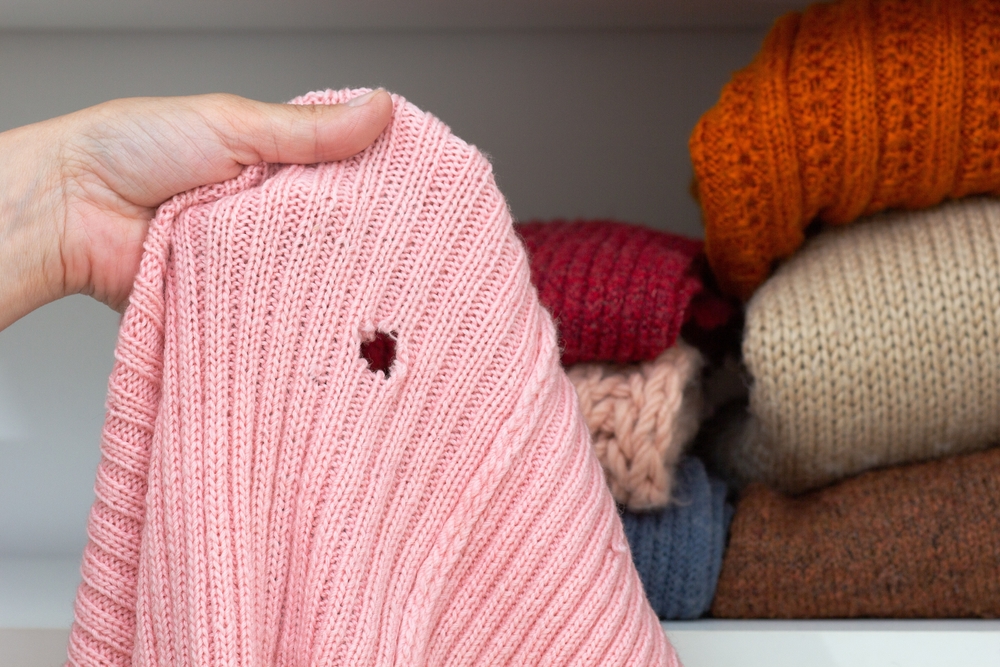

Holes in clothes after washing have many possible causes — including trapped bra underwires, damaged drum paddles, incorrect spin speeds, overloading, biological detergent on delicate fabrics, moths, deodorant damage, and physical wear from everyday use. The washing machine is often blamed but is frequently not the cause. Working through the likely causes systematically is the best approach.
Finding small holes in clothes after washing is a surprisingly common and frustrating problem. The washing machine is usually blamed first — but in many cases it is not the cause. This guide covers every likely explanation and what to do about each one.
Is the Washing Machine Actually to Blame?
The washing machine is the natural first suspect when holes appear in laundry — but experience and extensive user reports show that the cause is often elsewhere. Holes appear across different brands, drum sizes, and spin speeds, which makes a single machine design fault unlikely in most cases.
 Machine IS likely the cause if…
Holes appear on items that have never been worn, appear suddenly after a specific wash, or a scraping noise can be heard during the cycle — suggesting an obstruction inside the drum.
 Machine probably NOT the cause if…
Holes appear only on worn items, only in one specific location (e.g. front lower hem of t-shirts), or have been occurring across multiple different machines over time.

Buy a new t-shirt of the type getting holes but never wear it. Wash it regularly with your normal laundry. If it develops holes, the machine or wash process is likely the cause. If it stays intact, the holes are almost certainly caused by something happening during wear — not washing.
What Is Causing the Holes? — All the Possible Causes
This is one of the most common causes of unexplained holes and damage in a washing machine. Bra underwires — particularly from cheaper bras — can escape during the wash and become trapped beneath the drum or around the drum seal.
As the drum rotates, the wire’s sharp ends snag fabric as it is forced through the small holes in the drum during spin. The damage can be intermittent, making the cause difficult to identify. You may or may not hear a faint metallic scraping sound when the drum turns.

Always wash bras in a dedicated bra washing bag to prevent underwires escaping into the machine. Many bras should actually be hand-washed only — check the care label.
The plastic paddles inside the drum — also called lifters or baffles — tumble the laundry during the wash. If a paddle becomes cracked, loose, or broken, it can expose a sharp edge or a gap where fabric can snag and tear.
Inspect the drum paddles carefully. Run a nylon stocking stretched over your hand slowly around the inside of the drum and over each paddle — if it snags anywhere, that is a potential cause of damage. Replacement drum paddles are available from appliance spare parts suppliers.
Coins, clips, and other small metal objects left in pockets are a frequent cause of drum damage. They can dent or scratch the drum surface, or create elongated holes with sharp edges that snag fabric during the wash and spin.
Carefully examine the entire drum surface for dents, scratches, or sharp edges. Use the nylon stocking test — run it slowly around every part of the drum interior. Any snag point is a potential source of fabric damage. Always check and empty all pockets before loading the machine.
Spinning delicate or lightweight fabrics at too high a speed can cause or worsen holes, particularly in thin or loosely woven materials. Many people use the default cotton programme for all laundry without adjusting the spin speed.
As a general guide, maximum recommended spin speeds vary significantly by fabric type:
| Fabric type | Max recommended spin speed |
|---|---|
| Cottons | Up to 1400 rpm |
| Minimum iron / synthetics | Up to 1200 rpm |
| Denim | Up to 900 rpm |
| Woollens | Up to 1200 rpm |
| Delicates | Up to 600 rpm |
| Shirts | Up to 600 rpm |
| Silks | Up to 400 rpm |
Always check your machine’s instruction book and the garment’s care label — these are the definitive guides for your specific appliance and fabric.
Different fabric types have different maximum load capacities — not just by weight but by the nature of the fabric. Overloading forces garments into tight contact with each other and the drum, increasing friction and the risk of snagging.
Many people are unaware that a full drum of heavy denim or shirts is effectively overloading the machine even if it is within the stated kg capacity. Read our guide on how to load a washing machine correctly, and see our article on laundry coming out badly creased — overloading is a common cause of both problems.
Open zips, metal buttons, and buckles can catch on neighbouring garments during tumbling, creating pulls and holes — particularly in thinner fabrics. As a precaution, always zip up zips fully before washing, and turn garments with metal fastenings inside out. Placing delicate items in a mesh laundry bag adds an extra layer of protection.
Biological detergents contain enzymes that break down protein-based stains. These same enzymes can damage protein-based fabrics — particularly wool and silk — causing holes and weakening the fabric structure over time.
If holes are appearing specifically in woollen or silk garments, switching to a non-biological detergent is strongly advisable. Read our full guide on how biological detergents can damage woollens and silks.
Antiperspirant deodorants — particularly those containing aluminium-based compounds — can gradually weaken fabric fibres over time, especially in the underarm area. Spraying deodorant while wearing a garment can also affect the fabric at the front and sides. This is easily overlooked as a cause because the damage accumulates slowly and is not immediately visible.
If holes are consistently appearing in the same location on garments, consider whether chemical contact during wear could be responsible before attributing the fault to the washing machine.
Moth larvae cause small, irregular holes that can look very similar to washing machine damage — particularly in natural fibres such as wool, cashmere, and cotton. The holes are typically scattered randomly across the garment rather than concentrated in one area.
If garments have been stored for a period before the holes were noticed, or if the holes appear on multiple stored items, moths or other insects should be considered as a possible cause.
This is one of the most frequently overlooked causes — particularly for small holes that appear at the front lower hem of t-shirts. Repeated friction against jeans waistbands, belts, and kitchen worktops (granite and stone worktops are particularly abrasive) gradually weakens fabric in specific areas.
If holes consistently appear in the same location on garments — particularly the lower front — this is a strong indicator that the cause is wear during use rather than damage during washing.
How to Check Your Drum for Obstructions
If you suspect an obstruction inside the machine — such as a trapped bra wire or coin — carry out this inspection before running another wash.
-
Unplug the machine. Always disconnect from the mains before inspecting the drum.
-
Use the nylon stocking test. Stretch a nylon stocking over your hand and run it slowly around the entire interior of the drum — including the drum holes, the door seal, and each paddle. Any snag point indicates a sharp edge or obstruction.
-
Inspect the paddles carefully. Check each drum paddle for cracks, looseness, or exposed sharp edges. A damaged paddle should be replaced — see our spare parts guide.
-
Check the drum surface. Look for dents, scratches, or elongated drum holes with sharp edges caused by coins or foreign objects.
-
Listen during the next wash. A faint metallic scraping or tapping during the cycle — particularly on spin — is a strong indicator of a trapped object such as a bra wire.
-
If an obstruction is suspected but cannot be reached, a qualified engineer can access the drum properly without risking further damage. Book a repair engineer if needed.
How to Prevent Holes in Clothes During Washing
- Always check and empty pockets before loading — coins and keys are a common cause of drum damage
- Wash bras in a dedicated bra bag to prevent underwires escaping
- Zip up all zips fully and turn garments with metal fastenings inside out before washing
- Use mesh laundry bags for delicate items, thin fabrics, and anything with embellishments
- Select the correct programme and spin speed for each fabric type — check care labels
- Do not overload the drum — leave adequate space for garments to move freely
- Use non-biological detergent for wool, silk, and other delicate natural fibres
- Regularly inspect drum paddles and the drum interior for damage or sharp edges
Frequently Asked Questions
Why do small holes keep appearing in my t-shirts?
The most common cause of small holes specifically in the lower front area of t-shirts is physical friction during everyday wear — against jeans waistbands, belts, or abrasive kitchen worktops such as granite. Try the new t-shirt test: wash an unworn shirt repeatedly and see if it develops holes. If it does not, the cause is almost certainly wear during use rather than the washing machine.
Could a trapped bra wire be causing holes in my laundry?
Yes — this is one of the most frequent causes of unexplained fabric damage. A bra wire that has escaped into the machine can lie beneath the drum and snag garments during spin. Use the nylon stocking test to check the drum interior for sharp points or snag spots. You may also notice a faint metallic scraping noise during the cycle. Always wash bras in a protective bra bag.
Can biological detergent cause holes in clothes?
Yes — but only in specific fabrics. The enzymes in biological detergents break down protein-based stains, but they can also damage protein-based fibres such as wool and silk. If holes are appearing in woollen or silk garments, switch to a non-biological detergent. Read our full guide on biological detergents and fabric damage.
How do I know if my drum paddle is causing the damage?
Stretch a nylon stocking over your hand and run it slowly around the inside of the drum, paying close attention to each paddle. If the stocking snags on a paddle, that paddle has a sharp edge or crack that could be damaging your laundry. Replacement paddles are available — see our spare parts page to find the correct part for your machine.
Can moths cause the same kind of holes as a washing machine?
Yes — moth larvae create small, irregular holes that can look almost identical to mechanical damage from a washing machine, particularly in wool, cashmere, and cotton. If holes appear on stored garments, are scattered randomly across the fabric, or are concentrated on multiple stored items, moths are a likely cause rather than the washing machine.
My washing machine manufacturer says it is my fault — what should I do?
This is a common response from manufacturers, who often suggest incorrect spin speeds or overloading as the cause. Before accepting this explanation, work through the checks in this article — particularly the nylon stocking drum inspection and the unworn t-shirt test. If you can demonstrate that you are using the machine correctly and damage is still occurring, you have stronger grounds to pursue a complaint. Read our guide to consumer rights and faulty appliances for further advice.
See photos of holes in clothes from our readers
Our holes in clothes photo gallery shows examples of all types of damage — from bra wire snags to drum paddle tears to wear damage — which may help you identify the cause in your own laundry.
Stretch a nylon stocking over your hand and run it slowly around the drum interior. Any snag point is a potential cause of fabric damage.
Ask the repair forum
Post the make, model and symptoms and get help from the Whitegoods Help community.
290 Comments
Grouped into 265 comment threads.
0 replies Diane: It says exactly that in the actual article, and in many of the comments. It just goes to show it's all too long for people to read now :)
0 replies PEACHA you make perfect sense and its the first explanation that I have heard that hits it head on! It cannot be the machine because the holes wouldn't be concentrated in one area. Your posting makes sense and clearly explains the reason those darn holes are appearing in all of our shirts. EVERYONE READ PEACHA'S POSTING...IT IS CORRECT! I"m done wondering now. Thanks Diane
PEACHA you make perfect sense and its the first explanation that I have heard that hits it head on!
It cannot be the machine because the holes wouldn’t be concentrated in one area. Your posting makes sense and clearly explains the reason those darn holes are appearing in all of our shirts. EVERYONE READ PEACHA’S POSTING…IT IS CORRECT! I”m done wondering now.
Thanks
Diane
1 reply Last June I purchased a Hotpoint Aqualtis AQ9F492UV Washing Machine, it can take a 9kg load. I am also having the same problem with pinhead sized holes appearing in my clothes. Curiously, mainly in the front/abdomen region. It is a real mystery. We are all experiencing this problem yet there doesn't seem to be one solution to prevent this happening. I will try a slower spin and also put the more delicate items in the washing bag. Having said that I have never considered a cotton tee shirt to be regarded as a 'delicate' item. I have been using different Hotpoint machines for over 30 years, until recently I have never experienced this problem before. As other postings mention this is an extremely infuriating and expensive situation.
Last June I purchased a Hotpoint Aqualtis AQ9F492UV Washing Machine, it can take a 9kg load. I am also having the same problem with pinhead sized holes appearing in my clothes. Curiously, mainly in the front/abdomen region. It is a real mystery. We are all experiencing this problem yet there doesn’t seem to be one solution to prevent this happening. I will try a slower spin and also put the more delicate items in the washing bag. Having said that I have never considered a cotton tee shirt to be regarded as a ‘delicate’ item. I have been using different Hotpoint machines for over 30 years, until recently I have never experienced this problem before. As other postings mention this is an extremely infuriating and expensive situation.
Likely replying to Hazel
Hazel, IT”S NOT THE WASHING MACHINE! It’s the fabric and friction. The holes only appear below the belly button area, counter height, belt or pant height, counters, belts, pants.. Either the processing of the fabric has changed and/or its due to fibers that are too thin – when there’s any amount of friction there, little holes appear. Bring or send the shirts back to where you purchased them and have them deal with the manufacturer. Make a stink, but don’t blame Hotpoint or Miele or any of em’. It’s the companies making the shirts we need to be complaining to. Perhaps putting pressure on both industries.. will encourage them to fix the problem. We’re spending good money on clothing that look awful sometimes in the first wearing, let alone within a year. It’s ridiculous.
0 replies I recently changed soap powder and myself and my daughter have discovered holes in both our families clothes, so it must be the detergent and not the machines because it's two different washing machines and we discovered the holes in our laundry at the same time. We are not putting too much detergent in the wash cycle or put our clothes on the wrong washing cycle. What sticks in my mind is years ago a washing powder manufacturer changed their recipe for their washing powder and as soon as people used this product it was ruining their clothes.
I recently changed soap powder and myself and my daughter have discovered holes in both our families clothes, so it must be the detergent and not the machines because it’s two different washing machines and we discovered the holes in our laundry at the same time. We are not putting too much detergent in the wash cycle or put our clothes on the wrong washing cycle. What sticks in my mind is years ago a washing powder manufacturer changed their recipe for their washing powder and as soon as people used this product it was ruining their clothes.
0 replies I have a Miele washing machine and wash all my T shirts on the minimum iron wash at 900 RPM. My first thought seeing holes appearing in my sons T shirts at the front was his belt. However, it then started happening to several of my T shirts. It is not on all of them and is randomly picking designer T shirts or very cheap T shirts. Having read all the comments, I have come to no real conclusion except that I have washed clothes, worn seatbelts, stood by granite worktops, used different conditioners and not had holey T shirts until the last 2 -3 years so something has changed but cannot work out what.
I have a Miele washing machine and wash all my T shirts on the minimum iron wash at 900 RPM. My first thought seeing holes appearing in my sons T shirts at the front was his belt. However, it then started happening to several of my T shirts. It is not on all of them and is randomly picking designer T shirts or very cheap T shirts.
Having read all the comments, I have come to no real conclusion except that I have washed clothes, worn seatbelts, stood by granite worktops, used different conditioners and not had holey T shirts until the last 2 -3 years so something has changed but cannot work out what.
0 replies California here... with tiny holes in our shirts, too. I've looked for common denominators in all the many blogs about it. IT"S NOT THE WASHING MACHINE OR DRYER. Here's what some people have suggested: raggedy seat belts, moths, waterbugs, granite, washing machines, dryers, all countertops, belts, zippers, obesity, even a belly button disorder. But the one thing those of us who've spent a fair amount of money on thinking we're getting clothing to last, well, maybe more than a year.. is the fabric itself. Friction and bad fabric? Why did it start happening in the last few years? What's the common denominator with all the fabric developing these holes, even in the first hour of wearing? any friction.. one time.. Ive been wearing tee shirts all my life, never had this happen before. Whats changed? Cotton and cotton blends have changed. Where's it being made? How's it being made? These are the questions we should be asking. People are spending a lot of money and companies are making a lot of money selling them. I purchased all of my 7 holey shirts from Garnet Hill. They took all of them back very graciously, but had no answer. I tried contacting Velvet/Graham & Spencer, the manufacturer, 3 times - they were rude, disinterested, management never called back. Whatever happened to pride of product? It's up to us to get them to figure it out. I urge you to call the manufacturer, ask them what's up? It's unacceptable for them to continue making this crap! Someone's making a whole lot of money doing it and we're paying for it. I'm going to start a blog with the names of companies who manufacture these things - hopefully this weekend. Will let you know.. it'll be called "HOLEY SHIRTS" What do you think?
California here… with tiny holes in our shirts, too. I’ve looked for common denominators in all the many blogs about it. IT”S NOT THE WASHING MACHINE OR DRYER. Here’s what some people have suggested: raggedy seat belts, moths, waterbugs, granite, washing machines, dryers, all countertops, belts, zippers, obesity, even a belly button disorder. But the one thing those of us who’ve spent a fair amount of money on thinking we’re getting clothing to last, well, maybe more than a year.. is the fabric itself. Friction and bad fabric? Why did it start happening in the last few years? What’s the common denominator with all the fabric developing these holes, even in the first hour of wearing? any friction.. one time.. Ive been wearing tee shirts all my life, never had this happen before. Whats changed? Cotton and cotton blends have changed. Where’s it being made? How’s it being made? These are the questions we should be asking. People are spending a lot of money and companies are making a lot of money selling them. I purchased all of my 7 holey shirts from Garnet Hill. They took all of them back very graciously, but had no answer. I tried contacting Velvet/Graham & Spencer, the manufacturer, 3 times – they were rude, disinterested, management never called back. Whatever happened to pride of product? It’s up to us to get them to figure it out. I urge you to call the manufacturer, ask them what’s up? It’s unacceptable for them to continue making this crap! Someone’s making a whole lot of money doing it and we’re paying for it. I’m going to start a blog with the names of companies who manufacture these things – hopefully this weekend. Will let you know.. it’ll be called “HOLEY SHIRTS” What do you think?
1 reply my washing machine is driving me insane it was new in september and it is putting small holes in clothes i have tried different spin speeds but this has not helped. i have contacted the online store where i purchased it who told me to contact the manufacturer which i have done on several occasions. the paddles are loose in the drum these have been replaced but are still loose and i am absolutally sure this is what is causing the problem and i believe that everyone who has holey clothes will have loose paddles in their drum....i just dont know where to go from here as no one seems to want to help despite my washing machine having a 5 year parts and labour garantee
my washing machine is driving me insane it was new in september and it is putting small holes in clothes i have tried different spin speeds but this has not helped. i have contacted the online store where i purchased it who told me to contact the manufacturer which i have done on several occasions. the paddles are loose in the drum these have been replaced but are still loose and i am absolutally sure this is what is causing the problem and i believe that everyone who has holey clothes will have loose paddles in their drum….i just dont know where to go from here as no one seems to want to help despite my washing machine having a 5 year parts and labour garantee
0 replies to elaine: i don't know how the machines work that make the clothes, but i'm assuming that if they are faulty, then the fabric throughout the entire garment would be faulty. as such, i'm not sure how faulty fabric throughout the entire garment would explain holes only appearing in the same areas all the time on multiple garments. faulty fabric might make it *easier* for holes to form in certain areas, but it isn't the *cause* of the holes. a physical process - such as repeated exposure to friction - is needed to actually cause the hole to form.
to elaine:
i don’t know how the machines work that make the clothes, but i’m assuming that if they are faulty, then the fabric throughout the entire garment would be faulty. as such, i’m not sure how faulty fabric throughout the entire garment would explain holes only appearing in the same areas all the time on multiple garments.
faulty fabric might make it *easier* for holes to form in certain areas, but it isn’t the *cause* of the holes. a physical process – such as repeated exposure to friction – is needed to actually cause the hole to form.
0 replies I'm talking about holes in the same area, under the stomach and to the side.
I’m talking about holes in the same area, under the stomach and to the side.
0 replies to elaine: you said that, "...the problem is caused by the clothing manufacturing process." are you talking about the problem of random holes appearing in garments, or the problem of holes always appearing in the same area on garments? thanks
to elaine:
you said that, “…the problem is caused by the clothing manufacturing process.”
are you talking about the problem of random holes appearing in garments, or the problem of holes always appearing in the same area on garments?
thanks
Leave a comment
0 replies My husband believes that the problem is caused by the clothing manufacturing process. For example in the case of T-shirts, the "knitting machine" may have 3 or more little pegs that would hold the material in place when either the material or the garment is being made. This causes a weaker fiber in that area. Rejected theories: bugs wouldn't eat a garment in the same area, peolple have listed owning all types of counters like granite and formica, both top loading and front loading washers have been mentioned (I actually have a top loading washer with out a wringer that works like a front loading washer), no detergent or washer, for that matter will cause holes in the same area, people said it has happened to new garments.It has to be something with the way these clothes are made!
My husband believes that the problem is caused by the clothing manufacturing process. For example in the case of T-shirts, the “knitting machine” may have 3 or more little pegs that would hold the material in place when either the material or the garment is being made. This causes a weaker fiber in that area. Rejected theories: bugs wouldn’t eat a garment in the same area, peolple have listed owning all types of counters like granite and formica, both top loading and front loading washers have been mentioned (I actually have a top loading washer with out a wringer that works like a front loading washer), no detergent or washer, for that matter will cause holes in the same area, people said it has happened to new garments.It has to be something with the way these clothes are made!
0 replies I have examined our drum in some detail. The holes positioned around the hexagons of the honeycomb seem smooth but where the honeycome becomes flat, at the rear of the drum and next to the paddles the holes seem slightly abrasive when rubbed with a stocking. It seems unlikely that all the manufacturers are making their own drums and perhaps no one wants to admit the cause as it might affect so many machines? We now spin clothes below 900rpm which has helped reduce the number of holes but the Miele does no enable you to reduce the spin time.
I have examined our drum in some detail. The holes positioned around the hexagons of the honeycomb seem smooth but where the honeycome becomes flat, at the rear of the drum and next to the paddles the holes seem slightly abrasive when rubbed with a stocking. It seems unlikely that all the manufacturers are making their own drums and perhaps no one wants to admit the cause as it might affect so many machines? We now spin clothes below 900rpm which has helped reduce the number of holes but the Miele does no enable you to reduce the spin time.
0 replies I purchased an LG 8k washer two years ago. I have never previously had holes in my clothes, in the past I have always had an Hotpoint. In the last two years I constantly find new small holes in clothes. I have had to throw away quite a few items because of this. At first I was spinning clothes at either 1000 or 1200 rpm. I now spin all washes at just 800 rpm. I don't have any silk clothes. Still, even at 800 rmp I continue to find small holes in my clothes. I have checked the drum and there is no damage. I was considering buying another new machine but after reading the comments on here am not sure it would solve the problem. It's very expensive and irritating especially when it's a favourite garment!
I purchased an LG 8k washer two years ago. I have never previously had holes in my clothes, in the past I have always had an Hotpoint. In the last two years I constantly find new small holes in clothes. I have had to throw away quite a few items because of this. At first I was spinning clothes at either 1000 or 1200 rpm. I now spin all washes at just 800 rpm. I don’t have any silk clothes. Still, even at 800 rmp I continue to find small holes in my clothes. I have checked the drum and there is no damage. I was considering buying another new machine but after reading the comments on here am not sure it would solve the problem. It’s very expensive and irritating especially when it’s a favourite garment!
0 replies Ever since we bought a Miele 3824 in 2007 we have been experiencing the problem of small holes appearing in fine cotton T shirts, particularly Superdry. The holes appear in random locations and frequently on the first wash - the items are then unwearable. We are quite certain the machine is at fault as we did not experience the problem until we changed. My wife is extremely careful with all the washing and uses non-Bio Fairy, sometimes with Comfort . We have contacted Miele who were not interested. Has anyone had any success in pursuing a manufacturer? There appear to be one or two red herrings in this thread regarding Granite worktops, zips and belts which are quickly picked up by the manufacturers but still the main issue appears to be the appearance of tiny random holes.
Ever since we bought a Miele 3824 in 2007 we have been experiencing the problem of small holes appearing in fine cotton T shirts, particularly Superdry. The holes appear in random locations and frequently on the first wash – the items are then unwearable. We are quite certain the machine is at fault as we did not experience the problem until we changed. My wife is extremely careful with all the washing and uses non-Bio Fairy, sometimes with Comfort . We have contacted Miele who were not interested. Has anyone had any success in pursuing a manufacturer? There appear to be one or two red herrings in this thread regarding Granite worktops, zips and belts which are quickly picked up by the manufacturers but still the main issue appears to be the appearance of tiny random holes.
1 reply My theory is that it has nothing to do with washing machines and everything to do with seatbelts, I started pulling my tops over the lapbelt ayear or so ago and the the holes have stopped appearing.
My theory is that it has nothing to do with washing machines and everything to do with seatbelts, I started pulling my tops over the lapbelt ayear or so ago and the the holes have stopped appearing.
0 replies This is an interesting and puzzling article. I have a Zanussi Jetsytem 7kg washing machine 1600rpm spin. My t-shirts have holes in them dotted all over and one of my duvet covers has a large hole in it. I had thought it was because of the "paddle" on the door seal as the thicker fabrics like towels are fine. My gran refuses to use fabric softener as she said it weakens the fabric (I don't use fabric conditioner on my towels or denim). Most of my t-shirts and thin cotton tops have holes in them (but not my underwear or shorts), I have noticed the wash time is 2hrs 37minutes long on Cottons so also thought the holes could be due to sustained friction as the washing tumbles are much longer and more intense than my last machine. My duvet cover has two fabric types on it. The top is polyester and the bottom is cotton. The wash label said to wash as Cottons so I did. After a few washes a hole about 1cm big appeared at the top end of it, so replaced it (the pillow cases are of the same fabric yet are fine). I replaced the set with the same one and also got another one of the same fabric but a different design/ pattern. The one that was the same got a hole in exactly the same place and size despite washing as synthetics yet the other duvet of a different design/ pattern is as a good as new. I use Ariel Excel gel, Ariel Excel gel colour and Persil Biological tablets for my whites due to the bleaching agents in them, I always use Ariel Gel stain remover. I use Lenor and comfort concentrated fabric conditioners. I live with my friends and none of their items have holes in. One uses only Surf liquid and the other uses Ariel excel gel and vanish plus comfort concentrated fabric conditioner. Would love to know the cause as I can't afford to keep replacing my t-shirts. My theory to sum up is lengthened wash times and washing tumbling intensities (sustained friction) and concentrated fabric conditioners. I might do a test and wash all my new t-shirts on quick wash (lasts 40mimutes and see how that fairs.
This is an interesting and puzzling article. I have a Zanussi Jetsytem 7kg washing machine 1600rpm spin. My t-shirts have holes in them dotted all over and one of my duvet covers has a large hole in it. I had thought it was because of the “paddle” on the door seal as the thicker fabrics like towels are fine. My gran refuses to use fabric softener as she said it weakens the fabric (I don’t use fabric conditioner on my towels or denim).
Most of my t-shirts and thin cotton tops have holes in them (but not my underwear or shorts), I have noticed the wash time is 2hrs 37minutes long on Cottons so also thought the holes could be due to sustained friction as the washing tumbles are much longer and more intense than my last machine.
My duvet cover has two fabric types on it. The top is polyester and the bottom is cotton. The wash label said to wash as Cottons so I did. After a few washes a hole about 1cm big appeared at the top end of it, so replaced it (the pillow cases are of the same fabric yet are fine). I replaced the set with the same one and also got another one of the same fabric but a different design/ pattern. The one that was the same got a hole in exactly the same place and size despite washing as synthetics yet the other duvet of a different design/ pattern is as a good as new.
I use Ariel Excel gel, Ariel Excel gel colour and Persil Biological tablets for my whites due to the bleaching agents in them, I always use Ariel Gel stain remover. I use Lenor and comfort concentrated fabric conditioners. I live with my friends and none of their items have holes in. One uses only Surf liquid and the other uses Ariel excel gel and vanish plus comfort concentrated fabric conditioner.
Would love to know the cause as I can’t afford to keep replacing my t-shirts.
My theory to sum up is lengthened wash times and washing tumbling intensities (sustained friction) and concentrated fabric conditioners. I might do a test and wash all my new t-shirts on quick wash (lasts 40mimutes and see how that fairs.
0 replies I also have a Miele washing machine with a honeycomb drum and have had to throw away many tops because of random holes appearing in the fabric. I have just thrown away a Next blouse which had only been washed a few times because two small holes appeared in the fabric. Never had this problem with my old Neff washing machine.
I also have a Miele washing machine with a honeycomb drum and have had to throw away many tops because of random holes appearing in the fabric. I have just thrown away a Next blouse which had only been washed a few times because two small holes appeared in the fabric. Never had this problem with my old Neff washing machine.
0 replies Hello! Im so glad to have found this website! I have been getting holes in all my new favourite clothes, which is very upsetting! The areas where the holes are are very streched out, and have some white stuff on them. Can this be moths or the washing mashine? Some one please help!
Hello!
Im so glad to have found this website!
I have been getting holes in all my new favourite clothes, which is very upsetting! The areas where the holes are are very streched out, and have some white stuff on them. Can this be moths or the washing mashine? Some one please help!
0 replies I am so pleased to have found this site. I really was thinking that it's just me who has these problems with holes. The holes are always at waist height and yes, I do have granite work surfaces. They are usually in my more expensive T shirts - White Stuff seem to be the worst. I also use Comfort fabric conditioner, which seems to be a common thread and I have a Hotpoint machine. Not sure what the answer is, but will try wearing an apron and see if that helps.
I am so pleased to have found this site. I really was thinking that it’s just me who has these problems with holes. The holes are always at waist height and yes, I do have granite work surfaces. They are usually in my more expensive T shirts – White Stuff seem to be the worst. I also use Comfort fabric conditioner, which seems to be a common thread and I have a Hotpoint machine. Not sure what the answer is, but will try wearing an apron and see if that helps.
0 replies I thought i would google this issue and came up with this forum...My family has had random ripping of clothes out of the machine for years. T hsirts, blouses etc...The area looks stretched and then there are huge holes. I thought maybe bra straps but just took aloadout of machine. T shirts only. 5 of them. 1 has 2 big holes and is stretched in area?I have checked drum and nothing visible. What couldcause this? The machine was not overloaded. It was a brand new t shirt - first time to wash. nothing evident in drum. No bras etc or zippers
I thought i would google this issue and came up with this forum…My family has had random ripping of clothes out of the machine for years. T hsirts, blouses etc…The area looks stretched and then there are huge holes. I thought maybe bra straps but just took aloadout of machine. T shirts only. 5 of them. 1 has 2 big holes and is stretched in area?I have checked drum and nothing visible.
What couldcause this? The machine was not overloaded. It was a brand new t shirt – first time to wash. nothing evident in drum. No bras etc or zippers
0 replies I am still having ongoing issues with holes (despite a drum change a few years ago) and was very interested to see Simon's comments (28 August) as I also have a Miele with a honeycomb drum which I spent a fortune on specifically to avoid this sort of problem. Last week my daughter's t shirt came out with two holes in it after a 900rpm spin (wouldn't dare use anything higher for anything other than towels). It wasn't just nips in the thread this time - they were proper holes, perfectly spaced to match the holes in the honeycomb drum. The t shirt was brand new and unworn. It went straight from the shopping bag into the washing machine. I subsequently did the 'stocking' test yet again which didn't indicate anything untoward (surprise) and am looking forward to what I believe will be yet another inconclusive visit from a Miele engineer next week. Based on my past experience as well as this incident, you will have a hard time convincing me that it is not the machine. My problem is how can I prove this to Miele?
I am still having ongoing issues with holes (despite a drum change a few years ago) and was very interested to see Simon’s comments (28 August) as I also have a Miele with a honeycomb drum which I spent a fortune on specifically to avoid this sort of problem. Last week my daughter’s t shirt came out with two holes in it after a 900rpm spin (wouldn’t dare use anything higher for anything other than towels). It wasn’t just nips in the thread this time – they were proper holes, perfectly spaced to match the holes in the honeycomb drum. The t shirt was brand new and unworn. It went straight from the shopping bag into the washing machine. I subsequently did the ‘stocking’ test yet again which didn’t indicate anything untoward (surprise) and am looking forward to what I believe will be yet another inconclusive visit from a Miele engineer next week. Based on my past experience as well as this incident, you will have a hard time convincing me that it is not the machine. My problem is how can I prove this to Miele?
0 replies grandma - if the holes are appearing only in the front, then it's not the washing machine causing the holes. there is something else that is causing some regular wear there....
grandma – if the holes are appearing only in the front, then it’s not the washing machine causing the holes. there is something else that is causing some regular wear there….
0 replies I have just put another t shirt on the washing line and found a small hole in the front. I am fed up of buying new t shirts or worse still wearing a t shirt with small pin prick holes in the front. I have washed my t shirts together on 3 differnet cycles. Wool wash, quick wash and 30˚ wash and found no difference. I must admit not everyone of them has had a hole but find it is the expensive ones that seem more susceptable to this curse. Please somone find an answer!!!
I have just put another t shirt on the washing line and found a small hole in the front. I am fed up of buying new t shirts or worse still wearing a t shirt with small pin prick holes in the front. I have washed my t shirts together on 3 differnet cycles. Wool wash, quick wash and 30˚ wash and found no difference.
I must admit not everyone of them has had a hole but find it is the expensive ones that seem more susceptable to this curse. Please somone find an answer!!!
0 replies I own a Hotpoint Ultima which is 4yrs old and in the last year I have noticed small holes in T shirts and tops. Some of the garments are new and at the first time of washing holes have appeared. I use the quick wash at 30deg 800 spin speed on most of my clothes to try and preserve them so I am frustrated to find them damaged. I never overload the drum so and cannot understand whats happening.
I own a Hotpoint Ultima which is 4yrs old and in the last year I have noticed small holes in T shirts and tops. Some of the garments are new and at the first time of washing holes have appeared. I use the quick wash at 30deg 800 spin speed on most of my clothes to try and preserve them so I am frustrated to find them damaged. I never overload the drum so and cannot understand whats happening.
0 replies After using my washbags for a while and having no probs, took the tshirts out the bag and hey presto two had a tiny hole again. Paranoia set back in and i again checked every garment before and after the wash and couldnt believe that holes where reapearing but only the odd one. I decided to check my drum from top to bottom with a torch and on random holes in the tub could see tiny peices of metal inside the holes. I got a wooden cocktail stick and gently each one in turn checked each hole (some may call me sad) but was gob smacked at how the stick was snagging on these goles just inside and not going round each one smoothly. I looked at my sisters machine for comparison, she has an indesit, same makers as hotpoint which i have and her drum is as smooth as a babys bum no offending metal bits. After all my hassle with my last machine (brought from beko) which was shredding the clothes and hassle from beko themselves ,my husband decided to take matters into our own hands. Armed with a tiny metal file ,a torch and a cocktail stick we set to work and gently filed every single offending hole and checked for smoothness with the stick. Intrestingly half the drum seemed to be smooth and the other rough, we carried on till the whole drum was done. Two hours later, and after several test washes and spins at highest speed poss, there is absolutley no damage, not one hole, nothing. All i can presume is that the drums are not being finished off properly and the shap edges formed when the holes are punched are not being filed down smooth enough. Im still a little paranoid at wash times but everything seems ok ,lets keep fingers crossed!
After using my washbags for a while and having no probs, took the tshirts out the bag and hey presto two had a tiny hole again. Paranoia set back in and i again checked every garment before and after the wash and couldnt believe that holes where reapearing but only the odd one. I decided to check my drum from top to bottom with a torch and on random holes in the tub could see tiny peices of metal inside the holes. I got a wooden cocktail stick and gently each one in turn checked each hole (some may call me sad) but was gob smacked at how the stick was snagging on these goles just inside and not going round each one smoothly. I looked at my sisters machine for comparison, she has an indesit, same makers as hotpoint which i have and her drum is as smooth as a babys bum no offending metal bits. After all my hassle with my last machine (brought from beko) which was shredding the clothes and hassle from beko themselves ,my husband decided to take matters into our own hands. Armed with a tiny metal file ,a torch and a cocktail stick we set to work and gently filed every single offending hole and checked for smoothness with the stick. Intrestingly half the drum seemed to be smooth and the other rough, we carried on till the whole drum was done. Two hours later, and after several test washes and spins at highest speed poss, there is absolutley no damage, not one hole, nothing. All i can presume is that the drums are not being finished off properly and the shap edges formed when the holes are punched are not being filed down smooth enough. Im still a little paranoid at wash times but everything seems ok ,lets keep fingers crossed!
0 replies I've come back to this forum after quite a while because we're still getting holes in our laundry despite engineer visits and having the most gentle Miele Honeycombe drum machine. My wife has also recently got a hole in a brand new expensive cotton t-shirt which has only ever been hand-washed once. It's very interesting that this problem only seems to appear with cotton and no other fabric, even silks! My young daughter wears organic cotton baby clothes and she has never had a hole in any of them, despite using a more vigourous machine cycle (40 degrees express, rather than 30 degress delicate). Therefore I am beginning to wonder if the problem lies in the type of cotton being used, maybe even genetically modified, or subjected to heavy use of pesticides. It would be interesting to hear if anyone has experienced holes in organic cotton clothing.
I’ve come back to this forum after quite a while because we’re still getting holes in our laundry despite engineer visits and having the most gentle Miele Honeycombe drum machine. My wife has also recently got a hole in a brand new expensive cotton t-shirt which has only ever been hand-washed once.
It’s very interesting that this problem only seems to appear with cotton and no other fabric, even silks!
My young daughter wears organic cotton baby clothes and she has never had a hole in any of them, despite using a more vigourous machine cycle (40 degrees express, rather than 30 degress delicate).
Therefore I am beginning to wonder if the problem lies in the type of cotton being used, maybe even genetically modified, or subjected to heavy use of pesticides.
It would be interesting to hear if anyone has experienced holes in organic cotton clothing.
0 replies Yes Clare: I would say two things. A washing machine cannot put holes only in the front of t-shirts. A washing machine should never rip t-shirts (or any other item) just because other cotton items are washed with them, and if it does it's clearly badly designed.
Yes Clare: I would say two things.
A washing machine cannot put holes only in the front of t-shirts.
A washing machine should never rip t-shirts (or any other item) just because other cotton items are washed with them, and if it does it’s clearly badly designed.
0 replies Hi I have had lots of t-shirts with holes again just at the bottom front of the t-shirts. My washer is only 1 year old and i bought this one due to my old one doing the same. I called a hotpoint seating engineer out who checked my drum but advised that washing anything heavy or that holds a lot of water i.e towells, jeans with thinner type garments causes the t-shirts to be pushed through the little holes in the drum and when it starts to spin this is why the holes are appearing because the other side of the drum is very sharp. So i have been careful with what i'm putting in the same load of washing and since it has not happened but why they only appear at the front is a mystery and wouldn't quite ring true with what this engineer said but i agree with you all that it is so frustrating and expensive replacing clothes!!!
Hi I have had lots of t-shirts with holes again just at the bottom front of the t-shirts. My washer is only 1 year old and i bought this one due to my old one doing the same. I called a hotpoint seating engineer out who checked my drum but advised that washing anything heavy or that holds a lot of water i.e towells, jeans with thinner type garments causes the t-shirts to be pushed through the little holes in the drum and when it starts to spin this is why the holes are appearing because the other side of the drum is very sharp. So i have been careful with what i’m putting in the same load of washing and since it has not happened but why they only appear at the front is a mystery and wouldn’t quite ring true with what this engineer said but i agree with you all that it is so frustrating and expensive replacing clothes!!!
0 replies hi everyone, I've had this problem now for a couple off years now, but its happening more often. im getting very fed up. it always happens to White Stuff, and Boden tops. Yesterday it happened to my daughters Superdry t shirt. i, like everyone else on here has checked the washing machine drum and have changed washing detergent to Fairy Non Bio. Any advice would be much appreciated. thanks, sue
hi everyone, I’ve had this problem now for a couple off years now, but its happening more often. im getting very fed up. it always happens to White Stuff, and Boden tops. Yesterday it happened to my daughters Superdry t shirt. i, like everyone else on here has checked the washing machine drum and have changed washing detergent to Fairy Non Bio. Any advice would be much appreciated. thanks, sue
0 replies Hi, I have had similar cases, for both washing machine and hand washed, and yes mostly on stretchable cotton. Could it be other factors, maybe a chemical reaction with the detergent, bleach, or moths?
Hi, I have had similar cases, for both washing machine and hand washed, and yes mostly on stretchable cotton. Could it be other factors, maybe a chemical reaction with the detergent, bleach, or moths?
0 replies Hi, I have had probs with holes in the front of my t-shirts and I have found that it was being cause by the buckel on my belt. I noticed a sharp part of the buckel and this was 'brushing up' against my shirt and causing 'pin holes'. Stopped using the offending trouser belt and no more holes in my shirts. Paul
Hi,
I have had probs with holes in the front of my t-shirts and I have found that it was being cause by the buckel on my belt.
I noticed a sharp part of the buckel and this was ‘brushing up’ against my shirt and causing ‘pin holes’.
Stopped using the offending trouser belt and no more holes in my shirts.
Paul
0 replies Okay, I have been going crazy trying to find out what is doing this to my clothes. We tried several different wash cycles, removed anything with zippers, just washed t-shirts alone and nothing has helped. We still get small holes in shirts. My son's brand new A&F t-shirt, worn once and yesterday came out with a small tiny pin hole. We have ruined so many t-shirts and it is really getting expensive with all the clothing we have ruined We are so frustrated by this. The pin holes appear on front of shirt either up on top or down lower, but never in the same place. My husband and I are going to attempt to take out the drum to see if something is stuck inside that is rubbing the shirts the wrong way. This only just started happening within the last 3-4 months. Before that the washer has worked fine for the last 4 years. We have a Kenmore Elite FL.
Okay, I have been going crazy trying to find out what is doing this to my clothes. We tried several different wash cycles, removed anything with zippers, just washed t-shirts alone and nothing has helped. We still get small holes in shirts. My son’s brand new A&F t-shirt, worn once and yesterday came out with a small tiny pin hole. We have ruined so many t-shirts and it is really getting expensive with all the clothing we have ruined We are so frustrated by this. The pin holes appear on front of shirt either up on top or down lower, but never in the same place. My husband and I are going to attempt to take out the drum to see if something is stuck inside that is rubbing the shirts the wrong way. This only just started happening within the last 3-4 months. Before that the washer has worked fine for the last 4 years. We have a Kenmore Elite FL.
0 replies I got a Beko 1400 spin 7kg drum in december. After a few washes i started to notice small random holes mostly in tshirts, of course i blamed the wearers. I remembered my sis had a machine that ate the clothes and i decided to do a test. I took 5 clothing items and meticulously scoured everyone for damage and documented it. After the wash, low and behold 3 of the 5 had new holes. I then repeated this 2 more times and each time there were more holes. The mauufacturer took the machine back and i was refunded. I then decided to go back to hotpoint as i had always had one. Oh my god, this machine is doin the same thing. My hubbys fav tshirt looks like someone has shot him with a shotgun so i did my test again and i just cant believe it, exactly the same as the beko machine, the hotpoint is a 1200 spin and 7kg drum. Ive just invested in two very large industrial wash bags and since i have used these i have had not one item of damaged clothing so the machines have to be the culprits. I have to have smaller loads when using the washbags but at least they are not damaged. I wonder if the size of drum has a lot to do with it because my old hotpoint that died was a 5kg 1000 speed and never ever had a problem, i wish now that i had had the bearing fixed and kept it.
I got a Beko 1400 spin 7kg drum in december. After a few washes i started to notice small random holes mostly in tshirts, of course i blamed the wearers. I remembered my sis had a machine that ate the clothes and i decided to do a test. I took 5 clothing items and meticulously scoured everyone for damage and documented it. After the wash, low and behold 3 of the 5 had new holes. I then repeated this 2 more times and each time there were more holes. The mauufacturer took the machine back and i was refunded. I then decided to go back to hotpoint as i had always had one. Oh my god, this machine is doin the same thing. My hubbys fav tshirt looks like someone has shot him with a shotgun so i did my test again and i just cant believe it, exactly the same as the beko machine, the hotpoint is a 1200 spin and 7kg drum. Ive just invested in two very large industrial wash bags and since i have used these i have had not one item of damaged clothing so the machines have to be the culprits. I have to have smaller loads when using the washbags but at least they are not damaged. I wonder if the size of drum has a lot to do with it because my old hotpoint that died was a 5kg 1000 speed and never ever had a problem, i wish now that i had had the bearing fixed and kept it.
0 replies I had never heard about this problem until I visitied my sister's family last weekend. The most interesting t-shirt they showed me was a red one with white lettering and design on it. There were at leat 100 holes in it, but ONLY on the white parts - not a single hole on the red. Even the very narrow white lines had small holes in them. How can that be? Is the white fabric bleached more and therefore more susceptible to being damaged? What a mystery!!!
I had never heard about this problem until I visitied my sister’s family last weekend. The most interesting t-shirt they showed me was a red one with white lettering and design on it. There were at leat 100 holes in it, but ONLY on the white parts – not a single hole on the red. Even the very narrow white lines had small holes in them. How can that be? Is the white fabric bleached more and therefore more susceptible to being damaged? What a mystery!!!
0 replies It's got to be the washing machine! I regularly replace my washing machine every 2-3 years when it goes wrong (I use it so much that it's not worth repairing). I have never had any trouble with holes until now and usually choose a Hoover or Hotpoint. My latest one is a Zanussi and it's just 3 months old but since then I have had four T shirts ruined with holes, sometimes one hole, sometimes two or three. The spin speed is too fast at 1600 so I am resorting to using the next one down at 900 in the hope that it might stop this happening. One thing I have noticed is that the user manual says do not wash underwired bras in it - who wants to hand wash bras? If I had read this before I bought it I would have chosen another model. I did purchase it from John Lewis so I'm going to see if they will change it.
It’s got to be the washing machine! I regularly replace my washing machine every 2-3 years when it goes wrong (I use it so much that it’s not worth repairing). I have never had any trouble with holes until now and usually choose a Hoover or Hotpoint. My latest one is a Zanussi and it’s just 3 months old but since then I have had four T shirts ruined with holes, sometimes one hole, sometimes two or three. The spin speed is too fast at 1600 so I am resorting to using the next one down at 900 in the hope that it might stop this happening. One thing I have noticed is that the user manual says do not wash underwired bras in it – who wants to hand wash bras? If I had read this before I bought it I would have chosen another model. I did purchase it from John Lewis so I’m going to see if they will change it.
0 replies Hi, Same thing, holes appearing at the bottom of t-shirts but i think i might have found the cause. The buckle of the belt i believe is the cause especially because the metal spike of the buckle can often be sharp at the end which in my case is. So, wevry time i lean against something then the buckle snags and spears the shirts. It's not the washing machine 'cos it has happened to a shirt I've only worn once and not been washed and holes have started to appear at the bottom of the shirt near the buckle/belt area.
Hi,
Same thing, holes appearing at the bottom of t-shirts but i think i might have found the cause.
The buckle of the belt i believe is the cause especially because the metal spike of the buckle can often be sharp at the end which in my case is.
So, wevry time i lean against something then the buckle snags and spears the shirts.
It’s not the washing machine ‘cos it has happened to a shirt I’ve only worn once and not been washed and holes have started to appear at the bottom of the shirt near the buckle/belt area.
0 replies Sometimes though the washers are NOT to blame, most small holes are caused by the very small larvae of carpet beetles that originate from the loft & follow the warm pipes down...this is most often than not the case if your clothes didn't appear to have holes in before you washed them.
Sometimes though the washers are NOT to blame, most small holes are caused by the very small larvae of carpet beetles that originate from the loft & follow the warm pipes down…this is most often than not the case if your clothes didn’t appear to have holes in before you washed them.
0 replies Thanks for the photos Andrea: I've added one to the ones I have so far Holes in clothes photos (Holes in clothes photos 4).
Thanks for the photos Andrea: I’ve added one to the ones I have so far Holes in clothes photos (Holes in clothes photos 4).
0 replies Hi.. came upon this site actually this morning when I had my better half taking my machine apart for the umpteenth time trying to see if there is anything caught beneath the drum of my Zanussi ZNW 1200 W which is about three years old and has since day one being causing small holes in tee shirts and shirts and childrens cloths.. usually of cotton. Originally I was in two minds whether it was the washing machine or the dryer as I got both at the same time.. but as the dryer has been out of order for a while.. and the holes are still appearing.. as recently as yesterday (hence the taking apart today).. I now know it is the washing machine. Originally when it was happening I got an engineer round who told me there was nothing wrong with the machine and it must have been the dryer.. not much good to me now as the machine is out of warrenty but the damage is still being done. I use non-bio and sometimes bio.. depending on the amount and type of wash.. and the spin I use is always the 1200 spin for cottons.. unless it is delicate fabrics.. then it is a lower spin and a cold wash or the delicates cycle. No matter what I do.. the holes still keep appearing.. and it is not confined to a specific area of tees.. it can be back, front, arms etc The worst was a very expensive shirt I bought for my husband which got a complete rip in the front after one wash,.. that was NOT a good day at all. I am at a loss.. as having had numerous machines and with four kids.. this has only been happening with this machine in the past three years.. I am starting to wonder if it is the size.. as this is the first time ever I have gotten such a large machine .. a 7kg. I thought it would be good as we have so much laundry to do.. but in essence this has cost me more in clothes then the machine did initially.. and I rather think I am going to chuck it if I dont sort it by the end of the summer. It is not worth all the damage..
Hi.. came upon this site actually this morning when I had my better half taking my machine apart for the umpteenth time trying to see if there is anything caught beneath the drum of my Zanussi ZNW 1200 W which is about three years old and has since day one being causing small holes in tee shirts and shirts and childrens cloths.. usually of cotton.
Originally I was in two minds whether it was the washing machine or the dryer as I got both at the same time.. but as the dryer has been out of order for a while.. and the holes are still appearing.. as recently as yesterday (hence the taking apart today).. I now know it is the washing machine.
Originally when it was happening I got an engineer round who told me there was nothing wrong with the machine and it must have been the dryer.. not much good to me now as the machine is out of warrenty but the damage is still being done.
I use non-bio and sometimes bio.. depending on the amount and type of wash.. and the spin I use is always the 1200 spin for cottons.. unless it is delicate fabrics.. then it is a lower spin and a cold wash or the delicates cycle.
No matter what I do.. the holes still keep appearing.. and it is not confined to a specific area of tees.. it can be back, front, arms etc
The worst was a very expensive shirt I bought for my husband which got a complete rip in the front after one wash,.. that was NOT a good day at all.
I am at a loss.. as having had numerous machines and with four kids.. this has only been happening with this machine in the past three years.. I am starting to wonder if it is the size.. as this is the first time ever I have gotten such a large machine .. a 7kg.
I thought it would be good as we have so much laundry to do.. but in essence this has cost me more in clothes then the machine did initially.. and I rather think I am going to chuck it if I dont sort it by the end of the summer. It is not worth all the damage..
0 replies This has just started happening for us. Mostly in cotton t shirts a few towels but nothing else. HOwever, nothing ever before still I started using a wash ball. I only use it for towels and my son's wash. It wouldn't get the smell out of work clothes. But I can't really say what is causing it, that is all I have to go on since I have had the Samsung front loading washer for much longer than I have been using the wash ball. At first I thought my son was causing the holes, they were always at the front top near the neck. But then I started seeing them at the back on the bottom. Tiny little holes, when you hold up to the light looks like stars. I have checked inside the washer and found nothing that could be causing it. I might have to try the washing of a new shirt like suggested. But in the mean time everything else is continuing to get damaged.
This has just started happening for us. Mostly in cotton t shirts a few towels but nothing else. HOwever, nothing ever before still I started using a wash ball. I only use it for towels and my son’s wash. It wouldn’t get the smell out of work clothes. But I can’t really say what is causing it, that is all I have to go on since I have had the Samsung front loading washer for much longer than I have been using the wash ball.
At first I thought my son was causing the holes, they were always at the front top near the neck. But then I started seeing them at the back on the bottom. Tiny little holes, when you hold up to the light looks like stars. I have checked inside the washer and found nothing that could be causing it. I might have to try the washing of a new shirt like suggested. But in the mean time everything else is continuing to get damaged.
0 replies RELIEF AT LAST. Have been fed up over the last few weeks of tiny holes in MY tops. I thought it was moths but have never seen one and have new wardrobes so thought it highly unlikely. Ended up searching on web and found this site. It was recommended to do a test with a nylon tight over hand and feel around drum. I done this straight away and WOW found the culprit in seconds. There was a tiny pin loose in there. Not a pin I have used, I reckon it was in an item of clothing I had brought. I am so happy and hope this is the end of it. THANK YOU.
RELIEF AT LAST. Have been fed up over the last few weeks of tiny holes in MY tops. I thought it was moths but have never seen one and have new wardrobes so thought it highly unlikely. Ended up searching on web and found this site. It was recommended to do a test with a nylon tight over hand and feel around drum. I done this straight away and WOW found the culprit in seconds. There was a tiny pin loose in there. Not a pin I have used, I reckon it was in an item of clothing I had brought.
I am so happy and hope this is the end of it. THANK YOU.
0 replies OMG..I can't believe someone else has the same hole problem as me!!..I keep finding the same thing on my tops as well. Small pin holes on the bottom of my tops. Why only the bottom of the tops is a mystery. First i thought that these holes was due to ware and tear. So i binned them. Then after buying new tops and the same thing happeneing to them after only a week is so weird, and very annoying!!
OMG..I can’t believe someone else has the same hole problem as me!!..I keep finding the same thing on my tops as well. Small pin holes on the bottom of my tops. Why only the bottom of the tops is a mystery. First i thought that these holes was due to ware and tear. So i binned them. Then after buying new tops and the same thing happeneing to them after only a week is so weird, and very annoying!!
0 replies Further to my previous posting, I contacted White Stuff about the tiny holes which keep appearing in my tops - now 5 different tops! I have lots of cotton tops from other shops (mainly Gap, Boden, Next) and this has never happened to any others. I use non-bio washing liquid and have a 6 year old Miele washing machine. White Stuff have politely suggested that it is to do with how I have treated the tops, but said they can be returned within 6 months of purchase for a refund provided I still have the receipts (which I don't sadly). Having read some of the postings on this site, I will try changing the spin speed in future when I am washing White Stuff things (the machine defaults to 1400 normally) and I will hold on to receipts for all future purchases.
Further to my previous posting, I contacted White Stuff about the tiny holes which keep appearing in my tops – now 5 different tops! I have lots of cotton tops from other shops (mainly Gap, Boden, Next) and this has never happened to any others. I use non-bio washing liquid and have a 6 year old Miele washing machine.
White Stuff have politely suggested that it is to do with how I have treated the tops, but said they can be returned within 6 months of purchase for a refund provided I still have the receipts (which I don’t sadly).
Having read some of the postings on this site, I will try changing the spin speed in future when I am washing White Stuff things (the machine defaults to 1400 normally) and I will hold on to receipts for all future purchases.
0 replies Hi, I get tiny pin holes on the lower front of t-shirts. I have used both top loader and front loader washing machines and the problem happens when using both types of washing machine. Top loaders agitate and front loaders rotate the washing but the holes still appear. The holes are always at the front lower portion of t-shirts below the stomach. I may hand wash some t-shirts and see if hand washing stops the holes. I suspected that it was coming from say bleach in and around the kitchen when wiping surfaces or splashes of diluted bleac.h. These holes have been happening to my shirts for years, Just bought a t-shirt and within one week of wearing it it has over 5 pin holes. maddening!! Paul
Hi,
I get tiny pin holes on the lower front of t-shirts.
I have used both top loader and front loader washing machines and the problem happens when using both types of washing machine.
Top loaders agitate and front loaders rotate the washing but the holes still appear.
The holes are always at the front lower portion of t-shirts below the stomach.
I may hand wash some t-shirts and see if hand washing stops the holes.
I suspected that it was coming from say bleach in and around the kitchen when wiping surfaces or splashes of diluted bleac.h.
These holes have been happening to my shirts for years,
Just bought a t-shirt and within one week of wearing it it has over 5 pin holes.
maddening!!
Paul
0 replies Re White Stuff I also had a brand new White Stuff tunic - Jersey Cotton do this - I have returned it for refund and replaced it - I will let you know whether they refund - on the phone they told me it sounded like a cotton fault.
Re White Stuff
I also had a brand new White Stuff tunic – Jersey Cotton do this – I have returned it for refund and replaced it – I will let you know whether they refund – on the phone they told me it sounded like a cotton fault.
0 replies When I switched from a top loader to a front loading washing machine (Bosch), I noticed our clothes getting small holes or cuts in them. I used top loading machines for most of my life with no problems, not having to worry about spin speed, etc. In the end, the solution for me turned out to be using a (much) slower spin cycle. I only use 800 or 600 now, treating all of my clothes and other items as delicate. Since I made the switch no more holes in our clothes. The holes used to appear in clothes, sheets and duvet covers, not in towels but towels tend to be a different tougher weave. If front loaders used to be okay, then it could be a combination of factors coming together. A cheaper way or making cotton or cotton clothes, higher spin cycles but also with the emphasis on energy savings and eco are newer washing machines using less water? Perhaps less water + higher spin cycles + more cheaply made clothes can equal holes in clothes. Top loaders generally use more water or so I've heard.
When I switched from a top loader to a front loading washing machine (Bosch), I noticed our clothes getting small holes or cuts in them. I used top loading machines for most of my life with no problems, not having to worry about spin speed, etc. In the end, the solution for me turned out to be using a (much) slower spin cycle. I only use 800 or 600 now, treating all of my clothes and other items as delicate. Since I made the switch no more holes in our clothes. The holes used to appear in clothes, sheets and duvet covers, not in towels but towels tend to be a different tougher weave.
If front loaders used to be okay, then it could be a combination of factors coming together. A cheaper way or making cotton or cotton clothes, higher spin cycles but also with the emphasis on energy savings and eco are newer washing machines using less water? Perhaps less water + higher spin cycles + more cheaply made clothes can equal holes in clothes. Top loaders generally use more water or so I’ve heard.
0 replies I too have had problems with holes. I 've noticed them in t-shirts and undies mostly, but have found them on other things too. This never happened before we got our new, large, fast-spinning machine a few months back. From reading I am gathering that the fast spin, or friction with something behind the drum during the spin may be causing the problems. I think the worn clothes, or the nearly worn out spots must go first, hense, why fronts of t-shirts often get holes. I haven't noticed a certain spot on our clothes, just that it has been primarily the more worn cotton items. Thanks for the help.
I too have had problems with holes. I ‘ve noticed them in t-shirts and undies mostly, but have found them on other things too. This never happened before we got our new, large, fast-spinning machine a few months back. From reading I am gathering that the fast spin, or friction with something behind the drum during the spin may be causing the problems. I think the worn clothes, or the nearly worn out spots must go first, hense, why fronts of t-shirts often get holes. I haven’t noticed a certain spot on our clothes, just that it has been primarily the more worn cotton items. Thanks for the help.
0 replies Helen C, I look forward to hearing about your response from White Stuff.
Helen C, I look forward to hearing about your response from White Stuff.
0 replies I am delighted to have stumbled across this site. I have got three 100% cotton White Stuff cotton tops which have all developed small holes at the front (centre, middle). I am quite sure it is nothing I am doing as I have many other cotton tops and this has not happened to them. I am just about to White Stuff about it, and I will let you know what their response is.
I am delighted to have stumbled across this site. I have got three 100% cotton White Stuff cotton tops which have all developed small holes at the front (centre, middle). I am quite sure it is nothing I am doing as I have many other cotton tops and this has not happened to them. I am just about to White Stuff about it, and I will let you know what their response is.
0 replies I've been suffering these problems as well. Two years ago I moved from a condo to a house, and in the process went from a top-loader (with dryer above), to a front-loader, and I started to notice random holes in my t-shirts. These are front, back, sides and arms, so I know it's not because I'm rubbing on something. They're always the same size (very small), and they're driving me crazy. I hang nearly everything, so I know it's the washer. Extremely annoying, and frustrating.
I’ve been suffering these problems as well. Two years ago I moved from a condo to a house, and in the process went from a top-loader (with dryer above), to a front-loader, and I started to notice random holes in my t-shirts. These are front, back, sides and arms, so I know it’s not because I’m rubbing on something. They’re always the same size (very small), and they’re driving me crazy. I hang nearly everything, so I know it’s the washer. Extremely annoying, and frustrating.
0 replies I don't know if it's down to washing but from my experimants, it was down to the texture of the material. I used to believe it was down to moths and froze my clothes and kept them in sealed bags. But was surprised how some items in the same drawer would be fine yet others had holes, even brand new items. I also considered the washing machine, and hand washed them. The ones with the holes were 100% cotton . The ones that were intact had a tiny bit of lycra. As to the socks - I also thought this was down to moths until I went online and read about piling. Plus if you have arched feet or hard skin even a small amount, this can cause problems with holes and laddering. But I have to wonder why it seems to be just happening in recent years - whether the some changes have been made the the way cottong clothing is made perhaps. On the subject of moths, some years ago I read how one shop had to get rid of their entire new stock of clothing from overseas because it arrived infested by moths. Perhaps some shops don't have stringent enough checks and moths may be to blame for some of the problems?
I don’t know if it’s down to washing but from my experimants, it was down to the texture of the material.
I used to believe it was down to moths and froze my clothes and kept them in sealed bags. But was surprised how some items in the same drawer would be fine yet others had holes, even brand new items. I also considered the washing machine, and hand washed them.
The ones with the holes were 100% cotton .
The ones that were intact had a tiny bit of lycra.
As to the socks – I also thought this was down to moths until I went online and read about piling. Plus if you have arched feet or hard skin even a small amount, this can cause problems with holes and laddering.
But I have to wonder why it seems to be just happening in recent years – whether the some changes have been made the the way cottong clothing is made perhaps.
On the subject of moths, some years ago I read how one shop had to get rid of their entire new stock of clothing from overseas because it arrived infested by moths.
Perhaps some shops don’t have stringent enough checks and moths may be to blame for some of the problems?
0 replies The holes (I am afraid) are not caused by the washing although the washing helps identify the holes. The problem of the holes is caused by the manufacturer when making the clothes. When processing the clothing they are stressing the fronts of the clothing articles. You must hold up the clothes under the bright florescent store lights to insure that your new clothing is not already damaged. Don't buy it if you see inconsistent light coming through. Please tell the clerks of the potential holes. The foreign clothing manufacturers need to correct this Huge problem!
The holes (I am afraid) are not caused by the washing although the washing helps identify the holes. The problem of the holes is caused by the manufacturer when making the clothes. When processing the clothing they are stressing the fronts of the clothing articles. You must hold up the clothes under the bright florescent store lights to insure that your new clothing is not already damaged. Don’t buy it if you see inconsistent light coming through.
Please tell the clerks of the potential holes. The foreign clothing manufacturers need to correct this Huge problem!
0 replies keep in mind that if the holes aren't appearing randomly throughout the garments, then they are almost certainly not being caused by the washing machine - but rather some activity that is causing some wear in the location of the holes. so it's just a matter of figuring out the cause of the friction that is causing the holes....
keep in mind that if the holes aren’t appearing randomly throughout the garments, then they are almost certainly not being caused by the washing machine – but rather some activity that is causing some wear in the location of the holes. so it’s just a matter of figuring out the cause of the friction that is causing the holes….
0 replies I am so glad to finally stumble on this forum, as I have been despairing over my lovely Boden & Crew tops, all of them in slub cotton jersey material. And, yes, they only appear on the lower front part of the garment (abdomen). I have a Bosch Exclusiv F1100A which admittedly is 15 years old and use the IVS setting to spin. But I have never ever had problems with it until these slub cotton tops, and where the holes appear certainly isn't random. Could it be the material themselves? I now wash them in short wash in a bag but to no avail (and I hate sewing and mending!). If anyone has any answers, I would love to hear them.
I am so glad to finally stumble on this forum, as I have been despairing over my lovely Boden & Crew tops, all of them in slub cotton jersey material. And, yes, they only appear on the lower front part of the garment (abdomen). I have a Bosch Exclusiv F1100A which admittedly is 15 years old and use the IVS setting to spin. But I have never ever had problems with it until these slub cotton tops, and where the holes appear certainly isn’t random. Could it be the material themselves? I now wash them in short wash in a bag but to no avail (and I hate sewing and mending!). If anyone has any answers, I would love to hear them.
0 replies We too have a problem with our washing machine making holes in our clothing. It is a Hoover 1600, 9 months old and until three weeks ago there was not a problem. However, we now have holes in socks, sweaters, a shirt, and the stitching ripped on a pillowcase and a shirt. I did a hand wash and then spun two sweaters and these also came out of the washer with holes. I contacted the retailer by phone, and was told it could be a too high spin (we have not used the high spin), or putting too much washing in the machine, (this has not changed over the many years we have been putting clothes into a washing machine!) They also said to do a maintenance wash and if this did not correct the problem, then to ring them again. I fail to see how this could correct the problem! Having read most of the comments from other people who have had similar problems, it appears to be the fault of the 'modern' washing machine. Also if a high spin is blamed for causing these problems, then why are manufacturers making such machines and for what item of clothing can it be used for?
We too have a problem with our washing machine making holes in our clothing. It is a Hoover 1600, 9 months old and until three weeks ago there was not a problem. However, we now have holes in socks, sweaters, a shirt, and the stitching ripped on a pillowcase and a shirt. I did a hand wash and then spun two sweaters and these also came out of the washer with holes. I contacted the retailer by phone, and was told it could be a too high spin (we have not used the high spin), or putting too much washing in the machine, (this has not changed over the many years we have been putting clothes into a washing machine!) They also said to do a maintenance wash and if this did not correct the problem, then to ring them again. I fail to see how this could correct the problem!
Having read most of the comments from other people who have had similar problems, it appears to be the fault of the ‘modern’ washing machine. Also if a high spin is blamed for causing these problems, then why are manufacturers making such machines and for what item of clothing can it be used for?
0 replies I have had a Dyson washing machine for about 5 years now, for the last year, I have had lots of ruined clothing from small holes to tears, this is becoming more regular, and is now ruining all my bedding, brand new duvet covers, washed for the first time with about 5 or 6 small holes appearing after wash, I have recently noticed that some of the holes have black marks round them which looks like oil. I am at my wits end now trying to discover what is causing this, have phoned Dyson but they say it will cost £95 to send an engineer out.
I have had a Dyson washing machine for about 5 years now, for the last year, I have had lots of ruined clothing from small holes to tears, this is becoming more regular, and is now ruining all my bedding, brand new duvet covers, washed for the first time with about 5 or 6 small holes appearing after wash, I have recently noticed that some of the holes have black marks round them which looks like oil. I am at my wits end now trying to discover what is causing this, have phoned Dyson but they say it will cost £95 to send an engineer out.
0 replies I have a miele washing machine and was suffering with the holes in the t-shirts problem. Having tried various options of washing powder, cycles and consulting the engineer, I have begun washing all bras separately from other washing. Have done so for about 4 weeks and so far - no holes!! They are not underwired but I wonder if it is the clasp that catches in the drum and creates the hole!
I have a miele washing machine and was suffering with the holes in the t-shirts problem.
Having tried various options of washing powder, cycles and consulting the engineer, I have begun washing all bras separately from other washing. Have done so for about 4 weeks and so far – no holes!! They are not underwired but I wonder if it is the clasp that catches in the drum and creates the hole!
0 replies Dott: It could have got caught in the gap between the drum and the door seal and dragged round. If the machine is very noisy on spin it could have drum or drum bearing problems. Otherwise make sure you don't overload the drum and put small items in a protective net bag.
Dott: It could have got caught in the gap between the drum and the door seal and dragged round. If the machine is very noisy on spin it could have drum or drum bearing problems. Otherwise make sure you don’t overload the drum and put small items in a protective net bag.
0 replies In the past 2 weeks, I've seen holes suddenly appearing in 3 items of clothing: for some reason, all are my baby's clothes: one of her cotton vests, on the sleeve of one of her sleepsuits and on the heel of one of her thick cotton tights - where it was accompanied by a strange black mark which wasn't there before it was washed and didn't come out after I washed it again! I had not noticed anything like this any time in the past - I am renting and have been in this flat for 1 year. The machine I have is a Tecnik washer-dryer with a 5kg capacity, max spin 1200. The detergent I use is Ariel bio. Any suggestions? I'm quite curious as to why the black mark came out on the tights!
In the past 2 weeks, I’ve seen holes suddenly appearing in 3 items of clothing: for some reason, all are my baby’s clothes: one of her cotton vests, on the sleeve of one of her sleepsuits and on the heel of one of her thick cotton tights – where it was accompanied by a strange black mark which wasn’t there before it was washed and didn’t come out after I washed it again! I had not noticed anything like this any time in the past – I am renting and have been in this flat for 1 year. The machine I have is a Tecnik washer-dryer with a 5kg capacity, max spin 1200. The detergent I use is Ariel bio. Any suggestions? I’m quite curious as to why the black mark came out on the tights!
0 replies Marel: Thanks for your contribution. I can't see how it's impossible for a washing machine to always put holes so carefully in the lower front of garments. Holes caused by a washing machine must surely be random.
Marel: Thanks for your contribution. I can’t see how it’s impossible for a washing machine to always put holes so carefully in the lower front of garments. Holes caused by a washing machine must surely be random.
0 replies For sometime now, after washing my husband's t-shirts, they come out with holes at the lower front part, I was blaming him for not being careful at work, but today two of my favorite sweaters (DKNY) also came out with holes (first time wash) lower front part. I use "he" liquid detergent. My washing machine is a Bosch 700 series. I am going to call service and have them check under the washing machine drum...will see the outcome...
For sometime now, after washing my husband’s t-shirts, they come out with holes at the lower front part, I was blaming him for not being careful at work, but today two of my favorite sweaters (DKNY) also came out with holes (first time wash) lower front part. I use “he” liquid detergent. My washing machine is a Bosch 700 series. I am going to call service and have them check under the washing machine drum…will see the outcome…
0 replies Just an update to my story regarding the Miele washing machine. You may remember I had an engineer visit and he found a plastic shirt collar sticking out of a pipe under the washing machine drum. Its possible that as the drum rotates, the collar could point through the holes in the drum and snag the clothes. Well, its been a couple of months now, and I can report we haven't experienced any more holes...so far anyway!
Just an update to my story regarding the Miele washing machine.
You may remember I had an engineer visit and he found a plastic shirt collar sticking out of a pipe under the washing machine drum.
Its possible that as the drum rotates, the collar could point through the holes in the drum and snag the clothes.
Well, its been a couple of months now, and I can report we haven’t experienced any more holes…so far anyway!
0 replies LYN C replied to my last question by email so here it is - "I put on an old shirt and rubbed it up against the stone counter ever so slightly and poof, there appeared a hole. I am the exact height for the flat snap part of my jeans to rub against the counter trapping my shirt between the snap and the counter and almost using a cutting effect for the hole. My husband and daughter are taller and do not hit the counter at that height."
LYN C replied to my last question by email so here it is –
“I put on an old shirt and rubbed it up against the stone counter ever so slightly and poof, there appeared a hole. I am the exact height for the flat snap part of my jeans to rub against the counter trapping my shirt between the snap and the counter and almost using a cutting effect for the hole. My husband and daughter are taller and do not hit the counter at that height.”
0 replies Thanks for that Lyn C: That's a great result. How did you arrive at that conclusion?
Thanks for that Lyn C: That’s a great result. How did you arrive at that conclusion?
0 replies i ve got holes and yes we have found the culprit our garanite worktops !!!
i ve got holes and yes we have found the culprit our garanite worktops !!!
1 reply I've been finding the same 'tiny holes' appearing mostly at the front of t-shirts. Just a thought, would putting t-shirts into a pillowcase before washing work??? I've not tried it but might give it a go.
I’ve been finding the same ‘tiny holes’ appearing mostly at the front of t-shirts. Just a thought, would putting t-shirts into a pillowcase before washing work??? I’ve not tried it but might give it a go.
0 replies sounds good washerhelp. i hope it helps.
sounds good washerhelp. i hope it helps.
0 replies I've mentioned your experiment suggestion in the main article Jeff. Hopefully people will try it and report the results.
I’ve mentioned your experiment suggestion in the main article Jeff. Hopefully people will try it and report the results.
0 replies diane i know the frustration - i had the very same issue. small holes appearing in the lower front of t-shirts and it about drove me crazy because it didn't seem to make any sense. i posted about it earlier in this thread (post #174). as you noted, the key to the "experiment" i described is to never wear one of the shirts of the type that get the holes. in your case it would be one of the polo shirts. mark this shirt somehow so you know which one it is and never wear it - but wash it with everything else whenever you normally do laundry. if this shirt that is never worn (but gets laundered) doesn't get the holes, then the holes in the other shirts are almost certainly *not* being caused by the laundry machine or detergent, but rather by something the wearer of the shirts is doing to stress the fabric. as washerhelp said above, i hope some people try this and let us know what they find.
diane i know the frustration – i had the very same issue. small holes appearing in the lower front of t-shirts and it about drove me crazy because it didn’t seem to make any sense. i posted about it earlier in this thread (post #174).
as you noted, the key to the “experiment” i described is to never wear one of the shirts of the type that get the holes. in your case it would be one of the polo shirts. mark this shirt somehow so you know which one it is and never wear it – but wash it with everything else whenever you normally do laundry. if this shirt that is never worn (but gets laundered) doesn’t get the holes, then the holes in the other shirts are almost certainly *not* being caused by the laundry machine or detergent, but rather by something the wearer of the shirts is doing to stress the fabric.
as washerhelp said above, i hope some people try this and let us know what they find.
0 replies Jeff I read your entry a bit more careful and you are saying never wear it. That would be interesting to see then. It just seems like there is no ryhme or reason. My son just got 10 new polo shirts for school. After one wear and one wash holes occured in the front of the shirt....not in the other ones though. ?? don't get it
Jeff I read your entry a bit more careful and you are saying never wear it. That would be interesting to see then. It just seems like there is no ryhme or reason. My son just got 10 new polo shirts for school. After one wear and one wash holes occured in the front of the shirt….not in the other ones though. ?? don’t get it
0 replies ok Jeff and Tracey problem is it doesn't always happen in the first wash.... there is NO rhyme or reason for this. that is the bottom line. It is so aggrivating.
ok Jeff and Tracey problem is it doesn’t always happen in the first wash…. there is NO rhyme or reason for this. that is the bottom line. It is so aggrivating.
0 replies Brilliant idea Jeff. A perfect experiment. Let's hope several people try that.
Brilliant idea Jeff. A perfect experiment. Let’s hope several people try that.
0 replies to tracey here's something you can try that will help you determine if the laundry machine is the culprit. buy a new t-shirt of the type that has been getting the holes (abercrombie & fitch) *but never wear it*. each time you do laundry, throw it in with everything else and see if it ever gets holes. if it does, then it's probably the washing machine/detergent/faulty fabric. if the holes don't appear, then the holes in the other t-shirts are probably being caused by something the wearer of the shirts is doing to stress the fabric.
to tracey
here’s something you can try that will help you determine if the laundry machine is the culprit.
buy a new t-shirt of the type that has been getting the holes (abercrombie & fitch) *but never wear it*. each time you do laundry, throw it in with everything else and see if it ever gets holes. if it does, then it’s probably the washing machine/detergent/faulty fabric.
if the holes don’t appear, then the holes in the other t-shirts are probably being caused by something the wearer of the shirts is doing to stress the fabric.
0 replies I have the same continued problem of small holes appearing at the bottom, centre of my daughters' t-shirts. Usually happens only in the Abercrombie & Fitch shirts - Hollister have so far been fine. Happens after one wear and one wash - in a Miele, 1 year old honeycomb style washing machine! I use Persil, non-bio, naturals capsules for the cotton wash on a minumum iron, 40 degree, 1200 spin. Could it be the machine, the clothes or the washing liquid? Help!!
I have the same continued problem of small holes appearing at the bottom, centre of my daughters’ t-shirts.
Usually happens only in the Abercrombie & Fitch shirts – Hollister have so far been fine. Happens after one wear and one wash – in a Miele, 1 year old honeycomb style washing machine!
I use Persil, non-bio, naturals capsules for the cotton wash on a minumum iron, 40 degree, 1200 spin.
Could it be the machine, the clothes or the washing liquid?
Help!!
0 replies I agree with the comment above, I had several slub jersey cardigans which are quite thin all of which now have holes, whereas items which are thicker cotton are absolutely fine.
I agree with the comment above, I had several slub jersey cardigans which are quite thin all of which now have holes, whereas items which are thicker cotton are absolutely fine.
0 replies My wife believes the pile is very different in certain cottons and it is nearly always jersey cottons ending up damaged, which is a different finish to other cotton garments, which is why we have had baby grows, baby trousers and baby vests also come out with exactly the same holes in random places. Towels and sheets are generally different in the composition. We may be starting something here, Miele have today offered to put us in a new drum. Still don't believe this will help anything change unless something could be done in the manufacturing for the drum to not be like a cheese grater. Anton
My wife believes the pile is very different in certain cottons and it is nearly always jersey cottons ending up damaged, which is a different finish to other cotton garments, which is why we have had baby grows, baby trousers and baby vests also come out with exactly the same holes in random places. Towels and sheets are generally different in the composition.
We may be starting something here, Miele have today offered to put us in a new drum. Still don’t believe this will help anything change unless something could be done in the manufacturing for the drum to not be like a cheese grater.
Anton
1 reply Fame at last! Seriously, thanks Andy. Interesting to read the comment from Anton about dynamics and the shape of the garment leading to the front getting more holes than anywhere else. Holes mostly appearing in the waist area of garments have been the washing machine manufacturers main defence, usually blaming granite worktops. Not sure if it's possible to disprove that theory.
Fame at last!
Seriously, thanks Andy.
Interesting to read the comment from Anton about dynamics and the shape of the garment leading to the front getting more holes than anywhere else.
Holes mostly appearing in the waist area of garments have been the washing machine manufacturers main defence, usually blaming granite worktops. Not sure if it’s possible to disprove that theory.
Likely replying to Simon
Hi Simon:
Holes mostly appearing in the waist area of garments have been the washing machine manufacturers main defence, usually blaming granite worktops. Not sure if it’s possible to disprove that theory.”
They might have even got that theory from these comments :-)
I’m not sure the dynamics and shape should make much difference. If it was the washing machine I would expect towels to be equally affected, and cotton sheets, anything cotton really. If it’s mostly t-shirts that’s strange, and if added to that it’s mostly in the same place on t-shirts that’s extremely strange.
When inside the drum the garments get tossed around at random and when in spin laundry is plastered to the sides with some laundry on top of other items. It’s hard to see how t-shirts would mostly only present the front area to the face of the drum, and even if they did why would only the bottom of the front of the t shirt be holed?
If it does turn out to be anything to do with washing machines in some of these cases my personal theory has always been if the gap between the outer tub and the inner drum has been reduced to accommodate larger drums it could allow protruding cottons to hit the heating element, its bracket or even parts of the out tub but again, shouldn’t damage caused by this be in totally random places?
0 replies The holes in my clothes are like the 'small holes in cottons' pictures.
The holes in my clothes are like the ‘small holes in cottons’ pictures.
0 replies I've added the holes in clothes photos supplied by Simon Holes in clothes photos
I’ve added the holes in clothes photos supplied by Simon Holes in clothes photos
0 replies We have a Gorenje 7kg drum 1400 spin machine. Since buying it a few months ago and never experiencing holes in clothes prior to purchase a few small holes have started to appear in clothes. I could never be 100% sure that the holes were not there before until I wore a new cotton top on Saturday night and when I washed it Sunday it had a hole in the front of it. Obviously, now I am certain all the other holes were caused by the washing machine. Only in cotton items but not in one particular place. I think I will be contacting Groenje about this.
We have a Gorenje 7kg drum 1400 spin machine. Since buying it a few months ago and never experiencing holes in clothes prior to purchase a few small holes have started to appear in clothes. I could never be 100% sure that the holes were not there before until I wore a new cotton top on Saturday night and when I washed it Sunday it had a hole in the front of it. Obviously, now I am certain all the other holes were caused by the washing machine. Only in cotton items but not in one particular place. I think I will be contacting Groenje about this.
1 reply to anton: just curious - are the holes in only certain areas on the garments, or are they randomly all over the garments?
to anton:
just curious – are the holes in only certain areas on the garments, or are they randomly all over the garments?
Likely replying to jeff
Hi Jeff, the holes in our clothes are fairly random and have appeared lower and upper, front and back, sleeves and trouser legs. Although the percentage of garments with holes in central and lower regions is higher, we would assume this is generally due to dynamics and the shape of the garment to where the force of the spin will pull the t-shirt or trousers in.
thanks
Anton
0 replies Hi there, This is really interesting stuff, we have had a Miele 520 Novotronic for the past 3 years or so. Bought the machine for a slightly bigger drum and because of the reputation of Miele. We have 4 children and have been finding small holes up to 5mm in many items of clothing since we had the machine. Miele have sent out 6 engineers up to date and have even removed the drum. Miele say they cannot find anything wrong with the machine and will have to charge for any future call outs. More holes have appeared in clothes over the past couple of days. We have always used the same detergent which is an Ecover non bio liquid and the Ecover softener. We use these for their softness and natural content as my wife suffers with a skin complaint. The items of clothing ruined have mostly been cotton t shirts, pyjamas, children's cotton trousers and also items of bamboo clothing from designer companies. The ruined garments have been from different places in the world i.e. Egyptian cotton and Indian cotton and some items made in Turkey etc, which rubbishes one of Miele's possible solutions that some cotton is not as good as others. Currently waiting to speak to another manager on the case as I really am convinced this is a manufacturing fault as we are really careful in ensuring all garments are being washed on the recommended programmes. It is my guess that certain garments are being sucked into the drum holes and being damaged in that way. We are furious about the loss we have suffered and I would love to take this to Watchdog. Anton
Hi there,
This is really interesting stuff, we have had a Miele 520 Novotronic for the past 3 years or so. Bought the machine for a slightly bigger drum and because of the reputation of Miele. We have 4 children and have been finding small holes up to 5mm in many items of clothing since we had the machine. Miele have sent out 6 engineers up to date and have even removed the drum. Miele say they cannot find anything wrong with the machine and will have to charge for any future call outs.
More holes have appeared in clothes over the past couple of days. We have always used the same detergent which is an Ecover non bio liquid and the Ecover softener. We use these for their softness and natural content as my wife suffers with a skin complaint. The items of clothing ruined have mostly been cotton t shirts, pyjamas, children’s cotton trousers and also items of bamboo clothing from designer companies.
The ruined garments have been from different places in the world i.e. Egyptian cotton and Indian cotton and some items made in Turkey etc, which rubbishes one of Miele’s possible solutions that some cotton is not as good as others. Currently waiting to speak to another manager on the case as I really am convinced this is a manufacturing fault as we are really careful in ensuring all garments are being washed on the recommended programmes. It is my guess that certain garments are being sucked into the drum holes and being damaged in that way. We are furious about the loss we have suffered and I would love to take this to Watchdog.
Anton
0 replies Hi Andy, Miele sent the 2nd engineer for free this time as I spoke to a manager in customer services. They also agreed to waive the charge of the first callout after I grovelled on the phone :)
Hi Andy,
Miele sent the 2nd engineer for free this time as I spoke to a manager in customer services. They also agreed to waive the charge of the first callout after I grovelled on the phone :)
0 replies Thanks for the update Simon. Did they not charge you? A plastic shirt collar stuck inside isn't a machines fault so you did well if they didn't try to charge for their time. I agree with you that holes caused by catching on it wouldn't only appear on certain parts of a garment though.
Thanks for the update Simon. Did they not charge you? A plastic shirt collar stuck inside isn’t a machines fault so you did well if they didn’t try to charge for their time. I agree with you that holes caused by catching on it wouldn’t only appear on certain parts of a garment though.
0 replies Hi all, Thanks for all your comments. Engineer came this afternoon. He spent an hour here and was quite thorough. After taking the machine apart, and checking the inside and outside of the drum, he could only find one thing... There was a plastic shirt collar stuck in the hose and pointing out. The hose sits under the drum, so its possible that as clothes were sucked through holes in the drum, they rubbed against the shirt collar. The problem is that most of the holes are in the same place, around the waist level. So there is a possibility that wear and tear on this area of our clothes, coupled with the shirt collar causing friction made the holes. He also noted that the hose was a bit blocked, hence the collar being where it was. This is because we wash clothes at low temperatures which allows scum to build up in the hose. He recommended an empty 95 degree wash with a washing tab once a month to clear this. Anyway, hope what was found here might help with some of your problems! Time will tell if it really was the collar.
Hi all,
Thanks for all your comments.
Engineer came this afternoon. He spent an hour here and was quite thorough. After taking the machine apart, and checking the inside and outside of the drum, he could only find one thing…
There was a plastic shirt collar stuck in the hose and pointing out. The hose sits under the drum, so its possible that as clothes were sucked through holes in the drum, they rubbed against the shirt collar.
The problem is that most of the holes are in the same place, around the waist level. So there is a possibility that wear and tear on this area of our clothes, coupled with the shirt collar causing friction made the holes.
He also noted that the hose was a bit blocked, hence the collar being where it was. This is because we wash clothes at low temperatures which allows scum to build up in the hose. He recommended an empty 95 degree wash with a washing tab once a month to clear this.
Anyway, hope what was found here might help with some of your problems! Time will tell if it really was the collar.
2 replies Simon: Yes, please keep us informed of how you get on with the senior Miele engineer. Send me some photos if you want and I can add them to my photos here ( Holes in clothes photos ) - especially if the holes are different to the ones featured. Sue: Did you mean machine washable jumpers not hand washable?
Simon: Yes, please keep us informed of how you get on with the senior Miele engineer. Send me some photos if you want and I can add them to my photos here ( Holes in clothes photos ) – especially if the holes are different to the ones featured.
Sue: Did you mean machine washable jumpers not hand washable?
0 replies I was very interested to read of Simon's recent experience with his Miele washing machine. I have a two week old Miele machine (with the honeycomb drum) which has been used mainly with the 60℃ cotton and 40℃ minimum iron programmes. However, a week ago I used the woollen programme for the first time to wash a small load of machine and hand washable jumpers, all of which had been successfully machine washed previously. I was extremely disappointed to discover that one of the jumpers had a hole measuring approximately 8mm in length that had not been present prior to washing. I contacted Miele who suggested that there may have been a weakness/fault in the fabric or accidental damage that was not apparent at the time of washing. I fully accept that this may be the case and am well aware of the possibility of moth damage, although there is no evidence of this at the moment. I can't prove anything and I haven't been using the machine long enough to know whether this is a 'one off'. However, I will now be monitoring my laundry very closely! I hope Simon posts the result of the engineer's visit next week - it will be very interesting to hear the outcome.
I was very interested to read of Simon’s recent experience with his Miele washing machine.
I have a two week old Miele machine (with the honeycomb drum) which has been used mainly with the 60℃ cotton and 40℃ minimum iron programmes. However, a week ago I used the woollen programme for the first time to wash a small load of machine and hand washable jumpers, all of which had been successfully machine washed previously. I was extremely disappointed to discover that one of the jumpers had a hole measuring approximately 8mm in length that had not been present prior to washing.
I contacted Miele who suggested that there may have been a weakness/fault in the fabric or accidental damage that was not apparent at the time of washing. I fully accept that this may be the case and am well aware of the possibility of moth damage, although there is no evidence of this at the moment. I can’t prove anything and I haven’t been using the machine long enough to know whether this is a ‘one off’. However, I will now be monitoring my laundry very closely!
I hope Simon posts the result of the engineer’s visit next week – it will be very interesting to hear the outcome.
0 replies Thanks for your replies Jackie and WasherHelp. I understand that the honeycomb drum is less likely to cause holes from it's shape and the film of water it creates, but there is no getting away from the fact that holes have appeared in our clothes since we stopped hand-washing! We never used to get holes with our old cheapo Siemens machine. Maybe I should have stuck with them. More fool me for thinking I was buying the best! The only other thing I can think of is maybe it could be the washing liquid. We use Persil Non-Bio capsules. Also, our kitchen workstops are wood and very smooth, there's no way they could cause a hole. As for the quality of the clothes. I know a cheap t-shirt when I see one :), but my recently bought Hugo Boss T-shirt that is now ruined was made from really good quality cotton. Miele have agreed to send a more senior engineer next wednesday, free of charge, and meanwhile I am sending photos of the damaged clothes to their HQ. Will let you know how I get on.
Thanks for your replies Jackie and WasherHelp.
I understand that the honeycomb drum is less likely to cause holes from it’s shape and the film of water it creates, but there is no getting away from the fact that holes have appeared in our clothes since we stopped hand-washing!
We never used to get holes with our old cheapo Siemens machine. Maybe I should have stuck with them. More fool me for thinking I was buying the best!
The only other thing I can think of is maybe it could be the washing liquid. We use Persil Non-Bio capsules.
Also, our kitchen workstops are wood and very smooth, there’s no way they could cause a hole. As for the quality of the clothes. I know a cheap t-shirt when I see one :), but my recently bought Hugo Boss T-shirt that is now ruined was made from really good quality cotton.
Miele have agreed to send a more senior engineer next wednesday, free of charge, and meanwhile I am sending photos of the damaged clothes to their HQ. Will let you know how I get on.
0 replies Simon: I can see how frustrating this experience must be for you, and without an explanation most people instinctively blame the washing machine. I have to say though that of all washing machine drums I suspect the Miele honecomb drum is likely to be the most caring to clothes, and the Miele engineer may well be correct. I can't say this with certainty, but that's my current feeling. Have a look at this picture, which Miele use to demonstrate the difference between their honeycomb drum and a standard drum. Unfortunately I've lost the companion photo, which showed a standard drum with many more holes and the cotton fabric being forced much further through them. As you can see hardly any fabric is forced through on a honeycomb drum. Also, the honeycomb design causes water to form a cushion between the drum and the laundry which helps protect laundry even more. In my main article I say how I find it very hard to imagine how a washing machine could so selectively cause damage, and a lot of the anecdotal evidence from contributors to this topic seems to agree that the washing machine can't be responsible for putting holes in only certain items of clothing and only in specific places. The consensus is that something chemically or physically is breaking down the fibres in these specific areas, which under pressure of washing produces the holes. Kitchen worktops are one of the suspects, as is the quality of the modern garments and other possible causes. I don't know if you've had time, and there's a lot to read, but reading the entire article and every comment may help. __________________ Jackie: I agree with your last comment. Maybe someone like BBC's Watchdog might be interested? If anyone knows of an independent lab that we could send a selection of items away for testing where they could establish authoritatively what caused the holes I would be willing to help organise this. I'd also be willing to pay costs (as long as they weren't too expensive) as I would be delighted to help get to the bottom of this issue for my users.
Simon: I can see how frustrating this experience must be for you, and without an explanation most people instinctively blame the washing machine. I have to say though that of all washing machine drums I suspect the Miele honecomb drum is likely to be the most caring to clothes, and the Miele engineer may well be correct. I can’t say this with certainty, but that’s my current feeling.
Have a look at this picture, which Miele use to demonstrate the difference between their honeycomb drum and a standard drum. Unfortunately I’ve lost the companion photo, which showed a standard drum with many more holes and the cotton fabric being forced much further through them. As you can see hardly any fabric is forced through on a honeycomb drum. Also, the honeycomb design causes water to form a cushion between the drum and the laundry which helps protect laundry even more.
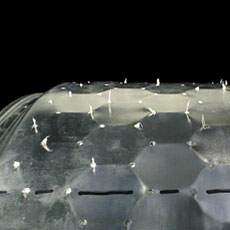
In my main article I say how I find it very hard to imagine how a washing machine could so selectively cause damage, and a lot of the anecdotal evidence from contributors to this topic seems to agree that the washing machine can’t be responsible for putting holes in only certain items of clothing and only in specific places.
The consensus is that something chemically or physically is breaking down the fibres in these specific areas, which under pressure of washing produces the holes. Kitchen worktops are one of the suspects, as is the quality of the modern garments and other possible causes. I don’t know if you’ve had time, and there’s a lot to read, but reading the entire article and every comment may help.
__________________
Jackie: I agree with your last comment. Maybe someone like BBC’s Watchdog might be interested? If anyone knows of an independent lab that we could send a selection of items away for testing where they could establish authoritatively what caused the holes I would be willing to help organise this. I’d also be willing to pay costs (as long as they weren’t too expensive) as I would be delighted to help get to the bottom of this issue for my users.
0 replies Well good luck to you Simon but I doubt you will get any joy from Miele or any of the other manufacturers for that matter. I have had this problem ongoing for years with several different models and makes and I am still completely baffled by it. I do not have granite worktops I never wear a belt. Always careful about loading and spin speeds,have tried every programme and every type of washing liquid,tablets and powders. I changed to a Miele Honeycomb drum myself a few years ago because of this problem, yet I still get holes in laundry. The holes are random in where they appear and range from tiny pin size holes to chunks that render an item severely damaged. I have been using automatic washing machines for many years having bought up two sons so think I have enough experience to know what I am doing. Yet this problem was unheard of years ago in the days of hot and cold fill machines. I said a lot earlier in this thread that the "Big Boys" should invest some of their profits in to investigating this problem as it is serious enough to be effecting many people so we can't all be wrong can we?
Well good luck to you Simon but I doubt you will get any joy from Miele or any of the other manufacturers for that matter. I have had this problem ongoing for years with several different models and makes and I am still completely baffled by it.
I do not have granite worktops I never wear a belt. Always careful about loading and spin speeds,have tried every programme and every type of washing liquid,tablets and powders. I changed to a Miele Honeycomb drum myself a few years ago because of this problem, yet I still get holes in laundry. The holes are random in where they appear and range from tiny pin size holes to chunks that render an item severely damaged.
I have been using automatic washing machines for many years having bought up two sons so think I have enough experience to know what I am doing. Yet this problem was unheard of years ago in the days of hot and cold fill machines.
I said a lot earlier in this thread that the “Big Boys” should invest some of their profits in to investigating this problem as it is serious enough to be effecting many people so we can’t all be wrong can we?
0 replies Just had a Miele service engineer round today. Our Miele has a honeycomb drum, yet we've been getting holes in our clothes. They are also around the belly area and the bottom of our clothes. Miele claim its "user error" or wearing a belt and they now want to charge me £98 for the engineers callout charge. Because of this I am determined to avoid the charge AND pursue them for the damage their washing machine has caused to our clothes. My wife is so careful with our clothes. She used to handwash our expensive t-shirts and tops and we never got holes. Soon after our baby was born, to save time, she started washing the clothes on a delicate or "silks" wash at 30 degrees. The machine was never overloaded, sometimes only 2 items at a time. It is only since then that we have been getting holes. Also, my wife doesn't wear a belt and some of her tops stop before the waist, so I would be amazed if they were rubbing on anything. And I have worn belts for years and years with no adverse effect on my clothes. I can see this is going to be a long drawn out battle with Miele and the insurers. Let the fight begin!
Just had a Miele service engineer round today.
Our Miele has a honeycomb drum, yet we’ve been getting holes in our clothes. They are also around the belly area and the bottom of our clothes.
Miele claim its “user error” or wearing a belt and they now want to charge me £98 for the engineers callout charge. Because of this I am determined to avoid the charge AND pursue them for the damage their washing machine has caused to our clothes.
My wife is so careful with our clothes. She used to handwash our expensive t-shirts and tops and we never got holes. Soon after our baby was born, to save time, she started washing the clothes on a delicate or “silks” wash at 30 degrees. The machine was never overloaded, sometimes only 2 items at a time. It is only since then that we have been getting holes.
Also, my wife doesn’t wear a belt and some of her tops stop before the waist, so I would be amazed if they were rubbing on anything. And I have worn belts for years and years with no adverse effect on my clothes.
I can see this is going to be a long drawn out battle with Miele and the insurers. Let the fight begin!
0 replies It is very interesting reading the comments above and there is a sense of relief that you are not alone (not that I want others clothes ruined but I hope you know what I mean). Having read them though I must say I am inclined to steer away from the theory that it's the washer. Our problem only started recently and the machine is 11 years old (AEG). Never had a problem with it before and it's too much of a coincidence that it's happening to others with newer machines. In our case use is also not logical as it happens to our(adult) clothes and the kids. The holes are randomly positioned on the garments and they are from different manufacurers. Would anyone subscribe to the theory or maybe even comfirm that there has been some change in the manufacturing process of materials today coupled with maybe the material is also actually thinner than in days gone by. Baffled as everyone else but would love to know the cause.
It is very interesting reading the comments above and there is a sense of relief that you are not alone (not that I want others clothes ruined but I hope you know what I mean). Having read them though I must say I am inclined to steer away from the theory that it’s the washer. Our problem only started recently and the machine is 11 years old (AEG). Never had a problem with it before and it’s too much of a coincidence that it’s happening to others with newer machines. In our case use is also not logical as it happens to our(adult) clothes and the kids. The holes are randomly positioned on the garments and they are from different manufacurers. Would anyone subscribe to the theory or maybe even comfirm that there has been some change in the manufacturing process of materials today coupled with maybe the material is also actually thinner than in days gone by. Baffled as everyone else but would love to know the cause.
0 replies I recently handwashed a new top (worn once) from French Connection.After drying it outside on the line I noticed holes at the front around the belly button area. I returned it to the shop I bought it and they kindly exchanged it.It then happened again, in extacly the same place a few weeks later, I thought I was going mad! My husband and daughter now think I've really lost it-it happened then again last week to another fine cotton top,again another favoutite and expensive! My initial theory was the kitchen cleaner rubbing against the top from the granite work top, but since I wore the second FC top on the day I returned from my holiday and didn't cook that evening, that sort of blows that theory out. Why does it happen around the belly button area, also it's been whilst the weather has been quite hot, more body sweat perhaps..HELP,I've just found another top with holes- this can't go on..!
I recently handwashed a new top (worn once) from French Connection.After drying it outside on the line I noticed holes at the front around the belly button area. I returned it to the shop I bought it and they kindly exchanged it.It then happened again, in extacly the same place a few weeks later, I thought I was going mad! My husband and daughter now think I’ve really lost it-it happened then again last week to another fine cotton top,again another favoutite and expensive! My initial theory was the kitchen cleaner rubbing against the top from the granite work top, but since I wore the second FC top on the day I returned from my holiday and didn’t cook that evening, that sort of blows that theory out. Why does it happen around the belly button area, also it’s been whilst the weather has been quite hot, more body sweat perhaps..HELP,I’ve just found another top with holes- this can’t go on..!
0 replies For the past several months, my 20+year old Kenmore (USA) has punctured small holes in summer tshirts and in lower undergarmets regardless of the age of the clothing. I use a fragrance free name brand detergent and either polyester or gentle cycle. No zippers, underwires or coins. I'm currently doing the research in order to purchase a new machine.
For the past several months, my 20+year old Kenmore (USA) has punctured small holes in summer tshirts and in lower undergarmets regardless of the age of the clothing. I use a fragrance free name brand detergent and either polyester or gentle cycle. No zippers, underwires or coins. I’m currently doing the research in order to purchase a new machine.
0 replies I am also having hole problems, mostly in cheaper asda plain colour jumpers. iv traced it back to overloading the machine. The jumpers catch on the rubber seal part of the drum when pushed up against it, and being more polyester based they simply wear away with the drum spinning so fast. After realizing this I now do 3/4 loads and the problem has completely disappeared!
I am also having hole problems, mostly in cheaper asda plain colour jumpers. iv traced it back to overloading the machine. The jumpers catch on the rubber seal part of the drum when pushed up against it, and being more polyester based they simply wear away with the drum spinning so fast. After realizing this I now do 3/4 loads and the problem has completely disappeared!
0 replies Well I've just discovered what was making little holes in my cotton t-shirts - a bra wire. I had a friend who fixes washing machines round cos there was a little lid (little one left something in her pockets!) stuck in the drum making a racket on the spin cycle and walla! a lid and a bra wire. hopefully no more holes in any of my other tops. it ruined about 5 of them
Well I’ve just discovered what was making little holes in my cotton t-shirts – a bra wire. I had a friend who fixes washing machines round cos there was a little lid (little one left something in her pockets!) stuck in the drum making a racket on the spin cycle and walla! a lid and a bra wire. hopefully no more holes in any of my other tops. it ruined about 5 of them
0 replies I am very upset. I have Bosch washer/dryer Maxx 5. It keeps tearing my clothes. It is clear that they are torn because of the friction. I called the service people who came and changed the door seal but it keeps tearing my clothes. I don't overload it, I don't wash bras and stuff like that as there's no woman at home. It seems that somehow it pushes the clothes towards the door and when it starts spinning they are rubbing against the door seal and that's it. I always load half load and everytime it washes I'm there to watch it and when I see the clothes pushed to the door I stop it, open the door, and push back the clothes. Very irritating exercise. I contacted Bosch but they are useless. I explained everything in detail but what I got was the general advice they would give to anyone - don't overload, don't wash bras, bla bla. I'm very upset as it has torn some of my best clothes already. I don't know what to do. I used to have a cheap Sumsung washing machine and never had problems with it. I really regret that I changed it with the 'fancy' Bosch. I thought Germans made excellent appliances, but obviously I was wrong.
I am very upset. I have Bosch washer/dryer Maxx 5. It keeps tearing my clothes. It is clear that they are torn because of the friction. I called the service people who came and changed the door seal but it keeps tearing my clothes. I don’t overload it, I don’t wash bras and stuff like that as there’s no woman at home. It seems that somehow it pushes the clothes towards the door and when it starts spinning they are rubbing against the door seal and that’s it. I always load half load and everytime it washes I’m there to watch it and when I see the clothes pushed to the door I stop it, open the door, and push back the clothes. Very irritating exercise. I contacted Bosch but they are useless. I explained everything in detail but what I got was the general advice they would give to anyone – don’t overload, don’t wash bras, bla bla. I’m very upset as it has torn some of my best clothes already. I don’t know what to do.
I used to have a cheap Sumsung washing machine and never had problems with it. I really regret that I changed it with the ‘fancy’ Bosch. I thought Germans made excellent appliances, but obviously I was wrong.
0 replies if the holes are always in the same place on the garments, then they can't be caused by the washing machine or detergent. the washing machine is tossing the clothes about randomly, and so there is no way that the machine could cause holes to appear always in the same place. there is some activity that you are doing that is causing wear on these particular areas of your clothes. be very conscious of what types of activities you engage in while wearing the clothes that are developing the holes and you will find the cause. best of luck, jeff
if the holes are always in the same place on the garments, then they can’t be caused by the washing machine or detergent. the washing machine is tossing the clothes about randomly, and so there is no way that the machine could cause holes to appear always in the same place.
there is some activity that you are doing that is causing wear on these particular areas of your clothes. be very conscious of what types of activities you engage in while wearing the clothes that are developing the holes and you will find the cause.
best of luck,
jeff
0 replies Wow - I can't believe so many other people experience the same problem! I've been having this problem for the last 2 years, we were renting a property with a built in machine when it first started happening(and I can't remember what kind of make it was). It was a smaller capacity machine though so I thought perhaps I was overloading so I cut down on how much laundry i was putting in but it still happened. We have now moved and have our own machine back, which had gone into storage and it's still happening. When we first used this machine in our first house I never experienced holes in clothes, so what has changed bewteen living in that house and this one - my answer is my washing powder. But should that really make a difference? I used to just use Tesco branded washing powder and experienced no holes. I then had children and needed one that didn't affect their skin and began using persil non bio liquid, an the holes began appearing. It has made me wonder if it is down to the liquid detergent. The holes have spoilt many of all the families clothes, although generally the children's clothes seem to have not been affected often, but some of my favourite items have had quite a few holes in, so bad that I've had to sew them up from the inside just so I can continue to wear them. I cannot afford to throw them out just because of a few holes, and although the holes are fairly small, in some items there are quite afew little holes. They are always in the centre of the tops, towards the bottom, only ever tops, no trousers have been affected. My machine is a Zanussi Progress 1200, Hydrosystem 6kg. I've not thought of reducing the speed of the macine, but if even with a change of liquid detergent my clothes still appear with holes then it is something else to try. Would be interesting if anyone else has expereinced these problems whilst using persil non bio.
Wow – I can’t believe so many other people experience the same problem! I’ve been having this problem for the last 2 years, we were renting a property with a built in machine when it first started happening(and I can’t remember what kind of make it was). It was a smaller capacity machine though so I thought perhaps I was overloading so I cut down on how much laundry i was putting in but it still happened. We have now moved and have our own machine back, which had gone into storage and it’s still happening. When we first used this machine in our first house I never experienced holes in clothes, so what has changed bewteen living in that house and this one – my answer is my washing powder. But should that really make a difference? I used to just use Tesco branded washing powder and experienced no holes. I then had children and needed one that didn’t affect their skin and began using persil non bio liquid, an the holes began appearing. It has made me wonder if it is down to the liquid detergent. The holes have spoilt many of all the families clothes, although generally the children’s clothes seem to have not been affected often, but some of my favourite items have had quite a few holes in, so bad that I’ve had to sew them up from the inside just so I can continue to wear them. I cannot afford to throw them out just because of a few holes, and although the holes are fairly small, in some items there are quite afew little holes. They are always in the centre of the tops, towards the bottom, only ever tops, no trousers have been affected.
My machine is a Zanussi Progress 1200, Hydrosystem 6kg.
I’ve not thought of reducing the speed of the macine, but if even with a change of liquid detergent my clothes still appear with holes then it is something else to try.
Would be interesting if anyone else has expereinced these problems whilst using persil non bio.
0 replies One thing I have noticed is people saying that the holes weren't there before they put the item in the washer. In knit fabrics, a cut yarn won't show right away. Only after the fabric is disturbed will the yarn-ends pull back and slip from the neighboring yarns, making a visible hole. I'm not saying this is the only possible cause, but I'm pretty sure it is why the holes seem to appear after a session in the washer and dryer.
One thing I have noticed is people saying that the holes weren’t there before they put the item in the washer. In knit fabrics, a cut yarn won’t show right away. Only after the fabric is disturbed will the yarn-ends pull back and slip from the neighboring yarns, making a visible hole. I’m not saying this is the only possible cause, but I’m pretty sure it is why the holes seem to appear after a session in the washer and dryer.
0 replies I have this problem. Previously with my old washer, it was only if the load was overfull - so my own fault. Now that I am living in rented accomodation, I am using the washing machine that was provided (and new). I've had problems frequently. Most of my clothes and my husbands clothes are made of jersey cotton (t shirt material) or denim. Denim doesn't seem to be affected but everything else does, many of my clothes that are new and worn once are then unwearable as they have holes (2-5mm). These holes can be anywhere! It's frustrating and upsetting - not to mention expensive!
I have this problem. Previously with my old washer, it was only if the load was overfull – so my own fault.
Now that I am living in rented accomodation, I am using the washing machine that was provided (and new). I’ve had problems frequently. Most of my clothes and my husbands clothes are made of jersey cotton (t shirt material) or denim. Denim doesn’t seem to be affected but everything else does, many of my clothes that are new and worn once are then unwearable as they have holes (2-5mm). These holes can be anywhere! It’s frustrating and upsetting – not to mention expensive!
0 replies I have a Sears Kenmore HE3t washer with the same problems listed by all. I have observed the wash cycle in particular the spin cycle of the washer. During the spin cycle the cloths are sticking outside of the drum area and lapping the bellow of the washer. As the spin speed increases, some of the cloths go over the lip of the drum and are between the drum and the bellow area. The net result is a hole is born in the clothing. If you look at the bellow, the surface closest to the drum shows wear from other clothing pinched between the drum and the bellow. I also noted depending on the wash size that the bellow and the drum do not align up resulting in the cloths making it into that gap even easier. New bellow helps for a while until it wears down or becomes thinner and the whole process starts over again. I would like to know if anyone else has a washer with a better bellow arrangement that prevents the cloths from this situation.
I have a Sears Kenmore HE3t washer with the same problems listed by all. I have observed the wash cycle in particular the spin cycle of the washer. During the spin cycle the cloths are sticking outside of the drum area and lapping the bellow of the washer. As the spin speed increases, some of the cloths go over the lip of the drum and are between the drum and the bellow area. The net result is a hole is born in the clothing. If you look at the bellow, the surface closest to the drum shows wear from other clothing pinched between the drum and the bellow. I also noted depending on the wash size that the bellow and the drum do not align up resulting in the cloths making it into that gap even easier. New bellow helps for a while until it wears down or becomes thinner and the whole process starts over again. I would like to know if anyone else has a washer with a better bellow arrangement that prevents the cloths from this situation.
0 replies I am a service tech for a major retailer in the states with 34 years experience. Holes in clothes are not a new complaint & are basically caused by three classes--chemical, mechanical & biological. When clothes are discovered damaged before placement into the laundry it is easy to divine the washer and/or dryer as not the culprit. Unfortunately, this is often not the case. There is a reason for this--some damaged articles don't reveal their damage until "after" the laundering process. In the diagnostics of holes in the clothing it is essential to do a little processing of the items involved: 1.) Is the clothing being damaged to one area of the garment such as front only, back only, right sleeve only (right-handed persons), left sleeve only (left-handed persons), etc. All of the these are indicative of a process which is being performed by the person wearing the item such as cooking spatters occurring to the front of the item that may contain chemicals or heated oils that damage & weaken the fabric, sleeves that are being abraded by right or left-handed persons in the course of typical cleaning, painting & furniture finishes containing chemicals. 2.) Is the hole in the clothing uniform and without ragged fraying that would occur from mechanical ripping of the fabric? If the holes are not frayed in appearance then this may be biological damage such as moths or insect. Of course, these are nonspecific holes as moths don't go for the bellybutton only. Washer products generally rip fabrics leaving fraying like a pair of cutoff jeans in the washer and if occurring in the dryer there should be in evidence a trail of threads caught on some sharp edge in the dryer. 3). Is the fabric easy to tear along the edges of the hole? Generally speaking chemical damage, particularly bleach, will destroy the tensile strength of textiles when spilled or dropped into direct contact w/cotton while undiluted. Look for signs of discoloration. If you have an old blacklight from your psychedelic days then bleach damage will flouresce under a blacklight. I don't work on Miele over here but I do service LG, GE, Whirlpool, Sears, Samsung, Electrolux, Bosch & Frigidaire front loads & top loads. None are immune to complaints of "Holes in Clothes". It is a dreaded complaint because once we are called the customer has firmly decided that the washer or dryer is the cause most of the time. The majority of that time it is not. I use a Frigidaire front load & have for eight years. I have experienced zero of the problems that have been complained about for that washer. My dryer is twenty-one years old (and was rebuilt 10 years ago). I have never had either tear my clothes from mechanical failure. All clothing that has come out with damage at the end I have been able to specifically equate to activities I have done to create the problem. They have mostly been chemical in nature from acids to cleaners that came in contact with me while doing routine chores & maintenance. The use of a stocking on the hand to feel for rough surfaces or snags is an old trick that works well. Be careful however. As more than one tech has found a sharp protruding object such as a rusty underwire can snag more than a stocking if you press too firmly or move too quickly across a surface. You can also catch pins & needles from the seal areas of the dryer drum at front & back. You should also observe mechanical actions of the machines if possible to see if something may be happening such as a top load w/agitator agitating & spinning at the same time. Of course, this results in clothing literally wrapping around the agitator as you might expect. I have serviced dryers with the drum baffles filled with coins from being loose & yet the customer was having no problems with torn clothing. Some models of dryers are prone to "catching" clothing along the front edge of the drum & bearing surface area. This occurs when drum bearing wear exceeds a certain tolerance. This usually gives indication by leaving reddish streaks or marks on clothing before the tearing begins. There is a fourth cause of holes which is really a combined action: Aging of clothing-This is a mechanical/chemical action over time. Abrading of clothing is a natural process of laundering action & leads to textile failure This combined with the chemical exposure repeatedly will cause the fabric to eventually fail. Although these days people don't seem to keep the clothes they wear long enough to see this occur. It is most commonly seen in sheets, towels & cleaning cloths. I have had customers hand me a towel to examine that was obviously so old I could practically see through it and ask me why the washer "tore" her perfectly good towel. That's the kind of thing techs see that creates that distrust of a customer's skill at examining just what they did do in those clothes.
I am a service tech for a major retailer in the states with 34 years experience. Holes in clothes are not a new complaint & are basically caused by three classes–chemical, mechanical & biological. When clothes are discovered damaged before placement into the laundry it is easy to divine the washer and/or dryer as not the culprit. Unfortunately, this is often not the case. There is a reason for this–some damaged articles don’t reveal their damage until “after” the laundering process. In the diagnostics of holes in the clothing it is essential to do a little processing of the items involved:
1.) Is the clothing being damaged to one area of the garment such as front only, back only, right sleeve only (right-handed persons), left sleeve only (left-handed persons), etc. All of the these are indicative of a process which is being performed by the person wearing the item such as cooking spatters occurring to the front of the item that may contain chemicals or heated oils that damage & weaken the fabric, sleeves that are being abraded by right or left-handed persons in the course of typical cleaning, painting & furniture finishes containing chemicals.
2.) Is the hole in the clothing uniform and without ragged fraying that would occur from mechanical ripping of the fabric? If the holes are not frayed in appearance then this may be biological damage such as moths or insect. Of course, these are nonspecific holes as moths don’t go for the bellybutton only. Washer products generally rip fabrics leaving fraying like a pair of cutoff jeans in the washer and if occurring in the dryer there should be in evidence a trail of threads caught on some sharp edge in the dryer.
3). Is the fabric easy to tear along the edges of the hole? Generally speaking chemical damage, particularly bleach, will destroy the tensile strength of textiles when spilled or dropped into direct contact w/cotton while undiluted. Look for signs of discoloration. If you have an old blacklight from your psychedelic days then bleach damage will flouresce under a blacklight.
I don’t work on Miele over here but I do service LG, GE, Whirlpool, Sears, Samsung, Electrolux, Bosch & Frigidaire front loads & top loads. None are immune to complaints of “Holes in Clothes”. It is a dreaded complaint because once we are called the customer has firmly decided that the washer or dryer is the cause most of the time. The majority of that time it is not. I use a Frigidaire front load & have for eight years. I have experienced zero of the problems that have been complained about for that washer. My dryer is twenty-one years old (and was rebuilt 10 years ago). I have never had either tear my clothes from mechanical failure. All clothing that has come out with damage at the end I have been able to specifically equate to activities I have done to create the problem. They have mostly been chemical in nature from acids to cleaners that came in contact with me while doing routine chores & maintenance.
The use of a stocking on the hand to feel for rough surfaces or snags is an old trick that works well. Be careful however. As more than one tech has found a sharp protruding object such as a rusty underwire can snag more than a stocking if you press too firmly or move too quickly across a surface. You can also catch pins & needles from the seal areas of the dryer drum at front & back.
You should also observe mechanical actions of the machines if possible to see if something may be happening such as a top load w/agitator agitating & spinning at the same time. Of course, this results in clothing literally wrapping around the agitator as you might expect. I have serviced dryers with the drum baffles filled with coins from being loose & yet the customer was having no problems with torn clothing.
Some models of dryers are prone to “catching” clothing along the front edge of the drum & bearing surface area. This occurs when drum bearing wear exceeds a certain tolerance. This usually gives indication by leaving reddish streaks or marks on clothing before the tearing begins.
There is a fourth cause of holes which is really a combined action:
Aging of clothing-This is a mechanical/chemical action over time. Abrading of clothing is a natural process of laundering action & leads to textile failure This combined with the chemical exposure repeatedly will cause the fabric to eventually fail. Although these days people don’t seem to keep the clothes they wear long enough to see this occur. It is most commonly seen in sheets, towels & cleaning cloths. I have had customers hand me a towel to examine that was obviously so old I could practically see through it and ask me why the washer “tore” her perfectly good towel. That’s the kind of thing techs see that creates that distrust of a customer’s skill at examining just what they did do in those clothes.
0 replies I have been experiencing this problem for at least 8 months now. I have noticed that it is more often GAP clothing that has gotten holes. I just want to know what the heck is causing this. I cannot afford to keep replacing my or my families clothing. Please help!!!
I have been experiencing this problem for at least 8 months now. I have noticed that it is more often GAP clothing that has gotten holes. I just want to know what the heck is causing this. I cannot afford to keep replacing my or my families clothing. Please help!!!
0 replies Diane: My only question is why does it happen to some T shirts and not other T shirts. It has got to be the soap reacting with those shirts.. The holes are always on the lower part of the T shirt only on the back….never the front. It doesn’t happen to ALL of our T shirts just some. The holes are perfectly round and there are a lot of them. Diane, I can't imagine how detergent could cause holes only on the lower part and back of t shirts and only on some. That would be impossible if the whole garment has been soaked in it. The washing machine couldn't possibly be so specific either. Your holes have to be caused by some specific friction or specific wear, or by coming into contact with something specific to them.
Diane:
My only question is why does it happen to some T shirts and not other T shirts. It has got to be the soap reacting with those shirts.. The holes are always on the lower part of the T shirt only on the back….never the front. It doesn’t happen to ALL of our T shirts just some. The holes are perfectly round and there are a lot of them.
Diane, I can’t imagine how detergent could cause holes only on the lower part and back of t shirts and only on some. That would be impossible if the whole garment has been soaked in it. The washing machine couldn’t possibly be so specific either.
Your holes have to be caused by some specific friction or specific wear, or by coming into contact with something specific to them.
0 replies I thought we had moths! The holes usually appear in my daughter's t-shirts which seem to be made of a thinner cotton. Maybe this could be the reason, especially if the spin speed is too fast?
I thought we had moths! The holes usually appear in my daughter’s t-shirts which seem to be made of a thinner cotton. Maybe this could be the reason, especially if the spin speed is too fast?
0 replies Pat Horne for the first time your idea makes sense to me. This is so mysterious. My only question is why does it happen to some T shirts and our house and not other T shirts. It has got to be the soap reacting with those shirts.. At our house: 1. The holes are always on the lower part of the T shirt only on the back....never the front. 2. It doesn't happen to ALL of our T shirts just some. 3. The holes are perfectly round and there are a lot of them. Its such a mystery at our house......
Pat Horne
for the first time your idea makes sense to me. This is so mysterious. My only question is why does it happen to some T shirts and our house and not other T shirts. It has got to be the soap reacting with those shirts..
At our house:
1. The holes are always on the lower part of the T shirt only on the back….never the front.
2. It doesn’t happen to ALL of our T shirts just some.
3. The holes are perfectly round and there are a lot of them.
Its such a mystery at our house……
0 replies I'm absolutely staggered at the amount of people who have flagged this problem up! I've been getting tiny holes in my clothes for a couple of years now and it seems to be the cotton based garments only? I thought it was just me being careless and catching my clothes on work surfaces or something but have been extra vigilent of late and still it's happening! I'm not convinced it's the washing machine - I have a strong theory it could be something to do with washing tablets or liquid, especially the biological kind. These days the emphasis is to get the washing cleaner and cleaner even at low temperatures. Perhaps they are too concentrated and the natural materials are suffering as a result. I'm going to switch to a non-biological, very mild washing powder and see how I go.
I’m absolutely staggered at the amount of people who have flagged this problem up! I’ve been getting tiny holes in my clothes for a couple of years now and it seems to be the cotton based garments only? I thought it was just me being careless and catching my clothes on work surfaces or something but have been extra vigilent of late and still it’s happening! I’m not convinced it’s the washing machine – I have a strong theory it could be something to do with washing tablets or liquid, especially the biological kind. These days the emphasis is to get the washing cleaner and cleaner even at low temperatures. Perhaps they are too concentrated and the natural materials are suffering as a result. I’m going to switch to a non-biological, very mild washing powder and see how I go.
0 replies The drum has the normal holes rather than the honeycomb. I've had these round holes appear in two new garments after their first wash so I don't think the fabric was weakened. I'm also careful about using the correct wash cycle for the material - but I've just found out how to programme the machine to wash with a gentle action on all cycles rather than the standard setting so I'm going to see if that makes a difference. I'll let you know if it does.
The drum has the normal holes rather than the honeycomb. I’ve had these round holes appear in two new garments after their first wash so I don’t think the fabric was weakened. I’m also careful about using the correct wash cycle for the material – but I’ve just found out how to programme the machine to wash with a gentle action on all cycles rather than the standard setting so I’m going to see if that makes a difference. I’ll let you know if it does.
1 reply I've had a Miele Prestige Plus 6 since July 2008. During this time I've occasionally noticed small round holes appearing in clothes and have put it down to wear and tear, belt buckles etc. After ruining a brand new top a couple of weeks ago I started checking my clothes both before and after a wash cycle and I'm now sure it's the washing machine causing the holes as they only appear after the wash. I've read about lots of possible causes but....I never over fill the machine and I check the instructions on the garments carefully. I also tend to use the 900 spin as the 1300 makes the clothes too hard and creased. I use Ariel colour tablets for coloured and Fairy non-bio for whites (I live in a hard water area). I wash wool and silk by hand. I've done the silk stocking test in the drum and can find no sharp edges. And I don't use underwired bras! The holes are perfectly round and about 5mm in diameter and have appeared in cotton tee shirts, cotton/polyester mix jumpers, and even socks. I never experienced this problem with my old Zanussi, which I used with the same types of detergent and clothes. I chose the Miele machine after much research and deliberation over the cost and I'm really disappointed with it. It doesn't seem right that manufacturers seem to blame the users over this problem. Has anyone found a satisfactory solution?
I’ve had a Miele Prestige Plus 6 since July 2008. During this time I’ve occasionally noticed small round holes appearing in clothes and have put it down to wear and tear, belt buckles etc. After ruining a brand new top a couple of weeks ago I started checking my clothes both before and after a wash cycle and I’m now sure it’s the washing machine causing the holes as they only appear after the wash. I’ve read about lots of possible causes but….I never over fill the machine and I check the instructions on the garments carefully. I also tend to use the 900 spin as the 1300 makes the clothes too hard and creased. I use Ariel colour tablets for coloured and Fairy non-bio for whites (I live in a hard water area). I wash wool and silk by hand. I’ve done the silk stocking test in the drum and can find no sharp edges. And I don’t use underwired bras! The holes are perfectly round and about 5mm in diameter and have appeared in cotton tee shirts, cotton/polyester mix jumpers, and even socks. I never experienced this problem with my old Zanussi, which I used with the same types of detergent and clothes. I chose the Miele machine after much research and deliberation over the cost and I’m really disappointed with it. It doesn’t seem right that manufacturers seem to blame the users over this problem. Has anyone found a satisfactory solution?
Likely replying to Paula
Paula, if fabric is weakened it’s common for it to only hole after washing. Curtains sometimes get holes in them after washing if they’ve become sun damaged.
But if your holes are perfectly round that sometimes could be caused by being cut while expressed through the holes in the drum. Does your machine have the honeycomb drum or normal holes?
0 replies comment #177 on March 9th is exactly right! This is the same as my comment on Nov 28th 2008 comment #97. Try and you will see.
comment #177 on March 9th is exactly right! This is the same as my comment on Nov 28th 2008 comment #97. Try and you will see.
0 replies I have found the answer after ten years of this. We have a stone island and it hits right where my jean snap is located and if I ever so slightly rub against the island with the shirt between the metal button and the stone island on the other side of the material it will rip. My husband and one daughter are taller and do not hit at this position and the other children are younger and that is the reason that I alone have this problem. Believe me, I have made it my life's work to experiment and figure this out for ten years. Don't know why I did not think of this.
I have found the answer after ten years of this. We have a stone island and it hits right where my jean snap is located and if I ever so slightly rub against the island with the shirt between the metal button and the stone island on the other side of the material it will rip. My husband and one daughter are taller and do not hit at this position and the other children are younger and that is the reason that I alone have this problem. Believe me, I have made it my life’s work to experiment and figure this out for ten years. Don’t know why I did not think of this.
0 replies So glad to hear so many of you out there are experiencing the same problem with small holes at the front of t-shirts. I thought i was going mad,at first i blamed the washing machine like many others i have been using a miele washing machine I've tried washing on various cycles all still getting holes and i bought a mesh wash bag still getting holes in the front! I've come to the conclusion it must be the friction with the holes always being in the exact location and another factor is i have granite worktops.
So glad to hear so many of you out there are experiencing the same problem with small holes at the front of t-shirts.
I thought i was going mad,at first i blamed the washing machine
like many others i have been using a miele washing machine I’ve tried washing on various cycles all still getting holes and i bought
a mesh wash bag still getting holes in the front! I’ve come to the
conclusion it must be the friction with the holes always being in the exact location and another factor is i have granite worktops.
0 replies just a guess but what if you have a T shirt on, go take a leak and when doing up your belt, pinch it in the belt buckle then pull it out and it snags. Then it goes through the wash, works through the cycles in the machine and your snag becomes a hole.
just a guess but what if you have a T shirt on, go take a leak and when doing up your belt, pinch it in the belt buckle then pull it out and it snags. Then it goes through the wash, works through the cycles in the machine and your snag becomes a hole.
0 replies just wanted to give my insight regarding this problem. i too have had the issue with the holes in the t-shirts. i posted a comment previously in this thread describing the problem, but basically it's much the same as what others have been experiencing - small holes that appear near the bottom center of the shirt. i realized that it couldn't be the detergent, bugs, or the washing machine, because as others have pointed out, the holes would appear in other garments and randomly throughout the garments. so i started to think of what i could be doing that would be creating friction or stress on these shirts, always in the same place - and i think i have finally figured it out. i have been doing bodybuilding for many years, and in some of the exercises the dumbells or barbell rubs on the front bottom of my shirt. as i investigated the possibility that this could be the source of the stress that was creating the holes, i realized that all of the t-shirts that i have worked out in have these holes, and all of the t-shirts that i have *never* workout in have *zero* holes. now i no longer do the exercises that caused the extreme rubbing on my shirt - and guess what? no more holes... so it's just a matter of carefully analyzing your activities and figuring out the source of stress that is creating the wear and subsequent holes in these garments. good luck!
just wanted to give my insight regarding this problem.
i too have had the issue with the holes in the t-shirts. i posted a comment previously in this thread describing the problem, but basically it’s much the same as what others have been experiencing – small holes that appear near the bottom center of the shirt. i realized that it couldn’t be the detergent, bugs, or the washing machine, because as others have pointed out, the holes would appear in other garments and randomly throughout the garments.
so i started to think of what i could be doing that would be creating friction or stress on these shirts, always in the same place – and i think i have finally figured it out. i have been doing bodybuilding for many years, and in some of the exercises the dumbells or barbell rubs on the front bottom of my shirt. as i investigated the possibility that this could be the source of the stress that was creating the holes, i realized that all of the t-shirts that i have worked out in have these holes, and all of the t-shirts that i have *never* workout in have *zero* holes.
now i no longer do the exercises that caused the extreme rubbing on my shirt – and guess what? no more holes…
so it’s just a matter of carefully analyzing your activities and figuring out the source of stress that is creating the wear and subsequent holes in these garments. good luck!
0 replies THIS IS MY QUESTION..WHY DOES IT HAPPEN TO SOME OF OUR T SHIRTS AND NOT OTHERS?? THIS MAKES ME WONDER THAT IT CAN'T BE THE MACHINE OR SOAP. IF SO IT WOULD HAPPEN TO ALL OF OUR T SHIRTS. I JUST DON'T GET IT........
THIS IS MY QUESTION..WHY DOES IT HAPPEN TO SOME OF OUR T SHIRTS AND NOT OTHERS?? THIS MAKES ME WONDER THAT IT CAN’T BE THE MACHINE OR SOAP. IF SO IT WOULD HAPPEN TO ALL OF OUR T SHIRTS. I JUST DON’T GET IT……..
1 reply I can't believe how many people are affected by this same problem.Firstly noticed signs on my husband's t-shirts and blamed him for the way he was wearing them perhaps catching on his belt buckle as none of my clothes were damaged but then my daughter's t-shirts started with the holes again put this down to a fashion belt. But this morning when doing the ironing have now noticed more holes on my son's t-shirt and my daughter's. The holes are identical and always appear round the bottom part of the t-shirt but not always at the centre have now decided it must be the washing machine so searched internet on how I could fix this and came across this sight. I do not have granite worktops. I use mainly surf soap powder. I do have a 7kg load and mainly use the 1400 rpm. I have rubbed my hand round the inside of the drum and can't feel anything too jaggy and I have checked all bras for missing wires. I think the big drum theory might be the problem.
I can’t believe how many people are affected by this same problem.Firstly noticed signs on my husband’s t-shirts and blamed him for the way he was wearing them perhaps catching on his belt buckle as none of my clothes were damaged but then my daughter’s t-shirts started with the holes again put this down to a fashion belt. But this morning when doing the ironing have now noticed more holes on my son’s t-shirt and my daughter’s. The holes are identical and always appear round the bottom part of the t-shirt but not always at the centre have now decided it must be the washing machine so searched internet on how I could fix this and came across this sight. I do not have granite worktops. I use mainly surf soap powder. I do have a 7kg load and mainly use the 1400 rpm. I have rubbed my hand round the inside of the drum and can’t feel anything too jaggy and I have checked all bras for missing wires. I think the big drum theory might be the problem.
Likely replying to jo-jo
jo-jo, if it was the washing machine why would it only put holes in t-shirts, and only on the bottom of them? Laundry is tossed around the drum totally randomly. So if anything was catching and damaging them surely it would hole them randomly, not only randomly on the garment but on all kinds of garments.
0 replies I have come across strong evidence that these biological laundry detergents (enzymes added) eat cottons too. If I'm right that would mean these laundry detergents are eating or digesting everyones clothes as that is what enzymes do in nature. Evidence for this will show up sooner on areas that are subjected to stress, ie the knees on your young boys jeans wearing out VERY fast and the bottom of your socks.
I have come across strong evidence that these biological laundry detergents (enzymes added) eat cottons too. If I’m right that would mean these laundry detergents are eating or digesting everyones clothes as that is what enzymes do in nature. Evidence for this will show up sooner on areas that are subjected to stress, ie the knees on your young boys jeans wearing out VERY fast and the bottom of your socks.
1 reply Thanks for the reply, they have been mostly cotton but now I've switched to merino wool and the same thing is happening, only after one wash too. We have a lot of hardwood floor but that has not affected my socks in the past. I've looked at the ingredients on our new front loader washer liquid detergent and found "enzymes" listed as a helpful ingredient to remove stains. I wonder if the enzymes could be breaking down the material as the fluffy stuff on the inside is what falls apart first leaving the see through netting. Not long after the netting is exposed I have a hole in my sock. Still a mystery, Thanks in advance for the help
Thanks for the reply, they have been mostly cotton but now I’ve switched to merino wool and the same thing is happening, only after one wash too. We have a lot of hardwood floor but that has not affected my socks in the past. I’ve looked at the ingredients on our new front loader washer liquid detergent and found “enzymes” listed as a helpful ingredient to remove stains. I wonder if the enzymes could be breaking down the material as the fluffy stuff on the inside is what falls apart first leaving the see through netting. Not long after the netting is exposed I have a hole in my sock. Still a mystery,
Thanks in advance for the help
Likely replying to Dan Peter
Hello Dan: Biological detergents can damage woollens (and silk) Biological washing machine detergents can damage woollens & silks (cause holes)
0 replies Dan: What are the socks made of and are there any washing instructions with them?
Dan: What are the socks made of and are there any washing instructions with them?
0 replies I am experiencing holes in my socks (socks only) after one wash and I just went and bought a $10 pair of socks but the same thing happened, and only after one wash. We have a new washing machine and dryer, what can I do? the fuzzy stuff inside the socks just falls apart and leaves the see through netting material on the bottom of my socks and if you pull at this netting , it rips very easily. The sock is done after only one wash, any advise on this?
I am experiencing holes in my socks (socks only) after one wash and I just went and bought a $10 pair of socks but the same thing happened, and only after one wash. We have a new washing machine and dryer, what can I do? the fuzzy stuff inside the socks just falls apart and leaves the see through netting material on the bottom of my socks and if you pull at this netting , it rips very easily. The sock is done after only one wash, any advise on this?
1 reply For the past few years only, every shirt I buy ends up with holes in the very same spot. It is at the bottom of my shirts and I thought they were snagging on my zipper but it happens to shirts that I wear with pull on pants also. I recently moved and have a new washer and it happened with the old washer too. I had quartz counters in the old house and have laminate now. Still happens. I bought a t shirt the other day and it had the same series of about 5 small holes in the same spot within hours. I have bought shirts from 3 or 4 different stores and it happens to all of them. It does not happen to any other member of my family. All of my shirts are hung in the same closet where my husband's clothes are. None of his are affected. I am going nuts with this ridiculous mystery!
For the past few years only, every shirt I buy ends up with holes in the very same spot. It is at the bottom of my shirts and I thought they were snagging on my zipper but it happens to shirts that I wear with pull on pants also. I recently moved and have a new washer and it happened with the old washer too. I had quartz counters in the old house and have laminate now. Still happens. I bought a t shirt the other day and it had the same series of about 5 small holes in the same spot within hours.
I have bought shirts from 3 or 4 different stores and it happens to all of them. It does not happen to any other member of my family. All of my shirts are hung in the same closet where my husband’s clothes are. None of his are affected. I am going nuts with this ridiculous mystery!
Likely replying to Paula S.
Paula, as it only happens to your things then maybe your clothes are coming into contact with a product you are using perhaps for cleaning. I wrote about this in November. If you do not already protect your clothes when involved in chores at home, work or even the garden then try wearing protective clothing and see if that makes any difference. Good luck.
0 replies Just been given a great tip on how to check if it's your drum snagging your clothes - take an old pair of tights and rub them round the inside of the drum - if they snag - then you have a problem with your drum. L
Just been given a great tip on how to check if it’s your drum snagging your clothes – take an old pair of tights and rub them round the inside of the drum – if they snag – then you have a problem with your drum.
L
0 replies PS - if you consistantly fold tee-shirts in the same place you can weaken the fabric and holes may start to appear on the fold lines - think of how shirt collars start to go through rubbing - it's the same thing. Also, ironing can expediate weakening and most iron manufacturers will not recommend fagranced water for steam irons for the same reason (and it can mess up your iron)
PS – if you consistantly fold tee-shirts in the same place you can weaken the fabric and holes may start to appear on the fold lines – think of how shirt collars start to go through rubbing – it’s the same thing.
Also, ironing can expediate weakening and most iron manufacturers will not recommend fagranced water for steam irons for the same reason (and it can mess up your iron)
0 replies Interesting - we were just discussing holes in laundry. I thought I'd share the outcome of our wisdom! There are two main reasons that you get holes in laundry. 1) In sufficient rinsing - detergent particals get caught in the fabric - don't get washed out and will simply rot the fabric. Ofter caused by too much detergent added for the cycle. Those of us with sensitive dispositions and who have 'extra rinse' know that this is a fab choice to add in as it will remove nearly all the problems caused by detergents. 2) Wrong wash / spin cycle. The latest complaint was that the washing was being sucked through the holes in drum and holes appearing. When the cycle was checked; delicates were being washed on cotton with a 1200 spin cycle - the scientist in me wanted to shout 'no brainer'. To prevent this use the instructions on the garment and wash at the temperatures shown. The reason that more delicate cycles only allow you to have a lower weight of garments delicates need more water per kg of clothing to craddle them in the machine and to prevent stress of the fabric. (And yes, your mother was right - a really good washing machine will cause less stress to your clothes than to handwash them). Now for the 2 caveats. a) If you buy a lesser quality washing machine then the drum may not be double punched so it could be less smooth and so catch the clothing. If you have a double punched drum then holes are more likely from the above than the drum itself. b) some fabrics are not uniform in their construction - linens do not have the same thickness in the whole length of the thread so if they have inherant weaknesses which detergent / wrong cycle can exploit. c) if there is a weakness in the garment then a washing machine will eventually find it and it will get worse. So the initial damage may be random but it will just keep getting bigger and bigger.
Interesting – we were just discussing holes in laundry. I thought I’d share the outcome of our wisdom!
There are two main reasons that you get holes in laundry.
1) In sufficient rinsing – detergent particals get caught in the fabric – don’t get washed out and will simply rot the fabric. Ofter caused by too much detergent added for the cycle. Those of us with sensitive dispositions and who have ‘extra rinse’ know that this is a fab choice to add in as it will remove nearly all the problems caused by detergents.
2) Wrong wash / spin cycle. The latest complaint was that the washing was being sucked through the holes in drum and holes appearing. When the cycle was checked; delicates were being washed on cotton with a 1200 spin cycle – the scientist in me wanted to shout ‘no brainer’. To prevent this use the instructions on the garment and wash at the temperatures shown.
The reason that more delicate cycles only allow you to have a lower weight of garments delicates need more water per kg of clothing to craddle them in the machine and to prevent stress of the fabric. (And yes, your mother was right – a really good washing machine will cause less stress to your clothes than to handwash them).
Now for the 2 caveats.
a) If you buy a lesser quality washing machine then the drum may not be double punched so it could be less smooth and so catch the clothing. If you have a double punched drum then holes are more likely from the above than the drum itself.
b) some fabrics are not uniform in their construction – linens do not have the same thickness in the whole length of the thread so if they have inherant weaknesses which detergent / wrong cycle can exploit.
c) if there is a weakness in the garment then a washing machine will eventually find it and it will get worse. So the initial damage may be random but it will just keep getting bigger and bigger.
1 reply I am experiencing the same problem holes in the front bottom part of the t-shirts. One theory I've thought of is, could this be the shape of the t-shirt and the baggiest piece of material that allows itself to be pulled into the drum ?
I am experiencing the same problem holes in the front bottom part of the t-shirts. One theory I’ve thought of is, could this be the shape of the t-shirt and the baggiest piece of material that allows itself to be pulled into the drum ?
0 replies There have been many accounts of holes in laundry and many feasible reasons put forward. The positioning of the holes on clothing in some of the comments does suggest damage caused by products we often use (in front of us) in our homes (or gardens) a spray of some sort for cleaning, bleach or other chemical. Clothing does not appear to be affected until it is washed, when water and detergent come into contact with the site of the splash causing a reaction. I had used a very powerful drain cleaner in my shower and even though I was very careful it is possible that a splash caught the bottom of the garment I was wearing. I didn't notice any holes until after the garment had been washed and hung out on the line. At that time I thought the damage had been done outside. On another occasion where I used some acetic acid in the lab, a very slight splash must have occurred but didn't appear to affect the tee shirt I was wearing until after I had washed it and then found small bleached patches. There are many household cleaners that claim to possess magical cleaning powers but some of these may be potentially dangerous to our clothing, damage of which is not apparent until after washing.
There have been many accounts of holes in laundry and many feasible reasons put forward. The positioning of the holes on clothing in some of the comments does suggest damage caused by products we often use (in front of us) in our homes (or gardens) a spray of some sort for cleaning, bleach or other chemical. Clothing does not appear to be affected until it is washed, when water and detergent come into contact with the site of the splash causing a reaction. I had used a very powerful drain cleaner in my shower and even though I was very careful it is possible that a splash caught the bottom of the garment I was wearing.
I didn’t notice any holes until after the garment had been washed and hung out on the line. At that time I thought the damage had been done outside. On another occasion where I used some acetic acid in the lab, a very slight splash must have occurred but didn’t appear to affect the tee shirt I was wearing until after I had washed it and then found small bleached patches. There are many household cleaners that claim to possess magical cleaning powers but some of these may be potentially dangerous to our clothing, damage of which is not apparent until after washing.
0 replies i thought i was the only one having this very bizarre and very frustrating problem. for several years i have had the small-holes-in-the-lower-front-of-T-shirts problem. interestingly, i also get these holes in the front of my boxer shorts - and the position of these holes is essentially in line with the holes on the t-shirts when the clothes are on. as others have mentioned, the non-randomness of the holes rules out bugs, detergents, and washing machines as the culprits. the friction idea seems to be the best so far, but it's just hard to imagine that there is that much more friction in the low-stomach area than in other areas of the shirt. my t-shirts do not come into contact with buttons, zippers, or belt buckles. after the last round of replacing the t-shirts, i decided not to store them folded up in a drawer, because at that time i thought that possibly some bug could be the culprit. so for the last few months i have been hanging up my t-shirts after laundering, and since then i have not seen any holes in these t-shirts. with that said, i recently noticed a small hole in one of my boxer shorts (in the usual place) and a small hole on the backside of a pair of thermal underwear pants (which i have always kept hung up). 99.9% of the issue with the holes has been as i described: on the lower front of cotton t-shirts and the front of poly/cotton boxer shorts, whith only a couple instances of holes that deviated from this pattern: i had one printed cotton t-shirt get these holes in the armpit area, and the hole on the backside of the thermal underwear pants (98% polyester, 2% spandex) was also anomolous. i really wish there was a satisfiying explanation for this probelm, as it has caused me so much aggrivation.
i thought i was the only one having this very bizarre and very frustrating problem. for several years i have had the small-holes-in-the-lower-front-of-T-shirts problem. interestingly, i also get these holes in the front of my boxer shorts – and the position of these holes is essentially in line with the holes on the t-shirts when the clothes are on.
as others have mentioned, the non-randomness of the holes rules out bugs, detergents, and washing machines as the culprits. the friction idea seems to be the best so far, but it’s just hard to imagine that there is that much more friction in the low-stomach area than in other areas of the shirt. my t-shirts do not come into contact with buttons, zippers, or belt buckles.
after the last round of replacing the t-shirts, i decided not to store them folded up in a drawer, because at that time i thought that possibly some bug could be the culprit. so for the last few months i have been hanging up my t-shirts after laundering, and since then i have not seen any holes in these t-shirts.
with that said, i recently noticed a small hole in one of my boxer shorts (in the usual place) and a small hole on the backside of a pair of thermal underwear pants (which i have always kept hung up).
99.9% of the issue with the holes has been as i described: on the lower front of cotton t-shirts and the front of poly/cotton boxer shorts, whith only a couple instances of holes that deviated from this pattern: i had one printed cotton t-shirt get these holes in the armpit area, and the hole on the backside of the thermal underwear pants (98% polyester, 2% spandex) was also anomolous.
i really wish there was a satisfiying explanation for this probelm, as it has caused me so much aggrivation.
0 replies We had a Beko machine. Small holes started to appear in an assortment of washing but yes mainly cottons. Thinking it was the washing machine, we shelled out and purchased a new machine. Again a Beko, 1400 spin 7kg drum. To my dismay clothes have again started appearing with holes in. Only usually one hole but enough to damage the item. It has happened to my daughters swim costume which was only in with soft towels, so clearly not a zip or anything. Also on fully and low loads. Dont know what to do as i have two small children and washing on all the time but cant afford to keep damaging clothing?? Help ??
We had a Beko machine. Small holes started to appear in an assortment of washing but yes mainly cottons. Thinking it was the washing machine, we shelled out and purchased a new machine. Again a Beko, 1400 spin 7kg drum. To my dismay clothes have again started appearing with holes in. Only usually one hole but enough to damage the item.
It has happened to my daughters swim costume which was only in with soft towels, so clearly not a zip or anything.
Also on fully and low loads. Dont know what to do as i have two small children and washing on all the time but cant afford to keep damaging clothing?? Help ??
0 replies Recntly our washing machine has been making tiny holes in all our new t-shirts at the bottom of the front. The holes are appering in exactly the same positons and place in all new garments despite us all being completely different heights. My family has been gatting really annoyed and freaked out thinking it's a ghost that all our new clothes have holes in bottom front in the exactly the same places and so I decided to go on the interne to see if anyone else is experiencing this same problem. I don't see how the washing machine could be making these holes as surely the holes would be random not EXACTLY the same (i think it's bout 6 holes if i remmeber righty so), it cannot be a work surface or something we lean on as we are different heights and why is it just on our new clothes? If you have any logical explanation for this lety me know. Please help thank you x x
Recntly our washing machine has been making tiny holes in all our new t-shirts at the bottom of the front. The holes are appering in exactly the same positons and place in all new garments despite us all being completely different heights. My family has been gatting really annoyed and freaked out thinking it’s a ghost that all our new clothes have holes in bottom front in the exactly the same places and so I decided to go on the interne to see if anyone else is experiencing this same problem. I don’t see how the washing machine could be making these holes as surely the holes would be random not EXACTLY the same (i think it’s bout 6 holes if i remmeber righty so), it cannot be a work surface or something we lean on as we are different heights and why is it just on our new clothes? If you have any logical explanation for this lety me know. Please help thank you x x
0 replies Diane- The problem is with FRICTION. Doesnt have to be granite. Something you are regularly doing without realizing it (of course) is creating friction against the cotton material (whether front or back) some holes may not be apparent at first- but after a wash and dry they show up (exactly as described) "cottage cheese" like was a good description once it gets so bad. Usually starts with just a few small ones at first. It's not rocket science to figure this out- and I feel for anyone who is worrying over it. Hang in there!
Diane-
The problem is with FRICTION. Doesnt have to be granite. Something you are regularly doing without realizing it (of course) is creating friction against the cotton material (whether front or back) some holes may not be apparent at first- but after a wash and dry they show up (exactly as described) “cottage cheese” like was a good description once it gets so bad. Usually starts with just a few small ones at first. It’s not rocket science to figure this out- and I feel for anyone who is worrying over it. Hang in there!
0 replies We have the prob. of holes in the back/bottom of our T shirts. It only happens to some of them...and are ALWAYS in the back on the bottom. This leads me to believe it cannot be the washing machine because why would it always be on the bottom of the back of the shirt? They are perfect round, small holes, and there are usually many of them making the lower back of the shirt look like swiss cheese. Does anyone have a logical explaintion of why this is happening? One that makes sense...we aren't near bleaches, acids, and do not rub against grainite...so what else can explain this? HELP!!
We have the prob. of holes in the back/bottom of our T shirts.
It only happens to some of them…and are ALWAYS in the back on the bottom. This leads me to believe it cannot be the washing machine because why would it always be on the bottom of the back of the shirt? They are perfect round, small holes, and there are usually many of them making the lower back of the shirt look like swiss cheese. Does anyone have a logical explaintion of why this is happening? One that makes sense…we aren’t near bleaches, acids, and do not rub against grainite…so what else can explain this? HELP!!
0 replies I FOUND THE ANSWER TO THIS PROBLEM:I also had tiny holes in all my t-shirts. I believe that it is a combination of all new washers ( mine is a Maytag Centennial) which spins at an accelerated speed that older washers & the new rage 2x detergents. I found a detergent that was not 2x concentrated & I do not have that " tiny holes problem" since I made the switch to a regular detergent. Good luck! I experienced that problem for months but no more! Enough wasting clothes!!!
I FOUND THE ANSWER TO THIS PROBLEM:I also had tiny holes in all my t-shirts. I believe that it is a combination of all new washers
( mine is a Maytag Centennial) which spins at an accelerated speed that older washers & the new rage 2x detergents.
I found a detergent that was not 2x concentrated & I do not have that ” tiny holes problem” since I made the switch to a regular detergent.
Good luck! I experienced that problem for months but no more!
Enough wasting clothes!!!
0 replies My wife and son were always having problems with small holes in the FRONT of their cotton t shirts. After Reading most of your articles it is now clear to me that whilst wearing jeans rubbing has caused these particular holes together with seatbelt friction ruining a few of my wifes finer tops after only one wear. With all this observation going on I haven't read anyone checking for these holes prior to washing. It is likely they are only discovered when been ironed. Others who are complaining about larger tears in various areas of clothing then there is the obvious cause of the drum snagging clothes which I would suggest would be easy to notice owing to the frequency with which it happens. I would like to thank the contributors as it was only after Reading there comments that the cause became apparent. Aprons whilst cooking and eating are the way ahead.
My wife and son were always having problems with small holes in the FRONT of their cotton t shirts. After Reading most of your articles it is now clear to me that whilst wearing jeans rubbing has caused these particular holes together with seatbelt friction ruining a few of my wifes finer tops after only one wear. With all this observation going on I haven’t read anyone checking for these holes prior to washing. It is likely they are only discovered when been ironed. Others who are complaining about larger tears in various areas of clothing then there is the obvious cause of the drum snagging clothes which I would suggest would be easy to notice owing to the frequency with which it happens. I would like to thank the contributors as it was only after Reading there comments that the cause became apparent. Aprons whilst cooking and eating are the way ahead.
0 replies i wanted to get in touch as i am also experiencing small holes in my mainly cotton clothing after washing in machine. I have a brand new hotpoint aqualtis which was heavily advertised on telly for its larger drum. I purchased mine in february and noticed small holes appearing in my washed clothing immediately. To start with i thought the odd items, being older peices of clothing had just worn through, but as it started then to happen on brand new items, which had only been worn once i began to question the machine. The holes are very small and often a few appear in the same patch at the same time. I thought it was the spin being too vigorous and have since turned this down as an option when i now wash, but this does not seem to help as today once again another brand new item of clothing has come out with several small holes in. On further investigation i can feel that when i push my finger onto the drainage holes in the machine and the skin is pushed inside i can feel that there is a sharpness there a bit like a cheese grater which appears to be on the other side of the drum. I also have a friend with the exact same machine and guess what? Yep she also has holes in her clothes too. I think that the larger drum is the reason for the fault as there is little space between the outside of the drum and the machine itself. I am now in touch with my retailer and will be seeking a replacement machine (not the one i already have) and compensation for half of my ruined wardrobe. I will keep you posted to the outcome.
i wanted to get in touch as i am also experiencing small holes in my mainly cotton clothing after washing in machine. I have a brand new hotpoint aqualtis which was heavily advertised on telly for its larger drum. I purchased mine in february and noticed small holes appearing in my washed clothing immediately. To start with i thought the odd items, being older peices of clothing had just worn through, but as it started then to happen on brand new items, which had only been worn once i began to question the machine. The holes are very small and often a few appear in the same patch at the same time.
I thought it was the spin being too vigorous and have since turned this down as an option when i now wash, but this does not seem to help as today once again another brand new item of clothing has come out with several small holes in. On further investigation i can feel that when i push my finger onto the drainage holes in the machine and the skin is pushed inside i can feel that there is a sharpness there a bit like a cheese grater which appears to be on the other side of the drum. I also have a friend with the exact same machine and guess what? Yep she also has holes in her clothes too. I think that the larger drum is the reason for the fault as there is little space between the outside of the drum and the machine itself. I am now in touch with my retailer and will be seeking a replacement machine (not the one i already have) and compensation for half of my ruined wardrobe. I will keep you posted to the outcome.
0 replies As far as I can see Shannon most people have front loaders.
As far as I can see Shannon most people have front loaders.
0 replies Jackie: In your case- large holes that can and do appear in various places on ALL your families clothes may indicate moths or some other pest. OR- you may actually be one of the few people who REALLY DOES have a BAD WASHER. Sorry you havent found any conclusive answers yet!
Jackie: In your case- large holes that can and do appear in various places on ALL your families clothes may indicate moths or some other pest. OR- you may actually be one of the few people who REALLY DOES have a BAD WASHER. Sorry you havent found any conclusive answers yet!
0 replies Does this seem to only be a problem with top load washing machines or does this happen with front loaders like the whirlpool steam washer? If it's the top load washing machine then I may buy a front loader. This is happening to all of my husbands shirts. I'm guessing b/c he has lots of cotton tshirts.
Does this seem to only be a problem with top load washing machines or does this happen with front loaders like the whirlpool steam washer? If it’s the top load washing machine then I may buy a front loader. This is happening to all of my husbands shirts. I’m guessing b/c he has lots of cotton tshirts.
0 replies Still doesn't "WASH" with me!!! So how do you explain the holes in the neck/back of lots of my t-shirts-see the photo's!
Still doesn’t “WASH” with me!!! So how do you explain the holes in the neck/back of lots of my t-shirts-see the photo’s!
0 replies I am back one more time to tell you all that I did experiment with the granite/hard surface rub theory. Rubbed a low quality cotton shirt (that had a high price tag by the way) side to side and a few up and down movements against the edge of my granite. YES---> tiny holes formed. After a delicate wash and air dry the holes were larger in appearance. These are the SAME holes that have been cursing all my shirts for some time now. Friction against a hard surface (whether it be rock or other material) weakens the already thin cotton fibers. Since this area (the lower stomach, or belly button- or sometimes even on the backside) is exposed to the most friction- it is easy to see that the problem is NOT bugs. Nor some mysterious worm. We are just consumers plagued with a lower grade cotton that cannot withstand the abuse of regular wear and tear. Why is this so hard for us to believe and accept? Think about how everything else in our present day society has been "downsized, downgraded- made in a more economic fashion." It's easy to see that we are now purchasing lower quality cotton products since we've been conditioned to do so. For anyone serioulsy searching for the real answer to holes in the front of your shirt- have no fear- it is simply science. Cause and effect. Even a higher grade (heavier cotton) shirt will eventually break down to friction damage. I've been wearing an apron in the kitchen for the past few months now- adn NO NEW HOLES have appeared. Save your hard earned $$ and buy and apron! You will not regret it! And you can stop worrying about your washer being a monster~!
I am back one more time to tell you all that I did experiment with the granite/hard surface rub theory. Rubbed a low quality cotton shirt (that had a high price tag by the way) side to side and a few up and down movements against the edge of my granite.
YES—> tiny holes formed. After a delicate wash and air dry the holes were larger in appearance. These are the SAME holes that have been cursing all my shirts for some time now. Friction against a hard surface (whether it be rock or other material) weakens the already thin cotton fibers.
Since this area (the lower stomach, or belly button- or sometimes even on the backside) is exposed to the most friction-
it is easy to see that the problem is NOT bugs. Nor some mysterious worm.
We are just consumers plagued with a lower grade cotton that cannot withstand the abuse of regular wear and tear. Why is this so hard for us to believe and accept? Think about how everything else in our present day society has been “downsized, downgraded- made in a more economic fashion.” It’s easy to see that we are now purchasing lower quality cotton products since we’ve been conditioned to do so.
For anyone serioulsy searching for the real answer to holes in the front of your shirt- have no fear- it is simply science. Cause and effect. Even a higher grade (heavier cotton) shirt will eventually break down to friction damage.
I’ve been wearing an apron in the kitchen for the past few months now- adn NO NEW HOLES have appeared. Save your hard earned $$ and buy and apron! You will not regret it! And you can stop worrying about your washer being a monster~!
0 replies Hello everybody, I'm in the US and have been having the same problem of tiny holes appearing on t-shirts on or around the belly button area. It is frustrating to see so many t-shirts go to waste! The t-shirts have been of various quality cotton, not just the cheap t-shirts produce holes, the expensive heavy t-shirts also produce holes. And all in the same belly button area! I do not have granite counter tops. I do not have a belly button ring. I wear a variety of jeans and pants. I wear different belts with my jeans from time to time. I am wondering if the seat belt in the car is causing this phenomenon??? I purchased a ladies t-shirt from a gaming website, it fit nicely but was made from very thin cotton. Holes appeared so I threw it away and ordered the men's t-shirt. Heavier cotton, but not a feminine fit. I have worn it several times and I discovered holes in the same area today! Bugger! Maybe the holes are made by aliens testing our quality of clothing. (lol)
Hello everybody, I’m in the US and have been having the same problem of tiny holes appearing on t-shirts on or around the belly button area. It is frustrating to see so many t-shirts go to waste! The t-shirts have been of various quality cotton, not just the cheap t-shirts produce holes, the expensive heavy t-shirts also produce holes. And all in the same belly button area!
I do not have granite counter tops. I do not have a belly button ring. I wear a variety of jeans and pants. I wear different belts with my jeans from time to time.
I am wondering if the seat belt in the car is causing this phenomenon???
I purchased a ladies t-shirt from a gaming website, it fit nicely but was made from very thin cotton. Holes appeared so I threw it away and ordered the men’s t-shirt. Heavier cotton, but not a feminine fit. I have worn it several times and I discovered holes in the same area today! Bugger!
Maybe the holes are made by aliens testing our quality of clothing. (lol)
0 replies Zanussi washer/7kg/1400rpm spin Have had the same problem with holes in cotton T shirts for a long time. Wifey wanted to replace the machine so checked for snags in the washer and bugs in the wardrobe but found nothing. Then read this blog and found the idea of work top edges and belts interesting as I often lean on the worktop with a beer and a fag. Just a thought, a few years ago it became fashionable to wear T shirts outside your trousers rather than tucked in,causing more contact between belt/button and worktop.Could this be the cause of the recent increase in hole formation? If so do we need a fashion change?
Zanussi washer/7kg/1400rpm spin
Have had the same problem with holes in cotton T shirts for a long time. Wifey wanted to replace the machine so checked for snags in the washer and bugs in the wardrobe but found nothing. Then read this blog and found the idea of work top edges and belts interesting as I often lean on the worktop with a beer and a fag. Just a thought, a few years ago it became fashionable to wear T shirts outside your trousers rather than tucked in,causing more contact between belt/button and worktop.Could this be the cause of the recent increase in hole formation? If so do we need a fashion change?
0 replies Guys and gals, through several tests I have drawn the conclusion that it is not bugs, not moths, not the deodorant spray since I never used it since I use roll-on, not the granite (since the holes are front and back of the t.shirts), not overloading, not over-spinning and I doubt that it is the washing machine since many machines of different brands seem to be reported. What I realised is that the softer and thinner the fabric is, the more holes appear. Since the holes are tiny non-stretched well defined holes (as though a drop of acid fell on the garment), I beleive that the holes are being caused by either the detergent or the softner. I am using Persil and Comfort. If anyone agrees with me, or has found a concrete solution, please let me know. I am fed up of throwing out clothes.
Guys and gals, through several tests I have drawn the conclusion that it is not bugs, not moths, not the deodorant spray since I never used it since I use roll-on, not the granite (since the holes are front and back of the t.shirts), not overloading, not over-spinning and I doubt that it is the washing machine since many machines of different brands seem to be reported. What I realised is that the softer and thinner the fabric is, the more holes appear. Since the holes are tiny non-stretched well defined holes (as though a drop of acid fell on the garment), I beleive that the holes are being caused by either the detergent or the softner. I am using Persil and Comfort. If anyone agrees with me, or has found a concrete solution, please let me know. I am fed up of throwing out clothes.
0 replies I FOUND A HOLE IN A PAIR OF JEANS BUT I DID NOT DO UP ZIP OR TURN THEM INSIDE OUT! I ALSO PUT THEM ON A HIGH SPIN!! THANKS FOR YOUR COMMENTS.....THE HOLE WAS PROBABLY DO TO MY NEGLIGENCE. I DO FEEL BETTER AS I AM GLAD IT IS NOT SOME FAULT IN THE DRUM OF MY WASHING MACHINE.
I FOUND A HOLE IN A PAIR OF JEANS BUT I DID NOT DO UP ZIP OR TURN THEM INSIDE OUT! I ALSO PUT THEM ON A HIGH SPIN!!
THANKS FOR YOUR COMMENTS…..THE HOLE WAS PROBABLY DO TO MY NEGLIGENCE. I DO FEEL BETTER AS I AM GLAD IT IS NOT SOME FAULT IN THE DRUM OF MY WASHING MACHINE.
0 replies First- for anyone suffering from holes in the front of shirt (belly-button area) we are in the wrong forum! Ours is a completely different problem than people who are getting random holes which may or may not be caused by the washing machine. Sure, the washer may eventually weaken a cotton fabric that already has holes.. but to blame the machine for such specific patterns? Whatever... I am interested in addressing the patterned front hole problem... (this was one of the few sites where anyone discussed this subject in such detail) I find myself intrigued with all the various answers/solutions to this and why its happening... However, LOGIC over rules all the scare tactics... Please.. get real- Moths and other fabric bugs are NOT PICKY. They dont go up to a shirt and say- hmmm, let me JUST eat the front. So, if this is happening to you- dont get freaked out by all the other posts. If you had moths- ALL your clothes would show signs of it- and the eating patterns would be totally RANDOM. As far as the friction theories- I give them credit and are very probable. CHEAP COTTON is also a definite part of the puzzle as well. I think that the people who have decided to wear aprons (yes, our parents did it- and survived) are on the right track. If you've lost some really expensive shirts (like I have) maybe an undershirt may help with the jean friction thing. It doesnt matter what weight, sex you are- it seems this problem can effect anyone. I purpose a web site forum set up specifically for this issue- as I do believe that as consumers we have the right to expect higher quality products (especially when we are PAYING higher prices for them) Whether it be buttons, jeans, belts, granite/surface rubs or any other source- shouldnt our clothing be able to withstand everyday wear and tear? If not- shoudnt they be labeled in such a way to warn us NOT to wear this product when cleaning your kitchen? Comical- I know... but does anyone else have a better idea? For now- if your COTTON is of a lesser quality or the material is extremely thin- we have to use common sense and beware of the elements that may damage it. Ridicuous- considering everything else we have to worry about it the world. Although I am SURE that there are some clothes eating machines out there- let's give the washer a break on this one, shall we?
First- for anyone suffering from holes in the front of shirt (belly-button area) we are in the wrong forum! Ours is a completely different problem than people who are getting random holes which may or may not be caused by the washing machine. Sure, the washer may eventually weaken a cotton fabric that already has holes.. but to blame the machine for such specific patterns? Whatever…
I am interested in addressing the patterned front hole problem… (this was one of the few sites where anyone discussed this subject in such detail) I find myself intrigued with all the various answers/solutions to this and why its happening…
However, LOGIC over rules all the scare tactics… Please.. get real- Moths and other fabric bugs are NOT PICKY. They dont go up to a shirt and say- hmmm, let me JUST eat the front. So, if this is happening to you- dont get freaked out by all the other posts. If you had moths- ALL your clothes would show signs of it- and the eating patterns would be totally RANDOM.
As far as the friction theories- I give them credit and are very probable. CHEAP COTTON is also a definite part of the puzzle as well. I think that the people who have decided to wear aprons (yes, our parents did it- and survived) are on the right track. If you’ve lost some really expensive shirts (like I have) maybe an undershirt may help with the jean friction thing. It doesnt matter what weight, sex you are- it seems this problem can effect anyone. I purpose a web site forum set up specifically for this issue- as I do believe that as consumers we have the right to expect higher quality products (especially when we are PAYING higher prices for them)
Whether it be buttons, jeans, belts, granite/surface rubs or any other source- shouldnt our clothing be able to withstand everyday wear and tear? If not- shoudnt they be labeled in such a way to warn us NOT to wear this product when cleaning your kitchen? Comical- I know… but does anyone else have a better idea?
For now- if your COTTON is of a lesser quality or the material is extremely thin- we have to use common sense and beware of the elements that may damage it. Ridicuous- considering everything else we have to worry about it the world.
Although I am SURE that there are some clothes eating machines out there- let’s give the washer a break on this one, shall we?
0 replies This problem has nothing to do with our waistlines ( Iwear a size 4) nor do I believe our washing machines (too many people are experiencing this problem and they don't all use the same washing machines and detergent) and unfortunately, I have to rule out the zipper on jeans explanation since I just found two holes on my pajama top (thin cotton). I wish I had an explanation, and I will keep searching, but I don't think we are on the right track so far.
This problem has nothing to do with our waistlines ( Iwear a size 4) nor do I believe our washing machines (too many people are experiencing this problem and they don’t all use the same washing machines and detergent) and unfortunately, I have to rule out the zipper on jeans explanation since I just found two holes on my pajama top (thin cotton). I wish I had an explanation, and I will keep searching, but I don’t think we are on the right track so far.
0 replies I had this problem with my Hotpoint about 7 years ago, I recieved compensation and my machine was replaced. It wasn't easy but I got there. In this case my clothing and bedding had a combination of small holes and very large snags. In the meantime I have moved twice the first time to rented accomadation with a machine in situ, a bosch classix which after 4 years had no issues with. I then moved again purchased my own Zanussi and three years on I have the problem back. So far I only have small holes in random places and on all the families clothing. I also have a dog and a cat so am not ruling out a bug issue. The detergent may be a factor as I try to use non bio. I recently had an issue with Black Mold in the drawer whilst waiting for someone to take my machine appart to get access to the whole drawer I started using a 2 in 1 detergent which is biological I don't recall seeing new holes then. I also try and wash my clothes on 30 deg althou my son who has allergies has his sheets washed at 60. I have just read a link about washing at low temps and with non bio. Does this give anyone any ideas? I am now using persil gel and comfort. My machine is a 6kg Zanussi front loader. If I've missed anything let me know.
I had this problem with my Hotpoint about 7 years ago, I recieved compensation and my machine was replaced. It wasn’t easy but I got there. In this case my clothing and bedding had a combination of small holes and very large snags. In the meantime I have moved twice the first time to rented accomadation with a machine in situ, a bosch classix which after 4 years had no issues with. I then moved again purchased my own Zanussi and three years on I have the problem back. So far I only have small holes in random places and on all the families clothing. I also have a dog and a cat so am not ruling out a bug issue. The detergent may be a factor as I try to use non bio. I recently had an issue with Black Mold in the drawer whilst waiting for someone to take my machine appart to get access to the whole drawer I started using a 2 in 1 detergent which is biological I don’t recall seeing new holes then. I also try and wash my clothes on 30 deg althou my son who has allergies has his sheets washed at 60. I have just read a link about washing at low temps and with non bio. Does this give anyone any ideas?
I am now using persil gel and comfort. My machine is a 6kg Zanussi front loader. If I’ve missed anything let me know.
0 replies Blimey ! How can a washing machine be the blame for holes in the front bottom of peoples t-shirts.....arrggghhh...its not !! It would have to be a clever washing machine to pick out you t-shirts only and then work out which is the front of the t-shirt and then work out where the bottom waist of the t-shirt is !!!....get a grip peeps. I have the same problem of holes in t-shirts at the waist. Again, I wear no belt and believe it must be the button on the top of my jeans. At first I thought it was a belt I was wearing and stopped using that. Then I thought it was the zip on my fly of my jeans, then found out the other night that wearing just button up fly jeans the same happens. So to my conclusion it is the button at the top of my jeans. It happens when you sit down and your gut traps your t-shirt under the button and causes friction to make the holes. Does this problem happen to anyone who does not slouch? Probably not. Does it happen to anyone who has a nice slim waist ? Probably not. I think the only cure for this is to start doing many sit-ups and obtain a six-pack so our bellies don't hang over the top button when we sit down. STOP BLAMING THE WASHING MACHINES
Blimey ! How can a washing machine be the blame for holes in the front bottom of peoples t-shirts…..arrggghhh…its not !! It would have to be a clever washing machine to pick out you t-shirts only and then work out which is the front of the t-shirt and then work out where the bottom waist of the t-shirt is !!!….get a grip peeps.
I have the same problem of holes in t-shirts at the waist. Again, I wear no belt and believe it must be the button on the top of my jeans. At first I thought it was a belt I was wearing and stopped using that. Then I thought it was the zip on my fly of my jeans, then found out the other night that wearing just button up fly jeans the same happens. So to my conclusion it is the button at the top of my jeans. It happens when you sit down and your gut traps your t-shirt under the button and causes friction to make the holes.
Does this problem happen to anyone who does not slouch? Probably not. Does it happen to anyone who has a nice slim waist ? Probably not.
I think the only cure for this is to start doing many sit-ups and obtain a six-pack so our bellies don’t hang over the top button when we sit down.
STOP BLAMING THE WASHING MACHINES
0 replies I have the problem of holes ONLY near my belly button on my T's. I dont believe any of the wash machine theories, or detergent theories are the root cause of the problem. Why don't the holes appear anywhere else on the t's, and why do my wife's undies not have holes? I think fibers are being torn during my normal wear and tear, such as rubbing up to my wood workbench. These tears are being made larger by the washing cycle. That's my 2 cents...
I have the problem of holes ONLY near my belly button on my T’s. I dont believe any of the wash machine theories, or detergent theories are the root cause of the problem. Why don’t the holes appear anywhere else on the t’s, and why do my wife’s undies not have holes?
I think fibers are being torn during my normal wear and tear, such as rubbing up to my wood workbench. These tears are being made larger by the washing cycle.
That’s my 2 cents…
0 replies Sorry-but I think that theory is rubbish. All of my family have holes in many items of clothing-not just t-shirts and certainly not restricted to waist level at the front. And I don't have granite work tops either! Only yesterday as I was ironing one of my husbands t-shirts I noticed a fairly big hole on the back at shoulder blade level-it wasn't there when he was wearing it the day before!
Sorry-but I think that theory is rubbish. All of my family have holes in many items of clothing-not just t-shirts and certainly not restricted to waist level at the front. And I don’t have granite work tops either!
Only yesterday as I was ironing one of my husbands t-shirts I noticed a fairly big hole on the back at shoulder blade level-it wasn’t there when he was wearing it the day before!
0 replies I'm from Ireland and have been experiencing the same problem with tiny holes at waist level on my cotton tops and t- shirts. I noticed it happening when I moved into a new house two years ago with guess what ... granite worktops in my kitchen! Its been happening to mostly my stuff but my husband hasnt escaped either. In a way, I'm delighted to think that I have finally found an explanation to this problem as it was driving me insane. The solution seems to be an apron, have to say I never thought I'd end up wearing one but if it saves my clothes who cares? Thanks so much for the advice, espesially rob the stay at home Dad, and to everyone else. Slan!
I’m from Ireland and have been experiencing the same problem with tiny holes at waist level on my cotton tops and t- shirts. I noticed it happening when I moved into a new house two years ago with guess what … granite worktops in my kitchen! Its been happening to mostly my stuff but my husband hasnt escaped either. In a way, I’m delighted to think that I have finally found an explanation to this problem as it was driving me insane. The solution seems to be an apron, have to say I never thought I’d end up wearing one but if it saves my clothes who cares? Thanks so much for the advice, espesially rob the stay at home Dad, and to everyone else. Slan!
0 replies Paul: It's a tricky one. The kitchen company's Sellotape suggestion seems a bit daft. Wearing an apron would be a good idea if someone is cooking and working at the worktop for a while but it's only a partial solution. Granite worktops have been suspected of causing tiny holes in t-shirts by many people. I would advise that you get the advice of a consumer advice centre. You may have to try taking the kitchen company to the small claims court, which isn't expensive. The responsibility is likely to be with the people you bought it from and not the people that made it. At the end of the day if the granite worktops are definitely damaging clothes simply by working in front of it then it's not really acceptable.
Paul: It’s a tricky one. The kitchen company’s Sellotape suggestion seems a bit daft. Wearing an apron would be a good idea if someone is cooking and working at the worktop for a while but it’s only a partial solution. Granite worktops have been suspected of causing tiny holes in t-shirts by many people. I would advise that you get the advice of a consumer advice centre. You may have to try taking the kitchen company to the small claims court, which isn’t expensive. The responsibility is likely to be with the people you bought it from and not the people that made it.
At the end of the day if the granite worktops are definitely damaging clothes simply by working in front of it then it’s not really acceptable.
0 replies I'm from the U.S. - I had been having the small hole mystery for over a year - just me - not my husband. I checked, cleaned, changed everything and finally decided it must be some kind of mite that only likes me. And then I thought, that's ridiculous but it is just me - what's different about me or my clothes? It finally hit me. There is a product called cellfood. You're supposed to add a few drops to water and drink it. I was using it straight out of the bottle - just a drop or two on problem skin areas. I looked it up and it had a caution - avoid contact with cotton, silk, linen - it will cause small holes. I doubt if many or any of you are using cellfood on your faces but there are some pretty strong solutions out there. I had someone stay at my house a few years ago and noticed my green towels seemed to have bleach spots - and we all know bleach weakens fabrics. It turned out to be the Proactiv solution she was using. Hope that helps someone out there.
I’m from the U.S. – I had been having the small hole mystery for over a year – just me – not my husband. I checked, cleaned, changed everything and finally decided it must be some kind of mite that only likes me. And then I thought, that’s ridiculous but it is just me – what’s different about me or my clothes? It finally hit me. There is a product called cellfood. You’re supposed to add a few drops to water and drink it. I was using it straight out of the bottle – just a drop or two on problem skin areas. I looked it up and it had a caution – avoid contact with cotton, silk, linen – it will cause small holes. I doubt if many or any of you are using cellfood on your faces but there are some pretty strong solutions out there. I had someone stay at my house a few years ago and noticed my green towels seemed to have bleach spots – and we all know bleach weakens fabrics. It turned out to be the Proactiv solution she was using. Hope that helps someone out there.
0 replies So happy i found this site, instead of moving we had a new £50,000 kitchen/conservatory fitted in March 2008 it is really nice with all Miele appliances and an island with a huge granite top on it. my wife started to notice holes appearing in the same waist location, after months of wondering where this problem is deveoping we found this site, the granite over the sink is higher than the island and we believe this is where the probem is. I am considering legal action as my wife has holes in approx £1000 worth of tops. can anyone give any help on how to combat this problem or any comments on my chance down the legal side would be most appreciated. granite company say its nothing to do with them! and kitchen company are saying stick selotape on??
So happy i found this site, instead of moving we had a new £50,000 kitchen/conservatory fitted in March 2008 it is really nice with all Miele appliances and an island with a huge granite top on it. my wife started to notice holes appearing in the same waist location, after months of wondering where this problem is deveoping we found this site, the granite over the sink is higher than the island and we believe this is where the probem is. I am considering legal action as my wife has holes in approx £1000 worth of tops. can anyone give any help on how to combat this problem or any comments on my chance down the legal side would be most appreciated. granite company say its nothing to do with them! and kitchen company are saying stick selotape on??
1 reply I was interested to read the letters regarding holes in laundry. I had the same problems approx. 9 years ago with my new hotpoint. The engineer tried to convince me I had loaded the machine wrongly. However with persistance it was found rough edges arround the holes in the drum were to blame . My machine drum was also off balance which caused clothes to be trapped and be torn. Holes and tears caused by machines was taken up by Watchdog and hundreds of viewers were involved. I hope this may be of interest.
I was interested to read the letters regarding holes in laundry.
I had the same problems approx. 9 years ago with my new hotpoint.
The engineer tried to convince me I had loaded the machine wrongly.
However with persistance it was found rough edges arround the holes in the drum were to blame .
My machine drum was also off balance which caused clothes to be
trapped and be torn.
Holes and tears caused by machines was taken up by Watchdog and hundreds of viewers were involved.
I hope this may be of interest.
Likely replying to John Howard
Hello John: I remember this issue. It was Hotpoint washer dryers and they were tearing laundry, which was getting caught on the dryer heating duct at the top of the door seal.
Hotpoint denied there was an issue and said it only happened if the drum was overloaded. As you say it was featured on Watchdog.
This holes in laundry seems to be something different though as holes are commonly localised in specific areas and often only on t-shirts. In many cases I doubt the washer is even to blame.
0 replies I agree with ripped, I think it may be the washing powders, not the washing machines. I found this article: (no longer exists), which says that an enzyme called cellulase is a recent additive to biological washing powders. Cellulase destroys cellulose, which is what plant cell walls are made of, such as cotton. Quote from the article: "° During use, small fibers are raised from the surface of cotton thread, resulting in a change in the texture of the fabric, and the brightness of colors is lowered. ° Cellulase removes the small fibres without damaging the major fibres and restores the fabric to its former condition." My tea towels have been falling to bits at a rate of knots, which never used to happen, so I'm going to switch to non biological powder to see if that stops their deterioration.
I agree with ripped, I think it may be the washing powders, not the washing machines.
I found this article: (no longer exists), which says that an enzyme called cellulase is a recent additive to biological washing powders. Cellulase destroys cellulose, which is what plant cell walls are made of, such as cotton. Quote from the article:
“° During use, small fibers are raised from the surface of cotton thread, resulting in a change in the texture of the fabric, and the brightness of colors is lowered.
° Cellulase removes the small fibres without damaging the major fibres and restores the fabric to its former condition.”
My tea towels have been falling to bits at a rate of knots, which never used to happen, so I’m going to switch to non biological powder to see if that stops their deterioration.
0 replies how come no one is blaming the detergent and fabric softener companies? i mean working for a huge well known corporate manufacturer i know how much they like to cut back and find cheaper alternatives so as to get bigger profits, i see some sort of pattern here, most people are saying this has started since 5 years ago"5 YEARS!" give or take a few and it would take a % of time for this product to hit the shelf's since it will remain in storage for some year(s) as it has no life expectancy it will be now that we will see the effects since the rotation will be hitting the shops on a mass scale maybe we should now attack the detergents and softener companies for compo and explanations
how come no one is blaming the detergent and fabric softener companies? i mean working for a huge well known corporate manufacturer i know how much they like to cut back and find cheaper alternatives so as to get bigger profits, i see some sort of pattern here, most people are saying this has started since 5 years ago”5 YEARS!” give or take a few and it would take a % of time for this product to hit the shelf’s since it will remain in storage for some year(s) as it has no life expectancy
it will be now that we will see the effects since the rotation will be hitting the shops on a mass scale
maybe we should now attack the detergents and softener companies for compo and explanations
1 reply I have had this issue for about a year now and all my expensive cotton only T shirts are ruined. I done a test last week to try and rule out Larvae or other 'bugs'. So I went out and bought a brand new £30 T shirt and put it straight in the washer. Low and behold when the wash was finished the T shirt had tiny holes in it on the front in the belly button region. (I didn't wear it) My theory is ; The quality of cotton used and how it is made. I have other cotton T shirts I have had for years and these have NO holes. NEW expensive T shirts after one wash seem to be the problem here. So I am putting it down to the Quality and origion of the Cotton. Whats your thoughts?
I have had this issue for about a year now and all my expensive cotton only T shirts are ruined.
I done a test last week to try and rule out Larvae or other ‘bugs’. So I went out and bought a brand new £30 T shirt and put it straight in the washer. Low and behold when the wash was finished the T shirt had tiny holes in it on the front in the belly button region. (I didn’t wear it)
My theory is ; The quality of cotton used and how it is made.
I have other cotton T shirts I have had for years and these have NO holes. NEW expensive T shirts after one wash seem to be the problem here.
So I am putting it down to the Quality and origion of the Cotton.
Whats your thoughts?
Likely replying to John honeyman
Hello John: If you didn’t wear the T-shirt then in your case at least you can rule out friction caused by belt buckles or kitchen work surfaces etc. However, if the tiny holes only appear in the bellybutton region it still doesn’t make a lot of sense because how can the holes be so localised?
If it was the washing machine it should be making the holes in random places anywhere on the garment. If it was poor quality fabric it should surely do the same? The fabric around the bellybutton area is no different to the rest of the T-shirt.
If you haven’t done so already I would carefully examine the wash label. You need to make sure you have washed it according to its instructions. Does it say hand wash only for example? Does it say do not tumble dry? I know you didn’t mention tumble drying but I have had cases of tumble dryers causing marks on laundry with the washing machine getting the blame.
If you know you have washed it according to the instructions and you suspect there is an issue with the quality of the material you should consider taking it back. Unfortunately it’s possible you could come across resistance to the idea that the T-shirt is faulty or of poor quality depending on where you bought it from. A reputable company should at the very least agree to send it back to the manufacturer for testing.
0 replies I was surprised to find a blog dedicated to a problem I've been having for over a year now... these holes in cotton t-shirts, exact location, near the middle of the stomach! I don't typically wear belts, do not have a bellybutton ring, limited time spent at kitchen counters... and some of the shirts have only been worn once! Yet the holes are always in the same exact location. It's only my t-shirts affected... not my kids or my husbands so far. I see a lot of comments related to washing machines, beatle larvae, etc... but I have to believe the holes caused by these would be far more random. I'll keep reading, but at this point am so frustrated and would love to find out what's causing this!
I was surprised to find a blog dedicated to a problem I’ve been having for over a year now… these holes in cotton t-shirts, exact location, near the middle of the stomach! I don’t typically wear belts, do not have a bellybutton ring, limited time spent at kitchen counters… and some of the shirts have only been worn once! Yet the holes are always in the same exact location. It’s only my t-shirts affected… not my kids or my husbands so far. I see a lot of comments related to washing machines, beatle larvae, etc… but I have to believe the holes caused by these would be far more random. I’ll keep reading, but at this point am so frustrated and would love to find out what’s causing this!
0 replies I should think its probably acid
I should think its probably acid
0 replies Hi there, I've had holes appear in laundry twice, both in cotton goods and in both times when I've hung it out to dry. I have an 8 year old simple Bosch machine and have used the same detergent throughout (Ariel either for whites or colour). If the washing machine was to blame then surely I would see these goods damaged during the winter when I don't hang them out. It is weird. Last summer I hung out a cotton voile nightie. I didn't notice anything wrong when I hung it out (on a whirly) but when I brought it in there were two holes, one in the bottom of the frill, about the size of a 10p coin and a small one in the body. Yesterday it was included in a wash with other cotton items and hung out...now it is peppered with small holes. The other items were fine. The first wash of the day was the kingsize cotton duvet cover and when I ironed that last night that had three small holes, two in the tail (it is an envelope style cover) and one near the edge at the top. It has been washed once before and was fine. Is there something outside that is causing the problem - is there an insect that settles on washing and likes a cotton munch? I just can't see the washing machine to blame as I would find the problem in washing that isn't hung out. Has anyone else noticed that the holes appear after they have been hung out to dry?
Hi there,
I’ve had holes appear in laundry twice, both in cotton goods and in both times when I’ve hung it out to dry. I have an 8 year old simple Bosch machine and have used the same detergent throughout (Ariel either for whites or colour). If the washing machine was to blame then surely I would see these goods damaged during the winter when I don’t hang them out. It is weird. Last summer I hung out a cotton voile nightie. I didn’t notice anything wrong when I hung it out (on a whirly) but when I brought it in there were two holes, one in the bottom of the frill, about the size of a 10p coin and a small one in the body. Yesterday it was included in a wash with other cotton items and hung out…now it is peppered with small holes. The other items were fine. The first wash of the day was the kingsize cotton duvet cover and when I ironed that last night that had three small holes, two in the tail (it is an envelope style cover) and one near the edge at the top. It has been washed once before and was fine. Is there something outside that is causing the problem – is there an insect that settles on washing and likes a cotton munch? I just can’t see the washing machine to blame as I would find the problem in washing that isn’t hung out.
Has anyone else noticed that the holes appear after they have been hung out to dry?
0 replies Thanks for the useful link Ladfromoz. The photo's show how the fabric gets pushed through the holes on spin and can catch on any obstruction in the bottom of the tub or even the heater or heater bracket if it has become disturbed. With cheaper washing machines even the edges of the pressed drum holes may be sharp. However, Miele shows a terry cloth bath towel at high spin speed which is probably the worst at being forced through holes. When they go on to say, "Now—substitute some of your most comfortable, favorite and valuable garments with the terry cloth towel used in the test above" this is mostly relevant if your most comfortable and valuable garments are made of cotton. I don't think nylon and other man made fabric gets pushed through as much as cotton. However, I'm pretty sure the Miele Honeycomb drum is more gentle on all laundry.
Thanks for the useful link Ladfromoz. The photo’s show how the fabric gets pushed through the holes on spin and can catch on any obstruction in the bottom of the tub or even the heater or heater bracket if it has become disturbed. With cheaper washing machines even the edges of the pressed drum holes may be sharp.
However, Miele shows a terry cloth bath towel at high spin speed which is probably the worst at being forced through holes. When they go on to say, “Now—substitute some of your most comfortable, favorite and valuable garments with the terry cloth towel used in the test above” this is mostly relevant if your most comfortable and valuable garments are made of cotton. I don’t think nylon and other man made fabric gets pushed through as much as cotton. However, I’m pretty sure the Miele Honeycomb drum is more gentle on all laundry.
0 replies Think that has EVERYTHING to do with it in my experience! By far the most obvious explanation for the damage to our laundry.
Think that has EVERYTHING to do with it in my experience! By far the most obvious explanation for the damage to our laundry.
0 replies I ad this problem before and it was the agitator arms were not fitted correctly, loose or missing. This causes the clothes to snag and tear
I ad this problem before and it was the agitator arms were not fitted correctly, loose or missing. This causes the clothes to snag and tear
0 replies Have sent quite a few photo's in of damaged clothing but they have yet to appear on the gallery. Need more people to take some photo's so we can all compare what is going on, and hopefully the manufacturers will sit up and take notice!
Have sent quite a few photo’s in of damaged clothing but they have yet to appear on the gallery.
Need more people to take some photo’s so we can all compare what is going on, and hopefully the manufacturers will sit up and take notice!
0 replies And then I found this in post # 3... The drum capacity The top spin speed Is it a washing machine or a washer dryer? The type of laundry affected - then describe as accurately as possible the exact nature of the damage The detergent used 8KG 1000RPM Machine Delicate tops made from synthetics and cottons, and they get small holes in them, typically the size of the hole in the drum of the machine. Dynamo Liquid low suds front loading detergent. It's an upright machine, but the blurb on the machine claims it works like a front loader.
And then I found this in post # 3…
The drum capacity
The top spin speed
Is it a washing machine or a washer dryer?
The type of laundry affected – then describe as accurately as possible the exact nature of the damage
The detergent used
8KG
1000RPM
Machine
Delicate tops made from synthetics and cottons, and they get small holes in them, typically the size of the hole in the drum of the machine.
Dynamo Liquid low suds front loading detergent.
It’s an upright machine, but the blurb on the machine claims it works like a front loader.
0 replies So that's what's doing it. We have a Fisher and Paykel Aquasmart WL80T65C that is going back for a refund after 7 months. Some of my wife's tops have had holes in them. We've been taking them in for repair, assuming they were being caused by cat claws. Yeah, blame the moggy. But we have had cats before (same breed), and we have only noticed this problem since having this machine, capable of 1000RPM spin speeds. That's not why it's going back, by the way. Very interesting reading, thanks for the info!
So that’s what’s doing it.
We have a Fisher and Paykel Aquasmart WL80T65C that is going back for a refund after 7 months.
Some of my wife’s tops have had holes in them. We’ve been taking them in for repair, assuming they were being caused by cat claws. Yeah, blame the moggy. But we have had cats before (same breed), and we have only noticed this problem since having this machine, capable of 1000RPM spin speeds.
That’s not why it’s going back, by the way. Very interesting reading, thanks for the info!
0 replies Thanks for that Chris. I've added this to the main article. I know people often spray deodorant across their front directly onto their top these days although I don't know if this is the type of deodorant you mean. I often spray the under arm antiperspirant type while I have a shirt on - although I haven't had any problems with the fabric there yet.
Thanks for that Chris. I’ve added this to the main article. I know people often spray deodorant across their front directly onto their top these days although I don’t know if this is the type of deodorant you mean. I often spray the under arm antiperspirant type while I have a shirt on – although I haven’t had any problems with the fabric there yet.
0 replies I used to work for a cosmetics company who make aerosol deodorants and one of the golden rules is never spray these on when you are wearing clothes as this will cause the material to breakdown and when the aerosol mixes with a bio washing powder it reacts and cause tiny holes to appear. I realise you may all say you don't do this but so does everyone I know and yet I have seen them all do it, maybe because they are in a rush or something but I think everyone does it now and again. This may not be the cause for many items as I an sure you don't all use these products but this maybe the cause for many.
I used to work for a cosmetics company who make aerosol deodorants and one of the golden rules is never spray these on when you are wearing clothes as this will cause the material to breakdown and when the aerosol mixes with a bio washing powder it reacts and cause tiny holes to appear. I realise you may all say you don’t do this but so does everyone I know and yet I have seen them all do it, maybe because they are in a rush or something but I think everyone does it now and again. This may not be the cause for many items as I an sure you don’t all use these products but this maybe the cause for many.
0 replies And the beat goes on! We can't all be wrong can we? There is something going on with our laundry and it seems the manufacturers are turning a blind eye to it all. Have emailed some pictures to Andy of t-shirts that have been ruined in my Miele machine. Not at waist hight at all, mainly top, front near the neck line. But have quite a few ruined items of clothing with holes in completely random areas,back/front/top/bottom/sleeves- no rhyme or reason to any of them.
And the beat goes on! We can’t all be wrong can we? There is something going on with our laundry and it seems the manufacturers are turning a blind eye to it all.
Have emailed some pictures to Andy of t-shirts that have been ruined in my Miele machine. Not at waist hight at all, mainly top, front near the neck line. But have quite a few ruined items of clothing with holes in completely random areas,back/front/top/bottom/sleeves- no rhyme or reason to any of them.
0 replies Me too. Same problems, small holes in the front of cotton tops. My husband wears tee shirsts that have a pocket in front. I have found holes in the pocket too. I too can't believe it's my washing machine. I have a two year old front loader. Has anyone tried cedar balls?
Me too. Same problems, small holes in the front of cotton tops. My husband wears tee shirsts that have a pocket in front. I have found holes in the pocket too. I too can’t believe it’s my washing machine. I have a two year old front loader.
Has anyone tried cedar balls?
0 replies There are lots of suggestions mixed in with all the comments, plus there are several suggested causes in the original article, unfortunately though there appear to be many different causes including some that are still a mystery. If none of them apply to you I'm afraid you are not alone in your frustrations.
There are lots of suggestions mixed in with all the comments, plus there are several suggested causes in the original article, unfortunately though there appear to be many different causes including some that are still a mystery. If none of them apply to you I’m afraid you are not alone in your frustrations.
0 replies I'm reading all the articles above and can't believe it all!!! I'm so fed up. I understand I'm not the only one, but NO ONE suggest any solution. I would be so greatfull for an advice. How to stop that, it drives me crazy.
I’m reading all the articles above and can’t believe it all!!! I’m so fed up.
I understand I’m not the only one, but NO ONE suggest any solution.
I would be so greatfull for an advice. How to stop that, it drives me crazy.
0 replies I have 7 cotton jersey tops all ruined with little holes in the front just below waist. One of them was brand new never washed. It has only ever happened when i have worn the top with jeans. I have monitored the situation and can guarantee it is caused by jeans. The holes are always in the same area. I don't usually wear belts. I buy all my jeans at the same store so took the issue up with the store. They say I am the only person complaining about it and they cannot find a manufacturing fault so won't accept responsibility although they say they feel it is caused by friction. There is no warning on the jeans about the possibility of friction with cotton jersey tops causing these holes!! I think I should be compensated for the damaged tops. I am very keen to make contact with anyone who feels this is only happening when these tops are worn with jeans!!
I have 7 cotton jersey tops all ruined with little holes in the front just below waist. One of them was brand new never washed. It has only ever happened when i have worn the top with jeans. I have monitored the situation and can guarantee it is caused by jeans. The holes are always in the same area. I don’t usually wear belts. I buy all my jeans at the same store so took the issue up with the store. They say I am the only person complaining about it and they cannot find a manufacturing fault so won’t accept responsibility although they say they feel it is caused by friction. There is no warning on the jeans about the possibility of friction with cotton jersey tops causing these holes!! I think I should be compensated for the damaged tops. I am very keen to make contact with anyone who feels this is only happening when these tops are worn with jeans!!
0 replies I can't believe that its not just me. Its defo the washing machine as my clothes don't have holes before washing and have them after I washed a top I had only worn once and it came out with a hole. Gutted it's right at the front where everyone can see wasted cash
I can’t believe that its not just me. Its defo the washing machine as my clothes don’t have holes before washing and have them after I washed a top I had only worn once and it came out with a hole. Gutted it’s right at the front where everyone can see wasted cash
1 reply I am so glad I found your site as I thought I was going crazy. People telling me that washing machines can't be making holes in clothes and that they must have been there before being washed. Well my washing machine too (a Bosch 1200 spin, 5 KG drum) is making holes in t-shirts. Its four years old and I don't think it did it from new however its definitely been happening for the past year! I've had an engineer out who told me that there was nothing wrong with the machine or drum - no bra wires, or sharp edges. I'm pretty sure its due to the fabric being pushed through the holes in the drum as the holes in the t-shirts are a similar size. I think my only solution is to buy another but what to buy? If spin speeds and drum size are to blame then things are only going to get worse. I am so reluctant now to put my clothes in the washing machine as they are quite expensive. My dad's suggestion was to hand wash everything. Great! so in the world of washing we are actually going backwards. I have used a lot of cheap, old washing machines in my time and never got holes in my clothes so it definitely is something to do with newer machines. I will contact Bosch and inform them of the problems I have been having as manufacturers need to put some research into this. I'd much rather have an older, smaller, slower spin speed washing machine that didn't ruin my clothes. I was shown an older drum design in a shop the other day which was tear drop shaped and was told that the newer design was supposed to be kinder to clothes. Did the tear drop shaped drums actually put holes in clothes though?
I am so glad I found your site as I thought I was going crazy. People telling me that washing machines can’t be making holes in clothes and that they must have been there before being washed. Well my washing machine too (a Bosch 1200 spin, 5 KG drum) is making holes in t-shirts. Its four years old and I don’t think it did it from new however its definitely been happening for the past year! I’ve had an engineer out who told me that there was nothing wrong with the machine or drum – no bra wires, or sharp edges. I’m pretty sure its due to the fabric being pushed through the holes in the drum as the holes in the t-shirts are a similar size. I think my only solution is to buy another but what to buy? If spin speeds and drum size are to blame then things are only going to get worse. I am so reluctant now to put my clothes in the washing machine as they are quite expensive. My dad’s suggestion was to hand wash everything. Great! so in the world of washing we are actually going backwards. I have used a lot of cheap, old washing machines in my time and never got holes in my clothes so it definitely is something to do with newer machines. I will contact Bosch and inform them of the problems I have been having as manufacturers need to put some research into this. I’d much rather have an older, smaller, slower spin speed washing machine that didn’t ruin my clothes. I was shown an older drum design in a shop the other day which was tear drop shaped and was told that the newer design was supposed to be kinder to clothes. Did the tear drop shaped drums actually put holes in clothes though?
0 replies Hi all, posted at 58 and 59 and have enjoyed seeing how the hole quandry has evolved. I concluded as have others that the front 'waist' area holes are indeed caused by friction between a belt buckle pin and a kitchen worktop. And since posting I have had a new kitchen installed with a lower worktop (NOT to avoid holes! I guess I'm just pants with a tape measure) and hey presto no more holes whatsoever. So, get a new kitchen or wear heels and or braces. Could be a hot new look. Rob Anderman, London, still too much time on my hands.
Hi all, posted at 58 and 59 and have enjoyed seeing how the hole quandry has evolved. I concluded as have others that the front ‘waist’ area holes are indeed caused by friction between a belt buckle pin and a kitchen worktop. And since posting I have had a new kitchen installed with a lower worktop (NOT to avoid holes! I guess I’m just pants with a tape measure) and hey presto no more holes whatsoever. So, get a new kitchen or wear heels and or braces. Could be a hot new look.
Rob Anderman, London, still too much time on my hands.
1 reply Has anyone found a solution to the hole in front of shirt problem? I see that you were going to contact manufacturers last December and wonder if there was a resolution? I am a writer for Glamour magazine in the US having this problem and did a google search and found your article. Any help appreciated. Thanks. Andrea
Has anyone found a solution to the hole in front of shirt problem? I see that you were going to contact manufacturers last December and wonder if there was a resolution? I am a writer for Glamour magazine in the US having this problem and did a google search and found your article. Any help appreciated. Thanks. Andrea
Likely replying to Andrea Lustig
Hello Andrea: One solution appears to be wear caused by friction from large belts, jeans, and even kitchen worktops. If holes are only appearing in the front of shirts it has to be caused by friction somewhere. The washing machine can’t put holes only in specific places and specific types of clothing.
0 replies I have tried the friction test, and that is what causes the small area of holes always in the same place at the bottom, my worksurfaces are granite, after the rubbing of this against the button at the top of my jeans small holes appeared, not straight away but about 1/2 - 1 hour later. I will never have a granite worktop again it has cost me a fortune.
I have tried the friction test, and that is what causes the small area of holes always in the same place at the bottom, my worksurfaces are granite, after the rubbing of this against the button at the top of my jeans small holes appeared, not straight away but about 1/2 – 1 hour later. I will never have a granite worktop again it has cost me a fortune.
0 replies I have been experincing this for 2 years now, only in 1 particular area at the bottom of the garment, cotton and cashmere, I am going to try the friction test.
I have been experincing this for 2 years now, only in 1 particular area at the bottom of the garment, cotton and cashmere, I am going to try the friction test.
0 replies I have had the same problem for the last year. Holes in cotton shirts at belly button area. Only my shirts, no one else in house. Cause = wearing cotton shirts with jeans and rubbing against countertop (soapstone/granite/laminate - doesn't seem to matter). The light weight cotton shirt, combined with friction against jeans(metal button and fabric protruding), and countertop causes holes. Try it and you will see. Put on your jeans, and your light weight cotton shirt, and rub against the countertop for less than one minute and you will see wear immediately and may also get holes right away. I did. Happening more to women than men as women are typically in the kitchen more. Going to wear an apron in the kitchen from now on. For some that are not in the kitchen much, maybe it is the same concept, but instead of the countertop it is friction with a seatbelt.
I have had the same problem for the last year. Holes in cotton shirts at belly button area. Only my shirts, no one else in house. Cause = wearing cotton shirts with jeans and rubbing against countertop (soapstone/granite/laminate – doesn’t seem to matter). The light weight cotton shirt, combined with friction against jeans(metal button and fabric protruding), and countertop causes holes. Try it and you will see. Put on your jeans, and your light weight cotton shirt, and rub against the countertop for less than one minute and you will see wear immediately and may also get holes right away. I did. Happening more to women than men as women are typically in the kitchen more. Going to wear an apron in the kitchen from now on. For some that are not in the kitchen much, maybe it is the same concept, but instead of the countertop it is friction with a seatbelt.
0 replies R Badham: Yes, holes only appearing at the front waist area of items of clothing cannot be being caused by the washing machine. It's impossible for a washing machine to only inflict holes in specific places on specific items. They should be very random. Your smelly washing machine problem could be helped by reading this section - Washing machine smells - causes of grease, slime and black mould inside washing machines
R Badham: Yes, holes only appearing at the front waist area of items of clothing cannot be being caused by the washing machine. It’s impossible for a washing machine to only inflict holes in specific places on specific items. They should be very random.
Your smelly washing machine problem could be helped by reading this section – Washing machine smells – causes of grease, slime and black mould inside washing machines
0 replies This has been happening to most of mine & my family's t-shirt type material clothes for a while now. What i don't understand though is, why is it 99% of the time at the front, waist area of the item of clothing? If it was random it would happen anywhere on the item, but it doesn't, it's almost always at the front, waist area. I have a Bosch 1200, about 7/8 years old now. I think what the previous person (Charlotte) said was very interesting, that it could be the 'paddle' although i'm not sure where abouts to find it in the machine. But again surely the holes would be more randomly placed, not just at the front? To be honest were thinking of getting a new washer as we are also suffering with the 'smelly washing' syndrome too (where the clean washing comes out smelling musty) Anyway, i hope the manufactures deal with this problem soon & stop sweeping it under the carpet, as its obvious there is a problem with 'holes in washing' Mrs B.
This has been happening to most of mine & my family’s t-shirt type material clothes for a while now.
What i don’t understand though is, why is it 99% of the time at the front, waist area of the item of clothing? If it was random it would happen anywhere on the item, but it doesn’t, it’s almost always at the front, waist area.
I have a Bosch 1200, about 7/8 years old now.
I think what the previous person (Charlotte) said was very interesting, that it could be the ‘paddle’ although i’m not sure where abouts to find it in the machine. But again surely the holes would be more randomly placed, not just at the front?
To be honest were thinking of getting a new washer as we are also suffering with the ‘smelly washing’ syndrome too
(where the clean washing comes out smelling musty)
Anyway, i hope the manufactures deal with this problem soon & stop sweeping it under the carpet, as its obvious there is a problem with ‘holes in washing’
Mrs B.
0 replies I too have been experiencing holes in my clothes, mainly mine put also a couple of my husbands & kids polo shirts. i have a john lewis washing machine (made by electrolux) which i purchased around march 08 so a new machine. The holes started to appear straight away & at first i didn't realise it was the machine. After investigating all the possiblities e.g belt or bra wires i realised it must the machine and had an engineer call. He knew what the problem was and cut or a piece of rubber mould on the inside of the rubber of the door seal (he called it the paddle) and since this has been removed the holes have stopped.This is a design that alot of makes & models have & is causing problems with hole in clothes,( that is what the engineer told me. ) Electrolux have admitted liability & i am now in dispute with them over a compensation claim but not having much success. so check your machines for the "paddle" & good luck !!!
I too have been experiencing holes in my clothes, mainly mine put also a couple of my husbands & kids polo shirts. i have a john lewis washing machine (made by electrolux) which i purchased around march 08 so a new machine. The holes started to appear straight away & at first i didn’t realise it was the machine. After investigating all the possiblities e.g belt or bra wires i realised it must the machine and had an engineer call. He knew what the problem was and cut or a piece of rubber mould on the inside of the rubber of the door seal (he called it the paddle) and since this has been removed the holes have stopped.This is a design that alot of makes & models have & is causing problems with hole in clothes,( that is what the engineer told me. ) Electrolux have admitted liability & i am now in dispute with them over a compensation claim but not having much success. so check your machines for the “paddle” & good luck !!!
0 replies These hole's are mostly made by buste holder's/bra so buy a special bag for it that will protect the rest of your laundry for getting holes in them.
These hole’s are mostly made by buste holder’s/bra so buy a special bag for it that will protect the rest of your laundry for getting holes in them.
0 replies Since my original note ot you in 2/08, I am glad to say I have had some success...I removed the metal button (no easy task) on my jeans and replaced it with a regular plastic button and the holes have stopped!!!
Since my original note ot you in 2/08, I am glad to say I have had some success…I removed the metal button (no easy task) on my jeans and replaced it with a regular plastic button and the holes have stopped!!!
0 replies Well I hope Brian has better luck than I did with my Zanussi machine a couple of years ago. They also replaced my drum/seal but it didn't stop the problem of random holes in laundry.
Well I hope Brian has better luck than I did with my Zanussi machine a couple of years ago. They also replaced my drum/seal but it didn’t stop the problem of random holes in laundry.
0 replies I've had an e-mail from Brian who was suffering from holes in clothes and sent me some photos last year. Here's what he says - Last year I reported a washing machine problem to you - my one year old Zanussi was suspected of making holes in some of my garments (photos are displayed on your website - see Case 2). The local Zanussi repair firm inspected the machine but could find no obvious fault. However, they replaced the drum and door seal. This was done just before Christmas and since then there has been no further damage to any of my washing. Thanks to Brian for the update. This is circumstantial evidence that it was the washing machine in this particular case although we need to remember there are many different causes for this issue and it's not always related directly to the washing machine.
I’ve had an e-mail from Brian who was suffering from holes in clothes and sent me some photos last year.
Here’s what he says –
Last year I reported a washing machine problem to you – my one year old Zanussi was suspected of making holes in some of my garments (photos are displayed on your website – see Case 2).
The local Zanussi repair firm inspected the machine but could find no obvious fault. However, they replaced the drum and door seal. This was done just before Christmas and since then there has been no further damage to any of my washing.
Thanks to Brian for the update. This is circumstantial evidence that it was the washing machine in this particular case although we need to remember there are many different causes for this issue and it’s not always related directly to the washing machine.
0 replies Heather: I think most people here are using front loading washing machines.
Heather: I think most people here are using front loading washing machines.
0 replies I thought I was going nuts, but now I know I'm not alone. I have had sooooo many t-shirts with holes at the bottom front. The shirts are from Gap, Old Navy, Target, and even Boutiques. I have felt around in my washer and dryer and have not felt anything sharp. I wonder if front load washers have the same problem?
I thought I was going nuts, but now I know I’m not alone. I have had sooooo many t-shirts with holes at the bottom front. The shirts are from Gap, Old Navy, Target, and even Boutiques. I have felt around in my washer and dryer and have not felt anything sharp. I wonder if front load washers have the same problem?
0 replies Have been using washing nets for my cotton tops and t shirts and so far ok so I think this could be the answer.
Have been using washing nets for my cotton tops and t shirts and so far ok so I think this could be the answer.
0 replies I have the same problem and it is driving me mad! I use Dreft and Seventh Generation and I think it is the enzmes in the detergent that is causeing the problem. Either that or the washing machine itself. I have a Maytag.
I have the same problem and it is driving me mad! I use Dreft and Seventh Generation and I think it is the enzmes in the detergent that is causeing the problem. Either that or the washing machine itself. I have a Maytag.
0 replies Welcome Susie: Yes, my bet is that many of these cases are caused by the fabric wearing against belts or similar. A combination of the new fashion of really wide belts with large buckles and maybe a reduction in quality of many t-shirts could be responsible. It's often the case that fabric can go into a wash without obvious holes but come out with holes due to the fabric being already badly weakened by wear and tear.
Welcome Susie: Yes, my bet is that many of these cases are caused by the fabric wearing against belts or similar. A combination of the new fashion of really wide belts with large buckles and maybe a reduction in quality of many t-shirts could be responsible.
It’s often the case that fabric can go into a wash without obvious holes but come out with holes due to the fabric being already badly weakened by wear and tear.
0 replies like so many others who have commented here, I have similar experience of holes in clothes: just in last year or so only cotton t-shirts (GAP, Oasis, Zara..ie cheaper - though one was whistles) always in front, about 3 inches from bottom of t-shirt i'm doubtful that it could be the washing machine or bugs/ moths, due to the consistent pattern of the holes....I would agree it might be something to do with belts or waistband of jeans.. also I've washed really delicate clothes in my machine (a 2 year old Bosch - and I use woolite for most washes) but the holes are only in the t shirts i wear with jeans.. also I checked cotton T shirts I wear to into work, and these had no holes (would never wear these tops with jeans)
like so many others who have commented here, I have similar experience of holes in clothes:
just in last year or so
only cotton t-shirts (GAP, Oasis, Zara..ie cheaper – though one was whistles)
always in front, about 3 inches from bottom of t-shirt
i’m doubtful that it could be the washing machine or bugs/ moths, due to the consistent pattern of the holes….I would agree it might be something to do with belts or waistband of jeans..
also I’ve washed really delicate clothes in my machine (a 2 year old Bosch – and I use woolite for most washes) but the holes are only in the t shirts i wear with jeans..
also I checked cotton T shirts I wear to into work, and these had no holes (would never wear these tops with jeans)
0 replies Jo: Your problem is typical. You are not overloading or spinning too fast which is the only explanation washing machine manufacturers and engineers are giving yet you have holes in cottons. The item affected is new so you can't even blame wear and tear. I have links to several protective laundry bags at the bottom of the original article. We need more people to send me photos of the damaged clothes so we can all have a look and see exactly what kind of holes they are Holes in clothes photos
Jo: Your problem is typical. You are not overloading or spinning too fast which is the only explanation washing machine manufacturers and engineers are giving yet you have holes in cottons. The item affected is new so you can’t even blame wear and tear.
I have links to several protective laundry bags at the bottom of the original article.
We need more people to send me photos of the damaged clothes so we can all have a look and see exactly what kind of holes they are
0 replies its a mystery to me - I have just chanced a white wash with kids clothes that were stained that needed a long wash (not easy care), plus some of my own but kept spin to 900. It wasn't a full load. My nice new white cotton t shirt came out with 2 holes. I couldn't believe it - I don't know what to think - other that get a laundry bag to protect certain items.
its a mystery to me – I have just chanced a white wash with kids clothes that were stained that needed a long wash (not easy care), plus some of my own but kept spin to 900. It wasn’t a full load. My nice new white cotton t shirt came out with 2 holes. I couldn’t believe it – I don’t know what to think – other that get a laundry bag to protect certain items.
0 replies Hello washerman01443. Thanks for your contribution. All this is mentioned in my original article with several other possible causes too. The problem is if 20 people have the problem there's likely to be several different causes. The first thing I say is to check is that you aren't spinning items at the wrong speed or overloading. However, many people have commented saying they are definitely using the washing machine correctly and get random holes. The problem with the explanation given by the repairman is that most people's holes in clothes are being caused in cotton, which can, and should be spun at full speed. Therefore if the holes are being caused by the clothes being forced through the holes in the drum then that would clearly be a design fault in the washing machine. Also, people have complained of having holes in clothes even from a Miele washing machine which has a honeycomb drum, which has no sharp punched holes at all on the other side.
Hello washerman01443. Thanks for your contribution. All this is mentioned in my original article with several other possible causes too. The problem is if 20 people have the problem there’s likely to be several different causes.
The first thing I say is to check is that you aren’t spinning items at the wrong speed or overloading. However, many people have commented saying they are definitely using the washing machine correctly and get random holes.
The problem with the explanation given by the repairman is that most people’s holes in clothes are being caused in cotton, which can, and should be spun at full speed. Therefore if the holes are being caused by the clothes being forced through the holes in the drum then that would clearly be a design fault in the washing machine. Also, people have complained of having holes in clothes even from a Miele washing machine which has a honeycomb drum, which has no sharp punched holes at all on the other side.
0 replies re article - random holes in clothes A friend of mine with many years experience as an engineer has advised that it is caused by a combination of the following, overloading iniatialy then spinning mostly at high speed which then forces the clothes to partially protude through the small drain holes in the drum, the outer part of the drum having sharp edges due to being machine punched then snag the clothes and as the spin speed reduces and fall away from the drum and then cause small tears.
re article – random holes in clothes
A friend of mine with many years experience as an engineer has advised that it is caused by a combination of the following, overloading iniatialy then spinning mostly at high speed which then forces the clothes to partially protude through the small drain holes in the drum, the outer part of the drum having sharp edges due to being machine punched then snag the clothes and as the spin speed reduces and fall away from the drum and then cause small tears.
1 reply I have just read the comments on this website with amazement after searching google for answers as to why holes are appearing in my washing. Its been happening to me on and off for the past 3-4 years and my latest washer (Bosh) is only 2 years old. After consulting friends, one of whom was having the same problem and phoned for an engineer to check her washer, she told me that he had suggested she started washing on the 'easy care' cycle as it could be to do with the pressure of the water when its first released into the wash. I disputed this as I have watched mine fill up empty to test it (isn't my life boring I hear myself say - but only cos I am nuts with this problem too....!!!) and the water in mine dribbles out. Needlesstosay, I am now washing all my clothes on the easy care cycle (40) as a precaution but adding the 'wash plus' button to whites as the programme is a bit short. To date, we seem to be ok so his could be worth a try. I have also reduced my spin to 900. Good luck everyone
I have just read the comments on this website with amazement after searching google for answers as to why holes are appearing in my washing. Its been happening to me on and off for the past 3-4 years and my latest washer (Bosh) is only 2 years old. After consulting friends, one of whom was having the same problem and phoned for an engineer to check her washer, she told me that he had suggested she started washing on the ‘easy care’ cycle as it could be to do with the pressure of the water when its first released into the wash. I disputed this as I have watched mine fill up empty to test it (isn’t my life boring I hear myself say – but only cos I am nuts with this problem too….!!!) and the water in mine dribbles out. Needlesstosay, I am now washing all my clothes on the easy care cycle (40) as a precaution but adding the ‘wash plus’ button to whites as the programme is a bit short. To date, we seem to be ok so his could be worth a try. I have also reduced my spin to 900. Good luck everyone
Likely replying to Jo
Hello Jo: It does sound a little bizarre to say the water coming into the machine could be causing holes in garments. As you say it merely trickles onto the laundry and can’t possibly enter the drum with any real force. Water comes in at mains pressure through the water valves and through into the soap dispenser where it runs down a hose into the tub. If by any chance this was causing any problems it’s clearly a design fault but I can’t imagine why he would say that.
Apart from anything the water comes in the same regardless of which programme you use. I wonder if something’s been lost in translation somewhere. The difference in the easy care programme may be less agitation and it is gentler on clothing.
At the end of the day though, if the washing machine was causing the holes it would clearly not be fit for purpose.
0 replies Janet: Your comment about it sometimes looking like acid was spilled made me think of bleach although it's hard to imagine how bleach would have got onto them. There are photos looking similar to how you describe here Holes in my holes in clothes pictures
Janet: Your comment about it sometimes looking like acid was spilled made me think of bleach although it’s hard to imagine how bleach would have got onto them.
There are photos looking similar to how you describe here Holes in my holes in clothes pictures
0 replies I have been experiencing holes in my clothes as well for the last year. They have been mostly cotton. The holes randomly appear in various places on the garments and not at waist level. Most of the clothes are mine, but a couple were my husband's cotton shirts. The holes are usually uniform, but sometimes it looks like acid was spilled on the garment with big sections missing on the front and back sides. The fabric sometimes just seems to have rotted. I can't find any rough spots on my washer or dryer and removed the spindle to check if properly seated. I have no problem with clothes catching between the dryer door and the drum. What is strange is that my old cotton shirts that never seem to wear out have never been affected. My washer and dryer are older but have never caused me any problems and there is no trace of cotton "pieces" floating around. I never overload,and I wash on gentle cycle and dry permanent press. No trace of moths or carpet larvae, either. My carpet is 8 years old and laundry problem just started a year ago.
I have been experiencing holes in my clothes as well for the last year. They have been mostly cotton. The holes randomly appear in various places on the garments and not at waist level. Most of the clothes are mine, but a couple were my husband’s cotton shirts. The holes are usually uniform, but sometimes it looks like acid was spilled on the garment with big sections missing on the front and back sides. The fabric sometimes just seems to have rotted. I can’t find any rough spots on my washer or dryer and removed the spindle to check if properly seated. I have no problem with clothes catching between the dryer door and the drum. What is strange is that my old cotton shirts that never seem to wear out have never been affected.
My washer and dryer are older but have never caused me any problems and there is no trace of cotton “pieces” floating around. I never overload,and I wash on gentle cycle and dry permanent press. No trace of moths or carpet larvae, either. My carpet is 8 years old and laundry problem just started a year ago.
0 replies Following up on my earlier post (#19)... We changed our machine for a Hotpoint Aqualtis late last year and as far as I'm aware are no longer getting holes in clothes. The bearings on the old one had definitely gone and given that the holes were "random" it looks like this was the cause. That said, after reading the entire thread I'm willing to believe that not all holes in clothes are the fault of the machine. I will keep an eye out for any recurrence in our household.
Following up on my earlier post (#19)…
We changed our machine for a Hotpoint Aqualtis late last year and as far as I’m aware are no longer getting holes in clothes. The bearings on the old one had definitely gone and given that the holes were “random” it looks like this was the cause.
That said, after reading the entire thread I’m willing to believe that not all holes in clothes are the fault of the machine. I will keep an eye out for any recurrence in our household.
0 replies Well done, Jackie ! What a cracking entry - if only more people ..... We have had an excellent Miele washing machine in regular family use for 14 years with no complaints - until about 2 months ago when it started to make a noise like a main bearing going. Then surprisingly, the noise stopped - and the m/c continues to function. However, in the last month it has started to chew random holes in all sorts of cotton garments. Nothing else has changed in the wash regime, so the cause has to be some sort of mechanical damage (outside the drum, which I have checked internally) in the m/c - as was evidenced by the noise mentioned above. This would confirm Jackie's findings and experience. To avoid the problem, we will be using a washing net until the m/c finally packs in. I am not a lawyer, but would suggest if you are having this problem with a new m/c, the m/c sold to you is "not fit for purpose". So, use a washing net to gather the evidence that it is the m/c causing the problem, keep a written record (m/c model, dates, load contents, powder used, articles damaged {take photos}, etc) of your damage experience (with/without the net), and, if justified by the results, submit a claim via the Small Claims Court. The amount of claim should be for the cost of the m/c, plus for replacement clothes, plus for the inconvenience and distress, plus for your time to rectify the problem at say 30 pounds an hour.
Well done, Jackie ! What a cracking entry – if only more people …..
We have had an excellent Miele washing machine in regular family use for 14 years with no complaints – until about 2 months ago when it started to make a noise like a main bearing going. Then surprisingly, the noise stopped – and the m/c continues to function.
However, in the last month it has started to chew random holes in all sorts of cotton garments. Nothing else has changed in the wash regime, so the cause has to be some sort of mechanical damage (outside the drum, which I have checked internally) in the m/c – as was evidenced by the noise mentioned above. This would confirm Jackie’s findings and experience.
To avoid the problem, we will be using a washing net until the m/c finally packs in.
I am not a lawyer, but would suggest if you are having this problem with a new m/c, the m/c sold to you is “not fit for purpose”.
So, use a washing net to gather the evidence that it is the m/c causing the problem, keep a written record (m/c model, dates, load contents, powder used, articles damaged {take photos}, etc) of your damage experience (with/without the net), and, if justified by the results, submit a claim via the Small Claims Court. The amount of claim should be for the cost of the m/c, plus for replacement clothes, plus for the inconvenience and distress, plus for your time to rectify the problem at say 30 pounds an hour.
0 replies I have been finding small holes, very similar to many people have said on this forum. Always in T shirts and always at the front about 5" from the hem of the T shirt, and always T shirts. The baby's clothes or bedding jeans etc have not been affected. It is driving me crazy!!!!!!!!!!!!! I have checked the inside of the drum and cannot find any sharp obstruction, I have also checked for moths, and have not found any. I am pulling my hair out, and my husband is bored ridged with me blathering on about it!! Has anybody got any further with this?
I have been finding small holes, very similar to many people have said on this forum. Always in T shirts and always at the front about 5″ from the hem of the T shirt, and always T shirts. The baby’s clothes or bedding jeans etc have not been affected. It is driving me crazy!!!!!!!!!!!!!
I have checked the inside of the drum and cannot find any sharp obstruction, I have also checked for moths, and have not found any. I am pulling my hair out, and my husband is bored ridged with me blathering on about it!!
Has anybody got any further with this?
0 replies You insert a small screwdriver into one of the holes on top of the lifter and press down on a springy bit of metal then slide the lifter to disengage it. Which hole, and which way you slide depends on the model, date code and it varies from manufacturer to manufacturer. They basically just clip in.
You insert a small screwdriver into one of the holes on top of the lifter and press down on a springy bit of metal then slide the lifter to disengage it.
Which hole, and which way you slide depends on the model, date code and it varies from manufacturer to manufacturer.
They basically just clip in.
0 replies Related topic - a pair of knickers ripped to shreds - I know why; it's because a drum lifter on my Hotpoint WF340 broke and I had to do a load of washing with a missing drum lifter. I have now located what I think is the correct replacement parts. But I can't find any detailed instructions for fitting them (the sort of instructions befitting a total amateur like me!). Can anyone help? Or do I have to get a professional repair person in?
Related topic – a pair of knickers ripped to shreds – I know why; it’s because a drum lifter on my Hotpoint WF340 broke and I had to do a load of washing with a missing drum lifter. I have now located what I think is the correct replacement parts. But I can’t find any detailed instructions for fitting them (the sort of instructions befitting a total amateur like me!). Can anyone help? Or do I have to get a professional repair person in?
0 replies Leigh: Socks getting ripped like that can be caused by getting caught between the drum and the back of the door seal during spin. This is more likely to happen if the washing machine is overloaded and more common on washer-dryers too. Try to get rid of the bits by putting the machine on wash a few times with no laundry inside. A quick wash or low temperature wash would be best. If a bit of the sock is missing check the pump filter to remove them before it causes a blockage - How do I clean my pump filter - where is the pump filter?
Leigh: Socks getting ripped like that can be caused by getting caught between the drum and the back of the door seal during spin. This is more likely to happen if the washing machine is overloaded and more common on washer-dryers too.
Try to get rid of the bits by putting the machine on wash a few times with no laundry inside. A quick wash or low temperature wash would be best.
If a bit of the sock is missing check the pump filter to remove them before it causes a blockage – How do I clean my pump filter – where is the pump filter?
0 replies I did my laundry at my mothers and a sock got ripped to shreds1 I can't find any snags in the drum, but a second wash was covered in back dots and fluff from the sock.When i put the machine on a rinse cycle with no laundry in, the bits of sock were still coming up! How can I clean the drum to stop this from happening again?
I did my laundry at my mothers and a sock got ripped to shreds1 I can’t find any snags in the drum, but a second wash was covered in back dots and fluff from the sock.When i put the machine on a rinse cycle with no laundry in, the bits of sock were still coming up! How can I clean the drum to stop this from happening again?
0 replies Well I dispute that theory! All of my family, including my son's girlfriend have items of clothes with holes in. they are not restricted to any particular area, front/back/top/bottom/sleeves have all been damaged over time. Several years ago a top manufacturer was on WatchDog every week because of this problem-I had one of their machines at the time. An independant engineer told me what the problem was and I insisted the manufacturer sent a supervisor and an engineer to my house to test the idea. Lo and behold when they stripped my machine down there was the evidence! Clothes were being pushed through the holes in the drum during spinning, catching on a spindle at the back and then going round and round at speed until eventualy the material broke away. There was a huge bundle of multi coloured material wrapped round the spindle and they were as amazed as me. To their credit they gave me a voucher to go and purchase a machine of my choice for considerably more than I had paid. Then came the Zannusi that had the same problems but they wouldn't accept it. Now I have a Miele but still getting holes in my laundry!! These big boys should invest some of their profits in trying to solve this problem-it really isn't good enough.
Well I dispute that theory! All of my family, including my son’s girlfriend have items of clothes with holes in. they are not restricted to any particular area, front/back/top/bottom/sleeves have all been damaged over time.
Several years ago a top manufacturer was on WatchDog every week because of this problem-I had one of their machines at the time. An independant engineer told me what the problem was and I insisted the manufacturer sent a supervisor and an engineer to my house to test the idea. Lo and behold when they stripped my machine down there was the evidence! Clothes were being pushed through the holes in the drum during spinning, catching on a spindle at the back and then going round and round at speed until eventualy the material broke away. There was a huge bundle of multi coloured material wrapped round the spindle and they were as amazed as me. To their credit they gave me a voucher to go and purchase a machine of my choice for considerably more than I had paid. Then came the Zannusi that had the same problems but they wouldn’t accept it. Now I have a Miele but still getting holes in my laundry!! These big boys should invest some of their profits in trying to solve this problem-it really isn’t good enough.
2 replies Hi, I've worked as an engineer for one of the major washing companies for the last 20 years and have come across this problem from time to time.Initially I think all of us have been guilty of blaming the customer for spinning at too high a spin speed for the type of material washed and although this can still be a possible cause there is obviously other factors we now have to look at.I may be biased but I'm sure that faulty machines are a very small percentage of the problem.If you look at the damaged clothes the customer produces it is normally from the same wearer or the damage is always on the same area of each article so it is very difficult to comprehend how the machine can be so selective.In my experience as others have mentioned it will be t shirts damaged at the waist level or childrens clothes.When it started happening in my own household a few months ago I eventually had to investigate thoroughly to prove to my beloved that it wasn't the washing machines fault.After weeks of detective work that Jim Rockford would be proud I found that it was always my wifes tops and my youngest sons tops.After a few more weeks we eventually found that a where my wifes jeans buttoned together at the waist there was a definite edge that pressed out onto her tops.It didn't feel at all sharp but as the holes have stopped since she stopped wearing the jeans I feel this was the definite cause.As far as the damage to my childs tops this was caused by a rough thread on the harness of his childseat in the car.All the damaged articles were of the same type i.e. small round holes that in the past I would have blamed washing machine fault..So I guess the best advice I can give you is look for a pattern to the damage and then check any thing that comes into contact with that particular item while washing/drying/storing or wearing.Hope this helps.
Hi, I’ve worked as an engineer for one of the major washing companies for the last 20 years and have come across this problem from time to time.Initially I think all of us have been guilty of blaming the customer for spinning at too high a spin speed for the type of material washed and although this can still be a possible cause there is obviously other factors we now have to look at.I may be biased but I’m sure that faulty machines are a very small percentage of the problem.If you look at the damaged clothes the customer produces it is normally from the same wearer or the damage is always on the same area of each article so it is very difficult to comprehend how the machine can be so selective.In my experience as others have mentioned it will be t shirts damaged at the waist level or childrens clothes.When it started happening in my own household a few months ago I eventually had to investigate thoroughly to prove to my beloved that it wasn’t the washing machines fault.After weeks of detective work that Jim Rockford would be proud I found that it was always my wifes tops and my youngest sons tops.After a few more weeks we eventually found that a where my wifes jeans buttoned together at the waist there was a definite edge that pressed out onto her tops.It didn’t feel at all sharp but as the holes have stopped since she stopped wearing the jeans I feel this was the definite cause.As far as the damage to my childs tops this was caused by a rough thread on the harness of his childseat in the car.All the damaged articles were of the same type i.e. small round holes that in the past I would have blamed washing machine fault..So I guess the best advice I can give you is look for a pattern to the damage and then check any thing that comes into contact with that particular item while washing/drying/storing or wearing.Hope this helps.
Likely replying to Jim R
Jim, I have looked for a pattern (I’ve had this problem for almost 10 years – different machines etc). It has happened to articles in my light wash many times which just consists of light t-shirts and underwear socks etc. No buttons, no zips or fasteners, not even rough or thick clothing. it’s happened to all our t-shirts and not just in the waist area. You answer is not the answer to my problem, unfortunately, but I’m glad you found the solution for you. As I said before, I’m going to go back to using the old duvet cover for some of my washes now! I’m just disappointed that I seemed to have been free of the problem for a few months (during which my machine was new) and now the problem has returned.
Likely replying to Jim R
Hello Jim R: Thank you very much for contributing. It’s great to get input from people in the trade. We mustn’t forget washing machines can rip and damage clothes, and that sometimes it’s the washer and sometimes it is a user fault, but as you say (and as I say in the original article) there’s no way that so many washing machines can be causing this problem and so selectively too, so it is fair to say that in many cases people need to look at other causes.
If a washing machine is damaging clothes it should be fairly random. It’s hard to imagine how a washing machine can rip only T-shirts. If it’s random then the washing machine may be the culprit.
0 replies Soft cotton will get forced through the holes in the drum on spin. The faster the spin the more they will get pushed through. If they catch the top of the heater bracket or anything trapped between the tub and drum it can cut the fabric - although this clearly shouldn't happen. (However, I suspect the gap between the revolving drum and outer tub may have decreased over recent years as drum sizes have increased). This could result in small holes with section of fabric missing. Make absolutely sure the t-shirts can be spun at the speeds you are spinning them. Lots of t-shirts have the "no tumble dry" symbol on the label too so it's best to comply with that. In the absence of any known cause (or cure) anyone affected may be better off using protective washing nets.
Soft cotton will get forced through the holes in the drum on spin. The faster the spin the more they will get pushed through. If they catch the top of the heater bracket or anything trapped between the tub and drum it can cut the fabric – although this clearly shouldn’t happen. (However, I suspect the gap between the revolving drum and outer tub may have decreased over recent years as drum sizes have increased). This could result in small holes with section of fabric missing. Make absolutely sure the t-shirts can be spun at the speeds you are spinning them. Lots of t-shirts have the “no tumble dry” symbol on the label too so it’s best to comply with that.
In the absence of any known cause (or cure) anyone affected may be better off using protective washing nets.
0 replies I have had this problem for at least 5 years, maybe as long as 10. It's always cotton t-shirts. Area varies from the waist to the back, to the top and on the front! The holes are tiny, around 2-3mm to around 5 mm. The material from the centre is always missing. It is VERY ANNOYING when it is a new or favourite top. I have been in tears of frustation over this sometimes. I have had it happen with many different washing machines. My current machine only 1 year old LG direct drive 7.5kg is now doing it, or so I believe! We lived in the States for 3 years and it happened then too. It was happening with my machine (a bosch) before we moved to the States and it happening with the machine before that! (can't remember the make). It never happens with the kids school shirts, only jersey soft knit type cotton. I have found it on the odd pillowcase too. I am now wondering about the substandard cotton theory too after reading all this. It can't be all my machines and all my detergents. I am very careful with my laundry, it happens with washes that have had no buttons, zips/fasteners in too. I never wash at more than 1200 spin and never overload. It got to me so much a few years ago that I started washing clothes inside an old duvet cover for extra protection for a while, I think it may have worked but not sure. I may try this again now. I am so glad I found this on the internet I always thought it was just my problem! None of the washing machine engineers I have dealt with over the years acknowledge this problem at all. I will keep checking back now for more comments.
I have had this problem for at least 5 years, maybe as long as 10. It’s always cotton t-shirts. Area varies from the waist to the back, to the top and on the front! The holes are tiny, around 2-3mm to around 5 mm. The material from the centre is always missing. It is VERY ANNOYING when it is a new or favourite top. I have been in tears of frustation over this sometimes. I have had it happen with many different washing machines. My current machine only 1 year old LG direct drive 7.5kg is now doing it, or so I believe! We lived in the States for 3 years and it happened then too. It was happening with my machine (a bosch) before we moved to the States and it happening with the machine before that! (can’t remember the make). It never happens with the kids school shirts, only jersey soft knit type cotton. I have found it on the odd pillowcase too. I am now wondering about the substandard cotton theory too after reading all this. It can’t be all my machines and all my detergents. I am very careful with my laundry, it happens with washes that have had no buttons, zips/fasteners in too. I never wash at more than 1200 spin and never overload. It got to me so much a few years ago that I started washing clothes inside an old duvet cover for extra protection for a while, I think it may have worked but not sure. I may try this again now. I am so glad I found this on the internet I always thought it was just my problem! None of the washing machine engineers I have dealt with over the years acknowledge this problem at all. I will keep checking back now for more comments.
0 replies Did a white wash yesterday and one t-shirt came out with a small hole on the back at about shoulder blade level. The material is completely missing but does not appear to be ripped but has slightly jagged edges to it as usual. I don't expect Lindsay to get any more joy from Zanussi than I did a couple of years ago. They virtually dismantled my machine on the kitchen floor and couldn't find anything wrong with it so would not accept any responsibility for damaged laundry. Doesn't seem to be any rhyme or reason to any of this and it is driving me nuts!
Did a white wash yesterday and one t-shirt came out with a small hole on the back at about shoulder blade level. The material is completely missing but does not appear to be ripped but has slightly jagged edges to it as usual.
I don’t expect Lindsay to get any more joy from Zanussi than I did a couple of years ago. They virtually dismantled my machine on the kitchen floor and couldn’t find anything wrong with it so would not accept any responsibility for damaged laundry.
Doesn’t seem to be any rhyme or reason to any of this and it is driving me nuts!
0 replies we've got the same problem and as spending my sunday evening trying to find the bug responsible, but reading this clearly it' s possibly something as abstract as wear on worktop or sub-standard cotton - i am going to investigate those options first. thanks to the great posts on here, particularly Rob (#58 & 59) - this is clearly a wider spread issue than i thought. Rob, get a hobby! thanks
we’ve got the same problem and as spending my sunday evening trying to find the bug responsible, but reading this clearly it’ s possibly something as abstract as wear on worktop or sub-standard cotton – i am going to investigate those options first.
thanks to the great posts on here, particularly Rob (#58 & 59) – this is clearly a wider spread issue than i thought.
Rob, get a hobby!
thanks
0 replies Lindsay: I'm not surprised you were angry if he was as patronising as that. The big problem with this issue is that there are many different causes of holes in laundry. If the washing machine is to blame it should be damaging all different types of laundry and in random places. Anyone getting holes only in certain types of fabric and in certain areas should look for another explanation because a washing machine cannot place holes in specific places and on specific garments. Also a washing machine is likely to tear clothes, or cause friction damage if they get trapped between the outer drum and the door seal which engineers will commonly blame on overloading. Overloading can result in this sort of damage but so can a badly designed washing machine (more commonly washer dryers) or one with a large gap between the drum and the door seal or a badly elliptical drum. Overloading should be avoided but in my experience more people underload than overload.
Lindsay: I’m not surprised you were angry if he was as patronising as that. The big problem with this issue is that there are many different causes of holes in laundry. If the washing machine is to blame it should be damaging all different types of laundry and in random places.
Anyone getting holes only in certain types of fabric and in certain areas should look for another explanation because a washing machine cannot place holes in specific places and on specific garments.
Also a washing machine is likely to tear clothes, or cause friction damage if they get trapped between the outer drum and the door seal which engineers will commonly blame on overloading. Overloading can result in this sort of damage but so can a badly designed washing machine (more commonly washer dryers) or one with a large gap between the drum and the door seal or a badly elliptical drum. Overloading should be avoided but in my experience more people underload than overload.
0 replies Isn't it funny that Washing Machine engineers haven't heard of this problem (yeh right!!). Today, after several phone calls and an email to customer services, managed to get a Zanussi engineer to call to check out my machine free of charge! Of course he couldn't find anything wrong with it, all he did was run his hand around the drum and the seals, which took approximately 5 minutes. After studying my holey washing, his comment was "it must be the way you're washing it luv". After 30 years of wasing clothes this was like a red rag to a bull and ended in a stand up row in the kitchen. He left to send his report back to Zanussi who I'm waiting to hear from with baited breath! Where do I go from here??
Isn’t it funny that Washing Machine engineers haven’t heard of this problem (yeh right!!). Today, after several phone calls and an email to customer services, managed to get a Zanussi engineer to call to check out my machine free of charge! Of course he couldn’t find anything wrong with it, all he did was run his hand around the drum and the seals, which took approximately 5 minutes. After studying my holey washing, his comment was “it must be the way you’re washing it luv”. After 30 years of wasing clothes this was like a red rag to a bull and ended in a stand up row in the kitchen. He left to send his report back to Zanussi who I’m waiting to hear from with baited breath! Where do I go from here??
0 replies Reckon I've worked ot the front T-shirt holes in my case, maybe it's the cause in all the others. I cook 3 times a day and have a grained laminate work surface. I wear a metal belt buckle. I f you rub up/down or left /right as I do when preparing food it takes no more than 3-5 "impacts" to put a hole in thin cotton.It seems to be where the fabric is squeezed between the buckle "pin" and the abraisive worktop edge. Even without the belt it will go through after a bit more contact.However I do accept that it's only tops bought in the last few years that suffer and it's reasonable to assume they are of a lower resistance/quality compared to stuff I wear from the 90's. I can't believe I've put up with the smell of moth balls for 2 years when it was simply making dinner that has wrecked my wardrobe. This solution was suggested by a poster on an American forum so I simply followed his experiment exactly and achieved the same results.That I believe, is science.
Reckon I’ve worked ot the front T-shirt holes in my case, maybe it’s the cause in all the others. I cook 3 times a day and have a grained laminate work surface. I wear a metal belt buckle. I f you rub up/down or left /right as I do when preparing food it takes no more than 3-5 “impacts” to put a hole in thin cotton.It seems to be where the fabric is squeezed between the buckle “pin” and the abraisive worktop edge. Even without the belt it will go through after a bit more contact.However I do accept that it’s only tops bought in the last few years that suffer and it’s reasonable to assume they are of a lower resistance/quality compared to stuff I wear from the 90’s. I can’t believe I’ve put up with the smell of moth balls for 2 years when it was simply making dinner that has wrecked my wardrobe.
This solution was suggested by a poster on an American forum so I simply followed his experiment exactly and achieved the same results.That I believe, is science.
0 replies Ok, this is for everyone experiencing holes at the front below the waistline. I don't have the definitive answer but reading other comments combined with my own exprerience I think we're nearer the truth. About 2 years ago (this is significant) holes as described in these posts started to affect only t-shirts in my wardrobe. Always in clusters,always within 3 inches of the bottom seam in the centre of the front. So, what is it? -It's not lavae/moths (nothing else affected,girlfriends clothes are fine.How do they know to eat in one place?) -It's not solely the washing machine( again girlfriend and lodgers clothes are fine,againm the specific area of holes) -It's not recreational cigarettes. -It's nothing sharp they come in to contact with. Initially it was thinner tops but now it includes medium weight cotton. The timing is key here as it's when I gave up work to become a stay at home dad. I used to wear a suit to work, my lovely tops were worn in the evening in front of the TV or occasional nights out. I will now put a t-shirt on at 7am, do the Dad stuff, including walking 4-5 miles a day and take it off at night.I also cook every meal and after testing I do rub against the worktop when chopping etc . Reading other reports I'm certain it's the massive increase in wear and tear combined with the tops all being fairly new. I haven't checked the country of origin but I'd bet it's cheaper made and a finer or less substantial knit. It wears thin (once after 3 wears) you wash it, it stretches and bingo-Holes. A single test of this is a YMC t-shirt. Fairly thin, 10 years old, worn all the time. Still has great shape and colour and NO holes. It's Italian cotton.My guess is many brands now source from the far east (Even Paul Smith, £120 for a jumper made in China? No thanks!) I also have Evisu jeans (Itallian),12 years old, still fine. Bought some far east made Lee jeans 8 months ago, crotch is through already. I'll speak to a couple of fabric manufacturers (I have time on my hands) for there opinion but untill then I'm convinced it's poorer quality combined with extra impact. Still doesn't sort my wardrobe out but should I buy a top tomorrow I'll damm want to no the provenence of the material. We do it with cars, meat, furniture. It's time to do it with cotton! Sorry it's so long. I'm slightly obsessive. Rob Anderman. London.
Ok, this is for everyone experiencing holes at the front below the waistline. I don’t have the definitive answer but reading other comments combined with my own exprerience I think we’re nearer the truth. About 2 years ago (this is significant) holes as described in these posts started to affect only t-shirts in my wardrobe. Always in clusters,always within 3 inches of the bottom seam in the centre of the front. So, what is it?
-It’s not lavae/moths (nothing else affected,girlfriends clothes are fine.How do they know to eat in one place?)
-It’s not solely the washing machine( again girlfriend and lodgers clothes are fine,againm the specific area of holes)
-It’s not recreational cigarettes.
-It’s nothing sharp they come in to contact with.
Initially it was thinner tops but now it includes medium weight cotton. The timing is key here as it’s when I gave up work to become a stay at home dad. I used to wear a suit to work, my lovely tops were worn in the evening in front of the TV or occasional nights out. I will now put a t-shirt on at 7am, do the Dad stuff, including walking 4-5 miles a day and take it off at night.I also cook every meal and after testing I do rub against the worktop when chopping etc .
Reading other reports I’m certain it’s the massive increase in wear and tear combined with the tops all being fairly new. I haven’t checked the country of origin but I’d bet it’s cheaper made and a finer or less substantial knit. It wears thin (once after 3 wears) you wash it, it stretches and bingo-Holes.
A single test of this is a YMC t-shirt. Fairly thin, 10 years old, worn all the time. Still has great shape and colour and NO holes. It’s Italian cotton.My guess is many brands now source from the far east (Even Paul Smith, £120 for a jumper made in China? No thanks!) I also have Evisu jeans (Itallian),12 years old, still fine. Bought some far east made Lee jeans 8 months ago, crotch is through already.
I’ll speak to a couple of fabric manufacturers (I have time on my hands) for there opinion but untill then I’m convinced it’s poorer quality combined with extra impact. Still doesn’t sort my wardrobe out but should I buy a top tomorrow I’ll damm want to no the provenence of the material. We do it with cars, meat, furniture. It’s time to do it with cotton!
Sorry it’s so long. I’m slightly obsessive.
Rob Anderman. London.
0 replies we have recently moved house and all of a sudden small holes have started to appear in the front (all at waist height) of both mine and my wifes cotton clothes (t-shirts and others) after washing. we have checked all surfaces at the height that may cause a rip, but there is nothing.as others have posted it is most confusing. Some t-shirts i have had for a while others literally worn once...there seems to be no discrimination as to the age of the garment. i can see from above that there seems to be little or no explanation as to why this occurs.....anyone?
we have recently moved house and all of a sudden small holes have started to appear in the front (all at waist height) of both mine and my wifes cotton clothes (t-shirts and others) after washing. we have checked all surfaces at the height that may cause a rip, but there is nothing.as others have posted it is most confusing. Some t-shirts i have had for a while others literally worn once…there seems to be no discrimination as to the age of the garment.
i can see from above that there seems to be little or no explanation as to why this occurs…..anyone?
0 replies I have had this exact same problem with small holes, mostly in the front of thin, sometimes nearly new cotton and cotton stretch t-shirts. I have a Miele washer with a honeycomb drum. I had a pest control specialist take the garments to some expert who looked at the holes microscopically (holes are the type where fabric is missing) and said that the holes were definitely not from moths or other bugs but from something mechanical weakening a thread in the fabric which then leads to a hole. It cannot be from a belt as my 7 year old's t-shirts have them and he has never worn a belt. That is as far as I have gotten in solving the mystery. New holes reappearing daily. Surely SOMEONE knows the cause ?
I have had this exact same problem with small holes, mostly in the front of thin, sometimes nearly new cotton and cotton stretch t-shirts. I have a Miele washer with a honeycomb drum.
I had a pest control specialist take the garments to some expert who looked at the holes microscopically (holes are the type where fabric is missing) and said that the holes were definitely not from moths or other bugs but from something mechanical weakening a thread in the fabric which then leads to a hole. It cannot be from a belt as my 7 year old’s t-shirts have them and he has never worn a belt.
That is as far as I have gotten in solving the mystery. New holes reappearing daily. Surely SOMEONE knows the cause ?
0 replies I have experience holes in my Levis after washing. It doesn't happen a lot, but just when they are getting "broken in" and looking good and feeling comfortable. It happens both with zippered and button-fly. I have a Whirlpool Ultimate Care II, large capacity machine. This was not an expensive washer, all I wanted was a good quality standard washer without all the bells and whistles. My latest theory, is that when I occassionally leave a few coins in the pocket, they could be rubbing holes in the denim.There are never holes in the pockets themselves, but I always find the quarters in the bottom of the washer, when the load is completed. Anyone else experience this?
I have experience holes in my Levis after washing. It doesn’t happen a lot, but just when they are getting “broken in” and looking good and feeling comfortable. It happens both with zippered and button-fly. I have a Whirlpool Ultimate Care II, large capacity machine. This was not an expensive washer, all I wanted was a good quality standard washer without all the bells and whistles. My latest theory, is that when I occassionally leave a few coins in the pocket, they could be rubbing holes in the denim.There are never holes in the pockets themselves, but I always find the quarters in the bottom of the washer, when the load is completed. Anyone else experience this?
0 replies As you say, the Miele drum is very kind to laundry and it falls away from the sides of the drum at the end of a wash cycle instead of being forced into the holes and needs to be pulled out. That is the main reason I bought the Miele after my experiences previously with damaged laundry. I too feel it is unlikely the machine is causing the problem. But having worn a t-shirt one day with no holes, then it goes in for a wash-and as I am ironing it I find holes, just doesn't make sense. I have dozens of cotton t-shirts hanging in my wardrobe, some only worn on holidays. Today I have taken them all out and examined them carefully, apart from ones recently damaged there are no holes at all in any of the others??? Read your posts re moths and don't feel that is the cause either, in my circumstances anyway. Very fastidious about cleaning, have no pets and feel lots of other items would show damage if they were present in my home. One thing that has struck me though is......I have a natural wicker laundry basket that is kept in my bathroom. Obvious access via the weave for any munch-bunch insects to get in, between wearing and washing clothes. I wonder if we could do a survey amongst any of the other posters and see if we have this in common? Actually, I would think ALL laundry baskets have some sort of ventilation holes which would be accessible-maybe that is the answer we are all looking for????
As you say, the Miele drum is very kind to laundry and it falls away from the sides of the drum at the end of a wash cycle instead of being forced into the holes and needs to be pulled out. That is the main reason I bought the Miele after my experiences previously with damaged laundry.
I too feel it is unlikely the machine is causing the problem. But having worn a t-shirt one day with no holes, then it goes in for a wash-and as I am ironing it I find holes, just doesn’t make sense.
I have dozens of cotton t-shirts hanging in my wardrobe, some only worn on holidays. Today I have taken them all out and examined them carefully, apart from ones recently damaged there are no holes at all in any of the others???
Read your posts re moths and don’t feel that is the cause either, in my circumstances anyway. Very fastidious about cleaning, have no pets and feel lots of other items would show damage if they were present in my home.
One thing that has struck me though is……I have a natural wicker laundry basket that is kept in my bathroom. Obvious access via the weave for any munch-bunch insects to get in, between wearing and washing clothes. I wonder if we could do a survey amongst any of the other posters and see if we have this in common? Actually, I would think ALL laundry baskets have some sort of ventilation holes which would be accessible-maybe that is the answer we are all looking for????
0 replies Jackie: thanks for revisiting this topic and for sharing your experience. The Miele honeycombed drum is reputed to be the most gentle on laundry available. Anyone interested in it can see that instead of having punched holes which are usually sharp at the other side of the drum it has a sculptured surface with quite small drilled holes. Miele say that because of the way the drum is designed during washing there is a thin film of water created between the laundry and the drum which cushions the laundry. I also know from experience that my own Miele washing machine does not leave the laundry stuck to the sides after spinning, whereas normal washing machines force the laundry (especially towels) through the holes during spin. I think it is unlikely that your problem is caused by the washing machine. Kevin posted a comment earlier regarding some larvae eating the laundry. He described how the material disappeared, which of course would be conducive to having been eaten away. Laundry damaged in a washing machine should have tears and cuts and not have smooth round holes with most of the material "eaten" away. I hope someone can relay their experience on how to detect for sure, or how to at least get rid of any insect infestation that could be eating cotton clothing. Maybe there's a case for trying some old fashioned moth balls?
Jackie: thanks for revisiting this topic and for sharing your experience. The Miele honeycombed drum is reputed to be the most gentle on laundry available. Anyone interested in it can see that instead of having punched holes which are usually sharp at the other side of the drum it has a sculptured surface with quite small drilled holes. Miele say that because of the way the drum is designed during washing there is a thin film of water created between the laundry and the drum which cushions the laundry. I also know from experience that my own Miele washing machine does not leave the laundry stuck to the sides after spinning, whereas normal washing machines force the laundry (especially towels) through the holes during spin.
I think it is unlikely that your problem is caused by the washing machine.
Kevin posted a comment earlier regarding some larvae eating the laundry. He described how the material disappeared, which of course would be conducive to having been eaten away. Laundry damaged in a washing machine should have tears and cuts and not have smooth round holes with most of the material “eaten” away.
I hope someone can relay their experience on how to detect for sure, or how to at least get rid of any insect infestation that could be eating cotton clothing. Maybe there’s a case for trying some old fashioned moth balls?
0 replies I posted very early on the forum regarding this subject, I had begun to think I was going mad until I discovered I wasn't the only one with this problem. I eventually threw my 4 year old washing machine away in despair and bought a Miele, 1400 spin with honey comb drum, about a year ago. The only time I use 1400 spin is on towels, the rest of the time 1200 is sufficient. For years I had used tablets in the wash, but at this time I reverted back to using Persil powder. Guess what? The last few weeks I have noticed it has started happening again! So far it is always on cotton t-shirts, but not restricted to the waist or the front. Several holes can appear on one top at a time,some minute and others enough to completely prevent them being worn again. As has been said, the holes are clean and the material is completely missing, not a jagged rip or a tear. I am at my wits end with this, as others are. There MUST be an answer to it-but what it is I have no idea.
I posted very early on the forum regarding this subject, I had begun to think I was going mad until I discovered I wasn’t the only one with this problem.
I eventually threw my 4 year old washing machine away in despair and bought a Miele, 1400 spin with honey comb drum, about a year ago. The only time I use 1400 spin is on towels, the rest of the time 1200 is sufficient. For years I had used tablets in the wash, but at this time I reverted back to using Persil powder.
Guess what? The last few weeks I have noticed it has started happening again! So far it is always on cotton t-shirts, but not restricted to the waist or the front. Several holes can appear on one top at a time,some minute and others enough to completely prevent them being worn again.
As has been said, the holes are clean and the material is completely missing, not a jagged rip or a tear. I am at my wits end with this, as others are. There MUST be an answer to it-but what it is I have no idea.
1 reply I too have holes in my t-shirts and tanks. I packed away 11 last year. we had our agitator replaced and the whole machine checked. Now I am starting to think it is not the washer but my clothes. It is always in front at waist level. What can we do about it? I have bought cheap and expensive brands and it still happens, maybe slower on the thicker cotton. Is beetle or moth larvae invisible to the eye? I don't see any moths or anything. I have used all cycles on the washer so it is not that. I thought about going to the university's ag. dept and asking them to investigate
I too have holes in my t-shirts and tanks. I packed away 11 last year. we had our agitator replaced and the whole machine checked. Now I am starting to think it is not the washer but my clothes. It is always in front at waist level. What can we do about
it? I have bought cheap and expensive brands and it still happens, maybe slower on the thicker cotton. Is beetle or moth larvae invisible to the eye? I don’t see any moths or anything.
I have used all cycles on the washer so it is not that. I thought about going to the university’s ag. dept and asking them to investigate
0 replies Further to my post re the clothes being eaten by larvae, one clue was that, when the fabric was placed on a flat surface, there was a hole - some of the fabric was missing, as opposed to a rip or tear which could have been pushed back together. There was also no sign of any fraying or distortion around the edges of the hole, as one would expect with a rip or a tear. On possible cause of small rips in the fabric could be a riser, or paddle, coming loose and trapping fabric between itself and the drum, although this is very rare, it's worth checking them for movement. Many of these clip in and will slide a little, but you should no be able to pull them away from the drum. If you can, then a clip or locating lugg may be broken. This tends to happen more when training shoes are washed - don't do it!
Further to my post re the clothes being eaten by larvae, one clue was that, when the fabric was placed on a flat surface, there was a hole – some of the fabric was missing, as opposed to a rip or tear which could have been pushed back together. There was also no sign of any fraying or distortion around the edges of the hole, as one would expect with a rip or a tear. On possible cause of small rips in the fabric could be a riser, or paddle, coming loose and trapping fabric between itself and the drum, although this is very rare, it’s worth checking them for movement. Many of these clip in and will slide a little, but you should no be able to pull them away from the drum. If you can, then a clip or locating lugg may be broken. This tends to happen more when training shoes are washed – don’t do it!
0 replies I rent and repair washing machines. To date I have only had two complaints of holes in clothes. I tested both machines extensively, checking all possibilities and even exchanged one for a new one. We eventually discovered that the cause was moth larvae, which like to eat cotton rich clothing.
I rent and repair washing machines. To date I have only had two complaints of holes in clothes. I tested both machines extensively, checking all possibilities and even exchanged one for a new one. We eventually discovered that the cause was moth larvae, which like to eat cotton rich clothing.
0 replies Tops only for me too, and around the waist. Have assumed to far it's from rubbing against the edge of my granite worktops as have caught myself doing this. Assuming t-shirt type material as it's thinner and the In my case it can't be beetle larvae from China (?!) as all my stuff is from Britain, Italy, or France. Unless they bought the cotton in from somewhere else...it's just happening on cotton. Washing machine is a Bosch and whilst shortly to be changed to a Miele (yay!), I don't blame the machine. Incidentally, when visiting a friend abroad who had an American style washer, I put in a cotton cardigan that had been washed many times on a usual cotton wash on my machine, but it came out of that machine practically shredded at the neckline and I had holes in a couple of other things - I think it was the spin.
Tops only for me too, and around the waist. Have assumed to far it’s from rubbing against the edge of my granite worktops as have caught myself doing this. Assuming t-shirt type material as it’s thinner and the
In my case it can’t be beetle larvae from China (?!) as all my stuff is from Britain, Italy, or France. Unless they bought the cotton in from somewhere else…it’s just happening on cotton.
Washing machine is a Bosch and whilst shortly to be changed to a Miele (yay!), I don’t blame the machine.
Incidentally, when visiting a friend abroad who had an American style washer, I put in a cotton cardigan that had been washed many times on a usual cotton wash on my machine, but it came out of that machine practically shredded at the neckline and I had holes in a couple of other things – I think it was the spin.
0 replies I have been getting holes in the front of my cotton t-shirts in the crotch area, about five inches above the bottom of the shirt, for as long as I can remember. This ONLY happens with cotton t-shirts. Some of the explanations offered seem to make sense, but then again they typically don't. It is surprising how many experience a similar phenomenon. For me the holes tend to appear in the formation of a rectangle, sometimes only one or two corners of it and sometimes all four, but always the same shape and size of what appears to be an irregular rectangle about 2in across and 1in high. It's very weird how it is always the same configuration. I have heard seatbelt but I don't drive and rarely find myself in a car, much less the same car, more often than once or twice a week. And usually I leave my coat or overshirt on in that situation. I am thinking it has to be the inside of some pair of pants that I have, as I often tuck in my undershirt and leave the overshirt out of the pants. I notice that with shirts that I wear more frequently, usually all four holes are present. The other possibility is that my saxophone has a keyguard which typically rests in that area during seated playing. However this doesn't explain the square formation. Still searching for the answer...
I have been getting holes in the front of my cotton t-shirts
in the crotch area, about five inches above the bottom of the shirt, for as long as I can remember. This ONLY happens with cotton t-shirts. Some of the
explanations offered seem to make sense, but then again they
typically don’t. It is surprising how many experience a similar phenomenon.
For me the holes tend to appear in the formation of a rectangle, sometimes
only one or two corners of it and sometimes all four, but always the same shape
and size of what appears to be an irregular rectangle about 2in across and
1in high. It’s very weird how it is always the same configuration. I have heard
seatbelt but I don’t drive and rarely find myself in a car, much less the same car,
more often than once or twice a week. And usually I leave my coat or
overshirt on in that situation.
I am thinking it has to be the inside of some pair of pants that I have,
as I often tuck in my undershirt and leave the overshirt out of the pants.
I notice that with shirts that I wear more frequently, usually all four holes
are present.
The other possibility is that my saxophone has a keyguard which
typically rests in that area during seated playing. However this
doesn’t explain the square formation. Still searching for the answer…
0 replies Karen: This type of explanation is more logical than blaming the washing machine. Although some damage or holes will be caused by washing machines, the incidence of holes appearing only in t-shirts and usually only on the front make it illogical for a washing machine to be the cause.
Karen: This type of explanation is more logical than blaming the washing machine. Although some damage or holes will be caused by washing machines, the incidence of holes appearing only in t-shirts and usually only on the front make it illogical for a washing machine to be the cause.
0 replies I have been getting these small mysterious holes in my cotton t-shirts for 18 months...some shirts brand new. I went thru all the logical ideas for why this was happening...moths, detergents, HE machines, etc., but I do believe the common link in all of this is that the cotton t-shirts are all made in the far east, mostly China, and they either over or under process the material and when the material comes in contact with an abrasive, such as denim, it breaks down the fibers and the result is small holes. I've even noticed that when I lean against my kitchen countertop (made of Silestone) and the edge is slightly abrasive. I have now covered the edge with clear shipping tape. Well see if that helps.
I have been getting these small mysterious holes in my cotton t-shirts for 18 months…some shirts brand new. I went thru all the logical ideas for why this was happening…moths, detergents, HE machines, etc., but I do believe the common link in all of this is that the cotton t-shirts are all made in the far east, mostly China, and they either over or under process the material and when the material comes in contact with an abrasive, such as denim, it breaks down the fibers and the result is small holes. I’ve even noticed that when I lean against my kitchen countertop (made of Silestone) and the edge is slightly abrasive. I have now covered the edge with clear shipping tape. Well see if that helps.
0 replies Fiona: There are many contributers to this topic and a few of them like you seem to have holes only in t-shirts, and only on the front. I must admit It's hard to imagine how the washing machine could be putting holes only in the front of t-shirts.
Fiona:
There are many contributers to this topic and a few of them like you seem to have holes only in t-shirts, and only on the front. I must admit It’s hard to imagine how the washing machine could be putting holes only in the front of t-shirts.
0 replies We have an AEG washer dryer (L14710 vit 5kg , max speed 1400) which is about 1 year old . I noticed small holes appearing in the front of cotton t-shirts about 6 months ago and it is getting more frequent. After finding this site I will definately get someone out to investigate. This is the first washer dryer we have bought and previously had a bosch washing machine which we used for 3 years without any problems. Has anyone else had problems with this make and model.
We have an AEG washer dryer (L14710 vit 5kg , max speed 1400) which is about 1 year old . I noticed small holes appearing in the front of cotton t-shirts about 6 months ago and it is getting more frequent. After finding this site I will definately get someone out to investigate. This is the first washer dryer we have bought and previously had a bosch washing machine which we used for 3 years without any problems. Has anyone else had problems with this make and model.
0 replies Hi, My husband and i have been having this problem for about 3 years on and off, it started when we lived in the states and now we have been living back in the UK for 6 months and its still happening. In that time we had a top loading US style machine, and have been using other machines since we came back - same issue. Our problem is not the washing machine. We both get small holes only in the front of tops at waist level, our theory is that is is friction rubbing against our jeans (y'know the bit that buttons and you have the little pointy bit of denim that sticks out where your waistband overlaps?) My theory up till now is that items of clothing have been created more cheaply than ever before AND the fact that everyone wears hipster jeans now, which hug your hips at the broadest part rather than the thinner waist where old style jeans hugged. I am getting so frustrated now as more and more of my tops are being affected, its so disheartening to have a top you love ruined after one or two wears! The beetle larvae thing really freaked me out though as i hate all things insect like, but that theory cant really explain to me why our holes ONLY occur on the front at waist level. I hope this helps, if someone could let me know if you think my theory is wrong, what the hell is ruining my clothes please, i am desperate (i even started snipping bits off the waistband of my jeans in desperation!) Thanks.
Hi,
My husband and i have been having this problem for about 3 years on and off, it started when we lived in the states and now we have been living back in the UK for 6 months and its still happening. In that time we had a top loading US style machine, and have been using other machines since we came back – same issue. Our problem is not the washing machine. We both get small holes only in the front of tops at waist level, our theory is that is is friction rubbing against our jeans (y’know the bit that buttons and you have the little pointy bit of denim that sticks out where your waistband overlaps?) My theory up till now is that items of clothing have been created more cheaply than ever before AND the fact that everyone wears hipster jeans now, which hug your hips at the broadest part rather than the thinner waist where old style jeans hugged. I am getting so frustrated now as more and more of my tops are being affected, its so disheartening to have a top you love ruined after one or two wears! The beetle larvae thing really freaked me out though as i hate all things insect like, but that theory cant really explain to me why our holes ONLY occur on the front at waist level. I hope this helps, if someone could let me know if you think my theory is wrong, what the hell is ruining my clothes please, i am desperate (i even started snipping bits off the waistband of my jeans in desperation!) Thanks.
0 replies Hi there,I live in New Zealand & experience exactly the same phenomena!! My shirts.. not my husbands & nothing has changed ie laundry detergent, washing machine, style of laundering & car for the last few years. So why does it happen to shirts new & old. I feel that the carpet larvae is a very viable answer & why the belly button area??? My t shirts are a lot thinner than my husbands, have a lot of diesel shirts & designer brands. perhaps at this point friction occurs (I don't have the flattest of tums!!) therefore making the fabric at that point more desirable. I don't believe in the seatbelt making holes theory... as I said same car, shirts etc & the holes are getting more & more common. I fold my clothes on the floor on the carpet so I am definitely not going to do that. From what I understand carpet larvae are extremely difficult to get rid of :(
Hi there,I live in New Zealand & experience exactly the same phenomena!! My shirts.. not my husbands & nothing has changed ie laundry detergent, washing machine, style of laundering & car for the last few years. So why does it happen to shirts new & old. I feel that the carpet larvae is a very viable answer & why the belly button area??? My t shirts are a lot thinner than my husbands, have a lot of diesel shirts & designer brands. perhaps at this point friction occurs (I don’t have the flattest of tums!!) therefore making the fabric at that point more desirable. I don’t believe in the seatbelt making holes theory… as I said same car, shirts etc & the holes are getting more & more common. I fold my clothes on the floor on the carpet so I am definitely not going to do that. From what I understand carpet larvae are extremely difficult to get rid of
:(
1 reply I have had this problem for quite some time now. I had a Hotpoint and noticed that on quite a few cotton tops two little holes appeared after the first wash. The engineers were called out but couldn't find anything wrong so decided not to do anything about it. I then showed the engineer the damage that the machine had caused, he then decided to change the drum. When he came back to replace the drum, it was faulty so the machine was replaced. I now have a new washing machine that is still making holes in clothes. I am really fed up as it is the same make and is still damaging new clothes. I am thinking of buying a new washing machine, but a different make, but am concerned that I'll be wasting my money because reading all the above comments it's not just a fault with one particular make.
I have had this problem for quite some time now. I had a Hotpoint and noticed that on quite a few cotton tops two little holes appeared after the first wash. The engineers were called out but couldn’t find anything wrong so decided not to do anything about it. I then showed the engineer the damage that the machine had caused, he then decided to change the drum. When he came back to replace the drum, it was faulty so the machine was replaced. I now have a new washing machine that is still making holes in clothes. I am really fed up as it is the same make and is still damaging new clothes. I am thinking of buying a new washing machine, but a different make, but am concerned that I’ll be wasting my money because reading all the above comments it’s not just a fault with one particular make.
Likely replying to Karen
Hello Karen:
The only thing I can suggest for now is to go for the best quality washing machine you can afford and buy from somewhere like John Lewis who usually take customer dissatisfaction issues very seriously. That way if you did have problems both the seller and the manufacturer should take the issue seriously.
I am trying to get some manufacturers to comment on this issue which is as yet still unresolved.
Reminder:
Please don’t forget the following when adding comments saying that you have this issue –
Anyone affected should add a comment. Please make sure you’ve read the explanations of possible causes to ensure that you aren’t inadvertently causing the problem by one of the several known user causes.
Please state –
- The drum capacity (5kg, 6Kg, 7Kg?)
- The top spin speed
- Is it a washing machine or a washer dryer?
- The type of detergent used
- The type of laundry affected – then describe as accurately as possible the exact nature of the damage
0 replies We have this problem too. Small holes only in cotton sweaters and underwear. We have a brand new Kenmore front-load washing and dryer. We live in Canada. My theory is the zipper, especially zippers in jeans. When clothing is wet and becomes sticky. Anything has an edge will be able to cause some damage when spinning together. I want to share how we handled this issue. First, we wash jeans separately and zip up everything that has a zipper on it. (this advice is on our userguide from the manufacture) We even reversed some sweater in order to "hide" the zippers. After doing these, holes become rare. Of course, we can't be sure it solves the whole issue completely. I don't what to rule out the "drum-hole" theory (during high spinning, the clothing contacts the edge inside). If that is the case, just use large washing bag and that should be enough because the bag is acting like a "shell". Hope it helpful. Leo
We have this problem too. Small holes only in cotton sweaters and underwear. We have a brand new Kenmore front-load washing and dryer. We live in Canada.
My theory is the zipper, especially zippers in jeans. When clothing is wet and becomes sticky. Anything has an edge will be able to cause some damage when spinning together.
I want to share how we handled this issue. First, we wash jeans separately and zip up everything that has a zipper on it. (this advice is on our userguide from the manufacture) We even reversed some sweater in order to “hide” the zippers. After doing these, holes become rare. Of course, we can’t be sure it solves the whole issue completely.
I don’t what to rule out the “drum-hole” theory (during high spinning, the clothing contacts the edge inside). If that is the case, just use large washing bag and that should be enough because the bag is acting like a “shell”.
Hope it helpful.
Leo
0 replies Other possible causes of holes Bra wire (or underwires) Bra wires are an extremely common problem with washing machines. Many of them (especially from cheaper bras) escape during the wash and get trapped under the drum. Commonly you will hear a gentle metallic scraping noise as the drum turns but depending where it settles it may not make any noise at all. The ends of bra wires can be sharp, especially if they break. As the clothes are forced through the small holes in the drum (particularly cottons) during spin they can snag on the underwire and cause damage to the laundry. If underwires from a bra are removable they should always be removed before washing. I’m sure many of them are supposed to be hand washed only!
Other possible causes of holes
Bra wire (or underwires)
Bra wires are an extremely common problem with washing machines. Many of them (especially from cheaper bras) escape during the wash and get trapped under the drum. Commonly you will hear a gentle metallic scraping noise as the drum turns but depending where it settles it may not make any noise at all. The ends of bra wires can be sharp, especially if they break. As the clothes are forced through the small holes in the drum (particularly cottons) during spin they can snag on the underwire and cause damage to the laundry.
If underwires from a bra are removable they should always be removed before washing. I’m sure many of them are supposed to be hand washed only!
0 replies Thank you for each of your comments. My sister and I have the same issue and are equally as frustrated. Any additional information would be very appreciated.
Thank you for each of your comments. My sister and I have the same issue and are equally as frustrated. Any additional information would be very appreciated.
1 reply This problem is occurring with our 3 month old Miele Machine. Its a 1200 spin and 5kg load and my wife is fastidious in the care she takes with not overloading, closing zips etc. Will contact them to see what they have to say. So far only cotton items have been affected- 2 of my tshirts and one of the wifes new ones!
This problem is occurring with our 3 month old Miele Machine. Its a 1200 spin and 5kg load and my wife is fastidious in the care she takes with not overloading, closing zips etc. Will contact them to see what they have to say. So far only cotton items have been affected- 2 of my tshirts and one of the wifes new ones!
Likely replying to Bob
Hello Bob. Please point them to this article if you can.
The fact that you’re the second Miele owner to say they have this problem and the fact that so many different makes are involved makes it hard for me to imagine there is any design fault with most washing machines.
However, there are clearly many people getting holes, mostly in t-shirts and other cottons but in many different fabrics and there must be reasons for this.
I’ve tried to cover all of the common user fault reasons in this article but if it’s even happening on a 5Kg drum Miele with a relatively slow 1200 spin and to cottons, then we are all still unable to pin the blame anywhere.
As the manufacturers are virtually the only ones getting the blame as far as customers are concerned they have a good reason to try and help find the answer. I plan to ask several manufacturers but am waiting for more photos first as they will inevitably want to see examples.
0 replies Belly rings may also account for some wear on tea shirts or shirts around the navel area.
Belly rings may also account for some wear on tea shirts or shirts around the navel area.
0 replies We've noticed this too - and I've found it affecting shirts that haven't even been laundered yet! I have a GE front loading washer, and it is supposed to be gentler than the standard old-style top loading machines. I really don't think this is a laundry issue - I think it is something to do with the thin knits of the shirts. Are your shirts affected 100% cotton, or cotton/spandex blends? So far, ours are both. It's really annoying, not to mention expensive, when good shirts are ruined by these unsightly holes. In the same place everytime - navel level. Generally, I don't wear belts, my daughter NEVER does. So it isn't being caused by that.
We’ve noticed this too – and I’ve found it affecting shirts that haven’t even been laundered yet! I have a GE front loading washer, and it is supposed to be gentler than the standard old-style top loading machines. I really don’t think this is a laundry issue – I think it is something to do with the thin knits of the shirts.
Are your shirts affected 100% cotton, or cotton/spandex blends? So far, ours are both. It’s really annoying, not to mention expensive, when good shirts are ruined by these unsightly holes. In the same place everytime – navel level.
Generally, I don’t wear belts, my daughter NEVER does. So it isn’t being caused by that.
0 replies The comments and emails I've had so far on this topic appear to show that many people are using their washing machine correctly, or at least they aren't overloading it and not spinning at too high a speed. Some people say they are getting holes in their clothes at spin speeds of 1000 rpm and less. I've even had someone with the problem who washes in a Miele washing machine which has a honeycomb drum, at 900 rpm, which is one of the best quality and the gentlest washing machines you can buy. The majority of laundry affected appears to be cotton t-shirts. We also need to look at other possible causes - not just washing machines. Detergents, tumble dryers (many modern t-shirt wash labels have the "do not tumble dry" symbol on although I'd expect shrinkage and damage to logos to be the main consequence there) and even life-style changes such as the new fashion for wearing high and thick belts in women's' fashion (could they be causing wear around the front of t-shirts?) More photos would help too ( Holes in clothes photos )
The comments and emails I’ve had so far on this topic appear to show that many people are using their washing machine correctly, or at least they aren’t overloading it and not spinning at too high a speed. Some people say they are getting holes in their clothes at spin speeds of 1000 rpm and less. I’ve even had someone with the problem who washes in a Miele washing machine which has a honeycomb drum, at 900 rpm, which is one of the best quality and the gentlest washing machines you can buy.
The majority of laundry affected appears to be cotton t-shirts. We also need to look at other possible causes – not just washing machines. Detergents, tumble dryers (many modern t-shirt wash labels have the “do not tumble dry” symbol on although I’d expect shrinkage and damage to logos to be the main consequence there) and even life-style changes such as the new fashion for wearing high and thick belts in women’s’ fashion (could they be causing wear around the front of t-shirts?)
More photos would help too ( Holes in clothes photos )
0 replies I have an LG washing machine, that I've had for almost 5 yrs. I only started experiencing the holes about one year ago or less. Prior to that I never had any problems. I have ruled out anything else that it could be. It's always cotton t-shirts, from any member of the family, generally one hole per garment. Often at least a couple garments per load are affected. I finally hit the roof this past weekend and stopped using the machine, as I can't stand to continue to see our good clothing ruined. The machine is 7kg capacity and max spin speed is 1200. I use the "cotton" cycle for all the items that get affected (this never happens on other cycles and with other types of clothing), which on my machine spins at a default of 800, so compared to what I've read here, that's much slower than what most people are spinning at when they experience the same problem. After reading all these comments, I'm not sure if it's worth having someone come out to check it or not...
I have an LG washing machine, that I’ve had for almost 5 yrs. I only started experiencing the holes about one year ago or less. Prior to that I never had any problems. I have ruled out anything else that it could be. It’s always cotton t-shirts, from any member of the family, generally one hole per garment. Often at least a couple garments per load are affected. I finally hit the roof this past weekend and stopped using the machine, as I can’t stand to continue to see our good clothing ruined. The machine is 7kg capacity and max spin speed is 1200. I use the “cotton” cycle for all the items that get affected (this never happens on other cycles and with other types of clothing), which on my machine spins at a default of 800, so compared to what I’ve read here, that’s much slower than what most people are spinning at when they experience the same problem.
After reading all these comments, I’m not sure if it’s worth having someone come out to check it or not…
1 reply Good news, my insurers have agreed an amount to cover our damaged clothing - result! Think we may have to use this towards a new machine. I know you don't like to specify/mention makes and models, but any advice before we chose a new model would be really helpful. Not sure we really need another washer/dryer, just a good, decent reliable machine that won't cost the earth! Thanks for your help and advice so far.
Good news, my insurers have agreed an amount to cover our damaged clothing – result! Think we may have to use this towards a new machine. I know you don’t like to specify/mention makes and models, but any advice before we chose a new model would be really helpful. Not sure we really need another washer/dryer, just a good, decent reliable machine that won’t cost the earth!
Thanks for your help and advice so far.
Likely replying to Lisa
Thanks Lisa. I have extensive advice about buying washing machines and the best makes to buy on Whitegoodshelp although it does need some time to check out properly Buying washing machines advice
0 replies Thanks for your contribution Lisa. If you have accidental damage insurance you may well be covered but it wouldn't be worth claiming unless expensive clothing was damaged as most people have at least a £50 excess on their policy. Some clothing of course can cost a lot of money so it may be appropriate to try to claim in some situations. If by any chance the insurer said damage from the washing machine isn't covered you could tell them the damage was caused by you accidentally overloading it. Washer dryers have long had a reputation for damaging clothing if overloaded because of the vent at the top of the door seal where the hot air is pumped in on tumble dry. Clothes caught between the lip of the drum and the door seal can get dragged up to the vent at the top of the door seal and get damaged. It's especially important not to overload a washer dryer for this reason.
Thanks for your contribution Lisa. If you have accidental damage insurance you may well be covered but it wouldn’t be worth claiming unless expensive clothing was damaged as most people have at least a £50 excess on their policy. Some clothing of course can cost a lot of money so it may be appropriate to try to claim in some situations. If by any chance the insurer said damage from the washing machine isn’t covered you could tell them the damage was caused by you accidentally overloading it.
Washer dryers have long had a reputation for damaging clothing if overloaded because of the vent at the top of the door seal where the hot air is pumped in on tumble dry. Clothes caught between the lip of the drum and the door seal can get dragged up to the vent at the top of the door seal and get damaged. It’s especially important not to overload a washer dryer for this reason.
0 replies This sounds way too familiar! We are having exactly the same problems, holes in clothing for the last year or so. We actually find items wedged in the gap between the door and the seal, which when released have the holes and snagging. I emailed the manufacturer who said we would need to get a service engineer out as the machine (waher/dryer) is out of warranty. We have decided after the most recent incident yesterday to no longer use our machine, it is almost 10 years old so guess it's time for a new one, rather than pay to get it repaired. Some basic/cheaper items, like vests and pillow cases have been ruined, other quite expensive tops and t-shirts also. Does anyone know if these items would be covered via home insurance for accidental damage?
This sounds way too familiar! We are having exactly the same problems, holes in clothing for the last year or so. We actually find items wedged in the gap between the door and the seal, which when released have the holes and snagging. I emailed the manufacturer who said we would need to get a service engineer out as the machine (waher/dryer) is out of warranty. We have decided after the most recent incident yesterday to no longer use our machine, it is almost 10 years old so guess it’s time for a new one, rather than pay to get it repaired. Some basic/cheaper items, like vests and pillow cases have been ruined, other quite expensive tops and t-shirts also. Does anyone know if these items would be covered via home insurance for accidental damage?
0 replies My friend has just pointed out holes in the top back of my t-shirt material tunic. I have noticed small holes in the t-shirts of my sons and husband but thought that they must have caught them or done something to cause the holes. I bought a new Zanussi washing machine 1400 spin with 7kg capacity. I am sure that the washing machine is to blame.
My friend has just pointed out holes in the top back of my t-shirt material tunic. I have noticed small holes in the t-shirts of my sons and husband but thought that they must have caught them or done something to cause the holes. I bought a new Zanussi washing machine 1400 spin with 7kg capacity. I am sure that the washing machine is to blame.
0 replies Kristin: Your machine isn't a UK one so I don't have any info on it. Thanks for the photos. I'll link to them shortly. Andrew: Yes, if drum bearings wear badly the drum can scrape on the heating element and outer tub.
Kristin: Your machine isn’t a UK one so I don’t have any info on it. Thanks for the photos. I’ll link to them shortly.
Andrew: Yes, if drum bearings wear badly the drum can scrape on the heating element and outer tub.
0 replies I too have the same problem - mostly with T shirt type clothing and one or two holes in each garment - this is so annoying - lots of decent new tops are ruined - I called the manufacturer today and have arranged a service visit - we have a Bosch with a 6KG drum and 1200 spin speed - have tried all spin speeds and different load sizes - most of the holes are around the bottom of garmetn but not all (some on sleeves). Has anyone else called out a manufacturer and had them agree that the washing machine is at fault ?- I dont want to have to pay for their service visit and can guess that they will say it is not the machine at fault but I have eliminated everything else and know it is.
I too have the same problem – mostly with T shirt type clothing and one or two holes in each garment – this is so annoying – lots of decent new tops are ruined – I called the manufacturer today and have arranged a service visit – we have a Bosch with a 6KG drum and 1200 spin speed – have tried all spin speeds and different load sizes – most of the holes are around the bottom of garmetn but not all (some on sleeves). Has anyone else called out a manufacturer and had them agree that the washing machine is at fault ?- I dont want to have to pay for their service visit and can guess that they will say it is not the machine at fault but I have eliminated everything else and know it is.
0 replies We have a Hotpoint Aquarius 1200 washing machine, bought from a reconditioner in late 1998. I don't know the drum size, I would guess it's a standard small one, and the max spin speed is 1200 although we normally use 1100 or 1000. It's been great with no problems at all until a year or so ago when small holes started appearing in the front of my wife's t-shirts. She stopped wearing a beloved pair of jeans because she thought they were to blame. Unfortunately the holes kept appearing, exclusively in stretchy cotton but on sleeves and the back as well as the front. Usually it's one or two holes per garment, each torn and about 1-2mm across. My wife reports the machine has also become noisier, although we've also moved it so that may be a factor. From my very limited knowledge of washing machines, I suspect the bearings have worn, bringing the inner drum into contact with the outer drum - does this sound plausible? In any case it isn't only new machines. We're now planning to replace the washing machine and were thinking of a bigger drum to wash duvets, but are worried we might find the same problem with a new one!
We have a Hotpoint Aquarius 1200 washing machine, bought from a reconditioner in late 1998. I don’t know the drum size, I would guess it’s a standard small one, and the max spin speed is 1200 although we normally use 1100 or 1000.
It’s been great with no problems at all until a year or so ago when small holes started appearing in the front of my wife’s t-shirts. She stopped wearing a beloved pair of jeans because she thought they were to blame.
Unfortunately the holes kept appearing, exclusively in stretchy cotton but on sleeves and the back as well as the front. Usually it’s one or two holes per garment, each torn and about 1-2mm across. My wife reports the machine has also become noisier, although we’ve also moved it so that may be a factor.
From my very limited knowledge of washing machines, I suspect the bearings have worn, bringing the inner drum into contact with the outer drum – does this sound plausible? In any case it isn’t only new machines. We’re now planning to replace the washing machine and were thinking of a bigger drum to wash duvets, but are worried we might find the same problem with a new one!
0 replies The washer is a Kenmore 80 Series. Where do I find the other info? I'm renting so don't have paperwork on this.
The washer is a Kenmore 80 Series. Where do I find the other info? I’m renting so don’t have paperwork on this.
1 reply I'm not crazy! We're currently renting, so I'm not familiar with the life of our current washer/dryer. For several months now I've been finding small holes in clothing - mostly in cotton t-shirt type material. At first I assumed it was something I was doing wrong. So, I no longer buy any off brand detergent. I've been careful to wash on the right speeds and not fill the tub too full. The holes remain and they appear even in clothing worn only once. I know the holes were not there prior to washing. Some of the holes are small and some almost look like small tear. It doesn't seem to matter what brand of clothing - Old Navy, Target, Aeropostale, GAP. This is frustrating!
I’m not crazy! We’re currently renting, so I’m not familiar with the life of our current washer/dryer. For several months now I’ve been finding small holes in clothing – mostly in cotton t-shirt type material. At first I assumed it was something I was doing wrong. So, I no longer buy any off brand detergent. I’ve been careful to wash on the right speeds and not fill the tub too full. The holes remain and they appear even in clothing worn only once. I know the holes were not there prior to washing. Some of the holes are small and some almost look like small tear. It doesn’t seem to matter what brand of clothing – Old Navy, Target, Aeropostale, GAP. This is frustrating!
0 replies Just found this forum after doing a search on Google. I am having exactly the same problem with my washing. Small holes in clothes, mainly tee shirt type material. I have a 6KG machine, 1200 rpm. I am going to write to the manunfactuer about this problem as it's totally unacceptable, not to mention expensive! Will post the reply, if I get one! :-/
Just found this forum after doing a search on Google. I am having exactly the same problem with my washing. Small holes in clothes, mainly tee shirt type material. I have a 6KG machine, 1200 rpm. I am going to write to the manunfactuer about this problem as it’s totally unacceptable, not to mention expensive! Will post the reply, if I get one! :-/
0 replies I am reading this website amazed. I have been having this problem with my tee-shirts the last couple of years. ALL my cotton tee-shirts end up with a collection of small holes at the bottom of the front of the shirt. Today is the last straw which has lead to my looking it up on the web and finding you lot!! Today I am wearing a brand new white tee-shirt from GAP. I have never worn it before, it is new yesterday. I have just looked down and found 3 holes at the bottom of the front. Can somebody PLEASE explain this to me? It's driving me crazy!
I am reading this website amazed. I have been having this problem with my tee-shirts the last couple of years. ALL my cotton tee-shirts end up with a collection of small holes at the bottom of the front of the shirt. Today is the last straw which has lead to my looking it up on the web and finding you lot!! Today I am wearing a brand new white tee-shirt from GAP. I have never worn it before, it is new yesterday. I have just looked down and found 3 holes at the bottom of the front. Can somebody PLEASE explain this to me? It’s driving me crazy!
0 replies It's interesting that a couple of people have only recently started getting this problem after five years. If it was a design fault in the washing machine or washer dryer you'd expect the problem to be present from the start. Holes in laundry suddenly starting after about five years could be caused by something that has become subject to wear though. For example drum bearings giving a little and allowing the drum slightly closer to the heating element and tub during spin, or the door seal gap increasing allowing items to get trapped between it and the revolving drum. Ironically, since writing these articles I have noticed that quite a few of my own cotton laundry has holes in it. The items affected are cotton underwear and cotton socks. Lots of my own socks have holes in them, in the heel and round the toes. However, I have always assumed these holes have been caused by sharp toenails and rough skin on heels or even walking around the house without slippers on at times. I still believe these are the main suspects but I am monitoring the situation. The holes in underwear are tears and they are mostly just above seams. These could have been caused by the washing machine, or they could just normal be wear and tear. Again I'm monitoring the situation. It is easy to blame the washing machine but a substantial amount of damage to laundry is caused by normal wear and tear, overloading the washing machine, washing woollens and silks in biological detergents, or spinning some fabrics on too fast a spin speed etc. - all of which I've covered in my articles here. But there remains an increaasingly large percentage of people who are getting their laundry damaged and holed in situations that cannot be explained away so easily. In particular, many people are having holes appear in their cotton T-shirts and other cotton items that are perfectly capable of being spun at full speed. Some are virtually new items not yet subject to wear and tear and so washing machines are still suspects in many cases. As more people contribute to this topic it increases the chance that a pattern may emerge.
It’s interesting that a couple of people have only recently started getting this problem after five years. If it was a design fault in the washing machine or washer dryer you’d expect the problem to be present from the start.
Holes in laundry suddenly starting after about five years could be caused by something that has become subject to wear though. For example drum bearings giving a little and allowing the drum slightly closer to the heating element and tub during spin, or the door seal gap increasing allowing items to get trapped between it and the revolving drum.
Ironically, since writing these articles I have noticed that quite a few of my own cotton laundry has holes in it. The items affected are cotton underwear and cotton socks. Lots of my own socks have holes in them, in the heel and round the toes. However, I have always assumed these holes have been caused by sharp toenails and rough skin on heels or even walking around the house without slippers on at times. I still believe these are the main suspects but I am monitoring the situation.
The holes in underwear are tears and they are mostly just above seams. These could have been caused by the washing machine, or they could just normal be wear and tear. Again I’m monitoring the situation.
It is easy to blame the washing machine but a substantial amount of damage to laundry is caused by normal wear and tear, overloading the washing machine, washing woollens and silks in biological detergents, or spinning some fabrics on too fast a spin speed etc. – all of which I’ve covered in my articles here. But there remains an increaasingly large percentage of people who are getting their laundry damaged and holed in situations that cannot be explained away so easily. In particular, many people are having holes appear in their cotton T-shirts and other cotton items that are perfectly capable of being spun at full speed. Some are virtually new items not yet subject to wear and tear and so washing machines are still suspects in many cases.
As more people contribute to this topic it increases the chance that a pattern may emerge.
0 replies I have had this washer 5 yrs and never had a problem until 6mths.ago.do you think i need a new washer..? most maufacturers would say YES. Dont you think its really strange or should i say convenient this is happening to a lot of peoples clothes...is it a way of making us all buy a new washer?..i think so . we need watchdog involved..Its a good job people can buy modern clothes with holes already in.
I have had this washer 5 yrs and never had a problem until 6mths.ago.do you think i need a new washer..? most maufacturers would say YES. Dont you think its really strange or should i say convenient this is happening to a lot of peoples clothes…is it a way of making us all buy a new washer?..i think so . we need watchdog involved..Its a good job people can buy modern clothes with holes already in.
0 replies I am experiencing the same problem with a 6Kg 1200 rpm. The washer drier is about 5 years old and only now started chewing up the laundry. I have checked the inside and all feel fine. I don't think is caused by the punched holes in the drums as this would became apparent from new and not after 5 years service. This sounds like a common problem with many washing machines and I suspect that manufactures are not trying to resolve this problem in order to sell more.
I am experiencing the same problem with a 6Kg 1200 rpm. The washer drier is about 5 years old and only now started chewing up the laundry. I have checked the inside and all feel fine. I don’t think is caused by the punched holes in the drums as this would became apparent from new and not after 5 years service. This sounds like a common problem with many washing machines and I suspect that manufactures are not trying to resolve this problem in order to sell more.
0 replies I am having this problem as well, the holes are not limited to the bottom of the garment and has happened only in t-shirts and t-shirt like material. Several of my daughters brand new (washed once or twice) Hollister shirts are ruined. I do not think the dryer is causing this and I have seen no moths. I do not dry mine or my husbands shirts and they have been effected as well. I am so upset by this, I wish I knew what to do. Anyone know who I could show the damage to that would know the cause?
I am having this problem as well, the holes are not limited to the bottom of the garment and has happened only in t-shirts and t-shirt like material. Several of my daughters brand new (washed once or twice) Hollister shirts are ruined. I do not think the dryer is causing this and I have seen no moths. I do not dry mine or my husbands shirts and they have been effected as well. I am so upset by this, I wish I knew what to do. Anyone know who I could show the damage to that would know the cause?
0 replies I have been having this problem and believe it’s linked to wearing a belt in my case however if others are having this problem without wearing belts then I’m at a loss?
I have been having this problem and believe it’s linked to wearing a belt in my case however if others are having this problem without wearing belts then I’m at a loss?
0 replies I have had this problem for nearly two years, small holes at waist level in fine cotton tshirts and jersey items lyocell and other syntheticsalso, always a small circle of several small holes. It started in my teenage daughters tops from GAP mostly, then spread to mine and my other teenage daughter, we have eliminated the washing machine, detergent, way of drying, etc. From looking on the web I think it is caused be carpet beetle larvae. At the present time we have about forty tops with holes in, some have not even made it into the wash they are brand new, they will be worn and then later the holes appear when you examine them the next day. Antoher theory is that the fabrics are contaminated with larvae in China and the clothes are made up and sold to us with larvae in them with only shows after a short time.
I have had this problem for nearly two years, small holes at waist level in fine cotton tshirts and jersey items lyocell and other syntheticsalso, always a small circle of several small holes. It started in my teenage daughters tops from GAP mostly, then spread to mine and my other teenage daughter, we have eliminated the washing machine, detergent, way of drying, etc. From looking on the web I think it is caused be carpet beetle larvae. At the present time we have about forty tops with holes in, some have not even made it into the wash they are brand new, they will be worn and then later the holes appear when you examine them the next day. Antoher theory is that the fabrics are contaminated with larvae in China and the clothes are made up and sold to us with larvae in them with only shows after a short time.
0 replies Forget the washing machine theory - My son bought a tee shirt wore it once and before he even put it in the wash it had holes - I have also had many tee shirts destroyed by these holes and the holes are usually on the bottom of the shirt and in group of about three - ( They are near where the zipper or belt would be - but I know there was no belt worn and the zippers are not able to snag it either - So now what !
Forget the washing machine theory – My son bought a tee shirt wore it once and before he even put it in the wash it had holes –
I have also had many tee shirts destroyed by these holes and the holes are usually on the bottom of the shirt and in group of about three – ( They are near where the zipper or belt would be – but I know there was no belt worn and the zippers are not able to snag it either –
So now what !
0 replies Hello Damian. In that case you need to channel your complaints to the people you bought it from as they are the ones responsible in UK consumer law. I would also contact Watchdog (I may approach them myself soon) to see if they are receiving other complaints. Finally I would take advice from the consumer groups (links on my consumer advice section).
Hello Damian. In that case you need to channel your complaints to the people you bought it from as they are the ones responsible in UK consumer law. I would also contact Watchdog (I may approach them myself soon) to see if they are receiving other complaints. Finally I would take advice from the consumer groups (links on my consumer advice section).
0 replies Thanks for your reply, Andy. As far as I am concerned, it is definately the washing machine - last week we washed my son's new school uniform ( he has never worn it before as he starts in September ). The T-shirt came out with a hole in it. The same with a T-shirt that was mine - the holes are around 2 mm in diameter. We have tried all combinations to eliminate the problem - lower spin speeds, less washing in the machine but all to no avail. We still get holes. Generally there is only 1 hole per item, but very occasionally there are 2.
Thanks for your reply, Andy. As far as I am concerned, it is definately the washing machine – last week we washed my son’s new school uniform ( he has never worn it before as he starts in September ). The T-shirt came out with a hole in it. The same with a T-shirt that was mine – the holes are around 2 mm in diameter.
We have tried all combinations to eliminate the problem – lower spin speeds, less washing in the machine but all to no avail. We still get holes. Generally there is only 1 hole per item, but very occasionally there are 2.
0 replies Damianmkvs, the manufacturer not being interested because it's now out of warranty is understandable. They would be interested if they thought it was possible the fault could lie with them and their washing machine but clearly (at this stage at least) they don't. However, this doesn't affect your statutory rights and it is the company you bought the washing machine from that you have a complaint with in UK consumer law - not the manufacturer. The big problem is of course that you can't be 100% certain that the fault is with the washing machine although I understand why you would strongly suspect it is. You would have to take the seller to the small claims court where a judge would decide. There is plenty of consumer advice on my main Washerhelp site including a link to instigate a small claim online Consumer advice - washing machines This article is meant to not only highlight the issue, but to try to eliminate the possibility that the holes are caused by user error, which is why I mention the maximum loading and maximum spin speeds for certain types of laundry. Anyone affected needs to make sure they aren't spinning certain types of laundry at inappropriate speeds. However, the experience of damianmkv (and one or two others on my washing machine forum) is that the damage to laundry is happening mostly on cotton T-shirts and other cotton items. Cotton is virtually the only type of laundry that can be spun at full speed. If this is the case then the manufacturer's theory that it is users spinning items too fast doesn't hold water. People have also reported damage even when spinning items as low as 900 rpm. If the damage to clothing is lots of small holes that match the pattern in the drum it would strongly imply that it is caused by the fabric being forced through the holes of the drum. If you are experiencing this problem with cottons - that should be spun at full speed then it's hard to blame anything but the washing machine. If on the other hand the damage is more like snagging, or threads being pulled it could be because it's catching on something. I am still collecting data and experiences on this subject. I'm interested to know how many people affected have larger than 5Kg drums. Anyone affected should add a comment. Please make sure you've read the explanations of possible causes to ensure that you aren't inadvertently causing the problem by one of the several known user causes. Please state - The drum capacityThe top spin speedIs it a washing machine or a washer dryer?The type of laundry affected - then describe as accurately as possible the exact nature of the damageThe detergent used
Damianmkvs, the manufacturer not being interested because it’s now out of warranty is understandable. They would be interested if they thought it was possible the fault could lie with them and their washing machine but clearly (at this stage at least) they don’t. However, this doesn’t affect your statutory rights and it is the company you bought the washing machine from that you have a complaint with in UK consumer law – not the manufacturer.
The big problem is of course that you can’t be 100% certain that the fault is with the washing machine although I understand why you would strongly suspect it is. You would have to take the seller to the small claims court where a judge would decide. There is plenty of consumer advice on my main Washerhelp site including a link to instigate a small claim online Consumer advice – washing machines
This article is meant to not only highlight the issue, but to try to eliminate the possibility that the holes are caused by user error, which is why I mention the maximum loading and maximum spin speeds for certain types of laundry. Anyone affected needs to make sure they aren’t spinning certain types of laundry at inappropriate speeds.
However, the experience of damianmkv (and one or two others on my washing machine forum) is that the damage to laundry is happening mostly on cotton T-shirts and other cotton items. Cotton is virtually the only type of laundry that can be spun at full speed. If this is the case then the manufacturer’s theory that it is users spinning items too fast doesn’t hold water. People have also reported damage even when spinning items as low as 900 rpm.
If the damage to clothing is lots of small holes that match the pattern in the drum it would strongly imply that it is caused by the fabric being forced through the holes of the drum. If you are experiencing this problem with cottons – that should be spun at full speed then it’s hard to blame anything but the washing machine. If on the other hand the damage is more like snagging, or threads being pulled it could be because it’s catching on something.
I am still collecting data and experiences on this subject. I’m interested to know how many people affected have larger than 5Kg drums.
Anyone affected should add a comment. Please make sure you’ve read the explanations of possible causes to ensure that you aren’t inadvertently causing the problem by one of the several known user causes. Please state –
- The drum capacity
- The top spin speed
- Is it a washing machine or a washer dryer?
- The type of laundry affected – then describe as accurately as possible the exact nature of the damage
- The detergent used
Diane: It says exactly that in the actual article, and in many of the comments. It just goes to show it’s all too long for people to read now :)