
What causes too much foam in the washing machine?
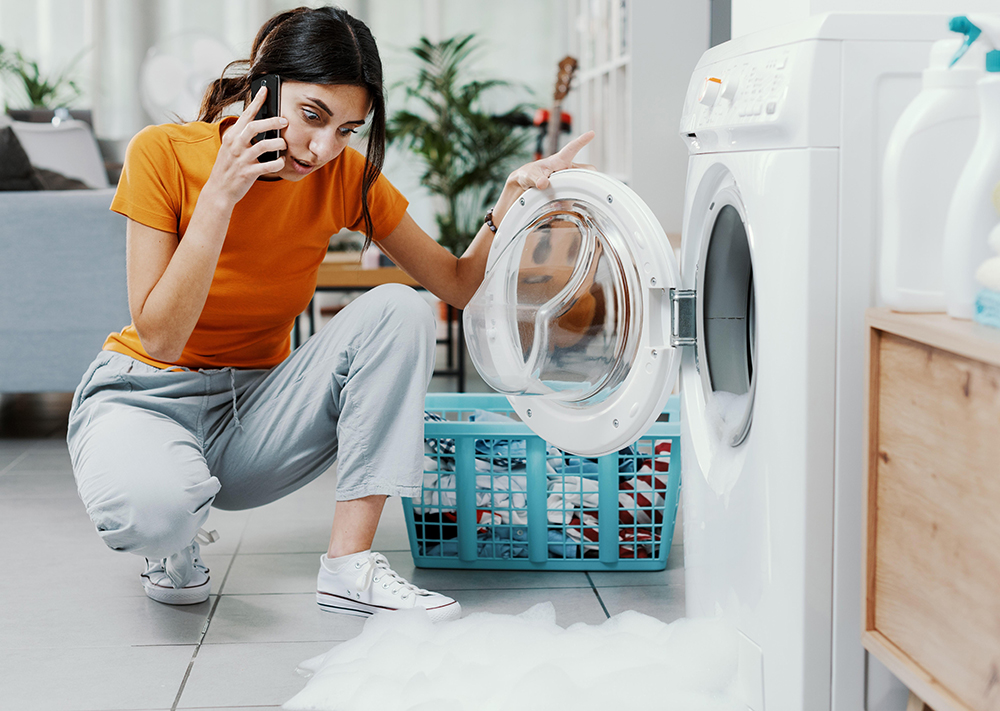

Excess foam is almost always a detergent issue rather than a machine fault. The most common cause is using too much detergent for the water hardness or load size. Counterintuitively, using too little can also cause some extra foaming because front-loading detergents contain anti-foaming agents that need to be present in sufficient quantity. The fix is using the correct amount for your water type.
Excessive foam inside the washing machine looks alarming but is rarely a sign of a machine fault. It can, however, cause real problems if severe enough – including preventing the machine from draining and leaking suds out through the door or dispenser drawer.
Why Too Much Foam Is a Problem
 What excessive foam causes
- Foam can leak from the machine – through the door seal, the soap drawer, or steam vents
- Heavy foaming can prevent the pump from draining the water correctly
- Too much foam cushions clothes from rubbing against each other – which reduces cleaning effectiveness. Mechanical agitation is a core part of how washing machines clean laundry
- Foam in the drum during spin can contribute to spin imbalance and machine noise
Causes of Excess Foam and How to Fix Them

Too much detergent
The most common cause. The correct quantity is specified on the detergent packet and varies with water hardness and soil level. Soft water areas require less detergent than hard water areas. Check the dosing guide on the packet and compare it to how much you are actually using.

Too little detergent
Counterintuitive but real – front-loading washing machine detergents contain anti-foaming agents. If too little detergent is used, there may not be enough anti-foaming agent present, which can cause some additional foam. This is less dramatic than the excess from too much detergent but worth knowing if you have been reducing dosage trying to fix the problem.

Water softer than expected
Soft water produces more foam from the same quantity of detergent than hard water. If you have moved to an area with softer water, or if your water supply has changed, the same detergent dose that worked before may now be excessive. Check your water hardness with your local water company and adjust the dosage accordingly.

Anti-limescale products over-softening the water
Products such as Calgon and similar anti-limescale tablets soften the water inside the machine during the wash. If you use these in a hard water area, you should use the detergent dosage specified for soft water – not hard. Using the hard water dose with an anti-limescale product effectively means you are using too much detergent for the actual water softness during the wash cycle. See our guide on whether Calgon is worth using.

Overloading the drum
An overloaded drum restricts rinsing – soap suds from the main wash cannot be fully removed because the laundry is packed too tightly for water to circulate effectively. The residual suds then become visible during the spin cycle. See our guide on how to load a washing machine correctly.
Machine Won’t Drain Due to Excess Foam
If the foam is so heavy the machine cannot pump out the water, do not keep running the drum – the agitation and pumping action whips the foam up further and makes the situation worse.
-
Try fabric softener first. Pour a cap-full of fabric softener into the dispenser drawer and flush it through with cold water. Fabric softener reacts with and suppresses foam relatively quickly. Wait a few minutes and check whether the machine can now drain.
-
If that does not work, flush with cold water manually. Without running the machine, pour cold water directly into the drum in large quantities. Lower the drain hose to allow this water to drain by gravity. Raise the hose and repeat. This dilutes the foam progressively without the drum agitation making it worse. This takes time but is effective.
-
Once foam has subsided, run a rinse-only cycle to clear any remaining detergent from the machine and laundry before running a normal programme.
Foam Only on Rinse and Spin
If excess foam is only visible during rinse cycles or spin – not during the main wash – a partial pump blockage is the likely cause. A partial restriction in the pump or filter allows enough water to drain to trigger the spin, but not fast enough to fully remove the soap suds from the main wash. These then get whipped up again during the spin.
Clean the pump filter first. If that does not resolve it, see our guide on washing machine not draining properly for further diagnosis.
Related Guides
Related Guides
Which Type of Detergent Is Best?Powder, liquid, biological, and non-biological detergents – what they do differently and when to use each.
Is Calgon Worth Using?Whether anti-limescale products genuinely protect your machine – and how they interact with detergent dosage.
Washing Not Getting CleanHow foam, loading, and detergent type all affect wash results – and what to change first.
 How to Load a Washing Machine
Correct loading technique for the best rinse results and to avoid overloading causing foam problems.
Frequently Asked Questions
Why is there too much foam in my washing machine?
The most common cause is using too much detergent for the water hardness. Soft water produces more foam from the same dose than hard water. If you use anti-limescale products such as Calgon, these soften the water further and you should use the soft water dosage on the detergent packet, not the hard water dosage. Using too little detergent can also cause some foam because front-loading detergents contain anti-foaming agents that need to be present in sufficient quantity.
Can too much foam stop the machine from draining?
Yes. Very heavy foaming can prevent the pump from draining effectively. Do not keep running the drum if this happens – the agitation makes the foam worse. Pour a cap of fabric softener into the dispenser drawer and flush with cold water to suppress the foam, or manually flush cold water through the drum by lowering and raising the drain hose repeatedly to dilute the suds without agitation.
Why do I only get foam on rinse and spin?
A partial pump or filter blockage is the likely cause. The restriction allows enough water to clear for the machine to proceed to spin, but not enough to fully remove the soap suds from the main wash. These then foam up again during the spin cycle. Clean the pump filter as a first step.
I reduced the detergent dose but still have too much foam – why?
If you have reduced the dose significantly, you may now be below the threshold needed for the detergent’s anti-foaming agents to work properly. Front-loading washing machine detergents are designed to produce minimal foam, and they contain agents specifically to suppress it – but these only work correctly at the right dosage. Check the packet for the correct quantity for your water hardness and use exactly that amount.
18 Comments
Grouped into 16 comment threads.
2 replies I have a Bosch class ixx washing machine. Recently it had been transported improperly without draining out the water from it ,Im guessing that is how it caused the problem- it shows the too much foam symbol when any cycle is put to work and it doesn't continue.If it is due to detergent getting deposited in some places during the transportation, how do i fix it?
0 replies I think it a fault with the washing machine, I've had many but this Beko wb1041r4w spills foam out of the drawer and door. Oddly I've found it only does it with powder not liquid detergent. Both are surf. I guess you get what you pay for.
I think it a fault with the washing machine, I’ve had many but this Beko wb1041r4w spills foam out of the drawer and door. Oddly I’ve found it only does it with powder not liquid detergent. Both are surf. I guess you get what you pay for.
0 replies Thanks, I've never come across rubbing alcohol Eric, but a quick search on it reveals many cleaning uses for it. I don't expect many people to have any though so the quickest and easiest thing to use in an emergency for most people would be the fabric softener which apparently kills suds quick.
Thanks, I’ve never come across rubbing alcohol Eric, but a quick search on it reveals many cleaning uses for it. I don’t expect many people to have any though so the quickest and easiest thing to use in an emergency for most people would be the fabric softener which apparently kills suds quick.
0 replies If the answer is "what do you do as the over sudsing is happening, and how do you STOP IT RIGHT now, I've found that addind a generous amount of rubbing alcohol into the mix. It kills the foam. You might need to wash your clothes again with NO soap to rinse them properly. I have an He front loader that you can pause mid-cycle. I did a quick drain and spin- then threw in 1/2 a bottle of isopropyl alcohol. It killed the suds in 10 seconds. Then I did another rinse and spin. Use judgement- some fabrics might not like alcohol.
If the answer is “what do you do as the over sudsing is happening, and how do you STOP IT RIGHT now, I’ve found that addind a generous amount of rubbing alcohol into the mix. It kills the foam. You might need to wash your clothes again with NO soap to rinse them properly. I have an He front loader that you can pause mid-cycle. I did a quick drain and spin- then threw in 1/2 a bottle of isopropyl alcohol. It killed the suds in 10 seconds. Then I did another rinse and spin.
Use judgement- some fabrics might not like alcohol.
0 replies I presume you don't literally mean laying down? Laying it down is what can cause problems. If by any chance water has got into the pressure switch you could try taking off the pressure tubing from the pressure switch under the lid and letting it stand for a good few hours. However, you must ensure the electricity is disconnected and be careful not to damage the pressure switch. Also, if the tubing is not replaced, or not replaced tightly then the washing machine can overfill and flood. Check out what the pressure switch is and looks like here - Faults on pressure system
I presume you don’t literally mean laying down? Laying it down is what can cause problems. If by any chance water has got into the pressure switch you could try taking off the pressure tubing from the pressure switch under the lid and letting it stand for a good few hours. However, you must ensure the electricity is disconnected and be careful not to damage the pressure switch. Also, if the tubing is not replaced, or not replaced tightly then the washing machine can overfill and flood. Check out what the pressure switch is and looks like here – Faults on pressure system
0 replies I think it is pretty normal for there to be some foam in the water with a washing machine on an empty wash cycle. There is always a buildup of deposited detergent inside the machine which keeps getting energised. There is nothing much that can be done other than keep doing regular maintenance cycles. The small amount of detergent whipped up during an empty wash cycle shouldn't be enough to contaminate the laundry. If your washing machine has an option for doing an extra rinse then use it. Make sure you don't use any option buttons that result in the washing machine doing less rinses or using less watering rinses. Checking your instruction book to see exactly what economy buttons do. Also make sure you you always use proper wash cycles and not the quick wash cycles which are pretty rubbish.
I think it is pretty normal for there to be some foam in the water with a washing machine on an empty wash cycle. There is always a buildup of deposited detergent inside the machine which keeps getting energised. There is nothing much that can be done other than keep doing regular maintenance cycles. The small amount of detergent whipped up during an empty wash cycle shouldn’t be enough to contaminate the laundry. If your washing machine has an option for doing an extra rinse then use it. Make sure you don’t use any option buttons that result in the washing machine doing less rinses or using less watering rinses. Checking your instruction book to see exactly what economy buttons do.
Also make sure you you always use proper wash cycles and not the quick wash cycles which are pretty rubbish.
0 replies Hello, My apartment comes with an LG front load washing machine. I usually use the right amount of detergent and I don't see excessive foaming during the whole program. Unfortunately, I see lots of suds during the clean cycle(s) when I run the machine empty with a cup of vinegar/baking soda/none. Last weekend, determined to see a suds-free wash, ran at least 6 empty sanitary cycles with the hottest water setting. And miserably failed! This is bothering me because I feel my clothes have the detergent residue even after that extra-rinse :( Please help me on how to achieve a suds-free empty cycle.
Hello,
My apartment comes with an LG front load washing machine. I usually use the right amount of detergent and I don’t see excessive foaming during the whole program.
Unfortunately, I see lots of suds during the clean cycle(s) when I run the machine empty with a cup of vinegar/baking soda/none. Last weekend, determined to see a suds-free wash, ran at least 6 empty sanitary cycles with the hottest water setting. And miserably failed! This is bothering me because I feel my clothes have the detergent residue even after that extra-rinse :(
Please help me on how to achieve a suds-free empty cycle.
0 replies "..you can get rid of excessive foaming by pouring a cap full of fabric conditioner into the machine".
“..you can get rid of excessive foaming by pouring a cap full of fabric conditioner into the machine”.
0 replies How do you stop the suds from like, multiplying? I'm doing these but the suds are multiplying and won't stop!
How do you stop the suds from like, multiplying? I’m doing these but the suds are multiplying and won’t stop!
0 replies Also make sure you aren't overloading the washing machine. Overloading can contribute to poor rinsing and excessive foam.
Also make sure you aren’t overloading the washing machine. Overloading can contribute to poor rinsing and excessive foam.
Leave a comment
0 replies The soap suds in my machine are pouring out the drawer when on spin mode. Also when I open the door after the programme stops there is a lot of suds remaining at the door seal. My wife also says there is an eggy smell but I'm going to do a hot wash to see if that problem is solved. Many thanks.
The soap suds in my machine are pouring out the drawer when on spin mode. Also when I open the door after the programme stops there is a lot of suds remaining at the door seal. My wife also says there is an eggy smell but I’m going to do a hot wash to see if that problem is solved. Many thanks.
0 replies G Lott: I'm assuming you mean laundry detergent liquid and not washing up liquid :) The latter would cause serious over foaming. Bath mats are notorious for not spinning in a washer if they are heavy (Why won’t washing machine spin just one item or very small loads?). If it has too much suds inside it may interfre with it's functioning so try pouring some fabric conditioner in (as described in this article under "How to deal with excessive foam on a wash" but if you can't see any suds it's probably nothing to do with it.
G Lott: I’m assuming you mean laundry detergent liquid and not washing up liquid :) The latter would cause serious over foaming.
Bath mats are notorious for not spinning in a washer if they are heavy (Why won’t washing machine spin just one item or very small loads?). If it has too much suds inside it may interfre with it’s functioning so try pouring some fabric conditioner in (as described in this article under “How to deal with excessive foam on a wash” but if you can’t see any suds it’s probably nothing to do with it.
0 replies I just put my friends washing machine on. His cleaner had left a bath mat in it, and as it was a little bit smelly, I put some washing liquid in the drawer and popped it on for a quick wash. When I came back to it, there were some suds on the kitchen floor... It also seemed to have stopped, so I turned the machine off. I then tried to turn it onto a hand wash and it's not working. Not turning. Not doing anything. It's all built in. What can I do?
I just put my friends washing machine on. His cleaner had left a bath mat in it, and as it was a little bit smelly, I put some washing liquid in the drawer and popped it on for a quick wash. When I came back to it, there were some suds on the kitchen floor… It also seemed to have stopped, so I turned the machine off. I then tried to turn it onto a hand wash and it’s not working. Not turning. Not doing anything. It’s all built in. What can I do?
0 replies I think it is down to the anti foam not activating til it reaches a hot temperature. 60C it works fine but below just keeps foaming unless you have a full or really dirty load.
I think it is down to the anti foam not activating til it reaches a hot temperature. 60C it works fine but below just keeps foaming unless you have a full or really dirty load.
0 replies Unfortunately the "recommended" dosage for small loads or washing curtains causes so much foam it rises over the door and if I don't stop the machine it could come out of the soap drawer! Yes I even tried, a few times, the recommended dosage without soda crystals, but the foaming is just as bad! Excess foam never occurs with full "dirty" loads or if you use less than the recommended detergent for washing 'light soiled' or small loads. If the detergent makers don't sort this foaming problem out, people will just use less than recommended in EVERY wash, which we know is NOT good for washing machines or the clothes. If you are doing a small load, washing your curtains or doing a load which you suspect will create tons of foam, simply use 1/4 of the minimum dosage and use 1 tablespoon of soda crystals in hard water areas. Things will still come out clean, if not cleaner than they would - without the excessive foam impairing washing performance. I nearly posted this before I remembered that this happens when I wash towels on their own. It doesn't happen if I wash towels with a mixture of other items. The only other suggestion is to try to wash a full load with other items in the same load, if they can be mixed.
Unfortunately the “recommended” dosage for small loads or washing curtains causes so much foam it rises over the door and if I don’t stop the machine it could come out of the soap drawer! Yes I even tried, a few times, the recommended dosage without soda crystals, but the foaming is just as bad!
Excess foam never occurs with full “dirty” loads or if you use less than the recommended detergent for washing ‘light soiled’ or small loads. If the detergent makers don’t sort this foaming problem out, people will just use less than recommended in EVERY wash, which we know is NOT good for washing machines or the clothes.
If you are doing a small load, washing your curtains or doing a load which you suspect will create tons of foam, simply use 1/4 of the minimum dosage and use 1 tablespoon of soda crystals in hard water areas. Things will still come out clean, if not cleaner than they would – without the excessive foam impairing washing performance.
I nearly posted this before I remembered that this happens when I wash towels on their own. It doesn’t happen if I wash towels with a mixture of other items. The only other suggestion is to try to wash a full load with other items in the same load, if they can be mixed.
0 replies This problem seems to be getting worse! There are 2 reasons why it seems to happen, in my experience: 1. Wash load too small. 2. Wash load very lightly 'soiled' e.g. curtains. It could also be that modern detergents don't have as much anti-foaming agents now or the quality of the anti-foaming agents are not as good as they used to be (or both)? If you have to wash small loads or items which are only dusty, like curtains, you will not get foaming if you use LESS than the minimum recommended dosage stated on the pack - provided that you add 1 tablespoon of soda crystals for hard water, unless of course you live in an area with soft water. Yes, it goes against the advice of using the recommended amount of detergent, but using less than recommended in these situations is the only way to stop the overfoaming and the soda crystals basically does the same job as calgon - soften water to prevent limescale build-up.
This problem seems to be getting worse!
There are 2 reasons why it seems to happen, in my experience:
1. Wash load too small.
2. Wash load very lightly ‘soiled’ e.g. curtains.
It could also be that modern detergents don’t have as much anti-foaming agents now or the quality of the anti-foaming agents are not as good as they used to be (or both)?
If you have to wash small loads or items which are only dusty, like curtains, you will not get foaming if you use LESS than the minimum recommended dosage stated on the pack – provided that you add 1 tablespoon of soda crystals for hard water, unless of course you live in an area with soft water.
Yes, it goes against the advice of using the recommended amount of detergent, but using less than recommended in these situations is the only way to stop the overfoaming and the soda crystals basically does the same job as calgon – soften water to prevent limescale build-up.
I have a Bosch class ixx washing machine. Recently it had been transported improperly without draining out the water from it ,Im guessing that is how it caused the problem- it shows the too much foam symbol when any cycle is put to work and it doesn’t continue.If it is due to detergent getting deposited in some places during the transportation, how do i fix it?
Likely replying to Nitha
Hello Nitha. This is a different issue in the sense that the washing machine isn’t actually suffering from too much foam but it is reporting that it is. I’m not sure exactly how the machine determines there is too much foam in the machine but maybe water has got into the pressure system, which might settle down if left for a day or so.
Is there a way to clean out the pressure system? I have already waited for long as the machine has been laying untouched from the past week…