
Tumble Dryer Tripping The Electrics
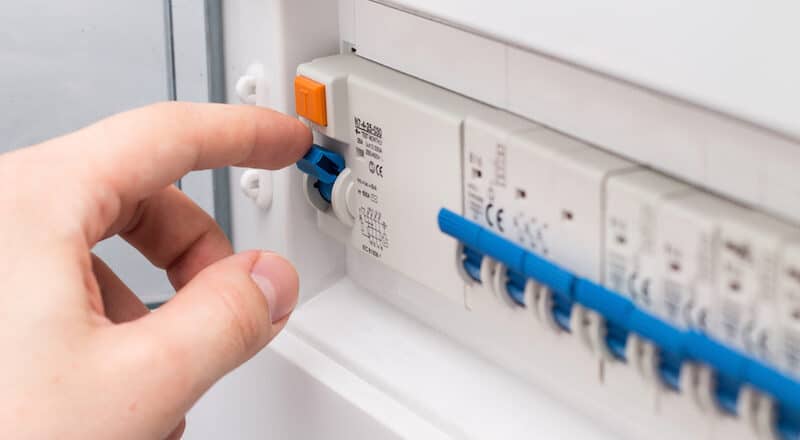

A tumble dryer tripping the electrics is detecting an electrical fault and the safety device is working exactly as it should. The most common causes are a failed heating element earthing to the casing, a faulty motor, a damaged power cable, or moisture reaching electrical components. Do not simply reset the trip and continue using the dryer – a tripping appliance has a genuine electrical fault that needs to be identified and resolved before the machine is safe to use again.

If your tumble dryer is tripping the electrics, stop using it immediately. Do not reset the trip and carry on. A tripping appliance has developed an electrical fault – the RCD or circuit breaker is operating correctly and protecting you from a potentially dangerous situation. The machine must not be used again until the fault has been identified and resolved. See our DIY appliance repair safety guide before attempting any investigation.
What’s happening when your dryer trips the electrics?
When a tumble dryer trips the electrics, it is triggering either the RCD (Residual Current Device) in your consumer unit, a circuit breaker, or in older properties, blowing a fuse. Each of these operates on a different principle and identifying which one is tripping can help narrow down the type of fault involved.
 RCD trip (most common)
An RCD monitors the balance of current flowing in and out of a circuit. When current is leaking to earth, meaning electricity is finding an unintended path through a fault or through a person, the RCD detects the imbalance and cuts the power within milliseconds. An RCD trip caused by a tumble dryer means current is leaking to earth somewhere within the appliance, its plug, or its cable. This is a ground fault and must be taken seriously. RCD trips typically manifest as a switch in the consumer unit that has flipped to the middle or down position.
 Circuit breaker trip
A circuit breaker (MCB) trips when the current flowing through the circuit exceeds the rated capacity of the breaker. This is an overcurrent trip, caused by the appliance drawing more current than the circuit is designed to carry. A tumble dryer causing an MCB trip suggests a component such as the motor or heating element is drawing excessive current due to a fault. MCB trips typically manifest as a switch that has moved to the off position in the consumer unit.
 When does it trip?
The timing of the trip is important diagnostic information. If the dryer trips immediately when plugged in or switched on, the fault is likely in the element, motor, or wiring. If it trips after a few minutes of running, the fault may be heat-related, with a component breaking down as it warms up. If it only trips on the heat setting but not on an air-only cycle, the heating element or its associated components are the most likely cause. Note the exact timing and conditions each time the trip occurs and relay this to an engineer.
The most common causes of tumble dryer tripping
Heating element earthing to the casing – by a clear margin
Faulty motor or capacitor drawing excessive current
Moisture ingress – particularly on condenser models
Damaged power cable or plug, often after the machine has been moved

This is the most common cause of an RCD trip in a tumble dryer. The heating element is a coiled resistance wire housed inside a protective casing. Over time, the wire can fracture or the insulation can degrade, causing the live element wire to make contact with the metal casing of the dryer. When this happens, current leaks to earth through the metal body of the machine, which the RCD detects and responds to by cutting the power. An element earthing fault almost always causes the trip to occur within the first few minutes of a heat cycle, or immediately when the heat comes on. The element can be tested for continuity and earth leakage with a multimeter by an engineer or a confident DIY repairer. A failed element also commonly causes the related symptom of a tumble dryer not heating when the element has gone open circuit rather than earthing.
The tumble dryer motor drives the drum and, on condenser and heat pump models, also operates the fan. Motor windings can develop insulation faults as they age, causing current to leak to earth and trip the RCD, or the motor can develop an internal short circuit that causes it to draw excessive current and trip the MCB. A motor fault is often indicated by the trip occurring at startup, when the motor first draws its highest current load, or intermittently as the motor temperature rises during the cycle. Motor faults typically require an engineer to diagnose conclusively and a motor replacement to resolve. A failing motor will frequently show other symptoms too – see our pieces on drum not turning, noisy tumble dryer, and dryer won’t start.
The power cable connecting the dryer to the wall socket is subject to mechanical stress over years of use, particularly if the machine has been moved frequently or the cable has been trapped beneath the appliance, kinked, or snagged. Internal cable damage can cause a live wire to make intermittent contact with the earth wire or with the outer sheath, creating a fault that trips the RCD. The plug itself can also develop faults, particularly if the internal connections have worked loose. A damaged cable is one of the safer faults to check yourself – inspect the cable visually along its full length for any signs of damage, kinks, burns, or exposed wire. If found, the cable must be replaced by a competent person before the machine is used again.

Tumble dryers handle large volumes of water vapour as they evaporate moisture from clothes. On condenser and heat pump models in particular, this moisture is managed internally and collected in a reservoir. If the condenser system is not maintained, if the reservoir is not emptied, or if there is a leak in the internal water pathway, moisture can reach electrical components including the element, the motor, the control board, and wiring connectors. Water bridging across electrical connections causes current leakage and RCD trips. This fault is more common in machines that have not had the condenser or filter cleaned regularly, or in machines where the water reservoir has overflowed. Thorough cleaning and drying, followed by a period of running on an air-only cycle before using heat, sometimes resolves moisture-related trips.

Most tumble dryer motors use a run capacitor to help start and maintain the motor’s rotation. A failing capacitor can cause the motor to draw excessive current on startup, tripping the circuit breaker. A capacitor fault often presents as the trip occurring at the moment the motor first tries to start, or the motor humming without turning before the trip occurs. Capacitor replacement is a relatively inexpensive repair and within the capability of a confident DIY repairer with the correct replacement part and appropriate safety awareness of the energy stored in capacitors.

The main control board manages all electrical functions of the dryer. A board fault can cause incorrect voltage or current to be supplied to components, leading to tripping. Board faults are less common than element or motor faults as a cause of tripping but should be considered when other components have been tested and found to be in good condition. Control board faults typically cause other symptoms alongside tripping, such as error codes, erratic programme behaviour, or components failing to activate at the expected point in the cycle.

While lint build-up does not directly cause an electrical trip in the same way as the faults above, severe lint accumulation can cause overheating of the element housing and associated wiring, which over time degrades insulation and creates the conditions for an earth fault or a thermal fuse failure that presents as a trip. Lint build-up is also a major UK fire-safety issue in its own right – see our coverage of tumble dryer fire risk caused by the filter. A machine that has never had its lint filter, condenser, or internal duct work properly cleaned is at much greater risk of developing heating-related electrical faults than one that has been well maintained.
When does the trip occur? Use the timing to narrow the cause
| When does it trip? | Most likely cause | Action |
|---|---|---|
| Immediately when plugged in | Severe earth fault in element, motor, or wiring | Do not use – engineer required |
| When switched on, before drum turns | Wiring fault, control board, or capacitor | Check cable for damage, engineer for component testing |
| When drum starts turning | Motor fault or capacitor failure | Engineer required for motor or capacitor diagnosis |
| A few minutes after heat comes on | Heating element earthing fault (most common) | Element testing and replacement – engineer or DIY with correct part |
| Only trips on heat setting, not air-only | Heating element or related thermostat/wiring | Confirms heat circuit fault – element the primary suspect |
| Intermittent, not every cycle | Intermittent earth fault, moisture ingress, or motor winding fault | Do not continue using – intermittent faults progress to permanent ones |
| After recent move or relocation of machine | Cable damage from moving, or condensation from cold environment | Inspect cable fully, allow machine to warm to room temperature before use |
| Error code showing alongside trip | Specific component fault indicated by machine | Look up code in our error codes guide |
Is it the dryer or the electrics?
Before concluding the fault is within the dryer itself, it is worth confirming that the problem is not with the wall socket, the circuit, or another appliance sharing the same circuit.
-
Reset the trip and plug a different appliance into the same socket. If that appliance trips the circuit too, the fault is in the socket or circuit rather than the dryer. Contact a qualified electrician rather than an appliance engineer.
-
If other appliances work fine on the same socket, plug the dryer into a different socket on a different circuit, ideally in a different room. If it trips that circuit too, the fault is confirmed to be within the dryer.
-
Inspect the dryer’s plug and cable visually before testing. Look for scorch marks on the plug, damage to the cable sheath, or signs of overheating at the socket end. A damaged plug or cable must be replaced before any further testing.
-
Try switching the dryer on with no load inside on an air-only (no heat) cycle. If it runs without tripping on air-only but trips when heat is selected, the heating circuit is confirmed as the fault location, which strongly points to the element.
Does the dryer type matter – vented, condenser, or heat pump?
All three types of tumble dryer can trip the electrics, but the most common causes vary slightly by type. For a fuller comparison of the three dryer types, see our heat pump vs vented vs condenser tumble dryers guide.
 Vented tumble dryers
The simplest design, with fewer internal components. Heating element earth faults and motor faults are the most common tripping causes. Less prone to moisture-related electrical faults than condenser models because moisture is exhausted directly out of the machine rather than being managed internally. Cable damage is a common culprit on older vented models that have been moved frequently.
Condenser tumble dryersCondenser models manage moisture internally, creating more opportunity for moisture to reach electrical components if the condenser unit or water reservoir is not regularly maintained. Moisture ingress is a more significant tripping risk on condenser machines than on vented models. The heating element, motor, and fan motor can all cause tripping. Regular condenser cleaning is the single most effective maintenance action for preventing electrical faults on condenser dryers.
 Heat pump tumble dryers
Heat pump dryers use a refrigerant circuit rather than a conventional element to generate heat, which means they do not have a traditional heating element to fail. Electrical faults on heat pump dryers more commonly involve the compressor, the fan motor, the control board, or moisture reaching electrical components. They are generally more expensive to repair when electrical faults develop and the diagnosis requires an engineer with specific heat pump dryer experience. For a full guide to heat pump dryer operation, see our heat pump tumble dryer guide.
Can you fix a tripping tumble dryer yourself?
 You can safely check yourself
- Visually inspect the power cable and plug for damage, burns, or exposed wire
- Clean the lint filter, condenser, and all accessible lint pathways thoroughly
- Empty and clean the water reservoir on condenser models
- Run an air-only cycle (no heat) to test whether the fault is in the heating circuit
- Test the dryer on a different socket and a different circuit
- Check for visible moisture inside the machine by removing the back panel (with the machine unplugged)
 What needs an engineer
- Testing the heating element for earth leakage (requires safe isolation and competent electrical testing)
- Motor testing and replacement
- Capacitor replacement (capacitors store charge and must be handled carefully)
- Control board diagnosis
- Any work involving internal wiring
- Any fault that cannot be identified through visual inspection alone
If you are confident with basic appliance repair and have the correct tools, a heating element replacement is within reach for a capable DIY repairer. Genuine replacement elements for most major brands are available through our appliance spare parts section. Always read our DIY appliance repair safety guide before beginning any internal work on an appliance that has been tripping the electrics.
Safety notice – tumble dryer fire risks and recalls
Tumble dryers have been the subject of more high-profile UK product safety actions than any other appliance category in recent years. An electrical fault causing your dryer to trip the electrics could be the early-warning symptom of a known model issue covered by a safety notice. Before continuing to investigate, check whether your model appears in any of these UK safety actions:
Tumble dryer fire risk – is yours one? (master overview)
Hotpoint and Indesit dryer fire risk
Beko and Blomberg dryer safety notice
Beko condenser tumble dryer safety notice
Logik LVD7W15 tumble dryer fire risk
Siemens tumble dryer fire risk
White Knight tumble dryer fire risk
Also relevant – can a tumble dryer catch fire when unplugged? Always check the OPSS product safety database for any active recall affecting your specific make, model, and serial number before continuing to use the appliance.
Is it worth repairing a tumble dryer that is tripping the electrics?
Whether to repair or replace depends primarily on the age of the machine, the cost of the repair, and the likely condition of other components. A heating element replacement on a three-year-old dryer is almost always worth doing. The same repair on a twelve-year-old machine with a drum that vibrates, a bearing that is wearing, and a belt that has been replaced once already may not represent value for money.
As a general guide, if the repair cost exceeds 50% of the cost of an equivalent replacement machine and the dryer is more than seven years old, replacement is often the better financial decision. For a full framework for making this decision, see our guide to whether to repair or replace your appliance. If replacement is the right call, our heat pump vs vented vs condenser dryers guide and most energy efficient tumble dryer piece set out the options. Be aware of the UK tumble dryer regulation changes due in 2027 when buying new.
Tumble dryer tripping the electrics and need an engineer?
Electrical faults in tumble dryers require proper diagnosis before repair. Our engineers cover tumble dryer repairs across all major brands and all three dryer types – vented, condenser, and heat pump – nationwide, with genuine spare parts available for most models.
Related tumble dryer fault guides
If your dryer has additional symptoms alongside the trip, the following dedicated guides may help with diagnosis.
 Tumble dryer not heating
Element failure, thermostat faults, and heat circuit diagnostics.
Tumble dryer drum not turningMotor, belt, and drum bearing diagnostics.
 Tumble dryer won’t start
Door switch, programme selector, and startup fault diagnosis.
 Takes too long to dry
Reduced heat output, lint blockage, and airflow problems.
 Noisy tumble dryer
Bearing, belt, drum, and motor noise diagnosis.
Filter fire riskWhy a blocked lint filter is a UK fire-safety issue, not just a maintenance one.
Want to diagnose appliance electrical faults confidently?
Electrical fault diagnosis on appliances – including dryers, washing machines, and dishwashers – is a core skill in appliance repair. The NAC National Training Centre offers structured, City and Guilds Assured training delivered by working engineers, with both practical and online options.
Frequently asked questions about a tumble dryer tripping the electrics
Why does my tumble dryer keep tripping the electrics?
A tumble dryer that repeatedly trips the electrics has developed an electrical fault that is causing current to leak to earth (triggering the RCD) or to exceed the circuit’s rated capacity (triggering the MCB). The most common causes are a failed heating element that has developed an earth fault, a faulty motor drawing excessive current, moisture reaching electrical components, or a damaged power cable. The fault is genuine and the trip is the safety device working correctly. The dryer must not be used again until the fault is found and repaired.
Is it safe to keep resetting the trip and using the dryer?
No. Resetting the trip and continuing to use the appliance is not safe. The RCD or circuit breaker is detecting a real electrical fault and cutting the power to protect you. Repeatedly overriding this protection exposes you to risk of electric shock or fire from the unresolved fault. The machine must be taken out of use until the fault has been properly diagnosed and repaired. If the trip occurs, switch the dryer off at the mains, unplug it, and contact an engineer.
My tumble dryer only trips when the heat is on. What does this mean?
If the dryer runs without tripping on an air-only cycle but trips when a heat setting is selected, the fault is confirmed to be within the heating circuit rather than the motor, drum, or drum-related components. The heating element is the most likely cause – a fractured element wire or degraded element insulation can cause the live element to make contact with the earth path, which the RCD detects and responds to. Other possibilities within the heat circuit include a thermostat with an internal earth fault or a fault in the wiring to the element. An engineer can test these components with a multimeter to confirm which has failed.
Could a blocked lint filter cause my dryer to trip the electrics?
A blocked lint filter does not directly cause an electrical trip. However, severe and long-term lint build-up causes the dryer to overheat, which degrades the insulation on the heating element and associated wiring over time. This progressive insulation breakdown eventually leads to earth faults that do cause tripping. Lint build-up is also a serious fire-risk issue in its own right – see tumble dryer fire risk caused by the filter. Keeping the lint filter clean after every cycle and cleaning the condenser regularly on condenser models is the most effective preventive measure.
Can moisture cause a tumble dryer to trip the electrics?
Yes. Tumble dryers handle large volumes of water vapour and, on condenser models, manage collected condensate internally. If the condenser is blocked, the water reservoir overflows, or there is an internal leak, moisture can reach electrical components including the element housing, wiring connectors, and the control board. Water bridging across electrical connections creates a current leak path that trips the RCD. On condenser models, emptying the reservoir after every cycle and cleaning the condenser every few cycles is essential maintenance that significantly reduces the risk of moisture-related electrical faults.
My dryer trips the electrics intermittently, not every time. Is this still serious?
Yes, an intermittent trip is just as serious as a consistent one and should be treated with the same urgency. Intermittent electrical faults typically indicate a fault that worsens with heat (a component breaking down as it warms up) or a connection that makes and breaks (a wire chafing against a metal edge, or a connector that is partially loose). Intermittent faults almost always progress to permanent faults, and in the intervening period the appliance is operating with an unresolved electrical problem. Take the machine out of use and have it inspected.
How much does it cost to repair a tumble dryer that is tripping the electrics?
The cost depends on the fault identified. A heating element replacement, the most common repair for a tripping dryer, typically costs between £80 and £150 including the part and labour for most standard models. Motor replacement is more expensive, typically £120 to £220 depending on the model. Control board replacement can be the most expensive component repair. An engineer’s diagnostic visit to identify the specific fault usually costs between £60 and £90 as a call-out charge. Before committing to any repair, consider the age and overall condition of the machine alongside the repair cost. Our guide to repairing versus replacing an appliance provides a useful framework for this decision.
Could my tumble dryer be subject to a UK safety recall?
Possibly. Tumble dryers have been the subject of more UK product safety notices than any other appliance category in recent years, affecting Hotpoint, Indesit, Beko, Blomberg, Siemens, Logik, and White Knight models among others. If your dryer is tripping the electrics, the underlying fault could be related to a known model issue. Check your make, model, and serial number against our tumble dryer fire risk – is yours one? guide and the OPSS product safety database before continuing to use the appliance.
Ask the repair forum
Post the make, model and symptoms and get help from the Whitegoods Help community.
0 Comments