
Planned Obsolescence in UK Appliances
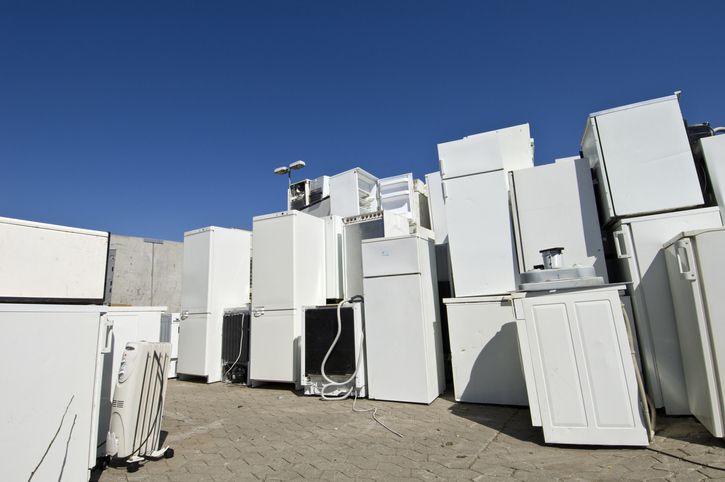

Planned obsolescence in the appliance industry is the design decision, conscious or otherwise, to limit how long an appliance can usefully serve its owner. It rarely takes the form of deliberate sabotage. Far more often it appears as small engineering choices that accumulate to make routine repairs uneconomical or impossible – sealed drums, foamed-in sensors, unavailable wear parts, deliberately incompatible components. Whether each of these meets the strict legal definition of planned obsolescence is debatable. Their cumulative effect on appliance lifespan is not. This article walks through the six practices that most often catch out UK consumers, with an honest analysis of the arguments on both sides.
The scale of the problem at a glance
Washing machines sold across the EU each year
Average washing machine lifespan a generation ago
Average washing machine lifespan today
Industry practices examined in this article
What does planned obsolescence actually mean?
Planned obsolescence is a contested phrase. Strictly defined, it describes a deliberate engineering decision to shorten a product’s useful life in order to drive replacement sales. Most manufacturers will, of course, deny that any such practice occurs in their products. From the manufacturer’s seat, every design choice has a justification – cost reduction, manufacturing simplicity, reliability improvement, leak prevention, regulatory compliance, or some combination of these.
From the consumer’s seat, and from the seat of the engineer who is called out to repair the appliance when it eventually fails, the picture often looks different. Components that used to be replaceable are now sealed inside larger assemblies. Spare parts for relatively recent appliances become unavailable within a few years of production ending. Wear-and-tear items that everyone in the industry knows will fail are made impossible to service. The cumulative result is that appliances are routinely scrapped at ages where, a generation ago, they would have been repaired.
Whether each specific instance meets the strict legal test for “planned obsolescence” is genuinely difficult to prove in a courtroom. France’s AGEC law, which now makes deliberate planned obsolescence a criminal offence, will likely test this question in real cases over the coming years. But for the consumer trying to understand why their five-year-old washing machine is being written off for the sake of a £10 component, the legal definition matters less than the practical reality.
This article is not an attack on any specific manufacturer. It is a thought experiment, in the spirit of working out what “reasonable” would actually mean if these practices were ever tested in front of a judge. Six practices are examined below, with the arguments on both sides set out fairly. Readers can form their own views.
1. Sealed washing machine tubs and drums
The most widely discussed example, and the one most directly relevant to our patch. Most modern washing machines have an outer tub welded or ultrasonically bonded shut at the factory, sealing the drum bearings, shaft seal, and drum spider permanently inside. When the bearings fail, which is a normal end-of-life wear event on any washing machine, the entire tub-and-drum assembly must be replaced as a single unit, typically costing more than half the original purchase price.
 Argument for – this is planned obsolescence
- Bearings and shaft seals are well-understood wear components with a predictable service life
- Manufacturers know roughly when they will fail
- Sealing them in unrepairable housing means replacement is the only rational economic choice at failure
- Budget brands continue to use split tubs with replaceable bearings – the sealed design is a choice not a necessity
- Inevitability + foreknowledge + deliberate removal of the repair option points strongly toward intent
 Argument against – this is reliability and cost engineering
- Welded tubs eliminate a potential leak path at the seal between the two halves of a split tub
- Lighter plastic construction reduces transport weight and emissions
- Manufacturing is faster and cheaper, keeping consumer prices down
- However, bolted tubs were not historically a significant source of leaks
- The bearings themselves come from the same suppliers – the reliability claim does not hold up on the part most likely to fail
Our view: if this design were ever tested in front of a judge, with the arguments properly presented, most reasonable people would conclude that sealed-tub washing machines fall within the spirit of planned obsolescence. The full detail of this argument is set out in our companion analysis on sealed drums versus split tubs.
2. Foamed-in refrigerator sensors
On many modern refrigerators and freezers, the temperature sensors that replaced traditional thermostats are foamed permanently into the cabinet wall during manufacturing. When the sensor fails, which it does, accessing or replacing it ranges from difficult to impossible without major destructive work to the cabinet. The component itself typically costs between a few pounds and £30 to £50. The consequence of its failure is often a written-off appliance.
Argument for – this is planned obsolescence
- The sensor is a known-failure component, even if the failure rate is relatively low
- Foaming it into a sealed cabinet wall means the entire cabinet is effectively scrap when it fails
- The failed part costs a small fraction of the appliance price
- The cost saving in production is captured by the manufacturer
- The cost of the resulting write-off is paid by the consumer and the environment
Argument against – this is design and hygiene
- Consumers prefer smooth, easy-to-clean interiors without protruding probes
- Improved insulation around the sensor may improve temperature reading accuracy
- However, the obvious alternative is a service-accessible sensor mount
- That was the standard approach until relatively recently
- It did not produce noticeably worse refrigerators
Our view: this design choice is genuinely hard to defend on engineering grounds when the consequences of failure are weighed against any benefits of integration. It is one of the practices most likely to attract scrutiny under legislation modelled on France’s AGEC law.
3. Unavailable dishwasher basket wheels
The small plastic rollers and wheels that allow a dishwasher basket to slide on its rails are wear components. They break, regularly, on dishwashers of all brands. On many models in the UK market, those wheels cannot be bought individually as spare parts. The only available replacement is the complete basket assembly, typically costing £80 to over £100, against an underlying component cost that would amount to a few pounds at most. For our broader coverage see our dishwashers hub.
Argument for – this is planned obsolescence
- These wheels are universally acknowledged wear components
- They will fail in normal use
- There is no engineering reason whatsoever to make them unavailable as individual spares
- Forcing consumers to buy an entire basket assembly pushes appliance owners toward “it’s not worth fixing”
- The decision applies to dishwashers that are otherwise perfectly serviceable
Argument against – none we have found
- We have looked – no manufacturer has offered any explanation that holds up to scrutiny
- The component is trivial to produce
- It is trivial to package
- It is trivial to distribute
- The decision to make it unavailable as a separate part is commercial, not engineering
Our view: this is among the easiest of the six practices to challenge. There is no defensible engineering justification.
4. Tumble dryer heater and thermostat assemblies
Traditional vented and condenser tumble dryers used small button-style thermostats that sat on the heating element. When one failed, which they did, the engineer or owner would replace it for a few pounds, often supplied as a kit of new thermostats for £10 to £20. This is no longer typical. On most modern dryers, the thermostats are not available as individual spare parts. The only available replacement is a complete heating element assembly with the thermostats already attached, typically costing £50 to £100 or more. See our tumble dryers hub for broader coverage.
Argument for – this is planned obsolescence
- For a five-to-seven-year-old £200 dryer, an assembly costing close to half the original price sends most owners toward replacement
- The components themselves have not changed materially
- The decision to sell only as a larger assembly is commercial
- Predictable consequences for the dryer’s economic life
- The “silly little thermostat” framing genuinely is how many owners see it
Argument against – this is safety engineering
- Manufacturers occasionally cite safety as the justification
- The reasoning is rarely set out in any detail
- How a thermostat in a larger pack is meaningfully safer than the same thermostat sold individually is not obvious
- The argument exists, but it does not have much substance
- The cost differential remains the dominant factor in the decision economics
Our view: this practice is harder to justify than manufacturers often acknowledge. The shift toward heat pump dryers, where heater elements work differently or are not present at all, means the issue will gradually become less common, but it remains a clear example of the broader pattern.
5. Heat pump dryer refrigerant units
Heat pump tumble dryers use a small refrigerant system to recycle heat. The refrigerant unit itself is a precision component but is generally supplied only as a complete sealed assembly costing £200 or more. When it fails, the only available repair route is to replace the entire unit, which on a dryer originally costing £350 is rarely an economically rational choice.
Argument for – this is planned obsolescence
- A single component costing more than 50% of the entire appliance
- That component is a known potential failure point
- Effectively bounds the appliance’s economic life by the life of one unit
- The design choice is not forced by physics or chemistry
- Supplying only complete units rather than serviceable sub-components is a commercial decision
Argument against – this is technical specialism
- Servicing refrigerant systems requires specialist equipment and F-Gas certification
- Allowing field service on consumer-grade equipment has genuine practical and safety challenges
- Trained technicians needed across the repair industry
- The cost of providing a serviceable refrigerant unit may genuinely exceed the cost of a sealed one
- Both in production and across training requirements
Our view: this is one of the genuinely two-sided cases. There is technical merit to the argument for sealed units. There is also no good reason for the part to be priced at more than half the cost of the entire dryer. The design and the pricing are separate decisions, and the latter is harder to defend than the former. For context on heat pump dryer ownership generally, see our heat pump vs vented vs condenser tumble dryers guide.
6. Premature parts obsolescence
One of the most pervasive issues in the UK appliance market, and one that affects every brand to varying degrees, is parts that become unavailable from the manufacturer within just a few years of the appliance leaving production. Fridge door shelves, dishwasher salt caps, oven knobs, washing machine door catches, and dozens of other small components routinely go obsolete on machines that are still well within their expected service life.
Argument for – this is planned obsolescence
- Some budget brands provide effectively no spare parts support beyond the warranty period
- Particularly those importing from Asia and Turkey under their own labels
- Out-of-warranty failure leaves the consumer with replacement as the only option
- Not the result of an unforeseen logistics failure
- A deliberate commercial choice not to stock parts for older machines, made with full knowledge they will be needed
Argument against – this is incompetence or poor planning
- Possible in theory to argue premature obsolescence is poor forecasting rather than deliberate intent
- Harder to sustain when the same pattern appears across multiple product lines and brand families
- A recurring outcome at some point stops looking like incompetence and starts looking like a choice
- UK Right to Repair regulations exist to address this
- Enforcement remains a real challenge
Our view: premature parts obsolescence is a real and widespread problem, even where formal Right to Repair obligations exist on paper. Whether it meets the strict legal test for planned obsolescence in any specific case would depend on the evidence and the judge, but the cumulative pattern is hard to attribute to anything other than design intent.
Parts compatibility and the case of the slightly-different pump
One further issue, beyond the six specific design practices, deserves a mention. The appliance industry has progressively moved away from universal parts and toward bespoke components, even for items where there is no technical reason for the change.
In the 1990s, a single universal Askoll pump fitted scores of popular washing machine models across multiple brands. Today, the same broad function requires dozens of different pumps, each fitted to a smaller range of machines, often differing only in a slightly different fitting or connector while being identical in every other respect. The same pattern applies to thermostats, motors, fan blades, and many other components.
The argument offered by manufacturers is that they need specific parts for specific machines. There is some truth to this for components with genuinely different specifications. There is little truth to it for components where the only difference is a non-standard mounting bracket that prevents the use of an interchangeable alternative.
The effect is that repair costs rise, parts availability becomes more fragmented, and engineers are forced to carry larger inventories or accept that more repairs will require return visits. The beneficiary is the manufacturer, who retains pricing control over the parts ecosystem for their machines. The losers are repairers, consumers, and the environment.
Why does the scale of this matter?
To understand why this matters at a level beyond any individual household’s annoyance, the scale of the appliance industry is worth pausing on. Across the EU, approximately 175 million washing machines are sold every year. The average UK washing machine lifespan has dropped from around 12 to 14 years a generation ago to under 10 years today – see our how long should a washing machine last analysis – a reduction that translates into millions of additional machines being manufactured, shipped, sold, and ultimately disposed of each year.
Even a modest extension of average appliance lifespan, of the order of two years, would prevent the manufacture and disposal of tens of millions of machines per year across Europe, with associated savings in raw materials, transport emissions, manufacturing energy, and waste disposal cost. The current regulatory focus on energy efficiency, while important, is partial. The full environmental case for longer-lasting appliances is significantly larger than the in-use energy savings alone.
If the appliance is the climate-relevant unit, the choice between an appliance that lasts 10 years and one that lasts 14 years is a meaningful environmental choice. That choice is increasingly being taken away from consumers by design decisions made long before the appliance leaves the factory. For a case-study angle, see our piece on why premium appliances increasingly fail early.
The Whitegoods Help view
None of this is an attack on individual manufacturers. The appliance industry employs many tens of thousands of people across the UK and Europe, and produces appliances that on the whole work well, wash well, cook well, and cool well for years at a time. The criticism is not of the industry’s competence. It is of a small number of specific design choices, taken across the industry over the past 15 to 20 years, that have systematically eroded the consumer’s ability to keep a working appliance working.
Our position is that consumers deserve transparent information about how long an appliance is realistically designed to last, and what happens when it eventually fails. Manufacturers have a commercial right to make engineering choices that reduce manufacturing costs. But where those choices materially shorten the useful economic life of an appliance, the trade-off should be visible to the buyer at the point of sale, not hidden until the moment of failure when the only realistic option is a new machine.
France’s AGEC law is a step in the right direction. The UK Right to Repair regulations are another, though enforcement remains the key question. UK consumer protection through the Consumer Rights Act 2015 is the third. The single most important driver of change, however, is consumer awareness. When buyers stop accepting “we don’t sell that part” as an answer, manufacturers will be obliged to listen. Until then, the industry will continue to follow the path that maximises short-term commercial outcomes at the cost of long-term consumer and environmental ones.
Concerned about an appliance that may be obsolete?
Before accepting “not repairable” as the final answer, a qualified engineer can often confirm whether parts are genuinely unavailable or whether alternatives exist. Our nationwide repair service and spare parts service support households trying to keep working appliances in service for as long as it is economically and practically sensible to do so.
Related Whitegoods Help reading
 Sealed drum vs split tub
The full technical analysis of sealed-tub washing machines and why the bearings can no longer be replaced.
 France’s AGEC law
How France has made deliberate planned obsolescence a criminal offence and what it could mean for the wider EU.
 White goods Right to Repair
UK regulations on parts availability and the manufacturer obligations they impose.
 How long should a washing machine last?
Reasonable lifespan expectations from a modern washing machine and what affects them.
 When premium appliances fail early
A real case study in expensive appliances with short economic lives – and what to do about it.
 Consumer rights and appliances
What the Consumer Rights Act 2015 actually gives you when an appliance fails too early.
Frequently asked questions
What is planned obsolescence in appliances?
Planned obsolescence is the design decision, conscious or otherwise, to limit how long an appliance can usefully serve its owner. In the appliance industry it most often appears as sealed components that cannot be serviced (such as welded washing machine tubs), wear parts that are not available as individual spares, and components that become unavailable shortly after production ends. Whether each instance meets the strict legal test for “planned obsolescence” is debatable; the practical effect on appliance lifespan is not.
Is planned obsolescence illegal in the UK?
Not directly, although several aspects of the practice are addressed by other legislation including the Consumer Rights Act 2015 (which requires goods to be durable) and the UK Right to Repair regulations (which require spare parts to be available for 7 to 10 years after a product was last sold). France has gone further and made deliberate planned obsolescence a criminal offence under its AGEC law. Similar legislation may be adopted across the EU and potentially in the UK over time.
What can I do about it as a consumer?
Three things. First, ask before you buy – whether a particular model has serviceable components, how long the manufacturer commits to parts availability, and what happens when common wear components fail. Second, when an appliance does fail, get a proper diagnosis from a qualified engineer before accepting that the machine is scrap. Third, give feedback to manufacturers when their parts availability or design choices have made a repair impossible. The industry responds to consumer feedback over time when the volume is high enough. See also our consumer rights and appliances guide.
Are some brands worse than others for planned obsolescence?
The practices described in this article are not unique to any single brand. The sealed-tub washing machine, the foamed-in fridge sensor, the unavailable basket wheels, and the bonded heater assemblies appear across most mainstream brands sold in the UK. The differences between brands are real but generally smaller than the differences between premium and budget tiers within each brand family. LG Direct Drive washing machines and some Miele models retain more serviceable internals than most mainstream alternatives, and budget brands with no UK service infrastructure are typically the worst for parts availability.
How long should an appliance last?
The average UK washing machine lifespan has dropped from around 12 to 14 years a generation ago to under 10 years today. Tumble dryers, dishwashers, and fridges follow broadly similar patterns. Whether these are reasonable lifespans depends on the price paid – a £300 entry-level machine lasting 8 years is different from a £900 premium machine lasting 8 years. The Consumer Rights Act 2015 requires goods to be durable for “a reasonable period,” interpreted through case law. There is no single legal answer, but premium appliances failing within a few years can give rise to consumer rights claims against the retailer.
Ask the repair forum
Post the make, model and symptoms and get help from the Whitegoods Help community.
0 Comments