
Grease marks on clothes after washing
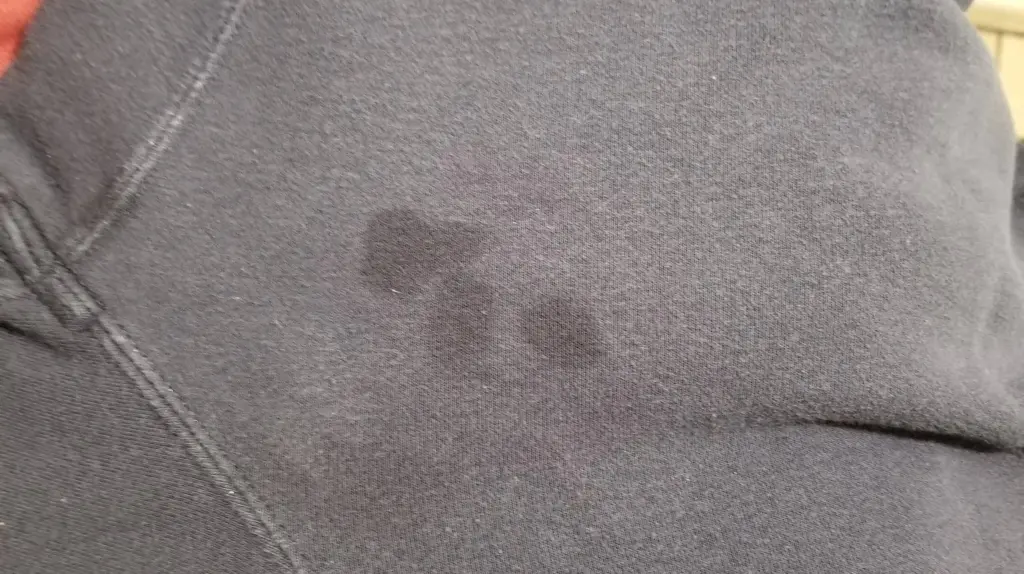

Grease marks on clothes after washing are usually caused by one of three things: under-dosing detergent allowing grease to redistribute onto other items, overloading the drum reducing wash effectiveness, or grease from cooking or food contact that was not pre-treated before washing. For greasy marks already on fabric, pre-treatment with washing up liquid or a liquid detergent before re-washing is the most reliable approach.
Why Grease Marks Appear After Washing
Grease redistribution from under-dosing
One of the less obvious causes of greasy marks on washed laundry is using too little detergent. Detergent works by holding grease and soiling in suspension in the wash water so it can be rinsed away. If the detergent concentration is too low, it cannot hold all the dissolved grease in suspension. As the wash water circulates, this free-floating grease can deposit onto other items in the load – leaving marks on items that were perfectly clean before washing.
This redistribution effect means a garment can come out of the wash with grease spots that were not on it when it went in. The cause is not the machine but the insufficient detergent concentration for the load. Always use the dose stated on the packet for the water hardness in the area and the level of soiling.
Overloading
An overloaded drum compounds the under-dosing problem. Items packed tightly cannot move freely through the water, reducing the contact between detergent solution and fabric. Soiling that should be lifted and held in suspension is instead left on items or transferred between them. Reducing the load size and using the correct detergent dose together produces significantly better results than either alone. See our guide on how to load a washing machine correctly.
Machine gunge depositing onto laundry
Greasy marks can also come from inside the machine rather than from the laundry itself. A washing machine used predominantly at low temperatures with liquid detergent can accumulate grease, limescale, and black mould on the drum, door seal, and inner workings. During a wash cycle this residue can transfer onto laundry as dark greasy smears. If the marks are dark, irregular, and appear on multiple items consistently, inspect the door seal fold and the drum interior. See our guide on washing machine grease, mould and smells.
How to Remove Grease Marks From Clothes

Washing up liquid pre-treatment
Washing up liquid is designed to cut through cooking grease and works well as a pre-treatment on fabric. Apply a small amount directly to the affected area and work it into the fibres with an old toothbrush using gentle circular movements. Allow to sit for a few minutes, then wash as normal at the temperature recommended on the care label. Do not scrub hard enough to abrade the fabric.

Liquid detergent pre-treatment
A concentrated liquid laundry detergent applied directly to the greasy area before washing is effective on most fabric types. Apply undiluted, work in gently, leave for 15 to 30 minutes, then wash at the garment’s recommended temperature. This approach is particularly useful on polyester, where oil and grease tend to bond more firmly to the fibres than on natural fabrics.

Wash at the highest safe temperature
After pre-treating, wash at the highest temperature the garment’s care label allows. Higher temperatures are more effective at breaking down and removing grease. Check the care label before washing – some synthetics and delicates cannot tolerate high temperatures and should be washed at 30 or 40 degrees maximum.
If a grease mark is still visible after washing, do not put the item in the tumble dryer. Heat sets grease stains into fabric and makes them significantly harder or impossible to remove on subsequent washes. Air dry the item and inspect the area before deciding whether to repeat the pre-treatment.
Related Guides
 How to Remove Stains From Clothes
Pre-treatment and washing techniques for common stains including grease, food, and oil.
 Washing Machine Grease and Mould
Causes of grease and black mould inside washing machines – and how to clean and prevent it.
 Washing Not Getting Clean
Diagnosing poor wash results from temperature, programme, detergent dose, and load size.
 White Streaks or Powder Residue on Laundry
A similar problem with different causes – marks appearing on laundry after washing.
Frequently Asked Questions
Why does my washing come out with greasy spots?
The most common cause is using too little detergent. When the detergent concentration is insufficient, it cannot hold all the dissolved grease in suspension in the wash water. As the water circulates, free-floating grease deposits onto other items in the drum. Using the correct dose for the water hardness and level of soiling prevents this. Overloading the drum compounds the problem by reducing water and detergent circulation.
How do I get grease out of clothes that have already been washed?
Pre-treat the affected area with washing up liquid or undiluted liquid laundry detergent, working it into the fibres with an old toothbrush. Allow to sit for 15 to 30 minutes then re-wash at the highest temperature the care label allows. Crucially, do not tumble dry until the mark has gone – heat sets grease into fabric and makes it much harder to remove on subsequent washes.
Why is my washing machine leaving greasy marks on clothes?
Dark, irregular greasy marks consistent across multiple loads are often coming from inside the machine rather than the laundry. A machine used mostly at low temperatures with liquid detergent accumulates grease, limescale, and mould inside the drum and door seal. This residue transfers onto laundry during the wash. Inspect the door seal fold and drum interior for gunge. A hot maintenance wash at 60 to 90 degrees with a machine cleaning product or soda crystals clears the build-up.
20 Comments
Grouped into 9 comment threads.
9 replies i am having a problem with my clothes constantly coming out of the washer with grease looking marks on them. i previously had a zanussi lindo 300 and had engineer visits who couldn’t find a problem with the machine. i now have a beko washer and the problem is still there. i don’t overload my washing and i am mindful of which detergents i use (i have about 5 different ones) i really am at a loss with this any advice of help would be greatly appreciated thank you
1 reply My washing is coming out with brown spots in the pattern of a colander. Must be coming through the drum. Would anyone have any ideas?
My washing is coming out with brown spots in the pattern of a colander. Must be coming through the drum. Would anyone have any ideas?
Likely replying to Barbara OHagan
Hello Barbara I have a separate article for that although it’s entitled rust spots rather than brown spots Rust coloured spots on laundry
1 reply Black marks or spots can be caused by black mould, is there black mould on the door seal?
0 replies Oil makes me think of drum bearings. If you are talking about a top loader though they are something I've not worked on but I know they sometimes have gearboxes that could leak oil.
Oil makes me think of drum bearings. If you are talking about a top loader though they are something I’ve not worked on but I know they sometimes have gearboxes that could leak oil.
0 replies Some of my items in a white wash come out with what appears to look like and smell like oil. Machine appears to be working fine though. No weird noises
Some of my items in a white wash come out with what appears to look like and smell like oil. Machine appears to be working fine though. No weird noises
0 replies Black spots are commonly caused by black mould though they normally appear on the door seal rather than on the laundry (What causes black mould on washing machines?). But if the door seal is covered in black mould then clothes could be picking up black marks from there. Have a good look at the inside of your door seal to see if it is affected and if so read the article I've just linked to. If the door seal appears to be perfectly clean and not covered in black mould than the other place clothes could pick up black marks from are from the inside of the main outer drum when they get pushed through the small holes in the inner drum during spin. If the outer drum is covered with gunge inside they could pick it up from there. However again, if the washing machine was so badly gunged up inside I would expect the door seal to be equally affected. Another possibility is oil from worn drum bearings. If this is the case I would expect the washing machine to be quite noisy on spin, usually a rumbling sound.
Black spots are commonly caused by black mould though they normally appear on the door seal rather than on the laundry (What causes black mould on washing machines?). But if the door seal is covered in black mould then clothes could be picking up black marks from there. Have a good look at the inside of your door seal to see if it is affected and if so read the article I’ve just linked to.
If the door seal appears to be perfectly clean and not covered in black mould than the other place clothes could pick up black marks from are from the inside of the main outer drum when they get pushed through the small holes in the inner drum during spin. If the outer drum is covered with gunge inside they could pick it up from there. However again, if the washing machine was so badly gunged up inside I would expect the door seal to be equally affected.
Another possibility is oil from worn drum bearings. If this is the case I would expect the washing machine to be quite noisy on spin, usually a rumbling sound.
0 replies When I do a wash I always get black spots on my clothing. Can you tell me why that is.
When I do a wash I always get black spots on my clothing. Can you tell me why that is.
0 replies i have black mark all around the drum and it looks like grease and i cannot seem to shift these marks so when cycle is finished especially with the larger items the are getting marked as the washing is pulled out.
i have black mark all around the drum and it looks like grease and i cannot seem to shift these marks so when cycle is finished especially with the larger items the are getting marked as the washing is pulled out.
0 replies My mum always put some Swarfega on any greasy marks on clothes before putting them in the washing machine, and it seems to work. Try on a bit of the fabric you won't see first though, just to check.
My mum always put some Swarfega on any greasy marks on clothes before putting them in the washing machine, and it seems to work. Try on a bit of the fabric you won’t see first though, just to check.
i am having a problem with my clothes constantly coming out of the washer with grease looking marks on them. i previously had a zanussi lindo 300 and had engineer visits who couldn’t find a problem with the
machine. i now have a beko washer and the problem is still there. i don’t overload my washing and i am mindful of which detergents i use (i have about 5 different ones) i really am at a loss with this any advice of help would be greatly appreciated thank you
Likely replying to rachel
Hello Rachel. Which kind of detergent do you use on the laundry that gets the grease marks? And do you use the exact amount that is advised on the detergent packaging for the level of hardness of your water and the level of soiling? One of the major causes of grease getting redeposited onto laundry from the wash is when there is not enough detergent inside the drum. Essentially there are products inside the detergent that attaches to the dirt and grease. When the washing machine goes through the rinse cycles it rinses away the detergent and with it the attached dirt and grease. So if there is not enough detergent in the drum then when the detergent is rinsed away there is dirt and grease left inside the washing machine that can redeposit onto laundry and accumulate inside the washing machine.
If you pull back the door seal where it meets the revolving drum, is there grease, grime and limescale underneath it and on the lip of the outer drum?
Hi Andy, I have the same [problem as above and yes there is grease and grime on the lip of the outer drum. What is the best way to get rid of this please?
Hello Alison. If it’s bad you may not be able to get rid of it, but the things to try are in my article here about the causes of grease and gunge inside washing machines washing machine smells
Likely replying to Andy Trigg (Whitegoodshelp)
Hi Andy, I’m an expat living in Cape Town and we have been having issues with 100% polyester cloths such as sports shirts getting grease spots on them after washing them in washing machine. These seem impossible to get out as we have tried a number of the traditional methods but to no avail. We do not use washing powder but rather the capsules from Ariel and OMO ( not sure if that’s available in UK as I’ve not been there since 2010 ). Anyway, any advice would be helpful. Incidentally we have a brand new Bosch front loader. We had this issue for a while and even wash these items without any other materials and at the correct temperatures etc. Yep the water in Cape Town is pretty hard.
Cheers.
Hello Peter. The only thing I can suggest, is that you carefully go through all of the points in my article to eliminate all the possibilities. Paying particular attention to the point that grease spots are commonly caused by grease being re-deposited on laundry due to not using enough detergent. If you are in a hard water area, you need to pay particular attention to the instructions on the detergent packet as to how much you need to use for very hard water.
If that doesn’t work, I would try a good quality powdered detergent.
Cool thanks Andy. I tend to stay away from powdered detergents as they can be quite abrasive on polyester. But a bit of experimenting is needed here. I tried borax and that didn’t really help much. As I stated before I use the capsules which I assume should be enough depending on how much of a washing load goes in.
Hi Peter. I would think that capsules, with a fixed amount of detergent inside, couldnt possibly be adequate for washng a lightly soiled load in soft water – and, a heavily soiled load in a hard water area.
Both scenarios need very different amounts of detergent. Do you use 2 capsules? What does it say on the packaging regarding washing different levels of soiling and in different levels of water hardness?
Hi Peter,
Having similar issues. Machine was working OK but around 4 months ago started noticing round marks left on some clothing after being washed (not all) the marks are not coloured just like greasy marks the same colour as the garment. Had an engineer out and he thought the drum would be dirty but said it was immaculate, he also checked the bearings but they were ok also. I have tried about 20 different cleaning products but nothing seems to work the issue appears to be resolved for a day or 2 but then the marks appear again. I live in a soft water environment. Any advice? Thanks…Jon
Hello Jon. If this issue only started about four months ago new have to assume something changed around that time although I’m sure you must have thought of that and maybe can’t think of anything?
If you haven’t changed anything at all, including the wash cycles you use, the detergent you use, the type of washing you are doing etc. then it obviously doesn’t make sense.
As my article suggests, not using enough detergent, and overloading the drum can cause grease and dirt to be redeposited on laundry. However, overloading means putting way too much in, so don’t just reduce the amount of laundry you are putting in the drum if you know you are not overloading (how to correctly load a washing machine)
If you have soft water, it is important to use the amount of detergent that is recommended on the detergent packaging for soft water. Apparently if you use too little detergent it can create a lot more suds than if you use too much so just make sure you read the packaging and are using what they suggest. I would also try using a good quality powdered detergent.