
How do you blank off the old hot water tap?
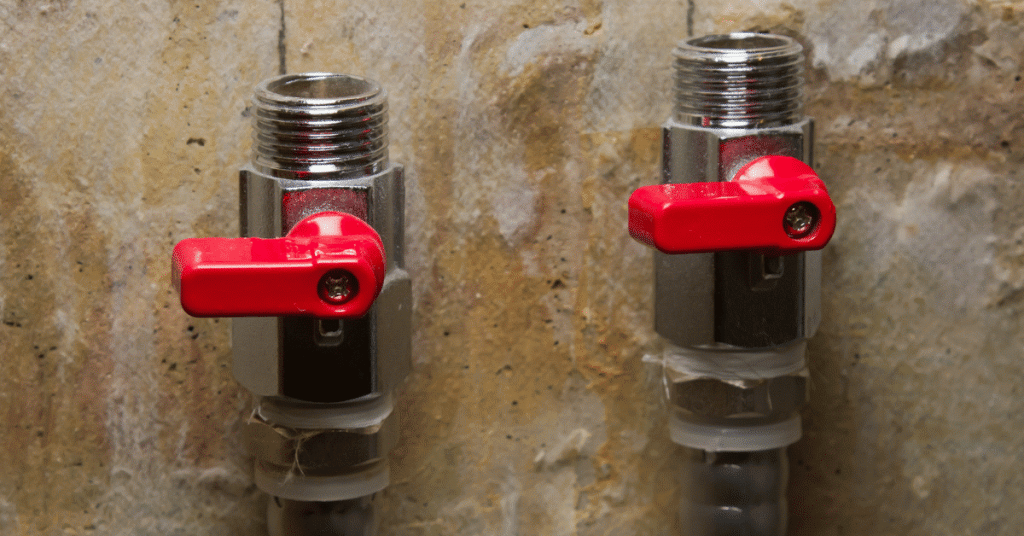

Most modern washing machines are cold-fill only, leaving a redundant hot water tap and pipework behind. Leaving it completely unused is the most common approach, but stagnant water in unused pipework can allow bacteria to develop over time. There are four options, each with different levels of effort and risk mitigation. The right choice depends on your plumbing setup and how concerned you are about dead-leg bacteria.
For the past two decades, almost all washing machines sold in the UK have been cold-fill only. If your plumbing has a hot tap that was previously used for the washing machine, that tap and the pipework leading to it may now be sitting permanently unused.
Your Four Options
-
Leave everything as it is and do nothing.
The most common approach – simply stop using the hot tap and leave the tap and pipework in place. For most households this is probably fine in practice, particularly where the dead-leg run of pipework is very short. The concern is that stagnant water in unused pipework can under certain conditions allow bacteria to develop. See the health risk section below for more detail on when this actually matters.
-
Fit a blanking cap to the tap outlet.
If leaving the tap in place but no longer connected to anything, fitting a 3/4 inch (approximately 19mm) blanking cap to the tap outlet prevents the risk of water escaping if the tap is accidentally turned. This is particularly worth doing if the tap is inside a cupboard with easy-to-catch lever handles. Blanking caps are available from any plumbers merchant or DIY store and should come with a rubber seal. This option does not address the stagnant water issue – it only prevents accidental discharge from the open tap.
-
Remove the tap and dead-leg pipework entirely.
The most thorough option. A plumber removes the tap and all pipework that branches off from the main supply specifically to serve it. This eliminates the stagnant water concern completely and tidies up the plumbing. It requires a plumber and involves some disruption, but permanently resolves the issue for any household genuinely concerned about bacteria in dead pipework.
-
Leave the hose connected and flush regularly.
Leave the hot fill hose connected to the hot tap but stored out of the way. On a regular basis – monthly is a reasonable frequency – run the hot tap until genuinely hot water flows through it (around 60 degrees). This flushes stagnant water from the dead leg, kills off any bacteria, and replaces the standing water with fresh. The water can be directed into a bucket, sink, or the washing machine’s standpipe. This option requires no plumber, retains the tap for possible future use, and addresses the bacteria concern without permanent removal. It does require the tap to be reasonably accessible.
Is the Bacteria Risk Actually Serious?
Stagnant water in unused pipework – known as a dead leg – creates conditions where bacteria including Legionella can potentially develop. This is a genuine concern in building regulations and commercial plumbing standards, which is why dead legs are generally discouraged in any water installation.
For domestic households with short runs of unused pipework, the risk is generally considered low but not zero. The actual risk level depends on the length of the dead leg, the material of the pipework, the ambient temperature, and how long the water has been standing. A very short run of pipe from a main that carries active flow is lower risk than a long, isolated dead leg in a warm utility space.
For a full explanation of the health risk and how to assess it for your specific situation, see our companion article on potential health risks from an unused washing machine hot water tap. Understanding the risk properly allows a more informed decision about which of the four options above is appropriate for your household.
How Long to Flush For
If flushing is the chosen approach, run the hot tap until the water emerging is genuinely hot – at least 60 degrees – rather than simply running for a fixed time. The time needed depends on the length of the dead leg and how quickly hot water from the boiler reaches the tap. In most domestic situations, 30 seconds to 2 minutes of hot flow is sufficient to flush a short dead leg completely. Some guidance suggests flushing weekly rather than monthly; the appropriate frequency depends on the length and configuration of the unused pipework.
Related Plumbing Guides
Related Guides
 Health Risks From an Unused Hot Water Tap
A full explanation of the bacteria and Legionella risk from dead-leg pipework and how to assess it for your situation.
 Cold Fill Washing Machines
Why modern washing machines only connect to the cold supply – and how this changed from older hot and cold fill machines.
 Tips for Connecting a Washing Machine
Practical advice for connecting inlet hoses and drain when installing a washing machine.
 Should You Turn Off the Taps When Not in Use?
The case for turning off water supply taps between washes to reduce flood risk from hose failures.
Frequently Asked Questions
Can I just leave the old hot water tap disconnected and do nothing?
For most households with short dead-leg pipework, this is probably fine in practice. The concern is that stagnant water in unused pipework can under certain conditions allow bacteria including Legionella to develop. The actual risk depends on the length of the dead leg, ambient temperature, and how long water has been standing. Read the companion article on potential health risks to make an informed decision for your specific situation.
What size blanking cap do I need for the hot tap?
You need a 3/4 inch (approximately 19mm) blanking cap. These are available from plumbers merchants and most DIY stores. The cap should include a rubber seal – if not, the seal from the old hot water hose connection may fit.
How often should I flush the unused hot tap to prevent bacteria?
Monthly is a practical frequency for most domestic situations. The important thing is to run the tap until genuinely hot water flows – at least 60 degrees – rather than running for a fixed time. Some guidance recommends weekly flushing for longer dead legs or in warmer environments. The water can be directed to a bucket, sink, or the washing machine’s standpipe.
121 Comments
Grouped into 96 comment threads.
5 replies Barbara: If your washing machine has two valves it should either be hot and cold fill, or should have come with a y-piece connector to connect both up to the cold tap if it's a cold fill only machine. If it has 2 water valves I would expect it needs them both connecting up. What does it say in the instruction book?
2 replies Need a blanking cap the site mentioned doesn't seem to be there any more any recommendations - help
Need a blanking cap the site mentioned doesn’t seem to be there any more any recommendations – help
Likely replying to Andy Trigg (Whitegoodshelp)
Dear Andy,
I have been trying to get onto the website E-lectricalshop.co.uk to order a blanking cap for old hot tap when connecting a cold fill only washing machine but when I click on “go to website” the page comes up saying “we’re closing down Talk Talk webspace”. Then when I click on “continue to browse” I get the message “NOT FOUND the requested URL/jmistone was not found on this server”.
I notice the comments posted on your website are all from 2010. Can this mean E-lectricalshop website no longer exist?
Any advice regarding this problem would be most welcome including any other website where I can get a suitable blanking cap from.
Thanking you for your help,
Regards,
John Smithb
2 replies Hi Andy, Currys refused to fit my new washing machine friday, my 12+ yr old Hotpoint finally passed on :( but he had cold & hot, new one is just cold, but they refused to fit because I have NO taps on my pipes at all, the words he used were 'broken off'??? hot & cold hoses were screwed on! I assumed that was the norm. Plumbers are quoting me 70 quid! This is a housing assosiation place, am I right that it's their responsibility to fit taps? Or is it easy for me to do myself? Any advice gratefully received. Damsel in distress! x
Hi Andy, Currys refused to fit my new washing machine friday, my 12+ yr old Hotpoint finally passed on :( but he had cold & hot, new one is just cold, but they refused to fit because I have NO taps on my pipes at all, the words he used were ‘broken off’??? hot & cold hoses were screwed on! I assumed that was the norm. Plumbers are quoting me 70 quid!
This is a housing assosiation place, am I right that it’s their responsibility to fit taps? Or is it easy for me to do myself?
Any advice gratefully received.
Damsel in distress! x
Likely replying to caroline
Hello Caroline. Unfortunately these retailers claim to “install” a washing machine but if there’s a single slight issue the “installers” refuse to do it. They will usually only screw the hose on and connect the drain hose as long as it’s dead easy to do. If there’s any awkwardness or difficulty they refuse. However, if there were no taps, that’s pretty rare and unusual. I can’t remember coming across such a thing. If there were no taps it means to disconnect the hoses you’d have to turn off the mains water, then drain all the hot water from the system to get the hot hose off. In such circumstances I can understand them saying they can’t do that. The terms and conditions usually say they will connect as long as it’s straight forward.
If there are taps, and they just didn’t look properly I’d be inclined to complain and get them back. I have two articles on installing a washing machine which you should read.
Awww thank you for replying hun, I had no joy with the landlord, they don’t get involved in washing machines apparently, but they said taps aren’t essential so I went & got a cap this morning, but it still leaked, so I have a plumber coming over soon as I now have the water off. He’s charging 50 quid to cut pipe back a tad, put tap on & totally blank the hot off x
1 reply the seal at the end of the hot water tap hose that is unconnected does that stop leaking if the hot water is turned on
the seal at the end of the hot water tap hose that is unconnected does that stop leaking if the hot water is turned on
Hello Ava. In order to stop any leaking, a blanking cap with a seal must be fitted as described in my article. In this scenario the hot water hose is just removed and is no longer needed. If the hose still connected to the old hot water tap then the only thing that would stop water coming out if the tap somehow started passing water through would be if the end of the hose was screwed onto some sort of dead-end.
1 reply My mum has an old Servis M3001 washing machine and during the process of fixing a leaky hot tap valve I noticed that the machine has like a small red blanking cap fitted where the hot hose used to connect to the machine. The hose will still connect to the machine but it looks like this stops any hot water going in. Is this a common thing, I've never seen this before? I can't find the old manual to verify whether the machine is cold fill only.
My mum has an old Servis M3001 washing machine and during the process of fixing a leaky hot tap valve I noticed that the machine has like a small red blanking cap fitted where the hot hose used to connect to the machine. The hose will still connect to the machine but it looks like this stops any hot water going in. Is this a common thing, I’ve never seen this before? I can’t find the old manual to verify whether the machine is cold fill only.
Likely replying to Ian James
Ian, if it has two water valves it is definitely a hot and cold fill washing machine. Cold fill washing machines will only have one valve.
Looking at Spares4Appliances there is definitely a hot water valve listed for that model – washing machine water valves
I can also see there is a hot water valve closing cap listed too. I’ve never come across this and I’m surprised that they would make a washing machine designed to use hot and cold water but then create a part to blank off the hot valve. However, if the washing machine is working ok on all the wash cycles I wouldn’t change anything.
1 reply Appreciate the advice re 1) blanking cap for hot water supply 2) and potential unhealthy dead water in old pipework run to washer. The remedy being to remove the surplus piping relating to the stagnant stretch. Would it not be possible reuse that hot water feed into the adjacent hot water outlet just to move the water,. You would have thought manufacturers would have been aware of the potential health issues of moving to a cold fill or just wanted to offer choice & options. and therefore have an optional hot water inlet to obviate the H&S problem, to drain or utilise an amount of water from the stagnant water automatically every so often.via some controller options. I always suspect some like going in circles
Appreciate the advice re 1) blanking cap for hot water supply 2) and potential unhealthy dead water in old pipework run to washer.
The remedy being to remove the surplus piping relating to the stagnant stretch.
Would it not be possible reuse that hot water feed into the adjacent hot water outlet just to move the water,.
You would have thought manufacturers would have been aware of the potential health issues of moving to a cold fill or just wanted to offer choice & options.
and therefore have an optional hot water inlet to obviate the H&S problem, to drain or utilise an amount of water from the stagnant water automatically every so often.via some controller options.
I always suspect some like going in circles
Likely replying to shaun
Hello Shaun. You make a very good point about manufacturers, they presumably had no idea that blanking off the hot water tap could lead to dangerous bacteria. To be fair, I only learnt about it myself several months back.
I have considered joining my hot and cold water hoses together using a y-piece connector which would regularly use the hot water and stop it going stagnant. The problem with this approach though is that modern washing machines and detergents are designed to work from cold water. In many cases though there wouldn’t be much hot water going into the machine because they take a while to run hot (unless supplied via a combi boiler close to the machine) and they don;t take much water in on wash. However, the hot tap would need to be turned off after the initial wash fill otherwise it would use a lot of hot water on rinses.
1 reply I have now added a complete new section on the main article above. It isn't 100% conclusive yet but gives a good idea of this issue. Keep an eye out for further updates as I continue my research.
I have now added a complete new section on the main article above. It isn’t 100% conclusive yet but gives a good idea of this issue. Keep an eye out for further updates as I continue my research.
1 reply Hi Collin. Thank you for pointing this out. I don't think even most plumbers know this or at least don't take much notice of it. I myself have a long run of old hot water pipework running from my kitchen, across to a free-standing garage, and a few feet inside to my washing machine, which is cold fill only. It's something I never thought about, but once pointed out it's obvious that this 20 feet of pipework will contain trapped water which will never flow anywhere. I am still investigating and researching, and waiting for a reply to an email I sent somewhere before deciding how serious a threat this is. I will certainly add a section on my main article advising that ideally all of the redundant pipework should be removed. How strongly I advise this depends on how potentially serious the issue actually is, or whether it's just a theoretical thing that is unlikely to cause any issues except in extreme freaky circumstances. One of the problems with removing all the plumbing of course is that a plumber will need to be employed, which won't be cheap. Another problem is people may be reluctant to remove the pipework in case it is ever needed again in the future. The latter may be unlikely, but personally, I wouldn't be at all surprised if hot and cold fill washing machines make a return on environmental grounds. I have a full article on cold fill washing machines where I conclude that cold fill only washing machines are actually bad for the environment because they are only "better"for the average person whereas many tens of thousands of people would benefit from having the hot water supply reinstated.
Hi Collin. Thank you for pointing this out. I don’t think even most plumbers know this or at least don’t take much notice of it. I myself have a long run of old hot water pipework running from my kitchen, across to a free-standing garage, and a few feet inside to my washing machine, which is cold fill only.
It’s something I never thought about, but once pointed out it’s obvious that this 20 feet of pipework will contain trapped water which will never flow anywhere. I am still investigating and researching, and waiting for a reply to an email I sent somewhere before deciding how serious a threat this is. I will certainly add a section on my main article advising that ideally all of the redundant pipework should be removed. How strongly I advise this depends on how potentially serious the issue actually is, or whether it’s just a theoretical thing that is unlikely to cause any issues except in extreme freaky circumstances.
One of the problems with removing all the plumbing of course is that a plumber will need to be employed, which won’t be cheap. Another problem is people may be reluctant to remove the pipework in case it is ever needed again in the future. The latter may be unlikely, but personally, I wouldn’t be at all surprised if hot and cold fill washing machines make a return on environmental grounds. I have a full article on cold fill washing machines where I conclude that cold fill only washing machines are actually bad for the environment because they are only “better”for the average person whereas many tens of thousands of people would benefit from having the hot water supply reinstated.
1 reply I don't have any expertise other than it is my understanding that "dead legs" ie lengths of pipe with standing water that are not in use, should be removed Colin Lewis
I don’t have any expertise other than it is my understanding that “dead legs” ie lengths of pipe with standing water that are not in use, should be removed
Colin Lewis
Likely replying to Colin Lewis
Hello Colin, I sent an email to the site I now link to in my main article but didn’t get a reply. I’ve sent another directly to the guy mentioned in that article now. Basically my amended advice in my article points out the issue and that best practice has got to be to eliminate all the unneeded pipework but I can’t see many people paying a plumber to do that without more evidence it’s a genuinely serious concern in the UK.
1 reply Doesn't blanking off the hot water pipe at the valve create a "dead leg" allowing bacteria to develop? Colin Lewis
Doesn’t blanking off the hot water pipe at the valve create a “dead leg” allowing bacteria to develop?
Colin Lewis
Leave a comment
1 reply I am sitting here having returned from B&Q with a blanking cap that is too small....then I found your article. I've just ordered one from the site you recommended so many thanks for being so informative and helpful. Much appreciated!!
I am sitting here having returned from B&Q with a blanking cap that is too small….then I found your article.
I’ve just ordered one from the site you recommended so many thanks for being so informative and helpful. Much appreciated!!
1 reply My cold water fill tap has broken. I thought I would be able to swap it for the red tap but it does not fit. My friend also gave me another black tap and that doesn't fit either. I resorted to use pliers to switch the cold water on but can only partially turn the valve. There is a small trickle of water going into my washer but it is obviously not enough pressure. Is there anything else I can do myself before calling a plumber?
My cold water fill tap has broken. I thought I would be able to swap it for the red tap but it does not fit. My friend also gave me another black tap and that doesn’t fit either. I resorted to use pliers to switch the cold water on but can only partially turn the valve. There is a small trickle of water going into my washer but it is obviously not enough pressure. Is there anything else I can do myself before calling a plumber?
1 reply I've just purchased a new washing machine and only has the cold water pipe. I closed the hot water tap off and it still has a small drip from the tap. Can I just fit a blanking cap or do I need a plumber to fit a new valve or close the pipe off??
I’ve just purchased a new washing machine and only has the cold water pipe. I closed the hot water tap off and it still has a small drip from the tap. Can I just fit a blanking cap or do I need a plumber to fit a new valve or close the pipe off??
Likely replying to Robert
Hello Robert. I understand your concern. As the cap has a rubber seal I would expect it to be OK especially as there is no real pressure, just a small drip. Keep an eye on it and check it regularly until it’s been on several weeks. If the tap is one with the red plastic levers though I would unscrew the plastic lever and try tweaking the valve shut more with some pliers, which may stop the drip altogether. Those type of taps commonly don’t close off 100% at times.
1 reply Great article - just what I needed to know when I installed our modern washing machine in our new home.
1 reply Just wanted to say thanks for this post - I purchased said blanking cap and it was fitted with no problem, was a little worried about the size not being right but you were spot. I also had an issue with the valves so blocked off hot water and replaced the cold water valve as it had a slow drip (well my plumber chap did it and he came out on a Saturday!)
Just wanted to say thanks for this post – I purchased said blanking cap and it was fitted with no problem, was a little worried about the size not being right but you were spot. I also had an issue with the valves so blocked off hot water and replaced the cold water valve as it had a slow drip (well my plumber chap did it and he came out on a Saturday!)
1 reply Thanks very much for the tip on getting hold of the blanking cap it saves me a whole lot of time searching and asking my way round DIY stores, I must add to your words of warning about the red and blue valve levers and I flooded my kitchen when I thought that the cold fill had been shut off but the lever had broken without me realising, you won't realise how strong mains pressure is until It's spraying all over your kitchen!!! Thanks again for such quality and easy to understand information.
Thanks very much for the tip on getting hold of the blanking cap it saves me a whole lot of time searching and asking my way round DIY stores, I must add to your words of warning about the red and blue valve levers and I flooded my kitchen when I thought that the cold fill had been shut off but the lever had broken without me realising, you won’t realise how strong mains pressure is until It’s spraying all over your kitchen!!! Thanks again for such quality and easy to understand information.
1 reply Ordered one of the brass blanking caps from e-lectricalshop.co.uk on Wednesday afternoon, arrived this morning. Saved lots of time rummaging around the DIY stores trying to find the right one. I notice that it has a full rubber insert rather than the usual type washer - assume this is OK?
Ordered one of the brass blanking caps from e-lectricalshop.co.uk on Wednesday afternoon, arrived this morning. Saved lots of time rummaging around the DIY stores trying to find the right one.
I notice that it has a full rubber insert rather than the usual type washer – assume this is OK?
1 reply I can only endorse the comments above. I ordered from the supplier as suggested, and the part arrived in a couple of days and fitted perfectly. The internet, I've found, is a remarkable resource for self-help and self-instruction in so many areas, from advice on addressing nagging worries as in this case, or on sealing a shower tray, to finding recipes for baking terrific cakes and breads, but only because decent people who know what they're talking about are prepared to share what they know. Many thanks.
I can only endorse the comments above. I ordered from the supplier as suggested, and the part arrived in a couple of days and fitted perfectly. The internet, I’ve found, is a remarkable resource for self-help and self-instruction in so many areas, from advice on addressing nagging worries as in this case, or on sealing a shower tray, to finding recipes for baking terrific cakes and breads, but only because decent people who know what they’re talking about are prepared to share what they know. Many thanks.
Likely replying to Keith
Thanks Keith and Hannah.
Ross: She can use it by connecting the hot and cold hoses to the single cold supply. This might help Is it possible to use a hot & cold fill washing machine with just a cold supply?
1 reply My hot fill pipe doesn't have a dedicated tap. Whoever plumbed it in didn't fit one. The cold and hot fill pipes to the washing machine each share stopcocks with the cold and hot fill pipes to the kitchen sink taps which will obviously have to be switched on again after installing the new, cold-fill only machine. I presume the blanking cap will be sufficient to seal off the hot water pipe at the point where the old hot fill hose currently attaches but would welcome your advice.
My hot fill pipe doesn’t have a dedicated tap. Whoever plumbed it in didn’t fit one. The cold and hot fill pipes to the washing machine each share stopcocks with the cold and hot fill pipes to the kitchen sink taps which will obviously have to be switched on again after installing the new, cold-fill only machine. I presume the blanking cap will be sufficient to seal off the hot water pipe at the point where the old hot fill hose currently attaches but would welcome your advice.
Likely replying to John Shuttleworth
Hello John. Yes, the cap has the same thread as the old hot fill hose so when you remove the old fill hose you screw the cap on in its place. However, ideally you’d like the tap to then be turned off so it’s not under any pressure.
If you can’t turn off this tap because it also supplies the sink tap you will have to rely on the rubber seal inside this cap preventing leakage. It should do, but keep a close eye on it for a few weeks at least.
0 replies I have to thank you for your helpful information about hot supply. It was very informative.
I have to thank you for your helpful information about hot supply. It was very informative.
0 replies Yes they closed down which was a shame. Try here Washing machine blanking cap for hot water (Screwfix)
Yes they closed down which was a shame. Try here Washing machine blanking cap for hot water (Screwfix)
0 replies Re earlier comments about blanking plug thread, it may be useful to know that 19mm = 0.748 inch. Which is practically the same as 3/4 inch.
Re earlier comments about blanking plug thread, it may be useful to know that 19mm = 0.748 inch. Which is practically the same as 3/4 inch.
0 replies A red indicator on a tap doesn't mean it's definitely a hot water tap. It's supposed to indicate a hot water tap but there's no difference between a hot and a cold water tap at all and the red or blue indicators are just there to help users. Someone could have used a red one instead of blue. To find out if it's hot or cold water attach a fill hose and run water into a bowl or bucket for a minute or so and see what comes out. If it's cold you can use it fine, if it's hot then someone plumbed it in wrong or connected it up for a dishwasher (some of which can use hot water) and it needs a proper cold water supply to use with a washing machine.
A red indicator on a tap doesn’t mean it’s definitely a hot water tap. It’s supposed to indicate a hot water tap but there’s no difference between a hot and a cold water tap at all and the red or blue indicators are just there to help users. Someone could have used a red one instead of blue. To find out if it’s hot or cold water attach a fill hose and run water into a bowl or bucket for a minute or so and see what comes out. If it’s cold you can use it fine, if it’s hot then someone plumbed it in wrong or connected it up for a dishwasher (some of which can use hot water) and it needs a proper cold water supply to use with a washing machine.
0 replies can you help please my mum is moving into a flat , but were the washing machine goes theres only 1 pipe to connect to washing maching to and the lever is red can I connect it to the red pipe or does it only have to be blue . And what to do if theres to pipes comin of tge waa
can you help please my mum is moving into a flat , but were the washing machine goes theres only 1 pipe to connect to washing maching to and the lever is red can I connect it to the red pipe or does it only have to be blue . And what to do if theres to pipes comin of tge waa
0 replies Thank you so much, I used pliers to turn off hot water valve worked a treat. Will look to cap off tomorrow. My hero! Washing away happily at the moment but will still cap off tomorrow.
Thank you so much, I used pliers to turn off hot water valve worked a treat. Will look to cap off tomorrow. My hero! Washing away happily at the moment but will still cap off tomorrow.
0 replies I've used self tapping taps before but they aren't ideal. They only pierce a very small hole to tap into the water, which (especially on the hot side) can repeatedly get clogged up over the years. They may have improved them by now though, it's a long time since I used one. If you know a decent reputable plumber he might not charge much to just put one in. Otherwise you might need to try the self tapping tap.
I’ve used self tapping taps before but they aren’t ideal. They only pierce a very small hole to tap into the water, which (especially on the hot side) can repeatedly get clogged up over the years. They may have improved them by now though, it’s a long time since I used one. If you know a decent reputable plumber he might not charge much to just put one in. Otherwise you might need to try the self tapping tap.
0 replies Can I use a self tapping cold water tap or do I need to get a plumber to put a complete new tap in for me?
Can I use a self tapping cold water tap or do I need to get a plumber to put a complete new tap in for me?
0 replies Thank you so much. You are an amazingly generous person to share your knowledge for free, whilst a plumber would have charged me in excess of £100 (call out fee and unnecessary parts and obligatory cuppa). Thank you is not enough. But thank you.
Thank you so much. You are an amazingly generous person to share your knowledge for free, whilst a plumber would have charged me in excess of £100 (call out fee and unnecessary parts and obligatory cuppa). Thank you is not enough. But thank you.
0 replies Good advice Kev, but no need to go hunting for old bike tire. When disconnecting old hose save rubber washer and reuse to seal 10p coin against fitting. For the avoidance of doubt washer goes between coin and fitting , not between coin and plastic screw on nut recovered from your old fill hose .Also works on redundant waste hose connections to sink waste etc.
Good advice Kev, but no need to go hunting for old bike tire. When disconnecting old hose save rubber washer and reuse to seal 10p coin against fitting. For the avoidance of doubt washer goes between coin and fitting , not between coin and plastic screw on nut recovered from your old fill hose .Also works on redundant waste hose connections to sink waste etc.
0 replies Thank you for the advice. The pipe dripped even after turning off the tap so I got one of these jobbies from the firm you suggested. It was delivered quickly and Hey Presto no more drips. Tony
Thank you for the advice. The pipe dripped even after turning off the tap so I got one of these jobbies from the firm you suggested. It was delivered quickly and Hey Presto no more drips.
Tony
0 replies Just putting this out there for anyone who hasn't got the time / want to wait for a cap, you can make a completely watertight seal for this if you live in the uk. You do this by taking the hose that you no longer need (the hot water hose) and removing the screw part from the end that connects to the warm water pipe from the wall. Remove the plastic screw and inside it place a 10p coin. Then get a small piece of rubber, like old bike tire or something, and cut a circle out the same size as the coin. Place that in top of the coin, and screw directly only to water pipe that needs blocking. Works perfectly. Hope this helps some people.
Just putting this out there for anyone who hasn’t got the time / want to wait for a cap, you can make a completely watertight seal for this if you live in the uk. You do this by taking the hose that you no longer need (the hot water hose) and removing the screw part from the end that connects to the warm water pipe from the wall. Remove the plastic screw and inside it place a 10p coin. Then get a small piece of rubber, like old bike tire or something, and cut a circle out the same size as the coin. Place that in top of the coin, and screw directly only to water pipe that needs blocking. Works perfectly. Hope this helps some people.
0 replies Thanks for this useful info about the blanking cap. In fact, I managed to buy a couple of these in Robert Dyas, having seen them in their Winchester and Basingstoke branches. In the latter branch the price and description on the display hook was incorrect so best to check the actual packet. They are described on the packet as "BRASS PLUMBING CAP For 3/4" appliance valve". They come with a washer and the price is £2.29.
Thanks for this useful info about the blanking cap. In fact, I managed to buy a couple of these in Robert Dyas, having seen them in their Winchester and Basingstoke branches. In the latter branch the price and description on the display hook was incorrect so best to check the actual packet. They are described on the packet as “BRASS PLUMBING CAP For 3/4″ appliance valve”. They come with a washer and the price is £2.29.
0 replies Thanks for this article, very useful advice - I found that ebay is a good source of caps too if you search for the right size: around £1.50 each
Thanks for this article, very useful advice – I found that ebay is a good source of caps too if you search for the right size: around £1.50 each
0 replies Boots Kitchen Appliances have just delivered and refused to install a Beko WMB61221S Washing Machine in Silver. Then because the defunct machine had a hot and cold water pipe. They said it could not be fitted and left a 69 year old woman with two washing machines in the kitchen, even after charging £19.99 for connection and £9.99 for delivery.
Boots Kitchen Appliances have just delivered and refused to install a Beko WMB61221S Washing Machine in Silver. Then because the defunct machine had a hot and cold water pipe.
They said it could not be fitted and left a 69 year old woman with two washing machines in the
kitchen, even after charging £19.99 for connection and £9.99 for delivery.
0 replies happy to abide by any policy, just grateful that there is someone out there so willing to give up their time to help all of us out here in distress! Thank you!
happy to abide by any policy, just grateful that there is someone out there so willing to give up their time to help all of us out here in distress! Thank you!
0 replies Yes thank you very much for your advice on how to do this simple job and where to get the blanking cap's there the same price now I got to so I blank of the hot water fill in on the washing machine to as I got told there's a possibility of it back flowing just to be on the safe side I live in a flat. PS. a plumber wanted to charge me £10,for doing a simple job, it took me all of 10mints to do it my self Thank you again Katrina
Yes thank you very much for your advice on how to do this simple job and where to get the blanking cap’s there the same price now I got to so I blank of the hot water fill in on the washing machine to as I got told there’s a possibility of it back flowing just to be on the safe side I live in a flat.
PS. a plumber wanted to charge me £10,for doing a simple job, it took me all of 10mints to do it my self
Thank you again
Katrina
0 replies Awesome! Thanks just had a wrestling match with a dodgy hot water valve!
Awesome! Thanks just had a wrestling match with a dodgy hot water valve!
0 replies My washer has been plumbed in with the hot and cold water pipes by the company i bought it from, i have now been informed that the washer is a cold fill only,can i not just turn the hot water tap off rather than having to change all the fittings
My washer has been plumbed in with the hot and cold water pipes by the company i bought it from, i have now been informed that the washer is a cold fill only,can i not just turn the hot water tap off rather than having to change all the fittings
0 replies Nice one Chris. Thanks for the update.
Nice one Chris. Thanks for the update.
0 replies I was able to sort it myself in the end. Many thanks, the forum offered helpful advice. I was ultimately able to get one off by hand and purchased a small pipe cutter for the other. I installed new valves and re-capped the hot and everything had been working great so far.
I was able to sort it myself in the end. Many thanks, the forum offered helpful advice. I was ultimately able to get one off by hand and purchased a small pipe cutter for the other. I installed new valves and re-capped the hot and everything had been working great so far.
0 replies Did you sort it Chris? I would think you'd need to cut it off with a hacksaw and start again.
Did you sort it Chris? I would think you’d need to cut it off with a hacksaw and start again.
0 replies When my new washing machine was delivered the installers noted that I could cap the hot water tap, but that I might need new washing machine tap valves. The blue and red plastic switches were missing and were failing to stem the flow of water. I successfully capped the hot, but now two weeks later there is a slow, but steady drip and I cannot remove the valves to replace them. I have the parts but whatever way I turn the existing valve they never become significantly tighter or looser. So far I also can't find a plumber to come out on a Saturday. Any advice you may have would be most appreciated. Thanks.
When my new washing machine was delivered the installers noted that I could cap the hot water tap, but that I might need new washing machine tap valves. The blue and red plastic switches were missing and were failing to stem the flow of water. I successfully capped the hot, but now two weeks later there is a slow, but steady drip and I cannot remove the valves to replace them. I have the parts but whatever way I turn the existing valve they never become significantly tighter or looser. So far I also can’t find a plumber to come out on a Saturday. Any advice you may have would be most appreciated. Thanks.
0 replies Sorry Mavis: Use the one from the hot valve.
Sorry Mavis: Use the one from the hot valve.
0 replies I am about to order a new washing machine and have disconnected the old one. My new one is cold fill only - old one had both hot and cold fill. I have ordered the blanking wash cap as suggested by you for the hot top.. However, the existing blue plastic cap to the cold tap has unscrewed and is missing/lost, Is it possible to buy the plastic lever which screws into the cold pipe - rest of the pipework does not need replacement.? Thank you for your help.
I am about to order a new washing machine and have disconnected the old one. My new one is cold fill only – old one had both hot and cold fill. I have ordered the blanking wash cap as suggested by you for the hot top.. However, the existing blue plastic cap to the cold tap has unscrewed and is missing/lost, Is it possible to buy the plastic lever which screws into the cold pipe – rest of the pipework does not need replacement.?
Thank you for your help.
0 replies I would turn it down until the noise stops and then up a little at a time until the noise re-appears, even if it's done slowly over several days. Then try turning it back a bit at a time until it stops again and hopefully it will be at an acceptable level. A plumber may be able to advise
I would turn it down until the noise stops and then up a little at a time until the noise re-appears, even if it’s done slowly over several days. Then try turning it back a bit at a time until it stops again and hopefully it will be at an acceptable level. A plumber may be able to advise
0 replies Many thanks for your advice Washerhelp. I've tried turning the pressure down but it then causes problems with flow to the upstairs shower jet. I guess it looks like we're going to have to put up with the banging LOL. Thanks again, Tony
Many thanks for your advice Washerhelp. I’ve tried turning the pressure down but it then causes problems with flow to the upstairs shower jet. I guess it looks like we’re going to have to put up with the banging LOL.
Thanks again,
Tony
0 replies Tony: If pipes bang when the washing machine valve shuts off it's usually too high water pressure although I just had a knocking noise when my washer stopped filling after turning the stop tap off whilst away and not turning it back on as high as it was before. Try adjusting the stop tap a bit at a time to see if you can stop it. It can also be caused or made worse if some of the pipework is loose and unsecured somewhere in the house.
Tony: If pipes bang when the washing machine valve shuts off it’s usually too high water pressure although I just had a knocking noise when my washer stopped filling after turning the stop tap off whilst away and not turning it back on as high as it was before.
Try adjusting the stop tap a bit at a time to see if you can stop it. It can also be caused or made worse if some of the pipework is loose and unsecured somewhere in the house.
0 replies Hi, I hope you can help me with my problem please? My problem has started since the fitting of a new washing machine and it relates to the pressure banging of pipes whenever I open and close the normal hot/cold water taps. I had a new washing machine intalled a few days ago, and I blanked off the hot water connector as you suggested (the new machine only has cold water fill), however, since then whenever I turn the taps on or off (hot and cold taps) there is a loud pressure bang/knocking noise. I have turned the water stop tap off and have got rid of the air on a couple of occasions, and this does stop the pressure bang for a few hours - although it comes back as loud as before! I would add that the stop tap is marked and I was careful to ensure that the flow of water was exactly the same when turned back on again. I never had this problem before the new machine was installed. Can you give me some advice please before I have to resort to the expense of a plumber? Many thanks, Tony
Hi,
I hope you can help me with my problem please? My problem has started since the fitting of a new washing machine and it relates to the pressure banging of pipes whenever I open and close the normal hot/cold water taps.
I had a new washing machine intalled a few days ago, and I blanked off the hot water connector as you suggested (the new machine only has cold water fill), however, since then whenever I turn the taps on or off (hot and cold taps) there is a loud pressure bang/knocking noise.
I have turned the water stop tap off and have got rid of the air on a couple of occasions, and this does stop the pressure bang for a few hours – although it comes back as loud as before! I would add that the stop tap is marked and I was careful to ensure that the flow of water was exactly the same when turned back on again.
I never had this problem before the new machine was installed. Can you give me some advice please before I have to resort to the expense of a plumber?
Many thanks, Tony
0 replies Thanks for the info.... I was aware of what I wanted but not the size and the assistants in the DIY barns do not have a clue what I want. Thanks as well for the link I have ordered the part. They must sell dozens on your recomendation.
Thanks for the info…. I was aware of what I wanted but not the size and the assistants in the DIY barns do not have a clue what I want. Thanks as well for the link I have ordered the part. They must sell dozens on your recomendation.
0 replies Hi i have just got a new washing machine and have to disconnect the old one. My new one is cold fill only where my old one had both hot an cold water pipes. I have ordered the wash cap as suggested here, however my concern is turning of the water supply off. To turn the water supply off i have too switch off hot and cold water supply separately is this normal as i live in a flat? or am i doing it wrong? Also once the new washing machine is installed and the wash cap attached to the hot water pipe, can i use it straight away or do i need to do a test drive? Any help is welcome.
Hi i have just got a new washing machine and have to disconnect the old one. My new one is cold fill only where my old one had both hot an cold water pipes. I have ordered the wash cap as suggested here, however my concern is turning of the water supply off. To turn the water supply off i have too switch off hot and cold water supply separately is this normal as i live in a flat? or am i doing it wrong? Also once the new washing machine is installed and the wash cap attached to the hot water pipe, can i use it straight away or do i need to do a test drive? Any help is welcome.
0 replies horray it works thanks to everyone who gave advice .
horray it works thanks to everyone who gave advice .
0 replies Great advice, thanks. Popped to my local Plumb Centre and picked up the blanking cap for £3.60 this morning. Easy job to remove the pipes and place the cap. Wouldn't have had a clue without reading this first. This is what the internet is all about! Thanks again.
Great advice, thanks. Popped to my local Plumb Centre and picked up the blanking cap for £3.60 this morning. Easy job to remove the pipes and place the cap. Wouldn’t have had a clue without reading this first.
This is what the internet is all about! Thanks again.
0 replies great advice i started to get stressed when i saw water under my sink cupboard then i realised it was the hot water pipe for the washing machine. Your article was a life saver I have ordered my blanking cap and am waiting for it. My only concern is once I put that on won't water start building up in the pipe?
great advice i started to get stressed when i saw water under my sink cupboard then i realised it was the hot water pipe for the washing machine. Your article was a life saver I have ordered my blanking cap and am waiting for it. My only concern is once I put that on won’t water start building up in the pipe?
0 replies B&Q Leatherhead had a 3/4 inch blanking cap in stock. Plumb Sure compression brass cap 3/4" female Bar code 05272068
B&Q Leatherhead had a 3/4 inch blanking cap in stock.
Plumb Sure compression brass cap 3/4″ female
Bar code 05272068
0 replies Neil. Turn the brass lug in the centre with some pliers. When the straight sides of the lug are parallel with the sides of the tap it is on so turn the lug 90 degrees. If in doubt, unscrew the plastic lever from the working tap and pop it on the broken one to turn it off.
Neil. Turn the brass lug in the centre with some pliers. When the straight sides of the lug are parallel with the sides of the tap it is on so turn the lug 90 degrees. If in doubt, unscrew the plastic lever from the working tap and pop it on the broken one to turn it off.
0 replies Hi,.thanks for the article. We have just bought a new washing machine, that only requires one tap so I want to switch off the hot tap. The problem is that the plastic lever is no longer there, and it looks like the screw of the tap us also missing. is this a job for a plumber is it simple to tighten the tap? after all, I wont be wanting to switch it on again. Thanks again, neil
Hi,.thanks for the article. We have just bought a new washing machine, that only requires one tap so I want to switch off the hot tap. The problem is that the plastic lever is no longer there, and it looks like the screw of the tap us also missing. is this a job for a plumber is it simple to tighten the tap? after all, I wont be wanting to switch it on again.
Thanks again, neil
0 replies Liz: If your washing was coming out steaming hot the chances are you connected the pipes the wrong way round and the hot water supply was inadvertently connected to the cold valve. This is easily done, sometimes the hoses or taps have been fitted the wrong way round as explained in my article here - Should the washing come out warm or cold?
Liz: If your washing was coming out steaming hot the chances are you connected the pipes the wrong way round and the hot water supply was inadvertently connected to the cold valve. This is easily done, sometimes the hoses or taps have been fitted the wrong way round as explained in my article here – Should the washing come out warm or cold?
0 replies Just ordered the blanking cap and a y piece. Moved washing machine that has a hot and cold fill, to fit a new floor but when we reconnected it, the washing was coming out steaming hot! Checked that pipes were connected correctly but am worried about shrinking my clothes! Plan to blank off the hot tap and use the y piece to fill both pipes with cold water. Fingers crossed! Thanks for the advice and web link!
Just ordered the blanking cap and a y piece. Moved washing machine that has a hot and cold fill, to fit a new floor but when we reconnected it, the washing was coming out steaming hot! Checked that pipes were connected correctly but am worried about shrinking my clothes! Plan to blank off the hot tap and use the y piece to fill both pipes with cold water. Fingers crossed! Thanks for the advice and web link!
0 replies You're dead right. B&Q looked at me like I was a madman when I asked for 19mm - and they actually argued that 19mm caps don't exist. Yet 22mm is too big, and 15mm is too small. Thanks for the link and sharing your expertise. It's great to find someone who knows what they're talking about.
You’re dead right. B&Q looked at me like I was a madman when I asked for 19mm – and they actually argued that 19mm caps don’t exist. Yet 22mm is too big, and 15mm is too small.
Thanks for the link and sharing your expertise. It’s great to find someone who knows what they’re talking about.
0 replies Thanks - exactly the good, clear information I was looking for. Knowing what I needed, I then walked down to a small, local appliance sales, repairs and spares shop and got the part for £1.60.
Thanks – exactly the good, clear information I was looking for. Knowing what I needed, I then walked down to a small, local appliance sales, repairs and spares shop and got the part for £1.60.
0 replies just to echo the thanks for this fantastic help. I had just realised that my new machine is cold fill and I wondered what I would do with the hot fill hose. Thanks to your knowledge and generosity I have been saved hours of boiling my brain thinking and worrying about it. thanks ever so much :)
just to echo the thanks for this fantastic help. I had just realised that my new machine is cold fill and I wondered what I would do with the hot fill hose. Thanks to your knowledge and generosity I have been saved hours of boiling my brain thinking and worrying about it.
thanks ever so much :)
0 replies Like other people your article saved me so much time looking for a solution then visiting DIY shops. Thanks so much
Like other people your article saved me so much time looking for a solution then visiting DIY shops. Thanks so much
0 replies Fantastic advice - you should get an MBE! I have just fitted a cap to my now redundant hot water valve and, having seen how much water leaks past the closed valve whilst waiting for the blank cap to arrive through the post over New Year, now plan to buy another one and fit it to the cold tap whenever I go away on holiday.
Fantastic advice – you should get an MBE! I have just fitted a cap to my now redundant hot water valve and, having seen how much water leaks past the closed valve whilst waiting for the blank cap to arrive through the post over New Year, now plan to buy another one and fit it to the cold tap whenever I go away on holiday.
0 replies Thanks for the advice. I ordered the blanking plug from the supplier you mention. Having tightened it hand tight and then progressively tighter still, I found that it still leaked ever so slightly. I placed a second rubber seal inside the blanking plug and this did the trick. A very helpful resource, thanks very much.
Thanks for the advice. I ordered the blanking plug from the supplier you mention. Having tightened it hand tight and then progressively tighter still, I found that it still leaked ever so slightly. I placed a second rubber seal inside the blanking plug and this did the trick. A very helpful resource, thanks very much.
0 replies Excellent advice, thanks. washing machine died yesterday and whilst ordering replacement discovered all new machines to be cold fill only. After investigating reasons for change (google is so wonderfull):decided to cap off old tap as a preventative measure before new one arrives. This information and link is BRILLIANT, lovely to know that it will fit perfectly.
Excellent advice, thanks. washing machine died yesterday and whilst ordering replacement discovered all new machines to be cold fill only. After investigating reasons for change (google is so wonderfull):decided to cap off old tap as a preventative measure before new one arrives. This information and link is BRILLIANT, lovely to know that it will fit perfectly.
0 replies Geoff: All washing machine taps are exactly the same. If you connected the washing machine hose to this tap then the blanking cap I described is the one you need.
Geoff: All washing machine taps are exactly the same. If you connected the washing machine hose to this tap then the blanking cap I described is the one you need.
0 replies I measured the end of my hot water tap and it is 19mm internally but 26mm externally. Presumably I need a different blanking cap? If so, do you know where I can get one?
I measured the end of my hot water tap and it is 19mm internally but 26mm externally.
Presumably I need a different blanking cap?
If so, do you know where I can get one?
0 replies Cracking advice. Exactly what I needed. Thanks :-)
Cracking advice. Exactly what I needed. Thanks :-)
0 replies Thanks very much for this advice - I visited two DIY stores and was advised that I needed the 22mm blanking nut. They had none in stock so I visited a third and purchased one. As everyone here now knows (thanks to you!), that size is fractionally too big. I ordered one from your link late on Tuesday night, it has just arrived and fits perfectly. Excellent advice, thank you!
Thanks very much for this advice – I visited two DIY stores and was advised that I needed the 22mm blanking nut. They had none in stock so I visited a third and purchased one. As everyone here now knows (thanks to you!), that size is fractionally too big. I ordered one from your link late on Tuesday night, it has just arrived and fits perfectly. Excellent advice, thank you!
0 replies Excellent article! This was exactly the answer to the problem I had on delivery of my new washing machine today - have sent off for the cap from the link you gave. Thanks so much.
Excellent article! This was exactly the answer to the problem I had on delivery of my new washing machine today – have sent off for the cap from the link you gave.
Thanks so much.
0 replies This is turning out to be a very useful topic for people and I really appreciate your thanks. It's very encouraging to see people genuinely being helped, and being very happy about it too.
This is turning out to be a very useful topic for people and I really appreciate your thanks. It’s very encouraging to see people genuinely being helped, and being very happy about it too.
0 replies This has been a serious time-saver. Just got a new washing machine with a cold only inlet and was quite concerned about leaving the hot pipe with just the lever valve preventing an accidental flood. Like many other posters I had a look in our local big name DIY shops but could only find 15 and 22mm blanking nuts, no 3/4" ones. Ordered one from the above link on Thursday, turned up on Saturday - Perfect.
This has been a serious time-saver. Just got a new washing machine with a cold only inlet and was quite concerned about leaving the hot pipe with just the lever valve preventing an accidental flood. Like many other posters I had a look in our local big name DIY shops but could only find 15 and 22mm blanking nuts, no 3/4″ ones. Ordered one from the above link on Thursday, turned up on Saturday – Perfect.
0 replies Thanks for your advice on the y-piece connection. It was just the information I needed. Cliff Stewart
Thanks for your advice on the y-piece connection. It was just the information I needed.
Cliff Stewart
0 replies Cliff: The set up you describe sounds like you are already running your washing machine (which is presumably a hot and cold fill) as a cold fill washing machine. If your red and blue hoses are attached to a y-piece they must both be being supplied by the same water tap as described here - Washing machine is a hot and cold fill, but I only have a cold water supply If this is the case I would just remove the y-piece from the tap as you would no longer need it and just connect the cold water hose for the new washing machine directly to the cold tap.
Cliff: The set up you describe sounds like you are already running your washing machine (which is presumably a hot and cold fill) as a cold fill washing machine. If your red and blue hoses are attached to a y-piece they must both be being supplied by the same water tap as described here – Washing machine is a hot and cold fill, but I only have a cold water supply
If this is the case I would just remove the y-piece from the tap as you would no longer need it and just connect the cold water hose for the new washing machine directly to the cold tap.
0 replies I notice I have a plastic Y-piece attaching the red and blue hoses to my now broken down 10-year old washing machine. The Y-piece is connected to a copper pipe with switch, which switches off the water to both hoses. In anticipation of a new cold-fill machine what do I use to isolate the hot water outlet of the Y-piece when the water is switched on? Would a plastic blanking 3/4"cap be sufficient on the red hose outlet? Are they sold?
I notice I have a plastic Y-piece attaching the red and blue hoses to my now broken down 10-year old washing machine. The Y-piece is connected to a copper pipe with switch, which switches off the water to both hoses. In anticipation of a new cold-fill machine what do I use to isolate the hot water outlet of the Y-piece when the water is switched on? Would a plastic blanking 3/4″cap be sufficient on the red hose outlet? Are they sold?
0 replies I would try the rubber seal from the hot fill hose Derek.
I would try the rubber seal from the hot fill hose Derek.
0 replies Hi, I bought a brass blanking cap this morning from a local hardware store for the very same reason as everyone on this thread. The cap did,nt come supplied with a washer though so was wondering will any type of rubber washer suffice?
Hi,
I bought a brass blanking cap this morning from a local hardware store for the very same reason as everyone on this thread. The cap did,nt come supplied with a washer though so was wondering will any type of rubber washer suffice?
0 replies You're a star. That's exactly the advice i was after, just bought the blanking cap from the link you gave. Brilliant! Thanks
You’re a star. That’s exactly the advice i was after, just bought the blanking cap from the link you gave. Brilliant! Thanks
0 replies Thanks for the excellent tip. Ordered Friday arrived Monday morning via Royal Mail. As a temporary measure you could use the old red or blue, round, plastic connector that came off the old hoses. By inserting a 10p piece into it,covering the hole, and then add the washer. This is what I did until the correct blanking cap arrived.
Thanks for the excellent tip.
Ordered Friday arrived Monday morning via Royal Mail.
As a temporary measure you could use the old red or blue, round, plastic connector that came off the old hoses.
By inserting a 10p piece into it,covering the hole, and then add the washer.
This is what I did until the correct blanking cap arrived.
0 replies Thanks very much Gavin and Carol: This is proving to be my most popular bit of advice. I'm really pleased it's helped so many people.
Thanks very much Gavin and Carol: This is proving to be my most popular bit of advice. I’m really pleased it’s helped so many people.
0 replies I cannot thank you enough for your advice here which I found via Google. I recently got a new washer with just a cold fill behind it instead of the old hot & cold. I recently noticed the floor getting wet around it and found the red plastic lever causing a drip. Getting to a DIY store is difficult at the best of times as I don't drive so your warning there was timely. I followed your link to e-lctricalshop.co.uk - blanking cap (£2.99) came 2 days later and fits brilliantly. I'm not exaggerating to say you're my hero for providing this valuable advice. Thanks to you this non-DIYer woman got this sorted out with little fuss. I have whitegoodshelp on my bookmarks list now!
I cannot thank you enough for your advice here which I found via Google. I recently got a new washer with just a cold fill behind it instead of the old hot & cold. I recently noticed the floor getting wet around it and found the red plastic lever causing a drip. Getting to a DIY store is difficult at the best of times as I don’t drive so your warning there was timely. I followed your link to e-lctricalshop.co.uk – blanking cap (£2.99) came 2 days later and fits brilliantly.
I’m not exaggerating to say you’re my hero for providing this valuable advice. Thanks to you this non-DIYer woman got this sorted out with little fuss. I have whitegoodshelp on my bookmarks list now!
0 replies Thank you so much-this has helped so much (just got a new washing machine and its single valve...) I would be lost if it wasnt for this guide!
Thank you so much-this has helped so much (just got a new washing machine and its single valve…)
I would be lost if it wasnt for this guide!
0 replies A friend has moved to a new house. She has an eight year old Indesit washing machine with both hot and cold fill. However, in the house she has moved to, the hot feed has been stop-ended. She is worried that she can't use the machine with the hot fill hose attached or with an open fill hole if the hose is removed. Do you know if these machines have a non-return valve to prevent water being forced out of the hot fill hole? If not, do you know where we might be able to get a stop for that hole? Thanks in anticipation for any help you can give so that I could set her mind at rest.
A friend has moved to a new house. She has an eight year old Indesit washing machine with both hot and cold fill. However, in the house she has moved to, the hot feed has been stop-ended. She is worried that she can’t use the machine with the hot fill hose attached or with an open fill hole if the hose is removed. Do you know if these machines have a non-return valve to prevent water being forced out of the hot fill hole? If not, do you know where we might be able to get a stop for that hole? Thanks in anticipation for any help you can give so that I could set her mind at rest.
0 replies Thank you so much for the above information. I was a little dismayed when my new machine arrived this afternoon, only to be told I needed some cap that I had never heard of. It was such a help reading your advice, and even better, I discovered that I live less than 8 miles from their shop - so have just been there in person to pick up the cap. Many thanks!
Thank you so much for the above information. I was a little dismayed when my new machine arrived this afternoon, only to be told I needed some cap that I had never heard of. It was such a help reading your advice, and even better, I discovered that I live less than 8 miles from their shop – so have just been there in person to pick up the cap.
Many thanks!
0 replies Thanks for thr response much appreciated
Thanks for thr response much appreciated
0 replies I wouldn't think so Eric. I wouldn't think there was a demand for white plastic ones. Sam: Chances are your tap is broken. It's extremely common with the ubiquitous red and blue tabbed taps most plumbers use. The plastic used for the levers isn't of good enough quality and they break. This results in you thinking you've turned the tap off but the plastic lever hasn't really turned the metal valve. Either that or it's turned it almost off but can't turn it completely off because of another common problem with these taps where they go very stiff. The answer is to remove the plastic lever and use pliers to turn the tap off and then use the blanking cap. Otherwise you'd need a plumber to replace the tap.
I wouldn’t think so Eric. I wouldn’t think there was a demand for white plastic ones.
Sam: Chances are your tap is broken. It’s extremely common with the ubiquitous red and blue tabbed taps most plumbers use. The plastic used for the levers isn’t of good enough quality and they break. This results in you thinking you’ve turned the tap off but the plastic lever hasn’t really turned the metal valve. Either that or it’s turned it almost off but can’t turn it completely off because of another common problem with these taps where they go very stiff.
The answer is to remove the plastic lever and use pliers to turn the tap off and then use the blanking cap. Otherwise you’d need a plumber to replace the tap.
0 replies Looking for the cap in white plastic, are they available?
Looking for the cap in white plastic, are they available?
0 replies Found this site so useful before so hoping you can advise... Just taking out my old machine to make way for new one arriving tomorrow. Old machine has hot and cold - new is cold only. However hot tap when disconnected from old machine and red "valve tap" is turned off still runs. HELP!?! Dont know why as this didnt happen before - any ideas or suggestions welcome before I have to pay a plumber a fee!
Found this site so useful before so hoping you can advise…
Just taking out my old machine to make way for new one arriving tomorrow. Old machine has hot and cold – new is cold only. However hot tap when disconnected from old machine and red “valve tap” is turned off still runs. HELP!?! Dont know why as this didnt happen before – any ideas or suggestions welcome before I have to pay a plumber a fee!
0 replies Thanks for the excellent advice. Have ordered a blanking cap today from E-lectricalshop.co.uk saving me the hassle of wandering around DIY stores hoping to find the right part.
Thanks for the excellent advice. Have ordered a blanking cap today from E-lectricalshop.co.uk saving me the hassle of wandering around DIY stores hoping to find the right part.
0 replies Thankyou so much for this advice. I've been worrying about the un-used hot water pipe for exactly the reasons you cited as well as a whole load of others including random teenage guests of my daughter fiddling with the lever, boiling hot water spewing everywhere, flooding into the hairdressers shop below etc. I was actually on the verge of ordering a 22mm compression blanking disc from somewhere or other (having spent hours trying to work out what the damned thing is called) so you've saved me a great deal of hassle. I shall order the right one now. Really appreciate your advice.
Thankyou so much for this advice. I’ve been worrying about the un-used hot water pipe for exactly the reasons you cited as well as a whole load of others including random teenage guests of my daughter fiddling with the lever, boiling hot water spewing everywhere, flooding into the hairdressers shop below etc. I was actually on the verge of ordering a 22mm compression blanking disc from somewhere or other (having spent hours trying to work out what the damned thing is called) so you’ve saved me a great deal of hassle. I shall order the right one now. Really appreciate your advice.
0 replies Many thanks Joanna. I wrote the article specifically to help people like yourself after having a lot of problems trying to buy one myself and it's great to get feedback that makes it worth while.
Many thanks Joanna. I wrote the article specifically to help people like yourself after having a lot of problems trying to buy one myself and it’s great to get feedback that makes it worth while.
0 replies I also just wanted to say many thanks for this, my blanking cap arrived today from E-lectricalshop.co.uk and it fits perfectly (this followed on from 3 fruitless trips to different DIY stores before I read your article).
I also just wanted to say many thanks for this, my blanking cap arrived today from E-lectricalshop.co.uk and it fits perfectly (this followed on from 3 fruitless trips to different DIY stores before I read your article).
0 replies Thank you for a very good and clearly written article, the information about the blanking caps was particularly helpful, and I have used your contact to order the caps I need. Thanks again for your information Bob Ashton
Thank you for a very good and clearly written article, the information about the blanking caps was particularly helpful, and I have used your contact to order the caps I need.
Thanks again for your information
Bob Ashton
0 replies Just wanted to thank you for your help and advice. I bought the cap from the site you recommended. Excellent service - ordered Friday pm, delivered Saturday am. Fitted it Saturday and all seems fine. As you say, I will keep an eye on it for a while. Again, many thanks!
Just wanted to thank you for your help and advice. I bought the cap from the site you recommended. Excellent service – ordered Friday pm, delivered Saturday am. Fitted it Saturday and all seems fine. As you say, I will keep an eye on it for a while. Again, many thanks!
0 replies You just unscrew the old hot fill hose from the tap and screw the blanking cap on in its place, and of course leave the hot water tap turned off. Make sure the seal is fitted inside the blacking cap and tighten it firmly but there's no need to use any tools, just nice and firm with the fingers should do. If you want to nip it up with some pipe pliers just nip it a millimetre or so past finger tight.
You just unscrew the old hot fill hose from the tap and screw the blanking cap on in its place, and of course leave the hot water tap turned off.
Make sure the seal is fitted inside the blacking cap and tighten it firmly but there’s no need to use any tools, just nice and firm with the fingers should do. If you want to nip it up with some pipe pliers just nip it a millimetre or so past finger tight.
0 replies do you fit this after the pre-existing tap (ie leave the old blue/red handle control where it is) or do you have to remove the old control piece?
do you fit this after the pre-existing tap (ie leave the old blue/red handle control where it is) or do you have to remove the old control piece?
Barbara: If your washing machine has two valves it should either be hot and cold fill, or should have come with a y-piece connector to connect both up to the cold tap if it’s a cold fill only machine. If it has 2 water valves I would expect it needs them both connecting up. What does it say in the instruction book?
Likely replying to Washerhelp
dear Washerhelp
I have bought and fitted the blanking cap on the end of the hot pipe to my new washer and tightened it up with pliers, but there is still a little leak. I am nervous of being too fierce with the pliers in case I twist/damage the pipe itself and end up with a bigger plumber type problem – at the weekend! The tap does not seem to turn off fully with the red lever. Should I try PTFE tape? Any suggestions would be gratefully received!
Is there a rubber seal with the blanking cap? There should be one. Also, unscrew the red lever and use pliers to turn off the tap fully.
Many thanks for the advice, but I think I have stopped the drip. I unscrewed the blanking cap (which did have a washer) and put in extra washer as well (one from hose from old washer) and also wrapped PTFE tape around the thread before screwing back on. No drips 24hrs later! However if a problem develops I will try your tip about unscrewing the red lever.
Likely replying to Washerhelp
Washerhelp, there’s not many of you in a dozen, but luckily for me you are!
Knew how to cap off the hot water for my new washing machine. However, looks like the isolation valve for the cold water supply was not working and this is the reason why couldn’t put on the washing machine when heating water – as it used it all up. Could you give us a few simple tips on replacing the isolation valve for the cold water feed before I connect up the new machine. Presume I need to turn off cold water supply in attic and drain the system??
Thanks in advance.
Michael
The cold water should be mains fed so it should just be a matter of turning off the main stop tab, which is almost always in the kitchen, often under the sink. To drain the hot system you would also just turn the stop tap off and run the hot water until it runs dry.