
Cold Fill Washing Machines
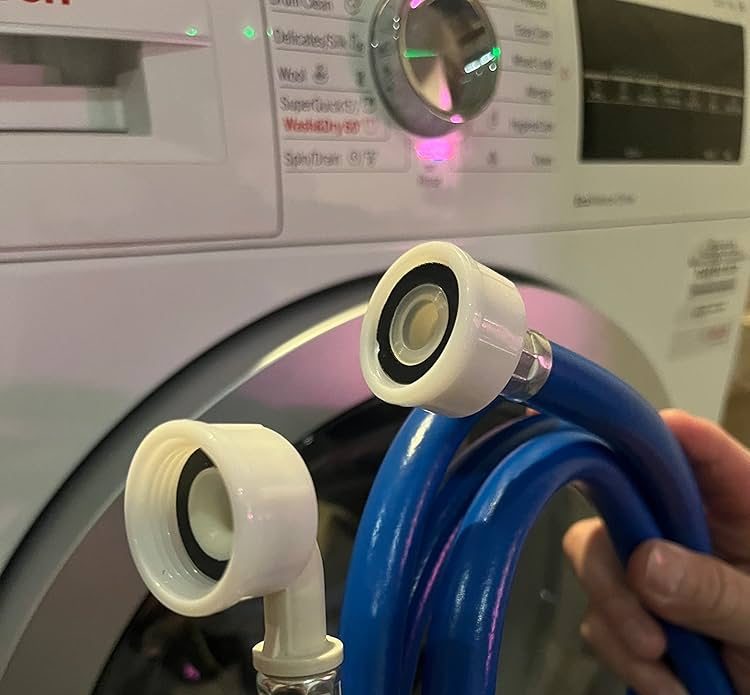

The vast majority of modern washing machines are cold fill only – they heat all water internally using an electric element. Hot and cold fill machines are still available but rare. For most households, cold fill works well and can be more economical. However, those with solar hot water, a combination boiler close to the machine, or who frequently wash at high temperatures may prefer a machine with a hot water valve.
For decades, washing machines came with both hot and cold water connections. Today, almost all are cold fill only. Whether this change benefits you depends on how your home’s hot water system works – and understanding the difference can help you decide whether it is worth seeking out one of the few remaining hot and cold fill machines still available.
Why Have Manufacturers Removed the Hot Water Valve?
Manufacturers offer several arguments in favour of cold fill only machines, and most have some genuine merit. However, removing the hot water valve also reduces manufacturing costs – fewer components, less wiring, one fewer hose connection – which suits manufacturers regardless of any user benefit.
The components saved by removing the hot fill system include the hot fill hose, the hot valve itself, the wiring to the valve, and the internal hose routing between the valve and the detergent dispenser. None of these are expensive parts individually, but across millions of units they represent a meaningful saving.
The Case For Cold Fill Only
The arguments in favour of cold fill are strongest for households with a gravity-fed hot water cylinder, or where the pipework between the boiler and the washing machine is long.
In these situations, hot water cools in the pipes before it reaches the machine. When the washing machine fills, it draws cold water from the pipes first – only getting genuinely hot water once the pipes have been flushed through. The volume of water involved in this flushing can be significant – up to a bowlful or more – and this water cools in the pipework and is effectively wasted. Meanwhile, drawing hot water from the cylinder causes the boiler to reheat it, using more energy than simply heating the small volume of water the washing machine actually needs.
 Hot Water Cylinder or Long Pipe Run
Cold fill is likely more economical. Hot water cools before reaching the machine, meaning you heat more water than you actually use.
 Combination Boiler Close to the Machine
Hot water arrives quickly with little waste. A hot fill valve would be more useful here, and cold fill offers less of an advantage.
Cold fill also has a specific benefit for users of biological detergents. The enzymes in biological detergent are most effective at low temperatures and are damaged by heat. Filling with cold water on a 40-degree wash gives those enzymes more time to work before the water reaches temperature. Flushing biological detergent with hot water from the start reduces its effectiveness.
The Case Against Cold Fill Only
The arguments against removing the hot valve are less often acknowledged by manufacturers, but they are real.
The most significant is the impact on high-temperature washes. Heating water from cold to 60 or 90 degrees entirely by electric element takes considerably longer than starting from a partially heated supply. This extends cycle times, adds wear and tear to the heating element, and increases the energy cost of high-temperature washing.

Washing machine manufacturers now recommend running a hot maintenance wash – typically at 60 or 90 degrees – at least once a month to prevent odour-causing bacteria, grease, and mould from building up inside the machine. See our guide on washing machine smells and how to prevent them. Without a hot fill valve, every maintenance wash must be heated entirely from cold, increasing both the time and energy involved.
The growing number of households with solar hot water systems, heat pump water heaters, or other low-cost or renewable hot water sources represents a significant and expanding group for whom cold fill is actively wasteful. These households generate hot water cheaply or freely, and their washing machine ignores it entirely – heating water from cold using electricity instead.
Non-biological detergent users also have no reason to prefer cold fill on lower-temperature washes. The enzyme argument does not apply to non-biological products, and starting with warmer water would simply reduce cycle times and energy consumption without any wash quality trade-off.
Does Cold Fill Actually Save Energy?
Whether cold fill is more economical than hot and cold fill depends on your hot water system. For a detailed comparison of the energy costs in different household setups, see our guide on whether a hot and cold fill washing machine is more economical.
The summary is that for homes with a gravity-fed cylinder or long pipe runs, cold fill is genuinely more economical for most washes. For homes with a combination boiler close to the machine – particularly those using renewable energy for hot water – a hot fill valve would reduce energy costs.
Can You Still Buy a Washing Machine With a Hot Water Valve?
Hot and cold fill machines are rare but not impossible to find. Some specialist manufacturers continue to produce machines with an intelligent hot fill system that uses hot water selectively depending on the wash programme selected. See our guide on washing machines with a hot water valve for current options.
If you are switching from a hot and cold fill machine to a cold fill only model, you will need to know what to do with the redundant hot water tap. See our guide on blanking off the old hot water tap, and be aware that an improperly capped connection can create a Legionella risk in the pipework.
Need Help With a Washing Machine?
Whether you need a repair or genuine spare parts, Whitegoods Help can point you in the right direction.
Related Guides
 Is a Hot and Cold Fill Washer More Economical?
A detailed comparison of energy costs for cold fill vs hot and cold fill in different home setups.
 Washing Machines With a Hot Water Valve
Still want a hot fill machine? This guide covers what is available and where to find it.
 What to Do With the Old Hot Water Tap
How to safely blank off the unused hot water connection when switching to a cold fill machine.
 Cold Fill vs Hot Fill: Pros and Cons
A full comparison of both systems across a range of household types and usage patterns.
Frequently Asked Questions
Why are most modern washing machines cold fill only?
Manufacturers argue that cold fill is more economical for most UK households, particularly those with gravity-fed hot water cylinders where hot water cools in the pipework before reaching the machine. Removing the hot fill valve also reduces manufacturing costs by eliminating several components. Both factors contributed to the transition.
Is a cold fill washing machine better for biological detergents?
Yes. The enzymes in biological detergents work most effectively at low temperatures and are damaged by heat. Starting a 40-degree wash with cold water gives those enzymes more time to act before the water temperature rises, which improves stain removal. This advantage does not apply to non-biological detergents.
Can I connect a cold fill washing machine to my hot water supply?
Connecting a cold fill machine directly to the hot tap is not recommended. The machine’s inlet valve is designed for cold water, and hot water can damage the valve and the internal hoses. For more detail, see our guide on connecting a cold fill machine to the hot tap.
I have solar hot water – is cold fill wasteful for me?
Yes, in practice. If you have a low-cost or renewable hot water source, a cold fill machine ignores it entirely and heats all water from cold using electricity. Households with solar hot water, heat pumps, or other cheap hot water supplies are the group most poorly served by cold fill only machines.
Are hot and cold fill washing machines still available?
They are rare but not impossible to find. Some specialist manufacturers continue to produce machines with intelligent hot fill systems that use hot water selectively based on the programme selected. See our guide on washing machines with a hot water valve for current options.
What should I do with the old hot water tap when fitting a cold fill machine?
The unused hot water connection must be properly capped off – not just disconnected and left open. An improperly capped connection can allow stagnant water to sit in the pipework, creating a Legionella risk. See our guide on blanking off the old hot water tap for safe capping methods.
7 Comments
Grouped into 5 comment threads.
2 replies Many thanks Graham, much appreciated. I try to look at issues in a balanced way. The main problem with cold fill only washing machines is that although the majority of people may find them adequate or even better, there are many people who find them less environmentally friendly and less economical. The answer is to design washing machines that adapt properly to the environment they are used in and give consumers the choice of whether to use a hot valve or not - many of whom would actually benefit :)
0 replies Well done Andy of Whitegoodshelp ! Having to buy a new washing machine (after10 years) I was taken aback to find that most were cold fill only. I am on the verge of returning the Beko model because there are so few programs that exploit the maximum spin and hoped to get hot and cold fill as well on any new one. I think your article on the merits or otherwise of cold fill only is excellent and persuasive. I have long pipe runs and washing mashines use so little water relatively that hardly any useful hot water ever gets into the machine. I am sure you are right, heat only the amount of water to the desired temperature on location, with an immersed element there are very few losses. But looking ahead it would be great to have a 'box' with with hot and cold feed in and a 'water' supply out to the washing mashine. The box would have a temp control just like a shower. or as you suggest have an option on the WM to allow the user to choose . Well done, good persuasive article, Thank you Andy
Well done Andy of Whitegoodshelp !
Having to buy a new washing machine (after10 years) I was taken aback to find that most were cold fill only. I am on the verge of returning the Beko model because there are so few programs that exploit the maximum spin and hoped to get hot and cold fill as well on any new one.
I think your article on the merits or otherwise of cold fill only is excellent and persuasive. I have long pipe runs and washing mashines use so little water relatively that hardly any useful hot water ever gets into the machine. I am sure you are right, heat only the amount of water to the desired temperature on location, with an immersed element there are very few losses.
But looking ahead it would be great to have a ‘box’ with with hot and cold feed in and a ‘water’ supply out to the washing mashine. The box would have a temp control just like a shower. or as you suggest have an option on the WM to allow the user to choose .
Well done, good persuasive article, Thank you Andy
0 replies For those with solar panels generating electricity, new technology such as the diverter switch from consumer unit to hot water cylinder immersion heater, this maximises unused power otherwise exported to the grid. There is much to gain on a nationwide basis. This continual topping up of hot water cylinders provides low cost (free in many situations) hot water, further reducing domestic carbon footprints. Washing machine manufacturers need to take this important development into account by fitting an eletronic valve to the water input, connected to a dial on machine that could allow adjustment of the incoming temperature. With today's sophisticated electronic capabilities it shouldn't be difficult to make this possible without detriment to the washing process. Washing machine makers could even claim money saving possibilities for their A Plus rated machines (when used with solar switched power)! That should help their sales and boost the development of switching technology. For anyone wishing to investigate this relatively new solar pv switch technology, Google "intelligent pv switches". Their makers claim ROI in as little as 2 to 3 years.
For those with solar panels generating electricity, new technology such as the diverter switch from consumer unit to hot water cylinder immersion heater, this maximises unused power otherwise exported to the grid. There is much to gain on a nationwide basis. This continual topping up of hot water cylinders provides low cost (free in many situations) hot water, further reducing domestic carbon footprints.
Washing machine manufacturers need to take this important development into account by fitting an eletronic valve to the water input, connected to a dial on machine that could allow adjustment of the incoming temperature. With today’s sophisticated electronic capabilities it shouldn’t be difficult to make this possible without detriment to the washing process. Washing machine makers could even claim money saving possibilities for their A Plus rated machines (when used with solar switched power)! That should help their sales and boost the development of switching technology.
For anyone wishing to investigate this relatively new solar pv switch technology, Google “intelligent pv switches”. Their makers claim ROI in as little as 2 to 3 years.
0 replies I'm surprised they still make twin tubs, to be honest they are rubbish now. Hoover and Hotpoint stopped making them years ago and the only ones I've seen are made of plastic. But yes, twin tub washing is very different to automatic washing machines.
I’m surprised they still make twin tubs, to be honest they are rubbish now. Hoover and Hotpoint stopped making them years ago and the only ones I’ve seen are made of plastic. But yes, twin tub washing is very different to automatic washing machines.
0 replies Machine will be right underneath the boiler, with no hot tank so I .will be replacing my broken machine with a twin tub using only enough hot water to cover the amount of clothes in tub. Is this the nearest I can get to the best of both worlds? I do not use biological detergents.
Machine will be right underneath the boiler, with no hot tank so I .will be replacing my broken machine with a twin tub using only enough hot water to cover the amount of clothes in tub. Is this the nearest I can get to the best of both worlds? I do not use biological detergents.
Many thanks Graham, much appreciated. I try to look at issues in a balanced way. The main problem with cold fill only washing machines is that although the majority of people may find them adequate or even better, there are many people who find them less environmentally friendly and less economical. The answer is to design washing machines that adapt properly to the environment they are used in and give consumers the choice of whether to use a hot valve or not – many of whom would actually benefit :)
Likely replying to Andy Trigg
Hi Andy,
I´m currently looking to buy a new washing machine and stumbled across your very useful article. If I buy a washing machine with hot and cold fill am I still able to only connect a cold fill hose?
Apologies if this is a really obvious question but weirdly, my current choice of washing machine is a hot & cold fill washing machine.
Thanks for your help.
Likely replying to Diana
Hi Diana: I have this article Washing machine is a hot and cold fill, but I only have a cold water supply