
Choosing lowest energy consumption washing machine

The most energy-efficient washing machine on paper is not necessarily the cheapest to run over time. Build quality, reliability, and lifespan have a far bigger impact on the real cost of ownership than small differences in energy ratings. Focus on a well-built, reliable machine first, then consider energy efficiency as a secondary factor among equals.
With energy costs high, buying the most efficient washing machine seems like an obvious priority. But efficiency ratings tell only part of the story. This guide gives a more complete picture of what actually determines the long-term running cost of a washing machine, and why reliability and lifespan matter far more than most buyers realise.
Why Energy Efficiency Ratings Are Not the Whole Story
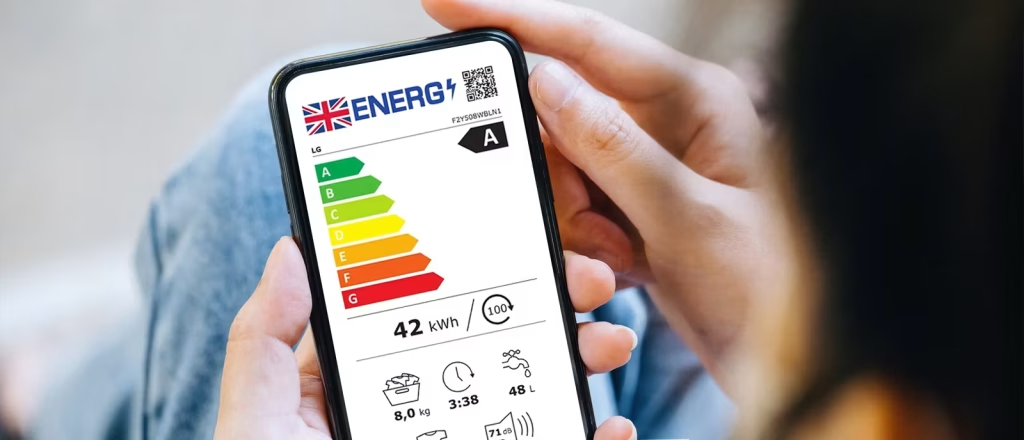
The energy label on a washing machine is a useful starting point, but it only measures energy consumption during a controlled test cycle. It tells you nothing about how reliably the machine will perform over its lifetime, how much a repair will cost, or how long the machine is likely to last. All three of those factors have a much larger impact on what a washing machine actually costs you over five or ten years than the difference between an A-rated and a slightly lower-rated model.
How much electricity the machine uses per cycle in controlled test conditions. A useful comparative tool when choosing between otherwise similar models at the same price point.
How reliable the machine is. How long it will last. How much a repair will cost. Whether the manufacturer supports it well. All of these have a far bigger impact on total cost of ownership than the efficiency rating.
The Real Maths: Running Costs, Purchase Price, and Lifespan
The difference in annual running costs between the most efficient and a moderately efficient washing machine is often surprisingly small. When you account for the full cost of ownership, the picture changes significantly.
| Scenario | Annual energy saving | Break-even point | Reality check |
|---|---|---|---|
| Machine A costs £100 more but saves £20 per year on energy | £20 | 5 years | Only worthwhile if the machine lasts significantly longer than 5 years |
| Machine A costs £200 more but saves £25 per year on energy | £25 | 8 years | Risky, as the average machine lifespan is currently 6 to 7 years |
| Two machines at the same price, one saves £15 per year | £15 | Immediate | Choose the more efficient one, as all else is equal |
| Single repair cost: £150 | n/a | n/a | Wipes out 5 to 7 years of typical energy savings in one event |

A single repair costing £150 wipes out between five and seven years of typical energy savings. A machine that fails after four years, even if highly efficient, is far more expensive to run overall than a slightly less efficient machine that lasts twelve years without a major fault.
What Actually Determines the Long-Term Cost of a Washing Machine
The single most important factor. A well-built machine from a brand with a strong reliability record will cost less over its lifetime than a cheaper, energy-efficient model that fails early or requires frequent repairs. Read our guide: which is the best washing machine to buy?
A machine that lasts 12 years spreads its purchase price across twice as many cycles as one that lasts 6. Longevity is the most eco-friendly and economically efficient outcome, and the energy label tells you nothing about it. Read: how long should a washing machine last?
A machine that is expensive or impossible to repair will be scrapped when it could have been fixed. Check spare parts availability before buying, particularly for less mainstream brands. See our Spare Parts Shop.
A genuine consideration, but only once you have satisfied yourself on build quality, reliability, and price. Between two otherwise equivalent machines, choose the more efficient one. As a deciding factor between unequal machines, it should rarely tip the decision.
Larger drums use more energy per cycle but wash more laundry in one go, reducing the number of cycles needed. Always compare machines of the same drum capacity when evaluating energy costs. A larger machine used efficiently can be more economical than a smaller one run frequently.
The upfront cost must be included in any running cost calculation. An expensive machine needs to last significantly longer, or save significantly more energy, to justify the premium. See our guide: does more expensive actually mean better?
How to Compare Energy Costs Properly
When comparing washing machines on energy use, several things need to be checked to ensure the comparison is meaningful.
 Compare machines with the same drum capacity. A 9kg machine will almost always use more energy per cycle than a 7kg machine. Comparing a 7kg and a 9kg on energy cost alone is not a fair or useful comparison.
- Look at the energy label in context. The UK energy label rates washing machines from A to G. Most current machines cluster in a relatively narrow band. The difference between the top-rated and mid-rated models in terms of real-world running cost is often a matter of pence per week.
- Factor in your actual usage patterns. Running costs assume a standard number of cycles per week. If you wash more or less frequently, your actual costs will differ. A larger drum used for fuller loads can be more efficient than a smaller machine run more often.
- Include purchase price in the calculation. A machine that costs £150 more upfront needs to save you that £150 in energy costs before it begins to show any net saving. Always ask how long the payback period is and whether the machine is realistically likely to last that long.
- Check wash and spin performance ratings too. An energy-efficient machine that rinses poorly or leaves laundry very wet after spin is not saving you money if you need to rewash or tumble dry more as a result. Read: why modern washing machines rinse poorly and what energy labels on washing machines actually mean.
Do Eco Programmes Actually Save Energy?
Most modern washing machines include an eco or energy-saving programme. These cycles typically run at lower temperatures for longer periods, which reduces energy consumption compared to a full cotton programme at 60°C.
When eco programmes genuinely save energy
For lightly soiled, everyday laundry where a thorough hot wash is not needed. Running eco at 40°C or lower for regular loads can make a meaningful difference to annual energy consumption.
 When eco programmes are less effective
For heavily soiled laundry, items that require a hygienic wash, or bedding and towels. Using an eco programme on unsuitable loads means re-washing, which costs more energy overall, not less.
The energy label rating is measured on a specific test programme. In real-world use, your actual consumption depends on which programmes you use and how often. Using the right programme for each load is as important as the machine’s rated efficiency. Read our guide: washing at 30 degrees, five things to know.
Tips to Reduce Washing Machine Running Costs
Regardless of which machine you own, these habits make a significant difference to real-world energy consumption.
- Always run full loads. A half-empty drum uses almost as much energy as a full one, so consolidating loads reduces the number of cycles and saves energy.
- Wash at lower temperatures. The majority of everyday laundry can be washed effectively at 30°C or 40°C with modern detergents. Save higher temperatures for genuinely soiled items, towels, and bed linen.
- Use the eco programme for everyday loads. Reserve higher temperature programmes for laundry that genuinely needs them, rather than running them by default.
- Spin at a higher speed. Faster spin removes more water mechanically, which reduces tumble dryer time or air-drying time significantly, saving energy and cost downstream.
- Use the correct detergent dose. Overdosing wastes money and can leave residue, potentially requiring additional rinse cycles that add to energy use.
- Maintain your machine regularly. Clean the filter, descale in hard water areas, and run occasional maintenance washes. A well-maintained machine runs more efficiently and lasts considerably longer. See our pump filter cleaning guide.
- Consider a smart tariff. If you have a smart meter and a time-of-use energy tariff, running the machine during off-peak hours can reduce energy costs regardless of the machine’s efficiency rating.
What to Prioritise When Buying an Energy-Efficient Washing Machine
Based on engineering experience and real-world cost analysis, here is how to weight the factors when making a purchase decision.
| Priority | Factor | Why it matters |
|---|---|---|
| 1st | Reliability and build quality | Determines lifespan and repair costs, the single biggest driver of total cost of ownership |
| 2nd | Brand reputation for longevity | Some brands consistently outperform others for lifespan, worth researching before buying |
| 3rd | Value for money | Purchase price spread over expected lifespan. A more expensive machine is only justified if it lasts proportionally longer |
| 4th | Drum capacity for your needs | A right-sized drum for your household reduces the number of cycles needed per week |
| 5th | Energy efficiency rating | A useful tiebreaker between otherwise comparable machines, rarely a decisive factor on its own |
| 6th | Programme range and features | Eco programmes, spin speeds, and specialist cycles are useful but secondary to the above |
Ready to choose your next washing machine?
Our independent buying guides cover reliability, energy ratings, drum capacity, and value, everything you need to make the right decision.
Frequently Asked Questions
Is it worth paying more for an A-rated washing machine?
It depends on how much more. If two machines are similarly priced and one has a better energy rating, choose the more efficient one. But if the A-rated machine costs significantly more upfront, calculate how long it would take to recover the difference in energy savings, and be realistic about whether the machine will last that long. For most buyers, a reliable mid-range machine from a reputable brand will deliver better value than an expensive top-rated model from a less dependable manufacturer.
What is the most energy-efficient way to use a washing machine?
Always run full loads, wash at 30°C or 40°C for everyday laundry, use the eco programme where appropriate, and spin at a higher speed to reduce drying time. These habits make a bigger difference to your actual energy bill than the difference between most efficiency-rated models on the market. Maintaining the machine, particularly cleaning the filter and descaling in hard water areas, also keeps it running efficiently for longer.
Does a bigger drum always mean higher energy costs?
A larger drum uses more energy per cycle, but it also washes more laundry in one go. If you regularly wash large loads, a bigger drum can actually be more efficient overall, because you run fewer cycles. The key is to match drum capacity to your actual usage. A 9kg machine run half-full every day is less efficient than a 7kg machine run full every day. Always compare machines at the same drum capacity when evaluating energy ratings.
How much can I save on energy bills with a more efficient washing machine?
The real-world difference between mid-range and top-rated machines is often surprisingly modest, typically a few pounds to tens of pounds per year depending on usage. Rising energy prices increase the value of those savings, but the principle remains: do not sacrifice reliability and build quality for a small energy saving. A single repair or early replacement will cost far more than the cumulative energy saving.
Are eco programmes always better for the environment?
Eco programmes use less energy per cycle, but they run for longer. For lightly soiled everyday laundry they are genuinely more efficient. But if items need re-washing because the programme was not thorough enough, or if you run shorter quick-wash cycles because the eco programme takes too long, the environmental saving is reduced or eliminated. Use the right programme for the load, not just the lowest-energy option regardless of the task.
Where can I find reliable buying advice on washing machines?
Independent consumer testing organisations assess washing machines on energy use, wash performance, spin efficiency, and ease of use, and the best track long-term reliability by brand. Their recommendations are subscription-based but worth consulting for major purchases. Whitegoods Help also provides independent guidance, see our washing machine buying guide and our article on which washing machine to buy.
Running Costs
Buying Advice
Washing Machines
Eco Programmes
Ask the repair forum
Post the make, model and symptoms and get help from the Whitegoods Help community.
0 Comments