
Washing Machine Door Glass Exploding: How Real Is the Risk?
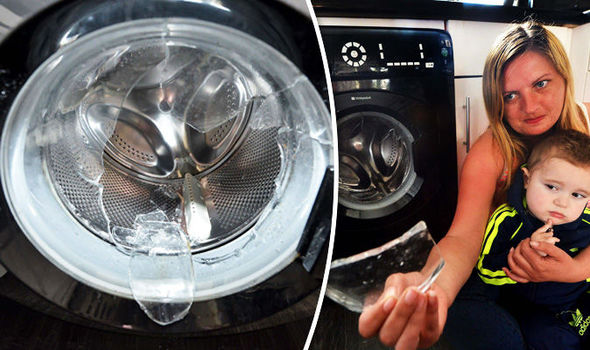

Washing machine door glass can shatter due to impact damage from objects in the drum, thermal stress, overloading, or in rare cases manufacturing defects. Modern door glass is toughened (tempered) safety glass, which is designed to break into small pieces rather than large dangerous shards – but fragments can still cause cuts. The risk of serious injury is very low, but the failure can happen without warning, including when the machine is switched off.
Reports of washing machine door glass suddenly shattering have been documented across many brands and price ranges for years. While the risk is statistically low, it is real – and the unpredictable nature of these failures makes it worth understanding the causes, the risks, and what to do if it happens to you.
What Actually Happens When Door Glass “Explodes”?
The word “exploding” is commonly used by consumers to describe what happens – and while alarming, it is not quite accurate. What occurs is a sudden structural failure of toughened glass, which shatters rapidly into multiple fragments rather than breaking cleanly.
Washing machine door glass is made from toughened (tempered) safety glass. This type of glass is manufactured under high internal tension, which causes it to shatter into smaller pieces when it breaks – rather than large, blade-like shards. This design is intended to reduce injury risk in the event of breakage.

Incidents have been reported both while the machine is running and while it is switched off and not in use. The latter is less common but is harder to predict and prepare for – and is one reason why the issue generates significant concern.
How Common Is This Problem?
There is no official industry dataset, so it is not possible to give a precise figure. What can be said is:
 Rare but real
The number of incidents is very low relative to the millions of washing machines in use – but reports have been consistent over many years and across many brands.
 All price ranges affected
Reports involve budget and premium brands alike. There is no strong evidence that any one manufacturer is significantly more or less affected than others.
 Injury risk is very low
Serious injuries directly caused by door glass failure are extremely rare. The most common harm is minor cuts when clearing up broken glass afterwards.
Unpredictable timingGlass can fail during a cycle or when the machine has been switched off for hours. This unpredictability is what makes the issue particularly concerning for households with children and pets.
What Causes Washing Machine Door Glass to Shatter?
The most widely accepted cause is prior impact damage to the glass – often unnoticed at the time. Coins, keys, or metal objects left in pockets can strike the door glass during the wash. Belt buckles, zips, and metal buttons on clothing repeatedly hitting the door also cause micro-scratches and stress points over time.
Toughened glass can absorb this kind of damage and remain intact for some time – sometimes weeks or months – before suddenly failing without any further trigger. This delayed failure is one reason why the cause is often difficult to identify and disputed.
Washing machines heat and cool repeatedly during normal use. Over time, this thermal cycling can place cumulative stress on weakened glass. The release of this stress may explain why some doors shatter when the machine is not running – residual tension in the glass discharges unpredictably, sometimes hours after the last wash cycle.
This phenomenon is not unique to washing machines – it is also documented in oven doors and double-glazed window units, which use the same type of toughened glass.
Consistently overloading the drum increases the force with which laundry strikes the door during the wash and spin cycles. While machines are designed to handle normal use, repeated heavy loading may contribute to long-term weakening of the glass – particularly in combination with items that have hard fastenings.
In rare cases, a flaw introduced during the manufacturing process – such as incorrect tempering or a stress concentration – can cause a door glass to fail earlier than expected, and sometimes without any obvious external trigger. This is difficult to prove and manufacturers rarely accept it as an explanation, but industry knowledge of toughened glass acknowledges that manufacturing faults can and do cause spontaneous failures.
Why Does Toughened Glass Sometimes Fail Without Warning?
This is the question that concerns most people – and understanding it requires knowing a little about how toughened glass is made.
Toughened glass is created by rapidly heating and then cooling standard glass. This process puts the outer surfaces into compression and the inner core into tension. The result is glass that is significantly stronger than ordinary glass – but which, when it does break, releases all of that stored energy simultaneously. This is why it shatters suddenly and completely rather than cracking progressively.
The implication is that damage – whether from an impact, a manufacturing flaw, or gradual stress – may remain invisible right up until the point of failure. The glass gives no visible warning. This behaviour is inherent to the material, not a specific defect in any one machine.

The same spontaneous failure behaviour has been observed in oven door glass, shower enclosures, and double-glazed window units – all of which use toughened glass. It is a property of the material, not a unique flaw of washing machine design.
How to Reduce the Risk
While the risk cannot be eliminated entirely, these practical steps significantly reduce the likelihood of door glass failure:
 Always check pockets before loading – coins, keys, and small metal objects are a leading cause of glass damage
- Zip up zips fully and turn garments with metal fastenings inside out before washing
- Use mesh laundry bags for items with exposed metal buckles, decorative studs, or underwired bras
- Do not overload the drum – excessive loading increases the force with which laundry strikes the door
- Ensure the machine is level on stable flooring – excessive vibration increases stress on all components
- Keep children and pets away from in front of the machine while it is running, as a precaution
What to Do If the Glass Shatters
-
Do not panic – while alarming, the risk of serious injury from the initial breakage is very low. Toughened glass is designed to break into smaller fragments rather than large dangerous shards.
-
Disconnect the appliance from the mains immediately. Do not attempt to use it or open it further until the power is off.
-
Wear protective gloves before touching anything. Even toughened glass fragments can cause cuts. Clear the glass carefully and thoroughly – check inside the drum, under and around the machine.
-
Photograph everything – the broken glass, the machine, the drum contents, and the surrounding area. This evidence is important if you need to make a complaint or claim.
-
Contact the manufacturer and the retailer. Report the incident to both. Read our guide on who is responsible for exploding door glass before speaking to them – manufacturers commonly attribute blame to the user, and knowing your position in advance is valuable.
-
Do not use the machine until the door assembly has been professionally inspected and replaced. Contact a qualified repair engineer to assess and repair the appliance.
Who Is Responsible – You or the Manufacturer?
This is one of the most contentious aspects of door glass failures. When consumers report incidents, manufacturers almost universally respond by attributing blame to the user – claiming overloading, metal objects in the drum, or incorrect use. In most cases, they cannot prove this – but equally, consumers typically cannot prove it was a manufacturing defect.
 What manufacturers typically say
The glass was damaged by a foreign object, overloading, or incorrect use. They rarely accept that toughened glass can fail spontaneously – even though this is a documented property of the material.
What you can argue
If you washed normal laundry in line with the machine’s instructions, left no obvious foreign objects in the drum, and the machine was used correctly, it is reasonable to argue the failure was not your fault. Under the Consumer Rights Act, appliances must be of satisfactory quality and durable.
For a full analysis of the liability question – including what to say to manufacturers and what rights you have – read our dedicated article: Exploding door glass – whose fault is it?
For your general consumer rights when an appliance develops a fault, see our consumer rights and appliances guide.
Frequently Asked Questions
Is it safe to stand in front of the washing machine while it is running?
For most people in most circumstances, yes – door glass failures are statistically very rare. However, as a precaution, it is sensible to discourage young children and pets from standing directly in front of a running machine. The risk of serious injury from a failure is extremely low, but the unpredictable nature of the event means basic precautions are reasonable.
My door glass shattered while the machine was switched off – how is that possible?
This is one of the most alarming aspects of this issue – and it is a documented behaviour of toughened glass. Residual stress built up through thermal cycling or prior impact damage can be released unpredictably, even hours after the last wash cycle. The glass gives no visible warning before failure. This behaviour is inherent to toughened glass and is not unique to washing machines.
The manufacturer is blaming me – what should I do?
This is a very common response. Manufacturers routinely attribute door glass failures to user error – overloading, foreign objects, or incorrect use – because it is almost impossible to prove a manufacturing defect after the fact. If you used the machine correctly and followed the instructions, you have grounds to push back. Read our detailed guide on who is responsible for exploding door glass, and our consumer rights guide for further support.
Are some brands more prone to this than others?
Reports involve a wide range of brands across all price points – including budget and premium manufacturers. Without verified industry-wide data, it is not possible to reliably rank brands by risk. Our broken door glass photos and brand tally page records reported incidents by brand, which may provide some useful context.
Can I claim for the cost of repair or a replacement machine?
Possibly – particularly if the machine is relatively new or still under warranty. Under the Consumer Rights Act 2015, appliances must be of satisfactory quality and last a reasonable amount of time. If the machine is within six months of purchase, the fault is presumed to be inherent unless the retailer can prove otherwise. After six months, the burden of proof shifts to you. See our Consumer Rights Act guide for full details.
Is the glass inside the drum safe after a failure?
Not immediately. After a door glass failure, fragments will be present inside the drum, on the door seal, and on the floor around the machine. Do not attempt to use the machine, and do not reach inside without wearing protective gloves. The drum contents will likely be unusable. The machine will need a full door assembly replacement by a qualified engineer before it can be safely used again – book a repair engineer to assess it.
See photos and reports of broken door glass
Our dedicated page features reader-submitted photos of shattered door glass across many brands, along with a running tally of reported incidents by manufacturer.

Disconnect power immediately. Wear gloves before touching anything. Photograph everything before clearing up. Do not use the machine until professionally repaired.
Ask the repair forum
Post the make, model and symptoms and get help from the Whitegoods Help community.
207 Comments
Grouped into 163 comment threads.
1 reply I’ve just had a Miele engineer out to my 4 and half year old Miele washing machine WWE320 power wash because the glass door shattered mid spin cycle. It’s shredded the clothes inside and the rubber seal and we’re lucky it didn’t pierce the plastic outer door casing and kill us! Miele do not accept responsibility that there maybe a manufacturing fault and have condemned the machine as beyond repair. They have attempted to charge us their mandatory £175 call out fee and have offered to put me in touch with their sales team to do a “deal” on a new washing machine. Flabbergasted!!!
0 replies Have a Whirlpool model WFW86HEBW1 which blew out the glass into large shards, small pieces and tiny slivers right at the beginning of a wash cycle, while I was watching through the door at the time. Had just loaded a mattress pad I have washed in it many, many times before. No metal of any kind within.
Have a Whirlpool model WFW86HEBW1 which blew out the glass into large shards, small pieces and tiny slivers right at the beginning of a wash cycle, while I was watching through the door at the time. Had just loaded a mattress pad I have washed in it many, many times before. No metal of any kind within.
0 replies The glass door on my Beko 1200 exploded this morning part way through a 90 degree wash. It was terrifying and I was shocked and shaken. There were shards of sharp glass on the kitchen floor and in the clothes in the machine. I then spent most of the day on the phone to Beko. First they wanted full details of the machine and purchase info. Then they said there was nothing they could do as it was out of warranty. I appreciate the machine is 17 months old but this is a safety issue not a warranty one. I tried again and was told to send them all the info in an email to customer services. I don’t know where to go next as I think I will be ignored. Any advice would be gratefully received. Having a washing machine is like having an unexploded bomb in your house
The glass door on my Beko 1200 exploded this morning part way through a 90 degree wash.
It was terrifying and I was shocked and shaken. There were shards of sharp glass on the kitchen floor and in the clothes in the machine.
I then spent most of the day on the phone to Beko. First they wanted full details of the machine and purchase info. Then they said there was nothing they could do as it was out of warranty. I appreciate the machine is 17 months old but this is a safety issue not a warranty one.
I tried again and was told to send them all the info in an email to customer services.
I don’t know where to go next as I think I will be ignored.
Any advice would be gratefully received. Having a washing machine is like having an unexploded bomb in your house
0 replies Brand new Haier I-Pro Series 3 HW80-B14939 8Kg 1409 spin washing machine. Bought 7th Nov, delivered & installed (by the company) on 15th Nov. Single wash run at low temperature. No metal on clothes / in pockets. While I was out at work yesterday the glass shattered. Nobody was in the house. Nothing has hit the door. My previous machine (also Haier) stood in the same place for 13years and the glass was not the thing that failed.
Brand new Haier I-Pro Series 3 HW80-B14939 8Kg 1409 spin washing machine. Bought 7th Nov, delivered & installed (by the company) on 15th Nov. Single wash run at low temperature. No metal on clothes / in pockets. While I was out at work yesterday the glass shattered. Nobody was in the house. Nothing has hit the door. My previous machine (also Haier) stood in the same place for 13years and the glass was not the thing that failed.
1 reply Our Miele w1 washer door shattered, glass was contained in unit and outer glass of door didn't break. Appears to have continued spin cycle , shredding clothes. There was only sportswear and a night gown in the unit. Have called miele but so far no response from their repair service. What should our expectations be? Do we need a replacement machine because of all the glass shards or is it repairable? We bought unit in 2021 and bought the three year warranty.
Our Miele w1 washer door shattered, glass was contained in unit and outer glass of door didn’t break. Appears to have continued spin cycle , shredding clothes. There was only sportswear and a night gown in the unit. Have called miele but so far no response from their repair service. What should our expectations be? Do we need a replacement machine because of all the glass shards or is it repairable? We bought unit in 2021 and bought the three year warranty.
Hello Jay. Unfortunately it’s not possible to predict what a manufacturer will say or do. As my article suggests, most manufacturers tend to blame the user. So if they say it is caused by the user, they are unlikely to be very helpful. However, if they say it is caused by overloading, I would ask them why their washing machines are not designed to cope with the simple case of overloading, which virtually everybody does at one time. If they say it is caused by some metal object, such as a belt buckle or even a coin, I would also ask them why their washing machine, a premium brand, is not strong enough to cope with that?
At the end of the day, it is not a strong position to be in because we can’t really prove that it is a design fault, even if that is strongly suspected. Some manufacturers have apparently done free repairs or replacement machines. The best advice I can give is to carefully read this article, and all the comments, which all give people’s personal experience of this issue. Then read this article Broken door glass – who’s fault is it?. That way you will at least have a very good understanding of the issue
0 replies Bosch door exploded - absolutely gutted happy to send pics - luckily had a plastic outer piece so safety covered in part but devastated about clothes which will be ruined - have booked engineer visit as under warranty but not sure they can ‘fix’ as machine us full of glass now - shocking
Bosch door exploded – absolutely gutted happy to send pics – luckily had a plastic outer piece so safety covered in part but devastated about clothes which will be ruined – have booked engineer visit as under warranty but not sure they can ‘fix’ as machine us full of glass now – shocking
2 replies My Bosch washing machine exploded yesterday while I was cooking in the kitchen . It was not operating at the time. I had sometime before put a small dark load with the intention of more items later in the day . I can only describe it like an explosion followed by the sound of shattering glass. I didn't know initially where it had come from. My machine was purchased 28th March 2022 so is less than a year old .It shattered into many sharp dangerous pieces. I took photos and then took along time clearing up the mess and shards of glass. I got it from John Lewis . They said contact Bosch . The Bosch representative I spoke to clearly did not believe me and said I must have overloaded the machine even though I had explained that the machine was not on when it happened. They are sending an engineer to determine the cause and say I will have to claim on my house insurance if it is classed as accidental damage . I am furious that they are suggesting it is my fault.
My Bosch washing machine exploded yesterday while I was cooking in the kitchen . It was not operating at the time. I had sometime before put a small dark load with the intention of more items later in the day . I can only describe it like an explosion followed by the sound of shattering glass. I didn’t know initially where it had come from. My machine was purchased 28th March 2022 so is less than a year old .It shattered into many sharp dangerous pieces. I took photos and then took along time clearing up the mess and shards of glass. I got it from John Lewis . They said contact Bosch . The Bosch representative I spoke to clearly did not believe me and said I must have overloaded the machine even though I had explained that the machine was not on when it happened. They are sending an engineer to determine the cause and say I will have to claim on my house insurance if it is classed as accidental damage . I am furious that they are suggesting it is my fault.
Hi Dawn. It’s frustrating because all the manufacturers say exactly the same thing. First they say they’ve never heard of the problem, and secondly they say you must have overloaded it, or you must have left something metal inside the washing machine. To be fair, my impression is that it is quite a rare incident these days. It seemed to happen a lot several years ago when I first wrote these articles, but then petered out. Maybe manufacturers improved something?
But what I can say is that I have been repairing washing machines since 1976, and this never used to happen.
I’ve seen many washing machines so badly overloaded, and so badly out of balance (this is before they invented out of balance control) that washing machines literally jumped up into the air, and walked across the kitchen. Sometimes as far as the attached hoses would allow them. I’ve seen them bash great big dints in both sides of the washing machine’s casing and damage cupboards.
I’ve also seen great big scars on the door glass where the revolving drum lip had caught relentlessly on it during spin, and cut big marks into the door glass. I’ve also seen countless washing machines with pen knives, large coins, large buckles etc. stuck inside the washing machine. These objects caused extensive damage to the inner drum and the outer tub, but never damaged the door glass.
Washing machines door glass used to be extremely thick, and strong. I can only speculate that at some point in relatively recent history, manufacturers changed the type of glass that they use to what is called safety glass. Safety glass is created under high tension, and designed to shatter into many small pieces if it breaks. The idea is that in a breakage, glass will shatter into small “safe” pieces.
However, my experience shows that safety glass was completely unnecessary. I only ever had to replace a couple of washing machine door glasses in 30 years. As far as I recall they were all due to unusual incidences such as someone dropping something heavy onto the open door of a washing machine, causing it to crack (not break).
So why would they start to make them out of safety glass all of a sudden? Possibly there could have been some legislation that forced it. Or maybe they reduced the thickness of the door glass in order to cut costs, and realised that they had better now make it out of safety glass because it is now vulnerable to being broken?
This is obviously just speculation. I do not know the answer. An important thing to understand is that safety glass seems to have an ability to spontaneously explode. It’s happened for many years on the glass on oven doors. It can even happen on double-glazed window units. It happened to me. We had a double-glazed unit in our conservatory roof which just spontaneously exploded one (very) hot day after 9 years.
A major problem seems to be that it’s extremely difficult or even impossible to ascertain exactly what caused any glass to spontaneously explode. Manufacturers who use this type of glass just seem to accept that this is what it does, it’s one of those things, it’s rare but it just happens. However, this is not really good enough when we the consumers suffer financial loss because of it. No one says when you buy these products that the glass can sometimes spontaneously explode for no apparent reason and that this is normal, and just one of those things.
When I have researched it, though, I have seen references to manufacturing faults. It’s possible that during manufacture, some flaw or error is introduced, which results in door glass failure sometime in the future. It’s also possible that some force from a metal object could damage the door glass and either cause it to break instantly, or introduce a weakness that causes the explosion some time later. Possibly due to change in temperature.
My experience is that any company faced with having to replace any of this glass that has exploded always acts the same. They say it’s nothing to do with them, and you have to pay for it. We would probably need some glass experts to advise on this issue.
In my case, when my conservatory roof spontaneously exploded, I argued with the company that fitted it, that many sources on the Internet that say a manufacturing fault can cause it. Or that it can happen if it is fitted poorly, and under some sort of pressure. The company replaced my conservatory roof double-glazed panel, and did not charge me.
2 replies Tally on the Electrolux washer glass explosion. Happened as it was not on/running a load as the last load was done 8 hours earlier.
Tally on the Electrolux washer glass explosion. Happened as it was not on/running a load as the last load was done 8 hours earlier.
Thanks Melissa. I’ve added yours to my list here – https://www.whitegoodshelp.co.uk/broken-door-glass-photos/
The glass in the door of our front load washer suddenly shattered. Thankfully, no one was in the room when it happened. It was not running at the time.
Electrolux
Model EFLS517SIW0
Produced in No 2017
We purchased in Dec 2017
Incident occurred in Jun 2023
Electrolux response
“ Was anyone hurt? Any property damaged?”
When I said no, response was “we will give you a 20% discount on a new glass.”
I appreciated the discount but I really want to know if anyone is tracking incidents and if Electrolux is determining why the glass is shattering.
Since I do not put belts or other items that could bang against door in the washer, that could not be the cause.
0 replies My beko washing machine door exploded on me last week it totally shattered into big and small pieces I just literally left the kitchen when I happened luckily my little boy was sat in the living room and no one was hurt. I’ve never been so shocked in my life with the loud bang that it created. I have photos on my phone as my friends and family didn’t believe me.
My beko washing machine door exploded on me last week it totally shattered into big and small pieces I just literally left the kitchen when I happened luckily my little boy was sat in the living room and no one was hurt. I’ve never been so shocked in my life with the loud bang that it created. I have photos on my phone as my friends and family didn’t believe me.
3 replies Miele just under 12 months old, heard a bang went into laundry room and floor flooded, glass exploded, thankfully plastic outer covering this, Miele came 2 days later and removed my bed linen & towels into a black bin liner as just covered in glass small splinters complete with dark grey marks (oil maybe?) all glass bagged up and put in drum, photos were taken of machine and washing inside by the engineer, new machine arrived a few days later, but Miele refuse to compensate me for my Laura Ashley bed linen and towels, advice please Many thanks
Miele just under 12 months old, heard a bang went into laundry room and floor flooded, glass exploded, thankfully plastic outer covering this, Miele came 2 days later and removed my bed linen & towels into a black bin liner as just covered in glass small splinters complete with dark grey marks (oil maybe?) all glass bagged up and put in drum, photos were taken of machine and washing inside by the engineer, new machine arrived a few days later, but Miele refuse to compensate me for my Laura Ashley bed linen and towels, advice please
Many thanks
Likely replying to Angela Rees
Hello Angela. It’s always disappointing to hear about a Miele door glass incident. Did you say there is a plastic outer covering on the door preventing the glass from shattering outwards? If so that’s a good improvement, one I suggested years ago.
Regarding your bedlinen and towels, this would be known legally as consequential loss. If Miele have accepted responsibility, and you can argue that by replacing the washing machine they have, then I’m pretty sure they have a responsibility to compensate for any consequential loss as well.
I would get back in touch with them and use that exact phrase. This should show that you have taken some advice and that you know the legal technical term. A manufacturer can’t accept responsibility for an incident, and compensate by replacing the product, but refuse any liability for the damage that the product did.
If on the other hand they are claiming that you are responsible for the glass breaking, either totally or partially, then that would be a different matter. But if that was the case, why have they given you a new washing machine?
Likely replying to Andy Trigg (Whitegoodshelp)
Hi Andy
Thanks for your reply and help, Miele agreed replacement on the phone when the engineer called them from my house, as it was totally not my fault, so guess I have a battle ahead as they stated in an email that Miele as a company do not cover consequential loss, but they have clearly accepted liability I’ve told them this but they have stood firm
Wish me luck
Likely replying to Angela Rees
Hello Angela. Consequential loss is when you are forced by law to compensate someone who suffered a consequential loss due to something that was your fault. If a customer is claiming consequential loss then that’s a matter for the small claims courts and the consumer law. No one decides whether to comply to that are not. They are either liable under consumer law, or not. It’s a bit disappointing when companies do this, especially a company like Miele who strive for the highest standards. The amount of money that it is likely to cost them to compensate you is peanuts to them. I don’t understand why they would rather lose a customer and gain extra bad publicity.
Leave a comment
0 replies Thanks for adding your experience Alison. It's a shame it's still happening although reports have definitely dropped off heavily this last year.
Thanks for adding your experience Alison. It’s a shame it’s still happening although reports have definitely dropped off heavily this last year.
0 replies We have just had the door of our Beko machine shatter. It was 3 years old bought late 2014 ...Model WM7043CW 1400rpm 7kg load. The glass shattered whilst it was spinning. We were just lucky that none of us were in the kitchen when it happened as it sent glass across the room. There are fine shards and particles of glass in all the washing and lots of the clothes are shredded as it was spinning with the glass in it. Quite a frightening thing to experience and the had never heard of this as a potential problem until googling it yesterday when it happened to us. Thank you for this site. I have also left a message on Which website on a similar article about these problems. Beko are sending an engineer this week, but not sure what will be the outcome or where we stand legally. The warranty was out as it is 3 years old but obviously this is an extreme malfunction not just a normal breakdown and a full wash of clothes ruined. I dread to think what would happen if a small child were nearby at the time.
We have just had the door of our Beko machine shatter. It was 3 years old bought late 2014 …Model WM7043CW 1400rpm 7kg load.
The glass shattered whilst it was spinning.
We were just lucky that none of us were in the kitchen when it happened as it sent glass across the room.
There are fine shards and particles of glass in all the washing and lots of the clothes are shredded as it was spinning with the glass in it.
Quite a frightening thing to experience and the had never heard of this as a potential problem until googling it yesterday when it happened to us.
Thank you for this site. I have also left a message on Which website on a similar article about these problems.
Beko are sending an engineer this week, but not sure what will be the outcome or where we stand legally. The warranty was out as it is 3 years old but obviously this is an extreme malfunction not just a normal breakdown and a full wash of clothes ruined.
I dread to think what would happen if a small child were nearby at the time.
0 replies I have an AEG front loader washing machine we use this machine for our clothes only (we have a LG top loader that is abused with all the pets linen etc) in other words our AEG was handled with kids gloves. My machine is 9 years old but its predecessor (also an AEG) managed to get to well over 16 years before we-retired it from service and donated the machine to a friend of mine. The AEG self destructed at the beginning of this month (May 2017). I heard this continual crashing sound coming from the scullery and I raced indoors thinking it was my epileptic dog having a seizure. There was glass, hot water and steam all over the scullery floor and I had to switch off the machine at the wall. We were incredibly lucky that no one (human or pet) was walking by when the machine exploded ! I was quite dumbfounded by my find. I have contacted AEG to report this matter frankly an exploding glass door is shocking and an unacceptable safety hazard. The initial reaction from the AEG representative I spoke to was-but it is 9 years old and after a promise of sending someone to our house to investigate or take away the machine for testing this was 2 months ago and now I hear they are just going to replace the door! Surely there is glass in the drum area and one cannot just replace the broken door. I wanted feedback on the cause of this self destruct because I am not going to throw money at expensive repairs only for the door to explode again. Clearly AEG do not care about safety / quality service (the only reason we bought the AEG product in the first place). Why have a glass door anyway? Really this needs to be revisited.
I have an AEG front loader washing machine we use this machine for our clothes only (we have a LG top loader that is abused with all the pets linen etc) in other words our AEG was handled with kids gloves. My machine is 9 years old but its predecessor (also an AEG) managed to get to well over 16 years before we-retired it from service and donated the machine to a friend of mine.
The AEG self destructed at the beginning of this month (May 2017). I heard this continual crashing sound coming from the scullery and I raced indoors thinking it was my epileptic dog having a seizure. There was glass, hot water and steam all over the scullery floor and I had to switch off the machine at the wall. We were incredibly lucky that no one (human or pet) was walking by when the machine exploded ! I was quite dumbfounded by my find.
I have contacted AEG to report this matter frankly an exploding glass door is shocking and an unacceptable safety hazard. The initial reaction from the AEG representative I spoke to was-but it is 9 years old and after a promise of sending someone to our house to investigate or take away the machine for testing this was 2 months ago and now I hear they are just going to replace the door! Surely there is glass in the drum area and one cannot just replace the broken door. I wanted feedback on the cause of this self destruct because I am not going to throw money at expensive repairs only for the door to explode again.
Clearly AEG do not care about safety / quality service (the only reason we bought the AEG product in the first place).
Why have a glass door anyway? Really this needs to be revisited.
1 reply Further to my comment on 29/06/16 regarding Beko door glass shattering. I have had my machine replaced, so proves they have admitted liability, beko have also offered me £25 as a goodwill gesture they say, for the damage if £165 worth of clothes, this I am not happy with, as I do not have accidental damage insurance to claim myself, and why should I have to anyway, it was their faulty machine that caused the damage, I am taking this further, and help or suggestions would be appreciated. Many thanks
Further to my comment on 29/06/16 regarding Beko door glass shattering.
I have had my machine replaced, so proves they have admitted liability, beko have also offered me £25 as a goodwill gesture they say, for the damage if £165 worth of clothes, this I am not happy with, as I do not have accidental damage insurance to claim myself, and why should I have to anyway, it was their faulty machine that caused the damage, I am taking this further, and help or suggestions would be appreciated. Many thanks
1 reply Hi, yesterday (28/06/15) my 20 month old Beko WM74156LW washing machine exploded glass everywhere on a final 1500 spin. It also has one of the hard plastic oblong things attached inside the drum broken off from it, I don't know if that has unattached itself during spin and smashed the glass, or if it has been pulled off with the force of the clothes twisting together whilst poking out of the broken glass, definately not overloaded, or underloaded. Brand new tee shirts for holidays ruined in shreds. Awaiting an engineer coming out Friday to investigate. Will keep posted with outcome.
Hi, yesterday (28/06/15) my 20 month old Beko WM74156LW washing machine exploded glass everywhere on a final 1500 spin. It also has one of the hard plastic oblong things attached inside the drum broken off from it, I don’t know if that has unattached itself during spin and smashed the glass, or if it has been pulled off with the force of the clothes twisting together whilst poking out of the broken glass, definately not overloaded, or underloaded. Brand new tee shirts for holidays ruined in shreds. Awaiting an engineer coming out Friday to investigate. Will keep posted with outcome.
2 replies I have looked on my washing machine door (it is has not cracked). However, there is a very small hairline crack in the glass. But more worrying than that, there appears to be some tiny air bubbles in the glass, which of course can only be from manufacture of the glass. Yes it is a Samsung Eco Bubble, but come on, I don't think that can put air bubbles in the glass :) Is it a potential spot for weakness?
I have looked on my washing machine door (it is has not cracked). However, there is a very small hairline crack in the glass. But more worrying than that, there appears to be some tiny air bubbles in the glass, which of course can only be from manufacture of the glass. Yes it is a Samsung Eco Bubble, but come on, I don’t think that can put air bubbles in the glass :)
Is it a potential spot for weakness?
0 replies After hearing a news segment on 5 live the other morning about washing machine glass cracking, I had a brief look at my machine to find that indeed, there is a crack from the top of the drum around the edge and underneath. I have contacted LG who are going to look into this for me and I have forwarded them a picture and they have advised me to not use the machine. I don't know how long this has been like this if I haven't noticed it before, as the glass hasn't shattered, just cracked! I might be in for a long wait.
After hearing a news segment on 5 live the other morning about washing machine glass cracking, I had a brief look at my machine to find that indeed, there is a crack from the top of the drum around the edge and underneath. I have contacted LG who are going to look into this for me and I have forwarded them a picture and they have advised me to not use the machine. I don’t know how long this has been like this if I haven’t noticed it before, as the glass hasn’t shattered, just cracked! I might be in for a long wait.
0 replies I received a comment a few weeks back from Kate but she wrote it on the wrong article. I suggested re-posted it here, but she hasn't so far, and may not have received my email so I'll paste it in manually for the record - On Friday 27th January I came home to find my kitchen and hallway covered in glass, not into safety glass pieces, but a combination of shards and larger chunks! My washer door has exploded whilst on the spin cycle (1400) speed. It shredded the clothing directly at the front of the drum. Hotpoint did not appear alarmed and said they had never heard of this happening before! * days for an appointment I had to wait and then on the morning of my appointment the engineer phoned in sick so I had to wait another 5 days. The engineer came on the 9th and said he would have to order parts (several) which would not arrive until 17th Feb!!! I was very put out by the way this was being handled and not happy at the thought of the machine being repaired so after a long hard battle, and Hotpoint accusing me of cancelling my appointment on the 4th, my replacement is arriving today I Hope ! 23 days after reporting the issue.
I received a comment a few weeks back from Kate but she wrote it on the wrong article. I suggested re-posted it here, but she hasn’t so far, and may not have received my email so I’ll paste it in manually for the record –
On Friday 27th January I came home to find my kitchen and hallway covered in glass, not into safety glass pieces, but a combination of shards and larger chunks! My washer door has exploded whilst on the spin cycle (1400) speed. It shredded the clothing directly at the front of the drum. Hotpoint did not appear alarmed and said they had never heard of this happening before! * days for an appointment I had to wait and then on the morning of my appointment the engineer phoned in sick so I had to wait another 5 days. The engineer came on the 9th and said he would have to order parts (several) which would not arrive until 17th Feb!!! I was very put out by the way this was being handled and not happy at the thought of the machine being repaired so after a long hard battle, and Hotpoint accusing me of cancelling my appointment on the 4th, my replacement is arriving today I Hope ! 23 days after reporting the issue.
0 replies Beko WMB81445LW Just like Brenda in April 2015, my 2 year old washing machine "exploded" today on the final spin of a 40 degree cottons wash. Glass everywhere, some clothes ripped to shreds and the rest covered in fine slivers of glass. I have contacted Beko and they are sending out an engineer in a week to have a look. Like others have reported, if there is any glass trapped in the drum or the pump then I will not be happy if they just replace the glass.
Beko WMB81445LW
Just like Brenda in April 2015, my 2 year old washing machine “exploded” today on the final spin of a 40 degree cottons wash. Glass everywhere, some clothes ripped to shreds and the rest covered in fine slivers of glass. I have contacted Beko and they are sending out an engineer in a week to have a look. Like others have reported, if there is any glass trapped in the drum or the pump then I will not be happy if they just replace the glass.
0 replies The door glass on my Beko washing machine burst tonight. Glass and water everywhere, the machine continued with the wash cycle after the door glass burst, splattering more glass and water. I've had the machine for a few years and am not sure how many but it defiinately is not ancient! Just thankful that nobody else was in the house and near the machine. I was in a state of shock for a while because it did indeed seem like an explosion. All that was in it were two mop cloths, no zips, coins or any other hard object. I'd never heard about all this before it happened, glad to have found this site, I really didn't think anyone would believe it.
The door glass on my Beko washing machine burst tonight. Glass and water everywhere, the machine continued with the wash cycle after the door glass burst, splattering more glass and water. I’ve had the machine for a few years and am not sure how many but it defiinately is not ancient! Just thankful that nobody else was in the house and near the machine. I was in a state of shock for a while because it did indeed seem like an explosion. All that was in it were two mop cloths, no zips, coins or any other hard object. I’d never heard about all this before it happened, glad to have found this site, I really didn’t think anyone would believe it.
0 replies We have a 5 year old LG front loader. My wife heard a pop and my daughter scream in our down stairs. She ran down and found glass and water everywhere. Seems my daughter was walking out of our play area downstairs and just got to the stairs when the washing machine door "exploded". Luckily she was not hurt or in the line of fire. I use the word exploded cautiously as others have but when you find glass 6 feet from the actual washer what other word would you use? My wife was washing some blanket covers on a regular cycle. The results are listed under the pictures section. I called LG and they were rude and very short with me- " you are out of warranty so we cant do anything about it"??? I had never in my life even heard of this happening but when we called a repair center to see if it was fixable they said "oh yea just google it we have seen quite a few in the last few years" .
We have a 5 year old LG front loader. My wife heard a pop and my daughter scream in our down stairs. She ran down and found glass and water everywhere. Seems my daughter was walking out of our play area downstairs and just got to the stairs when the washing machine door “exploded”. Luckily she was not hurt or in the line of fire. I use the word exploded cautiously as others have but when you find glass 6 feet from the actual washer what other word would you use? My wife was washing some blanket covers on a regular cycle. The results are listed under the pictures section. I called LG and they were rude and very short with me- ” you are out of warranty so we cant do anything about it”??? I had never in my life even heard of this happening but when we called a repair center to see if it was fixable they said “oh yea just google it we have seen quite a few in the last few years” .
0 replies Good, my name is Jota Alves, to inform you that I have a machine Washing Indesit 10 Klg. The glass broke me is tempered and laminated glass that can cause ireversiveis damage, which deveeria be Tempered glass but not rolled, Indesit is not responsible for this manufacturing defect. thank you all going to do a petition to Blame Indesit Company, and remove this and other products from the market. Thank you Jota Alves
Good, my name is Jota Alves, to inform you that I have a machine Washing Indesit 10 Klg. The glass broke me is tempered and laminated glass that can cause ireversiveis damage, which deveeria be Tempered glass but not rolled, Indesit is not responsible for this manufacturing defect.
thank you all going to do a petition to Blame Indesit Company, and remove this and other products from the market.
Thank you
Jota Alves
0 replies Some new washing machines now have a barrier: I've seen two new AEG washing machines that both have a protective plastic see-through plate in front of the door glass (which is the solution I've always described). I don't know if they have definitely introduced this barrier to protect against broken glass or it's for another purpose but if buying a new washing machine you might want to look out for ones with a plastic barrier in front of the glass. AEG have only had 1 reported incident on Whitegoodshelp by the way so if they have introduced it for protection that's pretty impressive. However, both washing machines I've seen were washer dryers so there is a chance they have only installed it on washer dryers because the door glass gets much hotter on the drying cycle. If this is the case though it does show that it's not difficult to fit a protective shield in front of the door glass, as I've said, Hoover used to do it in the 90s on many models - before the exploding door glass issue.
Some new washing machines now have a barrier: I’ve seen two new AEG washing machines that both have a protective plastic see-through plate in front of the door glass (which is the solution I’ve always described). I don’t know if they have definitely introduced this barrier to protect against broken glass or it’s for another purpose but if buying a new washing machine you might want to look out for ones with a plastic barrier in front of the glass. AEG have only had 1 reported incident on Whitegoodshelp by the way so if they have introduced it for protection that’s pretty impressive.
However, both washing machines I’ve seen were washer dryers so there is a chance they have only installed it on washer dryers because the door glass gets much hotter on the drying cycle. If this is the case though it does show that it’s not difficult to fit a protective shield in front of the door glass, as I’ve said, Hoover used to do it in the 90s on many models – before the exploding door glass issue.
0 replies THE DOOR OF MY WASHING MACHINE BEKO WM7043CW BLEW OUT AND UP INTO PIECES, two days ago Wednesday15 July 2015 . ON A 30degree wash for 39 minutes half full with underwear and tee shirts. all shredded and slashed. Absolutely scary and frightening if my granddaughter had been here she would be in the vicinity of the machine! She is two. I have been left shaking and freaked out! I bought from John Lewis exactly One year ago. They are being absolutely shitty to me. I cant believe how much I trusted them as a retailer. I have lost confidence in this Brand and want a replacement but not another BEKO. They only want to replace the door and nothing else and keep saying I have the Sales of Good Act 1979 incorrect. They also keep refering to the very few incidents considering how many units have been sold!!?? I dont think anything will happen until someone is killed just like the BEKO fridge freezers and the BEKO gas ovens. I am so freaked out about this.
THE DOOR OF MY WASHING MACHINE BEKO WM7043CW BLEW OUT AND UP INTO PIECES, two days ago Wednesday15 July 2015
. ON A 30degree wash for 39 minutes half full with underwear and tee shirts. all shredded and slashed.
Absolutely scary and frightening if my granddaughter had been here she would be in the vicinity of the machine! She is two. I have been left shaking and freaked out!
I bought from John Lewis exactly One year ago. They are being absolutely shitty to me. I cant believe how much I trusted them as a retailer. I have lost confidence in this Brand and want a replacement but not another BEKO.
They only want to replace the door and nothing else and keep saying I have the Sales of Good Act 1979 incorrect. They also keep refering to the very few incidents considering how many units have been sold!!??
I dont think anything will happen until someone is killed just like the BEKO fridge freezers and the BEKO gas ovens.
I am so freaked out about this.
0 replies Zanussi this time! Just over 6 months old. My wife came home today to discover glass in the door of the machine had shattered, with glass spread all over our kitchen floor. Just the dog in at the time, but like a lot of the above posts, feelings of what could have happened if our 4 year old daughter or 14 month old son were by the machine at the time? Pretty disgusted to see that this seems to be an on-going issue for over 6 years now, yet the manufacturers seem reluctant to tackle the issue head on. I'm sorry to say that it looks like it will have to take a serious injury or something even worse for these repeated incidents to get properly addressed. Machine sold by Currys so we'll see what they have to say about it in the morning!
Zanussi this time! Just over 6 months old. My wife came home today to discover glass in the door of the machine had shattered, with glass spread all over our kitchen floor. Just the dog in at the time, but like a lot of the above posts, feelings of what could have happened if our 4 year old daughter or 14 month old son were by the machine at the time? Pretty disgusted to see that this seems to be an on-going issue for over 6 years now, yet the manufacturers seem reluctant to tackle the issue head on. I’m sorry to say that it looks like it will have to take a serious injury or something even worse for these repeated incidents to get properly addressed. Machine sold by Currys so we’ll see what they have to say about it in the morning!
0 replies John Lewis JLBIWM1402 Integrated Washing Machine is with this fault, the customers service are not helpful to have any acknowledgement of this machine exploding glass door. They have their hand tired to internal processes which is to replace the door. John Lewis are highly respected as the best retailer and win many customer service awards but they are lacking knowledge not aware of this in general these exploding washing machine issues. I have pictures. John Lewis has promised to replace the door of this dangerous washing machine. I’m taking legal advice and I will be reporting this to BBC watch dog and the other government bodies in the UK. This machine is very dangerous. This is not a top rated machine just basic Integrated.
John Lewis JLBIWM1402 Integrated Washing Machine is with this fault, the customers service are not helpful to have any acknowledgement of this machine exploding glass door. They have their hand tired to internal processes which is to replace the door. John Lewis are highly respected as the best retailer and win many customer service awards but they are lacking knowledge not aware of this in general these exploding washing machine issues. I have pictures. John Lewis has promised to replace the door of this dangerous washing machine. I’m taking legal advice and I will be reporting this to BBC watch dog and the other government bodies in the UK. This machine is very dangerous. This is not a top rated machine just basic Integrated.
0 replies Our 8 year old W4446 Miele had the glass explode on us, whilst washing 3 tea towels. I ordered a new one and have just fitted it. It took a while to see the little white caps on the interior of the door, that allows you to unscrew the plastic retaining rims. We did have glass everywhere but a torch shining a ground level helped me hoover most of the small bits up. The glass was quite nasty. They could not find the 10 year warranty and I think, having looked at the warranty on line, the glass is not covered.
Our 8 year old W4446 Miele had the glass explode on us, whilst washing 3 tea towels. I ordered a new one and have just fitted it. It took a while to see the little white caps on the interior of the door, that allows you to unscrew the plastic retaining rims.
We did have glass everywhere but a torch shining a ground level helped me hoover most of the small bits up. The glass was quite nasty.
They could not find the 10 year warranty and I think, having looked at the warranty on line, the glass is not covered.
1 reply I have received contact from a researcher from the Daily Mail interested in talking to anyone affected. If you are interested contact me and I will put you in touch with them.
0 replies My hotpoint 8months old has just been on final spin and glass door has popped glass everywhere including inside machine, there was also an unusual smell and smoke coming from machine
My hotpoint 8months old has just been on final spin and glass door has popped glass everywhere including inside machine, there was also an unusual smell and smoke coming from machine
0 replies My Message: Hi, I have a Beko EcoSmart ECOWMB81445LW , last Sunday night the door exploded on the final spin cycle of 40C wash. it wasn't overloaded and there were no coins or anything in it. Glass was everywhere all over kitchen and Dog is now totally stressed out as small cut, from flying glass but lucky as could have been so much worse very large shards landed by his food and water bowl. Clothes in machine covered in glass as are towels I had sitting on floor for next load. Some of the clothes are completely ruined shredded to bits. I was going on holiday next morning so contacted the company who I bought it off.who were supposed to arrange engineer contact, had to phone again on Wednesday when I returned home . Now engineer supposed to be coming out tomorrow to asses. I want a new machine as the drum is still full of glass. I was surprised to see how often this is happening as told by customer services never heard of this happening before! Thanks to Andy for this site.
My Message:
Hi, I have a Beko EcoSmart ECOWMB81445LW , last Sunday
night the door exploded on the final spin cycle of 40C wash. it wasn’t
overloaded and there were no coins or anything in it.
Glass was everywhere all over kitchen and Dog is now totally stressed out as small cut, from flying glass but lucky as could have been so much worse very large shards landed by his food and water bowl. Clothes in machine covered in glass as are towels I had sitting on floor for next load. Some of the clothes are completely ruined shredded to bits.
I was going on holiday next morning so contacted the company who I bought it off.who were supposed to arrange engineer contact, had to phone again on Wednesday when I returned home . Now
engineer supposed to be coming out tomorrow to asses. I want a new machine as the drum is still full of glass. I was surprised to see how often this is happening as told by customer services never heard of this happening before! Thanks to Andy for this site.
1 reply Just now my door shattered. Was not switched on, I heard something cracking and only saw the broken glass when I wanted to fill the machine. Have taken the door off, removed the broken glass and will try together a new door or new glass. Bosch Maxx6 Just over 1 year old
Just now my door shattered. Was not switched on, I heard something cracking and only saw the broken glass when I wanted to fill the machine.
Have taken the door off, removed the broken glass and will try together a new door or new glass.
Bosch Maxx6
Just over 1 year old
1 reply whilst my Beko washing machine was on its final spin yesterday 30/03/2015 with a half load of bedding we heard a loud bang in the kitchen, when we looked the whole kitchen floor, cooker and work surfaces where strewn in chunks of glass and fine slithers and the machine was still going. The contents of the machine had to be thrown as they were covered in glass, the machine needs to be replaced as theres glass fragments gone though the drum. I dread to think what would have happened if anyone had been in the kitchen at the time jon d
whilst my Beko washing machine was on its final spin yesterday 30/03/2015 with a half load of bedding we heard a loud bang in the kitchen, when we looked the whole kitchen floor, cooker and work surfaces where strewn in chunks of glass and fine slithers and the machine was still going. The contents of the machine had to be thrown as they were covered in glass, the machine needs to be replaced as theres glass fragments gone though the drum. I dread to think what would have happened if anyone had been in the kitchen at the time
jon d
Likely replying to jon.d
Hello Jon.d, thanks for sharing your experience. I’ve added another Beko to the tally who now account for half of all reported incidents to me. Due to their price though they are possibly one of the most commonly bought washing machines in the UK so I would expect there to be statistically more reports about them. If you have any photos please send them to me by using the contact form at the top of the page. I can then reply to you by email and you can attach photos if you reply.
2 replies I have just noticed Tammi Scott's comment and that is exactly what happened to mine, it continued to spin until the machine was turned off. My clothes are now covered in glass.
I have just noticed Tammi Scott’s comment and that is exactly what happened to mine, it continued to spin until the machine was turned off. My clothes are now covered in glass.
Likely replying to Karen
Hello Karen. Contact Beko and see if they offer to do anything you might find acceptable. I don’t know what their policy is on this, but they have by far the most reported incidents (to me) which now amounts to 24. This is a slow burning issue which has still not gone away after over 6 years of reports. No one has issued any product safety notice on any of these washing machines despite it looking like a clear risk that sooner or later a child could get injured – especially with 19 people reporting that their washing machine was not even running when it happened.
My guess is that without a high profile serious injury nothing will ever be done and manufactures may well just be thinking it’s caused by customer misuse such as leaving coins in pockets or washing items with large buckles or metal buttons.
Ultimately, in consumer law it is the retailer who sold it who carries the can. Under the sale of goods act you might argue that the machine was sold with an inherent fault or design flaw and ask for a free repair or replacement but to my knowledge no one has proven, or even attempted to prove that it is indeed caused by a design flaw or fault. I’ve not been able to clarify whether manufacturers are obliged to design products that withstand easily predictable misuse or not. They certainly should be but I’ve seen no evidence that they are. This issue could easily be solved by placing a plastic cover in front of the door glass or presumably making the glass stronger.
If you haven’t already, read my follow up article exploding door glass who’s fault is it? and keep us informed.
Hi Karen and everyone else. Quick update on my machine, customer services were not interested so I contacted the MD of Hotpoint (easy to find email addresses online). I have now had my door replaced free of charge and they are also replacing the drum, door seal and heating element again all free of charge. Keep fighting as they need to take resposiblity for it.
0 replies This has just happened to me this morning, I was lucky that none of my children were in the kitchen as shards of glass flew across the kitchen just missing me. I have contacted Beko but I have a feeling I won't get anywhere. The machine is about 4 or 5 years old and I think the warranty has run out. I don't know what my rights are and if it's beko's responsibility to repair or replace it. If anyone could guide me through what I'm supposed to do next that would be great. I can't afford to foot the bill of repairs or buy a new one
This has just happened to me this morning, I was lucky that none of my children were in the kitchen as shards of glass flew across the kitchen just missing me. I have contacted Beko but I have a feeling I won’t get anywhere. The machine is about 4 or 5 years old and I think the warranty has run out. I don’t know what my rights are and if it’s beko’s responsibility to repair or replace it. If anyone could guide me through what I’m supposed to do next that would be great. I can’t afford to foot the bill of repairs or buy a new one
3 replies On Saturday morning during the final spin my washing machine door smashed sending shards of glass flying across my kitchen. To make it worse the machine continued to spin meaning more glass was glug out but also sucked inside the machine and mixed in with the clothes. At this point there was also smoke coming out the machine and a strong burning smell so I had to turn off all my electric as the plus is located behind the machine. On calling Hotpoint I was basically told it's tough and I would have to pay for a repair. Instead I email the CEO directly to complain and today have just received a call to arrange a repair. However on thinking about it I am still not happy as the machine could have a serious electrical fault and Hotpoint seem happy to just stick a new door on and leave it at that. Have emailed the CEO asking would he feel safe having this machine in his house and asking if Hotpoint would cover my insurance claim and provide a new house should mine burn down due to this.....will await his reply!
On Saturday morning during the final spin my washing machine door smashed sending shards of glass flying across my kitchen. To make it worse the machine continued to spin meaning more glass was glug out but also sucked inside the machine and mixed in with the clothes. At this point there was also smoke coming out the machine and a strong burning smell so I had to turn off all my electric as the plus is located behind the machine. On calling Hotpoint I was basically told it’s tough and I would have to pay for a repair. Instead I email the CEO directly to complain and today have just received a call to arrange a repair. However on thinking about it I am still not happy as the machine could have a serious electrical fault and Hotpoint seem happy to just stick a new door on and leave it at that. Have emailed the CEO asking would he feel safe having this machine in his house and asking if Hotpoint would cover my insurance claim and provide a new house should mine burn down due to this…..will await his reply!
Likely replying to Tammi Scott
Thanks Tammi. I’ve added yours to he tally on the right column and will add one of your photos too. It’s useful to get as many experiences as possible. I doubt an electrical fault is involved although obviously without seeing it I can’t say anything with certainty. To me, the issue is probably that chunks of glass jammed in the drum and caused friction with the plastic inner drum, and maybe caused the motor to struggle and overheat trying to maintain spin.
In order to repair the machine they would need to strip it down and ensure all pieces of glass were removed from inside the drum, sump hose, pump etc. They may offer to swap it. They may offer a new one at a “discounted” price or in an ideal world free of charge. You will need to decide what you are happy with.
Likely replying to Tammi Scott
Hello Tammi. Thanks for sharing your experience. The more people that do the more helpful it is to others. It is good news that they have replaced so many parts free of charge. Have any of them hinted at what they believe caused the door glass to explode, and have they said that the new door glass has been modified or improved in any way? Manufacturers are usually in that difficult position of being fearful of conceding any liability but wanting to help so they tend to hold their cards close to their chest so to speak.
1 reply I have had an Indesit IWE 81681 ECO washing machine for 20 months during this time it has been fairly trouble free, until friday night when I heard what can be only described like a brick being thrown through a window. on inspection the Glass door on the washing machine had disintegrated resulting in sharp shards and crushed glass all over the kitchen and inside the machine . I contacted the retailer ( currys) who have said it will take TWO working days to be back in contact, and today I contacted Indesit themselves who initially were quite helpful up until I said it was over one year old. Thereafter i was transferred around different departments and put on hold about 8 times and cut off twice. i eventually ended up at ' Chargeable Dept' who were only interested in me paying for an out of warranty repair or once again transferring me to the service dept who would only transfer m back to the Chargeable dept. It was just luck that my daughter had left the kitchen only minutes before or she would have been covered in glass.
I have had an Indesit IWE 81681 ECO washing machine for 20 months during this time it has been fairly trouble free, until friday night when I heard what can be only described like a brick being thrown through a window. on inspection the Glass door on the washing machine had disintegrated resulting in sharp shards and crushed glass all over the kitchen and inside the machine . I contacted the retailer ( currys) who have said it will take TWO working days to be back in contact, and today I contacted Indesit themselves who initially were quite helpful up until I said it was over one year old. Thereafter i was transferred around different departments and put on hold about 8 times and cut off twice. i eventually ended up at ‘ Chargeable Dept’ who were only interested in me paying for an out of warranty repair or once again transferring me to the service dept who would only transfer m back to the Chargeable dept.
It was just luck that my daughter had left the kitchen only minutes before or she would have been covered in glass.
Likely replying to graham little
Hello Graham. Unfortunately the manufacturers rarely seem to be bothered. If someone had been injured they might have a different attitude (fearing bad publicity), but under the sale of goods act it is the poor retailer who sold it to you that shoulders all the responsibility even though it’s clearly not their fault. It may be possible to sue a manufacturer directly but the most accessible consumer right we have is the sale of goods act which charges retailers with the responsibility. If you want to take this further you have to do press the retailer or take proper consumer advice. (Exploding door glass who’s fault is it?)
0 replies Thanks for the update daisydon. That's my sentiment too, if a company deals with a problem well they deserve credit for it. Being confident someone will sort something out if anything goes wrong is a good reason to use someone. To be honest most companies wouldn't have swapped it and would have insisted they had an engineer look at it first.
Thanks for the update daisydon. That’s my sentiment too, if a company deals with a problem well they deserve credit for it. Being confident someone will sort something out if anything goes wrong is a good reason to use someone. To be honest most companies wouldn’t have swapped it and would have insisted they had an engineer look at it first.
0 replies Thanks for the info regarding consumer rights, i thought that was the case but just wanted to check before i started spouting the law! It also helps that appliances online have a face book page so i was able to query everything publicly, they have (hopefully) sorted everything now, ill just wait and see if the money goes back on my card its a shame the installer didn't install the machine properly, I've still got to try and get it level now which because of its position will probably mean uninstalling it! i must say even though there were several issues getting this sorted the staff have always been very polite and helpful to the best of their abilities so i would buy from them again, i always say the problems isn't if something goes wrong its how its dealt with when it does go wrong that counts they have agreed to credit my card with 35 to cover the damaged washing (it was only two cushions and a throw that got damaged, would cost 32 to replace) so hopefully that is now done and dusted :-)
Thanks for the info regarding consumer rights, i thought that was the case but just wanted to check before i started spouting the law! It also helps that appliances online have a face book page so i was able to query everything publicly, they have (hopefully) sorted everything now, ill just wait and see if the money goes back on my card its a shame the installer didn’t install the machine properly, I’ve still got to try and get it level now which because of its position will probably mean uninstalling it!
i must say even though there were several issues getting this sorted the staff have always been very polite and helpful to the best of their abilities so i would buy from them again, i always say the problems isn’t if something goes wrong its how its dealt with when it does go wrong that
counts they have agreed to credit my card with 35 to cover the damaged washing (it was only two cushions and a throw that got damaged, would cost 32 to replace) so hopefully that is now done and dusted :-)
1 reply well got new washing machine installed, they didnt bother leveling it so it rattles about a bit, im now having a bit of a problem regards claiming for the destroyed washing (the drum carried on spinning with the door broken so it shredded some things) appliances online are saying its nothing to do with them and i need to phone the manufacturer direct is this correct?!
well got new washing machine installed, they didnt bother leveling it so it rattles about a bit, im now having a bit of a problem regards claiming for the destroyed washing (the drum carried on spinning with the door broken so it shredded some things) appliances online are saying its nothing to do with them and i need to phone the manufacturer direct is this correct?!
Likely replying to daisydon
Hello Daisydon. No they are wrong. Your contract is with Appliances Online, that’s why they replaced it in the first place. The manufacturer didn’t sell you anything, and they didn’t take any of your money. Hotpoint sold the washing machine to Appliances Online, and they then sold it to you. If anything happens then (rightly or wrongly) the government have made it the retailer who is responsible for up to 6 years (5 in Scotland) after you’ve bought a product in the UK.
If a retailer suffers financial loss having to compensate one of their customers due to a design fault or failure they need to take it up with the manufacturer. If the manufacturer is willing to compensate people and the retailer advises a customer to go to them because of this then I would see that as fair enough, but they can’t say it’s nothing to do with them go and fight it out with the manufacturer.
Spend some time reading this article and the comments to get a better idea Consumer Rights Act 2015 gives us 6 years to claim for faulty appliances
0 replies Thanks for the photo and video. The movement in the drum didn't seem unusual to me. There's never much clearance front to back. On spin the drum and tub bounce up and down and side to side rather than front to back. The picture (which I'll try to put up somewhere) is interesting, it's strange how it's broken with a piece lifted out of it.
Thanks for the photo and video. The movement in the drum didn’t seem unusual to me. There’s never much clearance front to back. On spin the drum and tub bounce up and down and side to side rather than front to back. The picture (which I’ll try to put up somewhere) is interesting, it’s strange how it’s broken with a piece lifted out of it.
0 replies hi andy, appliances online finally found my details on the system and after a bit of encouragement from me agreed to uphold what the manufacturer had said and send a replacement rather than an engineer, (they didn't have the same model available till next month so have had to go for next model down but in the nicer black finish, more expensive but I've not been charged the extra) it only had 3 small cushions and a light fleece throw in it, on further inspection i think the drum may be a bit too loose, it doesn't take much rocking for it to hit the machine housing, wondering if it hit the door on the spin also now need to work out how to make a claim for the shredded washing, it carried on spinning after the glass broke :-/ im just trying to work out how to email you the picture from my the ipad! (thought id better mention, its a 9kg drum!!)
hi andy, appliances online finally found my details on the system and after a bit of encouragement from me agreed to uphold what the manufacturer had said and send a replacement rather than an engineer, (they didn’t have the same model available till next month so have had to go for next model down but in the nicer black finish, more expensive but I’ve not been charged the extra)
it only had 3 small cushions and a light fleece throw in it, on further inspection i think the drum may be a bit too loose, it doesn’t take much rocking for it to hit the machine housing, wondering if it hit the door on the spin
also now need to work out how to make a claim for the shredded washing, it carried on spinning after the glass broke :-/
im just trying to work out how to email you the picture from my the ipad!
(thought id better mention, its a 9kg drum!!)
0 replies Thanks for sharing your experience daisydon. The door glass may well get very hot if it was on a 90 degree wash. It's good that Appliances Online immediately gave you an uplift, they are one of the few retailers I promote and seem a good company to me. Most would say they need to get an engineer to inspect it first. What kind of load did you have in?
Thanks for sharing your experience daisydon. The door glass may well get very hot if it was on a 90 degree wash. It’s good that Appliances Online immediately gave you an uplift, they are one of the few retailers I promote and seem a good company to me. Most would say they need to get an engineer to inspect it first. What kind of load did you have in?
0 replies the glass on my hotpoint door just smashed during the spin cycle, good job i wasnt standing next to it or id have had a large lump of glass in my leg, it is a week old, only done about 6 washes, i did notice on the one hot wash I've done the glass got burning hot to the touch, i purchased it through appliances on line... phoned service center, got given an up lift no and told they would replace the the machine i just need to ring back to get through to customer services to arrage delivery.... they say my details are not in the system so cant sort it out right now... im getting angrier by the minute!
the glass on my hotpoint door just smashed during the spin cycle, good job i wasnt standing next to it or id have had a large lump of glass in my leg, it is a week old, only done about 6 washes, i did notice on the one hot wash I’ve done the glass got burning hot to the touch, i purchased it through appliances on line… phoned service center, got given an up lift no and told they would replace the the machine i just need to ring back to get through to customer services to arrage delivery…. they say my details are not in the system so cant sort it out right now… im getting angrier by the minute!
1 reply We had a zanussi washer dryer, I say had as a week ago my partner put some cottons on to wash, the glass door shattered inside, we reported it to zanussi as it was only 6 months old they called today to say they are NOT replacing it as its been impacted by something in the drum never realised that clothes zips could do such damage and they said they will give us £150 toward another machine but not accept liability I rejected this and now seeking legal advise but looks like we have a fight on our hands
We had a zanussi washer dryer, I say had as a week ago my partner put some cottons on to wash, the glass door shattered inside, we reported it to zanussi as it was only 6 months old they called today to say they are NOT replacing it as its been impacted by something in the drum never realised that clothes zips could do such damage and they said they will give us £150 toward another machine but not accept liability I rejected this and now seeking legal advise but looks like we have a fight on our hands
Likely replying to Neil
Hello Neil. If Zanussi felt it was entirely your fault it seems strange they would offer you £150. One interpretation of this offer is them feeling at least partially to blame. Maybe they know the glass should be stronger but also believe it wouldn’t be an issue if people didn’t allow coins or other inappropriate metal bits in the machine.
It’s purely an interpretation, but a small claims court judge could decide it’s 6 of 1 and half a dozen of the other. They could also decide washing machine door glass should be designed to cope with such incidents, which is my current view. Without a judgement from someone with clout, or some consumer body it remains unsettled.
1 reply Our beko exploded on Monday, luckily in the early hours of the morning. Shards of glass where sent flying all over the utility room, again luckily not in the main kitchen. I sustained several cuts whilst hoovering and sweeping the debris, and more when I had to open the door to get the series number. The machine was delivered 0n September 26th so les than 12 weeks old! The engineer WA great, condemned the machine as glass may have entered the inner workings, and has said beko should compensate for contents. Has anyone had compensation like this, or for laundrey costs? I have 2 children and with work clothes and uniforms to keep on top of and work full time so don't have the time to use 'while you wait' laundrette, e en if there was one nearby. It's been a week and I can't see a new one being delivered much before Friday (Saturday today). I agree that it shouldn't be necesary to have to claim on the household insurance.
Our beko exploded on Monday, luckily in the early hours of the morning. Shards of glass where sent flying all over the utility room, again luckily not in the main kitchen.
I sustained several cuts whilst hoovering and sweeping the debris, and more when I had to open the door to get the series number.
The machine was delivered 0n September 26th so les than 12 weeks old!
The engineer WA great, condemned the machine as glass may have entered the inner workings, and has said beko should compensate for contents.
Has anyone had compensation like this, or for laundrey costs? I have 2 children and with work clothes and uniforms to keep on top of and work full time so don’t have the time to use ‘while you wait’ laundrette, e en if there was one nearby.
It’s been a week and I can’t see a new one being delivered much before Friday (Saturday today).
I agree that it shouldn’t be necesary to have to claim on the household insurance.
0 replies I do not know why Beko are telling you that they cannot repair the machine once glass has gone inside it as they sent an engineer to fix mine although after a lot of aggravation and a very grumpy engineer. Once they decided they no longer used the same door had to come back with a new glass bowl to fix inside the original door. Seems they only said this as it was only 6 months old. Beko are the worst company I have ever had to deal with and I for one will not be buying anything from them again. These machines are supposed to be able to deal with 90 degrees heat and vibration from fast spin cycles. If the glass breaks it is because they are being economical with safety by using thinner cheaper glass. I have not used 90 degrees heat cycle on it ever since as I do not trust it not to break again. I will be very careful with the next purchase and be asking a lot of questions next time. I would not want the same engineer in my house again either as he had the cheek to say when he came back that I had hidden the screws for the door when he had taken them away with him last time. He even had the cheek to go looking through drawers etc looking for them. I had to restrain myself from throwing him out the door before he fixed it.
I do not know why Beko are telling you that they cannot repair the machine once glass has gone inside it as they sent an engineer to fix mine although after a lot of aggravation and a very grumpy engineer. Once they decided they no longer used the same door had to come back with a new glass bowl to fix inside the original door. Seems they only said this as it was only 6 months old. Beko are the worst company I have ever had to deal with and I for one will not be buying anything from them again. These machines are supposed to be able to deal with 90 degrees heat and vibration from fast spin cycles. If the glass breaks it is because they are being economical with safety by using thinner cheaper glass. I have not used 90 degrees heat cycle on it ever since as I do not trust it not to break again. I will be very careful with the next purchase and be asking a lot of questions next time. I would not want the same engineer in my house again either as he had the cheek to say when he came back that I had hidden the screws for the door when he had taken them away with him last time. He even had the cheek to go looking through drawers etc looking for them. I had to restrain myself from throwing him out the door before he fixed it.
0 replies Becks, Have just finished dealing with Beko on the very same problem. My machine was about 6 months old. I contacted them directly as soon as door exploded. They sent somebody around to look at it 4 days later. Beko agreed to exchange the machine (not repair, They can't repair them after the glass has gone inside)A new machine was delivered 3 days later. Beko asked me to parcel up all the clothes that were in the machine and send them to them with a list of values (I was honest with this and just priced at replacement cost from original source, even if it was Matalan socks at £5 for 5 pairs) They have just agreed to pay the full amount plus postage costs. While I agree the doors should not be exploding in the first place, I have no problems with Beko's service following the incident.
Becks, Have just finished dealing with Beko on the very same problem. My machine was about 6 months old. I contacted them directly as soon as door exploded. They sent somebody around to look at it 4 days later. Beko agreed to exchange the machine (not repair, They can’t repair them after the glass has gone inside)A new machine was delivered 3 days later. Beko asked me to parcel up all the clothes that were in the machine and send them to them with a list of values (I was honest with this and just priced at replacement cost from original source, even if it was Matalan socks at £5 for 5 pairs)
They have just agreed to pay the full amount plus postage costs.
While I agree the doors should not be exploding in the first place, I have no problems with Beko’s service following the incident.
1 reply The main problem Becky, is knowing what caused it (see Exploding door glass who's fault it is?) - Is it a flaw in the glass, a design fault or caused by coins or other objects that shouldn't be in the machine? However, my personal view is even if it's the latter, washing machine door glass should be strong enough to cope with what washers have always had to cope with ie coins and other objects. They shouldn't be exploding spontaneously and shattering into sharp pieces. If you believe it's unacceptable you have to argue with the people you bought it from under UK sale of goods act. Beko may or may not try to appease you to try to keep you as a customer and protect their reputation with you and everyone you know but they have no responsibility to do anything other than repair it if it's still under their guarantee.
The main problem Becky, is knowing what caused it (see Exploding door glass who’s fault it is?) – Is it a flaw in the glass, a design fault or caused by coins or other objects that shouldn’t be in the machine? However, my personal view is even if it’s the latter, washing machine door glass should be strong enough to cope with what washers have always had to cope with ie coins and other objects.
They shouldn’t be exploding spontaneously and shattering into sharp pieces.
If you believe it’s unacceptable you have to argue with the people you bought it from under UK sale of goods act. Beko may or may not try to appease you to try to keep you as a customer and protect their reputation with you and everyone you know but they have no responsibility to do anything other than repair it if it’s still under their guarantee.
Hi thanks for your reply . My concern is now, if they repair it,will it happen again and maybe this time we won’t be so lucky that someone is not by it. Also will they move every inch of glass out the machine for me, how do they know that has been done? Plus my machine was off at the time this happened, it was actually 3am in the morning when we heard the smash but didn’t realise what it was. It had not been used since about 6pm the night before, this is what concerns me. They may come in and replace drum,glass etc but if its a fault on these machines should they not recall them like other products they have listed on their recall list on the website!
0 replies Hi I have unfortunately been vexed by the exploding door! Got my beko washing machine over 16 months ago, was in bed the other night and heard a smashing noise. Me and my partner ran down expecting the worst, could not find anything. In my head it would not comprehend to check the washing machine. So to my surprise the next morning I was greeted with pieces of glass on the floor, and the whole glass window in the door inside my machine shattered. It was lucky it wasnt daytime and my soon to be 2 year old wasn't walking past. I also have to say beko were not the best to communicate with over the problem, and I am now awaiting on someone to come and inspect it, to see if its repairable. And this happened on wednesday night and the earliest they could get someone out was tuesday.I will be really honest I don't want it repaired, everyone knows how glass gets everywhere I am going to be too on edge washing my daughters washing in there just incase. Anybody got any advice where I could go with this.
Hi I have unfortunately been vexed by the exploding door! Got my beko washing machine over 16 months ago, was in bed the other night and heard a smashing noise. Me and my partner ran down expecting the worst, could not find anything. In my head it would not comprehend to check the washing machine. So to my surprise the next morning I was greeted with pieces of glass on the floor, and the whole glass window in the door inside my machine shattered. It was lucky it wasnt daytime and my soon to be 2 year old wasn’t walking past. I also have to say beko were not the best to communicate with over the problem, and I am now awaiting on someone to come and inspect it, to see if its repairable. And this happened on wednesday night and the earliest they could get someone out was tuesday.I will be really honest I don’t want it repaired, everyone knows how glass gets everywhere I am going to be too on edge washing my daughters washing in there just incase. Anybody got any advice where I could go with this.
0 replies Hotpoint model: wmd 740 . While on full spin the glass popped while i was stood there. As i tried to turn it of as it had just started a full spin it started spitting out glass and ripping the items in the washer. It had my kids school uniform and a cushion ofthe sofa in it . Luckily my 3year old was in anotherroom orwho knows what could of happend.
Hotpoint model: wmd 740 . While on full spin the glass popped while i was stood there. As i tried to turn it of as it had just started a full spin it started spitting out glass and ripping the items in the washer. It had my kids school uniform and a cushion ofthe sofa in it . Luckily my 3year old was in anotherroom orwho knows what could of happend.
0 replies You can now add another Beko. My 5 month old WMB91242 LC's door exploded tonight 30 degree quick daily wash, only half full. door exploded during spin with about 2 minutes to go. Wash ruined with hundreds of tiny pieces of glass in the material. will be calling Beko first thing tommorow. will let you know outcome.
You can now add another Beko. My 5 month old WMB91242 LC’s door exploded tonight 30 degree quick daily wash, only half full. door exploded during spin with about 2 minutes to go. Wash ruined with hundreds of tiny pieces of glass in the material. will be calling Beko first thing tommorow. will let you know outcome.
1 reply Further to washerhelps comment I agree that this is an event that doesn't affect specific models, its an issue that can affect any washer of any brand at any time. The combination of extreme heat variations on the glass and the difference of temperature from the inside of the machine to the outside of the machine will all play a role in these situations. I think this is an across the board issue that affects all brands and its unfair to put too much emphasis on the number of cases reported by brand, especially bearing in mind Beko hold 20% of the UKs Whitegoods sales which means they probably sell close to 10x more washing machines in the UK than some other brands.
Further to washerhelps comment I agree that this is an event that doesn’t affect specific models, its an issue that can affect any washer of any brand at any time. The combination of extreme heat variations on the glass and the difference of temperature from the inside of the machine to the outside of the machine will all play a role in these situations. I think this is an across the board issue that affects all brands and its unfair to put too much emphasis on the number of cases reported by brand, especially bearing in mind Beko hold 20% of the UKs Whitegoods sales which means they probably sell close to 10x more washing machines in the UK than some other brands.
Likely replying to SurfUK
Hi SurfUK. Yes, as I said in my previous post the door glass is most likely common across all models and therefore model numbers aren’t likely to be be relevant. If it was only one brand affected though I would start to ask about model numbers in case by any chance it threw up a pattern.
The counting of individual brand incidents is something I instinctively did from early on as it was unknown which brands where affected. By the time it started to become apparent that many different brands were affected the chart had been running some time and I’ve kept it updated. I take your point about more popular brands potentially showing up more and giving a false impression but with Miele being number 2 so far who probably sell the least amount of washing machines it’s hard to be sure what to make of it.
There are several manufacturers who so far have no incidents reported so for now it remains a useful chart to keep.
0 replies Good question Anonymous, model numbers have rarely been mentioned. I would expect the door glass to be the same on virtually all models of any particular brand in most cases. Beko have indeed had the most reported cases but remember this is still a very rare event so it's only 18 Beko's at the moment out of maybe hundreds of thousands of them.
Good question Anonymous, model numbers have rarely been mentioned. I would expect the door glass to be the same on virtually all models of any particular brand in most cases. Beko have indeed had the most reported cases but remember this is still a very rare event so it’s only 18 Beko’s at the moment out of maybe hundreds of thousands of them.
0 replies can anybody tell me which beko model as been affected as i have just bought one obliged
can anybody tell me which beko model as been affected as i have just bought one obliged
1 reply CONCERNED Most concerned to read this as will be buying new washing machine soon. What to buy? See even Bosch affected and told Siemens and Neff built in same factory and share many parts. Our present machine is a 22 year old Zanussi which has been excellent, only needing a new belt, one set of carbon brushes for it's AEG motor, and two selector switches in all that time, all of which I fitted myself so no maintenance contract. Bearing now beginning to sound a little noisy and some rust on machine (it's located in our garage at present). The outer drum is also made of metal and the door has thick glass and is firmly attached. Wish I could buy this model again new!! Quality is definitely not what it used to be.
CONCERNED Most concerned to read this as will be buying new washing machine soon. What to buy? See even Bosch affected and told Siemens and Neff built in same factory and share many parts. Our present machine is a 22 year old Zanussi which has been excellent, only needing a new belt, one set of carbon brushes for it’s AEG motor, and two selector switches in all that time, all of which I fitted myself so no maintenance contract. Bearing now beginning to sound a little noisy and some rust on machine (it’s located in our garage at present). The outer drum is also made of metal and the door has thick glass and is firmly attached. Wish I could buy this model again new!! Quality is definitely not what it used to be.
Likely replying to Barry
Hello Barry: You express a very understandable concern. I have to say that although more cases are coming forward since the publicity, this still appears at the moment to be very rare so the overwhelming odds are that whichever washing machine you bought this would not happen.
If there are still any washing machines with a double glazed door, where a plastic outer piece is fitted in front of the door glass then clearly that’s the type to go for if anyone is specifically concerned about this issue. I know Hoover used to do this for many years but I’m not sure if they stopped. The plastic was there for extra thermal protection.
Here are tips for anyone wanting to try and prevent this happening –
* Always ensure that the person who puts laundry into the washing machine checks carefully for coins, or any other object inside pockets. Coins and other metal objects may be damaging the door glass.
* Keep checking the door glass for flaws, cracks or any other damage and if found get the door glass replaced.
* If seriously worried about the even rarer reports of the glass shattering when the washer isn’t even on you could drape a towel over the door when not in use. It sounds almost ridiculous to have to do this, but it should help prevent flying glass if the glass were to shatter.
* Don’t overload the washing machine.
0 replies Hi, I had the same thing happen. Last August Bank Holiday whilst not in use and switched off late at night...but I am adding another brand AEG....
Hi, I had the same thing happen. Last August Bank Holiday whilst not in use and switched off late at night…but I am adding another brand AEG….
0 replies Liz: Yes, the glass is clearly weakened if there is a crack and it could shatter.
Liz: Yes, the glass is clearly weakened if there is a crack and it could shatter.
0 replies Having just read an article in the Daily Mail i felt i must tell you my experience> I have owned Miele Washing Machines and dryers for 20+ years and always considered them the best on the market then about 6 months ago i woke to find that the glass had completely shattered into the machine drum after not being used for 2 days i presumed (even though the door was closed) that someone had knocked it but i couldnt see how< i then ordered a new glass from Germany (from Miele) and had it replaced but less than 6 months later the exact same thing happened AGAIN the machine was not in use and luckily not full of water so i ordered another new glass from Germany (through the Miele website) and yes you've guessed it happened AGAIN after the experience of having to buy 3 new glass bowls at £60 each plus labour to fix them i had begun to think that Miele no longer lived up to their promise of making quality machines and given that my current machine was 11 years old i have sadly taken the decision to replace it with a Samsung
Having just read an article in the Daily Mail i felt i must tell you my experience> I have owned Miele Washing Machines and dryers for 20+ years and always considered them the best on the market then about 6 months ago i woke to find that the glass had completely shattered into the machine drum after not being used for 2 days i presumed (even though the door was closed) that someone had knocked it but i couldnt see how< i then ordered a new glass from Germany (from Miele) and had it replaced but less than 6 months later the exact same thing happened AGAIN the machine was not in use and luckily not full of water so i ordered another new glass from Germany (through the Miele website) and yes you've guessed it happened AGAIN after the experience of having to buy 3 new glass bowls at £60 each plus labour to fix them i had begun to think that Miele no longer lived up to their promise of making quality machines and given that my current machine was 11 years old i have sadly taken the decision to replace it with a Samsung
0 replies We have a Zanussi essential Washer/Dryer. About 2-3 yrs old. About 6 mths ago I noticed an internal crack on the inside glass of the door. Should I stop using it? Should I contact Zunussi ?
We have a Zanussi essential Washer/Dryer. About 2-3 yrs old.
About 6 mths ago I noticed an internal crack on the inside glass of the door. Should I stop using it? Should I contact Zunussi ?
0 replies NOTE: I have a journalist interested in featuring someone affected by exploding washing machines in That's Life magazine and are willing to pay for an interview. If anyone affected is interested please contact me and I will put you in touch with them.
NOTE: I have a journalist interested in featuring someone affected by exploding washing machines in That’s Life magazine and are willing to pay for an interview. If anyone affected is interested please contact me and I will put you in touch with them.
1 reply Just 3.30pm the glass in the front door of my Hotpoint WMF 823 has exploded. Large pieces of glass have blown out onto the floor and the washing is hanging out of the door. It was a standard 60 degree wash. I now have to pay £104 for an engineer to come and replace the glass. HOTPOINT DO NOT accept that it could have been faulty as it would have happened before now. The machine is 6 months old. This could have been so dangerous had someone been standing by the machine. HOTPOINT say I have damaged it! why would I? DO NOT BUY ONE OF THESE MACHINES I WILL NEVER BUT HOTPOINT AGAIN
Just 3.30pm the glass in the front door of my Hotpoint WMF 823 has exploded. Large pieces of glass have blown out onto the floor and the washing is hanging out of the door. It was a standard 60 degree wash. I now have to pay £104 for an engineer to come and replace the glass. HOTPOINT DO NOT accept that it could have been faulty as it would have happened before now. The machine is 6 months old. This could have been so dangerous had someone been standing by the machine. HOTPOINT say I have damaged it! why would I? DO NOT BUY ONE OF THESE MACHINES I WILL NEVER BUT HOTPOINT AGAIN
Likely replying to KAREN WIGLEY
Karen, the Sale of Goods Act says products should be free from Inherent faults. Although it’s true that faults commonly show up within 6 months, inherent faults can take years to show and the Sale of Goods Act allows us to sue for damages up to 6 years (5 in Scotland) after purchase.
Faults that show within 6 months are deemed to have been there at purchase and therefore we were sold faulty goods unless the seller can prove otherwise. Unfortunately though, after 6 months it’s up to the consumer to prove that a fault is inherent or was there at time of sale. It’s difficult to prove what is causing this specific issue.
0 replies this morning i put my beko washing machine on to only notice there was a huge crack running along the bottom of the glass door. it wasn't there yesterday so this appeared when the machine was not in use. it is scary to think what could of happened if i hadn't noticed it. my machine is about 3 years old. I've got a replacement glass coming but im going to make sure in future the glass is checked before every wash
this morning i put my beko washing machine on to only notice there was a huge crack running along the bottom of the glass door. it wasn’t there yesterday so this appeared when the machine was not in use. it is scary to think what could of happened if i hadn’t noticed it. my machine is about 3 years old. I’ve got a replacement glass coming but im going to make sure in future the glass is checked before every wash
0 replies I called back and they agreed to send out engineer free of charge but were clear that is damage was found to be caused by me then I would need to pay. I had also emailed them via their contact is link. The following day I got a call in response to my email , they said they would send out an engineer who would repair my machine free of charge. They also agreed to compensate me for the damage to my clothes. Engineered arrived at appointed time and repaired machine, it has been working fine since, cheque arrived yesterday for damage to clothes. Perhaps best option is to contact via email !!
I called back and they agreed to send out engineer free of charge but were clear that is damage was found to be caused by me then I would need to pay. I had also emailed them via their contact is link. The following day I got a call in response to my email , they said they would send out an engineer who would repair my machine free of charge. They also agreed to compensate me for the damage to my clothes. Engineered arrived at appointed time and repaired machine, it has been working fine since, cheque arrived yesterday for damage to clothes.
Perhaps best option is to contact via email !!
0 replies If your washing machine door glass has shattered or exploded please send photos so I can put them on this article as examples. Contact me using my contact form I can then reply, and you can attach the photos to my email reply.
If your washing machine door glass has shattered or exploded please send photos so I can put them on this article as examples. Contact me using my contact form I can then reply, and you can attach the photos to my email reply.
0 replies Laribe. If the manufacturer isn't interested in helping other than to repair and charge you then you would need to seek consumer advice from somewhere like trading standards. The people responsible in consumer law are the people who sold it to you so it's them you have to chase - not the manufacturer. Please keep us informed of any developments. These cases may hinge on what is causing them. But even if they are being caused by coins, which should not be inside the washing machine it could still be judged that the manufacturers might have a duty to design the door glass so that dangerous shattering does not happen.
Laribe. If the manufacturer isn’t interested in helping other than to repair and charge you then you would need to seek consumer advice from somewhere like trading standards. The people responsible in consumer law are the people who sold it to you so it’s them you have to chase – not the manufacturer. Please keep us informed of any developments.
These cases may hinge on what is causing them. But even if they are being caused by coins, which should not be inside the washing machine it could still be judged that the manufacturers might have a duty to design the door glass so that dangerous shattering does not happen.
0 replies My candy grand O washing machine door exploded yesterday . Machine was completing a 40c cycle of towels and shirts. The glass is everywhere, large pices , large shards , small bits and lots if small / dust like pices . luckily enough no one was directly I. Front of machine as I dread to think what the outcome would have been. I called candy customer service , they did not appear alarmed or bothered. They said They could send out an engineer which would cost me £119 or I could take out an extended warranty as machine is under 5 years old at £13.99 per month. If I took the later and the machine could not be repaired they woul cancel the direct debit and refund me £13.99. I have now managed to empty the clothes out of the machine and they are full of holes and glass.i called back the candy customer service number , quoted in Which and asked to speak to a manger , I've now been waiting over 4 hrs for a call back. Reading Which it appears that this problem has been reported previously but manufacture appears not to have taken any action. Any suggestions?
My candy grand O washing machine door exploded yesterday . Machine was completing a 40c cycle of towels and shirts. The glass is everywhere, large pices , large shards , small bits and lots if small / dust like pices . luckily enough no one was directly I. Front of machine as I dread to think what the outcome would have been. I called candy customer service , they did not appear alarmed or bothered. They said They could send out an engineer which would cost me £119 or I could take out an extended warranty as machine is under 5 years old at £13.99 per month. If I took the later and the machine could not be repaired they woul cancel the direct debit and refund me £13.99. I have now managed to empty the clothes out of the machine and they are full of holes and glass.i called back the candy customer service number , quoted in Which and asked to speak to a manger , I’ve now been waiting over 4 hrs for a call back. Reading Which it appears that this problem has been reported previously but manufacture appears not to have taken any action. Any suggestions?
0 replies I think you can sue a manufacturer directly under English common if you have suffered financial loss from the machine not being fit for purpose. My understanding is that The Sale of Goods Act et al are in addition to this. These Acts clarify consumers' rights, so that it is easier to win a case. But, if anyone has actually cut themselves on the broken glass, they have a personal injury claim. This is more serious for the manufacturer, because the compensation payable really starts to mount up. Any high street solicitor will usually take this on or at least give you half a hour's free advice to see if there's money in it for them. I hasten to add that I'm not a lawyer but I've won all but one of the civil actions I've ever taken to assert my rights as a consumer. One was a personal injury claim and was settled out of court.
I think you can sue a manufacturer directly under English common if you have suffered financial loss from the machine not being fit for purpose. My understanding is that The Sale of Goods Act et al are in addition to this. These Acts clarify consumers’ rights, so that it is easier to win a case.
But, if anyone has actually cut themselves on the broken glass, they have a personal injury claim. This is more serious for the manufacturer, because the compensation payable really starts to mount up. Any high street solicitor will usually take this on or at least give you half a hour’s free advice to see if there’s money in it for them.
I hasten to add that I’m not a lawyer but I’ve won all but one of the civil actions I’ve ever taken to assert my rights as a consumer. One was a personal injury claim and was settled out of court.
0 replies Add another, my Hoover OPH616 door glass exploded last night with very light load 40deg glass all over kitchen, happened during fast spin cycle I think as no water on floor. Clothes ruined as glass has cut them in many places. Call to cirrus coming machine is nearly 3years old but I have a 5 year currys warranty. But having said this it is more of the safety issue for me, what if a child had been in the room with broken glass all over the place and a washer spinning at 1600rpm with a large hole in the front!
Add another, my Hoover OPH616 door glass exploded last night with very light load 40deg glass all over kitchen, happened during fast spin cycle I think as no water on floor. Clothes ruined as glass has cut them in many places. Call to cirrus coming machine is nearly 3years old but I have a 5 year currys warranty. But having said this it is more of the safety issue for me, what if a child had been in the room with broken glass all over the place and a washer spinning at 1600rpm with a large hole in the front!
0 replies I brought a Beko washing machine from comet on the 21st june 2012 and have had it a week i got up this morning to find the door had exploded. I had done a wash the night before and the washer was finished when i had gone to bed. The clothes in the washer are covered in shards of glass and ruined. I have been in touch with Beko and they have told me to send in the clothes to them by post so i can be compensated and an engineer will come out and fit a new door on 3rd july, but who wants a washer with shards of glass in the drum so i am expecting comet to either replace or refund me. We will see
I brought a Beko washing machine from comet on the 21st june 2012 and have had it a week i got up this morning to find the door had exploded. I had done a wash the night before and the washer was finished when i had gone to bed. The clothes in the washer are covered in shards of glass and ruined. I have been in touch with Beko and they have told me to send in the clothes to them by post so i can be compensated and an engineer will come out and fit a new door on 3rd july, but who wants a washer with shards of glass in the drum so i am expecting comet to either replace or refund me. We will see
2 replies hi the same thing as happend to me my washer is 5 month old zanissi. I am waiting for someone at the moment to come out and look at my zanussi washer last night while it was on a wash the glass on the door expoled phoned the care centre this morning they tried to fob me off till monday its only thursday the glass is like daggers on the door an i still have my washing in which is full of spinters of glass i have a 4 year old son so I've demanding some one come today can i also claim for my clothes because they will not be waerable now
hi the same thing as happend to me my washer is 5 month old zanissi. I am waiting for someone at the moment to come out and look at my zanussi washer last night while it was on a wash the glass on the door expoled phoned the care centre this morning they tried to fob me off till monday its only thursday the glass is like daggers on the door an i still have my washing in which is full of spinters of glass i have a 4 year old son so I’ve demanding some one come today can i also claim for my clothes because they will not be waerable now
0 replies Beco rep/eng came last week to make report. phone call Fri thay are taking old washer away and replacing it with new one/new model. Well done BECO.
Beco rep/eng came last week to make report. phone call Fri thay are taking old washer away and replacing it with new one/new model. Well done BECO.
0 replies Karen Walters: This whole issue is a very tricky one because glass shouldn't break unless "broken" by something. The door glass on washing machines should be fairly thick (although I wouldn't be surprised if it's not as thick as it used to be to save money). It's understandable for retailers and even engineers to suspect something external has caused this to happen and unfortunately very difficult for a customer to prove anything different. All I can say is that in the 30 years I spent repairing washing machines I hardly ever had to replace a washing machine's door glass. Only around 3 or 4 times, and each time the customer told me how it had been broken and never tried to blame the washing machine. Plus they just broke in two and definitely did not shatter or explode. We currently have about 45 reports of washing machine door glass shattering, with at least 10 saying the washing machine was not even being used when it happened.
Karen Walters: This whole issue is a very tricky one because glass shouldn’t break unless “broken” by something. The door glass on washing machines should be fairly thick (although I wouldn’t be surprised if it’s not as thick as it used to be to save money).
It’s understandable for retailers and even engineers to suspect something external has caused this to happen and unfortunately very difficult for a customer to prove anything different. All I can say is that in the 30 years I spent repairing washing machines I hardly ever had to replace a washing machine’s door glass. Only around 3 or 4 times, and each time the customer told me how it had been broken and never tried to blame the washing machine. Plus they just broke in two and definitely did not shatter or explode.
We currently have about 45 reports of washing machine door glass shattering, with at least 10 saying the washing machine was not even being used when it happened.
0 replies Yesterday I came home to glass shattered all over the kitchen! At first it looked like vandalism but then noticed that the glass on the washing machine door was smashed. This is a John Lewis middle range machine that was only purchased on 26 March 2012!!!!! I had been running a 40c cotton wash at the time and it looks like that wash had run its cycle as there wasn't any water left in the machine (only glass!) and the clothes where dry. I was completley horrified - huge chunks of glass were everywhere! What if someone had been in the kitched at the time?? I contacted John Lewis who informed me that there must have been something sharp in the wash as glass couldn't just shatter in this way and that if so, it wouldn't be covered by the warranty!!!!! Had an engineer out to look at it and he is going to replace the door, drum and outlet pipe (as glass was in both of these). Initially was happy with this as at least I wasn't going to have to pay for the damage but how can I trust the machine again? The engineer said it can "just happen" - not good enough!!!!
Yesterday I came home to glass shattered all over the kitchen! At first it looked like vandalism but then noticed that the glass on the washing machine door was smashed. This is a John Lewis middle range machine that was only purchased on 26 March 2012!!!!! I had been running a 40c cotton wash at the time and it looks like that wash had run its cycle as there wasn’t any water left in the machine (only glass!) and the clothes where dry. I was completley horrified – huge chunks of glass were everywhere! What if someone had been in the kitched at the time??
I contacted John Lewis who informed me that there must have been something sharp in the wash as glass couldn’t just shatter in this way and that if so, it wouldn’t be covered by the warranty!!!!!
Had an engineer out to look at it and he is going to replace the door, drum and outlet pipe (as glass was in both of these). Initially was happy with this as at least I wasn’t going to have to pay for the damage but how can I trust the machine again? The engineer said it can “just happen” – not good enough!!!!
1 reply 1/6/12 Mrs Newcombe (86) informed me the Beco wm5100w washing machine glass door shattered all over the kitchen and in the washing. I rang Beco - informed me they will ring to make appointment. .. still waiting . have photos
0 replies ive had the biggest shock off my life today as never thought could happen. doin a 60degree wash and i heard a banging sound. bent down to look in the machine and the glass just exploded around me, missin me and my 3yr old son, i dont know how it missed us. im in shock to be honest that this can happen and disgusted im not the only one to witness this, whats goin on if yrs on its still happening. mine is a black beko 9kg machine. wasnt over loaded etc. im goin to ring currys in morn but dreading the wait as have a family of 6 and you can imagine the wash loads we have. wish me luck :)
ive had the biggest shock off my life today as never thought could happen. doin a 60degree wash and i heard a banging sound. bent down to look in the machine and the glass just exploded around me, missin me and my 3yr old son, i dont know how it missed us. im in shock to be honest that this can happen and disgusted im not the only one to witness this, whats goin on if yrs on its still happening. mine is a black beko 9kg machine. wasnt over loaded etc. im goin to ring currys in morn but dreading the wait as have a family of 6 and you can imagine the wash loads we have. wish me luck :)
1 reply My Hoover machine has just done the same thing, I am still shaking from the shock. I read on another website just now about other Hoover machines doing the same.
My Hoover machine has just done the same thing, I am still shaking from the shock. I read on another website just now about other Hoover machines doing the same.
marilyn & Louise: Your cases sound more like the different case of washing machine drums exploding out of the top of the machine – Hoover Candy & Indesit washing machines exploding
1 reply Hi I have just read all the comments about exploding washer doors and would just like to tell you my zanussi zwf1415w washer door exploded last night. I had new bearings fitted and had just sat through a quick wash and full spin, watching it like a tv, amazed at how quiet it was again. Emptied the load which consisited of, 1 single valance sheet and 2 cotton and netting gazebo side panels, the load weighing next to nothing even when wet. I emtied the washer and left the door ajar and went to bed. I came to put a wash load in the following morning and the glass was inside the washer?????? I do not understand how this could have happened as I would have thought if there was anything wrong with it it would have broken under pressure. Any explanations or advice greatly appreciated.
Hi I have just read all the comments about exploding washer doors and would just like to tell you my zanussi zwf1415w washer door exploded last night.
I had new bearings fitted and had just sat through a quick wash and full spin, watching it like a tv, amazed at how quiet it was again. Emptied the load which consisited of, 1 single valance sheet and 2 cotton and netting gazebo side panels, the load weighing next to nothing even when wet.
I emtied the washer and left the door ajar and went to bed.
I came to put a wash load in the following morning and the glass was inside the washer??????
I do not understand how this could have happened as I would have thought if there was anything wrong with it it would have broken under pressure.
Any explanations or advice greatly appreciated.
Likely replying to sue
Hello Sue. Yes, more and more people are reporting door glass shattering when the washing machine is not in use. My guess is it may have something to do with flaws in (or damage to) the glass and succumbing to temperature changes but it’s purely a guess. It needs proper investigation by someone like Which?
0 replies I am very pleased to report that BOSCH has REPLACED my 15mth old washing machine, after the glass door shattered while the machine was NOT IN USE with a brand new one. I feel I have been fairly treated.
I am very pleased to report that BOSCH has REPLACED my 15mth old washing machine, after the glass door shattered while the machine was NOT IN USE with a brand new one. I feel I have been fairly treated.
1 reply This afternoon my Beko 8227 was on the spin cycle & sounded as if a hammer was spinning about in the machine as there was such a loud banging noise. My partner went to check in the machine. He bent down to look in the drum & decided to turn it off at the mains. At that second the machine exploded, it was like a bomb going off. The glass shattered & went absolutely everywhere. Tiny shards of glass are all over the kitchen & worktops. Needless to say if this happended a few seconds earler my partners face would have been ripped apart - he is already having flashbacks & thinking about what could have happened. My wee boy wasnt far behing him. I wasnt sure what to do so phoned Beko & straight away they said it would need to be referred to their health & safety department BUT as its a holiday weekend they are not open again until Tuesday. I then phoned my home insurance company & again as its not an emergency they wont be open until Tuesday. Next step is that I googled expolding washing machines as this is not something I have ever heard off & came across this site. After reading all the comments I dont know who should be contacted now as it seems at last count 15 Beko machines have reported this problem & it is still happening & it is only a matter of time before a very serious injury occurs or even death. I cant find the receipt for the machine as I bought it online from the Coop but dont know if I should contact them as part of the sale of goods act as I cant find my order number. I cannot stress how much like it was like a bomb going off & dread to think what would have happened to my partner or little boy. We were supposed to have family around for Easter dinner but all afternoon I have been finding shards of glass all over the kitchen so I do not want to prepare food on the worktops in case some glass is still lurking about & ends up in the food (despite cleaning & wiping tens of times!). The clothes that were in the machine are all totally ruined as there are small bits of glass like powder all through them & I dont think they will wash out . Adding up what was in the machine there is about £400 worth of clothing - do you think Beko will stump up or insurance? Looking at the comments I dont really think it should be the insurance as I have never claimed before I dont want to be penalised by having to pay an excess & lose no claims discount due to a fault that is quite clearly known about however nothing seems to be being done about it. Any advice on next steps especially since its holiday weekend.
This afternoon my Beko 8227 was on the spin cycle & sounded as if a hammer was spinning about in the machine as there was such a loud banging noise. My partner went to check in the machine. He bent down to look in the drum & decided to turn it off at the mains. At that second the machine exploded, it was like a bomb going off. The glass shattered & went absolutely everywhere. Tiny shards of glass are all over the kitchen & worktops. Needless to say if this happended a few seconds earler my partners face would have been ripped apart – he is already having flashbacks & thinking about what could have happened. My wee boy wasnt far behing him.
I wasnt sure what to do so phoned Beko & straight away they said it would need to be referred to their health & safety department BUT as its a holiday weekend they are not open again until Tuesday. I then phoned my home insurance company & again as its not an emergency they wont be open until Tuesday. Next step is that I googled expolding washing machines as this is not something I have ever heard off & came across this site.
After reading all the comments I dont know who should be contacted now as it seems at last count 15 Beko machines have reported this problem & it is still happening & it is only a matter of time before a very serious injury occurs or even death. I cant find the receipt for the machine as I bought it online from the Coop but dont know if I should contact them as part of the sale of goods act as I cant find my order number.
I cannot stress how much like it was like a bomb going off & dread to think what would have happened to my partner or little boy. We were supposed to have family around for Easter dinner but all afternoon I have been finding shards of glass all over the kitchen so I do not want to prepare food on the worktops in case some glass is still lurking about & ends up in the food (despite cleaning & wiping tens of times!).
The clothes that were in the machine are all totally ruined as there are small bits of glass like powder all through them & I dont think they will wash out . Adding up what was in the machine there is about £400 worth of clothing – do you think Beko will stump up or insurance? Looking at the comments I dont really think it should be the insurance as I have never claimed before I dont want to be penalised by having to pay an excess & lose no claims discount due to a fault that is quite clearly known about however nothing seems to be being done about it.
Any advice on next steps especially since its holiday weekend.
Likely replying to Carol B
Hi Carol B.
Having gone through this already it seems your first recourse is through the retailer. If it’s out of warranty then you have to be able to show that the breakage happened as a result of an inherant fault in the machine. To do that you would have to get an engineer to inspect & report. To avoid a situation where your engineer says there is a fault but the Co-op’s engineer refutes that, you would have to hire an engineer who is also approved by the Co-op; that will probably take time to organise.
Although it’s unlikely to help you directly you could also notify the Which Consumer group and your local Trading Standards office (part of local Council). If these organisations don’t hear about every such incident then they cannot bring their not insignificant weight to bear against the manufacturers. Equally the manufacturers need to know about these cases so they are able to investigate & put things right.
Best of luck
0 replies Richard: If the glass is a different design it would suggest the possibility of a redesign, which of course also suggests acknowledgement of an need to improve. The plastic at the front of the door glass is designed to prevent small children burning their hands. I would have thought it would have been a safety regulation but as far as I've been able to find out it's not. As the door glass can presumably reach almost 90 degrees on the hot wash it looks like a safety hazard but oven door glass and central heating radiators also get pretty hot so it's presumably not a protected issue.
Richard: If the glass is a different design it would suggest the possibility of a redesign, which of course also suggests acknowledgement of an need to improve. The plastic at the front of the door glass is designed to prevent small children burning their hands. I would have thought it would have been a safety regulation but as far as I’ve been able to find out it’s not. As the door glass can presumably reach almost 90 degrees on the hot wash it looks like a safety hazard but oven door glass and central heating radiators also get pretty hot so it’s presumably not a protected issue.
0 replies Update on the retailer response (Sainsbury Online): As was to be expected they are "sorry you are having a problem with the spin cycle on your machine". I did mention the problem was broken door glass, honest! Of course, if I want to pursue this I will have to commission my own engineer's report. They're decent about this: "If the engineers report establishes that your washing machine had an inherent fault at the time of purchase, we will cover the expense of the engineers visit, repair, replace or refund you for the fridge freezer." My fridge freezer still works thanks - it's the washing machine that's gubbed! So their couldn't care less stock letter works - Rather than shell out for an engineer's report which either their engineer will refute or they'll take weeks to remedy, I'm just going to buy the parts - door glass & 3 drum paddles costing about £40 - and then have a fun Saturday stripping the machine down to clean out any glass & then putting it back together. (my wife hopes!!) BTW, the door glass is the same part for a very wide range of Zanussi & Electrolux machines, with spin speeds ranging from low to high - ours runs up to 1600rpm. I suspect the thinner glass from the "we'll get away with that" School of Industrial Design works for lower speeds but maybe not for the higher speeds which may be more common in the higher end marques that populate the top of your league table. It would be interesting to know the speeds on those machines too. Anyway, I've e-mailed the Which magazine beacause this is a safety issue which should be investigated. Hopefully, they will.
Update on the retailer response (Sainsbury Online): As was to be expected they are “sorry you are having a problem with the spin cycle on your machine”. I did mention the problem was broken door glass, honest!
Of course, if I want to pursue this I will have to commission my own engineer’s report. They’re decent about this: “If the engineers report establishes that your washing machine had an inherent fault at the time of purchase, we will cover the expense of the engineers visit, repair, replace or refund you for the fridge freezer.” My fridge freezer still works thanks – it’s the washing machine that’s gubbed!
So their couldn’t care less stock letter works – Rather than shell out for an engineer’s report which either their engineer will refute or they’ll take weeks to remedy, I’m just going to buy the parts – door glass & 3 drum paddles costing about £40 – and then have a fun Saturday stripping the machine down to clean out any glass & then putting it back together. (my wife hopes!!)
BTW, the door glass is the same part for a very wide range of Zanussi & Electrolux machines, with spin speeds ranging from low to high – ours runs up to 1600rpm. I suspect the thinner glass from the “we’ll get away with that” School of Industrial Design works for lower speeds but maybe not for the higher speeds which may be more common in the higher end marques that populate the top of your league table. It would be interesting to know the speeds on those machines too.
Anyway, I’ve e-mailed the Which magazine beacause this is a safety issue which should be investigated. Hopefully, they will.
0 replies Here's the latest tally Beko - 14 Miele - 7 Bosch - 3 Hoover - 3 LG - 3 Samsung - 3 Zanussi - 2 Hotpoint - 1 Ignis - 1 Tricity Bendix - 1 Not specified - 2 It should be noted that out of the 40 cases reported so far, 10 have said the washing machine was not even in use at the time. (See column over on right for updated figures)
Here’s the latest tally
Beko – 14
Miele – 7
Bosch – 3
Hoover – 3
LG – 3
Samsung – 3
Zanussi – 2
Hotpoint – 1
Ignis – 1
Tricity Bendix – 1
Not specified – 2
It should be noted that out of the 40 cases reported so far, 10 have said the washing machine was not even in use at the time.
(See column over on right for updated figures)
0 replies The glass on our Miele W1714 door shattered the other morning whilst the machine was not in use and the door open. Luckily the plastic outer prevented too much glass in the kitchen and no one was in the room at the time The drum and seal are covered in very sharp glass, some large chunks but with a fair amount of almost dust-sized fragments which may have got into the machine and re-appear on subsequent washes? Engineer is due any time this morning so we will see what he says (the machine is still under warranty). This really shouldn't happen to any machine.
The glass on our Miele W1714 door shattered the other morning whilst the machine was not in use and the door open. Luckily the plastic outer prevented too much glass in the kitchen and no one was in the room at the time
The drum and seal are covered in very sharp glass, some large chunks but with a fair amount of almost dust-sized fragments which may have got into the machine and re-appear on subsequent washes?
Engineer is due any time this morning so we will see what he says (the machine is still under warranty).
This really shouldn’t happen to any machine.
0 replies I live in Cape Town & was the proud owner of a Bosch washing machine. However while NOT IN USE the 1/2 open glass door exploded ! No one was in the room so no damage done to clothes or animal . I am still waiting for Bosch to 'replace the door' which quite frankly disturbs me greatly as I do not see how they are going to be able to guarantee all the glass gone & the machine safe for use.
I live in Cape Town & was the proud owner of a Bosch washing machine. However while NOT IN USE the 1/2 open glass door exploded ! No one was in the room so no damage
done to clothes or animal . I am still waiting for Bosch to ‘replace the door’ which quite frankly disturbs me greatly as I do not see how they are going to be able to guarantee all the glass gone & the machine safe for use.
0 replies I own stackable whirlpool duet washer and dryer. The set was purchased 1 year ago. The washer was nothing but problems with a faulty bearing and the machine sounding like a jet engine on the spin cycle. Techs replaced bearing and the whole drum and two weeks later the noise was back and then a loud bang and the machine fell apart resulting in company after many long phone conversations and few weeks replaced machine. Now while the washer machine was washing the clothes and finished its cycle I open the dryer and observe the inside glass of the dryer shattered with glass fragments all over. These machines have been a nightmare and cost close to $1700.
I own stackable whirlpool duet washer and dryer. The set was purchased 1 year ago. The washer was nothing but problems with a faulty bearing and the machine sounding like a jet engine on the spin cycle. Techs replaced bearing and the whole drum and two weeks later the noise was back and then a loud bang and the machine fell apart resulting in company after many long phone conversations and few weeks replaced machine. Now while the washer machine was washing the clothes and finished its cycle I open the dryer and observe the inside glass of the dryer shattered with glass fragments all over. These machines have been a nightmare and cost close to $1700.
0 replies Hello sh0ck99: Hoover used plastic at one point in the 70s but it used to crack and leak. Glass should be fine as long as it's tough enough. Strictly speaking you aren't supposed to wash bras in the washing machine (according to the bra manufacturers themselves) but I can't imagine how a puny little bra under-wire could cause the door glass to shatter.
Hello sh0ck99: Hoover used plastic at one point in the 70s but it used to crack and leak. Glass should be fine as long as it’s tough enough. Strictly speaking you aren’t supposed to wash bras in the washing machine (according to the bra manufacturers themselves) but I can’t imagine how a puny little bra under-wire could cause the door glass to shatter.
0 replies Well looks like i can join the crowd today. I have a Bosch 500 washer and during the final spin it was making more noise then usual and when it stopped i noticed the glass on the inside was shattered. The unit is roughly 16 months old. Now im not sure if this is what happend or not but its plausable I looked through the clothes closest to the door to check for any item that could have done this and there was one of my wifes bra's with a piece of the under wire poking out. is it possible that the wire could have scratched the door enough during the spins to score it at which point it shattered . I dont know theres a guy coming out friday to see if he can figure out whats going on to verify warranty or not leaving the clothes and glass in minus the bra of course. My only question is why do they use glass and not some sort of vac molded plastic does the washer generate that much heat that would cause other materials to melt?
Well looks like i can join the crowd today. I have a Bosch 500 washer and during the final spin it was making more noise then usual and when it stopped i noticed the glass on the inside was shattered. The unit is roughly 16 months old. Now im not sure if this is what happend or not but its plausable I looked through the clothes closest to the door to check for any item that could have done this and there was one of my wifes bra’s with a piece of the under wire poking out. is it possible that the wire could have scratched the door enough during the spins to score it at which point it shattered . I dont know theres a guy coming out friday to see if he can figure out whats going on to verify warranty or not leaving the clothes and glass in minus the bra of course. My only question is why do they use glass and not some sort of vac molded plastic does the washer generate that much heat that would cause other materials to melt?
0 replies b.hutchens 05/02/2012 today me and my two girls were siiting in the kitchen ,when a loud pop/bang followed by the sound of falling glass happened in our utillity room, i opened the door to find glass all over the floor and our washing machine in full spin with a great big gaping hole in the door ,i couldnt believe my eyes, i quickly turned the machine off and closed utillity door till the machine had stopped. Once stopped, opened the door to find the washing machine door completely destroyed and the nastiest of shards of glass sticking out into the machine ,sicking really to think not 2 hours before our 5 month baby daughter had been laying beneath door on her rocker trying to sooth her as the motion helps , the machine is a bosch clasixx 1200 express about 6 years of age in mint condition. I'm astonished to find this is a common fault ,having googled what just happened and have found this site devoted to this problem, i am currently in the process of contacting bosch this evening ,i just cant belived this has happened to see your washing machine in full spin with a gaping hole in it and glass everywhere on the floor is frightening....
b.hutchens
05/02/2012
today me and my two girls were siiting in the kitchen ,when a loud pop/bang followed by the sound of falling glass happened in our utillity room, i opened the door to find glass all over the floor and our washing machine in full spin with a great big gaping hole in the door ,i couldnt believe my eyes, i quickly turned the machine off and closed utillity door till the machine had stopped.
Once stopped, opened the door to find the washing machine door completely destroyed and the nastiest of shards of glass sticking out into the machine ,sicking really to think not 2 hours before our 5 month baby daughter had been laying beneath door on her rocker trying to sooth her as the motion helps , the machine is a bosch clasixx 1200 express about 6 years of age in mint condition.
I’m astonished to find this is a common fault ,having googled what just happened and have found this site devoted to this problem, i am currently in the process of contacting bosch this evening ,i just cant belived this has happened to see your washing machine in full spin with a gaping hole in it and glass everywhere on the floor is frightening….
0 replies One thing to bear in mind is has the glass shattered into many small blunt pieces, or has it broken into dangerous sharp pieces? If the former it's most probably designed to do that for safety reasons (like car windscreens). The latter is a serious safety issue. UPDATE: I have a new article exploding door glass who’s fault is it?
One thing to bear in mind is has the glass shattered into many small blunt pieces, or has it broken into dangerous sharp pieces? If the former it’s most probably designed to do that for safety reasons (like car windscreens). The latter is a serious safety issue.
UPDATE: I have a new article exploding door glass who’s fault is it?
0 replies The manufacturer's are (against assumed logic) not responsible under the Sale of Goods Act. If they want to help (to protect their own reputation) that's great, but if not, your only address in UK consumer law is with the people you bought it from under the sale of goods act. In circumstances like these where the door glass is exploding or shattering and you are not satisfied it is safe or that they will replace it with one that is safe you can only try to argue with the retailer that the washing machine has an inherent fault, or inherent design fault. Glass does not have to break easily, and certainly shouldn't during normal use (unless washing something with large metal buckles etc.)- or especially when the appliance (as reported several times here) is not even on. Glass can be made bullet-proof so glass per sae is not destined to break if manufactured strong enough to cope with all conditions it should encounter.
The manufacturer’s are (against assumed logic) not responsible under the Sale of Goods Act. If they want to help (to protect their own reputation) that’s great, but if not, your only address in UK consumer law is with the people you bought it from under the sale of goods act.
In circumstances like these where the door glass is exploding or shattering and you are not satisfied it is safe or that they will replace it with one that is safe you can only try to argue with the retailer that the washing machine has an inherent fault, or inherent design fault.
Glass does not have to break easily, and certainly shouldn’t during normal use (unless washing something with large metal buckles etc.)- or especially when the appliance (as reported several times here) is not even on. Glass can be made bullet-proof so glass per sae is not destined to break if manufactured strong enough to cope with all conditions it should encounter.
0 replies My daughter had this happen also (see Dave says: August 23, 2011 at 8:56 pm) In reply to Tracy's Hoover 5 year warranty, this company and Hotpoint give out a 5 year warranty and in small print they state that this is only a free parts warranty if you deal with their service engineer. A charge of each call out is over £100 regardless how small the job. Hoover charged me this for tightening two nuts, total time 10 minutes. Hotpoint wanted similar for oven thermostat light bulb change. I did the job myself in 15 minutes but Hotpoint still charged me over £14 for bulb and standard delivery of over £6. The bulb arrived loose unwrapped in a basic envelope with general post. Rip off Britain wanted me to appear on their programme but my health doesn't allow for this. Don't pay them a penny and threaten them with small claims court telling them that once the fee is paid for court appearance, that you will be requiring a refund for ALL your costs to date before settlement whether they settle before or in court. All travel expenses and loss of work to appear should bump up their bill. They will try to get you to part with your money before caving in. The evidence on this web page alone states that they are aware of the problem and that you are not the first person to claim. Keep a record of all correspondence and receipts of additional costs (including telephone call records). My bet is that they will replace the door free rather than attend a small claims court.
My daughter had this happen also (see Dave says: August 23, 2011 at 8:56 pm)
In reply to Tracy’s Hoover 5 year warranty, this company and Hotpoint give out a 5 year warranty and in small print they state that this is only a free parts warranty if you deal with their service engineer. A charge of each call out is over £100 regardless how small the job. Hoover charged me this for tightening two nuts, total time 10 minutes. Hotpoint wanted similar for oven thermostat light bulb change. I did the job myself in 15 minutes but Hotpoint still charged me over £14 for bulb and standard delivery of over £6. The bulb arrived loose unwrapped in a basic envelope with general post. Rip off Britain wanted me to appear on their programme but my health doesn’t allow for this.
Don’t pay them a penny and threaten them with small claims court telling them that once the fee is paid for court appearance, that you will be requiring a refund for ALL your costs to date before settlement whether they settle before or in court. All travel expenses and loss of work to appear should bump up their bill.
They will try to get you to part with your money before caving in.
The evidence on this web page alone states that they are aware of the problem and that you are not the first person to claim. Keep a record of all correspondence and receipts of additional costs (including telephone call records). My bet is that they will replace the door free rather than attend a small claims court.
0 replies The glass in my Hoover washing machine door exploded sat during a hot wash cycle, glass all over kitchen floor and inside the drum. I bought the machine in April 2010. Luckily no one was in the kitchen at the time, and the wash cycle carried on regardless!! I contacted Hoover who said although it was covered by a 5yr parts warranty I'd have to pay £119 labour. Have refused to pay as this must be a major health & safety issue and desgn fault .... Planning my next move would be grateful for any advice.
The glass in my Hoover washing machine door exploded sat during a hot wash cycle, glass all over kitchen floor and inside the drum. I bought the machine in April 2010. Luckily no one was in the kitchen at the time, and the wash cycle carried on regardless!! I contacted Hoover who said although it was covered by a 5yr parts warranty I’d have to pay £119 labour. Have refused to pay as this must be a major health & safety issue and desgn fault …. Planning my next move would be grateful for any advice.
0 replies 13/01/2012 - i bought my Hotpoint Ultima on the 25/05/2011 and today during a rinse the door glass exploded, spraying the kitchen with shards of glass. it shook us all up as our 2yr old was only a meter infront of it playing. i called them straight away and was bounced from number to number i took me over 45 minutes to talk to someone and then i was told to contact the seller. so i called them who then had to call hotpoint direct. the earliest i get to see someone is wednesday as the engineers dont work week ends and dont work after 6pm. They even said that it would take longer to repair if the fault was found to be ours. i found them to be very unhelpful and quite rude. they have no consideration for the dangers involved or for what could have happened, and they are prepared to leave me with a very dangerous machine for a week. I didnt spend top money for so called good quality and bad service!! i thought i would buy what i thought was the best and have great service...... how wrong was i!
13/01/2012 – i bought my Hotpoint Ultima on the 25/05/2011 and today during a rinse the door glass exploded, spraying the kitchen with shards of glass. it shook us all up as our 2yr old was only a meter infront of it playing. i called them straight away and was bounced from number to number i took me over 45 minutes to talk to someone and then i was told to contact the seller. so i called them who then had to call hotpoint direct. the earliest i get to see someone is wednesday as the engineers dont work week ends and dont work after 6pm. They even said that it would take longer to repair if the fault was found to be ours. i found them to be very unhelpful and quite rude. they have no consideration for the dangers involved or for what could have happened, and they are prepared to leave me with a very dangerous machine for a week. I didnt spend top money for so called good quality and bad service!! i thought i would buy what i thought was the best and have great service…… how wrong was i!
0 replies I presume you've pointed them to this article Izzy? Another one with washing machine door glass exploding when not even in use! Regarding your question, see my last reply above yours.
I presume you’ve pointed them to this article Izzy? Another one with washing machine door glass exploding when not even in use! Regarding your question, see my last reply above yours.
0 replies We were away on holiday on return we found our LG washing machine door in pieces on the floor. We called yesterday to get it repaired and have been told they have never heard of an exlpoding washing machine door. It scares me, what if it gets fixed and then happen again while we are at home? Iz from Aus
We were away on holiday on return we found our LG washing machine door in pieces on the floor. We called yesterday to get it repaired and have been told they have never heard of an exlpoding washing machine door. It scares me, what if it gets fixed and then happen again while we are at home?
Iz from Aus
0 replies There is anecdotal evidence that some of these door glasses are shattering when the washing machine is not even in use. If you are sure you haven't aggravated the situation by washing something with heavy metal buckles or buttons or badly overloading it then I'd be inclined to complain to the retailer and ask for it to be replaced with a different make. Unfortunately though, it seems a lot of different makes appear affected.
There is anecdotal evidence that some of these door glasses are shattering when the washing machine is not even in use. If you are sure you haven’t aggravated the situation by washing something with heavy metal buckles or buttons or badly overloading it then I’d be inclined to complain to the retailer and ask for it to be replaced with a different make. Unfortunately though, it seems a lot of different makes appear affected.
0 replies Waiting for an engineer to come and fix my Hoover washing machine that imploded yesterday. The electric was off as we were putting a light fitting on upstairs, I heard a crash like glass and found my washing machine completely smashed, there was no one else on the room thank god as glass was everywhere and alot in the machine all over a load of baby clothes that had been washed that morning. Baffled. Obviously I expect the engineer to presumebit was my fault, I certainly will Persue a legal claim, it's when people don't take complaints further that they get away with making expensive products so shoddily! Ridiculous it's not even 2 years old yet!
Waiting for an engineer to come and fix my Hoover washing machine that imploded yesterday. The electric was off as we were putting a light fitting on upstairs, I heard a crash like glass and found my washing machine completely smashed, there was no one else on the room thank god as glass was everywhere and alot in the machine all over a load of baby clothes that had been washed that morning. Baffled. Obviously I expect the engineer to presumebit was my fault, I certainly will Persue a legal claim, it’s when people don’t take complaints further that they get away with making expensive products so shoddily! Ridiculous it’s not even 2 years old yet!
0 replies My partner and myself bought a Beko washing machine 5 months ago and this morning at 11am there was a loud bang and the glass in the door had shattered. I called both Comet and Beko. An engineer will be out from Comet next Wednesday, so a week with no washing machine!!!!! I dread to think if I was not in what would have happen????? I do not want it in the house now and my partner is terrified of it!!!! I will be asking the engineer to replace the whole unit as there is lots of glass in the machine and I doubt that it safe!!!!!! Can someone shed some light on what the engineer did when they had their machine fixed?
My partner and myself bought a Beko washing machine 5 months ago and this morning at 11am there was a loud bang and the glass in the door had shattered. I called both Comet and Beko. An engineer will be out from Comet next Wednesday, so a week with no washing machine!!!!! I dread to think if I was not in what would have happen????? I do not want it in the house now and my partner is terrified of it!!!! I will be asking the engineer to replace the whole unit as there is lots of glass in the machine and I doubt that it safe!!!!!! Can someone shed some light on what the engineer did when they had their machine fixed?
0 replies I have contacted all the people you mentioned. I didnt even get a reply from trading standards or watch dog! The retailer did respond. But with only go further if I am prepared to use there premium number! Typical
I have contacted all the people you mentioned. I didnt even get a reply from trading standards or watch dog! The retailer did respond. But with only go further if I am prepared to use there premium number! Typical
0 replies Hi - I bought a second hand washing machine just last week, a Tricity Bendix, and yesterday I went in to switch the load over to the dryer to find shattered class all over the floor! I've never heard of this happening until I googled it and came to this website. I didn't hear anything, and it was a normal load, normal temperature, nothing irregular about it. The glass is completely gone, and the shards that came out were very dangerous. Thank god my learning disabled son didn't walk in there (he wears no shoes when at home, just goes about in his socks) or he would have been seriously hurt.
Hi – I bought a second hand washing machine just last week, a Tricity Bendix, and yesterday I went in to switch the load over to the dryer to find shattered class all over the floor! I’ve never heard of this happening until I googled it and came to this website. I didn’t hear anything, and it was a normal load, normal temperature, nothing irregular about it. The glass is completely gone, and the shards that came out were very dangerous. Thank god my learning disabled son didn’t walk in there (he wears no shoes when at home, just goes about in his socks) or he would have been seriously hurt.
0 replies Got home from watching the football on saturday to find the glass had exploded on our Ignis AWD 593 integrated machine, never ever heard of this before, dont know if it was on or off at the time but the cycle had finnished, some of the glass was on the floor but most of the glass was inside the machine but that may have been that the unit door kept it there having read of how far the glass can travel this is a big concern if the unit door had been open, we had already ordered a new glass online before I visited your site and as the machine is over 4 years old I didnt think it was worth contacting Ignis but having second thoughts now, any feedback would be greatful, machine broke team got beat not an enjoyable saturday night
Got home from watching the football on saturday to find the glass had exploded on our Ignis AWD 593 integrated machine, never ever heard of this before, dont know if it was on or off at the time but the cycle had finnished, some of the glass was on the floor but most of the glass was inside the machine but that may have been that the unit door kept it there having read of how far the glass can travel this is a big concern if the unit door had been open, we had already ordered a new glass online before I visited your site and as the machine is over 4 years old I didnt think it was worth contacting Ignis but having second thoughts now, any feedback would be greatful, machine broke team got beat not an enjoyable saturday night
0 replies 6 month 3 days ago my Bosch washer door exploded. So far no one has been able to help me. I want it replaced. It is supposed to adjust itself to stay balanced. That failed. It is supposed to shut off when it is out of balance. That failed. It should have shatter proof glass. Clearly it does not. Glass has scratched up the drum, poked holes in the rubber seal, and clearly the computer is malfunctioning. There are tiny shards waiting to float back up if it is used again. A washer that has exploded should not be considered repairable. I have reported it to the cpsp. Do we really need to risk our lives so we can see our laundry?
6 month 3 days ago my Bosch washer door exploded. So far no one has been able to help me. I want it replaced. It is supposed to adjust itself to stay balanced. That failed. It is supposed to shut off when it is out of balance. That failed. It should have shatter proof glass. Clearly it does not. Glass has scratched up the drum, poked holes in the rubber seal, and clearly the computer is malfunctioning. There are tiny shards waiting to float back up if it is used again. A washer that has exploded should not be considered repairable. I have reported it to the cpsp. Do we really need to risk our lives so we can see our laundry?
0 replies Ali: As a Miele owner you have a unique dilemma. You can't just write it off and buy a better machine because you've already bought the better machine, supposedly the best. Unless you had something in there such as a large metal foreign object that shouldn't have been in I can't think of any reason why this should happen to a Miele washing machine. Maybe if something had a metal buckle or large metal button? What does the instruction book say about washing items with metal buttons, clasps or buckles? If it says not to put them in then Miele will be able to say it's not their fault.
Ali: As a Miele owner you have a unique dilemma. You can’t just write it off and buy a better machine because you’ve already bought the better machine, supposedly the best. Unless you had something in there such as a large metal foreign object that shouldn’t have been in I can’t think of any reason why this should happen to a Miele washing machine. Maybe if something had a metal buckle or large metal button? What does the instruction book say about washing items with metal buttons, clasps or buckles? If it says not to put them in then Miele will be able to say it’s not their fault.
0 replies My 4 year old Miele Novotronic W1514 inner glass door exploded tonight at the end of a 40 degree wash. Luckily the outer plastic cover stopped the glass showering the room and causing more damage. The glass was pretty thick and I therefore would be surprised if that was the cause, unless it was down to inferior quality. Like many on this site, I am so disappointed that I have been let down by a Miele product - obviously no longer a name of quality. I now have to decide what course of action to take and will take advice from the comments on here. I will definitely contact BBC Watchdog and of course, Miele, but it seems I should not expect too much! Do I aim for a new door and hope it will last a few more years or just admit defeat and buy a new brand of washing machine? Any further advice will be appreciated.
My 4 year old Miele Novotronic W1514 inner glass door exploded tonight at the end of a 40 degree wash. Luckily the outer plastic cover stopped the glass showering the room and causing more damage. The glass was pretty thick and I therefore would be surprised if that was the cause, unless it was down to inferior quality. Like many on this site, I am so disappointed that I have been let down by a Miele product – obviously no longer a name of quality. I now have to decide what course of action to take and will take advice from the comments on here. I will definitely contact BBC Watchdog and of course, Miele, but it seems I should not expect too much! Do I aim for a new door and hope it will last a few more years or just admit defeat and buy a new brand of washing machine? Any further advice will be appreciated.
0 replies Merry: Your issue is different than the issue discussed on this article, which is merely about exploding door glass on washing machines. This is another issue, which I cover here - Washing machines exploding You might want to add your experience there.
Merry: Your issue is different than the issue discussed on this article, which is merely about exploding door glass on washing machines. This is another issue, which I cover here – Washing machines exploding
You might want to add your experience there.
0 replies My mum bought a hoover washing machine in September 2008, and on saturday 15th Oct 2011 at about 11am, 5minutes after my mum put it on it exploded. There was a loud bang and the drum had twisted and spiked out of the top of the machine. There was bits of broken plastic everywhere, a brush that was on top of the machine had skewered itself an inch and a half into the ceiling and the blast had dented the freezer next to it. All of our clothes that were in there were totally ruined. It also managed to blow 2 of our electrical fuses so the telly stopped working as soon as the blast happened. Thank God we didn't have any small children running around because it could have killed someone or seriously injured them. The company has been very apologetic and they want to view the machine and issue us with a new model. It's actually made me and my mum quite scared of washing machines now :(
My mum bought a hoover washing machine in September 2008, and on saturday 15th Oct 2011 at about 11am, 5minutes after my mum put it on it exploded. There was a loud bang and the drum had twisted and spiked out of the top of the machine. There was bits of broken plastic everywhere, a brush that was on top of the machine had skewered itself an inch and a half into the ceiling and the blast had dented the freezer next to it.
All of our clothes that were in there were totally ruined. It also managed to blow 2 of our electrical fuses so the telly stopped working as soon as the blast happened. Thank God we didn’t have any small children running around because it could have killed someone or seriously injured them. The company has been very apologetic and they want to view the machine and issue us with a new model. It’s actually made me and my mum quite scared of washing machines now :(
0 replies Current reported door glass shattering incidents count: Beko - 13 Miele - 5 Samsung - 3 LG - 2 Hoover - 1 Zanussi - 1
Current reported door glass shattering incidents count:
Beko – 13
Miele – 5
Samsung – 3
LG – 2
Hoover – 1
Zanussi – 1
0 replies Thanks for the prompt reply. I have just contacted Trading Standards and am awaiting their reply. I will also inform the BBC Watchdog as per your suggestion, as well as now recontacting the original retailer. Many thanks Mr GP Wells
Thanks for the prompt reply. I have just contacted Trading Standards and am awaiting their reply. I will also inform the BBC Watchdog as per your suggestion, as well as now recontacting the original retailer.
Many thanks
Mr GP Wells
0 replies Hi there. My Beko washing machine door has exploded. The machine was not being used at the time. The glass has managed to spray aross most of the kitchen. It was on its last day of its one year warrenty. Thier rubbish site would not work, so by the time I got the email sent off it was a few minutes after the deadline. After many emails they say that its not their problem. Surely this cannot be correct? I dont think its a matter of just replacing the broken glass in the door as the drum had many tiny pieces of glass in it! Any of you guys know how I should proceed Thanks
Hi there. My Beko washing machine door has exploded. The machine was not being used at the time. The glass has managed to spray aross most of the kitchen. It was on its last day of its one year warrenty. Thier rubbish site would not work, so by the time I got the email sent off it was a few minutes after the deadline. After many emails they say that its not their problem. Surely this cannot be correct? I dont think its a matter of just replacing the broken glass in the door as the drum had many tiny pieces of glass in it!
Any of you guys know how I should proceed
Thanks
0 replies Haxisfan: Older washing machines may have had better quality and thicker glass.
Haxisfan: Older washing machines may have had better quality and thicker glass.
0 replies The door glass in our Indesit washer dryer got major cracks and little shattering... but none of the pieces fell on to the floor because the porthole door is double glazed to protect from the heat produced during the drying cycle. I don't know what to think... or what to blame... is it the slanting design of the glass bowl that causes a weakness in the glass or just low quality glass? Older machines used to have a straight glass which shut flush with the opening of the drum and never had this problem... not even after decades or washing!
The door glass in our Indesit washer dryer got major cracks and little shattering… but none of the pieces fell on to the floor because the porthole door is double glazed to protect from the heat produced during the drying cycle.
I don’t know what to think… or what to blame… is it the slanting design of the glass bowl that causes a weakness in the glass or just low quality glass? Older machines used to have a straight glass which shut flush with the opening of the drum and never had this problem… not even after decades or washing!
0 replies Well, LG came through....we have a new door on the washer with no cost to us. It appears to be a better door than the one before, too. They didn't poo poo on us at all....not sure if this is a common enough issue or what. Anyway, we're good to go after 2 and half weeks of waiting.
Well, LG came through….we have a new door on the washer with no cost to us. It appears to be a better door than the one before, too. They didn’t poo poo on us at all….not sure if this is a common enough issue or what. Anyway, we’re good to go after 2 and half weeks of waiting.
0 replies Hi, just thought i would let you know that our 9 month old BEKO washing machine ( another one for the list ) glass door has just shattered, we heard an almighty bang and found glass all over kitchen floor and inside the drum with glass all over the clothes, this had just finished its final spin, contacted beko who are sending an engineer out on tuesday, will keep you informed of his response.
Hi, just thought i would let you know that our 9 month old BEKO washing machine ( another one for the list ) glass door has just shattered, we heard an almighty bang and found glass all over kitchen floor and inside the drum with glass all over the clothes, this had just finished its final spin, contacted beko who are sending an engineer out on tuesday, will keep you informed of his response.
0 replies Good news daz. 3 weeks is too long without a washing machine but at least it's replaced now.
Good news daz. 3 weeks is too long without a washing machine but at least it’s replaced now.
0 replies New washer now in use. Cant fault the service even though from getting it authorised to delivered took almost 3 weeks.
New washer now in use. Cant fault the service even though from getting it authorised to delivered took almost 3 weeks.
0 replies have decided that beko as a company are as crap as their washing machines finally an engineer was sent round with the new door but brought the wrong one so now its got to sit in my living room for yet another week beko still wont help keep fobbing me off saying have to contact the retailer they are really not bothered that the door exploded i can only hope it dosn't happen to someone else and cause a serious injury !
have decided that beko as a company are as crap as their washing machines finally an engineer was sent round with the new door but brought the wrong one so now its got to sit in my living room for yet another week beko still wont help keep fobbing me off saying have to contact the retailer they are really not bothered that the door exploded i can only hope it dosn’t happen to someone else and cause a serious injury !
0 replies I live in the U.S. and decided to look up a strange thing that happened to us the other night. So I searched online and I see at least one other person has. The other night, we were watching TV and there was a loud bang. Upon inspection, the LG washing machine door cracked straight across the middle, and it wasn't on and the door was partly open to prevent mildew. How does this happen?!!! We bought the machine in June 2010. We'll be talking to the manufacturer tomorrow. Hope they take us seriously.
I live in the U.S. and decided to look up a strange thing that happened to us the other night. So I searched online and I see at least one other person has. The other night, we were watching TV and there was a loud bang. Upon inspection, the LG washing machine door cracked straight across the middle, and it wasn’t on and the door was partly open to prevent mildew. How does this happen?!!! We bought the machine in June 2010. We’ll be talking to the manufacturer tomorrow. Hope they take us seriously.
1 reply I reported my daughters door glass shattering on this site, see: Dave says: July 7, 2011 at 10:51 am. I have read the latest comments about the door glass shattering and it is only time before someone is going to get injured from this fault. I have encouraged my daughter and her husband to contact Beko as the supplier doesn't want to know. If everyone does this now, then Beko can't fob everyone off with the statement that they are not aware of this fault and pressure will be put on them to correct this fault or they are going to lose a lot of potential customers.
I reported my daughters door glass shattering on this site, see: Dave says:
July 7, 2011 at 10:51 am.
I have read the latest comments about the door glass shattering and it is only time before someone is going to get injured from this fault.
I have encouraged my daughter and her husband to contact Beko as the supplier doesn’t want to know. If everyone does this now, then Beko can’t fob everyone off with the statement that they are not aware of this fault and pressure will be put on them to correct this fault or they are going to lose a lot of potential customers.
Where I have posted previously on here about our Beko washing machine door exploding the only way you will get a sensible response from them is by reporting them to your local Trading Standards Office. They refused to do anything about repairing the door until I contacted Trading Standards by email. The result was that the glass in the door was replaced as the type of door had changed on the same model and that the Trading Standards Office local to Beko would investigate. I heard nothing further after this so assume that nothing was done about improving their safety standards. I am really surprised that after how long ago this was that nothing has changed which says a lot about government agencies response to health and safety issues. You should not have to go through TSO to get the manufacturer to take responsibility.
0 replies This happened to me the other day. I was doing a load of laundry (blankets) and I heard a loud crash. I went upstairs and glass was everywhere. I even had small pieces stuck in the wall. The door and frame are all still attached to the washer and I actually had to turn it off since the spin cycle was still going. I have had such a hard time getting any help and no one can give me an answer on why this would happen. It's a LG front loader that is only 3 years old. I'm just very thanful that my son or I were not in the room when it happened.
This happened to me the other day. I was doing a load of laundry (blankets) and I heard a loud crash. I went upstairs and glass was everywhere. I even had small pieces stuck in the wall. The door and frame are all still attached to the washer and I actually had to turn it off since the spin cycle was still going. I have had such a hard time getting any help and no one can give me an answer on why this would happen. It’s a LG front loader that is only 3 years old. I’m just very thanful that my son or I were not in the room when it happened.
0 replies Paul13 & mairs Beko are correct (technically) that it is not their problem, what they mean is they have no responsibility under UK consumer law (the Sale of Goods Act). The only people responsible are (unfairly in many ways) the retailer who sold it to you. In such circumstances you'd hope that any decent manufacturer would disregard this technicality and try to sort it out themselves. However, if they won't then you have to chase the retailer. (Consumer Rights Act)
Paul13 & mairs Beko are correct (technically) that it is not their problem, what they mean is they have no responsibility under UK consumer law (the Sale of Goods Act). The only people responsible are (unfairly in many ways) the retailer who sold it to you.
In such circumstances you’d hope that any decent manufacturer would disregard this technicality and try to sort it out themselves. However, if they won’t then you have to chase the retailer. (Consumer Rights Act)
0 replies I have a beko washing machine its over a year old and last wednesday the glass door exploded i rang beko who didnt want to know being as the machine was over a year old so i rang argos who said i have to get an independant engineer round to do a report and send it to them and they will follow it up , i dont have the money for a report eventhough argos said they would refund me it dosnt help if you dont have the money to begin with , so i rang beko back up and was pretty firm with them they agreed to send an engineer round this week and go from there , they pointed out that its not really their problem i have to go to the place where i brought it from however i pointed out that actually it is their problem as they are the ones who make the machines . Dont know what is yet to happen but will keep you all posted , i have got another machine on order which is coming tomorrow thanks to my mum and her argos card but i can tell you i havnt ordered a beko !
I have a beko washing machine its over a year old and last wednesday the glass door exploded i rang beko who didnt want to know being as the machine was over a year old so i rang argos who said i have to get an independant engineer round to do a report and send it to them and they will follow it up , i dont have the money for a report eventhough argos said they would refund me it dosnt help if you dont have the money to begin with , so i rang beko back up and was pretty firm with them they agreed to send an engineer round this week and go from there , they pointed out that its not really their problem i have to go to the place where i brought it from however i pointed out that actually it is their problem as they are the ones who make the machines . Dont know what is yet to happen but will keep you all posted , i have got another machine on order which is coming tomorrow thanks to my mum and her argos card but i can tell you i havnt ordered a beko !
0 replies Had the same problem with my Beko on Saturday where the door just exploded when on a wash with a small load. i spoke to Beko expecting a response along the lines of "we are sorry this has happened" or "we will arrange a refund" but all I got were objections and the promise to send out an engineer to assess the damage. Why they need to send an engineer to look at a hole in the door i don't know!!! The service so far has been terrible and they assured me this is the first time that they have heard of this happening obviously not true judging by what i have read on this website. I have also spoken to Argos as that is where i bought it and they have given me no assistance either so far, i am very disappointed with this so called reputable retailer, i expected more. I will pursue this until I get a satisfactory result. But all i can say is dont buy Beko, the most disappointing thing is not that it has happened but the fact Beko seem to think it is not that much of a problem when it could have been incredibly dangerous.
Had the same problem with my Beko on Saturday where the door just exploded when on a wash with a small load. i spoke to Beko expecting a response along the lines of “we are sorry this has happened” or “we will arrange a refund” but all I got were objections and the promise to send out an engineer to assess the damage. Why they need to send an engineer to look at a hole in the door i don’t know!!!
The service so far has been terrible and they assured me this is the first time that they have heard of this happening obviously not true judging by what i have read on this website. I have also spoken to Argos as that is where i bought it and they have given me no assistance either so far, i am very disappointed with this so called reputable retailer, i expected more.
I will pursue this until I get a satisfactory result. But all i can say is dont buy Beko, the most disappointing thing is not that it has happened but the fact Beko seem to think it is not that much of a problem when it could have been incredibly dangerous.
0 replies Good result. That's what I would expect form any half-decent manufacturer. The true test will be how they deal with the same events on washing machines a lot more than 17 days out of "guarantee".
Good result. That’s what I would expect form any half-decent manufacturer. The true test will be how they deal with the same events on washing machines a lot more than 17 days out of “guarantee”.
0 replies Update- Engineer came out Yesterday had a look at the pictures we took, inside of the machine, door and bag of glass and said------No problems i will ring it in and you will get a new machine next week from Argos who sold this one via Beko. Took all of 5 minutes. So a very good outcome to this issue which leads me to believe that they may know of an issue with the door glass thickness or related issues.
Update- Engineer came out Yesterday had a look at the pictures we took, inside of the machine, door and bag of glass and said——No problems i will ring it in and you will get a new machine next week from Argos who sold this one via Beko. Took all of 5 minutes. So a very good outcome to this issue which leads me to believe that they may know of an issue with the door glass thickness or related issues.
0 replies Beko have rung and sending an engineer out Wednesday to assess the machine. Woman on phone said most likely outcome will be a new machine as they wont risk fitting a new door due to the glass shards in the drum not being able to remove them fully. Will keep you posted.
Beko have rung and sending an engineer out Wednesday to assess the machine. Woman on phone said most likely outcome will be a new machine as they wont risk fitting a new door due to the glass shards in the drum not being able to remove them fully. Will keep you posted.
0 replies My daughters beko door glass exploded last night when it was on final rinse. 17 days out of the year warranty. Argos not interested but have called beko who are raising the issue as a concern. Will wait till monday for response from beko
My daughters beko door glass exploded last night when it was on final rinse. 17 days out of the year warranty. Argos not interested but have called beko who are raising the issue as a concern. Will wait till monday for response from beko
0 replies Now 7 weeks since Miele W1613 exploded. Retailer/engineer has visited twice more since my July 19 post. Now waiting for yet another part which should be fitted tomorrow. Meanwhile I have finally provoked Miele into action and they will send their local engineer to inspect - when he returns from vacation. They advise the replacement glass has been supplied by a different manufacturer to a higher specification following earlier explosions. The machine came with a ten year waranty so at least I will not be charged for the ongoing repairs. Miele also undertook to "consider" reimbursing laundry fees which is probably the least they should do under these circumstances. I have other equally expensive Miele appliances which have been well behaved up to now.
Now 7 weeks since Miele W1613 exploded. Retailer/engineer has visited twice more since my July 19 post. Now waiting for yet another part which should be fitted tomorrow. Meanwhile I have finally provoked Miele into action and they will send their local engineer to inspect – when he returns from vacation. They advise the replacement glass has been supplied by a different manufacturer to a higher specification following earlier explosions. The machine came with a ten year waranty so at least I will not be charged for the ongoing repairs. Miele also undertook to “consider” reimbursing laundry fees which is probably the least they should do under these circumstances. I have other equally expensive Miele appliances which have been well behaved up to now.
0 replies A summary of reports of washing machine door glasses exploding or shattering so far - Beko - 8 Miele - 5 Samsung - 3 Hoover - 1 Zanussi - 1
A summary of reports of washing machine door glasses exploding or shattering so far –
Beko – 8
Miele – 5
Samsung – 3
Hoover – 1
Zanussi – 1
0 replies Last night my beko washing machine exploded I used it about 30 hours before it exploded to do a small load it is about 2 years old, I went out for a fag at 11 then locked up and went to bed then at about 2 in the morning I head a big bang I went running down stairs thinking someone was robbing my house just to walk in to the kitchen and find small pieces off glass all over the floor I am now stuck with no washing machine:(
Last night my beko washing machine exploded I used it about 30 hours before it exploded to do a small load it is about 2 years old, I went out for a fag at 11 then locked up and went to bed then at about 2 in the morning I head a big bang I went running down stairs thinking someone was robbing my house just to walk in to the kitchen and find small pieces off glass all over the floor I am now stuck with no washing machine:(
0 replies Now 5 weeks since Meile W1613 exploded. Eventually the retailer/repairer obtained replacement door from the disinterested Germans. "Sorry, the engineer called in sick so we cannot keep our appointment. Will Saturday be OK?" No, not OK - but what else can we do but wait? An engineer arrived a day "early". But when he unpacked his treasures "the office" had not given him all the neccessary parts. The missing bits arrived (presumably not all the way from Germany) by car soon after. The repair was completed. The machine washed. Everyone celebrated. The machine broke. Water inlet problem: probably gunk dislodged by the unavoidable robust manhandling during repair. A few more days and the engineer returned, removed gunk. The machine washed. everyone rejoiced. The machine broke. Water inlet problem: over a month after the explosion the machine has managed a few washes. A huge laundry bill has accrued. Meile apparently could not be any less interested. Please do not by a Meile. Buy a cheap one and ditch it when it goes wrong.
Now 5 weeks since Meile W1613 exploded. Eventually the retailer/repairer obtained replacement door from the disinterested Germans. “Sorry, the engineer called in sick so we cannot keep our appointment. Will Saturday be OK?” No, not OK – but what else can we do but wait? An engineer arrived a day “early”. But when he unpacked his treasures “the office” had not given him all the neccessary parts. The missing bits arrived (presumably not all the way from Germany) by car soon after. The repair was completed. The machine washed. Everyone celebrated. The machine broke. Water inlet problem: probably gunk dislodged by the unavoidable robust manhandling during repair. A few more days and the engineer returned, removed gunk. The machine washed. everyone rejoiced. The machine broke. Water inlet problem: over a month after the explosion the machine has managed a few washes. A huge laundry bill has accrued. Meile apparently could not be any less interested. Please do not by a Meile. Buy a cheap one and ditch it when it goes wrong.
0 replies I had this happen to a Beko machine a year ago and reported it via my local Trading standards before they would do anything. They only replaced the glass in the original door frame. Cambs standards replied saying they contacted the Trading Standards Office local to Beko's Head Office but I have never heard anything further since the complaint was made. .
I had this happen to a Beko machine a year ago and reported it via my local Trading standards before they would do anything. They only replaced the glass in the original door frame. Cambs standards replied saying they contacted the Trading Standards Office local to Beko’s Head Office but I have never heard anything further since the complaint was made.
.
0 replies It sounds like this is an issue that needs looking at yes.
It sounds like this is an issue that needs looking at yes.
0 replies My daughters Beko washing machine glass door exploded at 10pm last night and it wasn't plugged in? Reading all these comments, it now sounds as if somebody has to sort this out immediately before anyone is seriously hurt? I will contact Beko and Watch Dog. This machine is about 5 years old and the glass imploded which will now cause additional damage to the water pump if not flushed through correctly. I would never buy a Beko!
My daughters Beko washing machine glass door exploded at 10pm last night and it wasn’t plugged in?
Reading all these comments, it now sounds as if somebody has to sort this out immediately before anyone is seriously hurt? I will contact Beko and Watch Dog. This machine is about 5 years old and the glass imploded which will now cause additional damage to the water pump if not flushed through correctly.
I would never buy a Beko!
1 reply Nearly 3 weeks since my exploding Meile let go. Apart from a brief visit by the retailer/service engineer to assess the damage there has been zero action. no sense of urgency. No hint of concern from Meile. It really make you wonder if anyone really gives a toss. Another visit to the launderette beckons.
Nearly 3 weeks since my exploding Meile let go. Apart from a brief visit by the retailer/service engineer to assess the damage there has been zero action. no sense of urgency. No hint of concern from Meile. It really make you wonder if anyone really gives a toss. Another visit to the launderette beckons.
Likely replying to gary
Hi Gary. I was about to buy a 1613 and came across this page while searching for reviews.
I’ve contacted Miele who appear to want to minimise the issue and refuse to give any sort of guarantee or assurance that the same thing won’t happen with mine. So I’ve decided I probably won’t buy it after all.
in their communications with me they state that there could be various reasons for the occurrence, (not that they have specifically addressed any incidents reported here) including ‘customer misuse’ or ‘a faulty part’.
It would be refreshing were a company of such repute be honest enough to say, yes, we have had reports of this, and yes, we are investigating it and plan to recall affected machines’. THAT would have made me go ahead with the purchase.
It’s all about attitude. Good luck and I hope you get somewhere.
0 replies The glass on our washing machine has just exploded! All that happened was that a cup fell out of a cupboard on the other side of the room, it went nowhere near the washer!
The glass on our washing machine has just exploded! All that happened was that a cup fell out of a cupboard on the other side of the room, it went nowhere near the washer!
0 replies My Meile W1613 had been unused for a few days when my a "bang" was heard. On inspection the inner glass door had exploded. Just to clarify: it was not in use at the time. The machine is approx 2 or years old. Currently awaiting a visit from the retailer's engineer tomorrow. We bought what we were told was the best make on the market. I hope Meile will take this obviously dangerous situation very seriously to protect their reputation.
My Meile W1613 had been unused for a few days when my a “bang” was heard. On inspection the inner glass door had exploded. Just to clarify: it was not in use at the time. The machine is approx 2 or years old. Currently awaiting a visit from the retailer’s engineer tomorrow.
We bought what we were told was the best make on the market. I hope Meile will take this obviously dangerous situation very seriously to protect their reputation.
0 replies What's going on with these door glasses - and on Miele's of all brands? I can't see how any door glass should ever shatter unless you were washing a brick. If washing normal laundry surely it's unacceptable for any door glass to explode or shatter - and doing so when not even in use? They can make bullet proof glass so glass isn't necessarily fragile by default.
What’s going on with these door glasses – and on Miele’s of all brands? I can’t see how any door glass should ever shatter unless you were washing a brick. If washing normal laundry surely it’s unacceptable for any door glass to explode or shatter – and doing so when not even in use?
They can make bullet proof glass so glass isn’t necessarily fragile by default.
0 replies I bought a Miele W1730 in February 2009. I woke up this morning to find the inner glass door totally shattered with glass all over the floor. The machine was not in use - this happened during the night. This washing machine cost me a lot of money and as things would have it, it's just out of the guarantee period.
I bought a Miele W1730 in February 2009. I woke up this morning to find the inner glass
door totally shattered with glass all over the floor. The machine was not in use – this happened during the night. This washing machine cost me a lot of money and as things would have it, it’s just out of the guarantee period.
0 replies I'm sorry to still be reading about these shocking incidents of exploding glass doors. BBC Watchdog has returned. Watching it earlier reminded me about the exploding glass doors that people have been reporting here. I eventually found this blog again (as the new website layout is still taking me time to navigate) - so reminders to people to please take photos and I definitely recommend contacting Watchdog with your evidence: If it happened to me, I would be contacting Watchdog immediately and I would *NOT* accept the washing machine manufacturer trying to blame me for their poor quality glass from breaking when it should *never* break on any programme or - in the case of washer-dryers - the hottest drying cycle. Glass doors should be able to withstanding becoming hot and being scraped by zips etc. If they break too easily, they are not fit for the purpose. Take action and let's put a stop to this forever, before somebody gets seriously injured!!
I’m sorry to still be reading about these shocking incidents of exploding glass doors.
BBC Watchdog has returned. Watching it earlier reminded me about the exploding glass doors that people have been reporting here. I eventually found this blog again (as the new website layout is still taking me time to navigate) – so reminders to people to please take photos and I definitely recommend contacting Watchdog with your evidence:
If it happened to me, I would be contacting Watchdog immediately and I would *NOT* accept the washing machine manufacturer trying to blame me for their poor quality glass from breaking when it should *never* break on any programme or – in the case of washer-dryers – the hottest drying cycle. Glass doors should be able to withstanding becoming hot and being scraped by zips etc. If they break too easily, they are not fit for the purpose.
Take action and let’s put a stop to this forever, before somebody gets seriously injured!!
0 replies I have a 1.5 year old Samsung washing machine, one day we noticed that the door glass was cracked and a large piece had fallen out into the machine. It is out of warranty but we have an extended warranty but they refused to cover the repair so I just order the part myself and replaced it at a cost of about $75. I am very surprised that this would break and do not consider it our fault so I am rather upset that we had to pay for the repair. I will be writing to Samsung about it to express my aggravation. -walter
I have a 1.5 year old Samsung washing machine, one day we noticed that the door glass was cracked and a large piece had fallen out into the machine. It is out of warranty but we have an extended warranty but they refused to cover the repair so I just order the part myself and replaced it at a cost of about $75.
I am very surprised that this would break and do not consider it our fault so I am rather upset that we had to pay for the repair. I will be writing to Samsung about it to express my aggravation.
-walter
0 replies joanne: I would say you have a claim against the people you bought it from if you can show it's a manufacturing fault but there's no proof of that at the moment only a claim that it is caused by user misuse. You shouldn't have to claim on your house insurance, which may cost you in increased premiums, loss of no claims bonus or simply in time and effort and the inconvenience of having to detail the claim for the next 3 to 5 years on any subsequent insurance quote enquiry you might want to do.
joanne: I would say you have a claim against the people you bought it from if you can show it’s a manufacturing fault but there’s no proof of that at the moment only a claim that it is caused by user misuse.
You shouldn’t have to claim on your house insurance, which may cost you in increased premiums, loss of no claims bonus or simply in time and effort and the inconvenience of having to detail the claim for the next 3 to 5 years on any subsequent insurance quote enquiry you might want to do.
0 replies bought a beko washing machine less than 2 months ago and 20 mins ago the glass shattered. it was on a final spin and sent the shards of glass all over kitchen floor and the clothes inside are covered in VERY SHARP pieces, best they can do is send sum1 out on monday. its thursday now. can i claim compensation for all the clothes that are ruined or is that a job for house insurance.
bought a beko washing machine less than 2 months ago and 20 mins ago the glass shattered. it was on a final spin and sent the shards of glass all over kitchen floor and the clothes inside are covered in VERY SHARP pieces, best they can do is send sum1 out on monday. its thursday now. can i claim compensation for all the clothes that are ruined or is that a job for house insurance.
1 reply i had a beko which i brought in dec of 09 that exploded glass from the door all over my kitchen while nobody was around(luckily).this happened in oct 10 only 10 months old, that was finally replaced with a new machine exactly the same. today feb 11 sitting in the lounge with my baby and 8 year old we heard a loud bang thinking something fell off the side in the kitchen i went to investigate to find the door has exploded yet again with small shards of glass covering all my 8week old babys clothes. I am now trying to get a new machine with a different make as dont want to have to go through this again.
i had a beko which i brought in dec of 09 that exploded glass from the door all over my kitchen while nobody was around(luckily).this happened in oct 10 only 10 months old, that was finally replaced with a new machine exactly the same. today feb 11 sitting in the lounge with my baby and 8 year old we heard a loud bang thinking something fell off the side in the kitchen i went to investigate to find the door has exploded yet again with small shards of glass covering all my 8week old babys clothes. I am now trying to get a new machine with a different make as dont want to have to go through this again.
Likely replying to natalie
Hello natalie: Your experience highlights the point I’ve made from the start, which is if they just replace the door glass what’s to stop it happening again? If they replace it with an improved design then it’s pretty much an admission it wasn’t suitable in the first place.
Are the shards of glass pointed and sharp, or are they small squares of glass as in safety glass that are unlikely to cut?
0 replies A suggestion to anyone who wishes to have this safety problem taken seriously... BBC Watchdog comes and goes, but looking at the BBC website, they are still looking for more stories. I would definitely recommend contacting BBC Watchdog - I'm sure when this is broadcast (I say "when" and not "if), people throughout the UK with shattered glass doors on washing machines and washer dryers will be contacting the programme.
A suggestion to anyone who wishes to have this safety problem taken seriously…
BBC Watchdog comes and goes, but looking at the BBC website, they are still looking for more stories. I would definitely recommend contacting BBC Watchdog – I’m sure when this is broadcast (I say “when” and not “if), people throughout the UK with shattered glass doors on washing machines and washer dryers will be contacting the programme.
0 replies To update on the Miele W3740 glass door shattering and Comet and Miele's disapointing response. Since sending a letter to Comet under the 1979 Sale of Goods Act (no response) I have written again stating my intention to take legal action against them, I asked for a written reply, they replied only by telephone. No one wants to commit themselves to paper anymore. Comet appear content to sit back and let Miele dictate the outcome although it is they who hold liability under the Sale of Goods Act. I had the same experience as Bill initially when I first informed Miele and it took another ten days for an engineer to just look, no repair. In the meantime I have been without a washing machine since 5 January. Miele have stated that they will undertake repairs under the guarantee. They will replace the door and remove glass from the drum using heavy lifting gear in my home, I have declined this offer, they then suggested they could do it in the garden! I declined this offer too, not wanting glass all over my patio and garden, I have a dog. Comet and Miele continue to fail to acknowledge the safety issue, they said that should the glass door shatter again it will be covered under their extended warranty, no mention of what happens should injury occur or if it happens after the warranty has expired, presumably the customer pays. Miele are not interested at all in why this has happened and that this machine has proved itself to be a time bomb, Miele are obviously aware of the other machines and glass breaking incidents and appear happy to keep their customers in the dark, to maintain the status quo probably all in the name of money.
To update on the Miele W3740 glass door shattering and Comet and Miele’s disapointing response. Since sending a letter to Comet under the 1979 Sale of Goods Act (no response) I have written again stating my intention to take legal action against them, I asked for a written reply, they replied only by telephone. No one wants to commit themselves to paper anymore. Comet appear content to sit back and let Miele dictate the outcome although it is they who hold liability under the Sale of Goods Act.
I had the same experience as Bill initially when I first informed Miele and it took another ten days for an engineer to just look, no repair. In the meantime I have been without a washing machine since 5 January. Miele have stated that they will undertake repairs under the guarantee. They will replace the door and remove glass from the drum using heavy lifting gear in my home, I have declined this offer, they then suggested they could do it in the garden!
I declined this offer too, not wanting glass all over my patio and garden, I have a dog. Comet and Miele continue to fail to acknowledge the safety issue, they said that should the glass door shatter again it will be covered under their extended warranty, no mention of what happens should injury occur or if it happens after the warranty has expired, presumably the customer pays. Miele are not interested at all in why this has happened and that this machine has proved itself to be a time bomb, Miele are obviously aware of the other machines and glass breaking incidents and appear happy to keep their customers in the dark, to maintain the status quo probably all in the name of money.
0 replies Dear Sir i own a Miele Komfort ModW1713. which was purchased Nov 07 up till now it has not been a problem. Last Thursday while washing three towels on a cotton programme 60 degree wash about half way through there was a loud bang and a noise like shaking ice cubes in a cocktail shaker. to my astonishment the inner dome on the door had exploded and filled the drum and washing with glass. Ran Miele the following day customer afterservice said they had never herd of this happening before and needed to get an engineer straight out to investigate, also wanted me to speak to one of there engineers so put me on hold. After a few minutes they came back said they didn't need to speak to me and it would be over a week before the engineer would come out with the replacement parts and to investigate. They asked if i had knocked door or anything but that is all, luckily we were here but like your other commenter my wife now has no confidence in the machine,makes it worse that they stated it has not happened before when it obviously has. The machine is obviously out of warranty luckily they didn't mention any charges i just don't like the idea that a company with a reputation like Miele would say it is not a problem and has not happened. If they do after the event try to charge for the repair can you advise where i stand on the matter
Dear Sir i own a Miele Komfort ModW1713. which was purchased Nov 07 up till now it has not been a problem.
Last Thursday while washing three towels on a cotton programme 60 degree wash about half way through there was a loud bang and a noise like shaking ice cubes in a cocktail shaker.
to my astonishment the inner dome on the door had exploded and filled the drum and washing with glass.
Ran Miele the following day customer afterservice said they had never herd of this happening before and needed to get an engineer straight out to investigate, also wanted me to speak to one of there engineers so put me on hold.
After a few minutes they came back said they didn’t need to speak to me and it would be over a week before the engineer would come out with the replacement parts and to investigate.
They asked if i had knocked door or anything but that is all, luckily we were here but like your other commenter my wife now has no confidence in the machine,makes it worse that they stated it has not happened before when it obviously has.
The machine is obviously out of warranty luckily they didn’t mention any charges i just don’t like the idea that a company with a reputation like Miele would say it is not a problem and has not happened. If they do after the event try to charge for the repair can you advise where i stand on the matter
1 reply It was my Miele W3740 that had the glass door suddenly shatter, unfortunately having written a letter to Comet under the Sale of Goods Act 1979 and copied in Miele, both sent via Recorded Delivery, I have had a very disappointing response from both parties. Miele have agreed to clear the glass from the drum under the guarantee but as they want to undertake major engineering on my premises and use heavy lifting gear to access the drum I have declined. Under the Sale of Goods Act I am not obliged to accept a repair. In any case they are aware that I have lost confidence in that machine. Comet as retailer has the liability but they have made minimal effort. Neither Comet nor Miele have given me the the courtesy of a reply to my letter, I doubt that any of the staff are able to put one together. I have had one phone call from Comet when I informed them that legal action is to follow, that was a week ago and I have heard nothing from Comet or Miele. I still have no washing machine machine, three weeks now! Next step is I am off to get the forms from the local Court. I will keep you posted.
It was my Miele W3740 that had the glass door suddenly shatter, unfortunately having written a letter to Comet under the Sale of Goods Act 1979 and copied in Miele, both sent via Recorded Delivery, I have had a very disappointing response from both parties. Miele have agreed to clear the glass from the drum under the guarantee but as they want to undertake major engineering on my premises and use heavy lifting gear to access the drum I have declined. Under the Sale of Goods Act I am not obliged to accept a repair. In any case they are aware that I have lost confidence in that machine. Comet as retailer has the liability but they have made minimal effort. Neither Comet nor Miele have given me the the courtesy of a reply to my letter, I doubt that any of the staff are able to put one together. I have had one phone call from Comet when I informed them that legal action is to follow, that was a week ago and I have heard nothing from Comet or Miele. I still have no washing machine machine, three weeks now! Next step is I am off to get the forms from the local Court. I will keep you posted.
Likely replying to Penny Hills
Hello Penny: Under the sale of goods act they are not obliged to replace an appliance if they can show it is disproportionately expensive compared to the cost of a repair – especially if it’s a minor fault. But having lost confidence in a machine that has exhibited such potentially dangerous behaviour though takes it into different territory and I would expect a retailer to be sympathetic to that. A lot depends on how long you’ve had the machine too.
Unfortunately as Miele are the highest quality washing machine you can buy it creates quite a dilemma as to what to replace it with. Please keep us posted thanks.
1 reply I'm glad I'm always at home when I have the washing machine on - you can't trust a washing machine to be left totally unattended!! As regular readers will know from other blogs on this site, I have to add a little more hot water to the main wash and lots of hot water to the rinses, as my skin is too sensitive and modern washing machines don't rinse properly, another sign of the poor quality of modern washing machines. In fact, modern washing machines are very poor quality as they are too cheap - the door glass breaking so easily is more proof they are cheap and nasty - literally! Washerhelp, who should people contact if the door glass breaks? With today's over-zealous "health and safety" laws, this problem must be rectified immediately. It never happened with older washing machines, so why is it happening now?
I’m glad I’m always at home when I have the washing machine on – you can’t trust a washing machine to be left totally unattended!! As regular readers will know from other blogs on this site, I have to add a little more hot water to the main wash and lots of hot water to the rinses, as my skin is too sensitive and modern washing machines don’t rinse properly, another sign of the poor quality of modern washing machines. In fact, modern washing machines are very poor quality as they are too cheap – the door glass breaking so easily is more proof they are cheap and nasty – literally!
Washerhelp, who should people contact if the door glass breaks? With today’s over-zealous “health and safety” laws, this problem must be rectified immediately. It never happened with older washing machines, so why is it happening now?
Likely replying to WMUser
Hello WMUser: The responsibility in consumer law is with the retailer, so if someone wanted to reject the washing machine and say they cannot trust it any more they would need to argue that case with whoever they bought it from and not the manufacturer. Having said that, any manufacturer is likely to be concerned about something like this happening and may well try to accommodate a consumer in some way. The dilemma they face is that if they simply replace the part in question what assurance is there that the same thing won’t happen again, yet if they say they’ve improved the design they concede that the original one was in some way deficient.
Regarding more wider safety concerns, people like Trading Standards, watchdog and other consumer groups would potentially be interested if this was seen as a consumer safety issue, which it certainly looks like. Whilst on the topic of safety issues there are increasingly concerning related issues I need to write more about such as exploding fridges and exploding washing machines where serious explosions are taking place putting consumers at great risk. One can only assume these issues are likely to be caused by the ever increasing drive to keep production costs and retail prices down resulting in reduced quality and corners being cut.
0 replies These reports make alarming reading, especially that a Miele washing machine glass door exploded - from one of the "best" manufacturers of washing machines! I'm starting to wonder if there is only one manufacturer of the door glass itself? Probably some cheap Chinese manufacturer, with the low-strength glass being imported by all the washing machine manufacturers? Anything to cut costs! This should NEVER happen and I hope someone will know which government safety department(s) should be contacted about this problem, along with the EU people, who could stop this happening in the EU member states. As for the glass becoming too hot to touch on 90C or 95C washes - all washing machines should really have an outer glass or plastic cover to prevent young children from touching the hot inner glass.
These reports make alarming reading, especially that a Miele washing machine glass door exploded – from one of the “best” manufacturers of washing machines!
I’m starting to wonder if there is only one manufacturer of the door glass itself? Probably some cheap Chinese manufacturer, with the low-strength glass being imported by all the washing machine manufacturers? Anything to cut costs!
This should NEVER happen and I hope someone will know which government safety department(s) should be contacted about this problem, along with the EU people, who could stop this happening in the EU member states.
As for the glass becoming too hot to touch on 90C or 95C washes – all washing machines should really have an outer glass or plastic cover to prevent young children from touching the hot inner glass.
0 replies My Miele W3740 washing machine glass door suddenly exploded shedding shattered glass and water around the room. The machine cost £700 and is only twenty months old so still within guarantee. It was about twenty minutes into the 95 degree cycle and was only at the beginning of this two hour cycle. On examination door looks as if it has been crushed into thousands of pieces, some hardly visible to the naked eye. The glass is still attached to the metal door around the lock area but has completely disintegrated around the rest, especially on the hinge side. According to the specification the door is caste metal although the engineer said it was not? He also said the glass door is the only part of the machine that Miele do not manufacture themselves. Overall he had little to say but did mutter he thought it was a problem with the door! I was fortunate that no one was near the machine or they would certainly have been scalded or cut from the flying glass. I was also fortunate to be able to get to the machine before serious flooding occurred. I don't think I would ever leave a washing machine unattended in the future. I have written to Miele and Comet by recorded delivery under the Sale of Goods Act 1979 but so far there has only been a deafening silence. Miele's engineer said their management support would be in contact, I have heard nothing. I am concerned that there are other potential time bombs out there, surely both retailer and manufacturer have a duty of care towards their customers. Miele's own engineer has examined the machine and reported back his findings, if Miele want to retain their good name they should take immediate action to find the cause for this failure and ensure it cannot happen again. The Miele W3740 is still available for sale.
My Miele W3740 washing machine glass door suddenly exploded shedding shattered glass and water around the room. The machine cost £700 and is only twenty months old so still within guarantee. It was about twenty minutes into the 95 degree cycle and was only at the beginning of this two hour cycle. On examination door looks as if it has been crushed into thousands of pieces, some hardly visible to the naked eye.
The glass is still attached to the metal door around the lock area but has completely disintegrated around the rest, especially on the hinge side. According to the specification the door is caste metal although the engineer said it was not? He also said the glass door is the only part of the machine that Miele do not manufacture themselves. Overall he had little to say but did mutter he thought it was a problem with the door! I was fortunate that no one was near the machine or they would certainly have been scalded or cut from the flying glass. I was also fortunate to be able to get to the machine before serious flooding occurred.
I don’t think I would ever leave a washing machine unattended in the future. I have written to Miele and Comet by recorded delivery under the Sale of Goods Act 1979 but so far there has only been a deafening silence. Miele’s engineer said their management support would be in contact, I have heard nothing. I am concerned that there are other potential time bombs out there, surely both retailer and manufacturer have a duty of care towards their customers. Miele’s own engineer has examined the machine and reported back his findings, if Miele want to retain their good name they should take immediate action to find the cause for this failure and ensure it cannot happen again. The Miele W3740 is still available for sale.
0 replies Regarding the door glass exploding on a Miele washing machine someone else emailed me about it happening to them the other week (unless by any chance that was you). As I replied back to them this is definitely not what you would expect from a Miele washing machine.
Regarding the door glass exploding on a Miele washing machine someone else emailed me about it happening to them the other week (unless by any chance that was you). As I replied back to them this is definitely not what you would expect from a Miele washing machine.
1 reply I just googled washing machines and exploding doors and came up with this website. I have been a Miele customer for years. I run two Miele one is 13 years old and it is used for animal bedding and smelly farm clothes and has never given any problems, when the old Zanussi packed up a year ago which the previous owner had left and was used for the above dirty jobs, I bought a new Miele for the personal clothes, t owels etc for my husband to come down stairs this morning and find that the glass door of the new one had exploded and put water and glass everywhere.
I just googled washing machines and exploding doors and came up with this website. I have been a Miele customer for years. I run two Miele one is 13 years old and it is used for animal bedding and smelly farm clothes and has never given any problems, when the old Zanussi packed up a year ago which the previous owner had left and was used for the above dirty jobs, I bought a new Miele for the personal clothes, t owels etc for my husband to come down stairs this morning and find that the glass door of the new one had exploded and put water and glass everywhere.
Likely replying to openspacewalker
Hello openspacewalker I have just read about your Miele washing machine door exploding – what model is your Miele ? I am the person whose Miele W3740 also exploded (see Anonymous ) sounds like you were unlucky enough not to have been around to switch the machine off. When Miele engineer examined mine he said he had not seen a glass door breaking like this for twenty years, or since he started working for Miele. I said I thought my Miele machine should be returned to the factory and properly examined but was told that as it had never happened before this was unlikely. Miele should be worried as they may well have a recall issue here. PENNY (aka anonymous)
0 replies If the new door glass is thicker it might imply they are aware the original glass was too thin and have tried to improve them.
If the new door glass is thicker it might imply they are aware the original glass was too thin and have tried to improve them.
0 replies Hi Well, we finally got the chap to fit us a new door on the washing machine. I asked him just what he thought would have coursed the first door to explode, all he could say was, how he thought there must have been a hair line crack in the glass some were, mind you this door now is much thicker, so lets hope we don't have any more of smashed doors
Hi
Well, we finally got the chap to fit us a new door on the washing machine. I asked him just what he thought would have coursed the first door to explode, all he could say was, how he thought there must have been a hair line crack in the glass some were, mind you this door now is much thicker, so lets hope we don’t have any more of smashed doors
1 reply With reference to the above comments, I am so glad that the exploding washer/dryer glass door has not only happened to me. I am currently pursuing the dangerousness of this matter as two weeks ago, with 3 items in the machine on a dry cycle, a loud bang occurred, similar to a pipe bomb going off. Following investigation, the glass of the door and its surround had been blown out at such a force, it had dented my fridge freezer door and also a sweeping brush handle which was approx 5 feet away from the machine. The 3 items inside the drum had also caught on fire. I perish the thought that if any one had been in front of the machine when it exploded, they would have either been severely maimed, or, if it was my youngest child who is only seven, he would not have stood a chance and could have been killed. So far, a senior engineer has been out from the company who made this deadly machine to supposedly do a full diagnostic check, yet, all he did was a fire check and alienate me and my husband because of his rudeness and obstructiveness. He made us feel that it was our fault that this product had blown up and was not interested in how it has affected us. I even asked him whether he had any suspicions as to why it had happened and his reply was that he did not wish to speculate.Some senior engineer hey! Yesterday, we were offered a replacement washer/dryer because they want the killer machine back for further testing yet, I am more annoyed that there has not been a mention of the word 'SORRY', for the stress this has caused and the numerous phone calls I have had to make to both parties who were involved with making and selling me this deadly machine. My advice to all consumers is that if they encounter safety issues with any items they may purchase, at first contact Consumer Direct about their worries and if they think that there is a safety issue they will pass the information on to the local Trading Standards Authority like they did in this particular case. Also, make sure you report the incident by writing to head office and send it by recorded delivery so that you can prove that it got there. Don't forget to make a duplicate of the letter too so you can always refer back to it. At present, I do not know whether I will have an explanation as to why the door exploded and by giving me a replacement in turn for the collection of the machine is a way of shutting me up and keeping me sweet. However, I am still very upset about the whole thing and now I have seen, by reading these comments that other people have gone through similar experiences has made me more determined to get to the bottom of it. If anyone has any suggestions or advice about this topic, please leave your comments as I feel, that at the moment, I will not be at ease until I have been given a reasonable explanation as to why this happened!
With reference to the above comments, I am so glad that the exploding washer/dryer glass door has not only happened to me. I am currently pursuing the dangerousness of this matter as two weeks ago, with 3 items in the machine on a dry cycle, a loud bang occurred, similar to a pipe bomb going off. Following investigation, the glass of the door and its surround had been blown out at such a force, it had dented my fridge freezer door and also a sweeping brush handle which was approx 5 feet away from the machine. The 3 items inside the drum had also caught on fire.
I perish the thought that if any one had been in front of the machine when it exploded, they would have either been severely maimed, or, if it was my youngest child who is only seven, he would not have stood a chance and could have been killed. So far, a senior engineer has been out from the company who made this deadly machine to supposedly do a full diagnostic check, yet, all he did was a fire check and alienate me and my husband because of his rudeness and obstructiveness. He made us feel that it was our fault that this product had blown up and was not interested in how it has affected us. I even asked him whether he had any suspicions as to why it had happened and his reply was that he did not wish to speculate.Some senior engineer hey!
Yesterday, we were offered a replacement washer/dryer because they want the killer machine back for further testing yet, I am more annoyed that there has not been a mention of the word ‘SORRY’, for the stress this has caused and the numerous phone calls I have had to make to both parties who were involved with making and selling me this deadly machine. My advice to all consumers is that if they encounter safety issues with any items they may purchase, at first contact Consumer Direct about their worries and if they think that there is a safety issue they will pass the information on to the local Trading Standards Authority like they did in this particular case. Also, make sure you report the incident by writing to head office and send it by recorded delivery so that you can prove that it got there. Don’t forget to make a duplicate of the letter too so you can always refer back to it.
At present, I do not know whether I will have an explanation as to why the door exploded and by giving me a replacement in turn for the collection of the machine is a way of shutting me up and keeping me sweet. However, I am still very upset about the whole thing and now I have seen, by reading these comments that other people have gone through similar experiences has made me more determined to get to the bottom of it. If anyone has any suggestions or advice about this topic, please leave your comments as I feel, that at the moment, I will not be at ease until I have been given a reasonable explanation as to why this happened!
Likely replying to Julia Davies
Hello Julia. You don’t mention the make of this appliance or the model number.
It sounds like the engineer may have been defensive, which is understandable. I’m not trying to excuse the attitude, just possibly explain it. I would assume that when any manufacturer comes across a safety issue like this they are pretty scared of potential consequences and may be quite reluctant to apologise, which could be seen as an admission of responsibility – especially if they genuinely don’t know how it happened yet.
Of course they should definitely be held accountable for safety failings if it’s shown to be the case. I think it’s quite likely most people will get the same cold, clinical and cagey response, (which is not what they want) because of their over defensiveness and fear of admitting responsibility. The irony is that many people would be satisfied with a genuine apology, and are much more likely to become litigious because of the lack of any apology or even sympathy. The problem is that manufacturers appear to be saying the issue is always caused by user “misuse” so are not likely to accept any responsibility unless it can be proven that it is a manufacturing flaw or failing.
Thanks for your contribution, and please keep us informed of unfolding events.
0 replies BEKO has informed us they will be here some time on the 1st. SEPT. To fit a new door, I must say, they didn't sound a bit surprised, so I will let you know just what takes place.
BEKO has informed us they will be here some time on the 1st. SEPT.
To fit a new door, I must say, they didn’t sound a bit surprised, so I will let you know just what takes place.
0 replies Pamela: Yours is the most bizarre case so far. It's hard to imagine a cause for a door glass shattering whilst not in use - do you have a poltergeist? ;-) Please keep us informed.
Pamela: Yours is the most bizarre case so far. It’s hard to imagine a cause for a door glass shattering whilst not in use – do you have a poltergeist? ;-)
Please keep us informed.
1 reply I have had a BEKO WASHING MACHINE, for 10 days. Last evening around 4pm, we were sitting in the living room, when we heard this loud bang, we found the cause, the DOOR ON THE WASHING MACHINE HAD JUST EXPLODED, the machine was not in use at the time. There was no know reason for this, as the machine, was quite empty, and still, with not a soul any were near it. On phoning BEKO, we were told, WE WOULD GET A PHONE CALL WITHIN THE NEXT 48 HOURS FROM A ENGINEER, mind you I know really don't trust any machine, as he will be only fitting a new door.
I have had a BEKO WASHING MACHINE, for 10 days.
Last evening around 4pm, we were sitting in the living room, when we heard this loud bang, we found the cause, the DOOR ON THE WASHING MACHINE HAD JUST EXPLODED, the machine was not in use at the time.
There was no know reason for this, as the machine, was quite empty, and still, with not a soul any were near it.
On phoning BEKO, we were told, WE WOULD GET A PHONE CALL WITHIN THE NEXT 48 HOURS FROM A ENGINEER, mind you I know really don’t trust any machine, as he will be only fitting a new door.
0 replies I am currently waiting for an engineer to come and fix the glass in my Zanussi washer dryer. I was doing a 40 wash not overly full and when I went to open the door I cut my hands on some glass. The inner door had exploded all over my clothes... I have never heard of this until it happened to me and I looked on the web abd saw your comments. I am really disappointed with how they are made, especially knowing that my mum has had many washing machines over the years and she has never come across this happening.
I am currently waiting for an engineer to come and fix the glass in my Zanussi washer dryer. I was doing a 40 wash not overly full and when I went to open the door I cut my hands on some glass.
The inner door had exploded all over my clothes…
I have never heard of this until it happened to me and I looked on the web abd saw your comments. I am really disappointed with how they are made, especially knowing that my mum has had many washing machines over the years and she has never come across this happening.
0 replies We had just bought a Samsung washing machine never again we were doin laundry as normal towels ect, when we heard a bang went to investigate and the the glass inside the machine broke right in half and glass everywere.We have been waiting for 2 weeks for a Samsung tec to look at it.Be carefull with theses machines the glass could have really hurt someone if they were standing there.Theses washers are dangerous and can cause serious damage to someone.
We had just bought a Samsung washing machine never again we were doin laundry as normal towels ect, when we heard a bang went to investigate and the the glass inside the machine broke right in half and glass everywere.We have been waiting for 2 weeks for a Samsung tec to look at it.Be carefull with theses machines the glass could have really hurt someone if they were standing there.Theses washers are dangerous and can cause serious damage to someone.
1 reply I have recently had the experience of the glass door in my Beko washing machine exploding / shattering on a 90 degrees hot wash and the machine is less than 4 years old. Beko were not very helpful and the issue has been raised with Hertfordshire and Cambridgeshire Trading Standards. The machine has since now today been repaired but should I trust it with high termperatures again? They only seemed to be willing to come back and finish the repair after contacting Trading Standards.
I have recently had the experience of the glass door in my Beko washing machine exploding / shattering on a 90 degrees hot wash and the machine is less than 4 years old. Beko were not very helpful and the issue has been raised with Hertfordshire and Cambridgeshire Trading Standards. The machine has since now today been repaired but should I trust it with high termperatures again?
They only seemed to be willing to come back and finish the repair after contacting Trading Standards.
Likely replying to Alex Scully
Hello Alex: If they didn’t explain exactly what caused the glass to shatter and what they’ve done to prevent it happening again (for example has the new door glass has been modified to prevent it happening again?) then presumably it could happen again.
If that’s the case you might be able to claim the washing machine isn’t fit for its purpose because it isn’t safe to use though unfortunately we don’t know what caused it at this stage. Therefore you would need to be able to prove that this is a design fault and that might not be easy (see my exploding door glass – who’s fault is it? article). If you have lost confidence in it you may be able to claim compensation from the retailer under the Sale of Goods Act which gives consumers up to 6 years (5 in Scotland) to claim compensation. Under the Sale of Goods Act it’s only the retailer who is responsible despite the fact that they didn’t actually make it.
If you pursue this line you can expect resistance from virtually all retailers who generally tend to just claim there’s nothing they can do once it is out of guarantee, which is not true. If you do win compensation in the small claims court they will likely knock off about half the value of the washing machine because you’ve already had 4 years use from it.
Most people tend to think it’s not worth the hassle and stress pursuing a claim, but if you do want to pursue it further you need to read this article and its comments EU 2 year guarantee. Consumer Rights Act 2015 gives us 6 years to claim for faulty appliances
0 replies I myself am extremely dissapointed with how washing machine's are made. At this moment I am waiting on an engineer comeing to my house to do a report on my washing machine . On Sunday night the glass exploded from the door shattering all over the floor and worktops when it was on the final spin,3mins to go. The machine is only 4 months old and luckily nobody was hurt. It was bedding and towels I had in the machine at the time.
I myself am extremely dissapointed with how washing machine’s are made. At this moment I am waiting on an engineer comeing to my house to do a report on my washing machine . On Sunday night the glass exploded from the door shattering all over the floor and worktops when it was on the final spin,3mins to go. The machine is only 4 months old and luckily nobody was hurt. It was bedding and towels I had in the machine at the time.
0 replies Thanks for publishing that warning and showing the photos. It is truly shocking. Would something like the British Standards Institute be worth contacting for advice? They used to have a testing centre in Milton Keynes where they carried out rigorous tests on consumer goods. Might still be there. Like yourself, I am shocked by shoddiness of modern washing machines as compared to their older counterparts. My 14 year old washing machine was capable of doing a high temperature wash without the glass door becoming a lethal weapon. The 1st time I did a similar wash on my new (July 2008) machine, the glass got red hot - enough to cause a burn. Not that I routinely finger glass doors, of course! However, It would be too dangerous to use if there was a small child in the house. I did question this with both the retailer and the manufacturer but was told that my machine was no different than others. Please tell me that that is not true! How do these things ever get passed for sale?
Thanks for publishing that warning and showing the photos. It is truly shocking. Would something like the British Standards Institute be worth contacting for advice? They used to have a testing centre in Milton Keynes where they carried out rigorous tests on consumer goods. Might still be there.
Like yourself, I am shocked by shoddiness of modern washing machines as compared to their older counterparts.
My 14 year old washing machine was capable of doing a high temperature wash without the glass door becoming a lethal weapon. The 1st time I did a similar wash on my new (July 2008) machine, the glass got red hot – enough to cause a burn. Not that I routinely finger glass doors, of course! However, It would be too dangerous to use if there was a small child in the house.
I did question this with both the retailer and the manufacturer but was told that my machine was no different than others. Please tell me that that is not true! How do these things ever get passed for sale?
I’ve just had a Miele engineer out to my 4 and half year old Miele washing machine WWE320 power wash because the glass door shattered mid spin cycle.
It’s shredded the clothes inside and the rubber seal and we’re lucky it didn’t pierce the plastic outer door casing and kill us!
Miele do not accept responsibility that there maybe a manufacturing fault and have condemned the machine as beyond repair.
They have attempted to charge us their mandatory £175 call out fee and have offered to put me in touch with their sales team to do a “deal” on a new washing machine.
Flabbergasted!!!
Hello Rachel. Yes, that is very poor indeed. And £175 just to tell you that your washing machine is not worth repairing is outrageously expensive. It just goes to show that sadly, Miele appliances, whilst still the best available, are not the solid investment that they always used to be any more.
I have 3 or 4 articles on this particular subject, so make sure you have read them all (they should all be linked to in this article). That way, you can fully understand the issue. Pay particular attention to the, “who’s fault is it?” article. Unfortunately, that article points out how it is impossible to prove that it has been caused by a manufacturing fault. However, at the same time, it is also usually impossible to prove that it has been caused by the customer.
Manufacturers should be well aware of this, and offer to at the very least meet customers half way. Unless they can show that the washing machine has not been used in accordance to instructions, and that has led to the broken glass, then they cannot say that it is caused by a customer.
Anyone who knows anything about high tension safety glass knows that it is potentially volatile, and can shatter spontaneously, often with no clue as to why. Although such incidents are commonly caused by damage to the glass, often micro scratches, I can say is an experienced engineer, that a washing machine door glass is always receiving micro scratches during its normal use.
Any item with metal buttons, zips etc. will typically be hitting the door glass during the wash cycle. So it is perfectly reasonable to assume that small scratches are a normal result of washing laundry. Read the instruction manual carefully. Does it say anything about not washing any items with certain types of buttons or zips? If it says something like you should zip or button them up, and/or wash them inside out, or inside net bags etc. then they have arguably covered this.
If there is no mention at all, and the implication is that you are perfectly entitled to wash all of your normal laundry (some of which may have zips or even metal buttons), then unless you have left coins inside pockets, or washed something with obviously unsuitable buckles etc. then you should be able to argue you have done nothing wrong. (But you can’t prove it, and can they prove otherwise?)
I would ask the manufacturers to demonstrate, or point you to evidence as to how it is NOT possible for this type of high tensioned safety glass to shatter due to manufacturing flaws, or due to normal wear and tear caused by zips etc. hitting it during a normal wash cycle.
As I said before, ultimately, it is extremely difficult for either party to prove that it is the other party to blame. Manufacturers just wash their hands of it because the last thing they want to do is accept responsibility, or accept that yes they can just suddenly shatter for reasons very few people understand. It is extremely easy for them to just blame the customer, and it seems to be what they all do, and they know that most customers will not or cannot fight that.