
Device to Replace Concrete Weights in Washing Machines
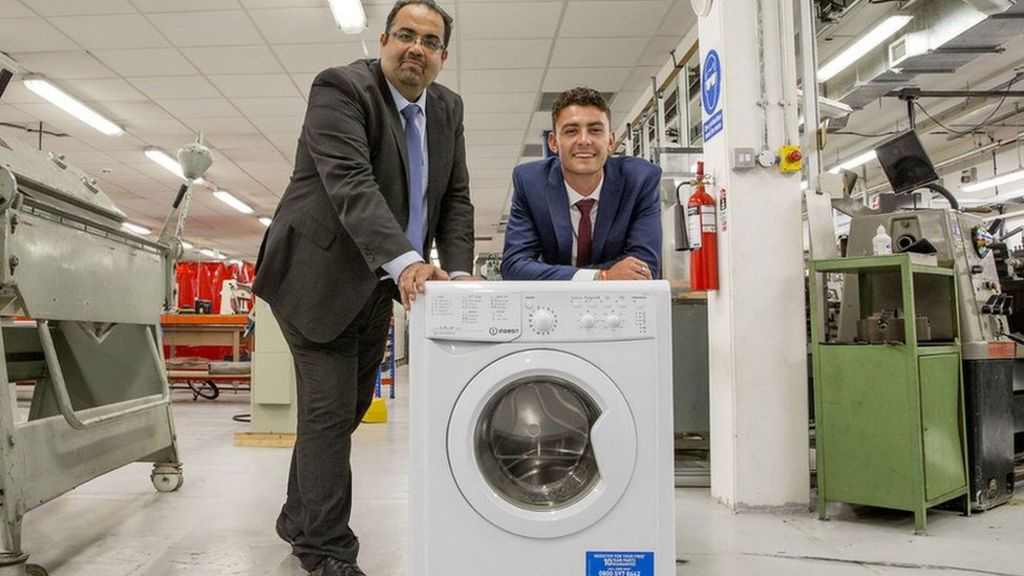

Concrete weights inside washing machines stabilise the outer drum during high-speed spin, stopping the machine walking, bouncing, or vibrating excessively. A proposal to replace them with water-filled plastic containers would cut shipping weight and carbon emissions – but faces significant engineering obstacles including the lower density of water, lack of internal space, dynamic sloshing, freezing, and the serious risk of water leaking inside a live appliance.
Washing machines are surprisingly heavy, and most of that weight is deliberate. Concrete blocks bolted to the outer drum do a critical engineering job – and a proposal to replace them with water-filled plastic containers has sparked plenty of debate. Whitegoods Help looks at why the weights are there, what the replacement idea actually involves, and whether it could ever work in practice.
Why do washing machines have concrete weights?
Opening the top or front panel of a washing machine reveals something most people are not expecting – large concrete blocks, typically around 25kg in total, bolted directly to the outer drum. To understand why they are there, it helps to know what happens during a spin cycle.
When a washing machine spins at 1,200 or 1,400 rpm, the drum and its contents become a rapidly rotating mass. Even a small imbalance – a single wet towel on one side – generates significant centrifugal force. Without stabilisation, the outer drum would move violently, banging against the cabinet and potentially walking the machine across the floor.
 Counterbalancing centrifugal force
The concrete adds mass to the drum assembly, reducing the ratio of imbalance to total weight. A 3kg imbalance on a 25kg drum assembly is far less destabilising than the same imbalance on a 5kg assembly – less movement, less vibration.
 Keeping the machine grounded
The combined weight of drum, concrete blocks, bearings, and motor makes the whole assembly harder to displace. This is what stops the machine “walking” across the floor when spinning at full speed.
 Positioning of the weights
Modern machines typically carry one weight on top of the drum and one either underneath or wrapped around the front. The distribution balances the assembly in multiple axes, not just left to right.
 Why plastic drums need more weight
Older machines used metal outer drums, aluminium back-plates, and cast-iron bearing housings – all heavy on their own. Modern plastic outer drums are much lighter, so concrete is bolted on to compensate. The shift to plastic is why current machines carry so much ballast.
What is the environmental cost of all that concrete?
Twenty-five kilograms of concrete per machine adds up to an enormous cumulative weight across an industry that ships millions of units globally every year. The environmental argument for reducing this weight is genuinely compelling.

Heavier loads burn more fuel. Reducing each machine by up to 25kg – roughly a third of the total weight – across millions of units adds up to a significant cut in transport energy.

Industry estimates have suggested that replacing concrete weights with lighter alternatives could cut CO₂ emissions by tens of thousands of tonnes a year across global appliance logistics.

Concrete production carries its own carbon footprint. Eliminating concrete from each machine would lower embodied carbon at source – a benefit that scales with global production volumes.

Lighter machines are safer and easier to handle through the supply chain, reducing injury risk for warehouse and delivery staff and potentially allowing tighter packing in shipping containers.
What is the water-filled replacement concept?
The proposed solution is elegantly simple in principle: replace the concrete blocks with empty plastic containers during manufacture and shipping. Once delivered, the containers are filled with water at the customer’s home to restore the ballast the machine needs to spin safely.
 What makes the idea appealing
Water is freely available at the point of installation. Empty containers are lightweight and take up the same space as filled ones. The concept removes the need to transport 25kg of concrete per machine. It is a creative, low-tech answer to a genuine environmental problem.
 The fundamental engineering problem
Water is much less dense than concrete. Concrete has a density of around 2,300 kg/m³, water just 1,000 kg/m³. A water container delivering the same mass as a concrete block needs to be more than twice the volume. Inside a machine with no spare space, that is a serious obstacle.

A typical 25kg concrete weight would need to be replaced with around 25 litres of water – roughly two and a half full washing-up bowls. Modern washing machines do not have a spare volume of this scale anywhere inside the cabinet. The outer drum already sits very close to the casing to fit larger drum capacities.
What are the engineering obstacles in detail?
Each problem on its own might be solvable. Stacked together, they explain why the concept has not made it into mass production – and why concrete remains the industry default after decades of incremental change.
1. There is no room inside modern washing machines
The trend toward larger drum capacities has pushed the outer drum progressively closer to the cabinet walls. Clearance between drum and casing is already tight – and that gap has to be preserved to let the drum move on its suspension during wash and spin without striking internal components.
Fitting water containers large enough to provide equivalent ballast would either need a bigger cabinet – cancelling some of the transport benefit – or a fundamental redesign of the internal layout. Washer-dryers are even more constrained because they share the same space with drying components.
2. Filling the weights at point of delivery is impractical
Access to the drum weights inside a fitted washing machine is extremely limited. The bottom weight sits in the tightest part of the machine and is completely inaccessible without partial disassembly. For the concept to work, the weights would need to be repositioned to the top and front where a fillable lid is reachable – which itself requires redesigning where and how they attach.
There are also practical risks. Water spilled during filling could contact electrical components. And a container that is not filled completely leaves an air pocket – allowing the water to slosh during spin and creating a shifting imbalance instead of a stable counterweight.
3. Water leakage could cause catastrophic damage
This is the most serious concern. Drum weights are subjected to enormous centrifugal forces during high-speed spin. Even current concrete weights are known to crack and work loose over time – a documented failure mode that causes vibration problems.
A plastic container holding 10-12 litres of water under those same forces would need to stay perfectly sealed and mechanically attached for the entire life of the machine. If it cracked, split, or detached, a sudden water release inside a live appliance could cause electrical shorts, corrosion, flooding, and in the worst case fire. The failure profile is much worse than a concrete weight simply cracking.
4. Sloshing water creates dynamic imbalance
A concrete weight is a static, fixed mass. A water-filled container introduces a dynamic element – the water moves inside as the drum accelerates and decelerates. Road tankers solve this with internal baffles specifically designed to break up liquid surge. Without equivalent baffling, a water-filled drum weight could actively worsen vibration rather than reducing it – the opposite of what is wanted.
5. Freezing risk in cold environments
Many UK washing machines are installed in garages, outbuildings, or unheated utility rooms. In a hard winter the water inside the ballast containers could freeze, expanding and cracking the plastic. Adding antifreeze would introduce a toxic chemical into a sealed system inside a domestic appliance, raising its own safety questions.
6. Transit packaging conflicts
New appliances ship with polystyrene or cardboard transit packaging fitted inside the machine to protect the drum during transport. Larger water containers would reduce or eliminate the space available for this packaging, potentially raising transit damage rates and adding cost elsewhere in the chain.
Washing machine vibrating, banging, or walking on spin?
A cracked or loose drum weight is one of several causes – and one our engineers see regularly. We can diagnose the fault and source the right replacement part.
Could the concept be made to work?
The obstacles above are real but not all of them are insurmountable. A few of them dissolve completely if the machine is redesigned around the new ballast concept from the ground up, rather than retrofitted onto today’s designs.
Double-skinned outer drumIf the outer drum were moulded as a hollow double-skinned structure, the cavity between the skins could itself act as the water reservoir – removing the need for separate containers entirely. This is the most structurally sound version of the idea, integrating the reservoir into the drum rather than bolting parts on.
 Quick-setting compound
One alternative suggested is filling the containers with a reactive compound – a powder or gel that absorbs water and then sets hard. This would give the installation convenience of water filling without leaving a permanent liquid reservoir under centrifugal stress. The result would effectively be a cast-in-place solid weight.
 Recycled or cast metal weights
A simpler alternative is using denser materials than concrete – cast iron, recycled metal, or composite ingots. Higher density means smaller weights for the same mass, easing the space problem. Metal weights can also be designed for recovery and recycling at end of appliance life.
 Build machines that last longer
Perhaps the most effective long-term approach is to build machines that last 20 years instead of 8. A machine that lasts twice as long amortises its manufacturing carbon – concrete included – over twice as many wash cycles. Durability is the most eco-friendly design choice. Read our analysis of the right to repair and appliance lifespan.
Why does my washing machine vibrate so much on spin?
Understanding the role of drum weights also helps explain some common faults. Excessive vibration and noise on spin are among the most frequently reported problems – and the ballast system is often involved.
| Symptom | Likely cause | What to do |
|---|---|---|
| Loud banging on spin | Unbalanced load, or drum weight loose or cracked | Redistribute the laundry first; if banging persists, see washing machine jumps and bangs on spin |
| Machine walking across the floor | Uneven floor, worn shock absorbers, or severely unbalanced load | Level the machine; check shock absorbers and feet |
| Loud rumbling or grinding throughout spin | Worn drum bearings | Compare your noise against our guide on what noisy drum bearings sound like |
| Vibration transmitted through floor | Suspended wooden floor, inadequate isolation | Use an anti-vibration mat; avoid high spin speeds on suspended floors where possible |
| Drum weight cracked or broken | Normal wear, impact, or age – particularly common with concrete weights | Replace the drum weight – see our spare parts guide |

Disconnect the appliance from the mains and turn off the water supply before opening the cabinet. Drum weights are heavy, and the drum assembly is under spring tension – dropping a 12kg block on hands or feet during reassembly is a real risk. If you are not confident with the mechanical work, book a qualified engineer rather than risking injury or further damage. See also our wider DIY washing machine repair warnings.
Frequently asked questions
Why is my washing machine so heavy?
Most of the weight in a modern washing machine comes from concrete ballast blocks – typically around 25kg in total – bolted to the outer drum. They are needed to stabilise the drum during high-speed spin cycles. Without them, the drum would move violently, banging against the cabinet and potentially walking across the floor. The motor, drum, bearings, and casing add further weight, but the concrete is the single largest contributor in most machines.
Could water-filled weights actually work in a washing machine?
In principle yes, in practice the engineering challenges are significant. Water is less than half the density of concrete, so an equivalent water-filled container would need to be more than twice the volume – and modern machines have no spare internal space at that scale. Added risks include internal water leakage under centrifugal stress, dynamic imbalance from sloshing, and freezing in cold environments. A double-skinned drum that uses water as an integral part of the drum structure is the most technically plausible route.
Why do modern machines need more concrete than older ones?
Older washing machines had metal outer drums, heavy aluminium bearing back-plates, and cast iron components – all of which contributed significant mass to the drum assembly without needing separate ballast. The switch to lightweight plastic outer drums removed that inherent mass, and it now has to be replaced with concrete. Ironically, a return to heavier metal components would reduce the need for dedicated ballast almost entirely.
What happens if a drum weight breaks?
A cracked or broken drum weight – a known failure mode with concrete after years of vibration – causes significantly increased noise and movement during spin. In severe cases it can bang against the inner drum or casing and cause further damage. If you hear loud banging that is not resolved by redistributing the load, a broken drum weight may be the cause. Drum weights can be replaced – see our spare parts guide or book a repair engineer.
Is there a better alternative to concrete for drum weights?
Several alternatives have been proposed or trialled. Cast iron or recycled metal weights are denser than concrete, meaning smaller weights could provide the same mass and ease the space problem. Some manufacturers have experimented with composite materials. The double-skinned drum concept – using the drum structure itself as a water reservoir – remains the most elegant theoretical solution but would need a fundamental redesign. For now concrete remains the industry standard because it is cheap, dense enough to be practical, and well understood.
My washing machine vibrates badly on spin – is it the drum weight?
Excessive vibration on spin can have several causes – an unbalanced load, a worn or failed shock absorber, an unlevel machine, or a cracked drum weight. Start by redistributing the laundry and checking the machine is level on solid flooring. If the problem persists, our guides on noisy washing machines and machines that jump and bang on spin cover detailed diagnosis.
Ask the repair forum
Post the make, model and symptoms and get help from the Whitegoods Help community.
8 Comments
Grouped into 6 comment threads.
1 reply Hi. This is all very interesting as I have a problem that relates to this. I am currently looking to replace a washing machine in an upstairs converted flat with suspended wooden floors and have been searching and enquiring about this to try and find the least vibrating machine on spin as the person below has complained that the whole place shakes and also the kitchen wall cupboards in my flat rattle away when the machine has been spinning. Do you think it's worth paying the extra for a Miele or maybe Bosch machine to try and minimise the vibration noise? or in this situation will any machine be as bad ? I would appreciate your input if you can help advise. Thanks
0 replies Indeed Riccardo. If all washing machines were only made as well as Miele it would reduce far more carbon emissions than this weight replacement idea.
Indeed Riccardo. If all washing machines were only made as well as Miele it would reduce far more carbon emissions than this weight replacement idea.
0 replies The CO2 from transport is, essentially, a one-off that happens once per new machine. The CO2 from producing the concrete block is also a one-off, unless the concrete block breaks. I think a good solution to the problem is to use a weight that doesn't break, can be recycled or even re-used, and a washing machine that lasts longer, thus meaning the environmental impact takes place one per 15 or 20 years instead of once every 4 years. Perhaps the weights could be made of cast iron and the machine built to last a couple of decades, as some manufacturers are already doing. This water weight idea sounds like a 'solution' to a non-problem. Probably water weights will be even less reliable than concrete weights, which in turn were less reliable than the iron weights they have largely replaced.
The CO2 from transport is, essentially, a one-off that happens once per new machine. The CO2 from producing the concrete block is also a one-off, unless the concrete block breaks.
I think a good solution to the problem is to use a weight that doesn’t break, can be recycled or even re-used, and a washing machine that lasts longer, thus meaning the environmental impact takes place one per 15 or 20 years instead of once every 4 years.
Perhaps the weights could be made of cast iron and the machine built to last a couple of decades, as some manufacturers are already doing. This water weight idea sounds like a ‘solution’ to a non-problem. Probably water weights will be even less reliable than concrete weights, which in turn were less reliable than the iron weights they have largely replaced.
0 replies Yes Bob, that's an interesting possible solution to the leak concern.
Yes Bob, that’s an interesting possible solution to the leak concern.
1 reply The concrete weight is used for damping, but I can also recall years ago with smaller metal drums that they still required two and occasionally three concrete block to absorb the energy. However there maybe a way of reducing some of these blocks weights by using a combination of a shock absorber, similar to those used on vehicles and on some industrial equipment, and a concrete weight. There is also the fact with water that unless the container was completely full then the water sloshing around could exacerbate the problem. (Road tankers have dividers inside the tank to prevent liquids sloshing around, besides making the vehicle uncontrollable but also can tip it over.) There is also the fact that if in a cold area in certain parts of the country, and particularly more northern parts of the world, the water could freeze and rapture the container. Some form of antifreeze would be required that is likely to be toxic. The whole thing gets messy, from filling and installation perspectives as well as from possible leaks. Maybe the answer is a quick setting concrete mixture contained within containment that water is added to and allowed to cure. This would get over the transit and locating the machine problem with weight, but does not get over the issue of lack of room within the machine's casing.
The concrete weight is used for damping, but I can also recall years ago with smaller metal drums that they still required two and occasionally three concrete block to absorb the energy. However there maybe a way of reducing some of these blocks weights by using a combination of a shock absorber, similar to those used on vehicles and on some industrial equipment, and a concrete weight.
There is also the fact with water that unless the container was completely full then the water sloshing around could exacerbate the problem. (Road tankers have dividers inside the tank to prevent liquids sloshing around, besides making the vehicle uncontrollable but also can tip it over.) There is also the fact that if in a cold area in certain parts of the country, and particularly more northern parts of the world, the water could freeze and rapture the container. Some form of antifreeze would be required that is likely to be toxic. The whole thing gets messy, from filling and installation perspectives as well as from possible leaks.
Maybe the answer is a quick setting concrete mixture contained within containment that water is added to and allowed to cure. This would get over the transit and locating the machine problem with weight, but does not get over the issue of lack of room within the machine’s casing.
Likely replying to Geoff
Hello Geoff. The Hoover washing machines I specialised in (and used for one of the photos) had just one tub weight hung at the bottom of the metal tub. That weight combined with the metal outer drum (tub) and the aluminium backplate was enough to keep the machines steady. Some brands might have chosen to have smaller weights distributed around the tub. Many washing machines also had big cast iron spiders with bearings in attached to the back of the tub that were as heavy as a drum weight. Since they all moved onto plastic outer drums they all need a lot more weights.
If the shock absorbers could be good enough to dampen virtually all outer drum movement then they could have the outer drum and weights closer to other parts and the casing. However, that would also increase costs. The whole idea could end up adding quite a lot to the cost of a washing machine because of all the redesign and installation costs. The only way I can see it taking off is if the government really needs it to happen to offset carbon emissions. Then increases in costs to consumers becomes collateral damage so to speak.
I also mention the moving water problem in my article although I only give it one sentence. The freezing water issue is one I hadn’t thought of. Many washing machines are kept in garages or out buildings. It would need to get pretty cold to freeze water inside the blocks but it’s not impossible and it would potentially be a problem if it cracked the blocks.
0 replies The "tanks" that are to be filled with water could have a reactive compound inside that absorbs the water and then sets hard thereby avoiding the chance of leaks.I seem to remember such a system being described to me a few years ago but at the moment i can't recall what the aplication was used for.
The “tanks” that are to be filled with water could have a reactive compound inside that absorbs the water and then sets hard thereby avoiding the chance of leaks.I seem to remember such a system being described to me a few years ago but at the moment i can’t recall what the aplication was used for.
Hi. This is all very interesting as I have a problem that relates to this. I am currently looking to replace a washing machine in an upstairs converted flat with suspended wooden floors and have been searching and enquiring about this to try and find the least vibrating machine on spin as the person below has complained that the whole place shakes and also the kitchen wall cupboards in my flat rattle away when the machine has been spinning. Do you think it’s worth paying the extra for a Miele or maybe Bosch machine to try and minimise the vibration noise? or in this situation will any machine be as bad ? I would appreciate your input if you can help advise. Thanks
Likely replying to Liz
Hello Liz. Unfortunately all washing machines will have problems on a suspended wooden floor. Miele are without doubt the least likely washing machines to shake about but even they are not designed or recommended to be used on a suspended wooden floor. It’s even possible (ironically) that with the Miele being so heavy it could cause even more vibration. Washing machines need to be on a solid well supported floor.