
Washing machine depth specifications
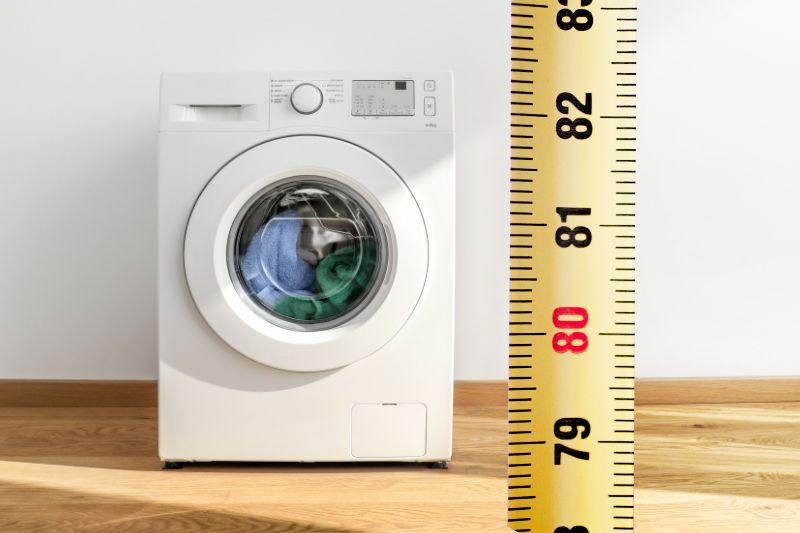

Washing machine depth measurements do not always include the space taken up by hoses and cables at the back, or controls and door features at the front. If the machine has an overhanging lid, the hoses often tuck underneath it and depth specs are usually accurate. If it does not, you may need extra space beyond the quoted figure. When fitting is critical, always measure the actual machine in a showroom or confirm with the retailer before buying.
A washing machine listed as 60cm deep sounds straightforward – but whether that figure accounts for hoses, cables, and fittings at the back, or protruding controls and door handles at the front, is rarely made clear in the specifications. Getting this wrong can mean a machine that does not fit where intended.
Does the Quoted Depth Include the Hoses and Cables?
Manufacturer depth specifications cannot always be relied upon to include the space that inlet and drain hoses take up at the rear. Whether they do depends on the design of the machine – specifically, whether the lid overhangs the back of the casing.
If the lid extends further back than the rear casing, the hoses can often sit in the gap between the casing and the back edge of the lid, meaning they do not add to the overall depth required. In this case, the quoted depth measurement – which typically reflects the depth of the lid – will usually be accurate for fitting purposes.
If the lid does not overhang at the back, the hoses will project behind the machine and add to the space needed. In this situation, the quoted depth may understate the actual space required.
 Machine With Overhanging Lid
Hoses typically tuck under the lid overhang. The quoted depth spec is usually reliable for fitting purposes.
 Machine Without Overhanging Lid
Hoses project behind the rear casing and add to the depth needed. The quoted measurement may not account for this.
The Overhanging Lid: What to Look For
Many modern washing machines are designed with a lid that extends further back than the main casing. The images below show examples of this on a Miele washing machine and a John Lewis washer dryer – both with lids that overhang the rear, allowing the hoses to sit within the footprint of the lid rather than projecting beyond it.
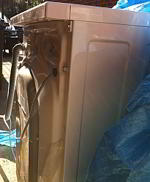
John Lewis washer dryer rear view – the lid extends beyond the casing, giving the hoses room to sit within the machine’s overall depth.

Miele washing machine rear view – similarly, the overhanging lid allows the inlet and drain hoses to route without adding to the machine’s depth footprint.
A wall socket or waste water standpipe behind the machine may also prevent it from pushing fully back under a worktop, even if the hoses fit within the lid footprint. Check what is on the wall behind the intended location before buying.
Watch Out for the Front: Doors, Drawers, and Protrusions
For most installations, not having quite enough depth simply means the machine sits slightly proud of the worktop edge. This is usually acceptable. The more practical problem with depth comes from what is at the front of the machine.
Many modern washing machines have bulkier front designs than older models, with the front casing bowing outwards. Door handles, control panels, knobs, and buttons can all project forward significantly. If a kitchen door or drawer opens across the path of the washing machine, these protrusions can cause it to catch – even if the machine appears to fit correctly in terms of the quoted depth measurement.
These front protrusions are not typically included in published depth measurements. If a kitchen door, drawer, or cupboard opens across the front of where the machine will sit, measure from the furthest projecting point at the front to the furthest projecting point at the back to get the true depth clearance needed.
Standard Kitchen Fitting Dimensions and Larger Drums
The standard space allocated for a washing machine in a fitted kitchen is 600mm (60cm). This worked well when washing machine drums were smaller and machines were shallower. The introduction of larger capacity drums – some machines now offer 10kg or 11kg loads – has pushed machine depths outward, with many modern models now reaching the full 600mm.
The extra depth needed for a larger drum typically comes from extending the drum from front to back, meaning the cabinet gets deeper rather than wider or taller. If you are working with a tight depth space, a machine with a smaller drum capacity may be shallower – though some manufacturers use the same cabinet depth across a range to reduce production costs, so this is worth checking on the specific model.
For further guidance on washing machine sizing, see our guides on washing machine size problems and issues, washing machine sizes compared, and how much space a washing machine needs round the sides.

Do not rely solely on published specifications. Physically inspect and measure the machine in a showroom, or get written confirmation from the retailer that the depth measurement accounts for hoses and rear fittings. Once delivered, a machine that does not fit is expensive and inconvenient to return.
Need Help Installing or Replacing a Washing Machine?
If you need a repair or are looking for a replacement, Whitegoods Help can point you in the right direction.
Related Guides
 Are All Washing Machines the Same Size?
Why washing machine sizes are not as standardised as they seem, and what to check before buying for a fitted space.
 How Much Space Does a Washing Machine Need Round the Sides?
Ventilation, clearance, and access requirements when fitting a washing machine into a tight space.
 Reducing the Height to Fit Under a Worktop
How to adjust the feet on a washing machine to clear a fitted worktop without affecting stability.
 Washing Machine Drum Sizes Explained
What drum capacity actually means in practice and how to choose the right size for your household.
Frequently Asked Questions
Does a washing machine’s quoted depth measurement include the hoses?
Not always. If the machine has an overhanging lid at the rear, the hoses typically tuck underneath it and the quoted depth is usually accurate. If the lid does not overhang, the hoses project behind the casing and the actual space needed may exceed the quoted figure. Check the design of the specific machine before buying.
What is the standard washing machine depth for a fitted kitchen?
The standard allocated space is 600mm (60cm). However, many modern machines – particularly those with larger drum capacities – now measure 60cm deep, meaning they fill the entire standard space. If depth is limited, look for machines with smaller drum capacities, though some manufacturers use the same cabinet depth across a range regardless of drum size.
Why won’t my washing machine push all the way back under the worktop?
Common causes include hoses or cables at the back taking up space the specifications did not account for, a wall socket or standpipe that prevents the machine going fully back, or a protruding lid design. Measure the space and the machine carefully, including any fittings on the wall behind.
Can a washing machine door or controls catch on kitchen drawers?
Yes. Many modern machines have bulkier front designs, with doors and control panels that project significantly from the main casing. These protrusions are not included in published depth measurements. If a kitchen drawer or door opens across the front of the machine’s location, measure the true front-to-back clearance needed including any protrusions before buying.
How do I check whether a washing machine will fit before buying?
Measure the available space carefully, including height, width, and depth. For depth, account for what is behind the machine – sockets, standpipes, or fixed pipework. If possible, inspect the machine in a showroom and measure the actual unit including any rear hose connections and front protrusions. If buying online, confirm with the retailer that the quoted depth is the true installed depth.
Ask the repair forum
Post the make, model and symptoms and get help from the Whitegoods Help community.
8 Comments
Grouped into 6 comment threads.
1 reply I am having problems buying a washing machine for my property I have looked everywhere for a machine with these dimensions (H) 89cm (W) 58.5cm (D) 62cm the depth and height are fine but most washing machines are 59.5-60cm will they still fit or not.
0 replies I have fitted many kitchens and have replaced many 'built in' appliances. Usually you can make them all work as they are generally standard (ish) sizes. The issues usually are around the pipes/outleets and the socket/cable (as a previous poster stated). Tips if you are not too handy are: 1) Ensure you have the standard 'space' in the kitchen (600W x 850H x 600D) or at least within a few mm of those dimensions. MOST but not all machines will fit. Some of the larger load washing machines can be problematic. 2) Use a decent company that will install for you. I have used AO.com and have generally been pleased. They come and deliver/fit (usually gone in an hour) and take the old machine away. Costs about average £80 extra but, sometimes thay have free or half price fitting. Sounds expensive but, if you think you might waste a day messing around and running up to the tip etc. it is not that bad (maybe I am getting lazy in my old age...)
I have fitted many kitchens and have replaced many ‘built in’ appliances. Usually you can make them all work as they are generally standard (ish) sizes. The issues usually are around the pipes/outleets and the socket/cable (as a previous poster stated). Tips if you are not too handy are:
1) Ensure you have the standard ‘space’ in the kitchen (600W x 850H x 600D) or at least within a few mm of those dimensions. MOST but not all machines will fit. Some of the larger load washing machines can be problematic.
2) Use a decent company that will install for you. I have used AO.com and have generally been pleased. They come and deliver/fit (usually gone in an hour) and take the old machine away. Costs about average £80 extra but, sometimes thay have free or half price fitting. Sounds expensive but, if you think you might waste a day messing around and running up to the tip etc. it is not that bad (maybe I am getting lazy in my old age…)
0 replies A standard cabinet is 570mm deep and the distance from floor to the underside of the worktop is 870. A cab is 720 high with and additional 150mm allowed for the plinth. This is the playing field you have to work around. Most Dishwashers are 596mm ish to fit within a 600mm cavity and they are about 820mm high. The depth is crucial. Watch out for your power socket. if it mounted too high, it interferes with the back of the unit - you have to use a fused outlet. To re-enforce teh core message of the article - check your measurements against standard cab sizez and make sure it fits - watch out for power, water and waste conections - they all take up room.
A standard cabinet is 570mm deep and the distance from floor to the underside of the worktop is 870. A cab is 720 high with and additional 150mm allowed for the plinth.
This is the playing field you have to work around. Most Dishwashers are 596mm ish to fit within a 600mm cavity and they are about 820mm high. The depth is crucial. Watch out for your power socket. if it mounted too high, it interferes with the back of the unit – you have to use a fused outlet.
To re-enforce teh core message of the article – check your measurements against standard cab sizez and make sure it fits – watch out for power, water and waste conections – they all take up room.
0 replies This is what my article says Ed, you just can't trust the measurements. You should be able to send it back.
This is what my article says Ed, you just can’t trust the measurements. You should be able to send it back.
0 replies We have just bought a Samsung washing machine advertised at 600mm deep however on trying to install have found it to be over 680mm!! Unfortunately the space it was to fit in is 690mm deep and therefore it is not possible to install it and close the doors in front of it. Surely samsung can't be out by 15% on the dimensions... will this be an issue with other manufacturers also?
We have just bought a Samsung washing machine advertised at 600mm deep however on trying to install have found it to be over 680mm!! Unfortunately the space it was to fit in is 690mm deep and therefore it is not possible to install it and close the doors in front of it. Surely samsung can’t be out by 15% on the dimensions… will this be an issue with other manufacturers also?
1 reply We will be having a problem in the near future regarding our washing machine. When we had the kitchen stripped out in 2008 and replaced with integrated appliances. The kitchen company offered, as an option, all white Whirlpool appliances, each of which were to be integrated. That was fine by us and we were pleased with the Whirlpool products. However, time passes on, and we are considering in the near future to renew the Whirlpool Washer Machine/Dryer. To my horror I find that Whirlpool no longer do a Model that has the same depth dimensions of our current Model. All their Models are at least 550mm depth whereas our current Whirlpool W/M is 525mm. Bang goes the 'integration' theme for ensuring a clean line in the kitchen! What bright spark in the Whirlpool manufacturing world thought that one up? If anyone knows of a W/M that has a depth dim of 525mm or less I would be pleased to hear about it.
We will be having a problem in the near future regarding our washing machine. When we had the kitchen stripped out in 2008 and replaced with integrated appliances. The kitchen company offered, as an option, all white Whirlpool appliances, each of which were to be integrated. That was fine by us and we were pleased with the Whirlpool products. However, time passes on, and we are considering in the near future to renew the Whirlpool Washer Machine/Dryer. To my horror I find that Whirlpool no longer do a Model that has the same depth dimensions of our current Model. All their Models are at least 550mm depth whereas our current Whirlpool W/M is 525mm. Bang goes the ‘integration’ theme for ensuring a clean line in the kitchen! What bright spark in the Whirlpool manufacturing world thought that one up? If anyone knows of a W/M that has a depth dim of 525mm or less I would be pleased to hear about it.
Likely replying to David Charles
Hello David. Did they build the kitchen units exactly around the appliances? That would be pretty silly. Are you sure your current washing machine takes up all of the depth space? An appliance slot for any white goods appliance should always be 600mm wide and 600mm deep. When done like that, all built in appliances will fit. Many may be less deep and just not fit all the way back.
I am having problems buying a washing machine for my property I have looked everywhere for a machine with these dimensions (H) 89cm (W) 58.5cm (D) 62cm the depth and height are fine but most washing machines are 59.5-60cm will they still fit or not.
Likely replying to Steve
Hello Steve. If fitting into a confined space then even half a millimetre too much will stop it fitting. I have more information on width of washing machines in another article but no solutions I’m afraid Washing machines and associated problems with sizes