
Washing Machines Not Delivering Right Temperature
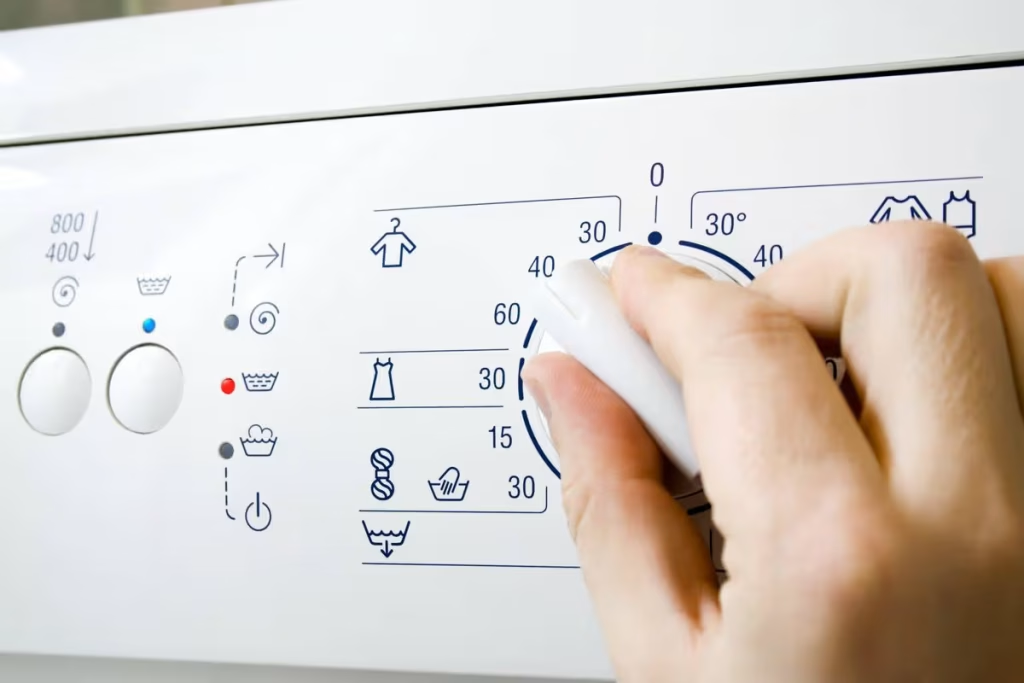

Independent testing has found that a significant proportion of washing machines do not reach the temperature displayed on their programme dial or screen. On a 60°C wash, some machines only reach 43-55°C. Even those that do reach 60°C often only maintain that temperature for a few seconds or minutes. This matters most for hygiene washes, killing bacteria, and washing at high temperatures for medical or allergy reasons.
When you select a 60°C wash, does your washing machine actually heat the water to 60°C? Independent testing has found that many do not – and in some cases the real temperature is dramatically lower than the programme label suggests. Here is what is known, why it happens, and what it means for your laundry.
What Independent Testing Has Found
Testing of washing machines across multiple brands has revealed a surprising discrepancy between the temperature displayed on programme selectors and the temperature actually reached inside the drum during a wash cycle.

In a sample of twelve washing machines tested on their 60°C cotton programme, the majority did not reach 60°C. Some reached only 43°C – a shortfall of 17 degrees. Even machines that did reach 60°C typically maintained that temperature for only a few seconds or minutes before the water cooled again, rather than washing at that temperature throughout the cycle.
A gap of 17 degrees between the selected programme temperature and the actual wash temperature is not a minor calibration difference. It is a fundamental mismatch between what the machine claims to do and what it actually delivers.
Why Do Washing Machines Underperform on Temperature?
There is a straightforward explanation – and it is not an accidental engineering oversight.
UK and EU energy labels for washing machines are calculated using standardised test conditions that include performance on a 60°C cotton wash. The energy consumption figure on the label is measured at this temperature. A machine that does not actually heat to 60°C will use less electricity during the test – and therefore achieve a better energy rating – than a machine that genuinely reaches and maintains that temperature.
If a machine only reaches 43°C on a nominally 60°C programme, it uses significantly less electricity to do so. This results in a lower kWh figure on the energy label – which makes the machine appear more efficient and more attractive to buyers. A machine that honestly heats to 60°C will appear less efficient by comparison, even though it is actually delivering the wash it claims.
The energy label testing regime does not appear to independently verify that a machine actually reaches the temperature stated on the programme. Provided the machine completes the cycle and produces results within certain parameters, the label is awarded based on energy consumption – not temperature accuracy. This creates a gap that some manufacturers have exploited.
Buyers comparing two otherwise similar washing machines will typically be attracted by the one showing lower annual energy costs. Manufacturers are therefore commercially incentivised to minimise energy consumption on test conditions – even if that means not delivering the wash temperature the programme suggests. An honest machine loses competitive advantage against one that prioritises test performance over real-world delivery.

In a competitive market where energy ratings influence purchase decisions, there is a commercial incentive to underperform on temperature during test conditions. Machines that do not reach the stated temperature benefit from artificially favourable energy ratings – at the expense of the consumer who selected that programme expecting it to perform as labelled.
Does Temperature Actually Matter?
For most everyday laundry – lightly soiled cotton at 30°C or 40°C, for example – the precise temperature is not critical. Modern detergents are formulated to clean effectively at lower temperatures, and the difference between 38°C and 40°C is negligible in practice.
However, there are specific situations where wash temperature matters significantly – and where a shortfall between the selected programme and the actual temperature could have real consequences.
 Killing bacteria and hygiene
A genuinely hot wash – typically 60°C or above – is recommended for killing household bacteria including E. coli and Staphylococcus. NHS guidance recommends washing items at 60°C to reduce the risk of infection. A machine that only reaches 43°C on a nominally 60°C programme is not achieving this hygiene outcome.
 Allergy and dust mite management
Dust mites – a common trigger for asthma and allergies – are killed at temperatures above 55-60°C. Washing bedding and soft furnishings at a labelled 60°C programme that only reaches 43°C will not achieve the intended result for allergy sufferers.
 Healthcare and vulnerable users
Households with vulnerable members – immunocompromised individuals, young children, or elderly people – who wash items at high temperatures specifically for hygiene purposes are most affected by a temperature shortfall. They may believe they are achieving a hygienic wash when they are not.
 Heavily soiled laundry
Very dirty items – heavily soiled workwear, nappies, or items contaminated with food – are sometimes washed at higher temperatures specifically for cleaning effectiveness. A shortfall in actual temperature will reduce the cleaning outcome for these loads.
Is This a Consumer Rights Issue?
Under the Consumer Rights Act 2015, goods must perform as described. If a washing machine programme is labelled as a “60°C Cotton” wash, there is a reasonable argument that the machine should actually heat to approximately 60°C for a meaningful part of that cycle.
 The consumer’s argument
A machine that only reaches 43°C on a labelled 60°C programme is not performing as described. If a consumer specifically selected that programme for hygiene purposes – and the machine fails to achieve the stated temperature – there may be grounds for a complaint under the Consumer Rights Act.
 The practical difficulty
Proving that a machine is not reaching the stated temperature requires measurement equipment most consumers do not have access to. Without independent test results naming specific models, a consumer making this claim faces a challenging evidential burden.
If you purchased a washing machine specifically for its high-temperature hygiene performance – and you have evidence that it is not reaching the stated temperature – it may be worth raising a formal complaint with the retailer citing the Consumer Rights Act. See our guide: Consumer Rights Act and faulty appliances.
Why All Washing Machines Cannot Have Radically Different Energy Use
A separate but related question is why energy consumption varies so much between machines that are fundamentally very similar in design.
All washing machines use essentially the same basic process: fill with water, heat it, agitate the laundry, rinse, and spin. The only component that uses significant electricity during the wash cycle is the heating element. A heating element of a given power rating will use the same amount of electricity to raise a given volume of water by a given number of degrees – regardless of the brand name on the front.

If two machines use the same volume of water and the same heating element power, they will use the same electricity to reach the same temperature. If one machine appears to use significantly less electricity on a 60°C wash than another, the most likely explanation is that the first machine is not actually heating to 60°C – not that it has found a more efficient way to heat water.
This is why the temperature accuracy issue and the energy rating issue are directly connected. A large gap in energy consumption between comparable machines should be treated with suspicion – it may reflect a gap in actual wash temperature rather than genuine engineering efficiency.
What Should You Do?
For most households, this issue has limited practical impact on everyday laundry. But if temperature accuracy matters to you, here is what to consider.
-
Check independent test results before buying. Consumer testing organisations assess real wash performance – including temperature accuracy – not just energy label figures. If hygiene washing is important to you, look specifically for results on 60°C performance, not just energy consumption ratings. Independent testers sometimes flag machines that score poorly on temperature accuracy. Read our guide: which washing machines to avoid.
-
Be sceptical of suspiciously low energy figures. If a machine’s stated energy consumption is significantly lower than comparable models – particularly on a 60°C programme – consider whether this reflects genuine efficiency or underperformance on temperature. Read our analysis: what energy labels on washing machines actually mean.
-
Use a longer programme for hygiene washes. Where temperature accuracy is important – for allergy bedding, nappies, or infection control – using a longer programme at the highest temperature setting gives the machine more time to heat the water. Some machines also offer a specific hygiene or anti-allergy programme that may be more reliable than the standard cotton cycle.
-
Consider the 90°C programme for true hygiene. If a machine’s 60°C programme is known to underperform, selecting a 90°C programme may deliver a closer real-world temperature – though this uses considerably more energy. Some machines include a specific hygiene wash that is separately controlled. See our guide on washing machines with a 95°C hot wash.
-
Maintain your machine’s heating element. In hard water areas, limescale builds up on the heating element over time, reducing its efficiency. A heavily scaled element takes longer to heat water and may not reach the target temperature reliably. Regular descaling can help. See our guide: limescale in washing machines.
Frequently Asked Questions
Does my washing machine actually reach 60°C on a 60°C wash?
It may not – and independent testing has confirmed that many machines do not. Some reach only 43-55°C on a nominally 60°C programme. Even those that do reach 60°C often only maintain that temperature briefly. Whether this matters depends on what you are washing – for most everyday laundry it has limited impact, but for hygiene or allergy washing it is a significant concern.
Why would a washing machine not reach the temperature it claims?
The most likely explanation is that energy ratings are partly calculated based on a 60°C wash test, and a machine that does not actually heat to 60°C uses less electricity – and therefore achieves a better energy rating. This creates a commercial incentive to underperform on temperature while achieving a favourable energy label. Some manufacturers may also deliberately heat to lower temperatures as part of a cycle design that prioritises energy efficiency over temperature accuracy.
Does it matter what temperature my washing machine reaches?
For most everyday laundry – lightly to moderately soiled items at 30-40°C – modern detergents work effectively regardless of small temperature variations. However, for hygiene washing – bedding for allergy sufferers, nappies, items used by immunocompromised individuals – the actual temperature reached matters significantly. Dust mites are not killed below 55°C and bacteria are not reliably killed below 60°C. A machine that only reaches 43°C on a 60°C programme will not achieve these outcomes.
How can I tell if my machine is reaching the right temperature?
Without specialist equipment it is difficult to measure wash temperature directly. One approach described by engineers is to wait until the machine begins draining the wash water and quickly measure the outgoing water temperature – though the timing is difficult and the water may have already cooled. The most practical approach is to check whether independent test results for your specific machine include temperature accuracy data, and to look for any significant discrepancy between the stated energy consumption and what comparable machines achieve.
Is this covered by consumer rights if my machine doesn’t reach the right temperature?
Potentially – if a machine programme is labelled as a “60°C wash” and it consistently falls significantly short of that temperature, there is an argument under the Consumer Rights Act 2015 that the product is not performing as described. The practical difficulty is proving the temperature shortfall without specialist measurement equipment. See our guide: Consumer Rights Act and faulty appliances.
My washing machine is not heating the water at all – is that different?
Yes – a machine that fails to heat water at all is a mechanical fault (a failed heating element or thermostat) rather than a temperature accuracy issue. If your laundry is coming out cold on heated programmes, this is a fault that needs repair. Read our guide: washing machine not heating up water, or book a repair engineer to diagnose the fault.
Washing machine not heating properly?
If your machine is failing to heat water at all – rather than underperforming on temperature – that is a fault that needs diagnosis and repair.
Ask the repair forum
Post the make, model and symptoms and get help from the Whitegoods Help community.
2 Comments
Grouped into 2 comment threads.
0 replies I expect there isn't an easy way to do it other than waiting right until the washer tries to empty the wash water out, or starts to take in cold water to cool it down after washing and then taking the temperature by either stopping the machine and waiting for the door lock to release then using any thermometer to test the water inside, or trying to take the temperature when it pumps the wash water away (if it hasn't cooled it down first by adding some cold water).
0 replies Hi, I was wondering what equipment was available to check the temperature of the water in the machine? Any help on the above would be appreciated. Kind regards, Pamela
Hi,
I was wondering what equipment was available to check the temperature of the water in the machine?
Any help on the above would be appreciated.
Kind regards,
Pamela
I expect there isn’t an easy way to do it other than waiting right until the washer tries to empty the wash water out, or starts to take in cold water to cool it down after washing and then taking the temperature by either stopping the machine and waiting for the door lock to release then using any thermometer to test the water inside, or trying to take the temperature when it pumps the wash water away (if it hasn’t cooled it down first by adding some cold water).