
Washing machines with a 95 degree hot wash
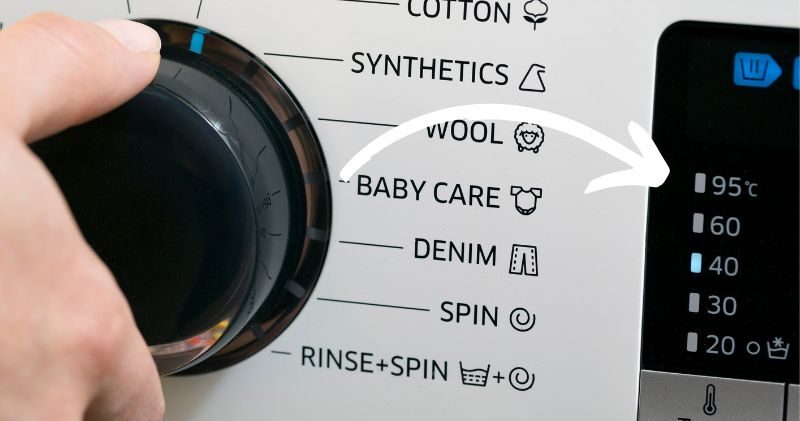

Most modern washing machines offer a maximum hot wash of 90 degrees. Some Miele, Samsung, and LG models include a 95 degree programme. Whether 95 degrees provides a meaningful practical benefit over 90 degrees for most laundry is not well documented – for hygiene and maintenance purposes 90 degrees is the more commonly cited threshold. Always check the care labels on laundry before using any high-temperature programme.
The vast majority of washing machines cap their hot wash at 90 degrees. A small number of models from certain brands go higher – to 95 degrees – though this is not a standard feature and requires checking the specification of individual models.
Which Brands Offer a 95 Degree Wash?
Based on available information, some models from the following brands have been found to offer a 95 degree hot wash programme:
Samsung
LG
This is not universal across all models from these brands. It is a feature that varies by model and range. If a 95 degree programme is a specific requirement, it is essential to check the technical specification of the exact model before purchasing rather than assuming it is included because the brand appears on the list above. Confirm directly with the manufacturer or retailer.
If you know of other brands or models that offer a 95 degree wash programme, the Whitegoods Help contact page is the best way to get that information added to this article.
Is 95 Degrees Better Than 90?
For most practical purposes, 90 degrees is the temperature cited for killing bacteria, hygiene washing of nappies and heavily soiled items, and the maintenance washes recommended to keep the machine itself clean. Whether the additional 5 degrees at 95 provides a meaningful practical benefit for most laundry tasks has not been extensively documented in published sources.
 When a higher temperature may help
- Washing for environments requiring clinical-level hygiene standards
- Heavy disinfection washing where the specific pathogen requires temperatures above 90 degrees
- Certain commercial or semi-commercial use cases
 Considerations against using 95 degrees routinely
- Higher temperatures cause more wear on fabrics over time
- Increased energy consumption compared to 90 degrees
- Most fabrics are not suitable for temperatures above 60 or 40 degrees – always check care labels
- The practical antibacterial benefit over 90 degrees is not clearly established for most domestic applications
For most households, 90 degrees is more than adequate for hygiene washes and machine maintenance. See our guide on washing machine smells and maintenance washing for guidance on when and how to use hot wash programmes effectively.
Related Guides
 Washing Machine Smells
When and how to use hot wash programmes to maintain the machine and prevent bacterial build-up.
 Washing at 30 Degrees
When low-temperature washing is appropriate and when it causes problems – including bacteria build-up inside the machine.
 Which Type of Detergent Is Best?
Biological vs non-biological, powder vs liquid – and how temperature affects which detergent works best.
 Miele Washing Machines
Why Miele is consistently recommended as the premium choice – and what features their range offers.
Frequently Asked Questions
Do most washing machines have a 95 degree wash?
No. The standard maximum hot wash on most modern washing machines is 90 degrees. A 95 degree programme is available on some models from Miele, Samsung, and LG, but it is not a standard feature and varies by model within those ranges. Always check the specification of the specific model you are considering if this is a requirement.
Is 95 degrees better than 90 degrees for killing bacteria?
For most domestic purposes, 90 degrees is the temperature commonly cited as sufficient for hygiene washing and machine maintenance. Whether 95 degrees provides a meaningful additional benefit for standard household use is not well documented. For specialised applications – clinical environments, specific infection control requirements – the guidance of a medical or infection control professional should be followed.
Will a 95 degree wash damage my laundry?
Very possibly, if used for regular laundry. Most fabrics have care label instructions specifying maximum wash temperatures – often 30, 40, or 60 degrees. Cotton that can be washed at 95 degrees is a narrow category. The 95 degree programme is intended for specific use cases such as heavily soiled whites or hygiene washing of items that can withstand high temperatures – not for routine use across a mixed wash load.
Ask the repair forum
Post the make, model and symptoms and get help from the Whitegoods Help community.
7 Comments
Grouped into 6 comment threads.
0 replies my hotpoint whirlpool has a 95 degree anti bacterial wash
0 replies I think the 50 degree temperature died out a long time back, it probably isn't a temperature with any specific merits. It's 10 degrees lower than 60, which would still be hot and save money, but 60 degrees is the temperature which kills bugs and bacteria.
I think the 50 degree temperature died out a long time back, it probably isn’t a temperature with any specific merits. It’s 10 degrees lower than 60, which would still be hot and save money, but 60 degrees is the temperature which kills bugs and bacteria.
0 replies I have an LG steam washing machine, with no 50'c cycle whic I really miss. I have heard some machines wash at 50.c not 60.c on their sysnthectic cycles... anyone aware LG are the same??
I have an LG steam washing machine, with no 50’c cycle whic I really miss. I have heard some machines wash at 50.c not 60.c on their sysnthectic cycles… anyone aware LG are the same??
0 replies if were talking about the original email, for carol, and if she is thinking of getting a samsung then, yes it has a 95'c cycle but only reaches 80'c on the 95'c cycle, still it holds 80'c for 10mins or so, so all bacteria is deffinatly killed the only positive of 95'c over 90'c is that white garments will come out ever so slightly (barley noticiable) whiter. for wmuser: the 50'c artical label was abolished a few years ago, and the 60'c synthetics artical lable was abolished way before that, it came for no need to have the 50'c wash cycle so most manufactures today with variable temps (LED format) will offer - 95/90, 60, 40, 30, cold wierdly however hotpoints max temp for synthetics is 50'c, not 60'c and i think they are gonna not ever up it to 60'c
if were talking about the original email, for carol, and if she is thinking of getting a samsung then, yes it has a 95’c cycle but only reaches 80’c on the 95’c cycle, still it holds 80’c for 10mins or so, so all bacteria is deffinatly killed
the only positive of 95’c over 90’c is that white garments will come out ever so slightly (barley noticiable) whiter.
for wmuser: the 50’c artical label was abolished a few years ago, and the 60’c synthetics artical lable was abolished way before that, it came for no need to have the 50’c wash cycle
so most manufactures today with variable temps (LED format) will offer – 95/90, 60, 40, 30, cold
wierdly however hotpoints max temp for synthetics is 50’c, not 60’c and i think they are gonna not ever up it to 60’c
0 replies Hi Andy, There is no benefit. Bacteria/pathogens/mould/mildew are all destroyed at 65oC with a holding time of 10 minutes and 3 minutes at 71oC, at 90oC you are talking seconds, so no benefit for either the machine or the laundry. These are all DSS guideline requirements. HTH, Oliver.
Hi Andy,
There is no benefit.
Bacteria/pathogens/mould/mildew are all destroyed at 65oC with a holding time of 10 minutes and 3 minutes at 71oC, at 90oC you are talking seconds, so no benefit for either the machine or the laundry. These are all DSS guideline requirements.
HTH,
Oliver.
1 reply My Zanussi-Electrolux has a 95C wash, but no 50C wash! To be honest, I don't think the water temperatures are exact? I don't know if it's possible for the temperature of washing water to be measured accurately or with an accuracy of, say, + or - 2C of the chosen temperature? So a 90C wash could end up being 92C towards the end of the main wash? I know my washing machine will fill up with some cold water during the last 10 minutes or so of a 95C wash, but not at the lower temperature washes.
My Zanussi-Electrolux has a 95C wash, but no 50C wash!
To be honest, I don’t think the water temperatures are exact? I don’t know if it’s possible for the temperature of washing water to be measured accurately or with an accuracy of, say, + or – 2C of the chosen temperature? So a 90C wash could end up being 92C towards the end of the main wash?
I know my washing machine will fill up with some cold water during the last 10 minutes or so of a 95C wash, but not at the lower temperature washes.
Likely replying to WMUser
Hi WMUser,
The 50oC wash was abolished a few years back, saying now anything carrying that label will be included in the 40oC synthetic cycle. As far as I know the 50oC is not on any new article of clothing? If you have a Synthetic 60oC and your machine has variable temperature you can reduce it to 50oC if it is important to you.
No, water temperatures are not exact, however when a modern machine has heated to temperature it will not heat again, so in reality a 90oC wash will more than likeley be in the late 70’s when it drains out. It is only some older machines that will put the heater back on during the wash to bring it back up to temperature.
The reason your machine has a cold top-up at the end of any wash above 60oC is because it has a plastic tank and cannot take such a sudden shock of cold water from the first rinse hitting it immediately from being at near boiling point, also it could not spin very fast either as it could warp the plastic. Manufacturers say it is to protect the clothing from shock creasing, but the 95oC is a cotton cycle and cotton cannot shock crease, neither can wool funnily enough, only man made fibres are affected this way. My Bosch and my Mums Siltal both have stainless steel tanks and at the end of a boil wash just drain and spin then start filling for the first rinse. My Bosch has a graduated rinse on synthetics to prevent shock creasing but the Siltal just drains with gentle action and then fills for the first rinse and neither machine has ever ruined a garment. The Hotpoint has a plastic tank and that too has a cold top-up.
The cold top-up should not be confused with the “Dilution Rinse” on old Hoovers which did this on all programmes except wool wash, as that was already at high level, this was to aid rinsing and drain more deteregent and muck off before the first rinse. Most machines of that era had a dilution rinse including the old Zanussi you are interested in.
HTH,
Oliver.
my hotpoint whirlpool
has a 95 degree anti bacterial wash