
Should I put detergent in the soap dispenser or straight in the drum?
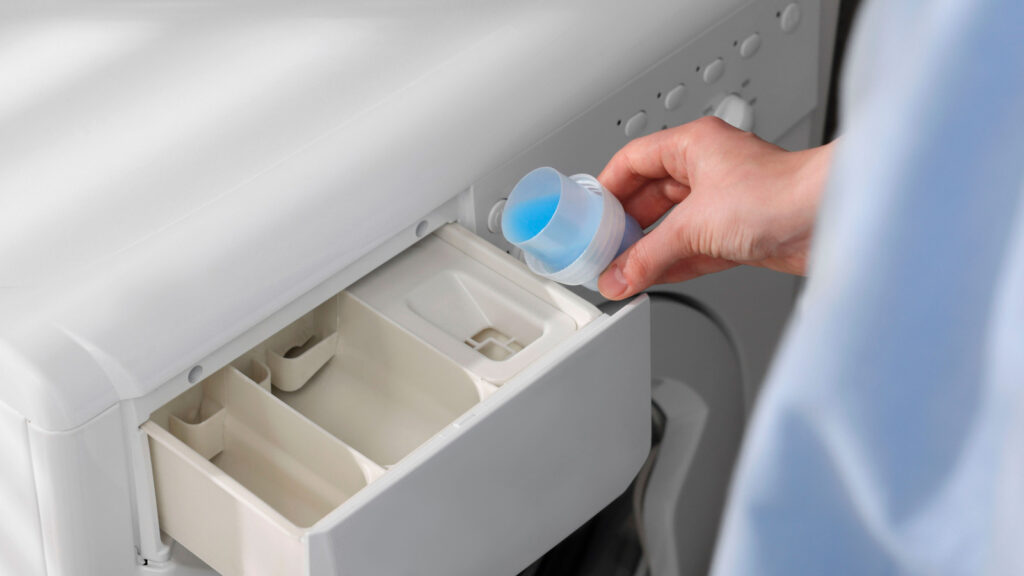

For most people, the soap dispenser drawer is the correct place for detergent. Placing detergent directly in the drum is an alternative if the dispenser is not flushing properly – but it must be used in a proper dosing ball, never poured loose onto clothing. Never overload the drum if using this method.
Most washing machine detergent belongs in the soap dispenser drawer – that is what it is designed for. But there are situations where placing it in the drum works better, and understanding the difference can help you get cleaner results and avoid problems.
Detergent in the Soap Dispenser Drawer
The dispenser drawer is the standard and recommended method for the vast majority of washes. Water is flushed through the drawer at the correct point in the cycle, carrying the detergent into the drum and distributing it through the load as the wash begins.
The most common problem with the dispenser drawer is a build-up of residue – old detergent, mould, or black sludge – that can block the channels and prevent the detergent from being properly flushed away. If your machine is leaving detergent in the drawer after a wash, or producing white streaks on clothing, the dispenser may need cleaning. See our guide on how to remove and clean the soap dispenser drawer.
Mould and residue in the soap dispenser drawer is one of the causes of unpleasant washing machine smells. Regular cleaning of the drawer – including the housing behind it – keeps both the drawer and the machine in better condition. See our guide on washing machine smells for more on this.
Should You Put Detergent in the Drum Instead?
Placing detergent directly in the drum rather than the drawer became briefly fashionable as a trend, but has no functional advantage for normal use. The dispenser drawer exists for a reason – it releases detergent at the right time and distributes it effectively. Using the drum instead makes sense only in specific situations.
 When the Drum May Be Better
The dispenser drawer is not flushing detergent away properly. The dispenser housing is damaged or clogged and cannot be fixed immediately. You prefer to avoid cleaning a persistently clogged drawer.
 When to Stick With the Drawer
For all normal washes. The drawer is more reliable, distributes detergent more evenly, and is designed to release detergent at the correct stage of the cycle.
How to Put Detergent in the Drum Safely
If you do use the drum, you must use a proper dosing container – a detergent ball or dosing ball designed for this purpose. Never pour loose powder or liquid detergent directly onto clothing. Undiluted detergent in direct contact with fabric can cause bleaching, staining, and permanent damage to fibres.
Most detergent manufacturers will supply a dosing ball free of charge on request, and they are widely available to buy separately.

If the drum is too full, the dosing ball cannot move freely and the detergent may remain trapped inside the laundry rather than dispersing into the wash water. This leads to poor cleaning results and may leave concentrated detergent residue on clothing. Detergent concentrated in one place inside clothing also presents a safety risk if the garment is handled by a child. See our guide on detergent danger to children.
One Practical Downside
A plastic dosing ball tumbling around inside the drum during a wash cycle can be noisy. This is a minor inconvenience but worth knowing before switching from the drawer.
White Streaks on Clothes After Washing
If laundry is coming out with white marks or streaks, this can be related to detergent not being properly flushed from the dispenser drawer during rinsing. Switching to the drum with a dosing ball may resolve this. For a full list of causes, see our guide on white streaks on laundry after washing.
Washing Machine Not Cleaning Properly?
If poor wash results persist despite correct detergent use, a fault with the machine may be the cause.
Related Guides
 Which Is the Best Type of Washing Machine Detergent?
Powder, liquid, or capsule – which works best for cleaning, machine care, and different water types.
 White Streaks on Laundry After Washing
All the causes of white powder or residue left on clothing – including dispenser and rinsing issues.
 Do Biological Detergents Damage Laundry?
What biological enzymes do and whether they are safe for wool, silk, and other delicate fabrics.
 Eco-Friendly Green Detergents
How plant-based and environmentally friendly detergents compare for washing performance and machine care.
Frequently Asked Questions
Is it better to put detergent in the drum or the dispenser?
For most washes, the dispenser drawer is better. It releases detergent at the correct stage of the cycle and distributes it more evenly. The drum is a valid alternative if the dispenser is not flushing properly, or if the drawer housing is clogged and cannot be cleaned immediately – but a dosing ball must be used.
Can I put detergent powder directly on top of clothes?
No. Undiluted detergent in direct contact with fabric can cause bleaching, staining, or permanent damage to fibres. If placing detergent in the drum, always use a dosing ball or dedicated container to hold the detergent until it dissolves in the wash water.
Why is my soap dispenser drawer not flushing detergent away?
The most common causes are a build-up of residue blocking the dispenser channels, or insufficient water pressure to flush the drawer cleanly. Remove and clean the drawer and the housing behind it. If the problem persists, a water pressure issue or a blocked dispenser feed tube may need investigating.
Can using a dosing ball in the drum damage the machine?
No – dosing balls are designed for use in the drum and will not damage the machine. The main practical issue is noise from the plastic ball tumbling during the wash and spin cycles. This is a minor inconvenience rather than a mechanical concern.
Why does leaving detergent in the drawer cause white streaks on clothes?
If detergent is not fully flushed from the dispenser drawer during the wash cycle, undissolved residue can be reintroduced to the rinse water or transferred onto clothing. Using the drum with a dosing ball removes this variable. See our guide on white streaks on laundry for a full breakdown of causes.
Ask the repair forum
Post the make, model and symptoms and get help from the Whitegoods Help community.
12 Comments
Grouped into 8 comment threads.
1 reply Hello, I have a front loading Electrolux washer. I misplaced my liquid detergent tray and I have used liquid detergent in the powder detergent compartment. Does this mean my laundry was not washed properly?
1 reply When my washing is on a cycle, their isn't any sign of the soap suds even though the water enters the dispenser and removes the powder
When my washing is on a cycle, their isn’t any sign of the soap suds even though the water enters the dispenser and removes the powder
Likely replying to Isabel saville
Hello Isabel. Modern detergents don’t tend to make many suds. Soap suds cushion laundry from each other and laundry gets clean mostly by rubbing against each other in the same way that we used to bash the against rocks in the river. Having said that, if you are used to seeing a certain amount of suds and now they’ve totally gone without changing the detergent something must account for it. If the the detergent is going into the machine it can’t really disappear.
One thing that could account for it is if some fabric conditioner is trickling into the drum. Fabric conditioner can suppress suds. Make sure you don’t spill any when filling up the fabric softener compartment and make sure you don’t overfill it and slam the drawer shut. That can allow some to spill over into the drawer and get washed down with the detergent.
0 replies I'm not sure if they still use them but if you originally got one inside a particular brand of detergent then contact the manufacturer. They will have one if they still make them.
I’m not sure if they still use them but if you originally got one inside a particular brand of detergent then contact the manufacturer. They will have one if they still make them.
0 replies I need a plastic ball to put my washing powder in along with the clothes in the drum, having great difficulty in finding this, can you advise, Many thanks, Mrs T Holdway
I need a plastic ball to put my washing powder in along with the clothes in the drum, having great difficulty in finding this, can you advise, Many thanks, Mrs T Holdway
0 replies In our case it was low water pressure not flushing all the detergent into the machine on wash and flushing bits of detergent in on rinses. Also, very hot water poured directly onto biological detergent can kill off the enzymes
In our case it was low water pressure not flushing all the detergent into the machine on wash and flushing bits of detergent in on rinses.
Also, very hot water poured directly onto biological detergent can kill off the enzymes
0 replies Thank you. :) If the soap drawer is being used and there are still white streaks on dark clothes, I could be right in saying that extra rinses are needed? If there's no obvious "extra rinse" button, the instruction book may explain how you can change the default rinse settings; most likely seen on more expensive machines, with their electronic controls and "menus" of options. Maybe pouring hot water into the soap drawer will help? The hot water dissolves the powder residues and this should avoid bits of powder being flushed into the rinse water. It works for me. I can't guarantee it would work for everyone else though. Also, it's never a good idea to add too much water into the machine, as the electronics could think something's wrong and display a cryptic error code. It should be okay to add hot water at the beginning of the wash though, since the clothes are soaking up the water and the machine will top-up the water level until no more is needed. Don't be surprised if you occasionally see a white mark on the odd item of dark clothing. I don't know why this happens.
Thank you. :)
If the soap drawer is being used and there are still white streaks on dark clothes, I could be right in saying that extra rinses are needed? If there’s no obvious “extra rinse” button, the instruction book may explain how you can change the default rinse settings; most likely seen on more expensive machines, with their electronic controls and “menus” of options.
Maybe pouring hot water into the soap drawer will help? The hot water dissolves the powder residues and this should avoid bits of powder being flushed into the rinse water. It works for me. I can’t guarantee it would work for everyone else though. Also, it’s never a good idea to add too much water into the machine, as the electronics could think something’s wrong and display a cryptic error code. It should be okay to add hot water at the beginning of the wash though, since the clothes are soaking up the water and the machine will top-up the water level until no more is needed.
Don’t be surprised if you occasionally see a white mark on the odd item of dark clothing. I don’t know why this happens.
0 replies Nice to see you again WMUser. We had white streaks on laundry using the dispenser too (as described in my white streaks on laundry after washing article).
Nice to see you again WMUser. We had white streaks on laundry using the dispenser too (as described in my white streaks on laundry after washing article).
2 replies Powder detergent has to go into the soap drawer. If you put washing powder into the drum (even if you put this powder into a plastic "ball" on top of the clothes), then you will be left with white "streaks" on dark clothing after the final spin. Even after many rinses, there will be visible white marks on dark clothes; lights and whites will also have these marks, even if you can't see them! I can definitely say that these white marks stopped appearing when I put the washing powder into the drawer. Pouring hot water into the soap drawer, when the washing machine is filling, will dissolve and flush-down the powder, to make sure none stays behind and sticks to the drawer (take care not to get the water on the floor - it happens easily and when you pour the hot water into the drawer too quickly). This is a good tip for anyone who has the washing machine connected to low water pressure. Yes you will need to occasionally clean the soap drawer tray and the inner surrounding, but it's easy to clean with a brush. I leave the soap drawer slightly open after every wash to prevent mould.
Powder detergent has to go into the soap drawer. If you put washing powder into the drum (even if you put this powder into a plastic “ball” on top of the clothes), then you will be left with white “streaks” on dark clothing after the final spin. Even after many rinses, there will be visible white marks on dark clothes; lights and whites will also have these marks, even if you can’t see them!
I can definitely say that these white marks stopped appearing when I put the washing powder into the drawer.
Pouring hot water into the soap drawer, when the washing machine is filling, will dissolve and flush-down the powder, to make sure none stays behind and sticks to the drawer (take care not to get the water on the floor – it happens easily and when you pour the hot water into the drawer too quickly). This is a good tip for anyone who has the washing machine connected to low water pressure.
Yes you will need to occasionally clean the soap drawer tray and the inner surrounding, but it’s easy to clean with a brush. I leave the soap drawer slightly open after every wash to prevent mould.
Hello, I have a front loading Electrolux washer. I misplaced my liquid detergent tray and I have used liquid detergent in the powder detergent compartment. Does this mean my laundry was not washed properly?
Likely replying to Sonia Johal
Hello Sonia. Most washing machines accommodate the use of liquid detergent in the soap dispenser. But they usually have a special compartment for it, or you have to slide a plastic blocker in place. Otherwise, most of the liquid will just immediately run down into the drum when you place it inside the soap dispenser.
The problem is that much of it can end up inside the sump hose underneath the drum, which is sealed off during the wash with a plastic ball. So potentially most of the liquid detergent could have been wasted.