
Why don’t most modern washing machines last very long?
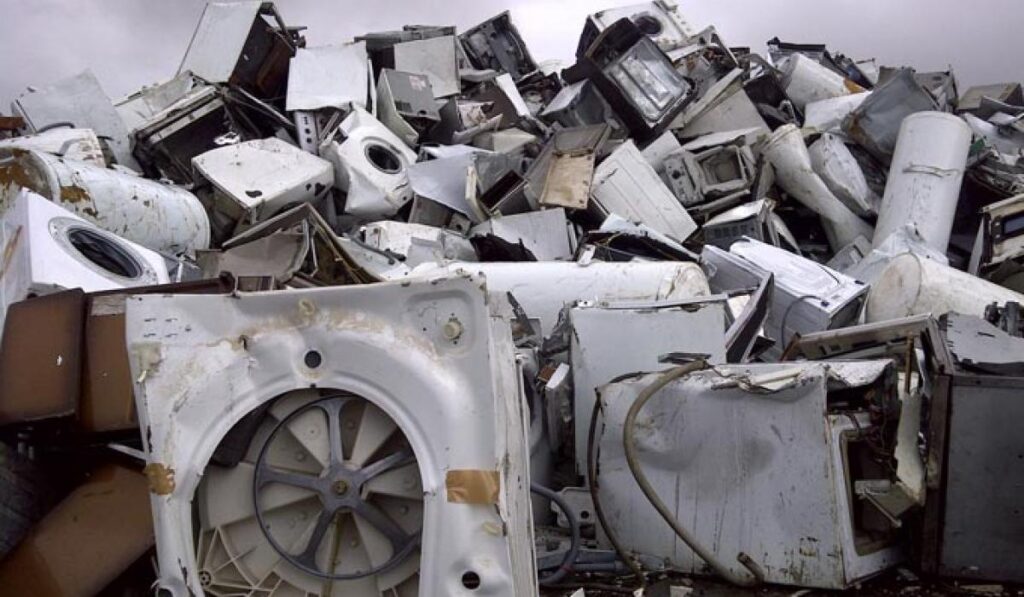

Modern washing machines are genuinely cheaper in real terms than they were 40 or 50 years ago – not simply because of more efficient production, but because of reduced build quality, cheaper materials, and designs that prioritise cost reduction over longevity. The result is machines that are less reliable and less repairable than older equivalents. Paying significantly more for a premium machine – such as Miele – does still buy measurably better build quality and longer lifespan.
Washing machines have become dramatically cheaper in real terms over the past 50 years. This is not simply a success of modern manufacturing efficiency – it reflects a sustained reduction in the quality of components, materials, and repairability that has accumulated over decades of competitive price pressure.
The Numbers: How Much Cheaper Washing Machines Have Become
The price reduction in real terms is striking. In 1973, a basic Hoover washing machine cost £94.88 – equivalent to approximately £1,190 in 2019 prices. By 2019 a comparable basic model with a faster spin and a larger drum could be bought for £220 – equivalent in 1973 purchasing power to approximately £21.
That represents a real-terms price reduction of nearly 80% over 40 years. No durable consumer product can sustain an 80% real-terms price reduction purely through manufacturing efficiency improvements. The shortfall is made up by reducing quality, longevity, and repairability.
Why Prices Dropped: Competition and Consumer Choice
Manufacturers have been making washing machines for many decades and could, in theory, have used that experience to produce increasingly reliable and durable appliances. Instead, the opposite has happened for the majority of the market.
The mechanism is consumer price sensitivity. When one manufacturer reduces price by cutting corners on quality, other manufacturers face a choice: maintain quality and appear expensive by comparison, or reduce quality to match the lower price. Most chose to reduce quality. The result is that almost every mainstream washing machine available in the UK today is manufactured to a broadly similar – and broadly low – standard of durability.
This is not a new observation or a recent development – the trend has been accelerating since the 1980s. The specific consequences include switching from metal to plastic components, reducing cable and hose lengths, using cheaper bearings and seals, simplifying designs to reduce manufacturing costs, and producing machines where key components cannot be economically repaired when they fail. The Right to Repair legislation now being introduced in the UK attempts to address some aspects of this trend – see our guide on white goods Right to Repair.
Does Spending More Actually Buy Better Quality?
At the mainstream price point – from around £200 to £600 – the differences between brands are largely superficial. Most machines share similar manufacturing standards, similar component quality, and similar expected lifespans. Paying £400 rather than £250 in this range does not reliably buy a more durable machine – it tends to buy more features.
Above approximately £600 to £700, and particularly at premium prices above £800, genuine quality differences do exist. Miele is the most consistently cited example in the UK market of a manufacturer that has maintained build quality standards rather than competing primarily on price. Their machines use metal components where budget machines use plastic, carry heavier-gauge materials, and are designed for longer service lives with easier repair access.

Within the mainstream market, an expensive-looking machine with a premium brand name and a £500 price tag may not be better built than a £300 alternative from the same manufacturer group. Features, styling, and brand positioning influence price as much as build quality. See our guide on whether more expensive washing machines are actually better quality before spending more in the mainstream bracket.
Buying a Washing Machine?
Related Guides
 How Long Should a Washing Machine Last?
Expected lifespans by price tier – and what affects how long a machine remains in service.
 Is a More Expensive Washing Machine Better?
Why price does not reliably indicate build quality in the mainstream market – and when it does.
 Which Is the Best Washing Machine to Buy?
How to choose between brands and price points – what actually matters for reliability and value.
 White Goods Right to Repair
The UK Right to Repair legislation – what it requires manufacturers to do and what it means for consumers.
Frequently Asked Questions
Why don’t modern washing machines last as long as older ones?
Modern washing machines are genuinely cheaper in real terms than machines from 30 to 50 years ago – not purely through manufacturing efficiency, but through reduced quality of components and materials. Competitive price pressure has driven manufacturers to switch from metal to plastic parts, reduce the quality of bearings and seals, and design machines where key components cannot be economically repaired. The result is shorter practical lifespans and less repairability.
Is it worth buying a more expensive washing machine?
Within the mainstream price bracket – roughly £200 to £600 – paying more does not reliably buy better build quality. It tends to buy more features and better styling. At premium price points above £700 to £800, genuine quality differences do exist. Miele is the clearest UK example of a manufacturer that competes on build quality rather than price, with machines designed for significantly longer service lives.
Will washing machines improve in quality?
Right to Repair legislation now requires manufacturers to make spare parts available for a minimum period after a model is discontinued, which should improve repairability over time. Whether mainstream machine build quality will improve depends primarily on whether consumer buying behaviour changes to reward durability over price – which has historically been slow to happen at scale.
117 Comments
Grouped into 92 comment threads.
3 replies Dave: That's pretty remarkable and if the machines do the job, then why not. To be honest I am no different with the machines that interest me - computers. These days, I recycle and redploy them for different tasks through the house and am not too worried about having the lastest/greatest. I just don't think a washer is worth £1000, that's all really ..... Adam: Unfortunately, I feel you are being slightly more personal than anyone else, so to be honest I did start to write something, but out of respect for Washerhelp's exemplary moderation I will just cease and desist. We are only discussing machines after all ..... Thanks.
3 replies Washerhelp makes a good point in reply to my last post - it is a gamble. However, I would contest that it was an equally big gamble buying new: I spent over £800 on a premium price and supposedly premium quality machine which lasted less than 2 years, cost me so much to run that I could have spent £200 on repairs or a re-con old machine and still had change out of teh electricity bill on the new one, and cost me a roughly estimated £500 in launderette bills and lost wages whilst battling with the manufacturer and Trading Standards to get faults under warranty repaired. There's no denying that keeping an old one going is a gamble, but after my bitter experience I'd say it was a gamble that I was more likely to win and with stakes that were lower than buying anything new other than a Miele or possible an ISE, both of which will cost the greater part of £1k to start with. Perhaps "Caveat Emptor" (buyer beware) has never been a more appropriate saying? Gwen- if you are still following this, it is of course your choice: like my mum you may decide that other factors in your life (in mum's case lack of transport and age) mean that you'll buy a Miele to offer some degree of insurance against repeated repairs, but if your hubby is as handy as it sounds my own personal opinion is still that keeping an old faithful going is at least "evens" (in gambling parlance). It does worry me though: one day my "new" old washer will reach the end of it's useful life and what the dickens are people like Gwen and I supposed to do then? I don't seen one single reason why we should be expected (forced?) to accept ineffective, inefficient, unreliable and over-priced modern applainces for the sake of shareholders making inflated profits, which is pretty much the bottom line in the appliance market as it is everywhere else these days.
Washerhelp makes a good point in reply to my last post – it is a gamble.
However, I would contest that it was an equally big gamble buying new: I spent over £800 on a premium price and supposedly premium quality machine which lasted less than 2 years, cost me so much to run that I could have spent £200 on repairs or a re-con old machine and still had change out of teh electricity bill on the new one, and cost me a roughly estimated £500 in launderette bills and lost wages whilst battling with the manufacturer and Trading Standards to get faults under warranty repaired.
There’s no denying that keeping an old one going is a gamble, but after my bitter experience I’d say it was a gamble that I was more likely to win and with stakes that were lower than buying anything new other than a Miele or possible an ISE, both of which will cost the greater part of £1k to start with.
Perhaps “Caveat Emptor” (buyer beware) has never been a more appropriate saying?
Gwen- if you are still following this, it is of course your choice: like my mum you may decide that other factors in your life (in mum’s case lack of transport and age) mean that you’ll buy a Miele to offer some degree of insurance against repeated repairs, but if your hubby is as handy as it sounds my own personal opinion is still that keeping an old faithful going is at least “evens” (in gambling parlance).
It does worry me though: one day my “new” old washer will reach the end of it’s useful life and what the dickens are people like Gwen and I supposed to do then? I don’t seen one single reason why we should be expected (forced?) to accept ineffective, inefficient, unreliable and over-priced modern applainces for the sake of shareholders making inflated profits, which is pretty much the bottom line in the appliance market as it is everywhere else these days.
Likely replying to dave
Hi Dave: Thanks for your continued contributions to my Blog. I really appreciate the comments from regulars like yourself :-)
Next time you need a new washing machine I strongly recommend the ISE10. There’s a problem getting them at the moment as they are upgrading it but this is only temporary. They are higher quality build than anything other than Miele, parts will be considerably cheaper than Miele, and repairs (including diy repairs) will be easy and relatively cheap to obtain. It has a stainless steel outer tub, 10 year guarantee, and is the best all round washing machine I’ve ever tested when you include repairs spares and aftersales – which I definitely do.
Likely replying to dave
Hi Dave and Andy,
I must say I strongly agree with Dave regarding keeping an old “Workhorse” running. I too would not have ANY form of modern washing machine, they do not wash or rinse even half properly and they cycle takes forever, I still have a modern (4 year old Hotpoint (Indesh!t) kicking about) and this took up to 3 hours to do a wash. Which on sunday I am changing the bearings on, modefying the drain and altering the pressure switch.
Although keeping an old machine running can be problematic at times, it is very rewarding and does pay dividends in the end through excellent performance and overall reliability. My 17 year old Bosch will be needing a new drum spider next time the bearings go and this will cost just over £200 but to me money well spent, it is also a hobby of mine keeping the old girl running amongst my other inventions and alterations on everything else!
One point I do have to make is it makes very good sense to buy another machine like you already have for spare parts, I bought a Bosch like mine as a spare for £32 on eBay (which funnily enough came from about a mile from your house Andy!) and I have dismantled the whole machine and put it in the loft for spares when needed.
Overall I see no modern equivalent to my Bosch or indeed Daves Hoover Electron.
Miele are a good machine however the price of spare parts are rediculous, I heard a rumour that a Miele washer / Drier door seal was £245, this was a few years ago though. My parents have a Miele condenser tumble drier in a nice stainless steel finish and the quality and performance is fantastic. It also cost a fortune at………£1399.97, so it had better last. Their washing machine an IAR Siltal is also remarkably well made, it has only had a pump, bearings, belt and brushes in nearly 10 years, for the first 4 years of its life it did about 25 loads a week, and the rest of its life it has done up to 20. Its very easy to maintain and the parts are fairly cheap, plus it does a 70oC wash in just over an hour so is quick too. However when the day comes it cannot be repaired any longer they are toying with the idea of a commercial JLA 6 (made by Schulthess in Switzerland) as no modern domestic machine will take 20 loads a week, not even Miele.
Well done Dave for keeping the Electron running.
All the best,
Oliver.
2 replies Washerhelp: OK, its really obvious how differently we see things. I find it interesting that you used BMW as an example. There we have the same issue - is a BMW worth the premium? The answer if you know anything about cars is NO. The logic that BMW's are made in Germany therefore they are better than X (although FIAT I will grant you *shudder* ....) is flawed. BMW's are waaaay overrated and overpriced. They are not quality vehicles. In fact a 3 series is so basic and uncomfortable it makes me want to cry and then laugh at the silly owners who choose them. Mercedes - same problem - HORRENDOUS recent sevice and reliability records on their machines (no I don't mean the S class), yet the yuppies stil buy them. I'd rather own a Ford Focus - and I hate the Ford Focus. In my opinion, Miele's are overrated in the same way. How anyone can look at Which charts, see a 2% difference in machine reliability between Beko and Miele, then hand over an extra £400 quid or so is beyond me, but it is your money and everyone is free to do as they please. Personally I would rather plump for an underdog any day of the week if it there is even a chance of getting the same/similar service life and more features. Its back to the basic Miele costing more than the highend Hotpoint. Erm... I think I'll take the Hotpoint thanks very much, skip the warranty and take my chances....!? To me it is a no brainer. I don't think this makes me a 'stupid' consumer - quite the opposite actually. I just bought a Beko fridge freezer today - it can operate at - 15 degrees C, unlike other fridge freezers on the market and is well designed in other respects too. The Hotpoint FF has given up after about 8 years (not too bad). Longevity of the Beko - I guess we will see, but my old Beko TV gave good service and again, the picture was better than an equivalent Sony costing twice as much. Interesting to note that my premium brand Sony only lasted 3 years. I have a Miele vacuum cleaner which has been pretty good. Again, it is pretty basic compared to a Dyson, or even an LG. I don't rate the Miele higher than LG to be honest, since the LG didn't break either and had the benefit of being bagless and not losing suction, but the Miele does work well enough. You seem to be assuming again and again that I speak only out of experiencing one product vs another, even though I have repeatedly tried to clarify this is not the case. In fact I specified that the pump failure on this particular Miele was apparently a common problem, not a one-off experience. I also, was the person who replaced the pump for my mother-in-law and the inside of the wshing machine looked like something from the 80's! So, finally, I did a random search for Miele on Google and completely by chance ended up on one of your reviews. I found an interesting comment, which sums up the likes of Miele quite nicely: "Of course parts are likely to be expensive too because they are high quality parts though even accounting for the quality it's hard to justify some of the prices of some spare parts, which franky can be astounding (eg. £500 for a motor, £200 for a pump). " The fact you have ever encountered having to purchase these parts, let alone that they are a COMPLETE ripoff, is all I need to make a decision I'm afraid and I can't STAND unreasoned brand loyalty (i.e. Sony, Miele, BMW, Dell) when other products are almost always better. Where are the 'better designed' MIele/BMW products? I just don't see it. Thanks though for the civil debate. I think you have a great well written website!
Washerhelp: OK, its really obvious how differently we see things.
I find it interesting that you used BMW as an example. There we have the same issue – is a BMW worth the premium? The answer if you know anything about cars is NO. The logic that BMW’s are made in Germany therefore they are better than X (although FIAT I will grant you *shudder* ….) is flawed. BMW’s are waaaay overrated and overpriced. They are not quality vehicles. In fact a 3 series is so basic and uncomfortable it makes me want to cry and then laugh at the silly owners who choose them. Mercedes – same problem – HORRENDOUS recent sevice and reliability records on their machines (no I don’t mean the S class), yet the yuppies stil buy them. I’d rather own a Ford Focus – and I hate the Ford Focus. In my opinion, Miele’s are overrated in the same way.
How anyone can look at Which charts, see a 2% difference in machine reliability between Beko and Miele, then hand over an extra £400 quid or so is beyond me, but it is your money and everyone is free to do as they please. Personally I would rather plump for an underdog any day of the week if it there is even a chance of getting the same/similar service life and more features. Its back to the basic Miele costing more than the highend Hotpoint. Erm… I think I’ll take the Hotpoint thanks very much, skip the warranty and take my chances….!? To me it is a no brainer. I don’t think this makes me a ‘stupid’ consumer – quite the opposite actually.
I just bought a Beko fridge freezer today – it can operate at – 15 degrees C, unlike other fridge freezers on the market and is well designed in other respects too. The Hotpoint FF has given up after about 8 years (not too bad). Longevity of the Beko – I guess we will see, but my old Beko TV gave good service and again, the picture was better than an equivalent Sony costing twice as much. Interesting to note that my premium brand Sony only lasted 3 years. I have a Miele vacuum cleaner which has been pretty good. Again, it is pretty basic compared to a Dyson, or even an LG. I don’t rate the Miele higher than LG to be honest, since the LG didn’t break either and had the benefit of being bagless and not losing suction, but the Miele does work well enough.
You seem to be assuming again and again that I speak only out of experiencing one product vs another, even though I have repeatedly tried to clarify this is not the case. In fact I specified that the pump failure on this particular Miele was apparently a common problem, not a one-off experience. I also, was the person who replaced the pump for my mother-in-law and the inside of the wshing machine looked like something from the 80’s! So, finally, I did a random search for Miele on Google and completely by chance ended up on one of your reviews. I found an interesting comment, which sums up the likes of Miele quite nicely:
“Of course parts are likely to be expensive too because they are high quality parts though even accounting for the quality it’s hard to justify some of the prices of some spare parts, which franky can be astounding (eg. £500 for a motor, £200 for a pump). ”
The fact you have ever encountered having to purchase these parts, let alone that they are a COMPLETE ripoff, is all I need to make a decision I’m afraid and I can’t STAND unreasoned brand loyalty (i.e. Sony, Miele, BMW, Dell) when other products are almost always better. Where are the ‘better designed’ MIele/BMW products? I just don’t see it.
Thanks though for the civil debate. I think you have a great well written website!
Likely replying to Traxxion
Hello Traxxion: I agree that many of the premium brands have reduced quality compared to their past and it’s a shame, though they are usually still better than the budget or even normal brands. Unfortunately we pay a lot for better quality. I also agree that “premium brands” are commonly overpriced in that their perceived value is worth more money and many people will pay extra for better. Often it is 3 times the cost for 50% better but premium quality brands don’t sell in the mass quantities that cheap ones do so economies of scale don’t help.
I wouldn’t go too much on the reliability figures from Which? – I have commented on them before as I believe the chart to have flaws in it due to the vast differences in sample numbers. Here’s what I wrote before on the topic –
“.. Which? say that the table is compiled from “the manufacturers that have the best reliability according to our members” and although that’s extremely interesting to see, I do have a problem with it in that each manufacturers reliability percentage is derived from a totally different sample. So to me its not really a fair comparison.
If you look at the numbers in brackets at the side of each manufacturer listed you can see that there’s a potentially distorting difference. I’m no statistician, but the numbers sampled can have a significant effect on end percentages. If you have 100 people owning a washing machine, and 10 of them have problems then its 10%, but if you have 200 people and 10 of them have problems its only 5%. The same results from just 2 people would be 50%.
The Tricity Bendix figures, which show as the most reliable washing machine are derived from just 93 people, whereas the Miele sample was 393 and the Bosh sample was 2,104. Because the samples are all different I cant see how this table can be 100% reliable.
Another anomaly is that Tricity Bendix beats Zanussi in the reliability table (who appear only halfway down), yet Tricity Bendix washing machines are only budget versions of Zanussi washing machines made by the same (Electrolux) group so you’d expect them to have the same reliability. One possible explanation (other than the very small sample size used for tricity Bendix) is that as budget washing machines, the Tricity Bendix brand is less complex, and therefore could be more reliable than the supposedly better quality Zanussi they are derived from. In fairness, if Tricity Bendix was particularly unreliable, a small sample size would work against it creating a larger percentage of people with problems so I’m happy to accept that Tricity Bendix may be very reliable for the price.
Finally, Candy is 6% above Hoover yet Hoover and Candy are fundamentally the same washing machines made by the same group with Hoover being the slightly more up-market product and supposed to be slightly better built.
Washing machine manufacturers labour charges are all fairly similar and surprisingly, the better quality washing machine manufacturers often charge no more or even less than some of the much cheaper brands.”
Likely replying to Traxxion
@Traxxion
There is, of course, the issue of the fact that “long life”, “Work well”, “Good value”, “Fair price” and so on are all SUBJECTIVE statements. I.e. they are all based on OPINIONS and not facts.
In my OPINION, no white goods item which lasts less than 5 years without a repair, or which has a total lifespan of less than 30 years is worth buying at all ….. that’s why I use a 1957 Hoover vacuum which has never yet needed anything beyond belts, sweeping brushes and bags, a 1983 Hoover Washer that has only ever had a new door seal or two, a 1976 Swan automatic kettle which has never needed any repair of any kind, a 1984 Russell Hobbs coffee percolator that has never failed, a 1981 Black and Decker lawn mower that has never had any repairs beyond replacement blades, a 1986 Bosch hedge trimmer that has never had any repairs other than sharpening the blade, a 1991 Hitachi TV that has never needed any repairs, a 1989 LEC fridge that has never needed repair, a 1994 LEC freezer that has never needed repair & a 1979 Glow Worm boiler that has never yet failed in any way.
It’s also why I now have a 2007 Miele Dishwasher with a 10 year guarantee after having a 1988 Bosch that managed only 10 years and then a 1999 Hoover Dishwasher that managed only 6 years. After that I had a year of washing pots by hand whilst I saved for the Miele. The Bosch and the Hoover together cost as much to buy and have repaired a couple of times each as a top of the range Miele, but I only bought a mid-range Miele. It’s still got he warranty so I should be quids in and if I’d had sense and bought Miele (or some other very highly reliable brand) to start with I’d not have wasted the money on the other two.
MOST people will not agree with me that my expectations are either realistic nor even desirable. Most people will also think that my machines are not good enough because they don’t have new ‘features’, and it sounds as though you would think that too, but why would I want new ‘features’? My Vacuum is rated at only 225 watts. Most modern ones are rated at at the very least 1500watts. I vacuum for 1/8 the energy cost of any new machine and yet my vac picks up all sorts that a Dyson and even a Miele, yes a Miele, modern one will not suck up at all.
My washer washes the clothes for less than 1 kWh of electricity, does a cycle in well under an hour (and that is NOT the quick wash) and rinses all the soap out properly. Why would I want a new one that uses 2 or 3 kWh to run a wash, takes 3 hours to do it and then leaves it full of soap?
As I said in an earlier post, I’m afraid it’s folk like you who demand ‘features’ and also demand what you call a good price but what in real terms is actually a huge reduction in price from what is realistic, who encourage the manufacturers to turn out crap at a throw away price. You balk at the cost of spares for the likes of Miele, but that’s only because you appear to live in the throw-away society that says “don’t mend, replace”.
As for you your comment that Washerhelp has unreasoned brand loyalty – I don’t think he or anyone else on here has said anything to suggest a brand loyalty at all except you with your budget-brand loyalties. I am only loyal to the brands I have as long as they continue to work without repair or replacement. If any of them do fail, at the age of my appliances they owe me nothing , and come that time I will replace with whatever is on the market that is expected to do the job, nothing but the job, do the job well and last a long time. Buy the time I buy new it may be that the brand I buy doesn’t even exist yet. There is no question of unreasoned brand loyalty.
2 replies Hiya, Thanks for your reply - it puts my mind at rest that their practices are usual. I am awaiting a Bosch engineer visit on Tuesday. However, I do not understand why there would be a coin in there when the machine has never been used!? Any ideas? I was putting it on its first empty cycle after having it for only one hour! Regards Chee
Hiya,
Thanks for your reply – it puts my mind at rest that their practices are usual. I am awaiting a Bosch engineer visit on Tuesday.
However, I do not understand why there would be a coin in there when the machine has never been used!? Any ideas?
I was putting it on its first empty cycle after having it for only one hour!
Regards
Chee
Likely replying to Chee
Hi Chee,
It’s not a new thing either: my mum’s first ever automatic (Hoover A3260, just lik ethe one I’ve been blogging about a lot lately) came in spring 1983 and although in those days they didn’t recommend a first empty wash, on the very first cycle it ran it made a terrible noise when it started to drain after the wash. The plumber who was fitting the kitchen was still there and he said he’d never heard anything like it. We got Hoover out and the man found a small metal spring clip in the pump which had clearly fallen in during manufacture. He picked it out and the machine ran for almost 28 years after that with not a single breakdown, so don’t get yourself into too much of a panic until the engineer has been and found out what it is.
2 replies Going off topic, so apologies, but taking comment 39 - "diy minded" and "resourceful". Perhaps in this day and age, when being environmentally friendly and cash-conscious are so high on the agenda, we will find more people who are in those categories and hence a descrease in the sale of new items (good or bad) and an increase in repairs and keeping things going (be they good or bad). Ironically the lady from over the road from me popped in only yesterday and commented that her daughter is still using a 1979 Hotpoint washer that has never (yet!!) broken down. We might be the "odd ones" but we can be proud of our low environmental impact! Andy (or anyone) - do you happen to know if the Maytag washers are ISE10's with a Maytag Badge? In Cole Brothers (John Lewis) they have these and they look exactly like ISE10's, with same buttons and knobs, and the advertising blub is almost word for word the same, especially in the technical section about the suspension and the like. To the naked eye one would think the Maytag is an ISE10 without the drop down door / shelf fitted.
Going off topic, so apologies, but taking comment 39 – “diy minded” and “resourceful”.
Perhaps in this day and age, when being environmentally friendly and cash-conscious are so high on the agenda, we will find more people who are in those categories and hence a descrease in the sale of new items (good or bad) and an increase in repairs and keeping things going (be they good or bad).
Ironically the lady from over the road from me popped in only yesterday and commented that her daughter is still using a 1979 Hotpoint washer that has never (yet!!) broken down. We might be the “odd ones” but we can be proud of our low environmental impact!
Andy (or anyone) – do you happen to know if the Maytag washers are ISE10’s with a Maytag Badge? In Cole Brothers (John Lewis) they have these and they look exactly like ISE10’s, with same buttons and knobs, and the advertising blub is almost word for word the same, especially in the technical section about the suspension and the like. To the naked eye one would think the Maytag is an ISE10 without the drop down door / shelf fitted.
Likely replying to dave
Hello Dave: Yes the Maytag models you mention are also made by Asko and are virtually the same washing machines. I don’t know the exact differences but the main difference is the ISE10 had a 10 year guarantee, drop down Door, and most important of all the promise of cheap and readily available spare parts. Essentially though, quality-wise it should still be a good machine.
Likely replying to dave
Hi Dave,
Regarding the DIY skills and resorcefullness of people today. I have to say skills are rapidly depleating and are not passed on father to son as it were anymore. Apart from my Mum and Dad I know on nobody else who could even change a set of carbon brushes let alone bearings etc.
All my ability to turn my hand to just about anything mechanical was tought to me by my Dad (very talented at turning his hand to anything too), when I was 18 months old I stripped down his MG carburetta, so I had a very early grounding as it were. Although my washing machine and other whitegoods repairs and alterations are all self tought, I can even teach my Dad a thing or two!! Last week I turned a wardrobe in to a wash basket! People are no longer interested in repairing their own things, they just throw things away for very little fault, a classic being last week a friend threw out a Beko washing machine because it refused to fast spin, it only needed a pair of brushes and all would be well, this highlights all too clearly the throw away society we live in today. This is a serious environmental problem.
Dave we are in the minority believe me on that!
I have a Hotpoint bearing change this weekend, also I am altering the pressure switch so it uses a sensible amount of water and modefying the drain so it empties better and faster to hopefully stop it sudslocking.
All the best,
Oliver.
1 reply I have a hoover electron 1100 deluxe (energy control series, it roughly 20 years old) i bought it when i was 23, second hand 13 years ago for £100. What a bargin! it has worked great for years, only a few weeks ago (My first repair since purchase) it stopped spinning, because it had been so good i didn't run to replace it instead got a local engineer, it turned out the belt had worn out, i got it replaced, the whole repair and call out cost me just £40. I'm online now to see if i can find a manual to the washing machine (as it was bought second hand no paper work). I am trying to be as eco friendly as possible so I'm interested in finding out it's energy usage, whether it uses hot/cold water, is it environmentally friendly? all these questions I never really thought about until the repair (as a back up to the machine not been repairable i did look at current models which seem to be energy and environmentally friendlier). I am confused on what to do as my washing machine is the best serving/lasting yet with energy prices rising is it the best in today's economy? I would appreciate any opinions on this dilemma of mine. Harmmi
I have a hoover electron 1100 deluxe (energy control series, it roughly 20 years old) i bought it when i was 23, second hand 13 years ago for £100. What a bargin! it has worked great for years, only a few weeks ago (My first repair since purchase) it stopped spinning, because it had been so good i didn’t run to replace it instead got a local engineer, it turned out the belt had worn out, i got it replaced, the whole repair and call out cost me just £40.
I’m online now to see if i can find a manual to the washing machine (as it was bought second hand no paper work). I am trying to be as eco friendly as possible so I’m interested in finding out it’s energy usage, whether it uses hot/cold water, is it environmentally friendly? all these questions I never really thought about until the repair (as a back up to the machine not been repairable i did look at current models which seem to be energy and environmentally friendlier).
I am confused on what to do as my washing machine is the best serving/lasting yet with energy prices rising is it the best in today’s economy? I would appreciate any opinions on this dilemma of mine.
Harmmi
Likely replying to harmmi
Hello harmmi: Basically I feel if it’s working OK it’ s not necessary to replace it. I can’t claim any scientific evidence to back it up but I wrote a lengthy article of the subject of whether we should replace an old appliance with a more energy efficient one here – Do we really need to dump our old inefficient appliances to save money and the world?
1 reply I think you are wrong to say that Miele and other top branded machines will last longer. Yes, the machine looks better, and yes they may take more knocks without plastic trims breaking but Ive had one. TWO heater elerments, a door seal, and a set of drum bearings later, I sold it on e-bay for £40..!! The truth is, these machines break down and cost just as much to repair as the cheapest Beko washer. Is it really worth paying the extra for a machine that they 'SAY' is top quality..?? Id say the answer is NO.. Its better to buy a middle of the road machine and treat it with care. You wont feel so bad about taking it up the tip when the time comes..!! (or when you simply get bored looking at it)
I think you are wrong to say that Miele and other top branded machines will last longer. Yes, the machine looks better, and yes they may take more knocks without plastic trims breaking but Ive had one. TWO heater elerments, a door seal, and a set of drum bearings later, I sold it on e-bay for £40..!! The truth is, these machines break down and cost just as much to repair as the cheapest Beko washer. Is it really worth paying the extra for a machine that they ‘SAY’ is top quality..?? Id say the answer is NO.. Its better to buy a middle of the road machine and treat it with care. You wont feel so bad about taking it up the tip when the time comes..!! (or when you simply get bored looking at it)
1 reply Hi T Curtis: I think I used the word "should", I would never say it will. But to be honest, since writing the article I've discovered anecdotal evidence that some Miele owners are finding their appliance doesn't last anywhere near as long as expected due to them being unlucky enough to suffer a breakdown where Miele quoted them extremely expensive amounts to fix. However, it should be a relatively rare thing to happen. There's definitely no guarantee that paying a lot more for a washing machine will always prove to be the right decision. However, the principle is that the chances are much more in your favour that a high quality appliance is the best choice. As Clueless Weasel says (in an ironically clued-up way), there's more to it than simple costs. It's not just the environmental impact, but the more expensive washing machine will be much more sophisticated, and likely to use less energy etc. plus generally be more of a pleasure to own and use including being quieter and just washing better. Then you have the hassle and stress involved in replacing the washing machine 2 or 3 times which should be added into the equation. Most people tend to buy washing machines in a higher price range. You can easily pay £500 and more for a relatively poor quality washing machine with bells and whistles, which can work out considerably more expensive over the years to keep replacing.
Hi T Curtis: I think I used the word “should”, I would never say it will. But to be honest, since writing the article I’ve discovered anecdotal evidence that some Miele owners are finding their appliance doesn’t last anywhere near as long as expected due to them being unlucky enough to suffer a breakdown where Miele quoted them extremely expensive amounts to fix. However, it should be a relatively rare thing to happen. There’s definitely no guarantee that paying a lot more for a washing machine will always prove to be the right decision.
However, the principle is that the chances are much more in your favour that a high quality appliance is the best choice. As Clueless Weasel says (in an ironically clued-up way), there’s more to it than simple costs.
It’s not just the environmental impact, but the more expensive washing machine will be much more sophisticated, and likely to use less energy etc. plus generally be more of a pleasure to own and use including being quieter and just washing better. Then you have the hassle and stress involved in replacing the washing machine 2 or 3 times which should be added into the equation.
Most people tend to buy washing machines in a higher price range. You can easily pay £500 and more for a relatively poor quality washing machine with bells and whistles, which can work out considerably more expensive over the years to keep replacing.
Likely replying to Washerhelp
Hi washerhelp, Thanks for that. I must say regarding hotpoints, from my experience (2 owned) The drum and shaft bearing quality seem to be absolute rubbish. Around 2 and a half years on average and thats 2 washes a week. Then when you take them apart to replace them you look at the quality of the build in the machine and wonder how they even justify £250 + for the appliance. Only myself and the wife so you’d think they would last longer than that.My current ones just packed up so i certainly won’t be buying hotpoint again. Just as an afterthought, they never seem to get the clothes very clean regardless of the programme you set them on.
all the best
tc
1 reply I've read through this thread with great interest and have decided to chip in with my two pennyworth. I think that a lot of the raw anger expressed here is simply because it is increasingly difficult these days to take the quality option when buying white goods, given that even once reputable brands are little better than the cheap as chips alternative. In my own house I have two fridge freezers (don't ask why) - one a 35 year old Swedish built Electrolux TR1241, the other a 16 year old Asko KF7932. The Electrolux came as part of the deal when we bought our first house twenty odd years ago, so it was by no means this year's model even then. Over the intervening years, the only replacement for it has been the fridge thermostat, not even the light bulb has gone. The Asko was probably the best quality model going when we got it in 1995 and was by no means cheap even then. However its door seals are now on the way out, the internal fridge lining has cracked in places and the bottom of the freezer door is beginning to rust away. The reality is that I can't get parts for the Asko, so when the seals do finally give in, I'll have to replace it, even though I would prefer not to. As such there is every likelihood that the Electrolux will still be going when the Asko is on its final journey to the dump. And from what I can see, I'm probably not even going to be able to buy another fridge freezer like the Asko, with twin compressors, at almost any price, unless I go for a US imported GE side by side American style job. As for something with the build quality of the Electrolux - well they just don't exist anymore. So I too sense the frustration when pursuing the quality option for white goods becomes so constrained, and limited between one or two brands, with the rest being equally poor. I'm sure that I'm not alone in wishing that manufacturers would concentrate far less on all the bells and whistles they put on their products, and instead get back to making rather less complex items that are designed to last, and which can be fixed when they do go wrong. This is though I imagine just too much to hope for.
I’ve read through this thread with great interest and have decided to chip in with my two pennyworth. I think that a lot of the raw anger expressed here is simply because it is increasingly difficult these days to take the quality option when buying white goods, given that even once reputable brands are little better than the cheap as chips alternative.
In my own house I have two fridge freezers (don’t ask why) – one a 35 year old Swedish built Electrolux TR1241, the other a 16 year old Asko KF7932. The Electrolux came as part of the deal when we bought our first house twenty odd years ago, so it was by no means this year’s model even then. Over the intervening years, the only replacement for it has been the fridge thermostat, not even the light bulb has gone. The Asko was probably the best quality model going when we got it in 1995 and was by no means cheap even then. However its door seals are now on the way out, the internal fridge lining has cracked in places and the bottom of the freezer door is beginning to rust away. The reality is that I can’t get parts for the Asko, so when the seals do finally give in, I’ll have to replace it, even though I would prefer not to. As such there is every likelihood that the Electrolux will still be going when the Asko is on its final journey to the dump. And from what I can see, I’m probably not even going to be able to buy another fridge freezer like the Asko, with twin compressors, at almost any price, unless I go for a US imported GE side by side American style job. As for something with the build quality of the Electrolux – well they just don’t exist anymore. So I too sense the frustration when pursuing the quality option for white goods becomes so constrained, and limited between one or two brands, with the rest being equally poor. I’m sure that I’m not alone in wishing that manufacturers would concentrate far less on all the bells and whistles they put on their products, and instead get back to making rather less complex items that are designed to last, and which can be fixed when they do go wrong. This is though I imagine just too much to hope for.
Likely replying to Mark
Hi Mark: Most of the white goods manufacturers who made high quality appliances for decades have now moved over to mass producing lower quality appliances. Brands like AEG and Bosch once made very heavy, very high quality appliances, but now just make relatively normal appliances with little difference in quality to their competition. You can now buy a Bosch washing machine for as little as £230 and an AEG for as little as £318.
Even without looking into these figures carefully it should be obvious to most people that you cannot produce a high quality washing machine for £230 – or even £318. Why have they done it? Either because they can’t make it pay any more selling high quality or they got greedy and preferred the mass-market sell.
Unfortunately most white goods manufacturers are flooding the UK with appliances full of fancy features but lower on quality and less repairable. As far as I’m aware we’ve never had so many fridges, cookers and washing machines catching fire or exploding! Just look at some of the recent
white goods safety notices
People appear to want features, features and more features, or they are being beguiled by them. They are buying really cheap throwaway ones or extremely expensive appliances that just aren’t made anywhere near as well as they once were and should be. Until enough people start to shun the brands who only make fancy appliances at high prices where money goes into the features and not the build quality then that’s all we’ll get.
Whilst ever the majority of people think a Miele washing machine at £600 is too expensive because it only has a 6Kg drum and 1300 spin, but will pay up to £800 for a Hotpoint (and then even take out an extended warranty) because it’s got an 11Kg drum and 1600 spin and may be a fancy colour – the quality appliances will remain a niche market selling in such low quantities that they can never bring prices down without having to start reducing quality a little.
1 reply I understand what you are saying, but please listen to what I was saying. For a start I did not say that Hopoint are better than Miele build quality simply based on one machine (better check your logic there). I said. yes, that Miele are overrated. That in this case the Miele cost more, is less reliable, has less features AND the washer pump is a common problem on this model. How does this distinguish the Miele build quality as superior - in this case? What benefit did the consumer get from paying the extra money? NONE. I also definitely said that Hotpoint are RUBBISH, yet in this case, the consumer has been robbed by Miele and Hotpoint are looking pretty good by comparison. What I am saying, is WHY should I pay over the odds, when I am not guaranteed to get a better result? Do you not feel the features and design of a Hotpoint machine somewhat offset the bland oldschool build of a Miele? Why do Miele's fetch a premium, when they are using less advanced technology and basic designs? The same goes for SMEG, Bosch or any other overrated brand. In all cases I am quite possibly better off financially and possibly getting a better machine by plumping for Beko. Its not like the premium brand is offering you the benefits of say buying a Ferrari over a Fiat. They aren't better machines, just 'possibly' better build quality. By the way - Beko are not a premium brand, but service the lower end and yet do not run far behind Miele in reliability stakes - interesting no? I do agree with what you are saying about the consumer in general however, I just don't think it applies so much to these machines, when the lines are so blurry and pretty much all the machines are expensive. £700 is NOT cheap. I don't care who you are trying to defend - an appliance costs nowhere NEAR that amount of money to build. Defending the dirty behaviour of manufacturers, exacerbates the problem. And then the cheek of them to ask me for MORE warranty money? I'm sorry, I agree with some of what you are saying, but I do feel your reasoning is faulty.....
I understand what you are saying, but please listen to what I was saying. For a start I did not say that Hopoint are better than Miele build quality simply based on one machine (better check your logic there). I said. yes, that Miele are overrated. That in this case the Miele cost more, is less reliable, has less features AND the washer pump is a common problem on this model. How does this distinguish the Miele build quality as superior – in this case? What benefit did the consumer get from paying the extra money? NONE. I also definitely said that Hotpoint are RUBBISH, yet in this case, the consumer has been robbed by Miele and Hotpoint are looking pretty good by comparison. What I am saying, is WHY should I pay over the odds, when I am not guaranteed to get a better result?
Do you not feel the features and design of a Hotpoint machine somewhat offset the bland oldschool build of a Miele? Why do Miele’s fetch a premium, when they are using less advanced technology and basic designs? The same goes for SMEG, Bosch or any other overrated brand. In all cases I am quite possibly better off financially and possibly getting a better machine by plumping for Beko. Its not like the premium brand is offering you the benefits of say buying a Ferrari over a Fiat. They aren’t better machines, just ‘possibly’ better build quality. By the way – Beko are not a premium brand, but service the lower end and yet do not run far behind Miele in reliability stakes – interesting no?
I do agree with what you are saying about the consumer in general however, I just don’t think it applies so much to these machines, when the lines are so blurry and pretty much all the machines are expensive. £700 is NOT cheap. I don’t care who you are trying to defend – an appliance costs nowhere NEAR that amount of money to build. Defending the dirty behaviour of manufacturers, exacerbates the problem. And then the cheek of them to ask me for MORE warranty money? I’m sorry, I agree with some of what you are saying, but I do feel your reasoning is faulty…..
Likely replying to Traxxion
@Traxxion.
Your last two posts exemplify EXACTLY why we get cheap, rubbish, washers flooding the market: people who buy an appliance based on it’s ability to carry out the job it is supposed to do and / or for it’s build-quality & expected life-span, are not interested in so-called ‘features’ (which, incidentally, the Energy Saving Trust claim are responsible for the excessive energy consumption of modern appliances compared to their predecessors, is-spite of the worthless energy-ratings they display).
Broadly speaking, though not 100% of the time, the more ‘features’ an appliance has, the less reliable, less efficient, less effective and less robust it is.
Indeed, many ‘features’ of modern washers are in fact things that older, and possibly quality (like Miele and ISE), machines did / do as a standard part of their cycles. They are not really “features’ at all.
Miele (and maybe ISE and possibly Bosch) build machines that are designed to last, designed to do the job (as well as you can get these days) and designed to look like what they are: white goods.
The demand from (mainly very gullible) customers for silly curvy shapes, daft colours (who wants a pink washing machine with daisies on it? LG think you do!), (mainly) pointless features (almost all of which never get used by almost every owner) and, worst of all, the expectation that you’ll change your appliances more often than some people change their socks in order to have the latest looking one all the time, are the reasons why the manufacturers turn out utter trash.
Miele have the confidence, quite rightly I think, to make machines which look plain (so they will fit with ANY kitchen or decor), machines which do a better job than any other on the market (though I can confirm from immediate relative’s experience, not as well as machines made 30 years ago) and machines which are guaranteed for at least 10 years and designed to run for at least 20 years.
I’m not a massive Miele fan, but if I ever have to face the horror of replacing my 29 year old washer which actually does wash, rinse and spin well, I’ll be buying a Miele because I will be confident of getting a similar trouble free lifespan from it and of getting the best washing and rinsing that can be obtained now.
1 reply I completely disagree with much of this article and most of the comments. Miele is mentioned for example, which to be honest are completely overrated. My wife has a good highend Hotpoint Washing machine from 6-7 years ago and her mum has a Miele which cost significantly more. The Miele is crap in comparison pure and simple. We have had to do NOTHING to the Hotpoint (and Hotpoint are a garbage make). The Miele by contrast has had the water pump replaced which cost a couple of hundred pounds and was dreadful to work on as well. Don't even get me started started on Fridge Freezers - they are ALL garbage, even the SMEG's which costs £1500 are nowhere near the build quality of an older fridge freezer. Ungrateful? Spoilt? Where do some of you people get this stuff? If you are paying several hundreds of pounds for a machine it should last, regardless. The duty is on the manufacturer to produce a good quality item (which is what you are paying for) and I shouldn't have to fork out £1000 for a washing machine, just to be sure it will last. I certainly shouldn't have to be content with a pathetic 12 month warranty. Stop attacking the consumer and put the blame where it lies, with the greedy corporations and their self-absorbed shareholders. We consumers are doing our part by PAYING for their salaries - aren't we?
I completely disagree with much of this article and most of the comments. Miele is mentioned for example, which to be honest are completely overrated. My wife has a good highend Hotpoint Washing machine from 6-7 years ago and her mum has a Miele which cost significantly more. The Miele is crap in comparison pure and simple. We have had to do NOTHING to the Hotpoint (and Hotpoint are a garbage make). The Miele by contrast has had the water pump replaced which cost a couple of hundred pounds and was dreadful to work on as well. Don’t even get me started started on Fridge Freezers – they are ALL garbage, even the SMEG’s which costs £1500 are nowhere near the build quality of an older fridge freezer.
Ungrateful? Spoilt? Where do some of you people get this stuff? If you are paying several hundreds of pounds for a machine it should last, regardless. The duty is on the manufacturer to produce a good quality item (which is what you are paying for) and I shouldn’t have to fork out £1000 for a washing machine, just to be sure it will last. I certainly shouldn’t have to be content with a pathetic 12 month warranty. Stop attacking the consumer and put the blame where it lies, with the greedy corporations and their self-absorbed shareholders. We consumers are doing our part by PAYING for their salaries – aren’t we?
Likely replying to Traxxion
@Traxxion
I’m mainly in sympathy with your post, most certainly over the points about length of warranty and longevity (or not) of (many) premium brands for which one is expected to pay (excessively) high prices.
The only slight area of disagreement between us might be over your implication that a fair price for a washer should be in the lower hundreds of pounds.
Given the atrocious build quality (including that of at least one premium price brand: LG) I feel that all currently available washers should be costing less than £500, possibly a lot less. HOWEVER, IF – and it’s a very big IF, washers were built to the same standards that even CHEAP ones were up to the late 1980’s, and taking account of inflation, I do think that perhaps we would then be wrong to expect such low prices.
My 1983 washer retailed at about £250 at the time it was new. It’s still running as good as the day it was bought and it’s now 29 years old. It was not a premium brand (Hoover) but it was built to a quality standard which was evidently even better than the maker’s warranty of the time (2 years) suggested.
If you do some calculations (and I’m no economist so I’ve relied on something that Washerhelp posted on here over a year ago, but it seems reasonable) you’d now expect to pay about £900 for the same product.
I’ve experienced an LG that cost £800 in 2008 – that was absolute rubbish in both reliability and doing the job. So obviously paying a price that is roughly equivalent to what we were paying in the 80’s is no guarantee of getting the equivalent quality, therefore I agree with you about the rip off pricing. but IF the quality WAS available, then I think perhaps we should be prepared to pay for it now as we were then.
I absolutely agree with you about Fridges – any and every brand. They are over-priced and often the big name brands and ‘trendy’ ones are lower quality and less effective than the super-cheap ones. I read a few years ago that a Russian made fridge, being sold as a Dixon’s own brand for £99, had won awards for build quality, reliability and accuracy of temperature control, which none of the big name brands could come near to. I think this proves your point.
1 reply The real issue here is why even £350-£450 washing machines are so unreliable. There is absolutely no reason why they can't be just as reliable as in the old days, and indeed, even cheaper! Thats the whole point of efficient design and cheap manuafacturing techniques... Sadly profit is king, and companies have learnt to exploit people's fears and convince them newer is better. Doesn't capitalism, with its endless growth, require all manufacturers to keep on making and selling things? So its not in Hotpoint's interests to keep machines from 1990 going! The car industry is now exactly the same, its a massive joke! I've just bought a basic Beko washing machine as I genuinely can't afford a £600-£800 machine at all! At £229 I'm not too fussed if I need a few parts here and there outside of the year's warranty.
The real issue here is why even £350-£450 washing machines are so unreliable. There is absolutely no reason why they can’t be just as reliable as in the old days, and indeed, even cheaper! Thats the whole point of efficient design and cheap manuafacturing techniques… Sadly profit is king, and companies have learnt to exploit people’s fears and convince them newer is better.
Doesn’t capitalism, with its endless growth, require all manufacturers to keep on making and selling things? So its not in Hotpoint’s interests to keep machines from 1990 going! The car industry is now exactly the same, its a massive joke!
I’ve just bought a basic Beko washing machine as I genuinely can’t afford a £600-£800 machine at all! At £229 I’m not too fussed if I need a few parts here and there outside of the year’s warranty.
Likely replying to Pete Salmond
Hello Pete: They could still be more reliable yes. My research showed that it should be at least £500 – £600 in today’s money for a basic washing machine though. Cheaper prices have been partially down to production methods but also very much down to simply reducing quality.
One of the biggest problems is that they simply keep changing components (presumably in the never ending pursuit of finding cheaper parts) and never benefit from a slowly evolving reliable component. All they have to do is design a decent part, let it evolve, see that it works, and keep using it. There’s no need to keep changing all the components other than to constantly drive down prices or as you suggest increase profits.
Hoover for example have been making the modern (matchbox-style) front loading washing machines for over 40 years, yet they currently have washing machines exploding in people’s kitchens (article coming soon). No one can tell me Hoover shouldn’t have perfected the art of making decent washing machines by now if that’s what they wanted to do.
1 reply Received my new Bosch washing machine at 3.15pm yesterday. I followed the instructions to the letter, and embarked upon its first empty wash. At the spin cycle and the rinse cycle, the machine (which is supposed to be an "Eco silence" drive) made the most horrendous grating noise which worried me immensely! I got straight on the phone to the retailer (Dixons) and have since spoken to 4 members of staff who have finally told me that they cannot do anything until a Bosch engineer comes next Wednesday (have to take another day off work) to verify any fault!! I cannot believe it - the machine is clearly faulty from the start and I want a refund - have I got any right and what should I say? Many Thanks for any help/advice, as I am so upset, I have spent £1700 with them in the space of two weeks - new kitchen in a new house.
Received my new Bosch washing machine at 3.15pm yesterday. I followed the instructions to the letter, and embarked upon its first empty wash. At the spin cycle and the rinse cycle, the machine (which is supposed to be an “Eco silence” drive) made the most horrendous grating noise which worried me immensely!
I got straight on the phone to the retailer (Dixons) and have since spoken to 4 members of staff who have finally told me that they cannot do anything until a Bosch engineer comes next Wednesday (have to take another day off work) to verify any fault!!
I cannot believe it – the machine is clearly faulty from the start and I want a refund – have I got any right and what should I say?
Many Thanks for any help/advice, as I am so upset, I have spent £1700 with them in the space of two weeks – new kitchen in a new house.
Likely replying to Chee
Hello Chee: It would be unusual for a retailer to immediately exchange something like a washing machine without an engineer checking it first, especially with a reported fault like yours. The fault you describe could be caused by a coin or other obstruction in the pump. I would check the pump filter just in case. Even if it turns out to be a fault they can insist on repairing it if it’s pretty minor.
The Sale of Goods Act is often ambiguous. It says we have the right to reject faulty goods but it also says a retailer has the right to repair instead of replace if they can show it’s disproportionately expensive to replace rather than repair. This does make sense for example if an engineer took the back off and found it was just a bit of polystyrene from the packaging that the belt was catching.
1 reply Gwen Try EMW ELECTRONICS they may be able to sell you a recon Hoover timer ian
1 reply I've ended up here looking for independent reviews of the ISE10. Very interested in buying one and tempted by the 10 year guarantee. Would you know if that guarantee would extend to damage caused by living in a hard water area? Or would I be expected to take some sort of precautions like C@lgon or a water softener device. Basically I'm hoping that I can buy an ISE10, and not worry about it. If it gets furred up, then it's covered ....
I’ve ended up here looking for independent reviews of the ISE10. Very interested in buying one and tempted by the 10 year guarantee.
Would you know if that guarantee would extend to damage caused by living in a hard water area? Or would I be expected to take some sort of precautions like C@lgon or a water softener device.
Basically I’m hoping that I can buy an ISE10, and not worry about it. If it gets furred up, then it’s covered ….
Likely replying to Clueless Weasel
Hello Clueless Weasel: I think limescale is likely to be considered an external cause by any guarantee, and although an individual engineer carrying out a repair under a guarantee may well just fix it anyway they could always turn round and say it isn’t covered.
However, if you use a good quality detergent and always use the correct amount your washing machine should be protected against hard water because that is part of its job – Should I use Calgon?
1 reply Reading this page again, I wonder how and why people can "afford" to buy the "latest and greatest" plasma TV's and computers etc. but when it comes to the important purchase of a washing machine, price seems to be the top priority? However, people may foolishly buy the top of the range washing machine from a manufacturer whose build quality is shoddy on *all* their washing machines. From Washerhelp - If I buy a more expensive washing machine, do I get a better washing machine? It's only when a washing machine breaks down and there's dirty washing piling up do people stop taking the washing machine for granted, until the new one is installed and running! Seriously, buying a washing machine is a major purchase and needs consideration. If you just pick a make/model that looks pretty and is cheap, it won't last long and is likely to annoy you with things like a noisy spin, flimsy door hinges, not stable on spin etc. A saying comes to mind: "Buy cheap, buy many".
Reading this page again, I wonder how and why people can “afford” to buy the “latest and greatest” plasma TV’s and computers etc. but when it comes to the important purchase of a washing machine, price seems to be the top priority? However, people may foolishly buy the top of the range washing machine from a manufacturer whose build quality is shoddy on *all* their washing machines. From Washerhelp – If I buy a more expensive washing machine, do I get a better washing machine?
It’s only when a washing machine breaks down and there’s dirty washing piling up do people stop taking the washing machine for granted, until the new one is installed and running!
Seriously, buying a washing machine is a major purchase and needs consideration. If you just pick a make/model that looks pretty and is cheap, it won’t last long and is likely to annoy you with things like a noisy spin, flimsy door hinges, not stable on spin etc.
A saying comes to mind: “Buy cheap, buy many”.
Likely replying to WMUser
Hello WMUser. I think too many people just see white goods appliances (especially washing machines) as a necessary evil and don’t like to spend too much money on them. Yet as you say, some people might spend £1000+ on a big TV but wouldn’t dream of spending £800 on a high quality washing machine.
1 reply Reading this page makes me *SO* angry! It appears that most of today's society are greedy and ungrateful, to say the least. They don't appreciate things any more and don't look after things, their attitude seems to be "if it breaks I'll buy another one". I won't make this too long, but let's start with the obvious things: people would rather spend their money on holidays more than once a year and a nice car, but in order to do so they buy everything else as cheaply as possible. I know people who don't mind buying cheap and nasty "Made in China" [bad word] that breaks easily and has to be replaced more often (and more RUBBISH being sent to landfill!). It won't be long before washing machines are Made in China, if they are not already! Look in the current Argos catalogue (Autumn/Winter 2009) on page 585, I suspect a washing machine at THAT price (£169.99) is probably Made in China? People moan when factories are shut down here and relocated to China, but they still don't like paying an 'expensive' price for things that are built PROPERLY!! It appears that most UK homes without built-in appliances have a Hotpoint washing machine because it looks nice and it's cheap, the owners don't seem to think or care about reliability. It's more about making things fashionable and - I say again - cheap. Don't tell me that people "can't afford" to buy quality washing machines. How did people with families in the 1970's afford washing machines, televisions and other goods when they were "expensive" but better made? If they could not afford to buy new, they rented them or bought items secondhand, the latter you can do today if you want to buy a quality make like Miele off ebay or elsewhere. So there you have it, today's society wants to buy things artificially cheap and want things that look nice, without caring about reliability. What these same people don't realise is they end up paying more by having to replace unrepairable washing machines time and time again. I agree with you Oliver Shaw about the Dysons, in fact the same applies to any bagless vacuum cleaner. I've noticed that most people buy cheap bagless vacuum cleaners (again to save money) thinking they've bought a "bargain" and will save lots of money not buying dustbags. The problem is that the filters clog much faster in bagless cleaners, in some bagless vacuums the filters are clogged with 1 inch thick dust after just a few months (I'm not joking!) and as a result the suction power is virtually nil. I know I'm going off topic now, this is meant to be about washing machines, but you see my point? If you know anyone who's about to embark on buying a cheap washing machine, I urge you to show them this page.
Reading this page makes me *SO* angry! It appears that most of today’s society are greedy and ungrateful, to say the least. They don’t appreciate things any more and don’t look after things, their attitude seems to be “if it breaks I’ll buy another one”.
I won’t make this too long, but let’s start with the obvious things: people would rather spend their money on holidays more than once a year and a nice car, but in order to do so they buy everything else as cheaply as possible. I know people who don’t mind buying cheap and nasty “Made in China” [bad word] that breaks easily and has to be replaced more often (and more RUBBISH being sent to landfill!). It won’t be long before washing machines are Made in China, if they are not already! Look in the current Argos catalogue (Autumn/Winter 2009) on page 585, I suspect a washing machine at THAT price (£169.99) is probably Made in China? People moan when factories are shut down here and relocated to China, but they still don’t like paying an ‘expensive’ price for things that are built PROPERLY!!
It appears that most UK homes without built-in appliances have a Hotpoint washing machine because it looks nice and it’s cheap, the owners don’t seem to think or care about reliability. It’s more about making things fashionable and – I say again – cheap.
Don’t tell me that people “can’t afford” to buy quality washing machines. How did people with families in the 1970’s afford washing machines, televisions and other goods when they were “expensive” but better made? If they could not afford to buy new, they rented them or bought items secondhand, the latter you can do today if you want to buy a quality make like Miele off ebay or elsewhere.
So there you have it, today’s society wants to buy things artificially cheap and want things that look nice, without caring about reliability. What these same people don’t realise is they end up paying more by having to replace unrepairable washing machines time and time again.
I agree with you Oliver Shaw about the Dysons, in fact the same applies to any bagless vacuum cleaner. I’ve noticed that most people buy cheap bagless vacuum cleaners (again to save money) thinking they’ve bought a “bargain” and will save lots of money not buying dustbags. The problem is that the filters clog much faster in bagless cleaners, in some bagless vacuums the filters are clogged with 1 inch thick dust after just a few months (I’m not joking!) and as a result the suction power is virtually nil. I know I’m going off topic now, this is meant to be about washing machines, but you see my point?
If you know anyone who’s about to embark on buying a cheap washing machine, I urge you to show them this page.
Likely replying to Appreciative
Appreciative,
I AGREE WITH EVERYTHING YOU SAY!!!!!!
That piece of sh*t in Argos is made in China, surprise surprise.
You are right people DO NOT value what they own anymore. Greedy and ungrateful are words that describe the modern person to perfection. I find this modern way very offensive, and believe it or not I’m only 20!
I remember many years ago buying something like a washing machine was something that got thought about properly and was almost a life changing decision. I bought a reconditioned machine a few months ago for two reasons, I’m not that well off and I wanted a machine that rinsed properly and if this machine should break down it WILL get repaired. People today do not know the true value of money, its just easy come easy go, an absolutely stupid policy I might add.
I appreciate EVERYTHING I own and how hard I have had to work to be able to afford it, I had to buy a new mattress not so long ago and saved up (not something people do today) to buy a good quality one, the old one lasted 19 years of excellent service!
Your statement about things being fashionable is true, people don’t want an old fashioned looking washing machine in their kitchens, they want the latest unreliable thing full of stupid features you will never use, I only use two programmes Cotton 60 and Cotton Economy 60, and have done for a long time!
Most of my things are 20 years old plus, things I have had given etc. and am grateful to people for this, I have a 19 year old television and it is excellent, my washing machine is 15 years old or so. I remember getting a tumble drier, saving up for that, and just how grateful I was to have it, although I am on my second one because the first was a compact model and I needed one to match the capacity of my washer, but I sold the compact one to a friend, not threw it away like a cast off and it is still going strong today.
I was brought up as a child if you cannot afford you cannot have, I have NEVER had a credit card and never will do, I do all my own repairs, but if needs must will pay if I have to. As and when I have kids of my own they will also be brought up with the same policy, money just cannot be thrown away like pieces of paper. If you look after things as I do the last a hell of a lot longer as you say.
Sorry off topic again, but today vacuum cleaners are just throw away items like all other electrical goods, and bag-less ones are just a bloody joke the do not work and never will, just yet another stupid idea the planet could do with out. We repair ours when things go wrong, or I do, I’m in the right business for that!
And holidays and cars, don’t start me off there!!
All the best to everyone who reads my RANT!!,
Oliver.
1 reply My first Washer was a Hoover Electron 1100, bought in 1983, for £200-and-something ( Can't remember the exact price, but in round figures it was £250). This washer was used, on average, 3 or 4 times a week, running one "non-fast coloureds" (40 degree cottons) wash and the rest of the cycles on "Whites economy" (60 degree cottons is the nearest modern equivalent). The grand total of all repairs to it were: new belts in 1989, 1996 & 2004; new door seals in 1996 & 2007; new carbon brushes in 1999; replacement drum bearings in 2007. In 2008 I was forced to replace it because the outer tub had rusted through in a very tiny area on the welded joint between the flat door end plate and the curved tub body. I'd say that by anyone's standards this machine was extremely reliable and gave excellent value for money. My mother had the same machine, bought only a few weeks later than mine. Hers also lasted until 2007. She put hers onto the Hoovercare Service PLan when she first bought it and had it annually serviced. Because of this she had quite a few more replacement parts, although by the admission of the engineers who called, many parts were not actually worn out when they were replaced, but under the terms of the service plan it was their duty to replace any parts that looked as if they may not make it through to the next year's service visit. Even so, her machine had no major parts replaced - belts, door seals, the rubber drain hose, carbon brushes and the dispenser hose were the only parts replaced in this way. Mum's machine broke down once when the programmer (timer) developed a fault in the rapid advance motor, which meant that some programmes started to "stick" part way through and she had to manually "nudge" the programmer on by one click. Under the Hoovercare plan the timer was replaced, though the engineer did comment that in fact a new Crouzet motor was obtainable and if she'd not been on the plan he'd have got a motor and fitted it to the existing timer rather than replace the whole unit. Mum's machine eventually needed new drum bearings too but the Hoovercare engineer (by then Gias) refused to carry out the work deeming that it was "uneconomical" and at that point cancelled the service agreement saying that they would no longer support her machine. This was a bitter blow but mum, by then aged 78, decided very reluctantly to buy a new machine rather than risk one that became unreliable and very costly. Mum bought a new Miele machine. It's pretty clear that it's the best quality that you can buy in any normal retail outlet and at the time of purchase there was a special offer where the 10 year guarantee was doubled to 20 years, with 5 years of that labour inclusive, or you could have a free vacuum cleaner instead. Mum has a perfectly good Hoover 119 Junior Vacuum that she got when she was married in 1956 so she took the guarantee instead! Mum's very annoyed that the Miele won't connect to hot water and she's also very far from convinced that it washes as well as the Hoover, but overall she's fairly happy with it. I bought an LG steam washer, mainly because it does have hot fill (but see the "I want a washing machine with a hot water valve" board for extensive debate over whether this really does what it says on the can) but also partly because it is obviously built very well and it has a 10 year parts warranty of which 3 years is labour inclusive. Like mum I am completely certain that the washing performance is very poor alongside the Hoover and the rinsing is diabolical, even with all the extra options selected; as is the (so called low) energy consumption. Never-the-less, as modern machines go I'm reasonably pleased, and at least it uses a little bit of my free solar hot water. As an aside, although I think everyone will agree that the Hoover's that mum and I had gave superb value for money and lasted very well, the service engineer who attended to mum's for about 11 out of the 24 years she had it, told her on a good number of occasions "Whatever you do, keep this until it falls apart. It's the last model they made to a **Quality** standard, not to a BUDGET, and it's better than any they've made since. I think this echo's and serves to add weight to Washerhelp (Andy's) introduction to this board.
My first Washer was a Hoover Electron 1100, bought in 1983, for £200-and-something ( Can’t remember the exact price, but in round figures it was £250).
This washer was used, on average, 3 or 4 times a week, running one “non-fast coloureds” (40 degree cottons) wash and the rest of the cycles on “Whites economy” (60 degree cottons is the nearest modern equivalent).
The grand total of all repairs to it were:
new belts in 1989, 1996 & 2004;
new door seals in 1996 & 2007;
new carbon brushes in 1999;
replacement drum bearings in 2007.
In 2008 I was forced to replace it because the outer tub had rusted through in a very tiny area on the welded joint between the flat door end plate and the curved tub body.
I’d say that by anyone’s standards this machine was extremely reliable and gave excellent value for money. My mother had the same machine, bought only a few weeks later than mine. Hers also lasted until 2007. She put hers onto the Hoovercare Service PLan when she first bought it and had it annually serviced. Because of this she had quite a few more replacement parts, although by the admission of the engineers who called, many parts were not actually worn out when they were replaced, but under the terms of the service plan it was their duty to replace any parts that looked as if they may not make it through to the next year’s service visit. Even so, her machine had no major parts replaced – belts, door seals, the rubber drain hose, carbon brushes and the dispenser hose were the only parts replaced in this way. Mum’s machine broke down once when the programmer (timer) developed a fault in the rapid advance motor, which meant that some programmes started to “stick” part way through and she had to manually “nudge” the programmer on by one click.
Under the Hoovercare plan the timer was replaced, though the engineer did comment that in fact a new Crouzet motor was obtainable and if she’d not been on the plan he’d have got a motor and fitted it to the existing timer rather than replace the whole unit.
Mum’s machine eventually needed new drum bearings too but the Hoovercare engineer (by then Gias) refused to carry out the work deeming that it was “uneconomical” and at that point cancelled the service agreement saying that they would no longer support her machine. This was a bitter blow but mum, by then aged 78, decided very reluctantly to buy a new machine rather than risk one that became unreliable and very costly.
Mum bought a new Miele machine. It’s pretty clear that it’s the best quality that you can buy in any normal retail outlet and at the time of purchase there was a special offer where the 10 year guarantee was doubled to 20 years, with 5 years of that labour inclusive, or you could have a free vacuum cleaner instead. Mum has a perfectly good Hoover 119 Junior Vacuum that she got when she was married in 1956 so she took the guarantee instead!
Mum’s very annoyed that the Miele won’t connect to hot water and she’s also very far from convinced that it washes as well as the Hoover, but overall she’s fairly happy with it.
I bought an LG steam washer, mainly because it does have hot fill (but see the “I want a washing machine with a hot water valve” board for extensive debate over whether this really does what it says on the can) but also partly because it is obviously built very well and it has a 10 year parts warranty of which 3 years is labour inclusive. Like mum I am completely certain that the washing performance is very poor alongside the Hoover and the rinsing is diabolical, even with all the extra options selected; as is the (so called low) energy consumption. Never-the-less, as modern machines go I’m reasonably pleased, and at least it uses a little bit of my free solar hot water.
As an aside, although I think everyone will agree that the Hoover’s that mum and I had gave superb value for money and lasted very well, the service engineer who attended to mum’s for about 11 out of the 24 years she had it, told her on a good number of occasions “Whatever you do, keep this until it falls apart. It’s the last model they made to a **Quality** standard, not to a BUDGET, and it’s better than any they’ve made since. I think this echo’s and serves to add weight to Washerhelp (Andy’s) introduction to this board.
Likely replying to Dave
Hi Dave,
I’ll give you my run down:
Started out in 2005 (when I moved out on my own) when I was 17 with a new Hotpoint Aquarius, in a lovley almond colour, matched my kitchen beatifully. This had to be the worst purchase I have ever made, I had it two and a half years and the timer (solid state) and PCB went kaput! It cost £500, I thought I had bought a good machine, but silly me based it on the Hotpoint of old, not the Antonio Merloni crap! This machine did about 4 loads a week at 40deg. but mainly 60 washes. (Have a dirty job)!!!
The one thing I noticed was it rinsed better than the machine I spent many years with at home (IAR Siltal), although an EXCELLENT built and uses hot water would you believe, and well performing machine, the rinsing is abysmol though! But the reliability is fantastic, it is 8 years old and does 8-15 loads a week, often overloaded and has no bearing wear what so ever, all I did was fit a new drain pump a couple of months ago!
But since the Hotpoint packed up I bought a reconditioned Bosch WFF2000 for £145, 12 months warranty and free delivery, and to top that some FREE hoses and a “Y” adaptor! It washes far better than the Hotpoint and equal to the IAR Siltal. But the rinsing is perfect, I suffer with dermatitis and eczema and this machine has cleared it up, and I have suffered since about age 8 when we got rid of the Servis Quartz 1000, this also rinsed properly. (I’m 20 now, not too far off 21).
My Mum has had:
A twin tub when first married in 1979, (unsure of who made it).
Servis Quartz 1000. A troublesome unreliable washer but excellent rinsing. This machine was repaired so many times in 18 years I have lost count of what its had!
Then a Tricity Bendix AW1050, excellent machine, sold after 6 years when we moved, again bad rinsing.
And to date an IAR Siltal integral washing machine, only had a pump in 8 years, but bad rinsing. (this is by far the best machine they have ever had in terms of washing performance and reliability).
The modern machines are absolute rubbish, they do not wash as well as the old ones, even though they wash over twice as long, the rinsing is a health hazard for me and they do not seem to spin things as dry. The build quality is shoddy, even Mieles are not built quite as well as they used to be, there again I will NEVER own one on the monopoly servicing and outragious price of parts. Like you say the old machines are built to a high quality spec. I mean the difference between the Bosch and the Hotpoint is amazing, even the drum is thicker steel and every thing feels a lot stronger. It may look old fashioned but its performance far outweighs this and would not swap it for anything else!
Also the Hoover Juniors are excellent, very tough and reliable. Personally I have commercial Sebo’s for our house, but I am a carpet cleaner and obviously have the best knowledge on what cleans carpets properly and what doesn’t! Dysons are absoute cheap nasty, poor performing rubbish, infact some of the worst performers I have ever seen! (Sorry off topic again, I just cannot help myself!!!)
All the best,
Oliver.
0 replies We have a Mielle washing machine and it's been a whole bunch of trouble. It's almost 9 years old. but today I've been told it now needs a new motor at a cost of well over £400. Almost the price of a new washer. This is the third serious problems we've had with it over it's lifespan. It's now going to be consigned to the scrapheap. I thought we were buying the Rolls-Royce of washing machines when we purchased this but it's proved to be no better than any other make. Once more no third party repairer around our are wants to touch a Meille machine. They say they can't get the parts and they are difficult to fix. We've been stung so many times by Mielle's £117/hour call out charge just to find out what the problems is, and then the price of spares are just ludicrous. We've probably spent over the price of the machine when new just to keep it going. Meille's customer support has been pretty poor, and their response time to getting a service engineer out quite appalling and you're pretty much forced to use their costly service engineers which are only registered third party engineers at that. This last time it's took almost two weeks to get an appointment and I had to kick up a fuss as I did not want to pay another damn call out charge after having them out just several weeks ago. Washing machines are an essential tool of our modern lives but, like most appliances these days, they just are not build to last. Really a washing machine should last 10 years plus and they should be guaranteed for that long. I wouldn't mind paying more if I had a 10 year full guarantee but it's going to need government legislation to achieve that and force manufacturers to make better quality appliances. In reality, you're probably better off buying cheaper machines and just replacing them when they fail. It's the sad truth. I won't be buying another Mielle.
We have a Mielle washing machine and it’s been a whole bunch of trouble. It’s almost 9 years old. but today I’ve been told it now needs a new motor at a cost of well over £400. Almost the price of a new washer. This is the third serious problems we’ve had with it over it’s lifespan. It’s now going to be consigned to the scrapheap. I thought we were buying the Rolls-Royce of washing machines when we purchased this but it’s proved to be no better than any other make. Once more no third party repairer around our are wants to touch a Meille machine. They say they can’t get the parts and they are difficult to fix. We’ve been stung so many times by Mielle’s £117/hour call out charge just to find out what the problems is, and then the price of spares are just ludicrous. We’ve probably spent over the price of the machine when new just to keep it going. Meille’s customer support has been pretty poor, and their response time to getting a service engineer out quite appalling and you’re pretty much forced to use their costly service engineers which are only registered third party engineers at that. This last time it’s took almost two weeks to get an appointment and I had to kick up a fuss as I did not want to pay another damn call out charge after having them out just several weeks ago.
Washing machines are an essential tool of our modern lives but, like most appliances these days, they just are not build to last. Really a washing machine should last 10 years plus and they should be guaranteed for that long. I wouldn’t mind paying more if I had a 10 year full guarantee but it’s going to need government legislation to achieve that and force manufacturers to make better quality appliances. In reality, you’re probably better off buying cheaper machines and just replacing them when they fail. It’s the sad truth. I won’t be buying another Mielle.
0 replies I find it sad that people write off so many things without even attempting to repair them (or at least know why it failed so they can be careful wth the next one); but if I'm honest, I also benefit from that attitude... My house has two Hoover washer dryers (Nextra 6 series), bought for a princely total of £30 from a well-known auction site. The first cost me a tenner minus just over a quid (the amount I recovered from the sump hose) as it wouldn't drain and the owner didn't want to spend £ getting it looked at and then potentially ££ on parts. Honestly? A flat blade screwdriver, some old towels and about 15 minutes was all it took, and even if they still somehow missed the fault, they'd be no worse off for trying! The second cost me £20 and I can't remember what the fault with that was (think it might have been no heat on drying) - again, it needed no parts replacing, just 45 minutes to remove the fan intake ducting and flush out all the mouldy lint blocking the air flow, then reset the thermal cut-outs. Just this weekend I picked up a Hoover condenser dryer that was tripping the mains - not sure how it had happened but the metal support bar for the front panel had been bent downwards, possibly from excess weight on top of the machine, and was shorting against the mechanical timer's motor terminal. Again, no parts needed to rectify (though I have also wrapped the bar in insulating tape where it had been shorted) and I now have a fully working dryer. All of my white goods have been bought second hand, usually needing at most, very minor work like the above to restore them to full operation. As above, my laundry room equipment cost me £50 for the lot, excluding travel to pick them up, so on that basis, long live the throw-away society!
I find it sad that people write off so many things without even attempting to repair them (or at least know why it failed so they can be careful wth the next one); but if I’m honest, I also benefit from that attitude…
My house has two Hoover washer dryers (Nextra 6 series), bought for a princely total of £30 from a well-known auction site. The first cost me a tenner minus just over a quid (the amount I recovered from the sump hose) as it wouldn’t drain and the owner didn’t want to spend £ getting it looked at and then potentially ££ on parts. Honestly? A flat blade screwdriver, some old towels and about 15 minutes was all it took, and even if they still somehow missed the fault, they’d be no worse off for trying! The second cost me £20 and I can’t remember what the fault with that was (think it might have been no heat on drying) – again, it needed no parts replacing, just 45 minutes to remove the fan intake ducting and flush out all the mouldy lint blocking the air flow, then reset the thermal cut-outs.
Just this weekend I picked up a Hoover condenser dryer that was tripping the mains – not sure how it had happened but the metal support bar for the front panel had been bent downwards, possibly from excess weight on top of the machine, and was shorting against the mechanical timer’s motor terminal. Again, no parts needed to rectify (though I have also wrapped the bar in insulating tape where it had been shorted) and I now have a fully working dryer.
All of my white goods have been bought second hand, usually needing at most, very minor work like the above to restore them to full operation. As above, my laundry room equipment cost me £50 for the lot, excluding travel to pick them up, so on that basis, long live the throw-away society!
0 replies Bought a Bosch WFF2000 new in 1995 - it has been badly abused - often on more than once a day - often dreadfully overloaded - one set of bearings and the drain pump replaced are all the repairs it has needed, not bad for 17 years hard work. It's just broken down again, and this time bearings and the spider both need replacing. The spider, although bolted to the drum, is not available as a separate part, and the drum is now obsolete. I'm tempted to just get it welded up, but instead have bought the same model second hand (£10 on ebay!) and will be using my machine as a donor. We just couldn't bear to be parted with this great machine. We will be a bit more gentle with it in future...
Bought a Bosch WFF2000 new in 1995 – it has been badly abused – often on more than once a day – often dreadfully overloaded – one set of bearings and the drain pump replaced are all the repairs it has needed, not bad for 17 years hard work. It’s just broken down again, and this time bearings and the spider both need replacing. The spider, although bolted to the drum, is not available as a separate part, and the drum is now obsolete. I’m tempted to just get it welded up, but instead have bought the same model second hand (£10 on ebay!) and will be using my machine as a donor. We just couldn’t bear to be parted with this great machine. We will be a bit more gentle with it in future…
0 replies Back to the original statment. The cost of badly designed goods, faulty goods, poor quality and repairs will cost the environment dearly. We have been making all these good now for 100years approx, like everything else we buy now. Cars etc. For "a few dollars more" and bit more thought in what we make and the consequences of failure considered, we would not be in this mess. Cars are given lifetime guarantees. (Not sure whos the car or the owner). Why cant we have lifetime guarantee on other products. This will hopefully inprove quality and save a lot of grief.
Back to the original statment. The cost of badly designed goods, faulty goods, poor quality and repairs will cost the environment dearly. We have been making all these good now for 100years approx, like everything else we buy now. Cars etc.
For “a few dollars more” and bit more thought in what we make and the consequences of failure considered, we would not be in this mess. Cars are given lifetime guarantees. (Not sure whos the car or the owner). Why cant we have lifetime guarantee on other products. This will hopefully inprove quality and save a lot of grief.
0 replies I totally agree!!!! I bought a Hotpoint washing machine and it lasted 18months. The matching dryer packed in after only 12 months and several repairs starting after 5 months ownership. I replaced the washer with the latest Hotpoint model at great expense and wouldnt you know the washing machine has packed in again after a grand total of 14 months ownership. Hotpoint used to be brilliant machines and these days they are not worth the cheap packaging they come in!!!! NOBODY TOUCH THEM IF YOU NEED A GOOD WASHING MACHINE
I totally agree!!!! I bought a Hotpoint washing machine and it lasted 18months. The matching dryer packed in after only 12 months and several repairs starting after 5 months ownership. I replaced the washer with the latest Hotpoint model at great expense and wouldnt you know the washing machine has packed in again after a grand total of 14 months ownership.
Hotpoint used to be brilliant machines and these days they are not worth the cheap packaging they come in!!!!
NOBODY TOUCH THEM IF YOU NEED A GOOD WASHING MACHINE
0 replies I'm saving up to buy the ISE hot and cold fill washing machine. I'm more than happy to spend lots of money on it because I know it has a 10 year guarantee, is designed to last at least 20 years and when it needs repairs, it CAN be repaired and CHEAPLY repaired, compared to all other brands: It can also rinse properly, as you can configure it to perform 7 rinses. Perfect for people like me who have skin allergies. A cheap washing machine cannot rinse properly even when you select the extra rinsing option! @Traxxion You will NOT get a reliable and repairable appliance for less than the cheapest Miele or ISE. Most consumers see products like washing machines as being "expensive" at £300 and want cheaper prices and more features, so most manufacturers are giving the public what they want, at the expense of reliability and quality. The build quality of modern washing machines are appalling and flimsy and they don't wash properly and don't rinse properly at all. In the long run, you will save more money when you buy an "expensive" washing machine that can be made to last over 20 years - including repairs - compared to buying 5 or more cheap washing machines in that same time period. When it comes to anything you buy, it's cheaper to buy a product ONCE - that lasts many years - compared to buying many of the same cheaper products. Do you really think that a cheap (£300 price range) washing machine could be made in Sweden (or in any Western country) to the same quality? Definitely not. Consumers demanding cheap washing machines will have to put up with poor quality and frequent replacements. It's your choice. Apologies for any mistakes, I couldn't sleep and now it's very late! :P
I’m saving up to buy the ISE hot and cold fill washing machine. I’m more than happy to spend lots of money on it because I know it has a 10 year guarantee, is designed to last at least 20 years and when it needs repairs, it CAN be repaired and CHEAPLY repaired, compared to all other brands:
It can also rinse properly, as you can configure it to perform 7 rinses. Perfect for people like me who have skin allergies. A cheap washing machine cannot rinse properly even when you select the extra rinsing option!
@Traxxion You will NOT get a reliable and repairable appliance for less than the cheapest Miele or ISE. Most consumers see products like washing machines as being “expensive” at £300 and want cheaper prices and more features, so most manufacturers are giving the public what they want, at the expense of reliability and quality. The build quality of modern washing machines are appalling and flimsy and they don’t wash properly and don’t rinse properly at all. In the long run, you will save more money when you buy an “expensive” washing machine that can be made to last over 20 years – including repairs – compared to buying 5 or more cheap washing machines in that same time period. When it comes to anything you buy, it’s cheaper to buy a product ONCE – that lasts many years – compared to buying many of the same cheaper products.
Do you really think that a cheap (£300 price range) washing machine could be made in Sweden (or in any Western country) to the same quality? Definitely not. Consumers demanding cheap washing machines will have to put up with poor quality and frequent replacements. It’s your choice.
Apologies for any mistakes, I couldn’t sleep and now it’s very late! :P
0 replies I found this article very interesting. From my own experience: I have had 3 washing machines, 2 Indisit which both lasted under 5 years before we had children, and a Meile W970 (£475 ex display) which has lasted 11 years is still going like new and has seen some considerable use since we now have 4 children. After owning I would have recommend Meile but Ive never had to order spares or realized how expensive they were. OBVIOUSLY THIS IS A MAJOR CONSIDERATION, I MAY HAVE JUST GOT LUCKY I did dry repairing one of the Indisit's myself and found only after a short life pipe work and drum were not just full of wash power residue but it was a right rusty mess inside. The whole thing was falling apart, Decided even if Id fixed it I didn't want to wash my clothes in it. I have also had the Meile apart on 3 occasions. Whilst the Meile does not suffer from rust the insides it will still get gunked up with powder residude/mould?and I feel its worth taking it apart every 3 to 4 years to clean out the pipes and power tray housing thoroughly. I have been impressed by how well designed the Meile mechanicals are, I particularly like the way the whole front hinges open for better access for repairs/ servicing. Personally I would not keep a machine for 20-30 years. Newer machines are more efficient on power and however good the machine is (even Meile's) they still get clogged with 20-30 years of dirt all of which cant be easily removed. My personal take is if a washing machine (or for that matter fridge/dish washer) is of decent quality it should last 10 years, after ten years, accept you had your value from it and sell it on to someone for £100, It will probably still serve them better than a new £200 model. If you buy a £200 washer you need a new one in under 5 years and get locked into a cycle of panic buying when the old ones brakes you need a new one immediately no time to shop around, also have to pay to have the old junk taken away or scratch your car up/ do you back in taking it the tip. Best budget for around £500-£700 and research what you buy. I was planning to buy another Meile next time John Lewis do a 10% off white good day or I see one at a good discount, sell the old Meile as a working machine but I will now consider ISE-5/ISE-10. Some people may look at £500-£800 on a washing machine as extravagance. I know how much use our Meile has had. Its cost probably less than 10p a wash cycle. Even if you only use your machine once or twice a week, a washing machine is always wet inside If the materials are so poor it can become a rusty mess inside you would not want to wash your clothes in.
I found this article very interesting.
From my own experience:
I have had 3 washing machines, 2 Indisit which both lasted under 5 years before we had children, and a Meile W970 (£475 ex display) which has lasted 11 years is still going like new and has seen some considerable use since we now have 4 children.
After owning I would have recommend Meile but Ive never had to order spares or realized how expensive they were. OBVIOUSLY THIS IS A MAJOR CONSIDERATION, I MAY HAVE JUST GOT LUCKY
I did dry repairing one of the Indisit’s myself and found only after a short life pipe work and drum were not just full of wash power residue but it was a right rusty mess inside. The whole thing was falling apart, Decided even if Id fixed it I didn’t want to wash my clothes in it.
I have also had the Meile apart on 3 occasions. Whilst the Meile does not suffer from rust the insides it will still get gunked up with powder residude/mould?and I feel its worth taking it apart every 3 to 4 years to clean out the pipes and power tray housing thoroughly. I have been impressed by how well designed the Meile mechanicals are, I particularly like the way the whole front hinges open for better access for repairs/ servicing.
Personally I would not keep a machine for 20-30 years. Newer machines are more efficient on power and however good the machine is (even Meile’s) they still get clogged with 20-30 years of dirt all of which cant be easily removed.
My personal take is if a washing machine (or for that matter fridge/dish washer) is of decent quality it should last 10 years, after ten years, accept you had your value from it and sell it on to someone for £100, It will probably still serve them better than a new £200 model.
If you buy a £200 washer you need a new one in under 5 years and get locked into a cycle of panic buying when the old ones brakes you need a new one immediately no time to shop around, also have to pay to have the old junk taken away or scratch your car up/ do you back in taking it the tip. Best budget for around £500-£700 and research what you buy.
I was planning to buy another Meile next time John Lewis do a 10% off white good day or I see one at a good discount, sell the old Meile as a working machine but I will now consider ISE-5/ISE-10.
Some people may look at £500-£800 on a washing machine as extravagance. I know how much use our Meile has had. Its cost probably less than 10p a wash cycle.
Even if you only use your machine once or twice a week, a washing machine is always wet inside
If the materials are so poor it can become a rusty mess inside you would not want to wash your clothes in.
0 replies The thing is T, that even the Hotpoint washing machines at twice that price have the exact same quality of components in them. The extra cost only goes towards extra profits for them and extra "features" for the customer. If you ever get the chance to see, feel and use a Miele washing machine the difference is immense. It's a similar kind of difference between a luxury German car and a basic Fiat Panda :)
The thing is T, that even the Hotpoint washing machines at twice that price have the exact same quality of components in them. The extra cost only goes towards extra profits for them and extra “features” for the customer.
If you ever get the chance to see, feel and use a Miele washing machine the difference is immense. It’s a similar kind of difference between a luxury German car and a basic Fiat Panda :)
0 replies My understanding is that it's not just about the cost. Perhaps there is an environmental impact to consider as well - the raw materials to produce 3 or 4 machines versus one. The Transport impact of 3/4 machines versus one?
My understanding is that it’s not just about the cost.
Perhaps there is an environmental impact to consider as well – the raw materials to produce 3 or 4 machines versus one. The Transport impact of 3/4 machines versus one?
0 replies I must be missing something here. The original poster says a machine at around £800 will last 2-3 times longer than a cheap one at £200. So whats the point of that then. 2-3 cheap machines at £200 a time or one that will last a similar time at £800. Makes no financial sense whatsoever.
I must be missing something here. The original poster says a machine at around £800 will last 2-3 times longer than a cheap one at £200. So whats the point of that then. 2-3 cheap machines at £200 a time or one that will last a similar time at £800. Makes no financial sense whatsoever.
0 replies Traxxion: Companies charge a premium price for their products when they have something both unique and perceived as high quality. Apple are a prime example, I agree they are very much overpriced, but that's because they have almost a monopoly. What are the serious alternatives to an iMac or iPhone? Assuming they are products you desire they have few if any peers. Companies will always charge as much as they can get away with unless their marketing strategy is specifically based on low price. Miele also have a virtual monopoly on the higher end appliances in the UK and as you say they probably wouldn't reduce prices if they started selling more. Chances are they'd just happily take the reduced production costs gained by economies of scale as extra profits. However, if the public demanded better appliances and more quality manufacturers existed then competition would bring down prices. Apple could not remotely get away with charging the prices they do, and having no discounted products unless enough of the public accepted those prices. Reluctantly many people accept the prices - otherwise they would be bust. A company cannot overcharge for its products without the public's consent and compliance. If Beko suddenly put their prices up they would go bust because the public would shun them. You can only get away with very high prices if the product is good enough and there is a distinct lack of competition.
Traxxion: Companies charge a premium price for their products when they have something both unique and perceived as high quality. Apple are a prime example, I agree they are very much overpriced, but that’s because they have almost a monopoly. What are the serious alternatives to an iMac or iPhone? Assuming they are products you desire they have few if any peers.
Companies will always charge as much as they can get away with unless their marketing strategy is specifically based on low price. Miele also have a virtual monopoly on the higher end appliances in the UK and as you say they probably wouldn’t reduce prices if they started selling more. Chances are they’d just happily take the reduced production costs gained by economies of scale as extra profits. However, if the public demanded better appliances and more quality manufacturers existed then competition would bring down prices.
Apple could not remotely get away with charging the prices they do, and having no discounted products unless enough of the public accepted those prices. Reluctantly many people accept the prices – otherwise they would be bust. A company cannot overcharge for its products without the public’s consent and compliance. If Beko suddenly put their prices up they would go bust because the public would shun them. You can only get away with very high prices if the product is good enough and there is a distinct lack of competition.
0 replies Ahh.... apologies; I didn't notice Traxxion's earlier remark about Apple products: I was too busy thinking about my reply on the whitegoods topic. I won't ask why you don't like Apple (apart from price, which is an issue for most people I think, even hardened Apple users) in case it provokes a 'rant'.
Ahh…. apologies; I didn’t notice Traxxion’s earlier remark about Apple products: I was too busy thinking about my reply on the whitegoods topic.
I won’t ask why you don’t like Apple (apart from price, which is an issue for most people I think, even hardened Apple users) in case it provokes a ‘rant’.
0 replies Washerhelp: The cheapness of machines relative to inflation - hard to know. There are other obvious factors - availability of materials, streamlined production lines, better tools and engineering, more machines sold and yes, higher turnover of the machines themselves, higher markup on parts?, etc. On the flipside - generally higher labour costs, probably higher materials costs?, more competitors (but that can work both ways). Some of it is just technology I guess. I mean a computer now costs what? - nothing basically. When you mentioned the bigger drums in your other posts, it clicked with me that this is the main difference on our purple-ish highend Hotpoint! :) Honestly, I find the larger drum incredibly useful and the machine washes well. Oh I totally accept that a 4% difference (if it is indeed a failure rate), IS statistically significant. No doubt there is some skew in the results as well, but it still says to me that quite a lot of people, the particular type of people who subscribe to Which, are pretty happy with their Bekos. An inferior machine for a third of the money with possibly just as good results, for half the time? Not a bad deal overall. Your intent in making your point is noble, but I feel the reality is, that if Miele could increase their market share, the prices would not come down - they would go up. Take Apple as an example..... ;P (sorry, its done now... doh!)
Washerhelp:
The cheapness of machines relative to inflation – hard to know. There are other obvious factors – availability of materials, streamlined production lines, better tools and engineering, more machines sold and yes, higher turnover of the machines themselves, higher markup on parts?, etc. On the flipside – generally higher labour costs, probably higher materials costs?, more competitors (but that can work both ways). Some of it is just technology I guess. I mean a computer now costs what? – nothing basically.
When you mentioned the bigger drums in your other posts, it clicked with me that this is the main difference on our purple-ish highend Hotpoint! :) Honestly, I find the larger drum incredibly useful and the machine washes well.
Oh I totally accept that a 4% difference (if it is indeed a failure rate), IS statistically significant. No doubt there is some skew in the results as well, but it still says to me that quite a lot of people, the particular type of people who subscribe to Which, are pretty happy with their Bekos. An inferior machine for a third of the money with possibly just as good results, for half the time? Not a bad deal overall.
Your intent in making your point is noble, but I feel the reality is, that if Miele could increase their market share, the prices would not come down – they would go up. Take Apple as an example….. ;P
(sorry, its done now… doh!)
0 replies (Apologies for the multiple comments today). I just found whilst pruning my forum, a post from July 2007 where I stated that you can buy a Bosch washing machine for £230. This is exactly the same price as I mentioned earlier today when I said you can buy a Bosch washing machine for - "as little as £230!" So, 5 years later a Bosch washing machine is exactly the same price. How can we expect quality products when prices are suppressed so much and people at the budget end of the market still only want to pay just over £200 for such a hard working and important appliance?
(Apologies for the multiple comments today). I just found whilst pruning my forum, a post from July 2007 where I stated that you can buy a Bosch washing machine for £230. This is exactly the same price as I mentioned earlier today when I said you can buy a Bosch washing machine for – “as little as £230!”
So, 5 years later a Bosch washing machine is exactly the same price. How can we expect quality products when prices are suppressed so much and people at the budget end of the market still only want to pay just over £200 for such a hard working and important appliance?
0 replies Although I've made this point in my article and elsewhere it's worth looking again at how prices for washing machines have changed over the years. In 1973 a Hoover washing machine spinning at less than 800 rpm with around 4.5kg drum space cost £94.88, which is roughly the equivalent of £986.75 today (according to the Historic inflation calculator) Unfortunately that's a pretty simplistic calculation, and can't be 100% accurate as many things have changed but in real terms I believe it gives a fair idea of how relatively cheap many modern washing machines are. You can buy a Bosch washing machine now for £230, which is the equivalent of £22.12 in 1973. So imagine if someone had brought out a washing machine in 1973 which instead of the Hoover's £94.98 price was only £22 - imagine what corners would have to be cut in order to reduce the price so much. According to this way of looking at things washing machines should in theory be on average around £900 if they'd kept pace with inflation but many are so substantially cheaper it's hard to explain away in simple lower production costs, and surely no coincidence that they aren't anywhere near as well made or repairable.
Although I’ve made this point in my article and elsewhere it’s worth looking again at how prices for washing machines have changed over the years.
In 1973 a Hoover washing machine spinning at less than 800 rpm with around 4.5kg drum space cost £94.88, which is roughly the equivalent of £986.75 today (according to the Historic inflation calculator)
Unfortunately that’s a pretty simplistic calculation, and can’t be 100% accurate as many things have changed but in real terms I believe it gives a fair idea of how relatively cheap many modern washing machines are.
You can buy a Bosch washing machine now for £230, which is the equivalent of £22.12 in 1973. So imagine if someone had brought out a washing machine in 1973 which instead of the Hoover’s £94.98 price was only £22 – imagine what corners would have to be cut in order to reduce the price so much.
According to this way of looking at things washing machines should in theory be on average around £900 if they’d kept pace with inflation but many are so substantially cheaper it’s hard to explain away in simple lower production costs, and surely no coincidence that they aren’t anywhere near as well made or repairable.
0 replies Traxxion: Re the Which? reliability report chart you mentioned. I think it's flawed, and don't believe Beko washing machines (basically the cheapest on the market) are almost as reliable as Miele. However, if true it would certainly need an adjustment of attitude :) The chart is only based on a questionnaire sent out to, "35,000 Which? members asking about the reliability of their domestic appliances up to six years old. Only 10,538 members responded". The sample numbers used are totally uneven. 1,355 Bosch owners replied but only 139 Whirlpool owners responded. If 100 people had problems with their Bosch washing machine out of 10,538 owners that's roughly 1% failure rate - but if just 2 Whirlpool owners out of the 139 had breakdowns that would be roughly 1.4% failure rate. I've made this point before too, and repeat, I'm not a statistician so I'm open to being put right if I'm misunderstanding something here. As far as my logic works, you need the same sample size to fairly compare anything. Regarding Miele verses Beko. 390 Miele owners responded and 215 Beko owners. If you multiply up the stats then out of every 100,000 people, 4000 more Beko owners will have a fault. The chart can't also take into account faults after 6 years. It's perfectly possible that the majority of Beko washing machines have long since been scrapped after 10 years but the majority of Miele washing machines are going strong for another 10 years. Therefore although I appreciate your way of interpreting the "only 4% difference" figure as being significant and proving something, I feel it's taking something at face value which gives a distorted impression. Another anomaly is that it shows John Lewis washing machines reliability rate of 91% yet John Lewis washing machines are actually Zanussi washing machines with the John Lewis name on. They may have a few extra features such as some extra options or a slightly faster spin, but they are otherwise exactly the same as a normal Zanussi washing machine yet this chart says Zanussi washing machines only have 84% reliability.
Traxxion: Re the Which? reliability report chart you mentioned. I think it’s flawed, and don’t believe Beko washing machines (basically the cheapest on the market) are almost as reliable as Miele. However, if true it would certainly need an adjustment of attitude :)
The chart is only based on a questionnaire sent out to, “35,000 Which? members asking about the reliability of their domestic appliances up to six years old. Only 10,538 members responded”. The sample numbers used are totally uneven. 1,355 Bosch owners replied but only 139 Whirlpool owners responded.
If 100 people had problems with their Bosch washing machine out of 10,538 owners that’s roughly 1% failure rate – but if just 2 Whirlpool owners out of the 139 had breakdowns that would be roughly 1.4% failure rate. I’ve made this point before too, and repeat, I’m not a statistician so I’m open to being put right if I’m misunderstanding something here. As far as my logic works, you need the same sample size to fairly compare anything.
Regarding Miele verses Beko. 390 Miele owners responded and 215 Beko owners. If you multiply up the stats then out of every 100,000 people, 4000 more Beko owners will have a fault. The chart can’t also take into account faults after 6 years. It’s perfectly possible that the majority of Beko washing machines have long since been scrapped after 10 years but the majority of Miele washing machines are going strong for another 10 years. Therefore although I appreciate your way of interpreting the “only 4% difference” figure as being significant and proving something, I feel it’s taking something at face value which gives a distorted impression.
Another anomaly is that it shows John Lewis washing machines reliability rate of 91% yet John Lewis washing machines are actually Zanussi washing machines with the John Lewis name on. They may have a few extra features such as some extra options or a slightly faster spin, but they are otherwise exactly the same as a normal Zanussi washing machine yet this chart says Zanussi washing machines only have 84% reliability.
0 replies Washerhelp - thanks for your response to my contribution. As you well know this problem is not simply confined to the white goods market. Going off topic slightly, the same problem affects the power tool industry, where many of the big players source their goods from the thousands of small factories which have sprouted up all over China in recent decades. As a consequence you can, for example, buy a power drill sporting a brand you've never heard of, but which looks indentical to that being offered by a big name at double the price. And in reality the two drills are pretty much the same, though the quality control on the latter might be rather better. I know that one increasingly common cheap as chips brand is able to offer a three year warranty on its tools - this being greater than almost all the big players - simply because it doesn't offer any service repair or spares backup worth mentioning, thus significantly lowering its overheads at a stroke. As a result, if your tool goes wrong within three years, they'll just send you another one and scrap the old one without even trying to fix it. As a model of sustainability this just cannot be right, but as a consumer it is just very difficult knowing which way to turn given that so many of the big names are at it.
Washerhelp – thanks for your response to my contribution. As you well know this problem is not simply confined to the white goods market. Going off topic slightly, the same problem affects the power tool industry, where many of the big players source their goods from the thousands of small factories which have sprouted up all over China in recent decades. As a consequence you can, for example, buy a power drill sporting a brand you’ve never heard of, but which looks indentical to that being offered by a big name at double the price. And in reality the two drills are pretty much the same, though the quality control on the latter might be rather better. I know that one increasingly common cheap as chips brand is able to offer a three year warranty on its tools – this being greater than almost all the big players – simply because it doesn’t offer any service repair or spares backup worth mentioning, thus significantly lowering its overheads at a stroke. As a result, if your tool goes wrong within three years, they’ll just send you another one and scrap the old one without even trying to fix it. As a model of sustainability this just cannot be right, but as a consumer it is just very difficult knowing which way to turn given that so many of the big names are at it.
0 replies Dave - did you not see Traxxion's, "rubbish Apple products" comment several back? ;)
Dave – did you not see Traxxion’s, “rubbish Apple products” comment several back? ;)
0 replies Washerhelp: I completely disagree with much of this article and most of the comments" was not the best way of joining in a discussion :) Point taken..... :)
Washerhelp:
I completely disagree with much of this article and most of the comments” was not the best way of joining in a discussion :)
Point taken….. :)
0 replies Interesting comments. I hope this doesn't descend into unfriendly arguments from entrenched points of view. As Dave rightly pointed out some of these points of view are subjective, so chances are no one is going to change their mind in an argumentative situation. As I pointed out in my previous comment people usually arrive at certain points of view in reaction to personal experiences and Traxxion's comment, "my premium brand Sony only lasted 3 years" appears to confirm one of the reasons for Traxxion's feelings. I do actually agree with some of the points, especially regarding the extremely high cost of Miele spares (which I've been very critical of in another article and comments). I welcome all points of view and have no wish to run a discussion where people are unable to express a differing point of view without being jumped on but maybe the opening phrase, "I completely disagree with much of this article and most of the comments" was not the best way of joining in a discussion :)
Interesting comments. I hope this doesn’t descend into unfriendly arguments from entrenched points of view. As Dave rightly pointed out some of these points of view are subjective, so chances are no one is going to change their mind in an argumentative situation.
As I pointed out in my previous comment people usually arrive at certain points of view in reaction to personal experiences and Traxxion’s comment, “my premium brand Sony only lasted 3 years” appears to confirm one of the reasons for Traxxion’s feelings.
I do actually agree with some of the points, especially regarding the extremely high cost of Miele spares (which I’ve been very critical of in another article and comments).
I welcome all points of view and have no wish to run a discussion where people are unable to express a differing point of view without being jumped on but maybe the opening phrase, “I completely disagree with much of this article and most of the comments” was not the best way of joining in a discussion :)
0 replies Let me clarify a few things: 'Washerhelp: OK, its really obvious how differently we see things.' It is, and i have to say, I agree with him. He is an engineer after all, what does he know?! I find it interesting that you used BMW as an example. There we have the same issue - is a BMW worth the premium? The answer if you know anything about cars is NO. The logic that BMW's are made in Germany therefore they are better than X (although FIAT I will grant you *shudder* .) is flawed. BMW's are waaaay overrated and overpriced. They are not quality vehicles. Have you ever been to Germany? After a recent trip to Berlin, 99% of cars I saw driven were BMW, Audi, Mercedes or VW. I will rather believe that the Germans do favour their quality vehicles as opposed to anything else. I doubt very much that the Germans are wrong, they insist on quality. 'How anyone can look at Which charts, see a 2% difference in machine reliability between Beko and Miele, then hand over an extra £400 quid or so is beyond me, but it is your money and everyone is free to do as they please. Personally I would rather plump for an underdog any day of the week if it there is even a chance of getting the same/similar service life and more features. Its back to the basic Miele costing more than the highend Hotpoint. I think I'll take the Hotpoint thanks very much, skip the warranty and take my chances!? To me it is a no brainer. I don't think this makes me a "stupid" consumer - quite the opposite actually.' Hmm, Im not saying anything. But in my previous post, I describe Hotpoint machines as a waste of space, poorly built and don't wash at all well, and thats an old one, I hate to imagine what the newer ones are like... 'I just bought a Beko fridge freezer today - it can operate at 15 degrees C, unlike other fridge freezers on the market and is well designed in other respects too. The Hotpoint FF has given up after about 8 years (not too bad). Longevity of the Beko - I guess we will see, but my old Beko TV gave good service and again, the picture was better than an equivalent Sony costing twice as much. Interesting to note that my premium brand Sony only lasted 3 years. ' Again, good luck with that.... I have a Miele vacuum cleaner which has been pretty good. Again, it is pretty basic compared to a Dyson, or even an LG. I don't rate the Miele higher than LG to be honest, since the LG didn't break either and had the benefit of being bagless and not losing suction, but the Miele does work well enough.' Again, back to the previous post. You seem to have been brainwashed that bagless is better, when it at all isn't. 'Loss of suction' is a load of bunkum, James Dyson would have us to believe... 'I also, was the person who replaced the pump for my mother-in-law and the inside of the washing machine looked like something from the 80?s!' Like we have been telling you, Miele have not changed their design or construction because it works! Why change something when it already works well for you?!
Let me clarify a few things:
‘Washerhelp: OK, its really obvious how differently we see things.’
It is, and i have to say, I agree with him. He is an engineer after all, what does he know?!
I find it interesting that you used BMW as an example. There we have the same issue – is a BMW worth the premium? The answer if you know anything about cars is NO. The logic that BMW’s are made in Germany therefore they are better than X (although FIAT I will grant you *shudder* .) is flawed. BMW’s are waaaay overrated and overpriced. They are not quality vehicles.
Have you ever been to Germany? After a recent trip to Berlin, 99% of cars I saw driven were BMW, Audi, Mercedes or VW. I will rather believe that the Germans do favour their quality vehicles as opposed to anything else. I doubt very much that the Germans are wrong, they insist on quality.
‘How anyone can look at Which charts, see a 2% difference in machine reliability between Beko and Miele, then hand over an extra £400 quid or so is beyond me, but it is your money and everyone is free to do as they please. Personally I would rather plump for an underdog any day of the week if it there is even a chance of getting the same/similar service life and more features. Its back to the basic Miele costing more than the highend Hotpoint. I think I’ll take the Hotpoint thanks very much, skip the warranty and take my chances!? To me it is a no brainer. I don’t think this makes me a “stupid” consumer – quite the opposite actually.’
Hmm, Im not saying anything. But in my previous post, I describe Hotpoint machines as a waste of space, poorly built and don’t wash at all well, and thats an old one, I hate to imagine what the newer ones are like…
‘I just bought a Beko fridge freezer today – it can operate at 15 degrees C, unlike other fridge freezers on the market and is well designed in other respects too. The Hotpoint FF has given up after about 8 years (not too bad). Longevity of the Beko – I guess we will see, but my old Beko TV gave good service and again, the picture was better than an equivalent Sony costing twice as much. Interesting to note that my premium brand Sony only lasted 3 years. ‘
Again, good luck with that….
I have a Miele vacuum cleaner which has been pretty good. Again, it is pretty basic compared to a Dyson, or even an LG. I don’t rate the Miele higher than LG to be honest, since the LG didn’t break either and had the benefit of being bagless and not losing suction, but the Miele does work well enough.’
Again, back to the previous post. You seem to have been brainwashed that bagless is better, when it at all isn’t. ‘Loss of suction’ is a load of bunkum, James Dyson would have us to believe…
‘I also, was the person who replaced the pump for my mother-in-law and the inside of the washing machine looked like something from the 80?s!’
Like we have been telling you, Miele have not changed their design or construction because it works! Why change something when it already works well for you?!
0 replies Again Traxxion you are wrong. I have been a subscriber to Which, and no Beko washing machines have ever been a best buy, and Hotpoint haven't had many either. Really, Hotpoint now owned by Indesit. And as for the jokes aka known as the faulty cookers and fridge freezers brought to us by Beko, you really think they are reliable? People died as a result of those poorly designed products, Beko were manufacturing those fridges for 7 years with the same thermostat. Quality control I don't think so. Don't talk to me about Hotpoint, my current flat has a WMA35, the parents have the exact same one, and they are nothing but useless. They don't get anything clean, even with a 40 degree cycle and Waitrose concentrated bio liquid. They are so noisy and unstable, and really are a waste of space. Say what you will, but Miele can't be beaten. FYI, Miele machines can be opened mid cycle, and the design hasn't ever changed because it works, if it ain't broke, don't fix it.
Again Traxxion you are wrong.
I have been a subscriber to Which, and no Beko washing machines have ever been a best buy, and Hotpoint haven’t had many either.
Really, Hotpoint now owned by Indesit. And as for the jokes aka known as the faulty cookers and fridge freezers brought to us by Beko, you really think they are reliable? People died as a result of those poorly designed products, Beko were manufacturing those fridges for 7 years with the same thermostat. Quality control I don’t think so.
Don’t talk to me about Hotpoint, my current flat has a WMA35, the parents have the exact same one, and they are nothing but useless. They don’t get anything clean, even with a 40 degree cycle and Waitrose concentrated bio liquid. They are so noisy and unstable, and really are a waste of space.
Say what you will, but Miele can’t be beaten. FYI, Miele machines can be opened mid cycle, and the design hasn’t ever changed because it works, if it ain’t broke, don’t fix it.
0 replies Traxxion: There's no doubt that Miele washing machines are seriously higher quality than a Beko or Hotpoint. And that they are far more sophisticated. You may have been comparing a basic entry model Miele with a "bells and whistles" Hotpoint. I can certainly open my Miele door mid wash if I want. It's more to do with water levels, which were at one time high enough to prevent the door opening but now are universally low enough to make it ok. It's like comparing a BMW with a Fiat car. However, there are people who buy a Fiat - or of course a Beko - and it lasts for many many years and it rarely or never breaks down, just as there are people who conversely buy a BMW - or Miele washing machine - and have a lot of trouble with it, or it doesn't last very long. But these are just anomalies, which if so minded, anyone can use to justify saying there's no point paying so much more to buy the "better quality product". It's a completely flawed logic but understandable if anyone has been let down by a "quality" product or has bought a so-called cheap product and been lucky enough to have no trouble and a long life from it. At the end of the day it's about odds. The odds are that if you buy a product known as the cheapest on the market it won't last or be as reliable as one renowned for being the best at twice the cost. If you buy the best and it sucks, it's illogical to deduce buying the best is pointless just the same as if you buy the cheapest and it lasts it doesn't prove buying premium brands is pointless. To me, it's the same principle as playing the game Bruce's play your cards right with the predicting of higher or lower cards. If the first card is a 4, then statistically the odds of the next card being higher are greatly in your favour and you should call higher. But it's perfectly possible for the next card to be a 2, 3, or even another 4 - and if it is, it doesn't mean you were wrong to predict higher. You should generally always predict higher on such a card because although it's possible for the next one to be lower or only the same there are far greater odds that it should be higher. It's more complex than that of course when buying products because the cost is often highly relevant but although I agree that Miele don't appear to be as great as they once were they are still seriously better than any Beko or Hotpoint.
Traxxion: There’s no doubt that Miele washing machines are seriously higher quality than a Beko or Hotpoint. And that they are far more sophisticated. You may have been comparing a basic entry model Miele with a “bells and whistles” Hotpoint. I can certainly open my Miele door mid wash if I want. It’s more to do with water levels, which were at one time high enough to prevent the door opening but now are universally low enough to make it ok.
It’s like comparing a BMW with a Fiat car. However, there are people who buy a Fiat – or of course a Beko – and it lasts for many many years and it rarely or never breaks down, just as there are people who conversely buy a BMW – or Miele washing machine – and have a lot of trouble with it, or it doesn’t last very long. But these are just anomalies, which if so minded, anyone can use to justify saying there’s no point paying so much more to buy the “better quality product”. It’s a completely flawed logic but understandable if anyone has been let down by a “quality” product or has bought a so-called cheap product and been lucky enough to have no trouble and a long life from it.
At the end of the day it’s about odds. The odds are that if you buy a product known as the cheapest on the market it won’t last or be as reliable as one renowned for being the best at twice the cost. If you buy the best and it sucks, it’s illogical to deduce buying the best is pointless just the same as if you buy the cheapest and it lasts it doesn’t prove buying premium brands is pointless.
To me, it’s the same principle as playing the game Bruce’s play your cards right with the predicting of higher or lower cards. If the first card is a 4, then statistically the odds of the next card being higher are greatly in your favour and you should call higher. But it’s perfectly possible for the next card to be a 2, 3, or even another 4 – and if it is, it doesn’t mean you were wrong to predict higher. You should generally always predict higher on such a card because although it’s possible for the next one to be lower or only the same there are far greater odds that it should be higher.
It’s more complex than that of course when buying products because the cost is often highly relevant but although I agree that Miele don’t appear to be as great as they once were they are still seriously better than any Beko or Hotpoint.
0 replies Adam: Please listen to me very carefully. I categorically did NOT say that Miele were crap. I said in essence "why should I be ripped off by Miele for their overrated machines, when there is a good chance a Beko or Hotpoint will last every bit as long?". Unlke you I had the benefit of an actual example and if you cared to look, a cursory glance down the comments on this page would reveal that many people feel the same way. I also said that Beko were not far behind Miele in reliability. Don't believe me - why don't you check Which magazine? I also said that Miele machines lack modern design features. For example, my 8 year old Hotpoint (still going strong) can be opened mid wash. Sounds useful - no? Then there is the actual cost to build. You can spend 1000 quid on a 30 year old design if you like, but that machine doesn't cost anything like that to build. Then there is your comment about 'labs'. Wow! Small point - do you not think ALL product manufacturers have test labs? It just sounds like you are 'reaching' a little. I have the benefit of facts (i.e. all the above) so I would think there is little we can disagree on?
Adam: Please listen to me very carefully. I categorically did NOT say that Miele were crap. I said in essence “why should I be ripped off by Miele for their overrated machines, when there is a good chance a Beko or Hotpoint will last every bit as long?”. Unlke you I had the benefit of an actual example and if you cared to look, a cursory glance down the comments on this page would reveal that many people feel the same way. I also said that Beko were not far behind Miele in reliability. Don’t believe me – why don’t you check Which magazine? I also said that Miele machines lack modern design features. For example, my 8 year old Hotpoint (still going strong) can be opened mid wash. Sounds useful – no? Then there is the actual cost to build. You can spend 1000 quid on a 30 year old design if you like, but that machine doesn’t cost anything like that to build. Then there is your comment about ‘labs’. Wow! Small point – do you not think ALL product manufacturers have test labs? It just sounds like you are ‘reaching’ a little. I have the benefit of facts (i.e. all the above) so I would think there is little we can disagree on?
0 replies I see my previous post hasn't appeared, but I really have to disagree with you Traxxion. Miele are the best you can get, and do you not think that the design and build of them hasn't changed for decades, because it hasn't needed to be. Please find me a manufacturer however that goes to the same level of detail and testing that they do, including laboratory testing on laundry, and even manufacture of components. I suppose you're also calling the Which readers liars, as Miele constantly comes out on top. Because are they that un-reliable and crap?! Oh, I forgot, Miele offer 10 year warranties, rather than just a year, does that not prove they are confident in their products? Afterall, they are German, says it all. As for Beko being good, you have got to be having a laugh. Carbon monoxide cookers and fridge freezers bursting into flames, I dont think so. Wouldn't go near a Beko with a 30ft barge pole.
I see my previous post hasn’t appeared, but I really have to disagree with you Traxxion. Miele are the best you can get, and do you not think that the design and build of them hasn’t changed for decades, because it hasn’t needed to be.
Please find me a manufacturer however that goes to the same level of detail and testing that they do, including laboratory testing on laundry, and even manufacture of components. I suppose you’re also calling the Which readers liars, as Miele constantly comes out on top. Because are they that un-reliable and crap?!
Oh, I forgot, Miele offer 10 year warranties, rather than just a year, does that not prove they are confident in their products? Afterall, they are German, says it all.
As for Beko being good, you have got to be having a laugh. Carbon monoxide cookers and fridge freezers bursting into flames, I dont think so. Wouldn’t go near a Beko with a 30ft barge pole.
0 replies By the way, I do acknowledge, or at least guess that you are no doubt an experienced tradesman, so I defer to your experience of various brands. I was just trying to make my point that I don't believe the prices of premium brands are reasonable, therefore while the average consumer may be ill informed and feeding a broken system, I don't think the consumer is to blame for poor quality. Certainly not in the same way that they are to blame for the rise of rubbish Apple products and trashy magazines. Washing machines and fridges are domestic utility items. They need to be fit for purpose and it starts and stops with the manufacturer (aka scam artist) as far as I'm concerned.
By the way, I do acknowledge, or at least guess that you are no doubt an experienced tradesman, so I defer to your experience of various brands. I was just trying to make my point that I don’t believe the prices of premium brands are reasonable, therefore while the average consumer may be ill informed and feeding a broken system, I don’t think the consumer is to blame for poor quality. Certainly not in the same way that they are to blame for the rise of rubbish Apple products and trashy magazines. Washing machines and fridges are domestic utility items. They need to be fit for purpose and it starts and stops with the manufacturer (aka scam artist) as far as I’m concerned.
0 replies There are a lot of rip off prices. Take shavers for example. The price of some shavers is unbelievable. We are always charged by one simple calculation, what can we get away with charging for this.. and how can we add extra perceived value... I believe, as Dave has pointed out, that a high quality washing machine is likely to cost at least £800 and higher. However, if most people favoured high quality washing machines the price would come down as they became mainstream instead of niche-market selling in relatively very small quantities. Currently we are being ripped off with pretty expensive washing machines full of so-called desirable features that are built no better than the cheapest basic versions - If I buy a more expensive washing machine, do I get a better washing machine? Another complete rip off is spin speeds. The idea that a manufacturer needs to build washing machines all virtually the same but with varying spin speeds is pure marketing Are washing machine spin speeds a con?
There are a lot of rip off prices. Take shavers for example. The price of some shavers is unbelievable. We are always charged by one simple calculation, what can we get away with charging for this.. and how can we add extra perceived value…
I believe, as Dave has pointed out, that a high quality washing machine is likely to cost at least £800 and higher. However, if most people favoured high quality washing machines the price would come down as they became mainstream instead of niche-market selling in relatively very small quantities.
Currently we are being ripped off with pretty expensive washing machines full of so-called desirable features that are built no better than the cheapest basic versions – If I buy a more expensive washing machine, do I get a better washing machine?
Another complete rip off is spin speeds. The idea that a manufacturer needs to build washing machines all virtually the same but with varying spin speeds is pure marketing Are washing machine spin speeds a con?
0 replies Traxxion: Your argument is based only on examples of two washing machines. It uses the flawed logic of, I know of one Miele washing machine that has been unreliable, and one Hotpoint that has been reliable, therefore the consensus that Miele are better than Hotpoint is wrong. It's like saying a report that silver cars are the most common cars in the UK is wrong because on your street the most common colour you can see is red. Miele are completely superior build quality to Hotpoint. The fact that a Miele you know of had a pump failure and a Hotpoint you know of hasn't broken down in 7 years doesn't mean Hotpoint are more reliable than Miele. It's the same kind of argument as saying my granddad smoked since he was 12 and lived 'til 95, therefore smoking can't be bad for your health. Anomalies are everywhere, as are exceptions to rules, but they can't change facts. The consumer is to blame in the same way as the consumer is to blame for the trashy magazines and newspapers like the News of the World. They are also to blame for spam. If no one clicked on any spam the entire industry would instantly die, but clearly many (albeit a minority) do click, and do buy the rubbish which is why we all have to suffer spam. Likewise if no one bought all the crap magazines focussing on tittle-tattle, lies, scandal and paparazzi photos then they too would not exist. If people stopped buying rubbish appliances.... The argument doesn't mean all the public are to blame, but elements of the public are to blame because most people buy the cheapest washing machines and shun the ones trying to be better because they are "too expensive". Manufacturers of washing machines and appliances supply what the public generally want, or at least what they think they want. If the public wanted high quality washing machines that could be repaired and last 20 years then the people producing them would thrive and the ones selling crap would not. The truth is, that although most people want them, they are not prepared (or often even able to afford) to pay for them. Of course the manufactures are very guilty too, but we can't change their behaviour without changing ours first.
Traxxion: Your argument is based only on examples of two washing machines. It uses the flawed logic of, I know of one Miele washing machine that has been unreliable, and one Hotpoint that has been reliable, therefore the consensus that Miele are better than Hotpoint is wrong. It’s like saying a report that silver cars are the most common cars in the UK is wrong because on your street the most common colour you can see is red. Miele are completely superior build quality to Hotpoint. The fact that a Miele you know of had a pump failure and a Hotpoint you know of hasn’t broken down in 7 years doesn’t mean Hotpoint are more reliable than Miele.
It’s the same kind of argument as saying my granddad smoked since he was 12 and lived ’til 95, therefore smoking can’t be bad for your health. Anomalies are everywhere, as are exceptions to rules, but they can’t change facts.
The consumer is to blame in the same way as the consumer is to blame for the trashy magazines and newspapers like the News of the World. They are also to blame for spam. If no one clicked on any spam the entire industry would instantly die, but clearly many (albeit a minority) do click, and do buy the rubbish which is why we all have to suffer spam. Likewise if no one bought all the crap magazines focussing on tittle-tattle, lies, scandal and paparazzi photos then they too would not exist.
If people stopped buying rubbish appliances….
The argument doesn’t mean all the public are to blame, but elements of the public are to blame because most people buy the cheapest washing machines and shun the ones trying to be better because they are “too expensive”. Manufacturers of washing machines and appliances supply what the public generally want, or at least what they think they want. If the public wanted high quality washing machines that could be repaired and last 20 years then the people producing them would thrive and the ones selling crap would not. The truth is, that although most people want them, they are not prepared (or often even able to afford) to pay for them.
Of course the manufactures are very guilty too, but we can’t change their behaviour without changing ours first.
0 replies Adam: The New Waves were much more repairable than modern Hoover washing machines. For example you could still strip down the motor to replace an armature or just the carbon brush ring. Funnily enough when I was repairing the Hoover New Wave's we were all lamenting how they were not as good as the previous models. I agree with all your comments about Miele, and if money is no object you cannot better them. However, people can have more concerns and worries about something that's statistically rare if consequences are serious, and can worry less about something that's more likely to happen if the consequences are more easily dealt with. The way most people's psychology works is if you tell a million people that only 10 of them will sufferer a serious event, at least half of them are likely to immediately tell themselves, "that'll be me". (maybe even more?) . This strange behaviour works in reverse of course, if you told a million people that 10 of them will win a million pounds I reckon at least halve of them would think, "knowing my luck it won't be me" :-)
Adam: The New Waves were much more repairable than modern Hoover washing machines. For example you could still strip down the motor to replace an armature or just the carbon brush ring. Funnily enough when I was repairing the Hoover New Wave’s we were all lamenting how they were not as good as the previous models.
I agree with all your comments about Miele, and if money is no object you cannot better them. However, people can have more concerns and worries about something that’s statistically rare if consequences are serious, and can worry less about something that’s more likely to happen if the consequences are more easily dealt with. The way most people’s psychology works is if you tell a million people that only 10 of them will sufferer a serious event, at least half of them are likely to immediately tell themselves, “that’ll be me”. (maybe even more?) . This strange behaviour works in reverse of course, if you told a million people that 10 of them will win a million pounds I reckon at least halve of them would think, “knowing my luck it won’t be me” :-)
0 replies Phil: There probably isn't a significant difference, Zanussi are roughly in the budget price range and AEG are their mid price range. Most manufacturers add features not quality to their more expensive products. However, I would expect some slightly better quality components, maybe slightly stronger suspension legs etc.
Phil: There probably isn’t a significant difference, Zanussi are roughly in the budget price range and AEG are their mid price range. Most manufacturers add features not quality to their more expensive products. However, I would expect some slightly better quality components, maybe slightly stronger suspension legs etc.
0 replies An interesting thread. My parents had a Hoover new wave bought in 1990, when i was born, and it lasted to around 2006, this was in constant use with four people from new to when it died. Any new hoover i would doubt would last a year, and to make ones which explode is really irresponsible. How can you cost cut when it gets to the extreme of being fatal, especially the Beko fridges and cookers. Any appliance now, I would go for Miele, (I have one of their vacuums and its amazing) I am hoping to work for them in Germany in the design sector. Granted they are expensive, but they have a long history, and the testing they go through is immense, even the laboratories that test out the effects on garments, and how they can achieve the best results! I also like how they make the majority of their own components in house, something no other company does, probably Asko included. So even though they are expensive to fix, its a very small likelihood they'll go wrong, when they've been through so many tests and development, the Germans are very fussy about this. Reminds me of a time, when my dad fitted Miele kitchens and one of the clients insisted their built in washing machine was faulty, because there's a certain knack to closing the door; swinging shut rather than slamming. A rep from Germany actually came over to Yorkshire to inspect the problem! Any other company that would do this? I doubt it very much.
An interesting thread. My parents had a Hoover new wave bought in 1990, when i was born, and it lasted to around 2006, this was in constant use with four people from new to when it died. Any new hoover i would doubt would last a year, and to make ones which explode is really irresponsible. How can you cost cut when it gets to the extreme of being fatal, especially the Beko fridges and cookers.
Any appliance now, I would go for Miele, (I have one of their vacuums and its amazing) I am hoping to work for them in Germany in the design sector. Granted they are expensive, but they have a long history, and the testing they go through is immense, even the laboratories that test out the effects on garments, and how they can achieve the best results! I also like how they make the majority of their own components in house, something no other company does, probably Asko included. So even though they are expensive to fix, its a very small likelihood they’ll go wrong, when they’ve been through so many tests and development, the Germans are very fussy about this.
Reminds me of a time, when my dad fitted Miele kitchens and one of the clients insisted their built in washing machine was faulty, because there’s a certain knack to closing the door; swinging shut rather than slamming. A rep from Germany actually came over to Yorkshire to inspect the problem! Any other company that would do this? I doubt it very much.
0 replies Phil A couple of questions, why do Hotpoint washers have so many bearing failures? Hotpoint have always had drum bearing failures as do many other washing machines though I'm not sure how they fair at the moment. In my opinion it's because they don't mind, they make plenty of money out of the spares or selling another machine. I don't accept for one minute that a manufacturer who has made washing machines for decades cannot produce a reliable product or one where drum bearings rarely if ever fail. They produce them to be as reliable - or unreliable as they desire. I accept that any manufacturer making a product too reliable will probably not survive or price themselves out of the market unless they can command a premium price. It's all about the balance between what's acceptable and fair compared to the prices paid. Currently many manufacturers have pushed this acceptability and fairness to the limit by making their appliance less and less repairable. The only trouble is they virtually all do it so they are all in it together and it's hard to single out any brands that are much more reliable as they are mostly much of a much-ness (apart from Miele and the ISE10). Are Zanussi a more reliable brand than Hotpoint or did I have rotten luck? I reckon they are a little more reliable but I've been to many with the same problem of drum bearing failures though I think it may be cheaper to repair theirs. Many Hotpoint's can no longer even have their drums stripped down as they've started welding the inner drum and bearings into the outer tub. One reason I would avoid Hotpoint. Also what do you think the LG washers, my dad said he will replace his Zanussi with an LG machine once its given up the ghost due to its DD motor (hes an engineer and so loves things like that)." I used to go for AEG personally, parts and technical information are easier to come by. But unfortunately they appear to have joined the increasing ranks of manufacturers building washing machines with drums bearings and seals completely sealed into their outer tubs which cannot be repaired or stripped down to retrieve obstructions which I completely disagree with and do not recommend.
Phil
A couple of questions, why do Hotpoint washers have so many bearing failures?
Hotpoint have always had drum bearing failures as do many other washing machines though I’m not sure how they fair at the moment. In my opinion it’s because they don’t mind, they make plenty of money out of the spares or selling another machine. I don’t accept for one minute that a manufacturer who has made washing machines for decades cannot produce a reliable product or one where drum bearings rarely if ever fail. They produce them to be as reliable – or unreliable as they desire.
I accept that any manufacturer making a product too reliable will probably not survive or price themselves out of the market unless they can command a premium price. It’s all about the balance between what’s acceptable and fair compared to the prices paid. Currently many manufacturers have pushed this acceptability and fairness to the limit by making their appliance less and less repairable. The only trouble is they virtually all do it so they are all in it together and it’s hard to single out any brands that are much more reliable as they are mostly much of a much-ness (apart from Miele and the ISE10).
Are Zanussi a more reliable brand than Hotpoint or did I have rotten luck?
I reckon they are a little more reliable but I’ve been to many with the same problem of drum bearing failures though I think it may be cheaper to repair theirs. Many Hotpoint’s can no longer even have their drums stripped down as they’ve started welding the inner drum and bearings into the outer tub. One reason I would avoid Hotpoint.
Also what do you think the LG washers, my dad said he will replace his Zanussi with an LG machine once its given up the ghost due to its DD motor (hes an engineer and so loves things like that).”
I used to go for AEG personally, parts and technical information are easier to come by. But unfortunately they appear to have joined the increasing ranks of manufacturers building washing machines with drums bearings and seals completely sealed into their outer tubs which cannot be repaired or stripped down to retrieve obstructions which I completely disagree with and do not recommend.
0 replies Thanks for the tip about AEG. just one question, is their overall reliability better than Zanussi despite being made by the same company?
Thanks for the tip about AEG. just one question, is their overall reliability better than Zanussi despite being made by the same company?
0 replies Thanks for the heads up on LG Dave. Will let my dad know. Do you know anything about the new AEG washers? They said their new machines have fewer moving parts so will last longer. I had thought of buying an AEG but it cost more than Zanussi yet is built by the same company so wasn't sure if I was paying for a better machine or not.
Thanks for the heads up on LG Dave. Will let my dad know. Do you know anything about the new AEG washers? They said their new machines have fewer moving parts so will last longer. I had thought of buying an AEG but it cost more than Zanussi yet is built by the same company so wasn’t sure if I was paying for a better machine or not.
0 replies Don't touch LG! Absolutely dire!! Their own engineers say anything over a half load will destroy motor (DD type) and one I tried used over 4 times the electricity on a 30 degree wash that my old Hoover did on a 60 degree. Washing poor and rinsing dire and that wad a Which? Best buy model! Also reliability awful. Skipped it at 18 months old after 3 catastrophic break downs.
Don’t touch LG! Absolutely dire!! Their own engineers say anything over a half load will destroy motor (DD type) and one I tried used over 4 times the electricity on a 30 degree wash that my old Hoover did on a 60 degree. Washing poor and rinsing dire and that wad a Which? Best buy model! Also reliability awful. Skipped it at 18 months old after 3 catastrophic break downs.
0 replies I got my second washer in the space of a year (1st was a Hotpoint, the 2nd is the Zanussi Jetsystem ZWF16581W). The Hotpoint broke down in the first month and again once a month for 6months, each repair taking 2weeks except for the final repair which took 6months! I decided to cut my losses and buy a new machine. My mum has a Zanussi Jetsystem from 2001 which has had two repairs (a new pump and a new PCB board), and my dad has one from 2006 (which has had no repairs at all) both work like they're new so I'm hoping my machine lasts just as long. When I lived with my mum the machine was on at least once a day, same for my dad. Mine is used at least once a day. My dad took out an extended warranty which has since expired and not had to use it, so he's happy the machine has proved to be reliable but not too happy as the warranty was wasted money. My parents first washer (Zanussi Washcraft) is still running. They got it in 1986 after my mum refused to wash both mine and my brothers Terry nappies by hand. It cost them over £500 back then. They then changed to the Hoover Ecologic washer dryer, whilst it broke down a few times (brushes, belt, programmer twice and bearings) my dad repaired the machine then by a new one, the only reason why they got rid of it was because my dad wired something up wrong in it and blew the thing up. The next Hoover they got lasted 18months hence to change back to Zanussi. I have looked at the price fr spares for my machine and my god are the expensive, I saw a motor for mine costing over £200! I myself am 27 and brought up to repair things than bin things. While I like modern things I also like reliabilty. I'd rather repair my machine than bin it because a simple part has broken, however due to the high costs for spare parts I will reluctantly replace the machine which I think is a waste. My dad has a Kirby Cleaner that he got in 1983/84 costing a lot of money, I hated it when growing up but now appreciate the quality, it still works perfectly fine. I have a Dyson and it's nowhere near as good but it's better than others I've used. A couple of questions, why do Hotpoint washers have so many bearing failures. Are Zanussi a more reliable brand than Hotpoint or did I have rotten luck? From personal experience I'd say Zanussi are more reliable, my mates parents have had 2 Hotpoint washers in the time that my dad has had his Zanussi but again not sure if that's just down to luck as they're both in the same price range. Also what do you think the LG washers, my dad said he will replace his Zanussi with an LG machine once it's given up the ghost due to it's DD motor (he's an engineer and so loves things like that.
I got my second washer in the space of a year (1st was a Hotpoint, the 2nd is the Zanussi Jetsystem ZWF16581W). The Hotpoint broke down in the first month and again once a month for 6months, each repair taking 2weeks except for the final repair which took 6months! I decided to cut my losses and buy a new machine.
My mum has a Zanussi Jetsystem from 2001 which has had two repairs (a new pump and a new PCB board), and my dad has one from 2006 (which has had no repairs at all) both work like they’re new so I’m hoping my machine lasts just as long. When I lived with my mum the machine was on at least once a day, same for my dad. Mine is used at least once a day. My dad took out an extended warranty which has since expired and not had to use it, so he’s happy the machine has proved to be reliable but not too happy as the warranty was wasted money.
My parents first washer (Zanussi Washcraft) is still running. They got it in 1986 after my mum refused to wash both mine and my brothers Terry nappies by hand. It cost them over £500 back then. They then changed to the Hoover Ecologic washer dryer, whilst it broke down a few times (brushes, belt, programmer twice and bearings) my dad repaired the machine then by a new one, the only reason why they got rid of it was because my dad wired something up wrong in it and blew the thing up. The next Hoover they got lasted 18months hence to change back to Zanussi.
I have looked at the price fr spares for my machine and my god are the expensive, I saw a motor for mine costing over £200! I myself am 27 and brought up to repair things than bin things. While I like modern things I also like reliabilty. I’d rather repair my machine than bin it because a simple part has broken, however due to the high costs for spare parts I will reluctantly replace the machine which I think is a waste. My dad has a Kirby Cleaner that he got in 1983/84 costing a lot of money, I hated it when growing up but now appreciate the quality, it still works perfectly fine. I have a Dyson and it’s nowhere near as good but it’s better than others I’ve used.
A couple of questions, why do Hotpoint washers have so many bearing failures. Are Zanussi a more reliable brand than Hotpoint or did I have rotten luck? From personal experience I’d say Zanussi are more reliable, my mates parents have had 2 Hotpoint washers in the time that my dad has had his Zanussi but again not sure if that’s just down to luck as they’re both in the same price range. Also what do you think the LG washers, my dad said he will replace his Zanussi with an LG machine once it’s given up the ghost due to it’s DD motor (he’s an engineer and so loves things like that.
0 replies I have a 25 year old Whirlpool ThinTwin washer/dryer. It looks dated, is inefficient and only does a mediocre job of washing and drying, but you'd have to pry it from my dead hands to get me to part with it. With all of its shortcomings, it keeps running with only a $50 or $100 part every three or four years. So far, all it has needed is a timer, belts and a few pulleys. Most of the newer, sleek looking, efficient machines they sell here (in the US), cost $2000 a pair, do an even worse job of cleaning, tend to get moldy and stinky, then quit after a few years. They have too fragile a design (especially front-loaders) and tend to have too much cheap (though expensive to repair, due to unique parts) electronic junk from China packed into them; thanks, but no-thanks! One last thing: no matter how efficient it may be, there is nothing sustainable about an appliance that doesn't last. All the energy saved in its short life (and more) will be consumed melting the metal down to make a replacement, shipping parts to or from China and land-filling the parts that can't be recycled.
I have a 25 year old Whirlpool ThinTwin washer/dryer. It looks dated, is inefficient and only does a mediocre job of washing and drying, but you’d have to pry it from my dead hands to get me to part with it. With all of its shortcomings, it keeps running with only a $50 or $100 part every three or four years. So far, all it has needed is a timer, belts and a few pulleys. Most of the newer, sleek looking, efficient machines they sell here (in the US), cost $2000 a pair, do an even worse job of cleaning, tend to get moldy and stinky, then quit after a few years. They have too fragile a design (especially front-loaders) and tend to have too much cheap (though expensive to repair, due to unique parts) electronic junk from China packed into them; thanks, but no-thanks!
One last thing: no matter how efficient it may be, there is nothing sustainable about an appliance that doesn’t last. All the energy saved in its short life (and more) will be consumed melting the metal down to make a replacement, shipping parts to or from China and land-filling the parts that can’t be recycled.
0 replies my mums 51 year old hotpoint empress gets used only once a week these days but when i was a child i remember it being on almost every day its built like a tank when its on thers no noise at all apart fromthe sound of swishing water and as my mum says you can have a load of washing on the line while an automatic is still filling up , i myself foolishly bought a new hotpoint auto washer a fiew months back i only bought it because my old hotpoint gave up the ghost after 22 years what a mistake its had two sets of bearings in 6 months if they go again im going to take it down to currys dump it in the shop and demand a refund meanwhile where do i do my washing when its broken you guessed it at my mums in the old Empress of course
my mums 51 year old hotpoint empress gets used only once a week these days but when i was a child i remember it being on almost every day its built like a tank when its on thers no noise at all apart fromthe sound of swishing water and as my mum says you can have a load of washing on the line while an automatic is still filling up , i myself foolishly bought a new hotpoint auto washer a fiew months back i only bought it because my old hotpoint gave up the ghost after 22 years what a mistake its had two sets of bearings in 6 months if they go again im going to take it down to currys dump it in the shop and demand a refund meanwhile where do i do my washing when its broken you guessed it at my mums in the old Empress of course
0 replies "£300 today is the equivalent of just £30 in 1973" I think that's based on the RPI, which is affected by the very thing we're looking at, namely consumer goods, which have got cheaper over the years and thus helped reduce the index. Compared to wages, I would say that the difference is a lot greater - £300 was a quarter of my gross salary in 1973!
“£300 today is the equivalent of just £30 in 1973”
I think that’s based on the RPI, which is affected by the very thing we’re looking at, namely consumer goods, which have got cheaper over the years and thus helped reduce the index. Compared to wages, I would say that the difference is a lot greater – £300 was a quarter of my gross salary in 1973!
0 replies " I've had my wife giving me that look.." I hope you returned it when the culprit turned out to be a bra wire! :-) It is encouraging that at least one manufacturer is making things with an eye to ease of maintenance. Many years ago I had an East German car that, necessarily, was designed the same way. It was a pleasure to work on, but like old motorbikes and old washing machines, it did need regular tweaking, and it could be argued that a modern low-price machine that gives no trouble for 5 years is just as good. Putting £1 a week in a pot and using it to buy a replacement when necessary is not such a bad alternative, although the unintended consequences of 'low energy' design, such as crap rinsing, is a complicating factor.
” I’ve had my wife giving me that look..”
I hope you returned it when the culprit turned out to be a bra wire! :-)
It is encouraging that at least one manufacturer is making things with an eye to ease of maintenance. Many years ago I had an East German car that, necessarily, was designed the same way. It was a pleasure to work on, but like old motorbikes and old washing machines, it did need regular tweaking, and it could be argued that a modern low-price machine that gives no trouble for 5 years is just as good. Putting £1 a week in a pot and using it to buy a replacement when necessary is not such a bad alternative, although the unintended consequences of ‘low energy’ design, such as crap rinsing, is a complicating factor.
0 replies An update into my ISE 10 ownership after the first year. I couldn't be happier. There have been a couple of incidents where it's made noises and for the first time this month I had an Error code on the panel. The noises turned out to be a bra wire poking through a hole in the drum, and the error code was fixed by a manual drain and restart. Did I mention how much I love that little hose on the bottom that lets me empty the machine without flooding the utility room?? Both times I've had to look at the machine I've had my wife giving me that look saying "Now we'll see if it was worth that £800 you talked me into" and each time it's been an easy fix and so well thought out with regard to maintenance that its been a pleasure to work on. I've no doubt that if something more challenging to fix came along then the 10yr guarantee will be whipped out straight away. So far though I'm impressed! I'd just like to pick up on a previous poster stating that his 6 yr washing machine was coping with 7 washes a fortnight. I would have thought that was very light use. My machine seems to be on every day. Sometimes twice a day. If I'm more typical use then he's looking at an equivalent of 2-3 years old, which is an unremarkable length of service, but still nice that its going strong.
An update into my ISE 10 ownership after the first year.
I couldn’t be happier.
There have been a couple of incidents where it’s made noises and for the first time this month I had an Error code on the panel. The noises turned out to be a bra wire poking through a hole in the drum, and the error code was fixed by a manual drain and restart. Did I mention how much I love that little hose on the bottom that lets me empty the machine without flooding the utility room??
Both times I’ve had to look at the machine I’ve had my wife giving me that look saying “Now we’ll see if it was worth that £800 you talked me into” and each time it’s been an easy fix and so well thought out with regard to maintenance that its been a pleasure to work on. I’ve no doubt that if something more challenging to fix came along then the 10yr guarantee will be whipped out straight away. So far though I’m impressed!
I’d just like to pick up on a previous poster stating that his 6 yr washing machine was coping with 7 washes a fortnight. I would have thought that was very light use. My machine seems to be on every day. Sometimes twice a day. If I’m more typical use then he’s looking at an equivalent of 2-3 years old, which is an unremarkable length of service, but still nice that its going strong.
0 replies Paul: Inflation is presumably also caused by people putting prices up, supply and demand fluctuations and asking for wage increases etc but manipulating the money supply is also part of it. It's one weird system. According to the Historic inflation calculator £300 today is the equivalent of just £30 in 1973, which is my point in the article. In 1973, when washing machines were made to a pretty high quality standard a Hoover washing machine (which was just a normal mass market machine) cost £94.88 so if you buy a washing machine today for £300 that's the equivalent of less than a third of the cost. If you want to pay less than a third of the cost, you will definitely get a far poorer quality product which will be less repairable and last only a fraction of the time. In 1973 an ordinary washing machine cost £94.88, which is the equivalent today (2011) to £912.74. So if washing machines had continued to be made to the same standards they should now cost around £900. The fact that many cost a mere £300 and some a crazy £179 cannot be explained by improvements in manufacturing processes and mass production etc alone. They certainly play a big part and my amount comparisons are pretty blunt and general, it's far more complex than that - but I think it gives a good idea of how the cost of washing machines has plummeted far more than most people realise and the cheap ones are now less than a third the cost from the 1970s, which has been achieved in no small part by drastically reducing their repairability and lifespan.
Paul: Inflation is presumably also caused by people putting prices up, supply and demand fluctuations and asking for wage increases etc but manipulating the money supply is also part of it. It’s one weird system.
According to the Historic inflation calculator £300 today is the equivalent of just £30 in 1973, which is my point in the article. In 1973, when washing machines were made to a pretty high quality standard a Hoover washing machine (which was just a normal mass market machine) cost £94.88 so if you buy a washing machine today for £300 that’s the equivalent of less than a third of the cost. If you want to pay less than a third of the cost, you will definitely get a far poorer quality product which will be less repairable and last only a fraction of the time.
In 1973 an ordinary washing machine cost £94.88, which is the equivalent today (2011) to £912.74. So if washing machines had continued to be made to the same standards they should now cost around £900. The fact that many cost a mere £300 and some a crazy £179 cannot be explained by improvements in manufacturing processes and mass production etc alone. They certainly play a big part and my amount comparisons are pretty blunt and general, it’s far more complex than that – but I think it gives a good idea of how the cost of washing machines has plummeted far more than most people realise and the cheap ones are now less than a third the cost from the 1970s, which has been achieved in no small part by drastically reducing their repairability and lifespan.
0 replies Inflation is the result of of government manipulating the money supply. We had deflation throughout the 19th Century because of increased competition and improvements in manufacturing that generated cost savings etc. Does' the author not think that computer technology has not contributed to the cost reduction in his 1973-90's comparison? Use limes scale remover regularly and your machine will run for ages. i have had my Zanussi for nearly 6 years and paid £225 (first flat) and gets used 7 times per fortnight. Miele are fantastic as are their vacuums. But all this technology in machine to link in with formulations is ridiculous. The cost in the expensive ones is as a result of an over engineered washing process in collusion with the laundry powder manufacturers. Maybe would pay £300- 350 for a washer with 15 year guarantee. Anything else is a rip!
Inflation is the result of of government manipulating the money supply. We had deflation throughout the 19th Century because of increased competition and improvements in manufacturing that generated cost savings etc. Does’ the author not think that computer technology has not contributed to the cost reduction in his 1973-90’s comparison?
Use limes scale remover regularly and your machine will run for ages. i have had my Zanussi for nearly 6 years and paid £225 (first flat) and gets used 7 times per fortnight.
Miele are fantastic as are their vacuums. But all this technology in machine to link in with formulations is ridiculous. The cost in the expensive ones is as a result of an over engineered washing process in collusion with the laundry powder manufacturers.
Maybe would pay £300- 350 for a washer with 15 year guarantee. Anything else is a rip!
0 replies "Why don't most modern washing machines last very long?" Here's a possible way to avoid this bad situation: I would suggest buying an old and reconditioned washing machine that was made at a time when all washing machines were easily repairable or buy an "ISE" brand, which is said to be very reliable and affordable to repair. If you can find lots of spare parts for an older washing machine online, it sounds like a much better option than paying around £400 for a new washing machine which only lasts about 5 years then it can't be repaired (or the price of the repair is almost the same as buying a new washing machine)!! Another advantage of old washing machines is they rinse MUCH better than today's washing machines! I'm not happy with the rinsing of my current Zanussi-Electrolux washing machine because it uses so little water, so I have the frustration of adding jugfuls of hot water to the rinses and that is not much fun, but I have no choice as my skin is sensitive to detergents. When it breaks, I am considering replacing it with a Zanussi ZFL1023 that's about 20 years old and I can see many spare parts are still available online for it. If you search for the Zanussi ZFL1023 on Google, I found at the top of the Google search some links to videos of it. 2 things strike me from briefly watching these videos: 1) It does a "spinwash", which my washing machine doesn't. 2) It uses a LOT more water than mine for rinsing. With a TMV fitted, I hope one day I can own this washing machine and rinse everything in warm water with those higher water levels. I'm not sure if a TMV would work if that washing machine has hot and cold fill (or if I can use a "Y" connector on a TMV valve to connect both hot and cold hoses to the TMV?). I definitely agree with the earlier comments about keeping old washing machines running. Let's not forget that you won't have the hassle of onboard computer electronics dying (these are standard on all new washing machines) because the old mechanical timers seem to outlast the electronic ones by many years. Old washing machines do have smaller drums and slower spin speeds, but does that matter if you can keep it going for years and the repairs would work out cheaper than the stupid prices charged by the manufacturers of today's washing machines (except ISE)? Let's put an end to this "stack 'em high, sell 'em cheap" rubbish and use washing machines that are reliable, cheap to repair, wash and rinse properly i.e. "old" washing machines. :)
“Why don’t most modern washing machines last very long?” Here’s a possible way to avoid this bad situation:
I would suggest buying an old and reconditioned washing machine that was made at a time when all washing machines were easily repairable or buy an “ISE” brand, which is said to be very reliable and affordable to repair. If you can find lots of spare parts for an older washing machine online, it sounds like a much better option than paying around £400 for a new washing machine which only lasts about 5 years then it can’t be repaired (or the price of the repair is almost the same as buying a new washing machine)!!
Another advantage of old washing machines is they rinse MUCH better than today’s washing machines! I’m not happy with the rinsing of my current Zanussi-Electrolux washing machine because it uses so little water, so I have the frustration of adding jugfuls of hot water to the rinses and that is not much fun, but I have no choice as my skin is sensitive to detergents.
When it breaks, I am considering replacing it with a Zanussi ZFL1023 that’s about 20 years old and I can see many spare parts are still available online for it. If you search for the Zanussi ZFL1023 on Google, I found at the top of the Google search some links to videos of it. 2 things strike me from briefly watching these videos: 1) It does a “spinwash”, which my washing machine doesn’t. 2) It uses a LOT more water than mine for rinsing.
With a TMV fitted, I hope one day I can own this washing machine and rinse everything in warm water with those higher water levels. I’m not sure if a TMV would work if that washing machine has hot and cold fill (or if I can use a “Y” connector on a TMV valve to connect both hot and cold hoses to the TMV?).
I definitely agree with the earlier comments about keeping old washing machines running. Let’s not forget that you won’t have the hassle of onboard computer electronics dying (these are standard on all new washing machines) because the old mechanical timers seem to outlast the electronic ones by many years.
Old washing machines do have smaller drums and slower spin speeds, but does that matter if you can keep it going for years and the repairs would work out cheaper than the stupid prices charged by the manufacturers of today’s washing machines (except ISE)? Let’s put an end to this “stack ’em high, sell ’em cheap” rubbish and use washing machines that are reliable, cheap to repair, wash and rinse properly i.e. “old” washing machines. :)
0 replies Unless he suspected the faults were caused by the customer an engineer would usually arrange for it to be exchanged after getting an uplift number from his boss. They would normally telephone from the customers house and arrange it or leave an uplift number with the customer and advise them to ring the shop or office. He can't just leave it unfixed and not tell the customer how to arrange a replacement. However, if he advised it could be fixed and the customer refused, he would presumably leave it to the customer to fight out with the office.
Unless he suspected the faults were caused by the customer an engineer would usually arrange for it to be exchanged after getting an uplift number from his boss. They would normally telephone from the customers house and arrange it or leave an uplift number with the customer and advise them to ring the shop or office.
He can’t just leave it unfixed and not tell the customer how to arrange a replacement. However, if he advised it could be fixed and the customer refused, he would presumably leave it to the customer to fight out with the office.
0 replies No he didn't leave the machine fixed - I had told him I wanted a refund. The report said: "Grinding/catching during spinning - cust removed transit bolts. Found damage to front panel near base plate above plynth. Pump cavitating and vibrating. Transit blanks/hose clamps all broken. No packaging present on delivery" This was quite tame, as he told me that the machine was pretty bad condition, and asked me if I saw the packaging. I said no, the machine came out of the van unwrapped - I assumed they had taken it off in the van! He tutted at this, but did not elaborate.........
No he didn’t leave the machine fixed – I had told him I wanted a refund. The report said:
“Grinding/catching during spinning – cust removed transit bolts. Found damage to front panel near base plate above plynth. Pump cavitating and vibrating. Transit blanks/hose clamps all broken. No packaging present on delivery”
This was quite tame, as he told me that the machine was pretty bad condition, and asked me if I saw the packaging. I said no, the machine came out of the van unwrapped – I assumed they had taken it off in the van!
He tutted at this, but did not elaborate………
0 replies Chee: What did the engineers report say exactly, and did he leave the appliance fixed?
Chee: What did the engineers report say exactly, and did he leave the appliance fixed?
0 replies Right, the engineers came out. Had to take another day off work but: They checked that I hadn't just been a dozy female and not taken the transit bolts out - duh! They checked the pipe and hose installation, and the levelling feet (done by me). They stripped the machine (over 2 hours!) and noticed damage inside the drum and exterior to the pump which was causing the horrendous noise as mentioned above. There was much water and dirt on my new kitchen floor!!! (not happy) He gave me a receipt and a copy of his report which clearly noted the machine as faulty. I thanked him, even though he had made no attempt to clear up after himself, and I breathed a huge sigh of relief and got straight on the phone to Dixons...... "If you haven't got an uplift number madam, then there's nothing we can do" WHAAAAAAAAAAAAT!!!!! How am I supposed to know what they need to process the refund/exchange? I thought the engineer would be able to do his job and give me the relevant information! So, there I was lumbered with a £560 machine that has been deemed faulty from the purchase date by a BOSCH engineer, but Dixons refuse to help me!! Needless to say, after much fighting, arguing, legal debate and determination, I have had the offending article removed and got a refund on principle. Why do they make it such a horrible experience - even when you are clearly in the right?
Right, the engineers came out. Had to take another day off work but:
They checked that I hadn’t just been a dozy female and not taken the transit bolts out – duh!
They checked the pipe and hose installation, and the levelling feet (done by me).
They stripped the machine (over 2 hours!) and noticed damage inside the drum and exterior to the pump which was causing the horrendous noise as mentioned above.
There was much water and dirt on my new kitchen floor!!! (not happy)
He gave me a receipt and a copy of his report which clearly noted the machine as faulty. I thanked him, even though he had made no attempt to clear up after himself, and I breathed a huge sigh of relief and got straight on the phone to Dixons……
“If you haven’t got an uplift number madam, then there’s nothing we can do”
WHAAAAAAAAAAAAT!!!!!
How am I supposed to know what they need to process the refund/exchange? I thought the engineer would be able to do his job and give me the relevant information!
So, there I was lumbered with a £560 machine that has been deemed faulty from the purchase date by a BOSCH engineer, but Dixons refuse to help me!!
Needless to say, after much fighting, arguing, legal debate and determination, I have had the offending article removed and got a refund on principle.
Why do they make it such a horrible experience – even when you are clearly in the right?
0 replies Ian: Some people do seem to prefer your method but many people are sick of replacing their appliances so often, and most people agree it's environmentally very damaging. Most cheap washers are more like £200 and replacing one every 3 or 4 years might not only be preferable to some but the only option for many people on low incomes who can't aford to invest in something better. I agree there is an argument that we don't necessarily want certain things to last too long any more because of potential advances in technology. It's something I increasingly find myself thinking about. It's a dilemma but at the end of the day washing machines don't tend to advance too much and some advances such as using much less water (resulting in poorer rinsing), and using a bit less energy (resulting in the doubling of wash times) are not welcomed by many people. The best solution may lie in washing machines that last around 10 years rather than 3 or 4, or even 15 - 20 or even well built appliances that can be reprogrammed with new features (Actually Miele do this already).
Ian: Some people do seem to prefer your method but many people are sick of replacing their appliances so often, and most people agree it’s environmentally very damaging. Most cheap washers are more like £200 and replacing one every 3 or 4 years might not only be preferable to some but the only option for many people on low incomes who can’t aford to invest in something better.
I agree there is an argument that we don’t necessarily want certain things to last too long any more because of potential advances in technology. It’s something I increasingly find myself thinking about. It’s a dilemma but at the end of the day washing machines don’t tend to advance too much and some advances such as using much less water (resulting in poorer rinsing), and using a bit less energy (resulting in the doubling of wash times) are not welcomed by many people.
The best solution may lie in washing machines that last around 10 years rather than 3 or 4, or even 15 – 20 or even well built appliances that can be reprogrammed with new features (Actually Miele do this already).
0 replies If you can get a cheap ie Beko washer for £149.00 it lasts 2 years or more. Going to work out cheaper than any expensive 10 year warranty washer - can't blame anyone for that and chances are you will get 3-4 years out of a Beko and will look more modern the next one you get and have new feature that will have been inforced by the EU to save energy
If you can get a cheap ie Beko washer for £149.00 it lasts 2 years or more. Going to work out cheaper than any expensive 10 year warranty washer – can’t blame anyone for that and chances are you will get 3-4 years out of a Beko and will look more modern the next one you get and have new feature that will have been inforced by the EU to save energy
0 replies Dave: I do hope your machine keeps going but unless someone is as dedicated as you (which most aren't) it is a big gamble to spend £200 on a 27 year old washing machine. I know some vital parts like the spring holding the brushes in place are obsolete. I also know that any vitreous enamel tub that's 27 years old is pretty likely to be almost rusted through by now and ready to leak. It's a miracle it hasn't already as they are renowned for it. To me it doesn't matter how much better a 27 year old washing machine is, if it's that old it's incredible it's still running and can't be expected to last long enough to repay a £200 investment. I made the analogy before, who's the best athlete - a 90 year old ex Olympian or a 20 year old amateur? I know who I'd put my money on in a race ;-)
Dave: I do hope your machine keeps going but unless someone is as dedicated as you (which most aren’t) it is a big gamble to spend £200 on a 27 year old washing machine. I know some vital parts like the spring holding the brushes in place are obsolete. I also know that any vitreous enamel tub that’s 27 years old is pretty likely to be almost rusted through by now and ready to leak. It’s a miracle it hasn’t already as they are renowned for it.
To me it doesn’t matter how much better a 27 year old washing machine is, if it’s that old it’s incredible it’s still running and can’t be expected to last long enough to repay a £200 investment. I made the analogy before, who’s the best athlete – a 90 year old ex Olympian or a 20 year old amateur? I know who I’d put my money on in a race ;-)
0 replies Gwen - I've not been on this board for a few weeks so I hope it's not too late to offer my advice: YOUR HUSBAND IS RIGHT!!! Mend it!!! It mightbe my old Electron 1100 you've read about, I don't know, but I had one from 1983 to 2008 and replaced it when the tub rusted through on a welded seam. THe new machine I bought cost over £800, was incredibly INefficient (despite being energy saving trust recommended), very unreliable, repairs under warranty were a joke and it blew up completely 3 times. This June I dumped it and the local 2nd hand washer shop sold me a re-furbished Electron 1100, whose serial number indicates it was built in August 1983, and pleasingly I find that not only can I still get most parts but I have now even come accross one firm that woudl have re-welded and re-enammelled the tub of my old one, for a price admittedly, but in hindsiight it would have cost me far less than the new machine and lasted longer. Only today (after reading your message) I have discovered a website for a spares retailer that stocks the timers, brushes, bearings, seals (incl tub seals), suspension parts, pumps and door glasses for this model (I know they are pattern-parts not original Hoover, but for a machine that age we can't ask anything else). So, Gwen, Hubby is right - and you'll be saving the environment too by not creating landfill and using excess energy as my eco-friendly (HA!) new machine did. Good luck!
Gwen – I’ve not been on this board for a few weeks so I hope it’s not too late to offer my advice: YOUR HUSBAND IS RIGHT!!! Mend it!!!
It mightbe my old Electron 1100 you’ve read about, I don’t know, but I had one from 1983 to 2008 and replaced it when the tub rusted through on a welded seam.
THe new machine I bought cost over £800, was incredibly INefficient (despite being energy saving trust recommended), very unreliable, repairs under warranty were a joke and it blew up completely 3 times.
This June I dumped it and the local 2nd hand washer shop sold me a re-furbished Electron 1100, whose serial number indicates it was built in August 1983, and pleasingly I find that not only can I still get most parts but I have now even come accross one firm that woudl have re-welded and re-enammelled the tub of my old one, for a price admittedly, but in hindsiight it would have cost me far less than the new machine and lasted longer.
Only today (after reading your message) I have discovered a website for a spares retailer that stocks the timers, brushes, bearings, seals (incl tub seals), suspension parts, pumps and door glasses for this model (I know they are pattern-parts not original Hoover, but for a machine that age we can’t ask anything else).
So, Gwen, Hubby is right – and you’ll be saving the environment too by not creating landfill and using excess energy as my eco-friendly (HA!) new machine did.
Good luck!
0 replies Thanks for getting back about the extended warranty I dont think I will be taking it . Allan
Thanks for getting back about the extended warranty I dont think I will be taking it .
Allan
0 replies Allan: I've written about this topic before Should I buy an extended warranty / guarantee? | Should I take out this extra 5 year warranty?
Allan: I’ve written about this topic before Should I buy an extended warranty / guarantee? | Should I take out this extra 5 year warranty?
0 replies Just came across your site maybe a bit late as I have just bought a Hoover Washing Machine OPH 616 £283.00 with a lifetime guarantee for £60.00 per year if I want I dont usualy take extended waranties what do you think we have always had Hoover Washing Machines and have been happy with them
Just came across your site maybe a bit late as I have just bought a Hoover Washing Machine OPH 616 £283.00 with a lifetime guarantee for £60.00 per year if I want I dont usualy take extended waranties what do you think we have always had Hoover Washing Machines and have been happy with them
0 replies Just updating my situation as this thread seems to have sprung to life in the last few days: We went for the ISE10 and 6 months on I couldnt be happier. Had to dig the first coins out of the easily accessible pump filter this morning. Loving the little hose that drains off the excess water neatly:) So far its living up to my expectations - very quiet, very fast, no-nonsense and just oozes build quality. /cw
Just updating my situation as this thread seems to have sprung to life in the last few days:
We went for the ISE10 and 6 months on I couldnt be happier. Had to dig the first coins out of the easily accessible pump filter this morning. Loving the little hose that drains off the excess water neatly:)
So far its living up to my expectations – very quiet, very fast, no-nonsense and just oozes build quality.
/cw
0 replies Gwen: 27 years is amazing, but even though most new ones are no match for it build quality wise it's quite a gamble to expect £200 worth of extra washing. Chances are at least some of the parts for it are obsolete. If you want one that's as well built or better look at any Miele or the ISE10.
Gwen: 27 years is amazing, but even though most new ones are no match for it build quality wise it’s quite a gamble to expect £200 worth of extra washing. Chances are at least some of the parts for it are obsolete.
If you want one that’s as well built or better look at any Miele or the ISE10.
0 replies We bought a Hoover Electron 1100 washing machine in June 1983 and appart from the odd replacement parts such as two door seals,brushes and a timer switch - all fitted by my husband it has given us no trouble at all. That is until now when the timer switch has given up the ghost,although we can still use it if we give it tender nursing.On enquiring about a replacement timer switch we were informed that it would cost about £200 so the time has probably come to replace it although my hubby is still considering repairing it,especially after reading previous comments about the same model!! We'll have problems replacing it and it may take us some time to do so.Watch this space...
We bought a Hoover Electron 1100 washing machine in June 1983 and appart from the odd replacement parts such as two door seals,brushes and a timer switch – all fitted by my husband it has given us no trouble at all.
That is until now when the timer switch has given up the ghost,although we can still use it if we give it tender nursing.On enquiring about a replacement timer switch we were informed that it would cost about £200 so the time has probably come to replace it although my hubby is still considering repairing it,especially after reading previous comments about the same model!! We’ll have problems replacing it and it may take us some time to do so.Watch this space…
0 replies Sorry for the delay in replying Christine: It does sound like there's a hole somewhere. Sump hose coming off would explain it but it's not something that happens normally. Coins damaging the plastic tub are very common and is probably a more likely explanation but no one can know without looking. If you have (usually optional) accidental damage cover on your house contents insurance you ought to be able to claim though.
Sorry for the delay in replying Christine: It does sound like there’s a hole somewhere. Sump hose coming off would explain it but it’s not something that happens normally. Coins damaging the plastic tub are very common and is probably a more likely explanation but no one can know without looking.
If you have (usually optional) accidental damage cover on your house contents insurance you ought to be able to claim though.
0 replies Zanussi ZWD1472W - washer/dryer - bought new in Dec.2006 - leaking - I put a cup of water in the drum & within seconds it ran out onto the floor - I thought may be the hose from base of drum to pump was damaged or come loose but when I suggested this to repair man he said it was more likely that the plastic drum had been cracked/split by a coin or something left in a pocket & if that was the case I might as well buy a new machine as the cost of replacing the drum would be so high - is it true that the drum is plastic & not stainless steel & is the repair mans telephone diagnosis probably correct - in comparison I bought a Zanussi washer/dryer in 1990 & it lasted 14 years & never cost me a penny.......
Zanussi ZWD1472W – washer/dryer – bought new in Dec.2006 – leaking – I put a cup of water in the drum & within seconds it ran out onto the floor – I thought may be the hose from base of drum to pump was damaged or come loose but when I suggested this to repair man he said it was more likely that the plastic drum had been cracked/split by a coin or something left in a pocket & if that was the case I might as well buy a new machine as the cost of replacing the drum would be so high – is it true that the drum is plastic & not stainless steel & is the repair mans telephone diagnosis probably correct – in comparison I bought a Zanussi washer/dryer in 1990 & it lasted 14 years & never cost me a penny…….
0 replies Thanks for your speedy response - the info is really helpful and has clarified a lot of confusing "soga" stuff. Much appreciated.
Thanks for your speedy response – the info is really helpful and has clarified a lot of confusing “soga” stuff. Much appreciated.
0 replies afcwfan: It shouldn't matter if it's an electronic fault or a mechanical fault. However, there could be significant difference in that with a mechanical fault a retailer might try to argue it failed due to fair wear and tear, but with an electronic part not being subject to wear it should shoot down that argument. An inherent fault is one that was there right from the very beginning. It doesn't have to give any symptoms right from the start though. For example, a part could fail after a few years but it could still be argued the part was inherently faulty. That doesn't mean you can claim any failure is due to an inherent fault though, and it may not be easy to prove. Relatively new consumer law changes have put the onus on the retailer to prove that a part was not inherently faulty at least until an appliance is six months old. In other words if a fault developed on a product that is under six months old it is assumed that the part in question was inherently faulty and you were therefore sold a faulty product. Unless the retailer can prove otherwise you should be entitled to a refund or an exchange though if you've had some use out of it they may try to knock off an appropriate amount. There's another contradictory clause which says if a retailer can show it's unreasonably expensive to replace it compared to repairing it they can refuse. Presumably this is to prevent having to replace a washing machine or other large white goods appliance for trivial faults that can be quickly and easily repaired. If the product is over six months however, then the onus is on the customer to prove that the failure was due to an inherent fault. This as you are finding is not easy. I don't understand why engineers should be so reluctant to write a fault report unless they are not confident enough to put their diagnosis in writing knowing it may be challenged by manufacture. If they are confident they should be just a simple matter of diagnosing a fault and writing down the exact nature of the fault. They don't have to pass judgement one way or the other, just put down in writing what the fault is. Maybe if you try asking for a written estimate they may be less coy? At the end of the day you just need confirmation that the party is faulty, you don't need an engineer to commit themselves to judging if this is acceptable or not. If the main motherboard has failed, you don't necessarily have to prove an inherent fault, you can just argue that it hasn't lasted a reasonable time, which is also covered under the sale of goods act. The success of this argument depends of course on how long it has lasted, has it rendered the appliance beyond economical repair? How much was paid for it? What kind of use as it had? Etc. But the sale of goods act says products should last a reasonable time and therefore be of "satisfactory quality" bearing in mind the cost and usage. - Goods are of satisfactory quality if they reach the standard that a reasonable person would regard as satisfactory, taking into account the price and any description.
afcwfan: It shouldn’t matter if it’s an electronic fault or a mechanical fault. However, there could be significant difference in that with a mechanical fault a retailer might try to argue it failed due to fair wear and tear, but with an electronic part not being subject to wear it should shoot down that argument.
An inherent fault is one that was there right from the very beginning. It doesn’t have to give any symptoms right from the start though. For example, a part could fail after a few years but it could still be argued the part was inherently faulty. That doesn’t mean you can claim any failure is due to an inherent fault though, and it may not be easy to prove.
Relatively new consumer law changes have put the onus on the retailer to prove that a part was not inherently faulty at least until an appliance is six months old. In other words if a fault developed on a product that is under six months old it is assumed that the part in question was inherently faulty and you were therefore sold a faulty product. Unless the retailer can prove otherwise you should be entitled to a refund or an exchange though if you’ve had some use out of it they may try to knock off an appropriate amount. There’s another contradictory clause which says if a retailer can show it’s unreasonably expensive to replace it compared to repairing it they can refuse. Presumably this is to prevent having to replace a washing machine or other large white goods appliance for trivial faults that can be quickly and easily repaired.
If the product is over six months however, then the onus is on the customer to prove that the failure was due to an inherent fault. This as you are finding is not easy. I don’t understand why engineers should be so reluctant to write a fault report unless they are not confident enough to put their diagnosis in writing knowing it may be challenged by manufacture. If they are confident they should be just a simple matter of diagnosing a fault and writing down the exact nature of the fault. They don’t have to pass judgement one way or the other, just put down in writing what the fault is. Maybe if you try asking for a written estimate they may be less coy? At the end of the day you just need confirmation that the party is faulty, you don’t need an engineer to commit themselves to judging if this is acceptable or not.
If the main motherboard has failed, you don’t necessarily have to prove an inherent fault, you can just argue that it hasn’t lasted a reasonable time, which is also covered under the sale of goods act. The success of this argument depends of course on how long it has lasted, has it rendered the appliance beyond economical repair? How much was paid for it? What kind of use as it had? Etc. But the sale of goods act says products should last a reasonable time and therefore be of “satisfactory quality” bearing in mind the cost and usage. –
Goods are of satisfactory quality if they reach the standard that a reasonable person would regard as satisfactory, taking into account the price and any description.
0 replies I think I need a bit of advice from any experienced repairers out there. Would an electronic fault (something wrong with the "brain" or motherboard of the machine) be considered an "inherent" fault (as there are no moving parts to wear out)? Second question: how can I find a local engineer who is willing to write a fault report? I've phoned a few now and none of them want to come and look at my washing machine as soon as I mention writing a fault report. I could understand their reluctance if I wasn't going to pay them for their time, but even with the offer of £120 they turn me down. Could someone please explain why this is. Thanks.
I think I need a bit of advice from any experienced repairers out there. Would an electronic fault (something wrong with the “brain” or motherboard of the machine) be considered an “inherent” fault (as there are no moving parts to wear out)? Second question: how can I find a local engineer who is willing to write a fault report? I’ve phoned a few now and none of them want to come and look at my washing machine as soon as I mention writing a fault report. I could understand their reluctance if I wasn’t going to pay them for their time, but even with the offer of £120 they turn me down. Could someone please explain why this is. Thanks.
0 replies afcwfan: The manufacturer has no legal responsibility - only a moral one. In UK consumer law the retailer is responsible. Most of them are washing their hands of any responsibility but they do have responsibility under the sales of goods act. You should read this article - EU 2 year guarantee Sales of Goods Act gives us 6 years to claim for faulty appliances What it boils down to in your case is, has it lasted a reasonable amount of time for the money it cost and the usage it's had? Is 2 and a half years a reasonable amount of time before a washing machine should be scrapped and replaced? Don't expect the manufacturer or the retailer to do anything. If you believe the product has not lasted a reasonable time and they are disputing that then you need to take the retailer to the small claims court. It shouldn't cost much money and it should be fairly straight forward and can even be done online ( I've read all the consumer advice about washing machines, I'm thinking of taking them to court ) The reason the small claims court was set up is to assist the ordinary consumer if they have a dispute with big businesses.
afcwfan: The manufacturer has no legal responsibility – only a moral one. In UK consumer law the retailer is responsible. Most of them are washing their hands of any responsibility but they do have responsibility under the sales of goods act. You should read this article – EU 2 year guarantee Sales of Goods Act gives us 6 years to claim for faulty appliances
What it boils down to in your case is, has it lasted a reasonable amount of time for the money it cost and the usage it’s had? Is 2 and a half years a reasonable amount of time before a washing machine should be scrapped and replaced? Don’t expect the manufacturer or the retailer to do anything. If you believe the product has not lasted a reasonable time and they are disputing that then you need to take the retailer to the small claims court.
It shouldn’t cost much money and it should be fairly straight forward and can even be done online ( I’ve read all the consumer advice about washing machines, I’m thinking of taking them to court ) The reason the small claims court was set up is to assist the ordinary consumer if they have a dispute with big businesses.
0 replies I have noticed that a lot of people are complaining that we live in a "throw-away" society, but this is, in part, due to manufacturers not being willing to give out warranties of decent length. Can you blame consumers for replacing products with something new when this is, quite often, the more cost-effective solution to a machine that has broken down? If a machine is more than one year old, try getting it repaired for less than a minimum of £120 (that is, of course, if it is something quite basic that needs replacing). My washing machine is only 2-and-a-half years old, the electronic "brain" of the machine is kaput, it will cost far more than is economically viable to repair, and both the retailer and manufacturer are refusing to admit any liability whatsoever. Sorry for the rant, but I've just received the letter from the retailer absolving themselves of all responsibility because I didn't buy an extended warranty! I have decided that if I have to buy a new machine then I am going to buy the AEG which comes with 5-year parts and labour (around £420) or the ISE10 (mentioned above) which comes with 10-years (although, I'm a bit uncertain about the drop-down door which may get in the way of loading and unloading the machine).
I have noticed that a lot of people are complaining that we live in a “throw-away” society, but this is, in part, due to manufacturers not being willing to give out warranties of decent length. Can you blame consumers for replacing products with something new when this is, quite often, the more cost-effective solution to a machine that has broken down? If a machine is more than one year old, try getting it repaired for less than a minimum of £120 (that is, of course, if it is something quite basic that needs replacing).
My washing machine is only 2-and-a-half years old, the electronic “brain” of the machine is kaput, it will cost far more than is economically viable to repair, and both the retailer and manufacturer are refusing to admit any liability whatsoever.
Sorry for the rant, but I’ve just received the letter from the retailer absolving themselves of all responsibility because I didn’t buy an extended warranty! I have decided that if I have to buy a new machine then I am going to buy the AEG which comes with 5-year parts and labour (around £420) or the ISE10 (mentioned above) which comes with 10-years (although, I’m a bit uncertain about the drop-down door which may get in the way of loading and unloading the machine).
0 replies The ISE10 is a good compromise. It's about £800 but with 10 years parts and labour guarantee and it's well built. They even guarantee it for 3 years if used semi commercially such as in a pub, restaurant or hairdressers. Miele also do machines of high quality starting at around the £600 but going much higher. To produce an acceptably well made washing machine for home use can be done (using these examples) for £600+ I personally don't want or expect washing machines to be so well made they last 20 or 30 years and virtually never break down. As you say if the quality is too high they just aren't viable purchases for home use. I'd be happy if they were just well made, with parts reasonably priced to enable them to be repaired as and when to keep them running a decent amount of time such as at least 10 -15 years, which is why I am currently praising the ISE10
The ISE10 is a good compromise. It’s about £800 but with 10 years parts and labour guarantee and it’s well built. They even guarantee it for 3 years if used semi commercially such as in a pub, restaurant or hairdressers.
Miele also do machines of high quality starting at around the £600 but going much higher. To produce an acceptably well made washing machine for home use can be done (using these examples) for £600+
I personally don’t want or expect washing machines to be so well made they last 20 or 30 years and virtually never break down. As you say if the quality is too high they just aren’t viable purchases for home use.
I’d be happy if they were just well made, with parts reasonably priced to enable them to be repaired as and when to keep them running a decent amount of time such as at least 10 -15 years, which is why I am currently praising the ISE10
0 replies How do you build a washing machine to last a very long time (say 25 - 30 years!)? Some ideas come to mind: Use very expensive parts. Do not use a brush motor. Do not use components made in China or the far East. The parts will have to be heavy and bulky - build the washing machine "like a tank"! Above all, it would be *VERY* expensive to buy in the first place. Commercial washing machines for home use. Would anyone be prepared to spend at least £2000 on such a washing machine, provided it lasted 25 - 30 years and didn't cost too much to repair if it did break down?
How do you build a washing machine to last a very long time (say 25 – 30 years!)? Some ideas come to mind:
Use very expensive parts.
Do not use a brush motor.
Do not use components made in China or the far East.
The parts will have to be heavy and bulky – build the washing machine “like a tank”!
Above all, it would be *VERY* expensive to buy in the first place.
Commercial washing machines for home use. Would anyone be prepared to spend at least £2000 on such a washing machine, provided it lasted 25 – 30 years and didn’t cost too much to repair if it did break down?
0 replies Why do washing machines only come with a one (or, in some cases two) year warranty? Most manufacturers (if you call them and ask) will say that a washing machine should last at least 4 years (5 or 6 according to Which?), so why should I have to pay an additional £150 to get a 5 year guarantee? Why do retailers and manufacturers not stand by their products and give us consumers what they themselves state is a basic expectation of product life?
Why do washing machines only come with a one (or, in some cases two) year warranty? Most manufacturers (if you call them and ask) will say that a washing machine should last at least 4 years (5 or 6 according to Which?), so why should I have to pay an additional £150 to get a 5 year guarantee? Why do retailers and manufacturers not stand by their products and give us consumers what they themselves state is a basic expectation of product life?
0 replies I for one am not a fan of the throwaway culture. However, it has made many products affordable to everyone, and it has come to support the current economy. Not that things couldn't be improved! I hope that the present push towards sustainability, resource and energy efficiency, will eventually translate into a return to the repair and service ethos, and better quality for goods like washers where it is a viable solution. But to return to the provision of goods which last from the present throwaway culture will require a change in many people's values and expectations; more than this it is likely to need the added stimulus of regulation or tax. Someone said "the customer gets what the customer demands" and this is true, to a point; but it is also led strongly by the media shaping our expectations, together with economic and market forces. It has become important to have 'the latest' fashion, the new colourway, the latest features; and because of the relative cheapness of many things, not having them has become associated as a sign of inferiority, poverty, or unconventional views. And of course, the manufacturers are now in a position whereas once they would sell us one item that lasted indefinitely, now in the same period we will buy 6, whether it be washing machines, other white goods, cars, etc. (To supply one item which lasts 6 times as long significantly financially disadvantages them). Mobile phones and computers are some of the worst examples, they are obsolete as they are released, and superceded almost immediately. In fact technology is deliberately withheld and released incrementally to encourage continual upgrading by purchasing new replacements. Now I don't give a '??$N' for fashion, and I care about the environment, so I would rather have longevity repair and service; but with our busy lives, cheap goods and 'keep-up-with-the-joneses', most people now select cheapness and convenience - throw it away and get another... Personal time preference - I want it now; money devalues... On the bagless vacuum - those filters are designed and recommended to be regularly cleaned and washed - but who reads the instructions and who bothers to do maintenance in this age of throwaway? (I have an old Kirby & an old aquavac) I've had a hotpoint 9901 washer-dryer since 1989, before that it was my brother's; it's 26 years old. Apart from chewing the odd jumper or t-shirt, it has served me very well indeed. Once, they were built to last and be easily serviced; virtually everything could be replaced. It has had several door seals and sets of brushes, all it's fill valves replaced, and is about due for it's shock absorbers and bearings. I will be bereft when it finally reaches the end of it's repairable life, and unable to afford a new Mele or ISO will doubtless be looking for an ISO secondhand. Virtually all my Hotpoint's parts are still readily available, off the shelf; I was horrified as my neighbour had to wait several months for a new flow valve, for his 13month old £400 machine, to be manufactured and delivered from the one and only supplier in Italy! Of course he bought another machine in the meantime!
I for one am not a fan of the throwaway culture. However, it has made many products affordable to everyone, and it has come to support the current economy. Not that things couldn’t be improved!
I hope that the present push towards sustainability, resource and energy efficiency, will eventually translate into a return to the repair and service ethos, and better quality for goods like washers where it is a viable solution. But to return to the provision of goods which last from the present throwaway culture will require a change in many people’s values and expectations; more than this it is likely to need the added stimulus of regulation or tax.
Someone said “the customer gets what the customer demands” and this is true, to a point; but it is also led strongly by the media shaping our expectations, together with economic and market forces. It has become important to have ‘the latest’ fashion, the new colourway, the latest features; and because of the relative cheapness of many things, not having them has become associated as a sign of inferiority, poverty, or unconventional views.
And of course, the manufacturers are now in a position whereas once they would sell us one item that lasted indefinitely, now in the same period we will buy 6, whether it be washing machines, other white goods, cars, etc. (To supply one item which lasts 6 times as long significantly financially disadvantages them). Mobile phones and computers are some of the worst examples, they are obsolete as they are released, and superceded almost immediately. In fact technology is deliberately withheld and released incrementally to encourage continual upgrading by purchasing new replacements.
Now I don’t give a ‘??$N’ for fashion, and I care about the environment, so I would rather have longevity repair and service; but with our busy lives, cheap goods and ‘keep-up-with-the-joneses’, most people now select cheapness and convenience – throw it away and get another… Personal time preference – I want it now; money devalues…
On the bagless vacuum – those filters are designed and recommended to be regularly cleaned and washed – but who reads the instructions and who bothers to do maintenance in this age of throwaway? (I have an old Kirby & an old aquavac)
I’ve had a hotpoint 9901 washer-dryer since 1989, before that it was my brother’s; it’s 26 years old.
Apart from chewing the odd jumper or t-shirt, it has served me very well indeed. Once, they were built to last and be easily serviced; virtually everything could be replaced.
It has had several door seals and sets of brushes, all it’s fill valves replaced, and is about due for it’s shock absorbers and bearings. I will be bereft when it finally reaches the end of it’s repairable life, and unable to afford a new Mele or ISO will doubtless be looking for an ISO secondhand.
Virtually all my Hotpoint’s parts are still readily available, off the shelf; I was horrified as my neighbour had to wait several months for a new flow valve, for his 13month old £400 machine, to be manufactured and delivered from the one and only supplier in Italy! Of course he bought another machine in the meantime!
0 replies I think we all know it's very obvious why they make machine that breaks quickly, it seem to be a game that we're all part of. They sell more in the long run. They almost become disposable products. You buy one, it packs up after 2 years, you buy another, it packs up etc Sure, you won't buy the same brand, but you will buy some brand, and since they're all in it together, they all stand to benefit at some stage from this same scam. They make more money in the long run than they would from making a great one that'll last for 20 years - unless they sell that good one at a very high price, but then they won't sell many. That's the unfortunate reality, most people WOULD rather buy a cheap one than the expensive one that'll last 20 years, and the manufacturers know it. So who's to blame, us or the manufacturers?
I think we all know it’s very obvious why they make machine that breaks quickly, it seem to be a game that we’re all part of.
They sell more in the long run. They almost become disposable products. You buy one, it packs up after 2 years, you buy another, it packs up etc
Sure, you won’t buy the same brand, but you will buy some brand, and since they’re all in it together, they all stand to benefit at some stage from this same scam.
They make more money in the long run than they would from making a great one that’ll last for 20 years – unless they sell that good one at a very high price, but then they won’t sell many.
That’s the unfortunate reality, most people WOULD rather buy a cheap one than the expensive one that’ll last 20 years, and the manufacturers know it.
So who’s to blame, us or the manufacturers?
0 replies As a new member to this site I have found the above topic very interesting. I am a washing machine dealer and over the years i have dealt with a large quantity of different washing machine manufacturers. In my experiance like most things in life you get what you pay for. People dont look at the purchase of an appliance as a long term investment. Instead it is merley a short term fix to an immediate problem. While not everyone can afford a top quailty German appliance i would suggest that in the long term the machine will work out to be well worth the money. I have vistited the Miele experiance centre and have seen for myself the fantastic build quality of the appliances. Over the years i have sold a large range of different appliances but hand on heart can say Miele appliances are by far the best pound for pound machine i have sold.
As a new member to this site I have found the above topic very interesting.
I am a washing machine dealer and over the years i have dealt with a large quantity of different washing machine manufacturers. In my experiance like most things in life you get what you pay for. People dont look at the purchase of an appliance as a long term investment. Instead it is merley a short term fix to an immediate problem. While not everyone can afford a top quailty German appliance i would suggest that in the long term the machine will work out to be well worth the money.
I have vistited the Miele experiance centre and have seen for myself the fantastic build quality of the appliances. Over the years i have sold a large range of different appliances but hand on heart can say Miele appliances are by far the best pound for pound machine i have sold.
0 replies Alexandra: Thank you for your contribution and welcome. It's interesting that you said, "as a family member used to work at Hotpoint we knew to stay clear from them". It's a sad indictment when even some people working at Hotpoint wouldn't buy or recommend them. Choosing Bosch over Hotpoint makes sense in my opinion. But ultimately Bosch are basically in the same price range as Hotpoint. If you compare prices of a Bosch and a Hotpoint washing machine (with equivalent features) a Bosch is not going to cost much if anything more. Therefore it's unrealistic to expect a giant leap in quality. They used to be a "quality" German product but have chosen in recent years to compete on price and have reduced build quality to do it. They are better than Hotpoint and have a better reliability record according to Which? and according to most engineers I know. (In fact I'm just writing an article announcing that Which? have said Bosch are the best appliance manufacturer in 2009). In order for you to jump up to a far superior build quality you have to jump up to the Miele which is a big jump price-wise. There are differences between the rest but not the kind of massive differences I was thinking about when writing the article. Unfortunately many washing machines don't appear to be very good at rinsing these days which is why I wrote Why can't modern washing machines rinse properly? Just make sure you aren't overloading the washing machine though as doing so can cause the exact symptoms you describe including poor wash results, undissolved detergent and poor rinsing. Other than that it's a shame you are disappointed, there must be some reason for the problems you describe. I think you have hit the nail on the head regarding why many people may be reluctant to spend a lot more on a washing machine. Is it the fear of having done so, finding themselves no better off? It is true that it is not necessarily a simple matter of just paying twice as much for a washing machine and being guaranteed 20 years or more of trouble-free washing. The downside of buying high-quality washing machine is that if and when a breakdown does occur it can be very expensive to repair. However, the theory remains that investing in such a high-quality product should still work out cheaper over the long term. Bearing in mind that we all tend to need a washing machine for 50 years or more during our life I prefer to look at the much bigger picture. I believe if you only buy quality washing machines you will be far better off, and enjoy much more sophisticated, quiet, more efficient and better performing washing machines. You will replace them less often too. Over the long period that we need washing machines it is highly likely you will have spent a lot less money on buying and maintaining them than sticking to cheap poor quality ones. However this path may well be made up of a small serieds of big expenses. A big expense to buy the machine in the first place, maybe several to 10 years down the line another big expense to have a repair done etc. The other path, the one chosen by most, tends to have a lot more incidences of paying out, most likely costing much more over your lifespan, but the regular payouts are smaller and potentially more manageable. To me it's similar to the difference between people who shop monthly at the supermarket buying all the largest packets and boxes of everything spending a pretty large amount. Buying in bulk and investing in any good special offers on products they regularly use. Compared with people who pop to the local shop every few days and may be once a week visit a supermarket but only by the small or normal sized packets and boxes. The people who pay out the larger amounts less frequently pay a lot less overall, but you need to be able to afford to invest more up front to pay less overall and there are many people who just do not have this luxury even if they agree with the argument. There are others though who could afford to buy the best but maybe have just never thought of it in the way I describe. Another problem is that many people may have experienced paying a lot more for a washing machine in the past expecting it will be of a higher quality only to find that it wasn't. People don't always realise that a washing machine manufacturer can make their top models almost as expensive as a basic Miele but it is still the exact same build quality as their cheapest model. Therefore you can pay almost as much for a top of the range Hotpoint as you can for the entry model Miele. The extra cost just goes entirely on extra features. This could leave some people thinking there's no point paying more for a washing machine ( If I buy a more expensive washing machine, do I get a better washing machine? )
Alexandra: Thank you for your contribution and welcome. It’s interesting that you said, “as a family member used to work at Hotpoint we knew to stay clear from them”. It’s a sad indictment when even some people working at Hotpoint wouldn’t buy or recommend them.
Choosing Bosch over Hotpoint makes sense in my opinion. But ultimately Bosch are basically in the same price range as Hotpoint. If you compare prices of a Bosch and a Hotpoint washing machine (with equivalent features) a Bosch is not going to cost much if anything more. Therefore it’s unrealistic to expect a giant leap in quality.
They used to be a “quality” German product but have chosen in recent years to compete on price and have reduced build quality to do it. They are better than Hotpoint and have a better reliability record according to Which? and according to most engineers I know. (In fact I’m just writing an article announcing that Which? have said Bosch are the best appliance manufacturer in 2009).
In order for you to jump up to a far superior build quality you have to jump up to the Miele which is a big jump price-wise. There are differences between the rest but not the kind of massive differences I was thinking about when writing the article.
Unfortunately many washing machines don’t appear to be very good at rinsing these days which is why I wrote Why can’t modern washing machines rinse properly? Just make sure you aren’t overloading the washing machine though as doing so can cause the exact symptoms you describe including poor wash results, undissolved detergent and poor rinsing. Other than that it’s a shame you are disappointed, there must be some reason for the problems you describe.
I think you have hit the nail on the head regarding why many people may be reluctant to spend a lot more on a washing machine. Is it the fear of having done so, finding themselves no better off? It is true that it is not necessarily a simple matter of just paying twice as much for a washing machine and being guaranteed 20 years or more of trouble-free washing. The downside of buying high-quality washing machine is that if and when a breakdown does occur it can be very expensive to repair.
However, the theory remains that investing in such a high-quality product should still work out cheaper over the long term. Bearing in mind that we all tend to need a washing machine for 50 years or more during our life I prefer to look at the much bigger picture. I believe if you only buy quality washing machines you will be far better off, and enjoy much more sophisticated, quiet, more efficient and better performing washing machines. You will replace them less often too. Over the long period that we need washing machines it is highly likely you will have spent a lot less money on buying and maintaining them than sticking to cheap poor quality ones. However this path may well be made up of a small serieds of big expenses. A big expense to buy the machine in the first place, maybe several to 10 years down the line another big expense to have a repair done etc. The other path, the one chosen by most, tends to have a lot more incidences of paying out, most likely costing much more over your lifespan, but the regular payouts are smaller and potentially more manageable.
To me it’s similar to the difference between people who shop monthly at the supermarket buying all the largest packets and boxes of everything spending a pretty large amount. Buying in bulk and investing in any good special offers on products they regularly use. Compared with people who pop to the local shop every few days and may be once a week visit a supermarket but only by the small or normal sized packets and boxes. The people who pay out the larger amounts less frequently pay a lot less overall, but you need to be able to afford to invest more up front to pay less overall and there are many people who just do not have this luxury even if they agree with the argument. There are others though who could afford to buy the best but maybe have just never thought of it in the way I describe.
Another problem is that many people may have experienced paying a lot more for a washing machine in the past expecting it will be of a higher quality only to find that it wasn’t. People don’t always realise that a washing machine manufacturer can make their top models almost as expensive as a basic Miele but it is still the exact same build quality as their cheapest model. Therefore you can pay almost as much for a top of the range Hotpoint as you can for the entry model Miele. The extra cost just goes entirely on extra features. This could leave some people thinking there’s no point paying more for a washing machine ( If I buy a more expensive washing machine, do I get a better washing machine? )
0 replies Hello I came across your site when I was looking for solutions about mouldy washing machine rubber, and, liked so much the articles that I'm still around reading them! Anyway, washing machines and prices vs durability: I can honestly say I wouldn't mind paying a higher price for a better washing machine. Yes, it wouldn't be easy as such, but it would be money that in my opinion is well spent. Now, if I say this then why don't I do it? Because I'm afraid that in the end they are all the same and I end up paying the double or more to get the same thing. My last machine was a washer dryer and we must have had it for 3 or 4 years. When buying another one I asked around to friends and the opinions went from Miele to Hotpoint. As a family member used to work at Hotpoint we knew to stay clear from them but it made us wonder: if there were people who actually liked the brand, wouldn't that mean that in the end you can find a good or bad machine in ANY brand? So in the end we went for what was the general opinion the middle ground and choose a Bosch. Not even 6 months after and the bloody thing is useless: doesn't matter which soap you use the clothes aren't clean enough, it ruins more sensitive items and it generally doesn't remove the whole soap.
Hello
I came across your site when I was looking for solutions about mouldy washing machine rubber, and, liked so much the articles that I’m still around reading them!
Anyway, washing machines and prices vs durability:
I can honestly say I wouldn’t mind paying a higher price for a better washing machine. Yes, it wouldn’t be easy as such, but it would be money that in my opinion is well spent.
Now, if I say this then why don’t I do it? Because I’m afraid that in the end they are all the same and I end up paying the double or more to get the same thing.
My last machine was a washer dryer and we must have had it for 3 or 4 years. When buying another one I asked around to friends and the opinions went from Miele to Hotpoint. As a family member used to work at Hotpoint we knew to stay clear from them but it made us wonder: if there were people who actually liked the brand, wouldn’t that mean that in the end you can find a good or bad machine in ANY brand?
So in the end we went for what was the general opinion the middle ground and choose a Bosch. Not even 6 months after and the bloody thing is useless: doesn’t matter which soap you use the clothes aren’t clean enough, it ruins more sensitive items and it generally doesn’t remove the whole soap.
0 replies Ah good moan time!! Where to start modern washing machines are built out of crap!! Long gone are the days when they were built like a brick built sh1t house!! The tanks are sealed meaning no bearing changes, no new drum spiders etc. Also forget retrieving lost objects unless you can remove a paddle. All this means a whole new tub unit every time, so uneconomical to repair. The electronics are rubbish, and for solid state timers they should be band! The old mechanical ones were best, no one will convince me otherwise! All the electronics including PCBs are built to a budget so regular failures are to be expected, and the price way between manufacturers is a joke. May be in ten years time you will be able to buy an Indesit for £1.73!!! (thats all they are worth today!) Cheap machines are not worth the energy wasted to make one! Also Miele may be good quality but I would NOT buy one as if the damn thing breaks down it will cost a fortune for monopolising Miele to come and repair it, no indie can touch it. Oliver.
Ah good moan time!!
Where to start modern washing machines are built out of crap!! Long gone are the days when they were built like a brick built sh1t house!!
The tanks are sealed meaning no bearing
changes, no new drum spiders etc. Also forget retrieving lost objects unless you can remove a paddle. All this means a whole new tub unit every time, so uneconomical to repair.
The electronics are rubbish, and for solid state timers they should be band! The old mechanical ones were best, no one will convince me otherwise! All the electronics including PCBs are built to a budget so regular failures are to be expected, and the price way between manufacturers is a joke. May be in ten years time you will be able to buy an Indesit for £1.73!!! (thats all they are worth today!) Cheap machines are not worth the energy wasted to make one!
Also Miele may be good quality but I would NOT buy one as if the damn thing breaks down it will cost a fortune for monopolising Miele to come and repair it, no indie can touch it.
Oliver.
Dave: That’s pretty remarkable and if the machines do the job, then why not. To be honest I am no different with the machines that interest me – computers. These days, I recycle and redploy them for different tasks through the house and am not too worried about having the lastest/greatest. I just don’t think a washer is worth £1000, that’s all really …..
Adam: Unfortunately, I feel you are being slightly more personal than anyone else, so to be honest I did start to write something, but out of respect for Washerhelp’s exemplary moderation I will just cease and desist. We are only discussing machines after all ….. Thanks.
Likely replying to Traxxion
Cheers Traxxion: I think it’s established we are all reasonable people now so if the discussion continues it can steer away from being too aggressive :)
Likely replying to Traxxion
@Traxxion. Thanks – yes it is quite remarkable in some ways. It’s worth pointing out that I’m not a silver-surfer (not that there is anything wrong with them) but only in my early 40’s. Some of my domestic appliances are older than I am, ALL except the dishwasher are the first and only of each type I’ve ever had, which is why most are a similar age due to being bought in the 80’s when I turned 18 and came to live in my own house. Possibly a large part of it is that I expect things to last ‘forever’ and I look after them and maintain them to try to get a good life out of them.
I’m also a Chartered IT Professional and teach computing – so you’ll not be surprised that I favour Apple products as they also have very long and usually trouble-free lives. Possibly you and I would agree on Apple being good value and well made? Apple are surely the Miele of the computer world?
Likely replying to Dave
@Dave “I’m also a Chartered IT Professional and teach computing so you’ll not be surprised that I favour Apple products as they also have very long and usually trouble-free lives. Possibly you and I would agree on Apple being good value and well made? Apple are surely the Miele of the computer world?”
Ha ha… I think you are trying to catch me hook line and sinker?? If we start a discussion about my opinion of Apple products, we will definitely, DEFINTELY having a falling out on our hands here :) Suffice to say that I don’t disagree that they are generally well made – hmmmm….. we should probably leave it at that before I start a rant ;)