
Washing Machine Tripping or Fusing Electrics
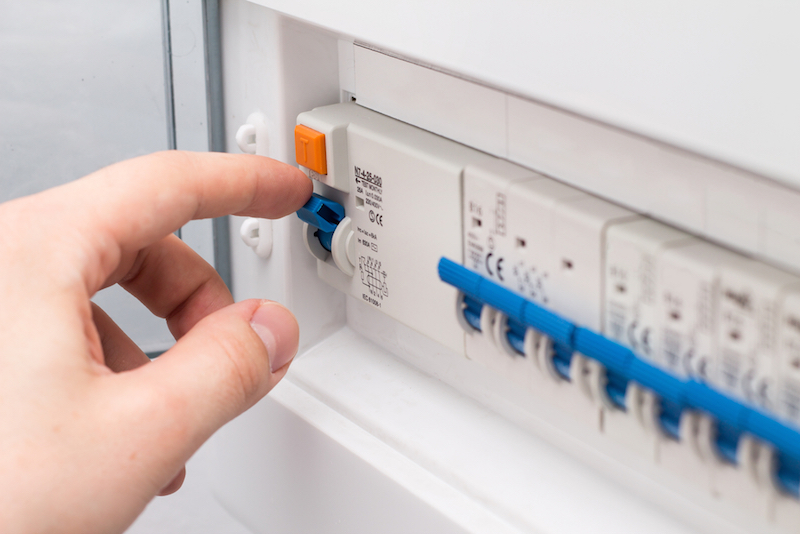

A washing machine tripping an RCD or blowing a fuse has a current leak to earth somewhere in its electrical system. The most common causes are a faulty heater, motor, suppressor, water reaching an electrical component, or a chafed wire shorting against the machine’s metalwork. Observing exactly when the trip occurs narrows down the suspect component significantly.

Properly diagnosing a washing machine that is tripping or fusing electrics requires an insulation test meter – specialist equipment costing £200 to £600 that applies 500V DC to test for insulation faults. An ordinary multimeter cannot detect most of the faults that cause this problem. Unless you have this equipment and the knowledge to use it, this fault needs a qualified engineer. See our DIY repair safety guide and DIY repair warnings before attempting anything.
Even without specialist test equipment, some useful diagnostic work is possible – and knowing which component is most likely responsible helps a qualified engineer fix the fault more quickly.
Most Common Causes

Heating element
One of the most common causes. An element that has developed a break in its insulation will leak current to earth when it heats up, tripping the RCD or blowing the fuse during the heating phase of the wash.

Motor
Motor insulation faults typically cause tripping during or just after the machine starts to turn the drum, and will usually also cause tripping on spin.

Suppressor
The mains interference suppressor is typically the first component powered when the machine is plugged in. A faulty suppressor often causes tripping the instant the plug is inserted or the machine is switched on.

Water on an electrical component
A leak allowing water to reach a live component – from a failed seal, a cracked hose, or water tracking down a wire – can cause immediate or intermittent tripping depending on where the water reaches.

Chafed or bare wire
Wiring whose insulation has been worn through by rubbing against the drum, chassis, or another component can short to earth when the tub moves on spin with a heavy load. This type of fault is often intermittent.
Using Timing to Identify the Suspect Component
Observing exactly when the machine trips is the most useful diagnostic tool available without specialist equipment. Each timing pattern points to a different likely cause.
| When does it trip? | Most likely cause | Notes |
|---|---|---|
| Immediately on plug-in or switch-on | Suppressor | See suppressor and capacitor shock warning – these can retain a charge even when unplugged |
| After filling, as the drum starts turning | Motor | If the motor is the cause, it will typically also trip on the spin cycle |
| Several minutes after filling, once the drum has been turning | Heating element | The fault often only appears once the element reaches temperature. See guide on removing the heater |
| On spin only, especially with large loads | Bare wire shorting against metalwork | Drum movement with heavier loads shakes loose wiring into contact with the chassis. Look for chafed or rubbed-through insulation |
| Intermittently, no consistent pattern | Water tracking to an electrical part, or intermittent wiring fault | Very difficult to diagnose without an insulation test meter. Requires engineer investigation |
Testing Without an Insulation Test Meter
A standard multimeter can detect a direct short to earth but cannot detect the low-level insulation faults that cause most tripping problems. A 3-volt multimeter cannot replicate the conditions under which 230V mains current finds a path to earth through degraded insulation.
 What a multimeter CAN find
- A direct short between a component’s live connections and its metal casing or earth tag
- A completely open circuit component
- A visibly broken or disconnected wire
 What a multimeter CANNOT find
- Low insulation faults – where mains voltage finds a high-resistance path to earth that 3V cannot replicate
- Faults that only appear at operating temperature
- Intermittent faults that require sustained voltage to reveal themselves

Never test any part or connection with the machine plugged in. Remove the wires from any component before testing it – testing with wires attached can give false readings. A clear continuity test result does not prove a part is good; it only proves there is no direct short at low voltage.
The Risk of Elimination Testing
Disconnecting components one by one to see whether the tripping stops is an unreliable diagnostic method and an expensive one if it leads to replacing the wrong part.
Why process of elimination can mislead
Example: there is a bare wire in the wiring harness to the motor that shorts against the chassis on spin. Disconnecting the motor moves the wire, removing the short. The machine no longer trips. The motor is replaced at significant cost – but the bare wire is still there. The fault returns, and an unnecessary motor has been purchased. Without an insulation test meter, there is no reliable way to confirm which component is actually at fault rather than which component’s disconnection happened to move a wiring fault away from a shorting point.
After the Machine Has Tripped: What to Do
-
Do not keep resetting and retrying. If the machine trips again immediately after resetting the RCD or replacing the fuse, there is an active fault. Repeatedly allowing it to trip can cause additional damage to components downstream of the fault. -
Never bypass a fuse. A fuse is protecting the circuit. Bypassing it removes that protection and risks fire, further component damage, or electric shock. -
If it resets and appears to work normally, monitor closely and note exactly when any further trip occurs. This timing information is valuable for the engineer. -
If it resets but something is no longer working (motor, heating, lights), the fault has damaged a component. The machine needs repair before further use. -
If the door won’t open after tripping, the door lock interlock may have been damaged by the electrical fault. See our guide on washing machine door will not open.
Do not buy replacement parts speculatively based on which component seems most likely. Parts should only be replaced once a fault has been confirmed – either by an insulation test meter or by a qualified engineer. An incorrect diagnosis leads to wasted expenditure and the fault remaining.
Time to Call a Qualified Engineer
A competent engineer with an insulation test meter can identify the cause of a tripping fault quickly and reliably. Without one, diagnosis is unreliable and replacement of the wrong part is a real risk.
Related Guides
Electric Shocks or Tingles From a Washing MachineWhat a mild electric shock from a washing machine means and why it must be investigated immediately.
Shock From Appliance When Switched OffWhy suppressors and capacitors can retain dangerous charge even after the machine is unplugged.
 Washing Machine Door Will Not Open
Causes of a locked door after a tripped fuse or electrical fault – including damaged door interlocks.
DIY Washing Machine Repair WarningsEight things that should never be done when attempting to repair a washing machine.
Frequently Asked Questions
Why is my washing machine tripping the RCD?
The machine has developed a current leak to earth somewhere in its electrical system. The most common causes are a faulty heating element, a motor with degraded insulation, a failed suppressor, water reaching a live component, or a wire whose insulation has been worn through and is making contact with the machine’s metalwork. Exactly when the trip occurs points to the most likely cause.
Can I diagnose a tripping washing machine with a multimeter?
Partially. A multimeter can detect a direct short between a component’s connections and its casing, which would confirm a complete insulation breakdown. However, most tripping faults are caused by low-level insulation faults that a 3-volt multimeter cannot detect. The 230V mains voltage can find a path to earth through degraded insulation that the multimeter’s low voltage cannot replicate.
What is an insulation test meter and why is it needed?
An insulation test meter applies 500V DC to the appliance or individual components and measures how much current finds its way to earth. This high voltage replicates the conditions under which mains-connected components fail, revealing faults that are invisible at low test voltages. They cost £200 to £600 and are used by professional repair engineers. It is not practical to buy one for a single domestic appliance diagnosis.
My washing machine tripped the fuse and now the door won’t open – what do I do?
The door interlock may have been damaged by the electrical fault, particularly if the trip was caused by a significant short circuit rather than a gradual insulation fault. The interlock can be manually released on most machines – see our guide on washing machine door will not open. Do not attempt to force the door. The machine should not be used again until a qualified engineer has identified and repaired the underlying electrical fault.
Is it safe to keep resetting the RCD and using the machine?
No. If the machine trips again after resetting, there is an active electrical fault that must be repaired before the machine is used again. Repeatedly resetting allows the fault to cause further damage to downstream components and increases the risk of electric shock or fire. The machine should be left unplugged until a qualified engineer has investigated.
Ask the repair forum
Post the make, model and symptoms and get help from the Whitegoods Help community.
66 Comments
Grouped into 34 comment threads.
0 replies Thanks for the update Peter, I can't see how the temperature sensor could trip the electrics though. If it was heavily coated it should only really restrict its temperature sensing ability. Before RCD's were invented and we just had fuses there was a fair bit of tolerance for earth leakage but I would think if the heater or motor has any leakage down to earth at all it could potentially trip an RCD. Keep an eye on it and fingers crossed.
0 replies Just an update, I did the 500 volt dc test on the appliance and seperately the motor and element,,both within tolerance. I then took a multimeter and checked the temperature sensor and I was getting a lower ohm reading to what it should be, so removed the sensor and on inspection it was heavily calcified.. I descaled and refitted it, and washing machine so far is working fine. The temperature sensor could be a red herring as I did a full strip of the wiring loom and pcb/connectors when inspecting for damage so could of just been a loose connection, that could of caused a low insulation fault when the machine had full load. Cheers for the guidance and support Andy Regards Peter
Just an update, I did the 500 volt dc test on the appliance and seperately the motor and element,,both within tolerance. I then took a multimeter and checked the temperature sensor and I was getting a lower ohm reading to what it should be, so removed the sensor and on inspection it was heavily calcified.. I descaled and refitted it, and washing machine so far is working fine.
The temperature sensor could be a red herring as I did a full strip of the wiring loom and pcb/connectors when inspecting for damage so could of just been a loose connection, that could of caused a low insulation fault when the machine had full load.
Cheers for the guidance and support Andy
Regards
Peter
3 replies Sorry Brandon, but as my article explains no one can effectively troubleshoot a low insulation fault tripping or fusing without a specialist insulation test meter that can put 500 volts DC through the appliance and through any suspected parts like a heater or motor. Unless you can see something blatantly obvious like a wire shorting out then the lack of the insulation test meter means even I couldn't fix it without just guessing at parts. If it trip the second the motor starts turning then the motor is definitely the number one suspect but the last thing you would want to do is speculatively guess at a Miele motor because they are so expensive.
Sorry Brandon, but as my article explains no one can effectively troubleshoot a low insulation fault tripping or fusing without a specialist insulation test meter that can put 500 volts DC through the appliance and through any suspected parts like a heater or motor. Unless you can see something blatantly obvious like a wire shorting out then the lack of the insulation test meter means even I couldn’t fix it without just guessing at parts. If it trip the second the motor starts turning then the motor is definitely the number one suspect but the last thing you would want to do is speculatively guess at a Miele motor because they are so expensive.
Likely replying to Andy Trigg (Whitegoodshelp)
Hi Andy
Our 6 year old Hoover washer/dryer tripped the RCD the other day, after resetting the RCD I was able to put the timer on “empty” pump the water out fine, set it to do a wash and the machine will fill with water fine and go through a cycle and a dry fine EMPTY, however with a load in it the RCD will trip every time the motor try’s to turn the motor.
I’m going to take my multi meter home with me tonight and borrow works PAT equipment (I’m PAT certificated) so I can do a 500 volt insulation test
Previous work I’ve carried out on this machine included changing the drum bearings, which was a complete case split and everything comes out including wiring looms and PCB’s, I was meticulous in the breakdown and re-assemble and have checked all connection’s and cables for possible bare wires.
My immediate thoughts is the motor, I’ve never replaced the bushes but from last year I remember the bushes looked ok and no carbon deposit on the accumulator, the only thing it did in recent history was leak last week, which only happened when the tumble dryer was in use, so we’ve stopped using the tumble dryer, any pointers would be much appreciated.
Cheers
Peter
Likely replying to Andy Trigg (Whitegoodshelp)
Thanks Andy
The PAT kit is booked out till Friday so I’ll do the fault finding you recommend at the weekend and let you know how I get on.
However, I’ve done a thorough diagnostic and by elimination just by trying different programs it will happily fiil/empty/spin and wil take a hand washed load and run a complete rinse cycle.The machine actually trips after about 1-2 minutes after after any wash cycle or after 5minutes on dryer setting. And for both conditions when the drum reverses direction. Machine is a Hoover HNWl 3126 washer/dryer. Now the dryer elements and drum element are independent so though they could be suspect, its also possible the motor is compromised and the extra draw when any heater element in use is sufficient to trip the RCD. All good fun !
Cheers
Peter
0 replies Hello white goods help. I have a Miele W562 Prestige Plus 6 washing machine which we have owned for the past 6.5 years and just this morning it has started acted really strange. It was on Express Wash and as soon as the drum started turning it trips the RCD Breaker switch, at first I assumed it was the heating element but I believe it's the motor as on the Express Wash it heats straight away and would have tripped it immediately. Please help. We can't afford to get a new machine and we don't know how much an engineer will cost.
Hello white goods help.
I have a Miele W562 Prestige Plus 6 washing machine which we have owned for the past 6.5 years and just this morning it has started acted really strange.
It was on Express Wash and as soon as the drum started turning it trips the RCD Breaker switch, at first I assumed it was the heating element but I believe it’s the motor as on the Express Wash it heats straight away and would have tripped it immediately.
Please help. We can’t afford to get a new machine and we don’t know how much an engineer will cost.
1 reply My new washing machine (May '15) a Bosch waq283s1gb has started tripping the socket fuse in the house. It is also giving off a burning smell. Obviously I observed what was happening after the first couple of times. Basically it fills up and works fine for about 10 minutes by which time the burning smell has started then it blows the fuse. It's only 4 months old but we bought it online at aoappliances so I don't know who to turn to with regards to guarantee etc. I would love your advice. Thank you
My new washing machine (May ’15) a Bosch waq283s1gb has started tripping the socket fuse in the house. It is also giving off a burning smell. Obviously I observed what was happening after the first couple of times. Basically it fills up and works fine for about 10 minutes by which time the burning smell has started then it blows the fuse. It’s only 4 months old but we bought it online at aoappliances so I don’t know who to turn to with regards to guarantee etc. I would love your advice. Thank you
Likely replying to Mary
Hello Mary. If you think the washing machine is faulty it should be straightforward to get AO.com to send someone to look at it via their website. But the first thing I would check is the plug and wall socket. Carefully examine the plug around the pins to see if there is any discolouring or melting. If it is plugged into a worn wall socket it could overheat during the wash and heat cycle, start to smell and cause dangerous problems. A worn wall socket causing overheating would not be covered under guarantee so check this first. If by any chance the plug is showing signs of burning you should immediately stop using it in that wall socket. You would need to get the wall socket replaced or start to use a different one. If the plug is badly burnt it would need a brand-new plug fitting.
If you cannot see anything wrong with the socket or plug you would need to get an engineer to sort it out.
0 replies Many thanks Andy. We're still not decided whether it'll be best to get it examined and repaired, or replace it. And there is a bit of a niggling worry that maybe the house electrics are a bit suspect: rats under the floor have maybe nibbled wires - but I guess that would be showing in other elements of the electrical system. But your input is much appreciated. Thanks again.
Many thanks Andy. We’re still not decided whether it’ll be best to get it examined and repaired, or replace it. And there is a bit of a niggling worry that maybe the house electrics are a bit suspect: rats under the floor have maybe nibbled wires – but I guess that would be showing in other elements of the electrical system. But your input is much appreciated. Thanks again.
0 replies Proof for us was that it didn't trip while on a cold wash - so it has to be to do with the heater circuit - not sure yet if a loose wire on the heater element
Proof for us was that it didn’t trip while on a cold wash – so it has to be to do with the heater circuit – not sure yet if a loose wire on the heater element
8 replies Hi, I have a Hotpoint WMYF 822 washing machine. Fairly new, couple of years old. Worked fine until recently, couldn't get machine to power up. Changed fuse in socket and worked fine. Next day, same thing happened, change fuse, all OK. The machine works fine and never stops mid cycle. If we do multiple loads, it's fine too. The problem occurs only if we haven't used machine for a day or so. The weird thing is though is that it is not blowing the fuses. I change fuse for an old one and works fine. It's getting a little frustrating now. I've tried other appliances in sockets and no problem so pretty sure it is a machine fault. Any ideas ? Many thanks in advance :-)
Hi, I have a Hotpoint WMYF 822 washing machine. Fairly new, couple of years old. Worked fine until recently, couldn’t get machine to power up. Changed fuse in socket and worked fine. Next day, same thing happened, change fuse, all OK. The machine works fine and never stops mid cycle. If we do multiple loads, it’s fine too. The problem occurs only if we haven’t used machine for a day or so. The weird thing is though is that it is not blowing the fuses. I change fuse for an old one and works fine. It’s getting a little frustrating now. I’ve tried other appliances in sockets and no problem so pretty sure it is a machine fault. Any ideas ? Many thanks in advance :-)
Likely replying to Maurice
Hello Maurice. That seems bizarre. If you are saying that replacing the fuse gets it going again, but the fuses aren’t actually blowing I would say you must be inadvertently fixing the issue simply by unplugging it, working inside the plug, and plugging it back in. Obviously if the fuse you replace has not actually blown then it can’t possibly be replacing the fuse that is getting it running again only something that is being disturbed or adjusted during the process. The first thing you need to do is try running the machine in a totally different socket. If there isn’t one available try using a good quality extension cable.
I would suspect that the wall socket is worn, or has a loose fitting or connection inside or there is something wrong inside the plug or in the mains cable of the washing machine. If the fault still occurs when plugged into an entirely different socket I would cut off 2 or 3 inches of the mains cable (assuming it is long enough) and fit a new plug altogether to discount any problem inside the plug or the mains cable running into it.
Thanks for your detailed reply Andy. I had an electrician out today ( friend of mine ) and he is baffled. He tested power to socket after washing machine failed to power up and power definitely at socket. He cannot understand how taking a fuse out and putting back the SAME fuse rectifies it ! He checked power cable and socket, no problem. The machine is only 2 years old and is in very good order. So, still none the wiser. I can rule out my sockets, so, it is a machine fault but how can flipping a fuse in a plug socket rectify it ? To be honest, I’m loathe to get an engineer out for this. I’ll just keep flipping the fuse but it is a very strange fault and I’d love to know if anyone else has suffered something similar. Thanks again for your help Andy :-)
Likely replying to Maurice
Hello Maurice. Changing a fuse which is still working for another can’t possibly fix anything and we both know it :) The only explanation is that the act of removing the plug and fiddling about with it to change the fuse is somehow reinstating a connection that had failed. A break in the mains cable (often around where the cord goes into the cord grip) can do it. It’s possible for the copper wire inside the neutral or live to be broken but still touching, and just moving or twisting the wire can make or break the connection.
I’m assuming that you have also tried just unplugging and re-plugging in instead of changing the fuse? Have you used the “old” fuses in other appliances to prove they are working OK? Have you tried just unplugging the machine, taking the plug cover off, just having a look inside and refitting everything?
You need to cut 2 inches off the washing machine cable and fit a new plug to eliminate those two possibilities. Otherwise you are leaving a theoretical possible cause in place. Even though it may well make no difference unless you do it you can’t be 100% sure it isn’t that. If it isn’t that, it has to be a fault on the socket (bear in mind the fault is highly unusual and the washer works perfectly ok for long periods so “testing” it may not discover anything.
Likely replying to Andy Trigg (Whitegoodshelp)
hi andy
i have a beko washing machine 3 years old.
it start making loud noise a few weeks back like bearing noise.
the other day it blew the bracker switch in house so i pull it from the wall and opened up.
found that the water inside the tub passed by the bearings(worn) and trickled down the drum onto the heater element wiring, which i suspect thats what tripped. cleaned it all down (dried up water).
to test electrics before i tackled the bearings. no power no lights or anything. power going into machine but no response. i noticed there is a emi filter could this be damaged due to the sudden surge? does this act like an internal fuse? any help would be much appreciated.
many thanks
paul c
Likely replying to Andy Trigg (Whitegoodshelp)
Hello Andy. My girl friend’s Bosch washing machine trips the RCD at the same time into the cycle (about 10 mins every time). She has tried it using an extension cable from the neighbour’s house and it works ok (they also have an RCD in their house). The washing machine is about 8 years old and no other devices trip the RCD. Any thoughts (heater?) Do you think it is likely to be worth repairing the machine, or better just go for a new one?
Likely replying to Keith
Hello Keith, that’s a novel way of testing :) It’s possible that her RCD is more sensitive, the heating element could have low insulation which trips her RCD but not the neighbours. It’s even possible the long extension cable might explain why it didn’t trip the neighbours RCD – especially if by any chance it wasn’t earthed! Which would be dangerous.
0 replies Hello valve. Unfortunately all my ideas already in this article. The only thing I can suggest this to carefully read all of my article above because I thought of all possible causes and actions for a fusing washing machine. But as you will see from the article, if you do not have an insulation test meter you are limited to what you can do.
Hello valve. Unfortunately all my ideas already in this article. The only thing I can suggest this to carefully read all of my article above because I thought of all possible causes and actions for a fusing washing machine. But as you will see from the article, if you do not have an insulation test meter you are limited to what you can do.
0 replies Hi I have a hotpoint AQ113D 697E aqua kris washing machine. It trips the whole electrics. I then have to let the water out from the drain/plug as it won't start again. It will then run on a spin cycle and a rinse cycle fine but if I try a full wash it trips after its full of water. I'm thinking it's probably the heater? How would I go about checking this or is it easier just to change? Any help would be great full. Thanks Paul
Hi
I have a hotpoint AQ113D 697E aqua kris washing machine.
It trips the whole electrics. I then have to let the water out from the drain/plug as it won’t start again.
It will then run on a spin cycle and a rinse cycle fine but if I try a full wash it trips after its full of water. I’m thinking it’s probably the heater?
How would I go about checking this or is it easier just to change?
Any help would be great full.
Thanks Paul
Leave a comment
1 reply You would need to make sure everything inside it is totally dry before it will work, but it's always possible some electrical components got damaged.
You would need to make sure everything inside it is totally dry before it will work, but it’s always possible some electrical components got damaged.
0 replies My washer does not turn on because the water from my drain backed up and water got all over it and it was working in till water got on it and the light won't turn on ...I can hear it turn on but no lights if I let it sit and dry will it turn on
My washer does not turn on because the water from my drain backed up and water got all over it and it was working in till water got on it and the light won’t turn on …I can hear it turn on but no lights if I let it sit and dry will it turn on
0 replies If it only trips when washing, and not when rinsing or spinning then it's likely to be related to the heating element or connections.
If it only trips when washing, and not when rinsing or spinning then it’s likely to be related to the heating element or connections.
0 replies I have read your article with interest as I have just had a similar problem. I have a 18 month old Hotpoint WMUD 10637 P ultima washing machine which is tripping the RCD. This seems to happen 15-30 seconds into a wash cycle. However, after manually opening the door and removing the clothes I put it on the 'spin/rinse/pump out' programme which operated correctly. I tried a wash cycle again with the same results. The 'spin/rinse/pump out' always works correctly. Do you have any ideas on the cause before I commit to calling out an engineer? Also, would you recommend calling an engineer via the Hotpoint phone line or contacting a local engineer? Any help would be greatly appreciated as I am already drowning under a pile of kids clothes! Many thanks.
I have read your article with interest as I have just had a similar problem. I have a 18 month old Hotpoint WMUD 10637 P ultima washing machine which is tripping the RCD. This seems to happen 15-30 seconds into a wash cycle. However, after manually opening the door and removing the clothes I put it on the ‘spin/rinse/pump out’ programme which operated correctly. I tried a wash cycle again with the same results. The ‘spin/rinse/pump out’ always works correctly. Do you have any ideas on the cause before I commit to calling out an engineer? Also, would you recommend calling an engineer via the Hotpoint phone line or contacting a local engineer? Any help would be greatly appreciated as I am already drowning under a pile of kids clothes!
Many thanks.
0 replies Tripping after 3 to 5 minutes could be a leak running onto something or a wire catching somewhere. It's unusual. If it does it on spin only with no water let in though you can discount a leak.
Tripping after 3 to 5 minutes could be a leak running onto something or a wire catching somewhere. It’s unusual. If it does it on spin only with no water let in though you can discount a leak.
0 replies Hello My neighbour has an old washing machine, unknown age or make. Each time it is started, it works for between 3 and 5 minutes before it trips the circuit board. After turning electric back on, moving dial to another position in the cycle, it again works for 3 - 5 minutes before trupping out again. Whichever part of the cylcle the dial is moved to, it always works for a while then trips. Any ideas so we can have a quick look before she buys a new machine? Thanks
Hello
My neighbour has an old washing machine, unknown age or make. Each time it is started, it works for between 3 and 5 minutes before it trips the circuit board. After turning electric back on, moving dial to another position in the cycle, it again works for 3 – 5 minutes before trupping out again. Whichever part of the cylcle the dial is moved to, it always works for a while then trips. Any ideas so we can have a quick look before she buys a new machine? Thanks
0 replies Hello chell. Intermittent faults are the hardest to find and its most likely why the engineer said there was nothing wrong with the machine when he couldn't find anything. However, there are things such as leaks and wires catching with heavy loads only that can cause intermittent tripping. Sadly most engineers don't have the time these days to test appliances thoroughly enough with intermittent faults and to be fair if it only trips every several washes and an engineer can't see anything wrong there's nothing much they can do unless they are experienced enough to check out unusual and rare faults they may have come across in the past. The same goes for the electrician, which leaves you in an impossible position. All I can recommend is that you carefully observe when it trips to see if it only happens for example with heavy loads, or on specific wash cycles or when you've washed 2 consecutive times etc which may give clues for an appliance engineer.
Hello chell. Intermittent faults are the hardest to find and its most likely why the engineer said there was nothing wrong with the machine when he couldn’t find anything. However, there are things such as leaks and wires catching with heavy loads only that can cause intermittent tripping. Sadly most engineers don’t have the time these days to test appliances thoroughly enough with intermittent faults and to be fair if it only trips every several washes and an engineer can’t see anything wrong there’s nothing much they can do unless they are experienced enough to check out unusual and rare faults they may have come across in the past.
The same goes for the electrician, which leaves you in an impossible position. All I can recommend is that you carefully observe when it trips to see if it only happens for example with heavy loads, or on specific wash cycles or when you’ve washed 2 consecutive times etc which may give clues for an appliance engineer.
0 replies no sometimes i can do 3 or 4 washes with no problems then other times it trips 5 or 6 times each cycle, i will try a different engineer, thanks for the help :-)
no sometimes i can do 3 or 4 washes with no problems then other times it trips 5 or 6 times each cycle, i will try a different engineer, thanks for the help :-)
8 replies I would say it is more likely to be the washing machine. Does it trip every cycle? My article above looks at the various possible causes which should be investigated by a competent engineer. A proper insulation test meter is needed to test the washing machine and its components properly.
I would say it is more likely to be the washing machine. Does it trip every cycle? My article above looks at the various possible causes which should be investigated by a competent engineer. A proper insulation test meter is needed to test the washing machine and its components properly.
Likely replying to Andy Trigg (Whitegoodshelp)
Hi Andy.
I’ve got a Hotpoint washer dryer (WDF740) that, besides being incredibly loud, has performed perfectly in the few years I’ve had it. Today the power tripped when it was mid way through a basic 30 degree cycle. After determining that it was definitely the washing machine rather than another appliance that had caused it I tried to find out what was up. I first emptied it, drained the water and isolated the water supply. I then took the top off and checked all the connections I could get to then did the same from underneath. There was nothing obviously loose or damaged or any sign of water getting somewhere it shouldn’t. I put it back together, switched it on and unlike before it didn’t trip again straight away, it did try to restart the program that was midway through but because the water supply was isolated it just pumped to no avail. I turned the water back on and after thirty seconds or so of filling it tripped the power again and now, as before the power trips as soon as you switch it on. From reading your advice above it sounds like the heater is the likely candidate for replacement, what do you think?
Thanks,
Scott.
Likely replying to Scott
Hello Scott. Yes it could be the heating element. If the drum is turning ok whilst it’s filling up then it’s not likely to be the motor. The only things that kick in on wash are the motor and the heater. Depending on how accessible the heater is (some are easy and others need stripping down to get to them) you could try disconnecting the heater making sure the wires are safely insulated and not able to catch on anything. This should trigger a time out on heat error but hopefully it would not trip any more.
However, if it was the heater I would expect it to trip quite quickly after filling up and not half way through a cycle.
Likely replying to Andy Trigg (Whitegoodshelp)
Hi Andy,
Very interesting and comprehensive article, thanks. My 14 year old Bosch classixx machine has never had a fault until last night. Essentially the machine runs fine until the spin cycle at the end – once it gets up to full speed it is tripping out the mains with a distinct smell coming from the machine like something has shorted out and potentially melted. Not a technical person at all so have had a brief look and can’t see anything obviously melted etc. Can I ask whether it is actually worth getting someone to look at it to fix it or am I best just biting the bullet and buying a new machine? If it really could be anything causing this is it going to cost a lot in terms of the call out and potential parts? I had an experience a few years back where I was repeatedly replacing parts on a tumble dryer and would prefer not to throw good money after bad.
Cheers,
David
Likely replying to David
Thanks David. 14 years is pretty amazing these days. Even back in the good old days 14 years was a respectable age. Therefore it’s not likely to be worth spending a lot. It sounds like possibly the motor may be playing up. Can you hear any sparking or strange noises just before it cuts out? Another possibility is if something is shorting out when the tub bounces around on spin.
To test the latter try it on spin with no laundry in so the tub won’t move at all during spin. To test the former I would taking the back off, position myself behind where I can see the motor and watch it on spin to see if I could observe any nasty sparking from the motor or anywhere during the spin cycle.
Likely replying to Andy Trigg (Whitegoodshelp)
Hi Andy. Could you help me please. My candy washing machine is on the blink. When I turn it on at the wall it blows the fuse and makes an electrical bang somewhere in the guts of the machine. I have left for a couple of days with the dehumidifier next to it with the back panel removed from wash machine. Tested today still blowing fuse and making bang sound. Is there anything else Barr calling an engineer you can advise me to do ?
Much appreciated for your time in advance
Paul
Likely replying to Paul Bennett
Hello Paul. My article was written to advise on what to do if a washing machine is fusing electrics or tripping so I honestly can’t think of anything else to add to my article above. However, if it making a loud bang when it happens the only thing you could possibly try is to take the lid on the back panel and very carefully see if you can spot where the bang is coming from.
Even then though you won’t know what is definitely causing it. For example it could be the motor blowing the PCB because the motor is shorting down-to-earth. But witnessing the PCB flashing is not much help because if you were to just replace the PCB the motor would blow the new one too. As I say in my article you cannot diagnose this fault without a proper insulation test meter. If you are lucky enough to spot a flash somewhere though and can trace it to something simple like bare wire touching the casing then that would be one of the rare cases where the lack of an insulation test meter wouldn’t necessarily prevent diagnosis.
Likely replying to Andy Trigg (Whitegoodshelp)
Hi Andy I’m having a few problems with my washing machine tripping my mains electricity this doesn’t happen all the time and it happens anywhere in the cycle sometimes I start the washer and it trips instantly or when it fills/empty/spins can trip on any setting but then other times it works great you wouldn’t think anything was wrong with it but today it’s tripped 4 times on a 30 mins was 1st wash of the day I have now done 2 more washes and not had a problem with it in got no way of testing machine just wanted to see if you have any idea what it could be
Likely replying to chris
Hello Chris. With a fault so intermittent, combined with the lack of an insulation test meter you are likely to struggle to get to the bottom of this. Even an engineer with a meter may not find anything. The reason I say this is that when he tests the washing machine with an insulation test meter he may very well find nothing shows up. If there is anything shorting to earth then it should trip the electrics every time without fail. The fact that it doesn’t, and it can go through entire washes without tripping the electrics implies strongly that there is no part on the machine that is leaking to earth. Therefore testing with a meter may not show anything.
It is possible he could get a low reading which might implicate a particular part, but I’m not aware of parts that leak to earth intermittently. The only possible contender might be a motor, which if running poorly and sparking badly could occasionally cause the electrics to trip.
So, even an engineer may not be able to find anything with it being so intermittent. He could turn up, put the meter over it and find nothing wrong, then sit and watch the machine for half an hour in which time it is unlikely to trip, and if it doesn’t trip the electrics what can he do?
On the other hand, intermittent tripping of this sort can be caused by water leaking onto part, with the amount of water leaking varying dependent upon which wash cycle is being used and how heavy the loaders. Another contender could be something as simple as a wire in the machine which has rubbed against something exposing a copper wire inside which occasionally touches earth depending on where it is lying inside the machine. Washing machines moves about a lot and can disturb wiring that runs up and down the casing. Something like that may be found quite quickly by an experienced engineer.
So in summary unless you could spot anything like a loose or worn wire, or could see that it is leaking onto something you have no chance of finding the problem without a test meter. The very first thing any engineer would do after being called out to an appliance tripping the electrics is to put the insulation test meter across Earth, live and neutral.
0 replies Hi, my beko washing machine keeps tripping the fusebox mid cycle , i contacted a repair company who said it was the electrics in the house at fault and to contact the local authority , however the local authority came and said they were not at fault it was simply the washing machine to blame, any advice or shall i try a new engineer?, the washer is only 4years old , thanks
Hi, my beko washing machine keeps tripping the fusebox mid cycle , i contacted a repair company who said it was the electrics in the house at fault and to contact the local authority , however the local authority came and said they were not at fault it was simply the washing machine to blame, any advice or shall i try a new engineer?, the washer is only 4years old , thanks
1 reply Hello again Andy, Many thanks for your help so far. I had an appliance engineer test the machine and he said its a problem with the tub bearings, and to replace these on an older model machine would cost £200. Does this sound correct to you? He charged £50 for the callout and said labour would be included, were any parts needing to be replaced once examined. However now he has recommended I replace the machine considering the cost of the parts. I have looked online and bearings seem to be very cheap, am I looking at the right thing? He said he would need to replace the whole 'tub'?
Hello again Andy,
Many thanks for your help so far. I had an appliance engineer test the machine and he said its a problem with the tub bearings, and to replace these on an older model machine would cost £200. Does this sound correct to you? He charged £50 for the callout and said labour would be included, were any parts needing to be replaced once examined. However now he has recommended I replace the machine considering the cost of the parts. I have looked online and bearings seem to be very cheap, am I looking at the right thing? He said he would need to replace the whole ‘tub’?
Likely replying to NAZIA
Hello Nazia, Drum bearings don’t normally cause a machine to trip the electrics but if they have gone many do need an entire tub, bearings often aren’t available as a spare part. Sometimes the bearings are available but if the machine is old and the drum bearings have collapsed it can mean a lot of damage is done inside and bearings can seize inside the drum and be unable to be knocked out. On an old machine I wouldn’t normally bother fixing it if drum bearings have gone.
Check to see if drum bearings are available for your model here washing machine drum spare parts.
2 replies The fault could be anything from simple to serious, an appliance engineer should be able to find out what it is easily, it's just not a diy job. An electrician is no good unless you suspect the fault is in the house electrics, you need an appliance engineer.
The fault could be anything from simple to serious, an appliance engineer should be able to find out what it is easily, it’s just not a diy job. An electrician is no good unless you suspect the fault is in the house electrics, you need an appliance engineer.
Likely replying to Andy Trigg (Whitegoodshelp)
Hi Andy
I pulled my Bosch washing machine away from the wall to get to the stopcock and in doing so I must have over-stretched the power cable because now the first 2 inches as it comes out of the back of the machine are unsheathed. The 3 wires within are still sheathed. Now it trips the mains every time I plug it in. Do you think I need an electrician or an appliance engineer or is there likely to be a simple answer if I just take the back off myself?
Thanks
Likely replying to Nick
Hello Nick, it’s probably pulled the tags off the suppressor. Take the lid off and look, The live and neutral on the mains cable should connect to a small suppressor. It should be easy enough to see where they should go (live to live and neutral to neutral) but if you wire it up wrong it will blow up.
0 replies Thanks for the response. Would I be able to get the machine repaired if the above is the fault in question, or would it need to be replaced? I am currently trying to get hold of an electrician but it's an impossible task at the moment!
Thanks for the response. Would I be able to get the machine repaired if the above is the fault in question, or would it need to be replaced? I am currently trying to get hold of an electrician but it’s an impossible task at the moment!
1 reply Hi, I have a 10 year old Hoover and my electrics have been tripping for maybe the last month intermittently. Once it trips, it continues to do so, so I tried switching off all the switches on the main board and switching them on one by one. It turns out the washing machine switch tripped the main rcd when turned on. Strange because I can use the washing machine without the electrics tripping. It seems to happen randomly
Hi, I have a 10 year old Hoover and my electrics have been tripping for maybe the last month intermittently. Once it trips, it continues to do so, so I tried switching off all the switches on the main board and switching them on one by one. It turns out the washing machine switch tripped the main rcd when turned on. Strange because I can use the washing machine without the electrics tripping. It seems to happen randomly
Likely replying to NAZIA
Hello Nazia. Tripping the electrics is a very hard fault to fix yourself without proper insulation test meter as described in my article. If it is also intermittent then it just makes it harder still. An intermittent problem with tripping the electrics can be caused by either water leaking onto something, or the drum catching a bare wire or causing a bare wire to short out. Both of these faults can only happen on specific long programs, all with particularly heavy loads.
In other words it is possible that a leak only gets onto a live part on a very hot wash, or a particularly long wash. Or the drum only moves around enough to cause the electrics to trip when it has a particularly heavy load inside.
Without a test meter all you can do is bear that in mind, and try to find out when the random tripping happens. It may not be truly random, it may only happen with heavy loads, or on certain programs.
1 reply Hi I've got a indisit. Iwsc51251 washingmachine it tripped the rcd about 10 mins in to 40 degrees cycle i manually drained the water puy wet clothes in and tried on a spin+drain setting to dry clothes worked fine so i put on q 20 degress cycle. And once it started To fill up a bit and again tripped rcd i reset and put on spin and drain. And works ok. Any ideas?
Hi I’ve got a indisit. Iwsc51251 washingmachine it tripped the rcd about 10 mins in to 40 degrees cycle i manually drained the water puy wet clothes in and tried on a spin+drain setting to dry clothes worked fine so i put on q 20 degress cycle. And once it started To fill up a bit and again tripped rcd i reset and put on spin and drain. And works ok. Any ideas?
Likely replying to james
Hello James. If it fills up with water, the motor turns the drum, it spins okay, and it only trips out when it is heating the water then is sounds like a classic case of a heater issue. Main suspect is either the heating element is shorting to earth, or there is an electrical fault such as a trapped or loose wire on the heating circuit.
As my article describes though unless you have the specialist insulation test meter you cannot test the heating element properly unless by any chance you can pick up some continuity between the earth tag and one of the heater connectors as described in my article. If you cannot see any wiring faults you would have to assume it is the heating element and only find out once it is being replaced.
1 reply hi my panasonic NA148VG4 trips the electric the instant you put the plug in. It first went during a wash and all the washing is still in it. Repair not till thursday. Do you have any idea how i can get my washing out before it is ruined? it's already been in there over a day. We tried getting to the lock from inside but couldn't reach it. Thanks
hi my panasonic NA148VG4 trips the electric the instant you put the plug in. It first went during a wash and all the washing is still in it. Repair not till thursday. Do you have any idea how i can get my washing out before it is ruined? it’s already been in there over a day. We tried getting to the lock from inside but couldn’t reach it. Thanks
0 replies Thanks very much Andy for your your quick response. I have had another look and although I thought the machine was switched off I think I had that wrong, sorry! I was having a very stressful afternoon!! I have tried it again, and when plugged in, the lights come on for maybe 2 or 3 seconds then the trip goes. I have a friend coming next weekend who would be able to install a new part, so would ideally want to have a part ready, i know its all a bit of a guessing game but happy to risk it with an educated guess! Thanks again.
Thanks very much Andy for your your quick response. I have had another look and although I thought the machine was switched off I think I had that wrong, sorry! I was having a very stressful afternoon!! I have tried it again, and when plugged in, the lights come on for maybe 2 or 3 seconds then the trip goes. I have a friend coming next weekend who would be able to install a new part, so would ideally want to have a part ready, i know its all a bit of a guessing game but happy to risk it with an educated guess! Thanks again.
1 reply I have a Hoover washing machine, that caused the RCD to trip yesterday, I changed the fuse and went to try again, but the trip goes even before the washing machine is switched on, i.e I plug in the socket and it trips, any ideas what could be causing it ?
I have a Hoover washing machine, that caused the RCD to trip yesterday, I changed the fuse and went to try again, but the trip goes even before the washing machine is switched on, i.e I plug in the socket and it trips, any ideas what could be causing it ?
Likely replying to Samantha
Hello Samantha, that is a little unusual. If you are sure that the washing machine is physically switched off when you are plugging it in then the main suspects are something in the plug itself (which is rare if it is a moulded plug, but if not then take off the plug cover to check), something shorting out inside the mains cable, which again is rare unless you can see physical damage anywhere. Or the mains suppressor, which is the first part electricity runs through after it gets into the machine through the mains cable and before it reaches any other part.
However, unless you know exactly how to bypass one safely, or you have an insulation test meter as mentioned in my article to test it with for low insulation, there isn’t anything you can do unless you were wanting to simply take gamble and try replacing it, which may or may not work. I cannot rule out any other possibility, but if the mains suppressor is clearly damaged or burnt in any way then that is the cause.. Also, as my article mentions, suppressors can hold a nasty electric charge even after being unplugged so don’t let anybody mess with them unless they understand how they work.
1 reply Hi, My hotpoint aqualtis 113d was working fine today when all of a sudden it tripped my downstairs sockets in the middle of a cycle. I checked the fuse, it was fine but when i turn it back on at the socket it turns on then immediately trips again. I have checked the suppressor but it is still in one piece and there is no sign of burning is there anything else I can check for before calling some one out?
Hi,
My hotpoint aqualtis 113d was working fine today when all of a sudden it tripped my downstairs sockets in the middle of a cycle. I checked the fuse, it was fine but when i turn it back on at the socket it turns on then immediately trips again. I have checked the suppressor but it is still in one piece and there is no sign of burning is there anything else I can check for before calling some one out?
Likely replying to Paul
Hi Paul. I’ve written down everything I could think of to help track this fault in this article, so I can only advise reading it carefully. It’s not possible or even wise to try and write full extensive blow by blow instructions because machines differ and there’s only so much a non-engineer can safely check. Suppressors for example can give a nasty shock even after the machine has been unplugged and some PCB’s can hold a nasty charge for several minutes after the machine is unplugged so I can’t encourage too much delving (Can you still get a shock repairing an appliance if it’s turned off?). This fault as mentioned in my article needs a proper insulation test meter, even I would be limited and handicapped trying to track the cause without one so that limits what can be done right from the start. There’s a chance that a determined and skilful person can narrow down the cause of this fault from my help but most probably won’t be patient enough or have the diagnostic experience.
You can’t eliminate the suppressor visually although if it’s got signs of damage or burning then that’s fair enough. A suppressor can short to earth with no visible clues at all. The only way to test a suppressor is to put an insulation test meter on each of is terminals and put 500 volts dc through and see if there is any continuity to earth or not. However, if it’s a totally plastic suppressor with no earth tag then it can’t short to earth although it could short live to neutral. The same applies to the heating element and the motor and other possible causes, the can all look 100% perfectly OK but have low insulation which can cause it to trip the electrics. You can only test them with the meter or safely disconnect them and see if it stops tripping which would imply they are the cause.
1 reply Hi, i have Beko WMA667S. It's quite old, over ten years and has worked for the most part of that time with no issues. I've had to replace the carbon brushes in the motor a couple of times but nothing else. I replaced a brush a few weeks ago and it has worked fine on at least 12 washes since then, but last night when the wash was nearly completed it blew the fuse and there was a terrible smell of burnt rubber. I've had a look and there are no signs of anything being burnt, wires, connectors in or around the motor or pcb. I've replaced the main fuse and the display is fine, the machine fills with water but then does nothing more. I'm no engineer and don't have circuit testing equipment. have i finally killed the old girl or is there anything else i could check? you mention resetting the trip board, how would i go about that, if indeed you tihnk that needs doing?
Hi, i have Beko WMA667S. It’s quite old, over ten years and has worked for the most part of that time with no issues.
I’ve had to replace the carbon brushes in the motor a couple of times but nothing else.
I replaced a brush a few weeks ago and it has worked fine on at least 12 washes since then, but last night when the wash was nearly completed it blew the fuse and there was a terrible smell of burnt rubber.
I’ve had a look and there are no signs of anything being burnt, wires, connectors in or around the motor or pcb.
I’ve replaced the main fuse and the display is fine, the machine fills with water but then does nothing more.
I’m no engineer and don’t have circuit testing equipment.
have i finally killed the old girl or is there anything else i could check? you mention resetting the trip board, how would i go about that, if indeed you tihnk that needs doing?
Likely replying to Martin
Hello Martin, sorry for not replying sooner. It sounds like the main suspect is the motor, especially as the motor has now stopped running. It’s probably too late now as I’m sure you will have had to do something but the chances are the motor has developed low insulation often caused by a buildup of carbon dust especially if any of the carbon brushes fitted were not genuine. There are lots of brushes available and sold as spare parts which are only, “to fit”, or to “suit” but they are softer and wear out quicker causing a lot more carbon dust. The chances are a new machine might be the best course of action.
0 replies If you keep resetting it without fixing the cause of the tripping it can blow something in the machine, maybe the pcb, then the tripping stops because power no longer gets through to the part that caused it but there may be a second fault now.
If you keep resetting it without fixing the cause of the tripping it can blow something in the machine, maybe the pcb, then the tripping stops because power no longer gets through to the part that caused it but there may be a second fault now.
0 replies Hi I have a Defy DA455, one day I set it to spin dry and it started but then tripped the mains. Every attempt after resetting it, caused it to trip immediately. After checking everything,now it don't trip but doesn't do anything. Like no power is coming through,breaker is fine.
Hi I have a Defy DA455, one day I set it to spin dry and it started but then tripped the mains. Every attempt after resetting it, caused it to trip immediately. After checking everything,now it don’t trip but doesn’t do anything. Like no power is coming through,breaker is fine.
1 reply My washer can be on for a while then my electric trips can't buy another yet but haven't a tester
My washer can be on for a while then my electric trips can’t buy another yet but haven’t a tester
Likely replying to kath
Hello Kath, the only thing I can suggest is to carefully read this article which is written specifically to advise what (limited) things you can check without an insulation test meter. Unfortunately if the article doesn’t help the only thing I can do is recommend an engineer.
It may be more difficult to troubleshoot if it only trips the electrics after it’s been on a while. If an expert engineer came to your house to look at the machine the first thing they would do is to use an insulation test meter on it to see if there is any earth leakage. If he didn’t have a meter he may find it very difficult unless he could spot something very simple and obvious. Without the insulation test meter it is difficult if you cannot see any obvious faults. Even for an engineer.
So a non-engineer without a meter is unlikely to solve this problem unless they have a very logical and methodical mind and a decent understanding of troubleshooting. My article gives a bit of general and basic advice but it’s all that can be advised so if it doesn’t help you need an engineer.
1 reply Hi Andy, My washing machine - an Indesit Moon - blew when I was away in July. There had been a huge thunderstorm across the country, all my electrics were out, everything else worked in the house apart from my washing machine, so I suspect it got struck somehow and that was why the house electrics went out. I did try the fuse as you do, and a different plug point, it wasn't that. I haven't looked at anything else yet. Where do you recommend I start? (I have been using other clothes washing methods in the interim, I was going to renew my kitchen but now am not)
Hi Andy,
My washing machine – an Indesit Moon – blew when I was away in July. There had been a huge thunderstorm across the country, all my electrics were out, everything else worked in the house apart from my washing machine, so I suspect it got struck somehow and that was why the house electrics went out. I did try the fuse as you do, and a different plug point, it wasn’t that. I haven’t looked at anything else yet. Where do you recommend I start? (I have been using other clothes washing methods in the interim, I was going to renew my kitchen but now am not)
Likely replying to Clare
Hello Clare, I think it’s highly unlikely anything got struck by lightning. A lightning strike would literally blow things to pieces and caused massive damage. However, the lightning may have caused a power surge. If the washing machine did go dead after a power surge it may have suffered damage to the main PCB. You would need an engineer to look at that.
Thanks for the update Peter, I can’t see how the temperature sensor could trip the electrics though. If it was heavily coated it should only really restrict its temperature sensing ability. Before RCD’s were invented and we just had fuses there was a fair bit of tolerance for earth leakage but I would think if the heater or motor has any leakage down to earth at all it could potentially trip an RCD. Keep an eye on it and fingers crossed.