
To Rent or Buy a Washing Machine?
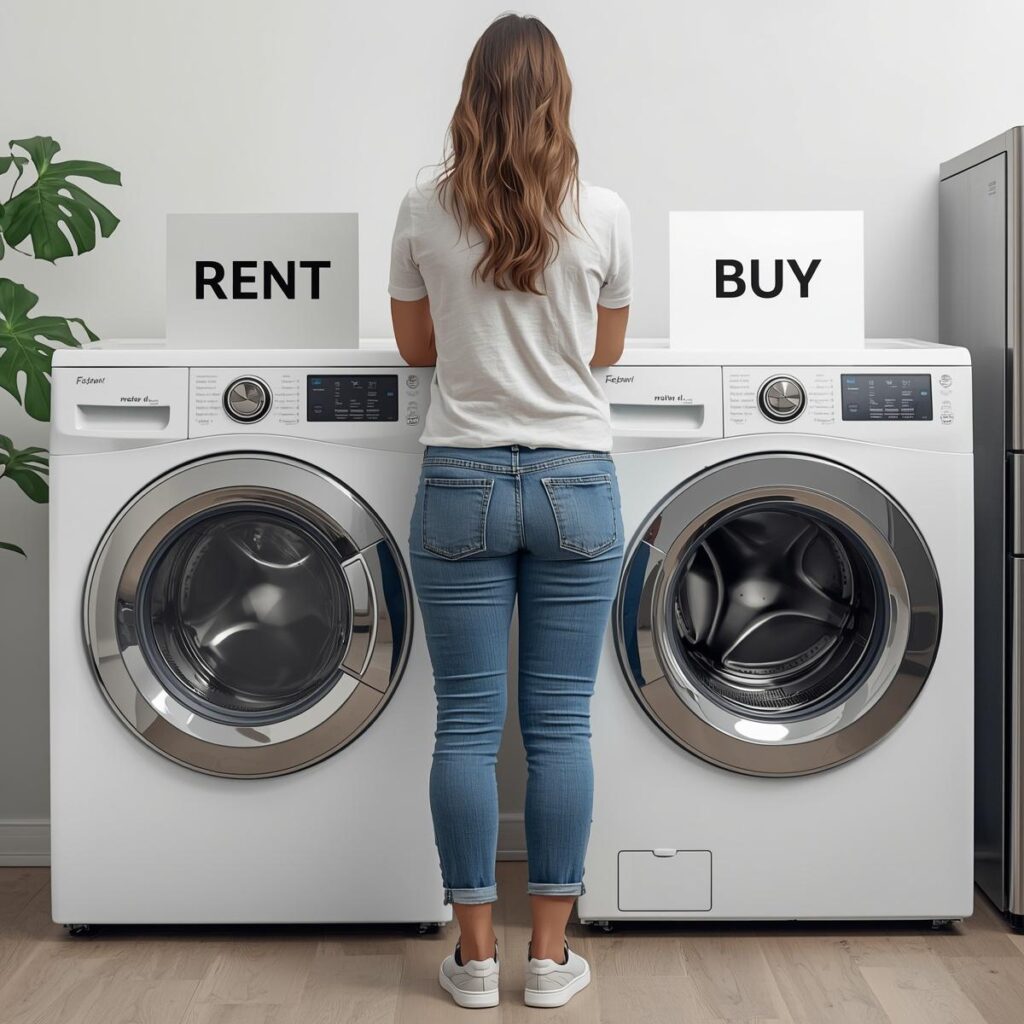

For most households, buying outright remains the more cost-effective option over the lifetime of the appliance. However, renting can make sense if you cannot afford the upfront cost, need flexibility, or want to avoid repair and replacement costs on a limited income. The key is understanding the full cost of each option before committing, rather than comparing only the headline figures.
Renting a washing machine was once common practice across the UK. Then buying became the obvious choice as appliances became affordable and long-lasting. Today, with average appliance lifespans falling and repair costs rising, the rent versus buy question is worth asking again. This guide covers how each option works, the real costs involved, and which makes more sense for different households.
Why the Rent vs Buy Question Has Returned
Appliance rental was widespread in the UK from the 1950s through to the 1980s. Many households rented their washing machines, televisions, and fridges rather than buying them outright. The attractions were straightforward: no large upfront payment, no repair bills, and the ability to upgrade as technology improved.
Renting fell out of fashion as appliances became cheaper to buy, credit became widely available, and machines routinely lasted 15 to 20 years with relatively affordable repairs. For most of that period, buying outright was clearly the better financial decision.
However, that picture has changed. The average lifespan of a washing machine has fallen considerably. Reader data gathered by Whitegoods Help found that 40% of respondents said their last washing machine lasted five years or less. A further 22% reported their machine lasting three years or less. While 36% reported machines lasting ten years or more, the pattern at the lower end of the market is significantly worse than it was a generation ago.
Spare parts have become harder to obtain and more expensive. Some manufacturers stop supporting models within a few years of manufacture. Extended warranties, which many buyers purchase to protect against repair costs, often result in machines being written off rather than repaired once they are more than five years old. Against this background, the calculus of renting versus buying looks different than it did twenty years ago.
The lifespan data above comes from a Whitegoods Help reader poll of 3,652 votes. It reflects self-reported experience across a range of brands, ages, and price points rather than manufacturer or independent test data. Machines at the budget end of the market tend to have shorter lifespans than mid-range or premium models.
How Washing Machine Rental Works
Washing machine rental involves paying a regular weekly or monthly fee to use an appliance owned by a rental company. The machine remains the property of the company throughout. At the end of the rental period, you typically return the machine, renew the agreement, or upgrade to a newer model.
The standard rental package usually includes:
-

Delivery and installation of the machine -
Repairs covered by the rental company at no extra charge -
Replacement if the machine cannot be repaired -
Collection at the end of the agreement
Some rental agreements also include servicing and access to newer models over time. The specific terms vary significantly between providers, so it is important to read the full contract before signing.

The UK washing machine rental market has contracted significantly since 2013. Several major rental providers, including BrightHouse which entered administration in 2020, are no longer trading. Before committing to any rental agreement, verify the provider is currently operational and check the contract terms carefully. Search for current providers in your area as availability varies by region.
The Real Cost Comparison
The most important thing to understand about rental is that it is almost always more expensive in total than buying outright. However, total cost is not the only relevant factor for every household.
| Factor | Buying outright | Renting |
|---|---|---|
| Upfront cost | Full purchase price (typically £300 to £800+ for a decent machine) | Little or none, some providers charge a setup fee |
| Monthly outgoing | Nothing after purchase (unless financing) | Ongoing weekly or monthly payments |
| Repair costs | Your responsibility, or covered by warranty | Covered by the rental company |
| Replacement if it fails | Your cost | Provided by the rental company |
| Total cost over 5 years | Purchase price plus any repair costs | Rental payments, typically significantly higher in total |
| Ownership at end | You own the machine | Machine returned to provider |
| Flexibility | Can sell or give away the machine | Can return at end of agreement term |
As a general illustration, a washing machine purchased outright for £400 costs £400. The same machine rented at a typical weekly rate over three years could cost considerably more in total payments, with nothing owned at the end. The total cost difference over a five-year period can easily run to several hundred pounds in favour of buying.
However, that comparison assumes the purchased machine lasts five years and does not require expensive repairs. If the machine fails at three years and needs a costly repair, or needs replacing entirely, the gap narrows.
Who Renting Makes Sense For
Despite the higher total cost, there are genuine circumstances where renting is the more sensible choice.
 No upfront capital available
If a washing machine has failed and there is no immediate money available to replace it, rental provides access to a working machine without requiring a lump sum. For households managing week to week, this can be more practical than taking on credit to buy outright.
 Certainty over repair and replacement costs
Budgeting is easier when the monthly cost is fixed. Buying outright means accepting the risk that an unexpected repair bill or early failure could add significant unplanned cost. For households on very tight budgets, eliminating that uncertainty has real value.
 Temporary living situations
If you are in rented accommodation for a short period, or are uncertain about your long-term location, renting a washing machine avoids the cost and inconvenience of buying, moving, and potentially selling an appliance. Some rental providers offer short-term agreements suited to this.
 Repeatedly replacing budget machines
Some households have found themselves replacing cheap washing machines every three to five years, each time facing an unplanned outlay. If that pattern is familiar, the predictable cost of a rental may compare more favourably than it appears at first glance, particularly if the rental includes replacement at no extra cost.
Who Buying Makes More Sense For
For most households in a stable situation with access to savings or affordable credit, buying outright remains better value. The key is buying at the right price point and making an informed choice rather than defaulting to the cheapest available machine.
Buy if you can
Buying a mid-range machine outright, from a brand with a reasonable reliability record, from a retailer where your consumer rights are clearly protected, will almost always be cheaper over five years than renting an equivalent machine. Read our guide: which washing machine should I buy?
 Do not buy the cheapest machine available
Budget washing machines at the very low end of the market are where the shortest lifespans and most expensive repairs tend to cluster. A machine bought for £200 that fails at three years may cost more in total than a £400 machine that lasts eight. The cheapest upfront price is rarely the cheapest long-term cost.
Alternatives to Both Renting and Buying New
Before committing to either a new purchase or a rental agreement, it is worth considering some alternatives that are often overlooked.

Buy a refurbished machine
Reconditioned washing machines from reputable suppliers can offer a mid-range machine at a lower price than new, typically with a short warranty included. Quality varies significantly between suppliers, so buy from someone who offers at least a three-month guarantee and can describe exactly what work has been carried out.

Buy on 0% credit
Many retailers offer 0% interest credit on larger appliance purchases. This gives the financial benefit of spreading the cost without the higher total cost of rental. Read the terms carefully, particularly what happens if a payment is missed, before using this option.

Check your consumer rights on a recent failure
If your existing machine has failed within six years of purchase, you may have stronger rights than you realise under the Consumer Rights Act 2015. Before buying or renting a replacement, check whether the retailer has any legal obligation to repair or replace the failed machine. Read our guide: Consumer Rights Act and faulty appliances.

Invest in a repair rather than replacing
If your current machine is repairable at a reasonable cost, fixing it is almost always cheaper than buying or renting a replacement. A mid-range machine that needs a new door seal or heating element is worth repairing. Use our fault guides to assess what is actually wrong before assuming a replacement is needed. See our washing machine fault guides.
Extended Warranties: A Related Consideration
Extended warranties are sometimes sold alongside washing machines as an alternative to renting for peace of mind on repair costs. They deserve a note of caution. Many extended warranty policies contain terms that allow the insurer to write off a machine rather than repair it, particularly once it is more than five years old or if the repair cost exceeds a threshold. You can find yourself with a six-year-old machine written off by the insurer, and a contribution towards replacement that does not cover the full cost of a comparable new machine.
Read our full guide before buying an extended warranty: are extended warranties worth it for washing machines?
Need help with your current machine before replacing it?
Before buying or renting a replacement, it is worth finding out whether your existing machine can be repaired. Whitegoods Help can connect you with a vetted engineer for same-day or next-day repairs with transparent pricing and all work guaranteed.
Frequently Asked Questions
Is it cheaper to rent or buy a washing machine?
Buying outright is almost always cheaper in total over the lifetime of the machine. Rental payments over three to five years typically exceed the purchase price of an equivalent machine by a significant margin, and at the end of the rental period you own nothing. However, renting eliminates upfront cost and covers repair and replacement, which changes the comparison for households where the upfront payment is the primary barrier.
What does washing machine rental typically include?
Most rental agreements include delivery, installation, repairs at no extra charge, replacement if the machine cannot be repaired, and collection at the end of the agreement. The specific terms vary between providers. Always read the full contract before signing, paying particular attention to minimum contract lengths, cancellation terms, and what happens if the machine is damaged through misuse.
How long do washing machines last on average?
Lifespans vary significantly by brand, price point, and usage. Reader data gathered by Whitegoods Help from over 3,600 responses found that 40% of machines lasted five years or less, with 22% lasting three years or less. However, 36% lasted ten years or more. Mid-range and premium machines from established brands tend to last considerably longer than budget models. Read our guide: how long should a washing machine last?
Are extended warranties a good alternative to rental?
Extended warranties offer some of the same protection as rental, covering repair costs, but they have significant limitations. Many policies allow the insurer to write off a machine rather than repair it, particularly after five years or if a repair is expensive. You can be left with a contribution towards replacement rather than a working machine. Read our full assessment: are extended warranties worth buying?
My washing machine has failed after only a few years. Do I have to replace it?
Not necessarily. If the machine is less than six years old and was purchased from a UK retailer, you may have rights under the Consumer Rights Act 2015 that require the retailer to repair or replace it. Additionally, many faults that appear serious are repairable at a cost well below the price of a replacement. Read our washing machine fault guides and our consumer rights guide before making any decision.
Where can I rent a washing machine in the UK?
The UK washing machine rental market has changed considerably in recent years. Several major providers have closed or stopped offering appliances, including BrightHouse which entered administration in 2020. Availability varies by region. Search for current providers in your area and verify they are actively trading before signing any agreement. Always read the full contract terms, particularly the minimum rental period and cancellation policy.
Ask the repair forum
Post the make, model and symptoms and get help from the Whitegoods Help community.
1 Comment
Grouped into 1 comment thread.
hi my name is Dana I am looking to rent a washing machine and also a big fridge freezer.