
Limescale In Washing Machines
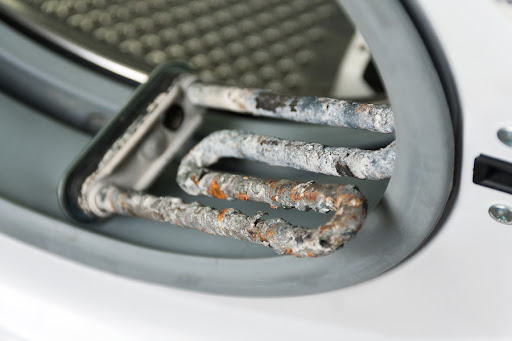

The best way to prevent limescale in a washing machine is to use a good quality detergent at the correct dose for your water hardness. Using too little detergent in a hard water area is the most common cause of limescale build-up. Descaling products treat existing scale but cannot substitute for correct detergent use, and may be ineffective if the build-up is already severe.
Limescale affects washing machines in hard water areas across the UK. Understanding how it forms, where it causes damage, and how to prevent it saves money on repairs and extends the life of the appliance.
What Is Hard Water?
Hard water contains dissolved minerals – primarily calcium and magnesium salts – picked up as water passes through rock and soil before entering the water supply. How hard or soft the water is depends on the geology of the area. Around 60% of UK homes are in hard water areas, concentrated mainly in the south and east of England.
Soft water, conversely, has a much lower mineral content and causes far less limescale. You can find out the hardness of your water supply by contacting your water company – most will provide this information freely and some offer water hardness test kits on request.
How to Tell If You Have Hard Water
The signs of hard water are usually visible elsewhere in the home before limescale becomes a problem inside appliances. Limescale deposits inside a kettle, white staining around taps and sinks, and scale on shower heads and shower screens are all reliable indicators of a hard water supply.
If your kettle regularly develops a white or grey crust on the element, your water is hard enough to cause problems inside a washing machine over time. Using the correct detergent dosage for your water hardness is the most effective preventive step.
How Does Limescale Affect a Washing Machine?
The heating element is the most vulnerable component. Limescale acts as an insulator, causing the element to run hotter than it is designed to – which accelerates wear and leads to premature failure. A heavily scaled element is also less efficient at heating water, which increases electricity consumption and extends cycle times.
Beyond the element, limescale accumulates throughout the machine – on internal hoses, drum surfaces, seals, and valves. Scale deposits on rubber seals and hoses accelerate deterioration, shortening their lifespan and increasing the risk of leaks. Valves coated in scale can stick or fail to open and close correctly.
 Heating Element
Scale acts as an insulator, causing overheating and premature element failure. Also reduces heating efficiency and increases energy use.
 Hoses and Seals
Limescale deposits accelerate the deterioration of rubber hoses and door seals, increasing the risk of leaks over time.
 Valves
Scale build-up on inlet and pressure valves can cause them to stick or fail to operate correctly, leading to filling or water level faults.
 Laundry
Washing in hard water without adequate detergent can damage fabric fibres over time, shortening the lifespan of clothing and textiles.
The Best Way to Prevent Limescale
Modern washing machine detergents contain water-softening agents specifically designed to counteract hard water and prevent limescale. Used at the correct dosage, a good quality detergent provides effective protection without the need for additional products.
The critical detail is dosage. Detergent packaging specifies different amounts for soft, medium, and hard water – a distinction many people ignore. In a hard water area, using the soft water dose means the water-softening agents are insufficient for the mineral content of the supply, and limescale begins to build up despite the use of detergent.
Check the label on your detergent and adjust the dose to match your water hardness. For most households in hard water areas, this simple change is the most effective preventive measure available. For guidance on choosing the right detergent type, see our guide on which is the best type of washing machine detergent.
Do Anti-Limescale Products Actually Work?
Products such as dedicated washing machine descalers can help manage existing limescale, particularly as a periodic treatment. However, they address the symptom rather than the cause. If the root issue is consistently using too little detergent for the water hardness, descaling products will need to be used repeatedly without ever resolving the underlying problem.
For a detailed look at whether specific anti-limescale additives are worth buying, see our guide on whether Calgon is worth using.
Is Hard Water Bad for You?
Hard water is harmful to appliances but not to people. The calcium and magnesium dissolved in hard water are beneficial minerals, and research has suggested a link between hard water consumption and lower cardiovascular disease rates. One consideration when fitting a whole-house water softener is that it removes these minerals from the drinking water supply – a trade-off worth being aware of.
If you are considering connecting a softened water supply to your washing machine, see our guide on connecting a washing machine to a softened water supply for what manufacturers say about its effects.
Limescale Caused a Fault?
If limescale has damaged the heating element or caused another fault, Whitegoods Help can help with a repair or spare part.
Related Guides
 Is Calgon Worth Using?
A detailed look at anti-limescale additives – whether they work, when they are useful, and whether you actually need them.
 Washing Machine Smells, Grease and Mould
How limescale and detergent residue contribute to bad smells inside washing machines – and how to prevent and clear them.
 Which Is the Best Type of Washing Machine Detergent?
Powder, liquid, or capsule – which detergent type is most effective and which works best in hard water areas.
Connecting to a Softened Water SupplyWhat manufacturers say about using softened water in a washing machine and whether it affects components or wash results.
Frequently Asked Questions
How does limescale damage a washing machine?
The heating element is most vulnerable – limescale acts as an insulator, causing the element to overheat internally and fail prematurely. It also reduces heating efficiency, increasing energy use. Beyond the element, scale accumulates on hoses, seals, drum surfaces, and valves, accelerating deterioration and increasing the risk of leaks and component failures over time.
How do I prevent limescale in my washing machine?
Use a good quality detergent at the correct dosage for your water hardness. Detergent contains water-softening agents that prevent limescale when used in the right amount. In hard water areas, this means using a higher dose than the minimum shown on the packaging. Most limescale problems are caused by consistently under-dosing detergent.
How do I know if I have hard water?
The most visible signs are limescale inside a kettle, white or grey staining around taps and sinks, and scale on shower heads. Around 60% of UK homes have hard water, concentrated mainly in the south and east of England. Your water company can confirm the hardness level for your area.
Do I need to use Calgon or a descaling product?
Not necessarily. If you are using a good quality detergent at the correct dosage for your water hardness, you should not need additional anti-limescale products. Descaling products are useful as a periodic treatment if scale has already built up, but they do not address the cause if the underlying issue is insufficient detergent dosage.
Is hard water harmful to people?
No – the minerals in hard water are not harmful to health. The calcium and magnesium dissolved in hard water are beneficial, and some research suggests a link between hard water consumption and lower rates of cardiovascular disease. The drawback of whole-house water softeners is that they remove these minerals from the drinking water supply.
6 Comments
Grouped into 2 comment threads.
1 reply Hello we have a washing machine that uses cold water, but we have limescale and its broken the drum to the point of not spinning.please what can we do
1 reply "A heating element caked in limescale is less effective at heating water because the limescale acts as an insulator, which means more electricity is used" That actually defies the conservation of energy; if more electricity is used then more heating of the water has taken place.
“A heating element caked in limescale is less effective at heating water because the limescale acts as an insulator, which means more electricity is used”
That actually defies the conservation of energy; if more electricity is used then more heating of the water has taken place.
Likely replying to Anwar Shiekh
Hello Anwar, I don’t think more heating of the water occurs other than water is heated for a longer period because the element is not as hot. Some of the electricity used to cause the heater to get hot is wasted because it can’t get heater as hot as it should be. It would be like if we put a insulating cover over a radiator, the radiator would remain as hot inside and continue to use energy, but less of the heat would escape into the room so the room would take much longer to reach temperature.
Hello we have a washing machine that uses cold water, but we have limescale and its broken the drum to the point of not spinning.please what can we do
Likely replying to Annabeth may sowter
Hello Annabeth. Limescale, and grease & slime can build up inside a washing machine to such an extent that it can rot through the aluminium spider on the back of the drum. These days, if that happens most washing machines are not worth repairing. Many have totally sealed outer drums and would need a complete outer and inner drum fitting.