
How To Clean a Dishwasher
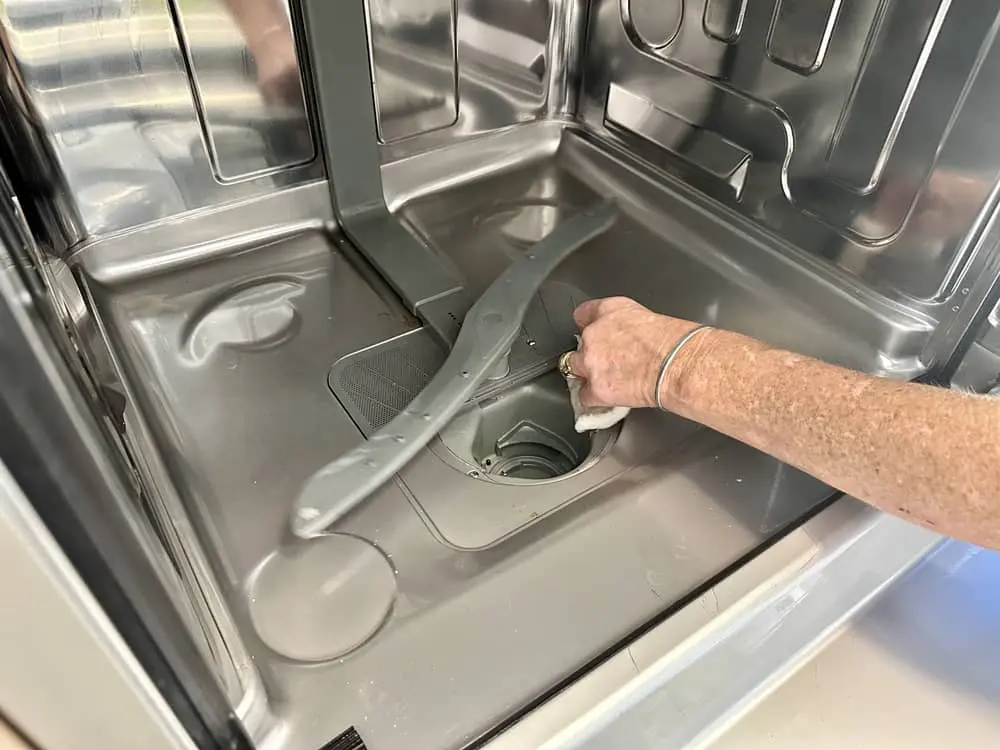
To clean a dishwasher properly you need to remove and rinse the filter, clear the spray arm holes, wipe down the door seal, clean the soap drawer, and run an empty hot cycle with a suitable cleaner. The whole process takes around 20 minutes of active time and should be done at least once a month. A clean dishwasher washes better, smells fresher, and lasts longer.
Why does a dishwasher need cleaning?
It sounds counterintuitive, but a machine that washes things for a living gets dirty surprisingly quickly. Every cycle deposits traces of food debris, grease, limescale, and detergent residue inside the drum, filter, spray arms, and door seal. Over time these build up, restrict water flow, create unpleasant smells, and reduce washing performance.
Most people only notice the problem when dishes start coming out with food still on them, or when the machine begins to smell. By that point, a significant build-up has already accumulated. Regular cleaning – around once a month for a typical household – prevents the problem from developing in the first place and keeps the machine performing as it should.
If your dishwasher is already leaving residue on dishes, see our fault guide on dishwashers not cleaning dishes properly alongside this article, as a deeper underlying fault may also be contributing.
What do you need before you start?
- A soft cloth or sponge
- An old toothbrush or small cleaning brush
- Warm water and washing-up liquid
- White vinegar or a proprietary dishwasher cleaner
- A toothpick or thin skewer for clearing spray arm holes
- Paper towels or a dry cloth
Always make sure the dishwasher has finished its last cycle and is fully cooled before cleaning. The interior, heating element, and water in the base can remain hot for some time after a cycle ends.
How do you clean a dishwasher step by step?
Step 1: Clean the filter
The filter is the single most important part to clean regularly. Located at the bottom of the dishwasher drum (usually beneath the lower spray arm), it traps food particles and debris to prevent them recirculating onto your dishes. A blocked filter is the most common reason a dishwasher stops cleaning effectively.
-
Remove the lower rack and set it aside. The filter assembly is typically located in the centre or rear of the drum floor.
-
Twist the cylindrical filter anticlockwise and lift it out, then remove the flat mesh filter beneath it. Most dishwasher filters come apart without any tools.
-
Rinse both parts under warm running water. Use an old toothbrush and a small amount of washing-up liquid to gently scrub away any grease or trapped debris. Do not use abrasive pads or scourers, which can damage the mesh.
-
Inspect the filter housing in the base of the machine. Remove any visible debris by hand or with a damp cloth before replacing the filter.
-
Reassemble the filter and twist it clockwise to lock it firmly back into position. A loose or incorrectly fitted filter will allow debris back into the wash cycle.
Filter design varies between brands and models. If you are unsure how your filter comes apart, consult your appliance’s user manual. Many manufacturers make these available to download from their websites.
Step 2: Clean the spray arms
Dishwashers have at least two spray arms – one below the lower rack and one beneath the upper rack. Some models have a third at the very top. These arms spin during the wash cycle and distribute water throughout the drum via small holes. If those holes become blocked with limescale or food debris, water distribution is reduced and washing performance drops.
-
Remove each spray arm by unscrewing the central nut or pulling it firmly upward, depending on how your model is secured. Most pull off or unscrew by hand.
-
Hold the arm up to the light and inspect each hole for blockages. Use a toothpick, skewer, or thin piece of wire to clear any that appear blocked. Work gently to avoid enlarging the holes.
-
Rinse the spray arms thoroughly under warm running water, shaking them to dislodge any remaining debris inside the arms themselves.
-
Refit the spray arms, making sure each one rotates freely before you close the machine. A spray arm that is not properly secured or cannot spin freely will not wash effectively.
Step 3: Clean the door seal
The rubber door seal (or gasket) runs around the inside edge of the door and prevents water from escaping during a cycle. It is also one of the most commonly neglected areas of the machine. Debris, grease, and mould collect in the folds of the seal, which is often the source of persistent bad smells even when the rest of the machine appears clean.
-
Open the door fully and locate the rubber gasket running around the door frame.
-
Use a damp cloth or sponge with a small amount of washing-up liquid to wipe along the full length of the seal, paying particular attention to the lower section where debris settles most heavily.
-
Use an old toothbrush to work into any folds or crevices in the rubber where mould or residue has accumulated.
-
Wipe clean with a damp cloth and dry with a paper towel. If mould is present, a diluted white vinegar solution applied with the toothbrush and left for a few minutes before wiping is effective for removing it.
Step 4: Clean the soap drawer
The detergent and rinse aid dispenser drawer accumulates hardened detergent residue and limescale over time. A partially blocked drawer prevents the full detergent dose from releasing correctly during the wash cycle, which directly affects cleaning performance.
-
Remove the soap drawer if your model allows it. Many slide out or unclip with a gentle press. If the drawer is fixed, clean it in place.
-
Rinse the drawer under warm water and use an old toothbrush to scrub away any hardened detergent, paying attention to the hinged compartment lid and any narrow channels around it.
-
Check the dispenser housing inside the door for residue and clean this in the same way.
-
Refit the drawer once clean and dry.
Step 5: Wipe down the interior
With the filter replaced and racks removed, take a damp cloth and wipe around the interior walls, the base of the drum, and the inside of the door – particularly the lower edge where water and debris pool. Pay attention to any corners around the filter housing and the area beneath the door where residue often collects unnoticed.
Step 6: Run a cleaning cycle
Once the physical cleaning is complete, run the machine empty on its hottest cycle with a dishwasher cleaner to flush through the system and remove any remaining grease, limescale, and bacteria from the internal components and pipework.
Products such as Finish Dishwasher Cleaner or similar are placed upside down in the lower rack and the machine is run on its hottest setting. Follow the specific product instructions on the packaging.
Place a dishwasher-safe bowl containing 250ml of white wine vinegar on the bottom rack and run the hottest cycle empty. Vinegar is effective against limescale and odours. Do not use vinegar and a proprietary cleaner in the same cycle.
Do not use bleach inside a stainless steel dishwasher drum. Bleach can cause permanent discolouration and damage to stainless steel surfaces and internal components. White vinegar and proprietary dishwasher cleaners are the appropriate choices for an empty cleaning cycle.
How often should you clean a dishwasher?
| Task | Recommended frequency |
|---|---|
| Remove large food debris from filter area | After every cycle, or as needed |
| Full filter clean | Once a month (more often in heavy use households) |
| Spray arm inspection and clean | Once a month |
| Door seal wipe down | Once a month |
| Soap drawer clean | Once a month |
| Full empty cleaning cycle | Once a month |
| Deep clean including spray arm removal | Every three months |
Why does a dishwasher still smell after cleaning?
If a persistent smell remains after a thorough clean, there are a few likely causes worth investigating before calling an engineer.
A common but often overlooked cause of dishwasher odour is a problem with the drain hose connection. If the drain hose is connected incorrectly and allows waste water to siphon back into the machine, it will cause a persistent sour or sewage smell regardless of how thoroughly you clean the drum. This is a plumbing fault, not a machine fault.
A small amount of water remaining in the very base of the machine after a cycle is normal. A larger pooling of water suggests a drainage problem. If water is not fully draining, it will stagnate and create odour between cycles.
Occasionally, debris bypasses the filter and lodges in the drain pump or sump area below the filter housing. This requires more careful inspection and, in some cases, professional attention to clear safely.
Regularly running a dishwasher on eco or short cycles at lower temperatures can allow grease and bacteria to accumulate faster than occasional hot washes clear them. Running the machine on its hottest setting at least once a month helps prevent this.
How can you keep a dishwasher clean between monthly cleans?
- Scrape plates before loading. You do not need to pre-rinse dishes, but removing large food scraps before loading reduces the amount of debris reaching the filter with every cycle.
- Keep the door slightly ajar between cycles. Leaving the door open a crack after a cycle ends allows moisture to escape and air to circulate inside the drum, which significantly reduces the conditions that allow mould and bacteria to develop.
- Use the correct amount of detergent. Using too little detergent can leave food residue on the drum interior. Using too much can leave soap residue and foam. Follow the manufacturer’s guidance for your water hardness and load size.
- Keep the rinse aid topped up. Rinse aid reduces water spotting on dishes and helps the drum interior dry more cleanly after each cycle, which in turn reduces residue build-up between cleans.
- Run a hot cycle regularly. Even if you mostly use eco or quick settings, running the machine on its hottest programme at least once a month helps kill bacteria and dissolve grease that lower temperature cycles leave behind.
- Check the rinse aid and salt levels. In hard water areas, dishwasher salt softens the water and protects the machine from limescale internally. Keeping salt levels topped up is important for both cleaning performance and machine longevity. For a guide to using the right detergent type, see our article on the best dishwasher detergent.
Always ensure the dishwasher is switched off at the socket before removing the filter, cleaning the spray arms, or inspecting any internal components. Never insert your hand into the drain area without checking for sharp debris first. If you notice any signs of burning, unusual electrical smell, water leaking from beneath the machine, or damage to the door seal that you cannot clean away, stop using the appliance and seek professional advice. See our full DIY appliance repair safety guide for detailed guidance.
Still having problems after cleaning?
If your dishwasher is still not cleaning properly, is producing error codes, or is showing signs of a mechanical fault, our engineers can help. We also stock a wide range of genuine dishwasher spare parts for those who prefer to carry out smaller repairs themselves.
Frequently asked questions about cleaning a dishwasher
How often should I clean my dishwasher filter?
For a typical household using the dishwasher daily, cleaning the filter fully once a month is the minimum recommended frequency. If you notice dishes coming out with food particles on them, or if the machine begins to smell between cleans, clean the filter immediately. Heavy use households, or those with young children who generate more food debris, may find cleaning every two weeks more practical.
Can I put dishwasher parts in the washing machine to clean them?
No. Dishwasher filters and spray arms should be cleaned by hand under warm running water with a brush and mild washing-up liquid. The heat, movement, and detergents in a washing machine cycle can warp or damage these components, particularly the plastic mesh of the filter.
Is white vinegar safe to use in a dishwasher?
White vinegar is safe to use in a standard cleaning cycle and is effective against limescale and mild odours. Place it in a dishwasher-safe bowl on the bottom rack and run the hottest empty cycle. However, do not use white vinegar routinely as a substitute for rinse aid, as prolonged exposure to acidic substances can degrade rubber seals and internal components over time.
Why does my dishwasher smell even though it looks clean?
If the smell persists after a thorough physical clean and a hot empty cycle, the most likely causes are a drain hose plumbing issue allowing waste water back into the machine, debris trapped in the pump or sump beyond the filter, or grease build-up in the internal pipework that a standard clean has not fully reached. A proprietary dishwasher cleaner run on the hottest setting is the next step, followed by professional inspection if the smell continues.
Should I leave the dishwasher door open or closed between uses?
Leaving the door slightly ajar between uses allows moisture to escape from the drum and air to circulate, which significantly reduces the build-up of mould, bacteria, and associated smells. A fully closed machine traps warm, damp air inside after every cycle, creating ideal conditions for mould growth, particularly along the door seal.
My dishwasher has a bad smell but I cleaned it last week. What should I check?
If the smell has returned quickly after cleaning, check the drain hose connection at the back of the machine and under the sink. A drain hose that dips too low, is not fitted with an anti-siphon loop, or is connected incorrectly to the waste can allow dirty water back into the machine between cycles. Also check whether water is fully draining at the end of each cycle by inspecting the base of the drum immediately after the programme finishes.
Do I need to use dishwasher salt and rinse aid even with all-in-one tablets?
In hard water areas, yes. All-in-one tablets contain a salt and rinse aid equivalent that is sufficient for soft to medium water hardness, but in hard water areas (most of the south and east of England) the salt and rinse aid in the tablet is not enough to fully soften the water reaching the machine. Topping up the dedicated salt and rinse aid reservoirs in addition to using all-in-one tablets gives noticeably better cleaning results and protects the machine from limescale build-up. If you are not sure whether you live in a hard water area, the Drinking Water Inspectorate publishes regional water hardness data online.
Still not fixed?
Here’s where to go next.
Ask the repair forum
Post the make, model and symptoms and get help from the Whitegoods Help community.
“Machine is 15 years old, but very light usage. Please see video…”
✓ Solved · LG · 4 replies
0 Comments