
Dishwasher Not Draining: Causes and How to Fix It
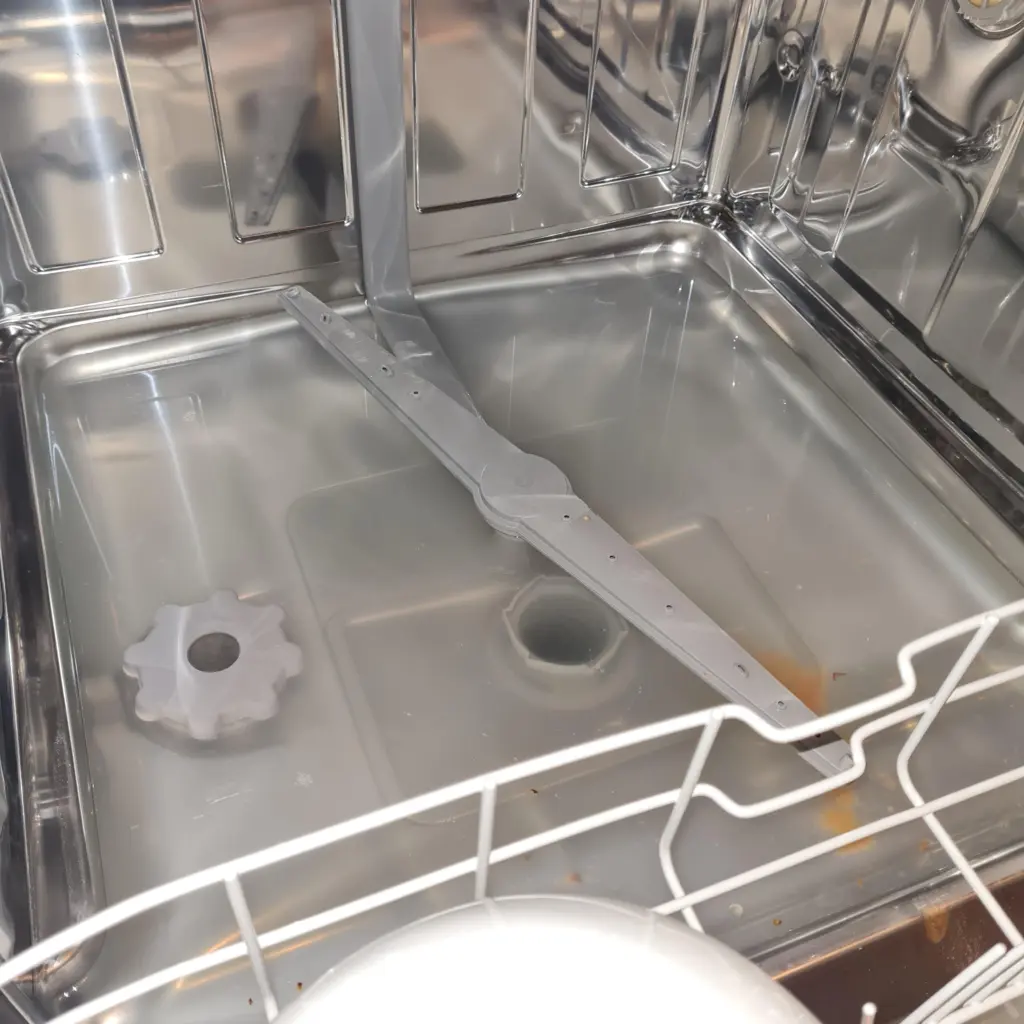
A dishwasher that is not draining is most commonly caused by a blocked filter, a kinked or obstructed drain hose, a blocked drain pump, or a problem with the household plumbing connection under the sink. The majority of drainage faults can be resolved without an engineer by working through the checks in this guide. If the machine is displaying an error code alongside the drainage problem, that code is the most useful starting point.
Is it normal for some water to remain in a dishwasher after a cycle?
A small amount of water sitting in the very base of the dishwasher, below the filter level, is completely normal after a cycle ends. This residual water is by design in most machines and helps keep the pump seals lubricated between uses.
What is not normal is visible standing water above the filter, water that reaches or covers the bottom rack, or water that clearly has not drained at all at the end of the programme. If you are seeing any of these, there is a drainage fault that needs investigating.
What are the most common causes of a dishwasher not draining?
The filter at the base of the dishwasher traps food debris and prevents it from reaching the drain pump. If the filter is heavily blocked, water cannot pass through it freely and begins to pool in the drum. This is the single most common cause of a dishwasher failing to drain and is almost always the first thing to check. Regular cleaning prevents it from occurring at all.
The drain hose carries waste water from the dishwasher to the household plumbing under the sink. If it has become kinked, twisted, or has accumulated a partial blockage of grease and debris internally, water will drain slowly or not at all. This is particularly common when a dishwasher has been moved recently or installed in a tight space.
The drain pump physically forces water out of the machine through the drain hose. If a piece of debris such as a broken glass fragment, a piece of cutlery, or a food item has bypassed the filter and lodged in the pump impeller, the pump will be unable to turn freely and drainage will stop entirely. In some cases the pump motor itself fails and requires replacement.
If the sink waste pipe, the trap beneath the sink, or the spigot connection where the dishwasher drain hose joins the household plumbing is blocked, water cannot leave the machine regardless of how well the dishwasher itself is functioning. A blocked kitchen sink drain is a common culprit that is often overlooked when diagnosing a dishwasher drainage problem.
If a cycle was interrupted mid-programme – by a power cut, by the door being opened at a critical point, or by an error code causing the machine to pause – the drain cycle at the end of the programme may not have run. Running a new cycle or selecting a drain-only programme where available will often resolve this without any further intervention.
If the drain hose is connected directly to the waste pipe without being looped up to a high point first, dirty water from the household plumbing can siphon back into the dishwasher during and after a cycle. This creates the appearance of the machine not draining when the actual problem is water returning after it has already left the machine.
How do you fix a dishwasher that is not draining, step by step?
Work through these checks in order. The first two resolve a large proportion of drainage faults without any further investigation.
Always switch the dishwasher off at the socket and have towels ready to catch any residual water before disconnecting hoses or reaching into the pump area. Water may still be present even if the drum appears empty, and may be hot immediately after a cycle. Check carefully for broken glass or sharp debris before reaching into the sump or pump area, and use protective gloves where possible.
Step 1: Check for an error code
Before doing anything physical, check the dishwasher display for an error code. Most modern dishwashers will display a specific code when a drainage fault is detected. Drainage-related error codes typically indicate a blocked filter, a pump fault, or a water level sensor issue depending on the brand and model.
Use our appliance error codes guide to identify what your specific code means before working through the physical checks below. Knowing which component the machine has flagged will help you focus your investigation.
Step 2: Clean the filter
This is the most important first step for the majority of drainage faults. Remove the lower rack and locate the filter assembly at the base of the drum. On most dishwashers this consists of a cylindrical filter that twists out anticlockwise and a flat mesh filter beneath it.
-
Twist the cylindrical filter anticlockwise and lift it free. Remove the flat mesh filter beneath it.
-
Rinse both parts thoroughly under warm running water. Use a soft brush to remove all trapped debris, grease, and food particles. A heavily blocked filter will be visibly clogged and may have a strong smell.
-
Inspect the filter housing in the base of the machine. Remove any debris from the sump area by hand or with a damp cloth. Check for any foreign objects that may have settled below the filter.
-
Refit the filter and twist it clockwise to lock it firmly in place. An incorrectly seated filter will allow debris to reach the pump directly.
-
Run a short cycle and check whether the machine now drains correctly before proceeding to the next step.
For a full guide to cleaning the dishwasher filter and all other components, see our dedicated article on how to clean a dishwasher.
Step 3: Check and clear the drain hose
Pull the dishwasher carefully forward to access the drain hose at the rear. Inspect the full length of the hose for any visible kinks, sharp bends, or compression caused by the machine sitting against the hose.
-
Trace the drain hose from the back of the dishwasher to its connection point under the sink. Straighten any kinks and ensure the hose is not pinched against a cabinet wall or the rear of the appliance.
-
Check that the hose forms a high loop before connecting to the waste pipe or sink trap. The highest point of the hose should be above the level of the water in the machine. Without this loop, siphoning can occur.
-
Disconnect the hose from the waste connection under the sink and check the spigot or connection point for any blockage. A blanking cap that was not removed during original installation is a surprisingly common cause of a dishwasher that has never drained correctly since fitting.
-
If the hose itself is suspected of having an internal blockage, it can be flushed through with warm water. A heavily blocked drain hose that cannot be cleared should be replaced. Replacement drain hoses are available through our Spare Parts Shop section.
Step 4: Check the household plumbing
Run the kitchen sink and observe whether it drains freely. A slow or blocked sink drain will prevent the dishwasher from draining correctly regardless of the condition of the machine itself. If the sink is draining slowly, clear the household waste pipe before concluding the dishwasher has a fault.
Also check the trap beneath the sink for blockage, and confirm the dishwasher drain hose spigot connection is clear and unobstructed.
Step 5: Check the drain pump for obstructions
If the filter is clean, the drain hose is clear, and the household plumbing is draining freely but water is still not leaving the machine, the drain pump itself may be obstructed or faulty.
On many dishwashers, the drain pump is accessible from inside the cabinet once the filter is removed. With the machine switched off and unplugged, remove the filter assembly and look down into the sump area. Use a torch to inspect the pump inlet for any visible obstruction such as glass fragments, a small bone, or a piece of broken crockery.
Before reaching into the pump area, check carefully for broken glass or sharp debris. Use protective gloves where possible. Never reach into the sump area with the machine connected to the mains electricity supply.
If an obstruction is found, remove it carefully and run a cycle to confirm drainage is restored. If no obstruction is present but the pump is still not activating, the pump motor has likely failed and will need replacement by an engineer or a confident DIY repairer with the correct part. Drain pumps for most major dishwasher brands are available through our Spare Parts Shop.
How can you diagnose a drainage fault by symptom?
| Symptom | Most likely cause | First check |
|---|---|---|
| Water pooling above filter level after every cycle | Blocked filter or drain pump obstruction | Clean the filter thoroughly |
| Water draining very slowly but eventually clearing | Partially blocked filter or kinked drain hose | Clean filter, check hose for kinks |
| Water returns to drum after draining | Drain hose siphoning, no anti-siphon loop | Check drain hose routing under sink |
| Machine never drained correctly since installation | Drain hose spigot blanking cap not removed, or hose fitted too low | Check spigot connection under sink |
| Cycle stopped mid-programme, water left in drum | Interrupted cycle, power cut, or error code pause | Run a new cycle or drain programme |
| Error code displayed alongside standing water | Varies by code and brand | Look up error code before proceeding |
| Humming sound but no draining | Pump motor running but impeller blocked | Inspect pump area for obstruction |
| No sound from pump at all during drain cycle | Pump motor failed or wiring fault | Engineer required for diagnosis |
When does a dishwasher not draining need an engineer?
✅ You can check and resolve yourself
- Blocked filter causing water pooling
- Kinked or misrouted drain hose
- Blocked household waste pipe or sink trap
- Drain hose spigot blanking cap still in place
- Drain hose installed without an anti-siphon loop
- Cycle interrupted before drain programme completed
- Visible debris obstruction in pump inlet area
❌ Requires a professional engineer
- Drain pump motor has failed and needs replacing
- Control board fault preventing drain cycle from activating
- Wiring fault to the pump
- Water level sensor fault causing incorrect cycle behaviour
- Repeated drainage faults after filter and hose have been checked and cleared
Always switch the dishwasher off at the socket and unplug it from the mains before removing the filter, inspecting the pump area, or disconnecting the drain hose. Water inside the machine may be hot immediately after a cycle. Never reach into the sump or pump area without checking for sharp objects first, and always use protective gloves when handling debris from inside the machine. If the dishwasher is showing signs of a burning smell, sparking, or any damage to wiring or the power cable, do not attempt any inspection and seek professional advice immediately. See our DIY appliance repair safety guide for full guidance before attempting any work.
Still not draining after working through these checks?
If the filter is clean, the hose is clear, and the household plumbing is draining freely but your dishwasher is still not draining, a component fault is the likely cause. Our engineers can diagnose and repair dishwasher drainage faults across all major brands, and we stock genuine drain pumps and spare parts if you prefer to carry out the repair yourself.
Frequently asked questions about a dishwasher not draining
Why is there water in the bottom of my dishwasher after a cycle?
A small amount of water sitting below the filter in the very base of the drum is normal and by design in most dishwashers. If water is clearly pooling above the filter level or is deep enough to be visible when the lower rack is in place, the machine has a drainage fault. Start by cleaning the filter thoroughly, as a blocked filter is the most common cause.
How do I force my dishwasher to drain?
On most dishwashers, cancelling the current programme and starting a new short cycle will trigger a drain sequence at the beginning of the new programme. Some models have a dedicated drain or cancel programme, which is usually activated by holding the start button for three to five seconds. Check your model’s manual for the specific method. If the machine drains when a new cycle is started, an interrupted programme was likely the cause rather than a mechanical fault.
Can a blocked filter stop a dishwasher from draining?
Yes. A heavily blocked filter is the most common single cause of a dishwasher not draining. The filter sits directly above the drain pump inlet, and when it becomes clogged with food debris and grease, water cannot pass through freely enough to drain. Cleaning the filter is always the first step when diagnosing a dishwasher drainage problem, and cleaning it regularly as part of monthly maintenance prevents the issue from developing in the first place.
Why does water keep coming back into my dishwasher after draining?
If water appears to drain during the cycle but returns to the drum afterwards, the most likely cause is a drain hose that is not fitted with an anti-siphon loop. Without the hose being routed up to a high point before connecting to the waste pipe, dirty water from the household plumbing can siphon back into the machine between cycles. Check the routing of the drain hose under the sink and ensure it rises to at least the height of the machine before descending to the waste connection.
My dishwasher has never drained properly since it was installed. What should I check?
If drainage has been poor from the very first use, the most common cause is a blanking cap on the sink waste spigot that was not removed before the drain hose was connected. This is a standard fitting on sink waste assemblies that is meant to be knocked out before a dishwasher or washing machine drain hose is attached. Check the spigot connection under the sink and confirm the cap has been fully removed. Also verify that the drain hose is routed with a high loop and is not connected in a position that restricts flow.
Is it safe to use a dishwasher that is not draining properly?
No. Running a dishwasher with a drainage fault is not recommended. Standing water that is not draining correctly will be recirculated over your dishes during subsequent cycles, redepositing food debris and bacteria onto crockery. There is also a risk of water overflowing from the machine if a blockage worsens during a cycle. Resolve the drainage fault before using the machine again.
How can I stop my dishwasher filter from blocking so often?
The single biggest factor in how often a dishwasher filter needs cleaning is how much food residue is left on plates before they are loaded. You do not need to pre-wash dishes, but scraping off solid food residue (peel, bones, large pieces of meat or vegetable) into the bin before loading dramatically reduces what reaches the filter. Running the machine on a hot wash (60°C or higher) periodically helps clear grease build-up, and a monthly run of a dishwasher cleaner or hot empty cycle with a cup of white vinegar in the upper rack will also help keep the filter and pump area clear. Inspecting and rinsing the filter at least monthly turns a tedious unblocking job into a routine maintenance task.
Still not fixed?
Here’s where to go next.
Ask the repair forum
Post the make, model and symptoms and get help from the Whitegoods Help community.
“Machine is 15 years old, but very light usage. Please see video…”
✓ Solved · LG · 4 replies
0 Comments