
Belt Keeps Coming Off Washing Machine
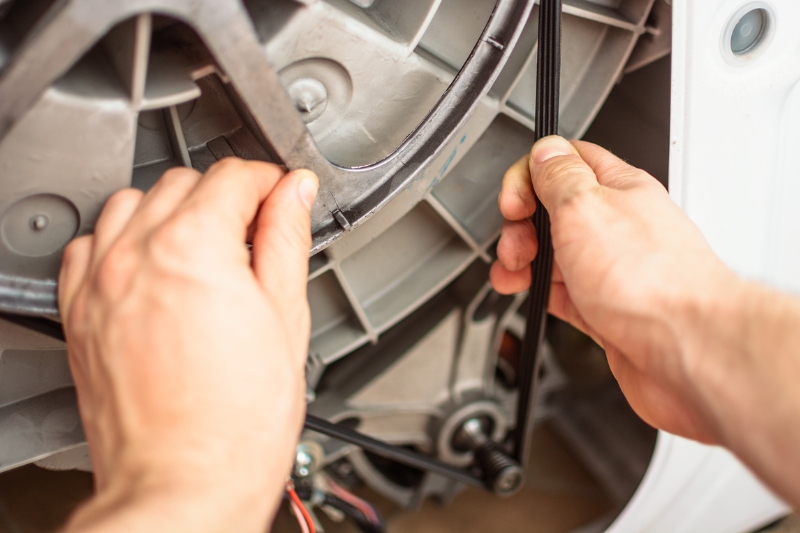

The most common causes of a washing machine belt repeatedly coming off are a worn or stretched belt, a loose or worn drum pulley, or a loose motor. Inspect the belt and drum pulley first. If the drum pulley bolt uses Loctite threadlocker, always reapply it when refitting. If the drum has noticeable up-and-down movement at the door seal, the bearings may have failed.

Always disconnect the washing machine from the mains electricity supply before removing any panels or accessing internal components. Never work on a machine that is plugged in. Wait for the drum to stop completely before reaching inside.
If your washing machine belt keeps coming off, there is an underlying fault causing it. A belt that slips off once and stays on when refitted may have been dislodged by an unusually heavy or unbalanced load. A belt that comes off repeatedly means something is wrong with the belt itself, the pulleys, the motor fixings, or the drum bearings. This guide works through all seven causes in order of how commonly they occur.
How to Confirm It Is a Belt Problem
Before working through the causes below, it helps to confirm that the belt is actually the issue rather than a different fault causing the drum not to turn.
-

Motor running but drum not moving. With the machine running, you can hear the motor spinning normally but the drum is not rotating. This is the classic symptom of a detached or broken belt. -
Drum spins unusually freely by hand. With the machine unplugged, spin the drum by hand. A drum with a correctly fitted belt has clear resistance from the motor. A drum whose belt has come off spins with very little resistance at all. -
You can see the belt inside. On most machines, removing the back panel reveals the belt, motor, and drum pulley. A detached belt will be sitting loose at the bottom of the machine rather than running around both pulleys.
The 7 Causes of a Belt That Keeps Coming Off
Cause 1: Worn or stretched belt
The most common cause. Drive belts wear and stretch over time, eventually becoming too loose to stay on the pulleys during the high-speed spin cycle. A worn belt may also have fraying around the edges or visible cracking on the inner surface. On multi-groove V-ribbed belts, check that the grooves are still clearly defined and not worn smooth, and that there is no rubber debris in the grooves.
A correctly tensioned belt should give a firm, resonant “ping” when plucked, similar to a guitar string. There should be a small amount of sideways movement when pressed, roughly 6mm either side, but the belt should not feel loose or floppy. If the belt is slack or visibly worn, replacement is the correct fix. A belt that has simply come off once on an unusually unbalanced load, but shows no wear, can often be refitted and will stay on.
Cause 2: Loose drum pulley bolt
The drum pulley is the large wheel at the back of the drum that the belt runs around. It is bolted to the drum shaft and must be firmly fixed. If the pulley bolt has worked loose, the pulley wobbles as it rotates during spin, causing the belt to ride off the pulley edge. This is a common cause on machines that have been previously repaired without Loctite threadlocker being applied to the bolt.
To check: with the back panel removed, grip the drum pulley and try to rock it from side to side. There should be no noticeable play. If it rocks even slightly, the bolt is loose. Tighten the bolt firmly, but do not overtighten it. If the bolt shears off in the drum shaft, the drum shaft or complete drum assembly may need replacing, which is an expensive repair. Always apply fresh Loctite threadlocker to the bolt before refitting.
Cause 3: Worn drum pulley
Even with the pulley bolt tightened correctly, a worn pulley can still cause the belt to come off. The pulley fits over the drum spider, a metal hub on the drum shaft, and over time this fit can wear loose. You can check this by removing the pulley bolt and rocking the pulley side to side on the shaft. If there is visible movement with the bolt removed, the pulley itself is worn and needs replacing, as no amount of bolt tightening will keep it running true.
Drum pulleys are available for most mainstream washing machine brands. You will need your exact model number to order the correct one. See our spare parts guide for sourcing.
Cause 4: Loose or damaged motor fixings
The motor must be rigidly fixed to the outer tub for the belt to run true. If one or more motor bolts have worked loose, or if a motor bolt has come out entirely, the motor will move slightly during spin, changing the distance between the motor pulley and the drum pulley and causing the belt to slip off. Check all motor mounting bolts are present and firmly tightened.
Cause 5: Cracked motor mounting arm
The motor is attached to the outer tub via cast alloy mounting arms or brackets. These can develop hairline cracks that are not immediately obvious but allow the motor to flex slightly during the spin cycle, even when the bolts are tight. A cracked mounting arm can cause the belt to come off intermittently, making the fault harder to find. Inspect each arm carefully under good light, checking particularly around bolt holes and any areas of previous repair. Read our guide: motor bracket on the drum is broken.
Cause 6: Broken drum bracket on the outer tub
On some machines, the motor is mounted to a bracket that is welded or bolted to the outer tub itself. If this bracket cracks or breaks, the motor is no longer held securely and will move during spin. This is less common than the other causes but worth checking on machines where no other cause can be found. Check the mounting bracket on the outer drum for cracks, particularly if the machine has been moved recently or had a previous heavy impact.
Cause 7: Failed drum bearings
Worn or collapsed drum bearings allow the drum to move up and down on its shaft. This movement causes the drum pulley to run out of true, deflecting the belt off the pulley during spin. To check for bearing wear, grip the drum near the door seal and try to lift it upward. A small amount of movement is normal. Significant up-and-down play, more than a few millimetres of visible movement, indicates bearing wear or collapse.
Failed bearings should also have produced a rumbling or grinding noise on spin for some time before the belt fault developed. If the machine has been increasingly noisy for several months and is now throwing the belt, bearing failure is very likely the cause. Read: what do worn drum bearings sound like?

Drum bearing replacement is a major repair involving full drum disassembly. On most budget machines, and on any machine over 6 to 7 years old, the repair cost typically approaches or exceeds the cost of replacement. If bearings have collapsed and seized onto the drum shaft, replacement is almost always the better outcome financially. Get a quote before authorising any work.
Preventing the Drum Pulley Bolt Coming Loose Again
A drum pulley bolt that keeps working loose is one of the most frustrating repeat faults on a washing machine. There are three methods manufacturers use to prevent this, and understanding which applies to your machine is essential before refitting.
 Loctite threadlocker
The most common method. A blue, glue-like substance is applied to the bolt thread before fitting, which sets firm and prevents vibration loosening. You will often see it as a blue residue on the old bolt. If Loctite was used originally, it must be reapplied on refitting or the bolt will work loose again. Clean the old Loctite from the thread and apply fresh blue Loctite 243 before refitting.
 Metal locking tab
Some machines use a metal tab that is bent up against a flat on the bolt head once tightened, preventing it from rotating. If this tab is worn, bent back flat, or missing, the bolt will work loose. Check whether one is fitted and replace it if damaged or absent.
 Spring-loaded locking washer
Some machines use a spring washer under the drum pulley bolt that provides constant outward pressure to prevent loosening. If this washer is missing or has lost its tension, replace it before refitting. A standard flat washer is not a substitute.
 Nyloc nut
Some models use a nyloc nut with a nylon insert that grips the thread and resists rotation. Nyloc fasteners should ideally be replaced rather than reused, as the nylon insert compresses on first use and provides less grip when reused. Use a new nyloc nut if available for your machine.
The bolt needs to be firm and secure, but excessive torque risks shearing the bolt off in the drum shaft. If the bolt shears, removing the broken stud requires specialist tools, and if it cannot be extracted, the drum or complete tub assembly may need replacing at significant cost.
Belt Tension: How Tight Should the Belt Be?
On older washing machines, belt tension was adjusted by loosening the motor mounting bolts and sliding the motor to increase or decrease the belt’s tightness. On most modern machines, the motor is fixed and belt tension is not adjustable. If the belt is too slack on a modern machine, it needs replacing rather than adjusting.
Correct belt tension
Pluck the belt like a guitar string. It should give a clear, resonant ping. When pressed sideways at the midpoint between the two pulleys, there should be approximately 6mm of movement in each direction. The belt should feel taut but not rigid.
 Incorrect belt tension
A belt that flops rather than pings is too loose and needs replacing. A belt that has no give at all and feels drum-tight is overtightened, which puts excessive strain on the motor bearings and drum bearings and will shorten their life significantly.
If your machine does have an adjustable motor, the front motor bolt is typically fitted on a slotted hole rather than a fixed hole. Loosen this bolt, slide the motor to achieve the correct tension, then retighten. Recheck tension after a few test cycles as the belt beds in.
How to Fit a New Drive Belt
Fitting a new drive belt is straightforward on most machines but can be awkward on models without a removable back panel. The process varies depending on access.
With a removable back panel
-
Disconnect from the mains and remove the back panel. On most front-loading washing machines, the back panel is held by several screws around the perimeter. Remove these and lift the panel clear.
-
Locate the motor pulley and drum pulley. The motor pulley is the small wheel on the motor shaft. The drum pulley is the large wheel at the back of the drum. The belt runs around both.
-
Loop the belt over the drum pulley first. Place the belt in the groove of the drum pulley and hold it in position. Feed the belt under the motor pulley and begin slowly rotating the drum pulley by hand. The belt will wind progressively onto the drum pulley with each turn until it is fully seated.
-
Check tension and alignment. The belt should sit centrally in the groove of both pulleys with no sign of tracking to one side. Pluck the belt to confirm correct tension.
Without a removable back panel
Some machines have a fixed back panel with only a small inspection opening. On these machines, the belt must be fitted from above after removing the lid. This is significantly more difficult.
Remove the lid and look down to locate both pulleys. Hook the belt onto the motor pulley first, then feed it onto the drum pulley while slowly rotating the drum by hand. The main difficulty is the belt slipping off the motor pulley before it can be seated on the drum pulley. One useful technique is to use a cable tie to temporarily hold the belt against the motor pulley while seating it on the drum pulley. Remove the cable tie completely once the belt is fitted.
Need a repair or spare parts?
If the belt fault points to worn bearings, a cracked motor bracket, or a damaged drum pulley, a professional engineer is the right next step. For straightforward belt and pulley replacements, our spare parts guide points you to trusted UK suppliers.
Frequently Asked Questions
Why does my washing machine belt keep coming off?
A belt that comes off repeatedly points to an underlying fault, not just a one-off event. The most common causes are a worn or stretched belt that needs replacing, a loose drum pulley bolt, or a worn drum pulley. Less common but possible causes include loose motor fixings, a cracked motor mounting arm, a broken drum bracket, or failed drum bearings. Work through each cause in the order listed above, starting with the simplest checks.
Can I refit the belt myself, or do I need an engineer?
Refitting a drive belt is one of the more accessible DIY washing machine repairs, provided you have access to the belt via a removable back panel. The process does not require specialist tools and is straightforward on most mainstream machines. The difficulty increases on machines without a removable back panel, where the belt must be fitted from the top. If the cause of the belt coming off is a deeper fault such as failed bearings or a cracked motor bracket, that repair is significantly more involved and an engineer is recommended.
How tight should a washing machine belt be?
A correctly tensioned belt should give a clear ping when plucked, like a guitar string, and have approximately 6mm of lateral movement when pressed sideways at its midpoint. A belt that flops or sags is too loose and should be replaced. A belt with no give at all is overtightened and will put excessive strain on the motor and drum bearings. On most modern machines, tension is not adjustable, so a slack belt needs to be replaced rather than adjusted.
What is Loctite and why do I need it on the drum pulley bolt?
Loctite is a threadlocker compound, a liquid that sets firm when applied between threaded fasteners, preventing vibration from working the bolt loose. It is commonly used on drum pulley bolts because the vibration of the spin cycle would otherwise gradually loosen even a firmly tightened bolt. You can identify its previous use by a blue residue on the old bolt thread. If Loctite was originally used, it must be reapplied when refitting, or the bolt will work loose again and the belt will come off repeatedly. Blue Loctite 243 is the standard medium-strength version suitable for this application.
My washing machine belt came off once but went back on fine. Do I need to do anything?
If the belt came off during an unusually heavy or unbalanced load and has not come off again, it may have been a one-off event. However, it is worth inspecting the belt for wear and checking that the drum pulley bolt is firm. If the belt shows significant wear or fraying, replace it before it fails completely during a wash cycle. A belt that has stretched will come off again under similar conditions.
The drum has some movement when I lift it near the door seal. Does that mean the bearings have failed?
A very small amount of play is normal and does not necessarily indicate bearing failure. The amount of movement matters: if you can clearly see the drum lifting several millimetres when pushed upward, and particularly if the machine has been increasingly noisy on spin over recent months, bearing failure is the likely cause. A machine with collapsed bearings will eventually seize, and the repair cost typically makes replacement the more sensible option. Read: what do worn drum bearings sound like?
Where can I buy a replacement washing machine drive belt or drum pulley?
Drive belts and drum pulleys are available for most mainstream washing machine brands through independent spare parts suppliers. You will need your exact model number, found on the rating plate inside the door rim, to order the correct part. A belt or pulley specified for the wrong model will not fit correctly and may cause further problems. See our spare parts guide for recommended UK suppliers.
Ask the repair forum
Post the make, model and symptoms and get help from the Whitegoods Help community.
2 Comments
Grouped into 2 comment threads.
0 replies There should hardly be any movement. If there's enough movement to cause the pulley at the back to run untrue and throw the belt off either there's a problem with the drum spider or bearings have started to collapse. It's commonly not worth repairing with most washers these days because if bearings have collapsed they often seize onto the drum shaft. If bearings have collapsed it should have been making a rumbling noise for a while. Sometimes one of the spider arms gets a crack in it which may be able to be replaced but it's a big job stripping it down and not all washers have them available as spare parts.
0 replies I have a belt that keeps coming off as described. There is some movement in the drum when I lift it from the front, but I am not sure how much movement would be considered "excessive". If the bearings have worn out, does that mean we need a new machine? Thanks!
I have a belt that keeps coming off as described. There is some movement in the drum when I lift it from the front, but I am not sure how much movement would be considered “excessive”.
If the bearings have worn out, does that mean we need a new machine?
Thanks!
There should hardly be any movement. If there’s enough movement to cause the pulley at the back to run untrue and throw the belt off either there’s a problem with the drum spider or bearings have started to collapse. It’s commonly not worth repairing with most washers these days because if bearings have collapsed they often seize onto the drum shaft. If bearings have collapsed it should have been making a rumbling noise for a while.
Sometimes one of the spider arms gets a crack in it which may be able to be replaced but it’s a big job stripping it down and not all washers have them available as spare parts.