
Motor bracket on washing machine broken
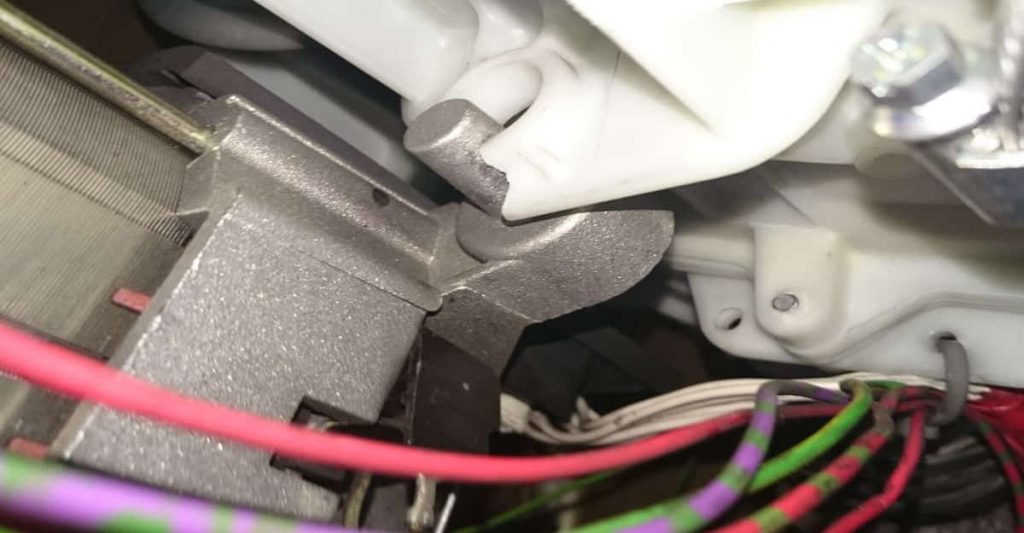

A broken motor bracket usually causes the drive belt to repeatedly come off, as the motor is no longer held rigidly in position. Epoxy adhesive repairs are unlikely to last more than one or two wash cycles due to the continuous forces the motor exerts during spin. If a replacement bracket is available for your model, fitting one is the correct fix. If it is not available, the machine may be beyond economical repair.

A broken plastic motor bracket is one of the more dispiriting washing machine faults to find. The bracket itself is often not expensive, but whether it is available as a spare part, and whether any repair attempt will hold, depends on the specific machine and the extent of the damage. This guide covers how to identify a broken bracket, what causes it, whether repair is realistic, and when replacement makes more sense. Written from hands-on engineering experience.
What does the motor bracket do?
The motor in a washing machine is bolted to the outer drum via a cast or moulded bracket, sometimes called a motor mounting bracket or motor support. On many machines this bracket is made from plastic or a glass-filled nylon composite. Its job is to hold the motor in a fixed position relative to the drum, maintaining the correct alignment and tension between the motor pulley and the drum pulley so the drive belt runs true.
The motor must be rigidly fixed for the belt to stay on. During the spin cycle, the motor runs at high speed and the outer drum simultaneously vibrates, moves on its suspension, and generates significant rotational forces. The bracket absorbs all of this. If the bracket breaks, the motor is no longer rigidly mounted, it begins to move relative to the drum during operation, and the drive belt comes off.
How do you identify a broken motor bracket?
A broken bracket does not always announce itself dramatically. The symptoms can develop gradually, which is why a bracket fault is sometimes preceded by a period of increasing noise or intermittent belt loss before the break becomes obvious.
 Drive belt repeatedly coming off
The most common presenting symptom. The belt comes off during spin, the drum stops turning but the motor can be heard running. The belt is refitted and comes off again, sometimes within the same cycle. This happens because the motor is no longer held at the correct fixed distance from the drum pulley. Read our guide: washing machine belt keeps coming off.
 New noise during spin
A bracket that has cracked but not yet fully broken can allow the motor to flex slightly during spin. This produces a new noise, often a knocking, rattling, or irregular vibration sound that worsens under load. If a noise preceded the belt fault, the bracket should be inspected before assuming the belt or motor is the primary issue.
 Visible crack or break on inspection
With the back panel removed, inspect the motor mounting bracket carefully under good light. Cracks often appear around the bolt holes or along stress lines in the moulding, and can be hairline fractures that are difficult to spot at first glance. Flex the bracket gently by hand to reveal cracks that are not otherwise visible.
 Motor movement under load
With the machine switched off and unplugged, try to rock the motor gently in its mounting. Any visible movement that is not present when the bolts are tight confirms the bracket is compromised. A small amount of flex in the bracket material is normal, but visible motor movement means the mounting is no longer providing rigid support.

Always disconnect the washing machine from the mains before removing the back panel or inspecting any internal components. Never reach inside a machine that is connected to the mains electricity supply.
Why does the bracket break?
A motor bracket breaking is not something that should happen under normal operating conditions. When it does occur, one of several underlying causes is usually responsible.
 Manufacturing defect or weak material
Some brackets break prematurely due to a flaw in the original moulding or a weakness in the plastic compound used. This is more common on machines where the manufacturer has used a thinner or lower-grade composite to reduce cost. The bracket may have been marginal from new, surviving for years before a minor additional stress causes it to fail.
 A motor that had already come loose
If the motor bolts worked loose over time, the motor would have been moving in the bracket during operation, generating stresses on the bracket that it was not designed to absorb. A motor that has been running loose for multiple cycles can crack or break the bracket through this repeated abnormal loading. The presence of worn or missing Loctite on the motor bolts alongside a bracket failure supports this diagnosis.
 An unusually heavy or unbalanced load
A severe out-of-balance load during spin creates forces significantly greater than normal operation. In most cases the machine will stop and display an error code, but if the imbalance was not detected quickly, the extraordinary forces during a high-speed unbalanced spin can be enough to crack a bracket that would otherwise have lasted the lifetime of the machine.
 Age and material fatigue
Plastic and composite materials fatigue over time under repeated cyclical loading. A bracket on a machine used heavily for ten or more years may simply have reached the end of its serviceable life, even with no single identifiable overload event. This type of failure is progressive, appearing first as a hairline crack before developing into a structural break.
Can the bracket be repaired?
The honest answer is: it is worth trying, but the odds are not good, and it is important to understand why before investing time in the attempt.
The forces acting on the motor bracket during operation are continuous and substantial. The motor is bolted to the bracket under significant tension, and during spin that tension is not static. The motor is effectively trying to rotate against the bracket at all times. Simultaneously, the drum vibrates on its suspension and transmits additional forces through the motor mounting. Any repair using adhesive is fighting all of these forces simultaneously, and it is fighting them throughout every cycle.
 Epoxy adhesive: unlikely to last
A Whitegoods Help reader supplied the photograph accompanying this article after attempting a repair on exactly this fault. He used a high-strength epoxy marketed as “as strong as metal.” The repair held initially. It failed on the first wash cycle. This is not an unusual outcome. The forces involved will defeat most adhesive repairs within a very small number of cycles, regardless of the stated strength of the product. The joint geometry, the constant cyclical loading, and the vibration all work against adhesive.
 When a repair attempt is reasonable
Not all bracket failures are equal. A bracket with three or four fixing points, where only one is cracked, may be more amenable to a repair attempt than one where a major structural section has broken away entirely. If the broken piece is intact and the fracture surface is clean, a repair attempt costs only the price of the adhesive and an hour of time. Use your judgement: if the machine is otherwise in good condition and a replacement bracket is not available, a careful epoxy repair with good surface preparation and a full cure time is worth attempting. Go in with realistic expectations, and if it fails, you have not lost much.
How do you replace the bracket (the correct fix)?
If a replacement bracket is available for your specific model, fitting it is always the right answer over an adhesive repair. The bracket is typically a straightforward part to replace once the motor has been removed from the drum, and the repair is reliable because it restores the original geometry and material strength.
-
Find your exact model number. The bracket must be for your specific model. Motor bracket designs vary between models even within the same brand. The model number is on the rating plate inside the door rim. Read our guide: how to find your appliance model number.
-
Check spare parts availability before committing to a repair. Search for the bracket by model number on a reputable spare parts supplier. If the bracket is unavailable or only available at very high cost, factor that into the repair vs replace decision before dismantling anything. See our spare parts guide for recommended UK suppliers.
-
Disconnect and remove the back panel. Always disconnect from the mains first. Remove the back panel to access the motor, belt, and bracket. On most machines the panel is held by screws around the perimeter.
-
Remove the drive belt and motor bolts. Slip the belt off the drum pulley. Remove the motor mounting bolts. Note the position and orientation of the motor before removing it.
-
Inspect the drum-side bracket mounting points. The bracket bolts to the outer drum. Check the drum side mounting points for any cracking or thread damage before fitting the new bracket.
-
Fit the new bracket, apply Loctite, and refit the motor. Fit the new bracket to the drum. Refit the motor, applying fresh Loctite threadlocker to the motor mounting bolts to prevent them working loose and causing the same problem again. Refit the belt and check tension and alignment before replacing the back panel.
Should you repair or replace the machine?
If no replacement bracket is available, or if the quoted cost of bracket plus labour is significant, the repair vs replace calculation becomes relevant. A broken motor bracket in isolation is not a major fault, but combined with parts availability problems on an older machine, it can represent the point at which replacement becomes the better decision.
Arguments for repairing
- The machine is otherwise in good condition
- The bracket is available and reasonably priced
- The machine is under 6 to 7 years old
- It is a premium brand with a longer expected lifespan
- The repair cost is well under 50% of replacement cost
Arguments for replacing
- No replacement bracket is available
- The machine is over 8 years old
- The repair cost approaches or exceeds 50% of a comparable replacement
- Other components are showing signs of wear
- The bracket failure suggests abnormal stress over time
Before making any decision, check your consumer rights. If the machine is relatively new and developed this fault without obvious cause, the retailer may be legally obliged to cover the repair under the Consumer Rights Act 2015. Read our guide: Consumer Rights Act and faulty appliances.
Need a professional engineer?
If the bracket repair is beyond a straightforward DIY fix, or if you need a qualified engineer to assess whether the repair is worthwhile, NAC Repair provides nationwide appliance repairs with transparent pricing and all work guaranteed.
Related washing machine repair guides
 Belt keeps coming off
All seven causes of a washing machine drive belt repeatedly coming off, including loose motor fixings and cracked brackets, with diagnosis and fix for each.
 Repairing a cracked outer drum
How to approach a crack or hole in the plastic outer drum, what repair options exist, and when replacement is the only realistic solution.
 All washing machine fault guides
Over 50 fault guides covering the most common washing machine problems, written from hands-on engineering experience.
 Find spare parts
How to source washing machine spare parts including motor brackets, with guidance on ordering by model number to ensure the correct fit.
Frequently asked questions about a broken washing machine motor bracket
What symptoms does a broken motor bracket cause?
The most common symptom is the drive belt repeatedly coming off during spin, because the motor is no longer held rigidly in position. The machine may also produce a new noise during spin, a knocking or rattling sound, before the belt fault develops. With the back panel removed, inspection will reveal a cracked or broken bracket, and the motor may have visible movement when rocked by hand with the bolts still in place.
Can I repair a broken motor bracket with epoxy or super glue?
You can try, but the chances of a lasting repair are low. The forces the motor exerts on the bracket during spin are continuous and substantial, and adhesive repairs typically fail within one to a few cycles. One documented attempt using a high-strength epoxy marketed as metal-strength held initially but failed on the first wash. That said, if no replacement bracket is available and the machine is otherwise in good condition, a careful epoxy repair with realistic expectations is worth attempting as a last resort. A clean fracture surface with good adhesive preparation and a full cure time gives the best chance.
Is a replacement motor bracket available for my machine?
It depends on the brand, model, and age of the machine. Motor brackets are stocked by independent spare parts suppliers for many mainstream washing machine models, but availability is not universal, particularly for older or less common machines. You will need the exact model number to search correctly. See our spare parts guide for recommended UK suppliers.
Why did the motor bracket break in the first place?
The most common causes are a manufacturing weakness in the bracket material, a motor that had already come loose and was moving in the bracket, an unusually severe out-of-balance spin event, or simply age and material fatigue on an older machine. In most cases, a bracket should not break under normal operating conditions. If the motor bolts had worked loose without being noticed and tightened, that progressive movement is a common underlying cause of bracket damage.
My belt keeps coming off. Could it be the bracket?
Yes, a broken or cracked motor bracket is one of the causes of a belt that repeatedly comes off. The others include a worn or stretched belt, a loose drum pulley bolt, a worn drum pulley, loose motor bolts, and worn drum bearings. Read our full guide to all seven causes: washing machine belt keeps coming off.
Is a broken motor bracket worth repairing or should I replace the machine?
If a replacement bracket is available at a reasonable cost and the machine is otherwise in good condition, the repair is worthwhile. If no bracket is available, or the machine is old or showing other wear, replacement may be more sensible. Always check your consumer rights first if the machine is relatively new, as the retailer may be legally obliged to cover the cost under the Consumer Rights Act 2015. Read: Consumer Rights Act and faulty appliances.
How much should a motor bracket replacement cost?
The bracket itself is typically a relatively inexpensive spare part, often in the £15 to £40 range depending on the brand and model, though exact pricing varies by supplier and availability. Labour is the larger element if you have an engineer carry out the work, as the motor has to be removed and refitted. Expect a typical engineer call-out plus labour to add £80 to £150 on top of the part cost. DIY replacement saves the labour cost entirely. Always get a written quote before authorising any work, and check the part availability against a spare parts supplier before agreeing to a repair.
Ask the repair forum
Post the make, model and symptoms and get help from the Whitegoods Help community.
0 Comments