
What do worn drum bearings sound like?
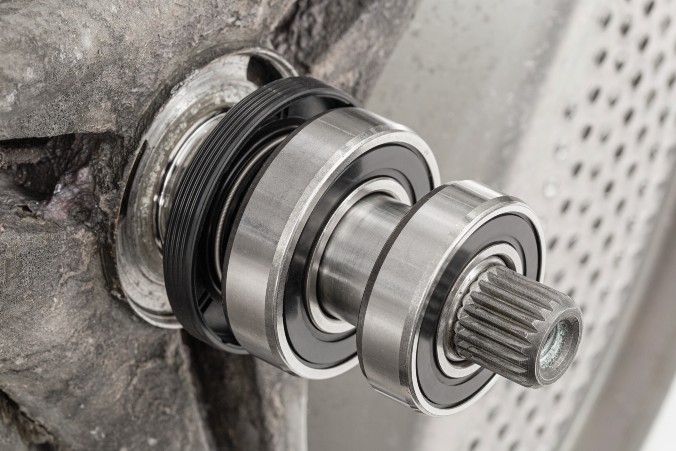
Worn drum bearings in a washing machine typically produce a deep, rumbling sound. But several other faults can produce an almost identical noise – and misdiagnosing bearings is an expensive mistake. This guide explains how to confirm worn drum bearings, what the sound actually is, and how to avoid the most common diagnostic errors.

The correct way to diagnose worn drum bearings is to remove the drive belt before spinning the drum by hand. This isolates the drum from the belt and motor, meaning any noise heard is coming from the drum bearings alone. Spinning the drum with the belt still on can lead to misdiagnosis.
Why Drum Bearing Diagnosis Is Easy to Get Wrong
Even experienced engineers can misdiagnose worn drum bearings. When the door is opened and the drum is spun by hand, the resulting noise is a combination of everything connected to the drum – including the drive belt and the motor. If any one of those components has developed a fault, it can produce a deep rumble that sounds almost exactly like worn drum bearings.
A washing machine was reported as very noisy and drum bearings were suspected. The drum was spun by hand with the belt in place, and the noise was consistent with worn drum bearings. A quote was given to replace the bearings. When the machine was stripped down, it transpired the noise was actually coming from the motor bearings – an uncommon fault, but one that produces an almost identical sound when the drum is spun with the belt connected. Had the belt been removed first, the drum would have spun silently and the motor identified as the source.
An engineer diagnosed worn drum bearings and ordered a complete new drum and bearing kit. When the repair was carried out, the back panel was removed and the drive belt was visibly in poor condition – the rubber had begun to melt. The belt was removed and the drum spun by hand: the bearings were completely fine, as was the motor. The source of the rumbling noise was the damaged belt itself. A new belt costing a fraction of the price resolved the problem entirely. This is an unusual fault, but it demonstrates why the belt must be removed before a bearing diagnosis is confirmed.
The Correct Way to Test for Worn Drum Bearings
The most reliable way to confirm worn drum bearings is to remove the drive belt and then spin the drum by hand. With the belt removed, the drum is no longer connected to the motor, so any noise produced when spinning is coming from the drum bearings alone.
-
Disconnect the washing machine from the mains supply completely before starting.
-
Remove the back panel (or top panel on some models) to access the drive belt and motor.
-
Slip the drive belt off the drum pulley.
-
Spin the drum by hand and listen carefully. If the bearings are worn, a deep rumbling sound will be clearly audible. If the drum spins quietly and smoothly, the bearings are not the problem and the noise source lies elsewhere – in the belt or motor.
What Do Worn Drum Bearings Actually Sound Like?
The noise is a deep, gravelly rumble – similar in character to a wheel bearing on a car that has started to fail. It is usually most obvious during the spin cycle but can also be heard when the drum is spun slowly by hand. The video below demonstrates the sound of a washing machine with clearly worn drum bearings.
Is There Play in the Drum?
After confirming that the drum bearings are rumbling, the next check is to assess how far the bearings have deteriorated. Open the door and grip the front lip of the drum. Pull it towards you and try to move it up and down on the shaft.
If there is significant movement – the drum lifts noticeably or rocks – then the front drum bearing has either collapsed entirely or the drum spider (the cross-shaped metal support at the back of the drum) has cracked or corroded through. Both situations significantly complicate the repair. In these cases, a complete new drum assembly may be needed, making the repair potentially uneconomical depending on the age and value of the machine.

If the drum moves freely on the shaft, the repair will require more than just new bearings. Get a professional assessment before committing to repair costs – the machine may be beyond economical repair.
More on washing machine noises
Frequently Asked Questions
How can I tell if my washing machine has worn drum bearings?
The most reliable test is to remove the drive belt and spin the drum by hand. If a deep, rumbling sound is audible with the belt removed, the drum bearings are worn. If the drum spins quietly without the belt, the noise source is likely the belt or motor rather than the bearings. Also check for play in the drum by gripping the front lip and testing for movement up and down on the shaft.
Why should I remove the drive belt before testing drum bearings?
Spinning the drum with the belt still on produces noise from the belt and motor as well as the drum bearings. A worn drive belt or worn motor bearings can produce a sound almost identical to worn drum bearings. Removing the belt isolates the drum so that any noise heard when spinning comes from the drum bearings alone.
Can a worn drive belt really sound like worn drum bearings?
Yes – and this is a known diagnostic trap. A drive belt that has deteriorated significantly – particularly one where the rubber has begun to melt or break down – can produce a deep rumbling sound when the drum is spun with the belt in place. This has led to unnecessary drum and bearing replacements. Always remove the belt before confirming a bearing diagnosis.
My washing machine drum moves up and down when I pull it. What does this mean?
Significant play in the drum – where it lifts or rocks on the shaft – indicates that the front drum bearing has collapsed, or that the drum spider has cracked or corroded. Both are serious conditions that typically require a complete new drum assembly rather than just replacement bearings. The repair cost may be high enough that the machine is beyond economical repair, depending on its age and value.
Is it worth repairing worn drum bearings?
It depends on the age of the machine, the extent of the bearing wear, and whether any secondary damage such as a failed drum spider is present. If the bearings are worn but the drum spider is intact and the machine is relatively young, a bearing replacement can be worthwhile. If there is significant play in the drum or secondary damage, the cost of repair may approach or exceed the value of the machine. A professional assessment is advisable before committing to the repair. See: washing machine noisy.
Ask the repair forum
Post the make, model and symptoms and get help from the Whitegoods Help community.
23 Comments
Grouped into 15 comment threads.
1 reply Thanks for information....do you have a sound of bad belt? Bravos XL, making awful noise during spin cycle to where TV is on max volume if watching TV...like a clunking sound?...sad part to get it in my laundry room we have to tear off molding, cut wall half way down an inch on each side and repair....I'm petrified of the cost of repair!! 4 kiddos, lots of wash, prob 5-6 years old.
1 reply if a washer is >10 years old and starts to make loud banging noise in spin if the repair is done i.e at disassemby 1.should both the bearings and spider arm be replaced at same time or 2. just the bearings / seals be fixed? or 3. fix only the spider and hope the bearings/ seals can carry on if its 1 or 3 the washer is a write off as the bosch. doesnt sell the spider only i.e you need to buy whole drum which is more than i paid for the washer.
if a washer is >10 years old and starts to make loud banging noise in spin if the repair is done i.e at disassemby
1.should both the bearings and spider arm be replaced at same time or
2. just the bearings / seals be fixed? or
3. fix only the spider and hope the bearings/ seals can carry on
if its 1 or 3 the washer is a write off as the bosch. doesnt sell the spider only i.e you need to buy whole drum which is more than i paid for the washer.
Likely replying to zahir
Hello zahir. In all honestly I would say if a washing machine is over 10 years old and needs the drum bearings replacing I would buy a new washing machine. Unless by any chance it is a real high quality washing machine, but even then it may not be worth repairing because a high quality washing machine would have extremely high bearing replacement costs.
The average life of a washing machine these days is officially only six or seven years. They don’t last very long but in real terms they are actually very cheap. In fact funny enough I’m just writing a new article about this where I have discovered that a Zanussi washing machine 36 years ago was £300. You can still buy a Zanussi washing machine today for £326. If you check on the Bank of England’s inflation calculator it shows that £300 36 years ago is the equivalent of £930 today. This shows how ludicrously cheap washing machines have become since they used to last 10 to 20 years on average, and why they don’t last very long any more.
1 reply My 2013 Hotpoint WMUD962G shakes and makes a clunking clacking sound when on spin. There doesn’t appear to be any play in the drum suggesting bearing is ok. I had the machine at an angle and checked the front weight as best I could and seemed secure as was the top weight. I changed the shock absorbers but no change. Any advice or further checks I could do would be appreciated.
My 2013 Hotpoint WMUD962G shakes and makes a clunking clacking sound when on spin. There doesn’t appear to be any play in the drum suggesting bearing is ok. I had the machine at an angle and checked the front weight as best I could and seemed secure as was the top weight. I changed the shock absorbers but no change. Any advice or further checks I could do would be appreciated.
Likely replying to GARRY TURNER
Hello Garry. Unfortunately noises on a washing machine can be caused by dozens of different things and it’s extremely difficult to diagnose from descriptions as opposed to hearing a noise. A clanking or clunking sound is usually caused by loose drum weight or a broken drum spider. The best thing I can recommend is to put aside some time to carefully read both of my comprehensive articles on troubleshooting noisy washing machines that are linked to at the end of this article. I have covered everything I could possibly think of in there including how to check for a broken or cracked drum spider.
1 reply During spin cycle the machine makes a loud roaring sound, what could it be?
During spin cycle the machine makes a loud roaring sound, what could it be?
Likely replying to Thomas Prouse
Hello Thomas. Have you listened to the video? That makes what could be described as a roaring sound and that’s just being spun by hand. If you disconnect the drive belt and then spin the drum by hand is shown in the video if it makes a rumbling sound than the drum bearings have failed. If it is totally silent then the noise is obviously something else in the next thing to check is running the motor on spin without the belt connected to see if the noise is coming from there. The third potential suspect is the pump. However, if it is the pump then the noise is going to be there even before the drum has gone into a spin.
0 replies Thank you so so so much for posting this sound. I’m sure you have helped so many people!!
Thank you so so so much for posting this sound. I’m sure you have helped so many people!!
1 reply It sounds like my bearings on the drum are gone on my washing machine , how much would you charge to fix it please
It sounds like my bearings on the drum are gone on my washing machine , how much would you charge to fix it please
Likely replying to Neil Gutteridge
Hello Neil. You can usually get a free quote from one of my repairers Appliance repairs. It is usually a very expensive job but some of my repairers have schemes in place for paying monthly and even covering the whole of the washing machine for future repairs over the next 12 months so it might be worth investigating.
1 reply Have a 4 month old whirlpool that seems to grind a bit and sometimes Very loud when it pumps out the water during rinsing . Warranty by mechanic replaced the pump but there is still weird sounding grinding going on when the machine starts to remove water from the tub. Any advice. P.s. loudest washer we ever had. Thanks
Have a 4 month old whirlpool that seems to grind a bit and sometimes Very loud when it pumps out the water during rinsing . Warranty by mechanic replaced the pump but there is still weird sounding grinding going on when the machine starts to remove water from the tub. Any advice. P.s. loudest washer we ever had.
Thanks
Likely replying to Jeff Hartzog
Hello Jeff. If it only makes a noise when it is emptying water it can only be the pump, or something stuck inside the pump like a button, or coin, or some other falling object. If it makes the grinding noise as soon the pump starts up but only lasts a second or so then it may just be that the pump they use is noisy. Some pump impellers rattle as they start up. But if the noise lasts for longer, and especially if it comes and goes there is possibly something stuck inside there that is being sucked in and tossed around. If this is the case, and especially if it is a plastic object they can be difficult to get out.
This is because if you lay the washing machine over to work on it the object can float back up inside the sump hose, or even inside the drain hose. In such a case once most of the water has been pumped away it is best to just disconnect the washing machine from the mains, and with the back panel off take off the sump hose and drain hose and then carefully inspect both hoses and inside the pump.
1 reply my hotpoint washing machine makes noises like the bareings have gone but they havent when the washing machine spins and bangs about a bit before it desides to spin some times it dosent spin at all and i have to take the clothes out and spin it with nothing in it to get it to spin with clothes in the drum as you said in your video i think its the motor bareings that are going or the moter is on its way out machine is only 4 years old and i doint use it very often
my hotpoint washing machine makes noises like the bareings have gone but they havent when the washing machine spins and bangs about a bit before it desides to spin some times it dosent spin at all and i have to take the clothes out and spin it with nothing in it to get it to spin with clothes in the drum as you said in your video i think its the motor bareings that are going or the moter is on its way out machine is only 4 years old and i doint use it very often
1 reply Hi. My frontloader is 5 yrs old. On spin it made an exceptionally loud noise. So I stopped it, removed the clothes. What we found is that the drum is so loose that it actually feel like its off set.
Hi. My frontloader is 5 yrs old. On spin it made an exceptionally loud noise. So I stopped it, removed the clothes. What we found is that the drum is so loose that it actually feel like its off set.
0 replies Hello Mark. It sounds like the front drum bearing might have collapsed. or there could be a crack or break in the drum spider. It sounds pretty serious.
Hello Mark. It sounds like the front drum bearing might have collapsed. or there could be a crack or break in the drum spider. It sounds pretty serious.
Leave a comment
0 replies Hi my machine started to make a banging noise during soon cycle. After the wash the machine was used again and it was apparent the belt had come loose. On removing the rear panel I discovered the belt in the inside of the drive wheel. After removal I spun the drum by hand and the bearings sound worn but there is a loud metalic bang on occassion while spinning? Any suggestions? Im thinking this is beond repair?
Hi my machine started to make a banging noise during soon cycle. After the wash the machine was used again and it was apparent the belt had come loose. On removing the rear panel I discovered the belt in the inside of the drive wheel. After removal I spun the drum by hand and the bearings sound worn but there is a loud metalic bang on occassion while spinning? Any suggestions? Im thinking this is beond repair?
0 replies If it was a broken spider arm the drum would lift far more in one place where the broken spider was. These days many brands of washing machine can't have drum bearings replaced and you have to fit a complete new drum.
If it was a broken spider arm the drum would lift far more in one place where the broken spider was. These days many brands of washing machine can’t have drum bearings replaced and you have to fit a complete new drum.
0 replies Our 2 year old washing machine had been making banging sounds during the spin cycle for about 2 weeks. Then it stopped spinning completely. I opened the back and the fan belt had come off but was in great condition. Having put the belt back on the banging continued. I have noticed rust down the back of the drum housing indicating bearing problems. Then I red this post and spun the drum with the belt off. It sounds just like your video clip. Also I lifted the drum from inside and it has about 1cm of movement independent of the housing. would this be both a broken or loose spider arm and the bearings? And is it an expensive job to repair? Should I just invest in a new machine? Unfortunately we can't find the paperwork for the warranty.
Our 2 year old washing machine had been making banging sounds during the spin cycle for about 2 weeks. Then it stopped spinning completely. I opened the back and the fan belt had come off but was in great condition. Having put the belt back on the banging continued. I have noticed rust down the back of the drum housing indicating bearing problems. Then I red this post and spun the drum with the belt off. It sounds just like your video clip. Also I lifted the drum from inside and it has about 1cm of movement independent of the housing.
would this be both a broken or loose spider arm and the bearings? And is it an expensive job to repair? Should I just invest in a new machine? Unfortunately we can’t find the paperwork for the warranty.
0 replies If it isn't noisy when you spin the drum by hand it's not likely to be drum bearings. My other article linked to at the bottom of the article explains all other sources of noise on a washing machine, I'd specifically check out the section on loose tub/drum weight.
If it isn’t noisy when you spin the drum by hand it’s not likely to be drum bearings. My other article linked to at the bottom of the article explains all other sources of noise on a washing machine, I’d specifically check out the section on loose tub/drum weight.
0 replies Ok My washing machine is fine until it goes on fast spin. It then sounds like a hadful of nuts and bolts are in the drum. The first time I heard it I opened the door took the clothes out expecting to find something that was causing the noise - I found nothing. Have now done 2 more washes with same noise on fast spin only. Next I took top off - nothing amiss, then took back off (eventually, how many screws) and again nothing seemed to be wrong - I have listed to the video on this sire and it does not sound like drum bearings. When I return home I will be taking the belt of and turning by hand to see how it sounds but to be honest I have turned drum by hand already and it sound fine. Therefore could it be the motor bearings? Anyone any ideas please??
Ok My washing machine is fine until it goes on fast spin. It then sounds like a hadful of nuts and bolts are in the drum. The first time I heard it I opened the door took the clothes out expecting to find something that was causing the noise – I found nothing. Have now done 2 more washes with same noise on fast spin only. Next I took top off – nothing amiss, then took back off (eventually, how many screws) and again nothing seemed to be wrong – I have listed to the video on this sire and it does not sound like drum bearings. When I return home I will be taking the belt of and turning by hand to see how it sounds but to be honest I have turned drum by hand already and it sound fine. Therefore could it be the motor bearings? Anyone any ideas please??
Thanks for information….do you have a sound of bad belt? Bravos XL, making awful noise during spin cycle to where TV is on max volume if watching TV…like a clunking sound?…sad part to get it in my laundry room we have to tear off molding, cut wall half way down an inch on each side and repair….I’m petrified of the cost of repair!! 4 kiddos, lots of wash, prob 5-6 years old.
Hi Elan, no but I have the sound of a loose drum pulley. If it’s not that, you’d need to go carefully through all my washing machine is noisy articles for clues.