
Why Is My Fridge Making a Strange Noise
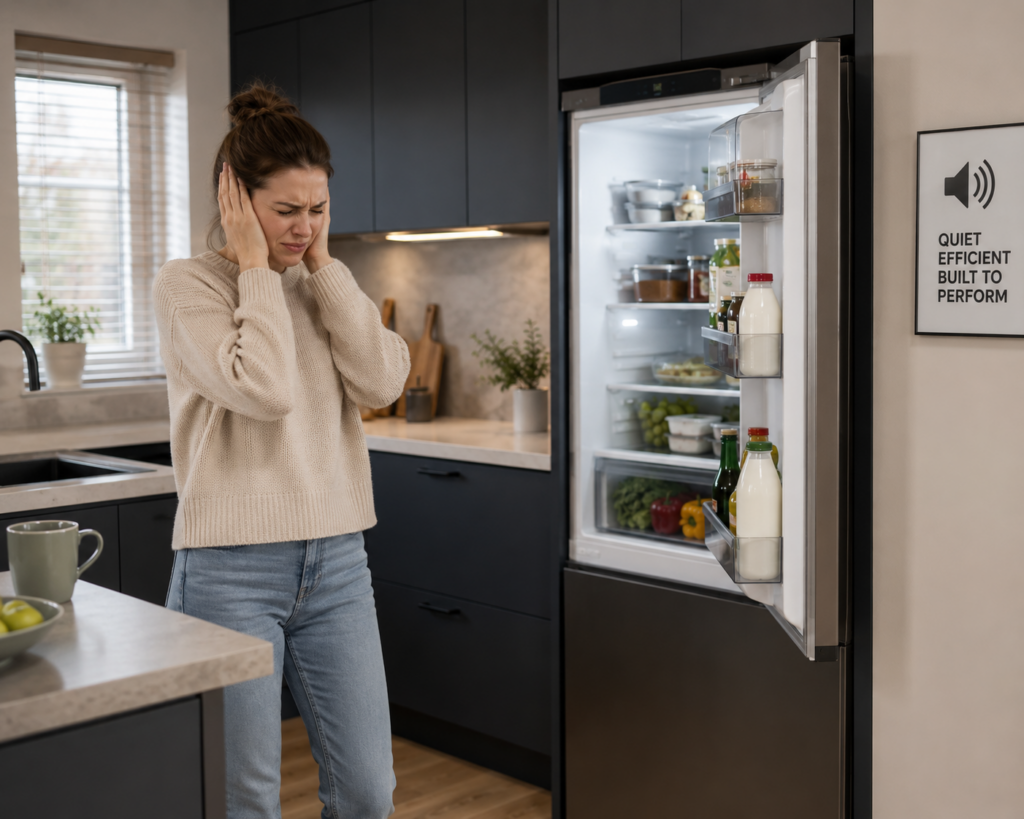

Most fridge and freezer noises are completely normal. A modern fridge contains a compressor, a fan or two, evaporator coils, condenser coils, refrigerant flowing through narrow pipes, a thermostat that switches on and off, and sometimes an automatic defrost system. All of these make small noises in normal operation. The sounds that genuinely indicate a fault are surprisingly few: a loud rattling that has appeared recently, a buzzing or screeching that gets worse, a constant running with no off cycle, or a complete silence in a fridge that is no longer cooling. This guide covers every common fridge noise, what it actually means, and which ones should worry you.
The single most important thing to know about fridge noise
Before working through specific noises, the most useful starting point is this: a fridge that is making more noise than it used to is not necessarily faulty. Modern fridges cycle their compressors on and off many times a day, run defrost cycles automatically, and respond to door openings, food being added, and ambient temperature with audible changes. A fridge that is doing its job properly is rarely silent.
What matters is whether the noise has changed character recently, whether it has grown louder, whether it has become continuous when it used to be intermittent, and whether it is accompanied by any actual cooling problem. A noisy fridge that is still keeping food properly cold rarely has an urgent fault. A quiet fridge that has stopped cooling is more concerning than a loud one that is working fine.
The diagnostic table below maps every common fridge noise to its most likely cause. The sections that follow give the engineering detail behind each.
Diagnostic table: what each noise probably means
| Noise | Most likely cause | Concern level |
|---|---|---|
| Steady low humming | Compressor running normally | Normal |
| Click followed by humming | Thermostat or compressor relay activating | Normal |
| Click with no humming | Compressor relay failure (compressor not starting) | Fault — get diagnosed |
| Gurgling or trickling water sounds | Refrigerant flow or defrost meltwater draining | Normal |
| Popping or cracking | Thermal expansion and contraction of plastic interior | Normal |
| Whirring or whooshing | Internal evaporator fan (frost-free models) | Normal |
| Rattling that comes and goes | Loose items inside, shelf vibration, items on top | Normal — fixable |
| Rattling that is constant or worsening | Compressor mount degradation or condenser fan | Concern — get diagnosed |
| Loud buzzing | Compressor strain, fan failure, or loose panels | Concern — investigate |
| Screeching, squealing, or grinding | Failing fan motor bearing | Fault — needs repair soon |
| Continuous running with no off cycle | Door seal fault, overfilled fridge, ventilation blocked, or thermostat fault | Concern — diagnose |
| Hissing | Defrost water on a hot surface, or normal refrigerant flow | Usually normal |
| Banging or knocking | Compressor end-of-life, mount failure, or fan striking ice | Fault — investigate urgently |
| Complete silence (no compressor cycling) | Compressor failure, thermostat failure, or power supply fault | Fault — call an engineer if food is warming |
The normal noises: what your fridge is supposed to do
Understanding the noises that are part of normal fridge operation makes it much easier to recognise the ones that are not. The five sounds below are routine and indicate that the appliance is working as designed.

The compressor hum
The compressor is the small motorised pump at the back or base of the fridge that compresses the refrigerant gas and drives the cooling cycle. When it runs, it produces a low steady hum, typically lasting 15 to 30 minutes at a time, several times a day. The pitch and volume of the hum vary slightly between models, with newer inverter-driven compressors significantly quieter than older fixed-speed ones. A faint, steady, consistent hum is one of the most reassuring sounds a fridge can make. It means the cooling cycle is running.
The thermostat click
At the start and end of each compressor cycle, you will often hear a single distinct click as the thermostat (or, in modern fridges, the electronic control board) switches the compressor on or off. The click is a relay closing or opening — a small electrical switch that handles the high current the compressor draws. A single click followed by the compressor humming on is normal. A click followed by silence (the compressor not starting) is not.
Gurgling, trickling, or bubbling water sounds
The refrigerant inside a fridge changes between liquid and gas during normal operation, and flows through narrow capillary tubes between the compressor, condenser, and evaporator. As it does, it produces gurgling, trickling, or bubbling noises that sound very much like water flowing through pipes. Additionally, in frost-free models, an automatic defrost cycle runs every 6 to 12 hours, melting any ice on the evaporator and allowing it to drain to an evaporation tray at the back of the appliance. The meltwater dripping makes its own gentle trickling sound. Both noises are entirely normal.
Popping or cracking
As different parts of the fridge interior cool down and warm up at different rates (especially during the defrost cycle, when the evaporator briefly heats), the plastic liner, shelves, drawers, and internal panels expand and contract. The resulting small movements produce occasional popping or cracking sounds, particularly noticeable in a quiet kitchen at night. These are thermal expansion noises and are completely benign. They are most common in the hours after the fridge has been running through a defrost cycle.
Whirring or whooshing (frost-free models)
Frost-free fridges and most modern fridge-freezers use one or two small internal fans to circulate cold air around the compartments. The fans run during normal operation and produce a steady whirring or whooshing sound, much like a quiet computer fan. The sound stops briefly during the defrost cycle and resumes after. Frost-free models without this sound generally have a fan problem; older static-cool fridges do not have an internal fan and do not produce this sound at all.
The concerning noises: when to investigate
Some fridge noises do indicate a real problem. The most common ones are below, with the likely causes and the appropriate response.

Loud or constant rattling
A rattling that comes and goes is usually loose items vibrating against each other, against shelves, or against the fridge top. Move loose bottles apart, secure removable shelves so they sit firmly, and check the top of the fridge for cereal boxes, jars, or other items vibrating against the lid. A rattling that is constant or that has grown progressively louder over weeks or months is more likely to be the compressor mounts perishing (allowing the compressor body to vibrate against its frame), a loose panel at the back of the fridge, or a condenser fan blade making contact with something it should not. A qualified engineer can diagnose which it is. See our appliance repair booking for nationwide diagnostic visits.
Loud buzzing or vibrating
A loud buzzing that is louder than the normal hum, particularly if it shakes the appliance noticeably, is most commonly caused by a compressor under strain. The compressor may be working harder than designed because of a refrigerant problem, a blocked condenser, poor ventilation around the fridge, or an overfilled appliance. Less commonly, a buzzing can come from a failing condenser fan, a loose panel resonating against the body, or a degrading compressor approaching end of life. The diagnostic approach is to check the easy possibilities first: ventilation, condenser dust buildup, fridge contents. If these are clear and the buzz persists, get an engineer to look.
Screeching, squealing, or grinding
Any high-pitched mechanical screech, squeal, or grinding noise from a fridge is almost always a fan motor bearing approaching failure. There are typically two fans in a modern frost-free fridge-freezer: a condenser fan at the back behind a protective grille, and an evaporator fan inside the freezer compartment. Either can develop bearing wear and start producing this noise. The fix is fan replacement, typically £30 to £80 for the part plus around £80 to £150 for the labour to fit. The repair is genuinely worth doing on most appliances under 8 years old. See our appliance spare parts service for sourcing replacement fans by model.
Banging or knocking
A banging or knocking sound from a fridge is concerning regardless of when it appears, because it suggests something mechanical is striking something else. Common causes include the evaporator fan blade striking accumulated ice (often diagnosed by also noticing reduced cooling), a degraded compressor mount allowing the compressor body to knock against the chassis, or a compressor approaching catastrophic failure. The defrost cycle in some models can produce a single loud clunk as the heater switches on, which can be alarming if you have not heard it before but is normal. Persistent or repeated banging is not normal and should be diagnosed.
Compressor running constantly with no off cycle
A normally functioning fridge runs its compressor in cycles, typically on for 15 to 30 minutes and off for similar periods, varying with ambient temperature and door openings. A fridge that runs continuously for hours at a time, never seeming to switch off, has a problem. The most common causes are a perished door seal letting cold air escape (and forcing the compressor to work continuously to keep up), a thermostat fault that has stuck in the “demand cooling” position, an overfilled fridge that cannot circulate air properly, a blocked condenser at the back, or a refrigerant leak that has reduced the cooling capacity. Each has different implications. Constant running also raises the electricity bill significantly. See our piece on fridge climate classes for the ambient temperature considerations.

Click with no compressor starting (complete silence after)
If you hear the thermostat or relay click but the compressor does not hum to life afterwards, the compressor is not starting. This usually means a failed compressor relay (often inexpensive to replace), a failed thermal overload protector (also inexpensive), or in worse cases a failed compressor (significantly more expensive). The fridge will warm up within a few hours if this is happening, so it is an urgent diagnosis. The fix can range from a £20 relay swap to a write-off depending on what has failed. See our repair or replace guide for the decision framework if the diagnosis comes back as a major component failure.
Why your fridge is noisier than it used to be
A fridge that is making more noise than it was a year ago does not necessarily have a fault — there are several entirely benign reasons for noise to increase over time. Working through these before assuming the worst usually identifies the cause.

The fridge has shifted
A fridge that has been bumped during cleaning, moved fractionally for a kitchen reorganisation, or settled on its feet over time can end up slightly less level than it was. An unlevel fridge transmits compressor vibration into the surrounding cabinetry, which amplifies the noise audibly. The fix is to check the front feet, which are usually adjustable: turn them anti-clockwise to extend, clockwise to retract, until the fridge sits flat with all four feet on the floor. A small spirit level on top of the fridge confirms when it is right. This single intervention often dramatically reduces noise on a fridge that has become noisier recently.

Something has been placed on top or behind
Items stored on top of the fridge (cereal boxes, crockery, kitchen scales) vibrate against the lid as the compressor runs and produce buzzing or rattling sounds that seem to come from the fridge itself. Items pushed behind the fridge — cables, food packaging that has fallen down, household debris — can vibrate against the back panel or the condenser coils with similar results. Pull the fridge out and check both spaces. The cause of a recently developed noise is often something obvious once you look.

Condenser coils need cleaning
The condenser coils at the back or underneath the fridge release heat removed from the interior. Over time, they accumulate dust, hair, and grime that act as insulation, forcing the compressor to work harder to achieve the same cooling. A fridge with dirty condenser coils is noticeably louder, runs more frequently, and uses more electricity than it should. Pulling the fridge out once a year and vacuuming the back coils (or the underside, depending on design) is a free maintenance task that reduces noise, extends the appliance’s life, and lowers running costs. See our piece on appliance running costs for the broader efficiency context.

Ice buildup in the freezer compartment
On both frost-free and manual-defrost models, ice can build up in the freezer to a point where it interferes with the airflow over the evaporator coils. The compressor responds by running longer to achieve the same temperature, producing more noise overall, and in some cases the evaporator fan starts contacting the ice and producing rattling or grinding sounds. Defrosting the freezer completely (overnight, with food temporarily moved elsewhere) often resolves both the noise and an underlying cooling efficiency problem. See our piece on frosting up in fridge or freezer for the wider causes.

Door seal degradation
A perished or distorted door seal lets cold air leak out and warm air leak in, forcing the compressor to run longer and more often to compensate. The result is more total noise across the day, even though each individual cycle sounds the same. A simple check: close a piece of paper or a £5 note in the door and try to slide it out. If it slides easily, the seal is not gripping. Replacement seals are inexpensive and a straightforward repair on most fridge models.
Specific freezer noises
Standalone freezers and the freezer side of fridge-freezers produce some noises that are distinct to freezing operation rather than refrigeration. Understanding these helps separate freezer-specific issues from general refrigeration faults.
The defrost cycle
Frost-free freezers run an automatic defrost cycle every 6 to 12 hours, where a small heating element briefly warms the evaporator to melt accumulated ice, which then drains to an evaporation tray at the back. The cycle takes around 20 to 40 minutes. During and immediately after, you may hear: a click as the heater switches on, gentle dripping as ice melts and drains, popping as the cold plastic warms slightly, and a louder fan as cooling resumes afterwards. All of this is normal and means the system is working correctly.

Sizzling or hissing during defrost
Occasionally, the meltwater from the defrost cycle drips onto a still-warm component (such as the defrost heater immediately after it has switched off) and produces a brief sizzling or hissing sound as it evaporates. This is normal and harmless. It usually only lasts a few seconds and only happens once or twice during the defrost cycle.
Loud thumping from a chest freezer
Chest freezers typically have a different compressor profile from upright freezers and can produce a noticeable thump as the compressor cycle starts or stops. A single, regular thump at the start or end of each cycle is normal. A loud, repeated thumping that does not stop, or one that has appeared recently and was not there before, suggests a compressor mount problem or a refrigerant flow issue and is worth getting diagnosed.
Ice cubes dropping in the icemaker
American-style fridge-freezers and any model with an integrated icemaker periodically dump completed ice cubes into the storage bin. The sound — typically a sharp clattering — can be alarming if you have not heard it before, particularly at night. It is entirely normal and indicates the icemaker is working. Most modern icemakers cycle every few hours.
American-style and French-door fridges: noises to expect
Larger American-style and French-door fridge-freezers have more moving parts than standard UK fridges and therefore make more noises in normal operation. Knowing which to expect makes the diagnostic process much easier.
Water dispenser and ice maker
The water reservoir, the icemaker fill cycle, the ice harvesting mechanism, and the water dispenser solenoid all produce distinct sounds. A water reservoir refilling makes a soft trickling sound. The icemaker filling its mould makes a brief hum and water flow. Ice cubes harvesting (typically every 1 to 2 hours when the bin is not full) makes the loudest sound — a series of clicks, a brief hum from the icemaker motor, and a clattering as cubes drop into the storage bin. The dispenser actuation makes a click as the door opens and a hum as ice is pushed out.
Multiple internal fans
American-style fridge-freezers typically have separate fans for the fridge and freezer compartments, plus a condenser fan at the back. The combined airflow is significantly more audible than on a single-fan UK fridge. Each fan can develop its own bearing issue independently, so a screeching or grinding noise on an American-style model needs careful localisation before any repair.

Inverter compressor variation
Many American-style and premium European fridges use inverter (variable-speed) compressors that adjust their running speed to match cooling demand. The result is a compressor that ramps up and down rather than switching firmly on and off, with a noticeable change in pitch and volume as it does. This is normal inverter behaviour and a feature of the more efficient newer compressors, not a fault.
What to do when you hear a worrying noise
When a fridge noise has you concerned, the diagnostic approach below is the engineering routine and works well for most situations.

Step 1: Confirm the fridge is still cooling properly
The most important question is whether the appliance is still doing its job. If the fridge interior is still cold (below 5°C) and the freezer is still firmly frozen (below -18°C), then whatever noise the fridge is making, it is not currently a cooling emergency. You have time to investigate. If the fridge has warmed noticeably or the freezer is softening, the situation is more urgent and you should call an engineer the same day, or shortly move food to a friend’s appliance to prevent loss.
Step 2: Locate the noise
Try to identify where the noise is coming from. Open the fridge door — if the noise stops or significantly reduces, it is coming from inside the appliance (most likely the evaporator fan, the icemaker, or items inside the appliance vibrating). If the noise continues unchanged with the door open, it is coming from outside the cooling compartment (most likely the compressor, the condenser fan, or external components at the back or underneath).

Step 3: Check the simple things
Empty the top of the fridge. Pull the fridge out and check behind it. Check the level of the appliance with all four feet on the floor. Look at the door seal for visible damage. Vacuum the condenser coils. Check inside the fridge for items that might be vibrating against the walls or shelves. These checks resolve a significant share of fridge noise complaints without any engineer involvement.
Step 4: Decide whether to call an engineer
If the simple checks have not solved it and the fridge is still cooling, a callout for a noise diagnosis is reasonable but not urgent. If the noise is accompanied by reduced cooling, a callout is more urgent. If the fridge has stopped cooling entirely, an engineer (or moving food immediately) is the only sensible response. Our appliance repair booking covers nationwide diagnostic visits across all major fridge brands.

Step 5: Weigh the repair against replacement
If the engineer’s diagnosis points to a major component failure (compressor, sealed system, refrigerant leak), the repair cost is often significant — typically £200 to £500 depending on the component. For a fridge that is 10 or more years old, this is often the moment to consider replacement instead. See our repair or replace guide for the full decision framework, and the broader piece on what appliances should cost and last for the wider context on appliance lifespan economics.
Maintenance habits that keep fridges quiet
A small amount of regular maintenance prevents most of the noise problems that develop over years of normal use. None of these tasks take long and all are free or cheap to do.
| Frequency | Task |
|---|---|
| Weekly | Quick visual check that nothing has fallen down behind the fridge and nothing on top is vibrating against the lid. |
| Monthly | Wipe out the interior, check that shelves are sitting firmly, secure any loose items inside that could rattle. |
| Every 6 months | Check the door seal for damage or perishing. Clean the seal with warm soapy water to maintain its grip. |
| Annually | Pull the fridge out, vacuum the condenser coils at the back or underneath, check the appliance is still level, and ensure ventilation clearances are correct per the manufacturer’s specs. |
| Every 1-2 years | Defrost the freezer completely (essential for manual-defrost models, beneficial for frost-free models that have built up significant ice). See our piece on frosting up in fridge or freezer for the wider context. |
The Whitegoods Help view
The honest editorial position is that consumers worry far more about fridge noises than the engineering picture warrants. The vast majority of fridge sounds — humming, clicking, gurgling, popping, whirring — are entirely normal and indicate that the appliance is doing exactly what it is designed to do. The relatively small number of noises that genuinely indicate a fault are usually distinct in character (screeching, banging, complete silence with warming food) and worth taking seriously when they appear, but most “is this normal” worries are about sounds that are.
The most useful intervention for any household worried about a noisy fridge is to learn the difference between the routine sounds and the abnormal ones, before a noise appears. The diagnostic table earlier in this article gives that mapping. A confident “that’s just the compressor cycling” response is worth far more than an emergency engineer callout for a fridge that has done nothing unusual.
Where a noise genuinely is abnormal, the response is straightforward: confirm the fridge is still cooling, locate the source, check the simple things first, and call an engineer if the issue persists. Most fridge noise faults are repairable for a sensible cost. The cases that lead to write-off are rare and almost always involve the sealed refrigerant system or compressor itself, which is when the broader repair-or-replace economics come into play.
Need help diagnosing a fridge or freezer noise?
If the simple checks have not resolved the noise and you are unsure whether the fridge has a genuine fault, our nationwide repair service covers all major UK refrigeration brands. Our spare parts service can supply replacement fans, seals, thermostats, and other commonly failing components by exact model number.
Frequently asked questions
Is it normal for a fridge to make noise?
Yes, absolutely. A modern fridge contains a compressor that hums when running, a thermostat that clicks on and off, refrigerant flowing through pipes (gurgling sounds), plastic that expands and contracts as compartments warm and cool (popping or cracking), and one or two internal fans (whirring or whooshing). All of these are normal. A completely silent fridge is unusual; a fridge that makes a variety of low-level sounds throughout the day is doing its job.
Why does my fridge make a clicking sound?
A click followed by humming is the thermostat or compressor relay activating, switching the compressor on for a cooling cycle. This is completely normal and happens many times a day. A click followed by silence (no humming) is different and suggests the compressor is failing to start, which is a fault worth diagnosing promptly. The distinction is what follows the click.
Why does my fridge sound like running water?
Refrigerant inside the fridge changes between liquid and gas as it flows through the cooling system, producing gurgling, trickling, and bubbling sounds that resemble water running through pipes. Additionally, in frost-free models, the automatic defrost cycle produces dripping sounds as meltwater drains to an evaporation tray. Both are normal and indicate the system is working correctly.
Why has my fridge become noisier than it used to be?
Common causes include the fridge becoming slightly less level (check the feet), items on top of the fridge vibrating against the lid, things fallen down behind the fridge, dust and grime accumulated on the condenser coils, a degraded door seal causing the compressor to run more often, or ice buildup in the freezer compartment affecting airflow. Each is fixable without an engineer. Pulling the fridge out, vacuuming the back, checking the level, and clearing the top often dramatically reduces noise.
My fridge is running constantly and never switches off. Is that a problem?
Yes. A normal fridge runs its compressor in cycles, typically 15 to 30 minutes on and similar periods off. Continuous running suggests a perished door seal, an overfilled fridge, blocked condenser coils, ventilation restriction, a thermostat fault, or a refrigerant leak that has reduced cooling capacity. Continuous running also raises the electricity bill significantly. Diagnose the cause: check the seal, check ventilation, vacuum the coils, and don’t overfill the appliance. If the basics are addressed and the running continues, get an engineer.
My fridge makes a screeching or grinding noise. What is it?
This is almost always a fan motor bearing approaching failure. There are typically two fans in modern frost-free fridge-freezers: a condenser fan at the back and an evaporator fan inside the freezer compartment. Either can develop bearing wear. The fix is fan replacement, typically £30 to £80 for the part plus £80 to £150 for labour. The repair is worth doing on most fridges under 8 to 10 years old. See our appliance spare parts service for sourcing the replacement.
Is a popping or cracking noise from my fridge normal?
Yes. Plastic interior components expand and contract slightly as different parts of the fridge warm and cool, particularly during and after the defrost cycle in frost-free models. The popping or cracking sound that results is completely normal and harmless. It is most noticeable in a quiet kitchen at night, which is when most people first notice it and worry.
My new fridge is louder than my old one. Is something wrong?
Probably not. New fridges with frost-free freezers have internal fans that older static-cool fridges did not, which adds a constant whirring sound. New fridges with inverter compressors produce variable-pitch hums rather than the on/off cycling of older fixed-speed compressors. New fridges with icemakers periodically drop ice cubes loudly into the storage bin. All of these are normal sounds that an older simpler fridge did not produce. The new fridge is not faulty — it is just doing more.
Should I call an engineer for fridge noises?
It depends on the noise and whether cooling is affected. For routine humming, clicking, gurgling, popping, and whirring, no — these are normal. For screeching, grinding, persistent banging, or any noise accompanied by reduced cooling, yes. For a fridge that has stopped cooling entirely or is showing signs of warming food, the engineer should be the same day or food should be moved temporarily. Our appliance repair booking covers nationwide diagnostic visits.
How long should a fridge last?
A well-maintained modern fridge typically lasts 10 to 15 years, with premium models occasionally longer. End-of-life faults are most commonly compressor failure, sealed-system refrigerant leaks, or fan and thermostat issues. For fridges over 12 years old developing significant faults, the economics often favour replacement over major repair. See our repair or replace guide and the wider piece on what appliances should cost and last for the broader economic framework.
Ask the repair forum
Post the make, model and symptoms and get help from the Whitegoods Help community.
0 Comments