
Freezer Drawer Broken
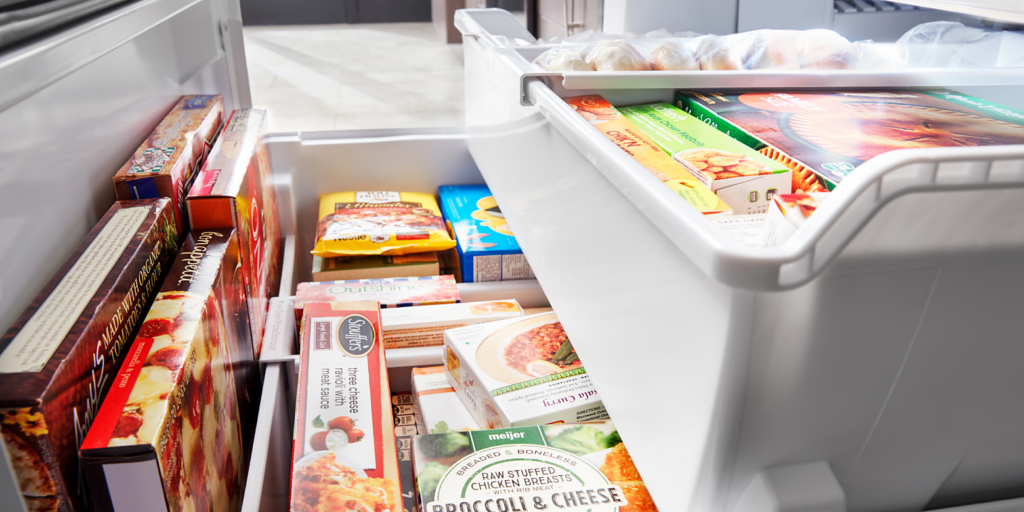

Freezer drawers most often break because they are forced open when jammed with ice buildup. Do not force a stuck drawer – gentle heat is the safe way to free it. Replacement drawers are available as spare parts for most mainstream fridge freezer brands and are a straightforward swap. Preventing ice buildup through regular defrosting and correct loading is the key to avoiding the problem recurring.
What causes freezer drawers to break?
Plastic becomes more brittle in cold conditions – this is unavoidable. But a freezer drawer should not normally break during regular use. When it does, there are usually two causes.
 Forcing a drawer stuck with ice
This is by far the most common cause. When ice builds up around a drawer, particularly in non-frost-free freezers, the drawer becomes physically locked in place. Pulling hard enough to shift it often breaks the front panel, snaps a runner, or cracks the frame. The plastic simply cannot flex far enough to accommodate the force required.
Overloading and food snagging
Overfilling a drawer puts constant strain on the frame, particularly on the front panel and runners. Food packed above the drawer rim can also snag on ice or the freezer structure, adding sudden load when the drawer is pulled. Over time this weakens the plastic until it fails.
How do you free a jammed freezer drawer without breaking it?
If a drawer is stuck, the cause is almost always ice. The only safe approach is to melt the ice gradually. Forcing the drawer will break it.

The plastic is brittle in cold conditions. What feels like the drawer starting to shift may actually be the frame beginning to crack. Apply heat first, force is last resort only.
-
Remove the drawer below the stuck one if possible. This gives you access to apply heat to the ice that is jamming the drawer from underneath or around the sides.
-
Place a bowl of hot water inside the space below to gently warm the surrounding area. The steam and heat will slowly melt the ice holding the drawer in place. Replace the water as it cools. This takes patience but is the safest method.
-
Use a hairdryer on a low setting to apply gentle heat directly to the area around the stuck drawer. Hold it at a safe distance and keep it moving – do not concentrate heat in one spot for long. Be careful around any water from melting ice.
-
Try gently rocking the drawer as the ice loosens, side to side rather than pulling straight out. Once it starts to move, continue applying gentle heat rather than increasing force.
-
Once the drawer is free, defrost the freezer fully before using it again. If you do not, ice will build up again quickly and the same problem will return. See our guide: frosting up in a fridge or freezer.
Recurring ice buildup that is not caused by leaving the door open too long suggests an underlying fault – a failing door seal, a defrost fault in a frost-free model, or a temperature control issue. See our guide: ice in the base of the freezer.
How do you buy a replacement freezer drawer?
Replacement drawers are available as spare parts for most mainstream fridge freezer brands – Beko, Hotpoint, Indesit, Samsung, LG, Bosch, Siemens, and many others. You need the exact model number of your appliance to find the correct part.
Where do you find your model number?
The model number is usually printed on a label inside the appliance, typically on the inner wall of the fridge compartment, or inside the freezer door frame. It may also be on a label on the back of the appliance. Note the full model number including any suffix letters before searching.
What should you check before ordering?
- Search your exact model number, not just the brand. Drawer dimensions and fittings vary considerably even within the same brand’s range
- Compare the part photograph to your existing drawer to confirm the shape, fittings, and front panel style match
- Check whether the listing covers just the drawer body, or whether runners and fittings are included or need to be ordered separately
- Read customer comments where available – these often flag any compatibility issues or fitting notes specific to that part
Our spare parts guide covers the main UK suppliers for fridge freezer parts.
What types of freezer and fridge parts are available?
 Freezer drawers
The plastic pull-out drawers in the freezer compartment. Available for most mainstream brands. Often sold per drawer rather than as a set – make sure to order the correct tier (top, middle, or bottom) as they may differ in depth.
 Salad and crisper drawers
The pull-out drawers in the fridge section, usually at the bottom. These are separate parts from the freezer drawers and must be matched to your specific model.
 Drawer runners and frames
If the drawer body is intact but the runners or side fittings are broken, these may be available as separate parts. Check whether your model has replaceable runners before ordering a full drawer.
 Shelves and bottle guards
Glass or plastic shelves and bottle-retaining guards in the fridge section also break and are usually available as spare parts. Again, match by exact model number.
How do you prevent freezer drawers breaking again?
Once a replacement drawer is fitted, a few habits will significantly reduce the chance of history repeating.
 Do not overfill drawers. Keep food within the rim of the drawer so it cannot snag on ice or the freezer structure when opening or closing. Overfilling also restricts airflow, which accelerates ice buildup.
- Never force a drawer that feels stuck. If a drawer resists opening, stop immediately and apply heat as described above. A moment of patience prevents a repair bill.
- Defrost regularly if your freezer is not frost-free. Manual defrost freezers need defrosting when ice buildup reaches around 6mm. Letting ice accumulate beyond this significantly increases the risk of drawers becoming jammed.
- Minimise door-open time when loading. Every time the door is left open, warm moist air enters and condenses inside the freezer. This moisture freezes and contributes to ice buildup around the drawers.
- Check the door seal regularly. A damaged or poorly seating door seal allows warm air in continuously, even when the door is closed. This accelerates ice buildup and puts the compressor under extra load. Press a piece of paper in the door seal around the full perimeter – if it pulls out easily, the seal needs attention.
Is recurring ice buildup a sign of a fault?
If your freezer ices up much faster than expected, particularly if you have a frost-free model that should never need manual defrosting, this points to an underlying fault rather than user behaviour.
Failed defrost system (frost-free)Frost-free freezers have an automatic defrost cycle that prevents ice buildup. If this system fails due to a faulty defrost heater, thermostat, or timer, ice accumulates rapidly. This requires a professional repair. See our guide: how frost-free defrosting works.
Damaged or perished door sealA door seal that no longer closes properly allows a continuous slow ingress of warm, moist air. This causes persistent ice buildup even with correct usage. Door seals are available as spare parts for most models.
Temperature control faultIf the freezer is running colder than its set temperature, ice buildup will be more rapid than normal. This can be caused by a faulty thermostat or temperature sensor.
Freezer location or ventilationA freezer in a very warm location, or one with insufficient ventilation around the back and sides, may work harder and produce more condensation inside. Check clearances match the manufacturer’s minimum requirements.
Need a replacement drawer or a repair engineer?
Find spare parts for your fridge freezer through our parts guide, or book an engineer if the ice buildup suggests an underlying fault.
Frequently asked questions about broken freezer drawers
Why do freezer drawers break?
The most common cause is forcing a drawer open when it is jammed with ice. Plastic becomes significantly more brittle at freezer temperatures, and the force required to shift an ice-locked drawer is often enough to crack or snap it. Overfilling drawers is the second most common cause – this both weakens the plastic over time and restricts airflow in ways that accelerate ice buildup.
How do I free a stuck freezer drawer without breaking it?
Apply gentle heat to melt the ice that is locking the drawer in place. Place a bowl of hot water in the drawer space below the stuck one, or use a hairdryer on a low setting. Gently rock the drawer as the ice loosens rather than pulling hard. Once free, fully defrost the freezer before using it again – if you do not, the same problem will return quickly.
Can I buy a replacement freezer drawer?
Yes, replacement drawers are available as spare parts for most mainstream fridge freezer brands. You need the full model number of your appliance to find the correct part. Different tiers (top, middle, bottom) within the same freezer may be different sizes, so confirm which drawer you need. Our spare parts guide links to the main UK suppliers.
My freezer ices up very quickly – is there a fault?
Rapid or excessive ice buildup, particularly in a frost-free model that should not require manual defrosting, usually indicates a fault. The most common causes are a failed automatic defrost system, a damaged door seal allowing warm air in, or a temperature control issue. See our guide: frosting up in a fridge or freezer. If the issue persists after defrosting, book an engineer to investigate.
How do I prevent freezer drawers from breaking?
Do not overfill drawers, do not force them if stuck, defrost regularly if your freezer is not frost-free, and minimise how long the door is left open when loading. Checking the door seal is in good condition is also important – a perished seal allows warm moist air in continuously, dramatically accelerating ice buildup.
Where do I find my fridge freezer model number?
The model number label is usually inside the appliance – check the inner side wall of the fridge compartment, the inner face of the fridge door, or inside the freezer door frame. It may also be on a label on the back of the appliance. Note the full model number including any suffix letters or numbers before searching for spare parts.
How much does a replacement freezer drawer cost?
Replacement freezer drawers typically cost between £15 and £60 depending on the brand and model, with larger drawers and premium brands sitting at the higher end of the range. Salad and crisper drawers are usually similarly priced. Runners and fittings, if available separately, are typically less. Always check the cost against the value and age of the appliance before ordering, particularly for older fridge freezers where multiple drawers may need replacing over time.
Ask the repair forum
Post the make, model and symptoms and get help from the Whitegoods Help community.
0 Comments