
Are eco labels on Washing Machines misleading?
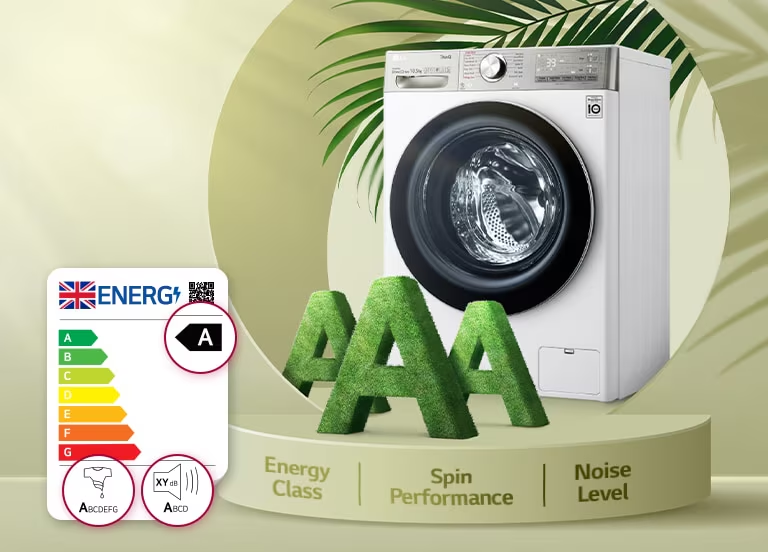

Washing machine energy labels provide a useful starting point but are not a reliable guide to the true cost of ownership, environmental impact, or overall quality. They do not account for reliability, repairability, how long the machine is likely to last, or how it was manufactured. A top-rated machine on paper can still be a poor long-term buy.
Energy efficiency labels on washing machines were introduced to help consumers make more informed choices and to push manufacturers towards greener products. The intention was sound – but the reality has always been more complicated, and the labels remain a limited and sometimes misleading tool when used in isolation.
How the Energy Label System Works – and Changed
The EU energy label system for washing machines was significantly reformed in March 2021. The old scale – which ran from A to G but had expanded upwards into A+, A++, and A+++ categories over the years – was replaced with a cleaner A to G scale. Crucially, the bar was reset: under the new scale, most machines on sale today sit in the C, D, or E bands. The A and B ratings are currently left empty, reserved for future products that exceed present efficiency standards.
The reform addressed one of the most obvious failings of the old system – that almost every machine had ended up clustered at the top of the scale, making meaningful comparison between products effectively impossible. The new scale gives more room to differentiate, but the underlying limitations of what energy labels measure – and what they do not – remain largely unchanged.

Energy labels measure energy efficiency under standardised test conditions. They say nothing about build quality, reliability, how long the machine is likely to last, or how easy and affordable it will be to repair when something goes wrong.
What Energy Labels Do Not Tell You
Taken at face value, an energy label answers one question: how efficiently does this machine use electricity under a specific set of test conditions? That is a narrow answer to a much bigger question about whether a machine is worth buying. The factors the label does not capture are often more important to the real-world cost of ownership.
 Reliability and Lifespan
A machine with a strong energy rating may be among the least reliable available – and an appliance that needs replacing after a few years is far more costly to the environment and your wallet than a slightly less efficient machine that lasts a decade.
 Repairability
Many lower-cost, high-rated machines are built to be cheap rather than repairable. When something goes wrong, the cost of repair can exceed the value of the machine – which means they end up as waste far sooner than they should.
 Country of Origin and Transport
The label says nothing about where the machine was manufactured or how far it has been transported. The carbon cost of shipping an appliance thousands of miles can significantly offset any efficiency gains during its working life.
 Production and Recyclability
The environmental impact of how a machine is made – the materials used, the production processes involved, and how recyclable the finished product is – falls entirely outside the scope of the energy label.
How Manufacturers Game the Ratings
When any rating system becomes a target, manufacturers adapt their products to score well on the test – sometimes in ways that do not benefit the user at all in normal use.
The 60-Degree Test Problem
Wash efficiency ratings are assessed using a single programme – a 60-degree cotton wash, which is one of the higher-temperature and more energy-intensive cycles, and one that most households use infrequently. A machine rated highly on this test may perform quite differently on the programmes most people actually use day to day.
Independent testing has found that a significant number of washing machines do not reach anywhere near 60 degrees on their 60-degree cycle. Some have been measured reaching only 43 to 50 degrees – which reduces actual energy use during the test and improves the rating, but also means the cycle is not doing what the user expects it to do. For more detail on this, see our guide on washing machines not delivering the right temperature.
Which? has tested washing machine temperatures and found many machines fail to reach their advertised wash temperature on the rated cycle. Note that full access to Which? test results requires a subscription.
Longer Wash Times to Achieve Better Ratings
Some machines achieve strong energy ratings by running their rated programme for considerably longer than older machines did for the same cycle. A wash that used to take 90 minutes might now take two to three hours to complete, using slightly less energy per hour but delivering the same or less overall performance.
In practice, many users respond to longer cycle times by switching to quick-wash programmes or reducing temperatures – which can lead to detergent and grease building up inside the machine over time, causing unpleasant smells and accelerating wear on internal components. See our guide on causes of grease, slime and black mould inside washing machines for more on this.
What Should You Actually Look For When Buying?
Energy ratings are worth noting, but they should sit alongside – not above – other factors when choosing a washing machine. The total cost of ownership over the machine’s lifespan is a much more useful measure than the energy label alone.
 Reliability track record – research the brand and model for reported faults and failure rates before buying
- Parts availability – can common wearing parts be sourced easily and at a reasonable cost?
- Repairability – is the machine designed in a way that allows an engineer to work on it, or is it a sealed unit?
- Actual running costs – energy use on the programmes you will actually use, not just the test cycle
- Expected lifespan – a machine that lasts 10 years at moderate energy use will typically cost less overall than a highly rated machine that lasts 4 years
For buying guidance that goes beyond the label, see our guides on choosing the best washing machine and washing machines to avoid. You can also reduce running costs significantly through smarter usage – see our guide on reducing the energy costs of running white goods.
Is Your Washing Machine Causing Problems?
Whether you need a repair or genuine spare parts, Whitegoods Help can point you in the right direction.
Energy Label Guides: Full Series
 Part 1: What Do Energy Labels Mean?
A full explanation of what washing machine energy efficiency ratings measure and how the labelling system works.
 Part 2: Energy Consumption (kWh per Cycle)
How to read and compare energy consumption figures, and what they mean for your actual running costs.
 Part 3: Wash Performance Ratings
How washing performance is rated on the energy label, and the limitations of the test method used.
 Part 4: Spin, Water Use and Noise
The remaining energy label data points – spin drying performance, water consumption and noise ratings – explained.
Frequently Asked Questions
Are washing machine energy labels reliable?
They are accurate in measuring what they test – energy use on a specific programme under standardised conditions – but that is a narrow measure. They do not account for reliability, repairability, how long the machine will last, or its broader environmental impact. Used in isolation, they can be misleading.
Did the energy label system change in 2021?
Yes. In March 2021, the old A+++ to D scale was replaced with a new A to G scale. The bar was reset so that most machines now sit in the C, D, or E range. The A and B ratings are currently reserved for future, more efficient products. The new system is more transparent, but the fundamental limitations of what the labels measure remain.
Why do some washing machines not reach their advertised temperature?
Independent testing has found that some machines run their rated cycles at lower temperatures than advertised – which reduces energy use during the test and improves the energy rating, but means the cycle does not perform as the user would expect. This is a significant issue on hygiene-critical washes such as 60-degree cotton cycles.
Are longer wash cycles actually more efficient?
On paper, using a lower power draw over a longer period can reduce total energy consumption per cycle. In practice, the longer times lead many users to switch to quick programmes or lower temperatures to save time – which can reduce cleaning effectiveness and cause grease and residue to build up inside the machine.
Should I ignore energy ratings when buying a washing machine?
No – but do not rely on them alone. A good energy rating is a reasonable indicator that a machine is not excessively wasteful. The problem comes when buyers use the rating as their primary decision factor, at the expense of build quality, reliability, repairability, and total cost of ownership over the machine’s lifespan.
Ask the repair forum
Post the make, model and symptoms and get help from the Whitegoods Help community.
0 Comments