
Is It Safe to Leave a Washing Machine On?
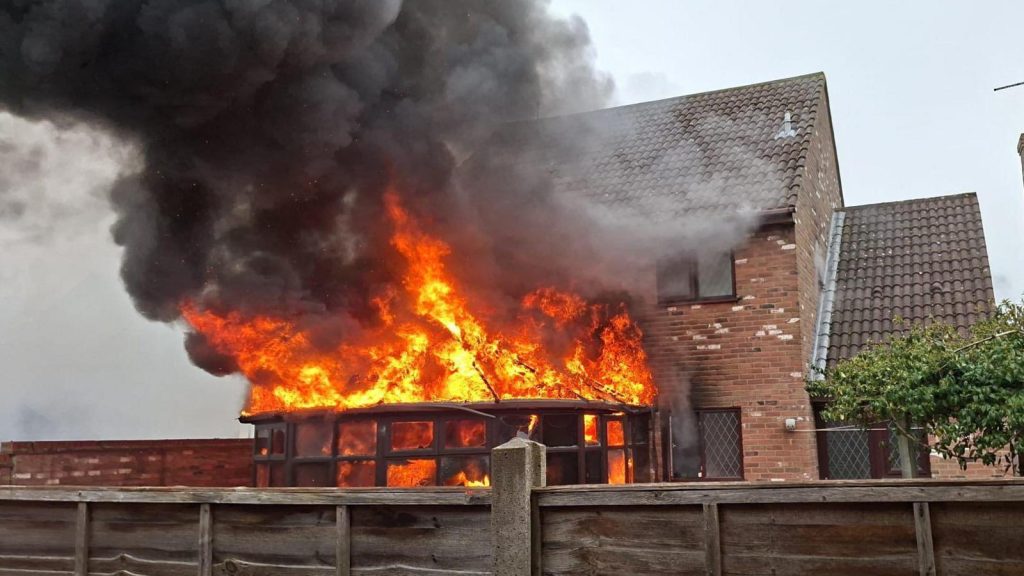

Leaving a washing machine, tumble dryer, or dishwasher running while you are out or asleep is a low-probability but high-consequence risk. White goods appliances are involved in over 1,000 accidental fires in England every year. The recommendation is to run these appliances only when someone is in the house and awake, in a position to hear a smoke alarm or smell burning. You do not need to watch them, but someone needs to be there.

Official UK fire safety guidance recommends not leaving white goods appliances running unattended. This does not mean sitting and watching every cycle, but it does mean having someone in the house who can respond to a smoke alarm or smell burning.
Washing machines, tumble dryers, and dishwashers are involved in house fires every year in the UK. Although this question is most commonly asked about washing machines, the same risks apply equally to tumble dryers and dishwashers, and this guide covers all three. Future dedicated guides for each appliance type are planned. For now, this is the real risk, what the most current statistics show, the specific advice for each appliance, and how to make an informed decision rather than simply hoping for the best.
The Real Risk: What the Current Statistics Show
Appliance fires are not as rare as most people assume. According to Electrical Safety First, 1,140 accidental electrical fires involving common household white goods, such as tumble dryers and washing machines, occurred across England in the year to 2025, the equivalent of three fires every single day. This figure covers England alone and does not include the rest of the UK.
 Washing machines and tumble dryers
Among the most common sources of accidental electrical fires in UK homes. Fires can result from electrical faults in the machine, overheating components, lint accumulation around heating elements in tumble dryers, or faults in the wiring and plug. Modern machines have better thermal protection than older ones, but are not immune from fire risk.
 Dishwashers
Less commonly discussed but also a documented source of appliance fires. Heating elements, pumps, and wiring are all potential fault sources. The same principle applies: a dishwasher running while the house is empty or everyone is asleep carries the same response-time problem as any other appliance.
 Fridges and freezers
These run 24 hours a day and cannot practically be switched off. However, a significant proportion of fridge and freezer fires are linked to blocked air vents at the rear of the appliance, where dust and lint accumulate over time. Pull fridges and freezers out periodically and clean the rear panels and vents. Check for relevant safety notices: fridge and freezer safety notices.
 Floods and leaks
Fire is the most serious risk, but large leaks are a significant secondary concern. A washing machine with a failed hose or seal running unattended can flood a room before anyone responds. Some leaks can run continuously until the water supply is turned off. Water damage from an unattended appliance leak can be both extensive and expensive.
The figure of 1,140 accidental white goods fires per year in England is sourced from Electrical Safety First’s Electrical Fire Safety Week 2025 campaign, published in 2025. This is the most current publicly available figure from a nationally recognised electrical safety body. The Home Office publishes annual detailed fire statistics for England (most recently for April 2024 to March 2025, published August 2025), which provide the underlying data. For the most detailed breakdown, see the Home Office detailed analysis of fires, England, April 2024 to March 2025.
For historical comparison, the former Electricity Safety Council reported 22 deaths and 2,500 injuries from appliance electrical fires in 2012, with washing machines and tumble dryers identified as the second most common cause of electrical fires in UK homes at that time. The current Electrical Safety First figures indicate the problem remains substantial over a decade later.
The nature of the risk matters as much as its scale. A fire starting in a machine you are watching can be caught quickly, as the first-hand account below demonstrates. A fire starting in a machine running overnight, or while the house is empty, has hours to develop before anyone responds. The same fault that produces a contained incident in a supervised home can burn a house down in an unsupervised one.
A Real Account: Why Being Present Changes the Outcome
The following account was shared by a Whitegoods Help reader and illustrates exactly why the presence of someone in the house changes the outcome of an appliance fire:
“My Indesit tumble dryer caught fire from the rear of the appliance within a couple of minutes of being started. Within a couple of minutes I could smell smoke. I dashed back to the machine where there was very slow grey smoke coming from around the sides of the dryer. I quickly pulled the laundry out and could see flames through the rear of the drum, approximately 7 to 10 inches high and clearly well alight. Because I caught the fire straight away, the flames hadn’t even damaged a plastic panel located above the motor compartment.
I think it’s important to mention: I was about to go out in my car as soon as I started the machine. There were four family members upstairs in bed when this incident occurred. I was genuinely having palpitations with the thought of what could have happened. The machine was around 5 years old and had been serviced just one month ago.”
Whitegoods Help reader, dryer fire account
This account makes the risk concrete. The machine had been recently serviced. The fire started within minutes. Being present made the difference between a contained incident and a potentially fatal house fire with four sleeping occupants. The same fault, one hour later with the house empty or everyone asleep, would have been a very different outcome.
Specific Advice for Each Appliance Type
Washing machines
Washing machines are among the most common sources of accidental electrical fires in UK homes. Electrical faults in the motor, wiring, PCB, or heating element are the most frequent causes, alongside flooding from failed hoses or door seals. Running a washing machine overnight or while the house is empty is not advisable. If you must use a delay start feature, set it to complete as close to when someone will be awake and present as possible.
Tumble dryers
Tumble dryers carry a higher fire risk than washing machines, primarily because of the combination of continuous heat and the lint they accumulate. Lint around or on the heating element is a significant fire accelerant. There has also been a large-scale recall programme in the UK for certain tumble dryer models from major brands, covering machines manufactured within specific date ranges. Check whether your machine is subject to a current recall before using it unattended.

Do not stop a tumble dryer mid-cycle and leave the laundry inside. In some circumstances, hot laundry left in a stopped drum can reach a temperature sufficient to ignite. If you need to stop the dryer to go out or to bed, cancel the cycle properly rather than simply switching it off mid-run. Read the full explanation: why you should not stop a tumble dryer mid-cycle.
Dishwashers
Dishwashers are often left running overnight because the cycle is long and the noise is unwelcome while the household is awake. The same fire and flood risks apply. If the dishwasher must run while the household is asleep, ensure smoke alarms are fitted nearby and that the machine is not subject to any current safety notice or recall.
Is It Safe to Use Delay Start?
The presence of a delay start feature on a machine does not mean the manufacturer endorses unsupervised overnight operation. Manufacturers include the feature because it is useful and commercially desirable, not because it removes the fire and flood risk. Cases of appliance fires and floods occurring during delay-start cycles are documented.
If you use delay start, set the cycle to complete as close as possible to when someone will be awake and in the house. A cycle finishing at 6am when the household rises at 6:30am is a considerably more manageable risk than a cycle running from midnight through to 2am.
Economy 7 Tariffs and Running Appliances Overnight
Economy 7 tariffs offer cheaper electricity during off-peak overnight hours, making running appliances at night financially attractive. Against this saving needs to be weighed the increased risk associated with unsupervised overnight operation. For most households, the electricity saving from running one or two appliance cycles during off-peak hours is relatively modest. It is worth calculating the actual saving before deciding whether it justifies the overnight risk.
If you do use Economy 7 for appliance cycles, set the cycle to run as late in the off-peak window as possible, so the machine finishes closer to when the household wakes up and someone is available to respond if needed. Read our full analysis: Economy 7 tariffs and white goods appliances.
Do Modern Appliances Have Better Safety Protection?
Yes, to a meaningful degree. Most modern appliances are controlled by software built into the main PCB. These machines typically have thermal protection that aborts the cycle if overheating is detected. They will time out and display error codes if filling, draining, or heating takes too long. Washing machines can abort the spin if the load is dangerously unbalanced.
However, these protections do not cover all failure modes. A flooding leak from a failed inlet hose, a fire starting from an electrical fault in the wiring or plug rather than the main PCB, or a dryer fire caused by lint ignition around the heating element, are all scenarios that onboard protection cannot prevent or detect in time. The protections reduce certain risks but do not eliminate the case for supervised operation.
Practical Steps to Reduce the Risk
-

Run appliances only when someone is in the house. The key protection against an appliance fire is a person who can hear a smoke alarm or smell burning and respond quickly. You do not need to watch the machine, but someone needs to be present. -
Fit a smoke alarm near your washing machine, tumble dryer, and dishwasher. Standard cooking-sensitive alarms are unsuitable in kitchens due to false alarms from cooking. Optical alarms, which are less sensitive to cooking fumes, are a better choice near appliances. Test any alarm regularly to confirm it is working. -
Clean the tumble dryer lint filter after every cycle. A blocked lint filter restricts airflow, causes overheating, and concentrates flammable material near the heating element. This is the single most important maintenance action for reducing tumble dryer fire risk. -
Pull fridges and freezers out periodically and clean the rear. A significant proportion of fridge and freezer fires are linked to dust and fluff accumulation blocking rear ventilation. Clean behind these appliances every six to twelve months. -
Check whether your appliance is subject to a recall or safety notice. Several major appliance recalls have been issued in the UK, including for large numbers of tumble dryers. Check the UK government’s product recall list: Trading Standards product recalls and safety notices. Also check: Whitegoods Help appliance safety notices. -
If using delay start, set it to finish as close to waking time as possible. Do not use delay start to run appliances through the middle of the night with the household asleep and no one able to respond. -
Turn off the water supply taps after using the washing machine. A machine that develops a leak while the supply is on can flood continuously until someone turns off the water. Turning off the inlet taps after each use eliminates this risk entirely. Read our guide: should you turn off the taps after using the washing machine?
More Safety Guides
How dangerous are our appliances?A frank look at the fire, flood, and injury risks from domestic white goods, what the statistics show, and how to put the risk in realistic perspective.
 8 ways to make your appliances safer
Practical steps every household can take to reduce the risk of fire, flood, and injury from washing machines, dryers, dishwashers, and fridges.
Why you should not stop a tumble dryer mid-cycleThe specific risk of stopping a tumble dryer part-way through a cycle and leaving laundry inside, and why cancelling the cycle properly matters.
 Washing machine door glass danger
Why washing machine door glass sometimes shatters unexpectedly, how common it is, and what to do if it happens.
 Extension leads and white goods appliances
Why using extension leads with washing machines, dryers, and dishwashers carries genuine fire risk, and the rules if one must be used.
 Appliance safety hub
All Whitegoods Help safety guides in one place, including fire risks, electric shock, manufacturer recalls, and safe appliance use.
Is your appliance safe to use?
If your appliance has been recalled, is making unusual noises, or has shown any signs of overheating, do not leave it running unattended.
Frequently Asked Questions
Is it safe to leave a washing machine on when you go out?
It is not recommended. According to Electrical Safety First, 1,140 accidental electrical fires involving white goods occurred in England in the year to 2025, the equivalent of three per day. A fire starting in an empty house has far longer to develop before anyone responds. Official UK fire safety guidance recommends having someone in the house when these appliances are running. Source: Electrical Safety First, Electrical Fire Safety Week 2025.
Is it safe to run a washing machine overnight?
The same risks apply as leaving one running while you are out, with the additional consideration that sleeping occupants are less likely to respond quickly to a smoke alarm or the smell of burning. If you use a delay start or Economy 7 tariff to run the machine overnight, set the cycle to finish as close to when the household wakes as possible rather than running through the middle of the night.
How many house fires are caused by white goods each year in the UK?
According to Electrical Safety First’s 2025 campaign data, 1,140 accidental electrical fires involving white goods such as washing machines and tumble dryers occurred across England in the year to 2025, the equivalent of three fires per day. This figure covers England only. The Home Office publishes detailed fire statistics annually through its official statistics programme, with the most recent release covering April 2024 to March 2025, published August 2025. Source: Electrical Safety First, 2025; Home Office fire statistics, 2025.
Are tumble dryers more dangerous than washing machines to leave running?
Yes, generally. Tumble dryers carry a higher fire risk because of the combination of continuous heat and the lint they accumulate. Lint around the heating element is a significant fire accelerant. Additionally, there have been large-scale tumble dryer recalls in the UK affecting specific brands and model years. Never leave a tumble dryer running when the house is empty or everyone is asleep, and never stop one mid-cycle without cancelling the programme properly first.
Is it safe to use the delay start feature on a washing machine or dishwasher?
The delay start feature does not remove the fire and flood risk. Manufacturers include it for convenience, not because it makes unsupervised operation safe. If you use delay start, set the cycle to complete as close to when someone will be awake and present as possible, and ensure smoke alarms are fitted nearby.
Do modern appliances have better fire protection than older ones?
Partially. Most modern appliances have PCB-controlled thermal protection that can abort cycles if overheating is detected, and they will display error codes if filling, draining, or heating takes too long. However, these protections do not cover all failure modes. Wiring faults, hose failures, and lint fires are not reliably prevented by onboard protection. Modern machines reduce certain risks but do not eliminate the argument for supervised operation.
Should I turn off the taps and socket when the washing machine is not in use?
Turning off the water supply taps after each use is good practice. A developing leak cannot flood continuously with the supply off. Turning off the wall socket when the machine is not in use is also beneficial where the socket is easily accessible, removing the small risk of an electrical fault in the standby circuit. Read our guide: should you turn off the taps after using the washing machine?
Ask the repair forum
Post the make, model and symptoms and get help from the Whitegoods Help community.
9 Comments
Grouped into 5 comment threads.
1 reply Do washing machines need to be unplugged at night?
1 reply I live in shared accommodation and one tenant keeps leaving the washer/dryer on overnight with just a few nylon items in with a plastic soap ball. We have had repeated conflicts that this is very dangerous and a serious potential fire hazard putting us all at risk but she doesn't listen or care. I woke up last week to a "burning" smell in the kitchen where she had left synthetic items in the dryer for over 3 hours! Am I wrong or is she?
I live in shared accommodation and one tenant keeps leaving the washer/dryer on overnight with just a few nylon items in with a plastic soap ball.
We have had repeated conflicts that this is very dangerous and a serious potential fire hazard putting us all at risk but she doesn’t listen or care.
I woke up last week to a “burning” smell in the kitchen where she had left synthetic items in the dryer for over 3 hours!
Am I wrong or is she?
Likely replying to Angela Anderson
Hello Angela. The fire risk is relatively low, but as my article points out, thousands of fires – some fatal – are caused by appliances and in my opinion leaving any washing machine, dryer or dishwasher on when no one is in the house or people are in bed is a very unnecessary risk.
I suspect doing so is not illegal, it seems to be just accepted that these things happen as we all accept that thousands of people are injured or killed in car accidents. However, if they won’t listen to common sense the only thing I can suggest is complaining to the landlord.
1 reply From an electrical safety point of view, would it not be to recommend that all white goods at risk should be connected into an RCD socket outlet at point of use. Extra protection should eliminate electrical overheating, risk of overloading and electric shock.
From an electrical safety point of view, would it not be to recommend that all white goods at risk should be connected into an RCD socket outlet at point of use. Extra protection should eliminate electrical overheating, risk of overloading and electric shock.
Likely replying to Colin Humphries
Hello Colin, ideally people should have rcd protected sockets throughout the house via the main fuse board but if not then plugging appliances into an rcd adapter could add extra safety. I don’t think rcd would prevent many fires though because it’s often things like failure of thermostats causing the heating element to over heat. In such cases the element wouldn’t be doing anything electrically wrong just running for too long or running when the washer has no water inside for example. Tumble dryers can catch fire due to design faults or when they get covered in fluff round the element (design deficiency) which catches fire. Fridges or freezers can catch fire when they get clogged up at the back with muck and dust.
As far as my understanding goes RCDs normally just trip when they detect an imbalance of magnetic field caused by electric current going to earth or in a direct short. I don’t think they can detect electrical overheating as in for example a poor connection somewhere. However, an electrical fire that burned through wiring and caused them to short should cause the rcd to trip cutting power and preventing a big flash but the fire is still free to spread if it can. Without an RCD device the fuse in the plug or even fuse board would also fail and cut off the power albeit not as quickly.
0 replies GW just posted the following comment on another article but it's very relevant to this one so I'm copying it here - With regard to a Tumble Dryer being a fire hazard? My Indesit (Model: IDVA735S) caught fire from the rear of the appliance within a couple of minutes of being started. This was the first dry of the day, so the machine wasn’t hot due to a previous drying cycle. When I added one quilt cover and a couple of pillowcases to the dryer drum, I left the dryer in motion whilst I continued with my usual tidying up first thing in the morning. Within a couple of minutes I could smell smoke, that rather obvious electrical burning smell that you get when a hairdryer gives up. I dashed back to the machine, where there was very slow grey smoke coming from around the sides of the dryer. I quickly pulled the quilt cover and pillowcases out, none were damaged, but I could see flames through the rear of the drum. The flames were approx’ 7-10 inches high and clearly well alight. Immediately I chucked water towards the flames, yes, I know I should have unplugged the machine, but I challenge anybody not to do precisely what I did when faced with such a situation! Because I caught the fire straight away, the flames hadn’t even damaged a plastic panel located above the motor compartment, so I was relieved to have been on hand when the incident occurred. I think it’s important to mention, I was about to go out in my car as soon as I started the machine, secondly, there were four persons (family) upstairs in bed when this incident occurred. I was genuinely having palpitations with the thought of what could have happened? The machine was in my kitchen, the filter was clean and the machine was serviced just one month ago. Hotpoint were called and an engineer is apparently coming out to check this fire hazard today. Needless to say, I expect the company to replace this dangerous machine, via my insurance. I’m just waiting for some jobsworth to try and extort delivery costs for any new appliance? I certainly don’t want a bloody repair! The moral of the above account is: Don’t leave these appliances on when you intend leaving home for a period of time, my machine was around 5 years old, but was recently serviced. Regards GW
GW just posted the following comment on another article but it’s very relevant to this one so I’m copying it here –
With regard to a Tumble Dryer being a fire hazard? My Indesit (Model: IDVA735S) caught fire from the rear of the appliance within a couple of minutes of being started. This was the first dry of the day, so the machine wasn’t hot due to a previous drying cycle.
When I added one quilt cover and a couple of pillowcases to the dryer drum, I left the dryer in motion whilst I continued with my usual tidying up first thing in the morning. Within a couple of minutes I could smell smoke, that rather obvious electrical burning smell that you get when a hairdryer gives up. I dashed back to the machine, where there was very slow grey smoke coming from around the sides of the dryer.
I quickly pulled the quilt cover and pillowcases out, none were damaged, but I could see flames through the rear of the drum. The flames were approx’ 7-10 inches high and clearly well alight. Immediately I chucked water towards the flames, yes, I know I should have unplugged the machine, but I challenge anybody not to do precisely what I did when faced with such a situation!
Because I caught the fire straight away, the flames hadn’t even damaged a plastic panel located above the motor compartment, so I was relieved to have been on hand when the incident occurred.
I think it’s important to mention, I was about to go out in my car as soon as I started the machine, secondly, there were four persons (family) upstairs in bed when this incident occurred. I was genuinely having palpitations with the thought of what could have happened? The machine was in my kitchen, the filter was clean and the machine was serviced just one month ago.
Hotpoint were called and an engineer is apparently coming out to check this fire hazard today. Needless to say, I expect the company to replace this dangerous machine, via my insurance. I’m just waiting for some jobsworth to try and extort delivery costs for any new appliance? I certainly don’t want a bloody repair!
The moral of the above account is: Don’t leave these appliances on when you intend leaving home for a period of time, my machine was around 5 years old, but was recently serviced.
Regards
GW
0 replies Most informative, thank you very much.
Most informative, thank you very much.
Do washing machines need to be unplugged at night?
Likely replying to Carina
Hello Carina. Ideally yes. Though I would estimate it to be very unlikely anything would go wrong with the washing machine (tumble dryer or dishwasher) not actually running. From what I can see the biggest risk is from an electrical fault inside the wall socket or the appliances plug. I will be writing a new article concentrating on the specific question soon and will be linking to 2 examples where people have claimed an appliance had an electrical fire incident after being left plugged in.
If it is easy to turn off the socket on an appliance you’re not using it is always best practice to do so. I do with our washing machine and tumble dryer in our garage. But I don’t on our dishwasher in the kitchen because the wall socket is behind lots of pans and pan lids at the back of a cupboard.