
Extension Leads and Cables with Washing Machines
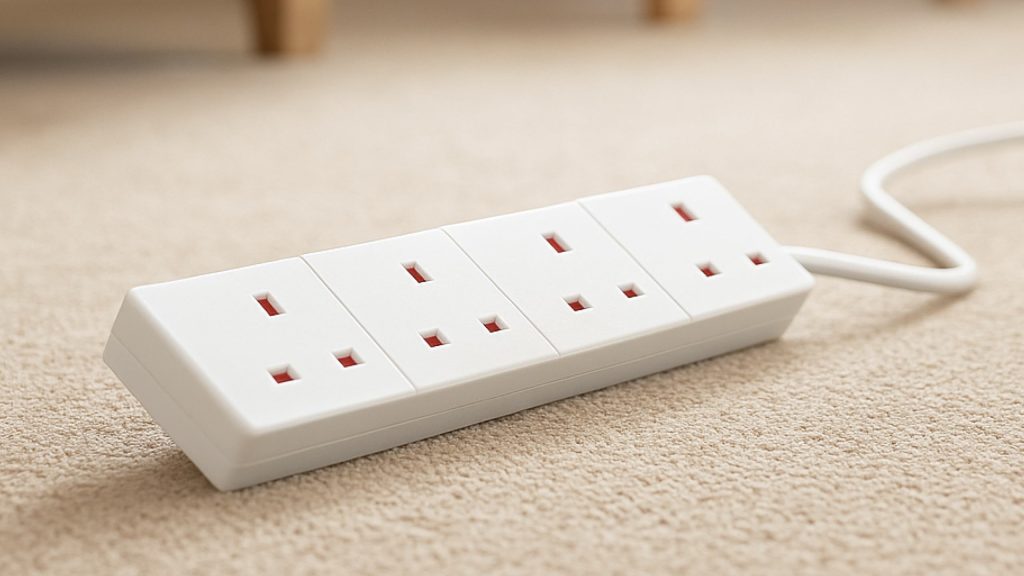

Using an extension lead with a washing machine is not recommended by manufacturers and introduces real fire and electrical risks. If one is absolutely necessary, it must be rated at 13 amps, be three-core with an earth conductor, and have cable at least as thick as the appliance’s own cable. Never run two high-current appliances from the same extension at the same time, and always fully unwind a cable reel before use.
Using an extension lead with a washing machine, dishwasher, or tumble dryer is not recommended by manufacturers and introduces genuine fire and electrical risks if the wrong cable is used. This guide covers what the risks actually are, the rules for choosing a safe extension lead if one is absolutely necessary, how to calculate whether your socket is overloaded, and the warning signs that something is going wrong.

All major appliance manufacturers, including Miele, explicitly state in their instruction manuals that washing machines must not be connected via an extension lead. If you must use one, the rules below are not optional – they are the minimum required for safe operation.
Why Extension Leads Are Risky With White Goods
Washing machines, dishwashers, and tumble dryers draw significantly more current than most domestic appliances. A washing machine on a hot cycle with the heating element running can draw close to 10 amps. A tumble dryer can draw 11 amps or more. These are high-current appliances operating continuously for extended periods, and that combination is precisely what extension leads are not designed to handle reliably.
 Overheating risk
Extension cables generate heat under load. A cable rated for lower-power appliances, such as lamps or chargers, will overheat when a washing machine draws 10 amps through it. The insulation degrades, connections become resistive, and in worst cases the cable can melt or ignite. This risk is present even when the extension cable appears to be working normally.
 Multi-socket overloading
A four or six-socket extension strip can only carry 13 amps in total through the cable, regardless of how many sockets it has. It is easy to plug multiple appliances into a multi-socket strip without realising that two high-current appliances running simultaneously will exceed the safe limit. This is one of the most common causes of extension lead fires in UK homes.
 No earth connection
Washing machines and other white goods appliances must be earthed. Some cheap extension cables use only two-core wiring with no earth conductor. Connecting a washing machine via an unearthed extension means the appliance is not earthed, and if an insulation fault develops inside the machine, the appliance casing becomes live at mains voltage. This is potentially lethal. Read: electric shocks from an appliance.
 Poor connections
The fire brigade advise against plugging large appliances into double adaptors because the internal connections are often of lower quality than a proper wall socket. Poor connections under high current loads create resistance, generate heat, and can arc. A connection that handles a phone charger safely can fail dangerously under the sustained current a washing machine draws.
The Rules for Using an Extension Lead Safely
If a wall socket is genuinely not available and an extension lead must be used, all of the following requirements apply. Missing any one of them creates a safety risk.
-

The lead must be rated for 13 amps. This is non-negotiable. Extension leads designed for garden tools, lamps, or low-power electronics are often rated at 5 or 10 amps, which is insufficient for a washing machine. A 10-amp lead connected to a washing machine will overheat. Check the packaging or the cable itself for the amp rating before use. If it is not clearly stated, do not use it for white goods. -
The lead must be three-core with an earth conductor. A washing machine requires an earth connection. A two-core extension cable has no earth, and connecting an earthed appliance to it removes the earth protection. Check the plug end of the extension cable: a three-core cable has three pins, including a longer earth pin at the top. A two-core cable has only the two flat live and neutral pins. -
The cable must be as thick as or thicker than the appliance’s own cable. A cable thinner than the appliance cable cannot safely carry the same current. The thickness of the cable is a rough visual guide to its current rating. If the extension lead cable is noticeably thinner than the machine’s own power cable, it is likely undersized for the application. -
Buy from a recognised brand. Cheap unbranded extension leads from market stalls or discount websites may not meet their stated ratings. Branded products from established UK electrical suppliers are more likely to meet their specifications reliably. This is not about price snobbery – it is about whether the stated amp rating is accurate. -
Never connect two high-current appliances to the same extension at the same time. A washing machine and a tumble dryer, or a washing machine and a dishwasher, running simultaneously on the same extension will draw close to or beyond 13 amps combined, overloading the cable and potentially the wall socket. No two appliances with heating elements should run from the same socket or extension at the same time. -
Keep the cable run as short as possible. Longer cables have higher resistance, which increases heat generation under load. Use the shortest cable that reaches the socket and avoid coiling any excess cable while the machine is running, as coiled cable traps heat.
Extension Reels: Unwind Fully Before Use
Retractable extension reels that wind up into a drum are particularly dangerous with high-current appliances if left wound up during use. When a cable is coiled, heat generated by current flow cannot dissipate and accumulates in the reel. This is why extension reels carry two separate amp ratings: one for fully unwound use, and a lower rating for use while wound up.

The wound-up rating on a cable reel is typically well below 13 amps. A washing machine drawing close to 10 amps through a wound reel can cause the reel to overheat and potentially catch fire even when the cable itself is rated for 13 amps unwound.
How to Calculate Whether You Are Overloading a Socket
Every UK wall socket can handle a maximum of 13 amps. Every appliance has a wattage rating on its label, and you can convert watts to amps using a simple calculation: divide the wattage by 230 (the UK mains voltage) to get the approximate amperage.
| Appliance | Typical wattage | Approximate amps |
|---|---|---|
| Washing machine (heating element running) | 2,000 to 2,400W | 8.7 to 10.4A |
| Tumble dryer | 2,400 to 2,800W | 10.4 to 12.2A |
| Dishwasher | 1,800 to 2,200W | 7.8 to 9.6A |
| Fridge freezer | 100 to 400W | 0.4 to 1.7A |
| Microwave | 700 to 1,200W | 3.0 to 5.2A |
| Laptop charger | 45 to 90W | 0.2 to 0.4A |
A multi-socket extension strip plugged into a single wall socket can only carry 13 amps in total through the connecting cable. It does not matter how many sockets the strip has. The maximum safe load across all sockets combined is 13 amps. If a washing machine alone draws up to 10.4 amps, there is only around 2.5 amps available for any other appliance on the same extension at the same time.
For an interactive tool to check whether your socket is overloaded, Electrical Safety First offer a free socket calculator: Socket Overload Calculator.
Wall Socket Adaptors
Double or triple wall socket adaptors, the type that plug directly into a wall socket and allow multiple plugs, are less common now that multi-socket extensions are widely available. They are always rated at 13 amps, so the amp limit itself is the same as a wall socket.
However, the same overloading rules apply. A washing machine drawing close to 10 amps leaves very little capacity for anything else on the same adaptor. Two high-current appliances in the same adaptor running simultaneously will overload it. The fire brigade advise against using double adaptors for large appliances because of poor internal connection quality, even where the amp limit itself is not exceeded.
Warning Signs of Overloading or Electrical Faults
A strange fishy or burning smell coming from a wall socket, plug, adaptor, or extension lead is a warning sign of dangerous overheating inside the fitting. This is not an obvious burning smell – it can be faint and unusual, more like a fishy or acrid odour. If you notice it, stop using the socket immediately and investigate the source before the fitting is used again.
Fishy or burning smellSome electrical components and insulation give off a characteristic fishy or acrid smell when they overheat, rather than the obvious smell of burning plastic or rubber. This smell near a socket, plug, extension lead, or adaptor should be treated seriously. Turn off the circuit and do not use the fitting until it has been inspected by an electrician.
Warm or hot socket or plugA socket or plug that feels warm or hot to the touch during appliance use indicates a connection issue or overloading. Some warmth under high load is not unusual, but a socket or plug that is uncomfortable to touch is not functioning safely. Have it inspected.
 Tripping RCD or circuit breaker
An RCD or circuit breaker that trips when a washing machine runs may indicate an overloaded circuit, a fault in the machine, or a problem with the extension cable or socket. Do not simply reset and continue without investigating the cause. A tripping RCD is doing its job, but the underlying cause needs to be identified.
Scorch marks or discolourationAny scorch marks, discolouration, or blackening around a socket, plug, or extension lead connection point indicates that arcing or overheating has occurred. The fitting must not be used again until it has been replaced and the cause investigated.
Related Safety Guides
Electric shocks from a washing machineWhy washing machines sometimes give electric shocks, the most common causes, and why an unearthed appliance is potentially lethal.
Extension sockets and adaptorsA deeper look at multi-socket extensions and wall socket adaptors, including how to check what is safe to plug in together.
 How to wire a washing machine plug
The correct way to wire a three-pin UK plug on a washing machine, including how to identify and connect the earth, neutral, and live wires safely.
 Appliance safety hub
All of Whitegoods Help’s appliance safety guides in one place, covering fire risks, electric shock, safety notices, and safe use of white goods.
8 ways to make your appliances saferPractical steps every household can take to reduce the risk of fire, flood, and injury from white goods appliances.
 Is it safe to leave the washing machine on when out?
The genuine fire risk from unattended appliances, what the evidence shows, and how to weigh the risk in practice.
Need a repair or electrical help?
If your appliance has an electrical fault, or if you need a qualified engineer to check your installation, Whitegoods Help can point you in the right direction.
Frequently Asked Questions
Can I use an extension lead with a washing machine?
Manufacturers including Miele explicitly advise against it in their instruction manuals, and it is not recommended as a permanent arrangement. If a wall socket is genuinely not available, the extension lead must be rated at 13 amps, be three-core with an earth, and have cable as thick or thicker than the appliance’s own cable. Never use a multi-socket extension with more than one high-current appliance running at the same time.
What extension lead rating do I need for a washing machine?
A minimum of 13 amps, three-core with an earth conductor. The cable must be at least as thick as the machine’s own power cable, and the lead should be from a recognised brand rather than an unbranded product. An extension rated for anything less than 13 amps is not safe for use with a washing machine.
Can I plug a washing machine and tumble dryer into the same extension lead?
Not at the same time. A washing machine on a hot cycle draws up to 10 amps and a tumble dryer can draw up to 12 amps. Running both simultaneously through a single 13-amp extension would significantly exceed the safe limit, causing overheating that could start a fire. If both appliances need to run, they must be on separate wall sockets.
How do I calculate whether my socket is overloaded?
Find the wattage of each appliance on its rating plate, typically inside the door rim or on the back. Divide the wattage by 230 to get the approximate amperage. Add up the amps of all appliances running from the same socket simultaneously. The total must not exceed 13 amps. For example, a 2,200W washing machine draws approximately 9.6 amps, leaving only 3.4 amps for anything else on the same socket while it is running.
I can smell something fishy near my socket. What does it mean?
A fishy or acrid smell near a socket, plug, extension lead, or adaptor is a warning sign of electrical overheating. Some components and insulation materials produce this specific smell rather than the more obvious smell of burning plastic when they overheat internally. Stop using the socket immediately, do not reset the circuit, and have it inspected by a qualified electrician before using it again.
Do I need to fully unwind a cable reel when using it with a washing machine?
Yes, always. A cable reel wound up in its drum cannot dissipate heat, so the effective safe current rating when wound up is significantly lower than the rating when fully unwound. Even a reel rated at 13 amps fully unwound will have a much lower wound-up rating printed on the label. Always fully unwind the reel before connecting a washing machine, dishwasher, or tumble dryer.
Is a two-core extension cable safe to use with a washing machine?
No. A two-core extension cable has no earth conductor. Connecting a washing machine to it removes the machine’s earth protection entirely. If the machine develops an internal insulation fault, the casing becomes live at mains voltage. This is potentially lethal. Always use a three-core extension cable with a washing machine.
Ask the repair forum
Post the make, model and symptoms and get help from the Whitegoods Help community.
6 Comments
Grouped into 5 comment threads.
0 replies All extension leads and sockets, no matter how many plugs they have can only have 13 amps drawn through them at the same time. If the wall socket is a twin socket then each socket can draw 13 amps so you should be OK. If it's a single socket though and you plug in an extension socket it will cope with a maximum of 13 amps. If the condenser dryer is running it will use most of that. Unfortunately the Electrical Safety First tool at the bottom of my article doesn't have any fridges or freezers as presumably they vary too much in what power they draw. The chances are the freezer would draw more than the the few amps left once the dryer is running unless it's a very basic freezer with no auto defrost(auto defrost function usually uses a small heating element). The only way to work out how many amps the freezer would use is to check on its rating plate to see how many watts it uses and divide it by 240. So for example if an appliance says it uses 800 watts, that's 800 divided by 240 which is 3.33 amps. If the dryer uses 2800 watts that's 11.66 amps so in that case that uses most of the 13 amps and only leaves around 1.33 amps to be running at maximum allowed. If you can plug an extension cable into a different socket to run the freezer that might be best.
0 replies I have a freezer plugged into the wall but I'm wanting to get a condenser dryer which would also require the same socket to be used, is there any extension lead out there that I could use for both appliances to be used at the daft time without it causing a risk???
I have a freezer plugged into the wall but I’m wanting to get a condenser dryer which would also require the same socket to be used, is there any extension lead out there that I could use for both appliances to be used at the daft time without it causing a risk???
1 reply i've just bought a closed plug single electric oven but the only socket available is the one my washing machine is plugged into, would i be able to plug them both into a 13amp extension if they are used separate? the washing machine has an on/off switch and only on when in use and there isnt a digital display on the oven so im presuming that it wont draw power when not in use? any help appreciated thanks
i’ve just bought a closed plug single electric oven but the only socket available is the one my washing machine is plugged into, would i be able to plug them both into a 13amp extension if they are used separate? the washing machine has an on/off switch and only on when in use and there isnt a digital display on the oven so im presuming that it wont draw power when not in use? any help appreciated thanks
0 replies Surge protection just protects our appliances in the event of a surge in the electric supply from the electric company. It's nothing to do with how much power is drawn by us. Make sure the appliances plugged in don't go over 13 Amps combined. If you have a double wall socket you might be better plugging separate smaller extensions in as each socket in the wall should be able to handle up to 13 Amps.
Surge protection just protects our appliances in the event of a surge in the electric supply from the electric company. It’s nothing to do with how much power is drawn by us. Make sure the appliances plugged in don’t go over 13 Amps combined. If you have a double wall socket you might be better plugging separate smaller extensions in as each socket in the wall should be able to handle up to 13 Amps.
0 replies I have recently purchased an 8 gang extension lead with individual switches. Now I wanted to know can I plug in my playstation, television, set top box, small fridge and hi fi into it. They say it has surge protection. So does that mean I can go over 13 amps?
I have recently purchased an 8 gang extension lead with individual switches.
Now I wanted to know can I plug in my playstation, television, set top box, small fridge and hi fi into it. They say it has surge protection. So does that mean I can go over 13 amps?
All extension leads and sockets, no matter how many plugs they have can only have 13 amps drawn through them at the same time. If the wall socket is a twin socket then each socket can draw 13 amps so you should be OK. If it’s a single socket though and you plug in an extension socket it will cope with a maximum of 13 amps. If the condenser dryer is running it will use most of that. Unfortunately the Electrical Safety First tool at the bottom of my article doesn’t have any fridges or freezers as presumably they vary too much in what power they draw.
The chances are the freezer would draw more than the the few amps left once the dryer is running unless it’s a very basic freezer with no auto defrost(auto defrost function usually uses a small heating element). The only way to work out how many amps the freezer would use is to check on its rating plate to see how many watts it uses and divide it by 240.
So for example if an appliance says it uses 800 watts, that’s 800 divided by 240 which is 3.33 amps. If the dryer uses 2800 watts that’s 11.66 amps so in that case that uses most of the 13 amps and only leaves around 1.33 amps to be running at maximum allowed. If you can plug an extension cable into a different socket to run the freezer that might be best.