
How To Wire A Washing Machine Plug
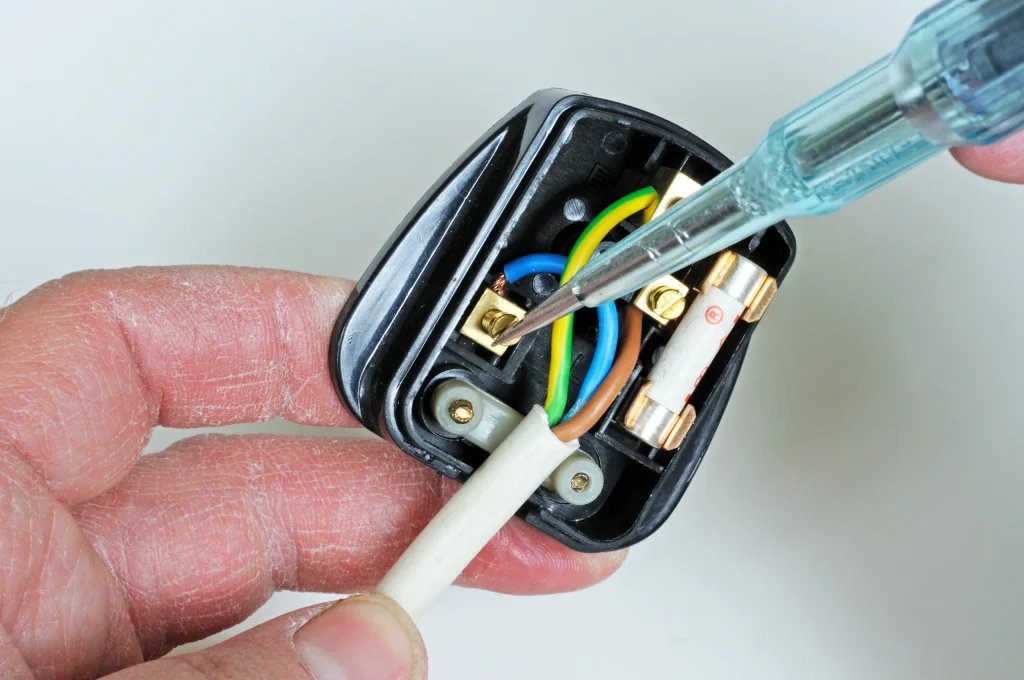

Brown goes to Live (L), Blue goes to Neutral (N), and Green/Yellow goes to Earth (E). The most common wiring mistake is cutting all three wires to the same length – each wire needs to be cut individually to reach its terminal, with the outer cable clamped under the cord grip, not the wires themselves.

Always ensure the appliance is unplugged before working on any part of the mains cable or plug. If you are not confident working with mains electrical connections, contact a qualified engineer. See our DIY repair safety guide before starting.
Fitting a new plug onto a washing machine mains cable is straightforward but must be done correctly. The most likely reason to need to do this is because the original moulded plug has been cut off to thread the cable through a small hole in a fitted kitchen cupboard.
Wire Colours: Where Each Wire Connects
| Wire Colour | Terminal | Label |
|---|---|---|
| Brown | Live | L |
| Blue | Neutral | N |
| Green / Yellow | Earth | E or ⏚ |
The Most Common Wiring Mistake
The most frequent error when fitting a plug is cutting all three wires to the same length before connecting them. Because the three terminals inside a 13A plug are not equidistant from the cable entry point, cutting all wires to the same length results in the brown wire – which has the shortest run to its terminal – being far too long.
This excess length forces the installer to loop the wire back into the plug, which in turn pushes the inner wires – rather than the outer cable jacket – under the cord grip. This is incorrect and potentially dangerous.

The purpose of the cord grip is to prevent the cable being pulled out of the plug. If the cord grip clamps the thin inner wires instead of the outer jacket, a tug on the cable can pull the wires free from their terminals, creating a shock or fire risk. The outer cable jacket must always be clamped under the cord grip.
How to Wire the Plug Correctly
-
Remove the plug cover and take note of where each terminal is positioned inside the plug and how far each is from the cable entry point.
-
Strip back the outer cable jacket to expose the three inner wires. At this stage all three wires will be the same length.
-
Hold the cable in position over the cord grip so that the outer jacket sits correctly under the grip when clamped. Do not cut anything yet.
-
With the cable held in position, measure and cut each wire individually to the length needed to reach its terminal – add approximately 5mm extra to each to ensure there is enough length to connect securely.
-
Strip approximately 6 to 7mm of insulation from the end of each wire.
-
Push the outer cable jacket under the cord grip and secure it. The grip must clamp the jacket, not the inner wires.
-
Connect each wire to its correct terminal – Brown to L, Blue to N, Green/Yellow to E – and tighten all terminal screws firmly.
-
Check that no bare copper is exposed outside a terminal, that no wires are trapped or pinched, and that the cord grip is clamped correctly on the outer jacket.
-
Refit the plug cover and tighten the cover screw.
The correct fuse rating for a washing machine is 13A. Do not fit a lower-rated fuse. If the original plug contained a different fuse, check the appliance data plate for the correct rating before fitting a replacement.
Need Help With a Washing Machine Electrical Fault?
If you suspect an electrical fault rather than a wiring issue, a qualified engineer should investigate before the appliance is used again.
Related Guides
 Washing Machine Fusing the Electrics
What to check if a washing machine is tripping the circuit breaker or blowing fuses – causes and what to do.
 Extension Leads for Washing Machines
Whether it is safe to use an extension lead with a washing machine, and what to look for if you need one.
 Should You Turn Appliances Off at the Socket?
Whether leaving washing machines and other white goods on standby is a safety or energy concern.
 DIY Repair Safety Guide
Essential safety rules before working on any appliance – electrical or otherwise.
Frequently Asked Questions
What colour wires go where in a UK plug?
Brown goes to the Live terminal (L), Blue goes to the Neutral terminal (N), and Green/Yellow goes to the Earth terminal (E or ⏚). These are the standard UK wire colours following the harmonised European colour coding introduced in 2004. Older appliances may have red (Live), black (Neutral), and green (Earth) – if working on old wiring, take extra care to identify wires correctly.
Why should the cord grip clamp the outer cable and not the wires?
The cord grip’s function is to prevent the cable from being pulled out of the plug under tension. If the grip clamps the thin inner wires rather than the tougher outer jacket, any pulling force is transferred directly to the wire terminals rather than the cable as a whole. This can pull wires free from their connections, creating a live exposed contact or a fire risk.
Why should I cut each wire to a different length?
Because the three terminals inside a 13A plug are at different distances from the cable entry point. If all wires are cut to the same length, the shortest-run wire (usually the brown Live) will be too long and cannot be connected neatly. Each wire should be cut individually to reach its terminal with a small amount of slack, not excess.
What fuse should I fit in a washing machine plug?
A 13A fuse is the correct rating for a washing machine. Do not fit a lower-rated fuse – washing machines draw significant current on startup and during heating, and an undersized fuse will blow unnecessarily. Check the appliance data plate if uncertain about the rated current draw.
Is it legal to wire my own plug?
Yes. Fitting a replacement plug on a domestic appliance in the UK is permitted work that does not require a qualified electrician. However, the work must be done correctly and safely. If you are not confident, contact a qualified engineer rather than risk a dangerous connection.