
Can you use a tumble dryer without a vent hose?
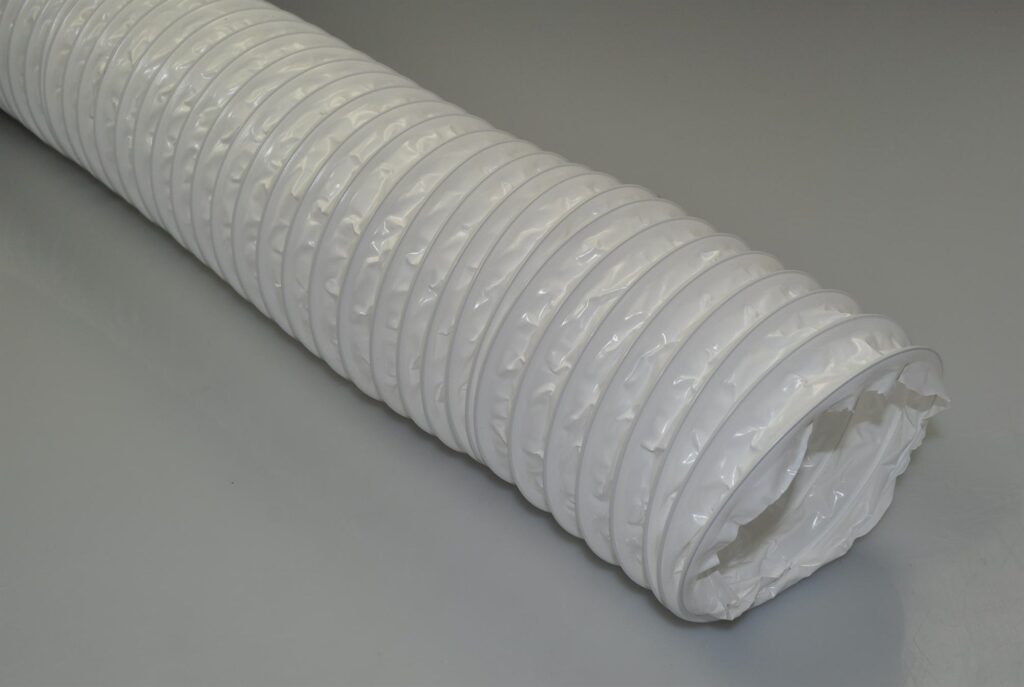

A vented tumble dryer will function without a vent hose as long as it is freestanding with open space around it and adequate ventilation in the room. Without a hose, the dryer exhausts hot moist air, fluff, and lint directly into the room – causing condensation on cold surfaces and potentially mould over time. If installing a proper external vent is not possible, keep the room well ventilated and ensure the machine is not enclosed in a confined space.
What Happens When a Vented Dryer Runs Without a Hose
A vented tumble dryer works by drawing fresh air in, heating it, passing it through the drum to carry away moisture, and exhausting the hot damp air out through the vent. Without a hose directing this exhaust outside, everything that would normally exit the building instead stays in the room:
 What vents into the room without a hose
- Hot, moist air – raising the humidity in the room significantly
- Fluff and lint – which settles on surfaces throughout the room
- Condensation on cold surfaces – walls, windows, tiles, and nearby appliances in cold weather
- Over time, mould growth on rubber seals, window frames, and other surfaces where condensation repeatedly forms
In a well-ventilated room with a window open, these effects are manageable. In a sealed room, particularly in cold or damp weather, they become a significant problem relatively quickly.
When It Is Acceptable to Run Without a Hose
-
The dryer is freestanding – not enclosed.
The machine must be able to draw fresh air in freely from all sides. A dryer pushed under a kitchen worktop, fitted into a tight alcove, or placed in an enclosed cupboard cannot take in adequate fresh air if its exhaust is not directed outside. It will overheat and may trigger the thermal cut-out, or worse. A freestanding dryer in an open position is different – it can draw air from the room even while exhausting into it.
-
The room has adequate ventilation.
Open a window or door while the dryer is running. This allows the hot moist air to escape and fresh air to enter. Without any ventilation, humidity builds to the point where condensation forms on every cold surface. Even a slightly open window makes a significant difference.
-
The alternative – run the hose through a window.
Rather than running the hose permanently through an exterior wall, running it temporarily through an open window or door when the dryer is in use is a practical compromise. This directs the exhaust outside without permanent installation and avoids the condensation and fluff problems of exhausting into the room.

A vented tumble dryer fitted under a worktop, in a cupboard, or in any enclosed position must have a vent hose directing exhaust outside or at minimum into the room via a route that allows fresh air to enter from elsewhere. An enclosed dryer that cannot draw in fresh air and cannot exhaust hot air will overheat. This is a fire risk. See our guide on tumble dryer fire risk from blocked filters and poor ventilation.
Internal Condenser Vent Kits
Internal condenser vent kits are accessories that attach to the end of a vent hose and direct the exhaust into a plastic container of water. The theory is that the water captures the moisture and lint rather than releasing them into the room. User experience with these products is very mixed – many report them as largely ineffective, particularly in terms of containing moisture and lint. Some users find them adequate for occasional use. They are not equivalent to proper external venting and should be treated as a partial mitigation rather than a solution.
Consider a Condenser Dryer Instead
If installing a vent hose is genuinely not possible and the limitations of running without a hose are unacceptable, a condenser tumble dryer is the practical alternative. Condenser dryers do not require a vent hose – they convert moisture into water that collects in a drawer. They can be installed anywhere accessible, though they still produce heat that can cause condensation on cold surfaces in very cold rooms. See our guide on condenser vs vented tumble dryers for a full comparison.
Related Guides
Related Guides
 Condenser vs Vented Tumble Dryer
Pros and cons of each type – installation requirements, running costs, and which suits different homes.
 Can You Extend a Tumble Dryer Vent Hose?
Why extending beyond the maximum recommended length causes problems – and what to do instead.
 Condenser Dryer Causing Condensation
Why condenser dryers still cause condensation in the room even without a vent hose – and how to manage it.
 Tumble Dryer Fire Risk From Blocked Filters
Why lint accumulation is a fire risk – and the safety rules for any tumble dryer installation.
Frequently Asked Questions
Can a vented tumble dryer be used without a vent hose?
Yes, if it is freestanding with adequate space around it and the room has enough ventilation. Without a hose, the dryer exhausts hot moist air, fluff, and lint directly into the room. This causes condensation on cold surfaces and lint deposits throughout the space. It works as a short-term measure with good ventilation but is not recommended for regular long-term use due to damp and mould risks.
What happens if a vented dryer is in an enclosed space without venting?
The dryer will not be able to draw in adequate fresh air and cannot exhaust the hot moist air it produces. It will overheat, the thermal cut-out will trip, and the machine will stop. In a severe case, this is also a fire risk. Any vented dryer that is enclosed – under a worktop, in a cupboard, or in a tight alcove – must have a vent hose directing exhaust outside or at minimum into the room via an opening that allows fresh air to enter from elsewhere.
Are indoor condenser vent kits any good?
User experience is mixed. These kits direct the exhaust hose into a water-filled container to capture moisture and lint before they enter the room. Many users find them largely ineffective, particularly for moisture. Some report reasonable results for occasional use. They are not equivalent to proper external venting and do not prevent humidity build-up in the room as effectively as directing the hose outside.
30 Comments
Grouped into 29 comment threads.
0 replies Garden sheds are very poor places for appliances as they get very cold, very hot, plus damp and condensation can cause problems. Even a long extension lead isn't ideal. Regarding venting during use though there should be no problems hanging the pipe out of the door instead of a window.
0 replies We are expecting our first baby and the wife would like a tumble dryer. The only place we can have one is in our garden shed and running an outdoor extension lead to power it...not ideal i know but its the only option. Providing the dryer is covered during the winter to help prevent the extreme temps, would there be a problem in putting the venting pipe out of the front door of the shed? We're in rented property so i dont really want to go drilling holes in the shed just in case. Thanks very much!
We are expecting our first baby and the wife would like a tumble dryer. The only place we can have one is in our garden shed and running an outdoor extension lead to power it…not ideal i know but its the only option. Providing the dryer is covered during the winter to help prevent the extreme temps, would there be a problem in putting the venting pipe out of the front door of the shed? We’re in rented property so i dont really want to go drilling holes in the shed just in case.
Thanks very much!
0 replies Claire: Yes a condenser dryer will be much better than a vented dryer although it's possible some condensation will still occur if the room is cold and has any cold surfaces such as tiles. For more information read this page - What's the difference between a condenser tumble dryer and a vented tumble dryer?
Claire: Yes a condenser dryer will be much better than a vented dryer although it’s possible some condensation will still occur if the room is cold and has any cold surfaces such as tiles. For more information read this page – What’s the difference between a condenser tumble dryer and a vented tumble dryer?
0 replies I need to buy a tumble dryer as I have not long had a baby and my washing pile is getting rediculous. It will need to go in my utility room but it has no heating there so is really cold during the winter. Venting is a bit of a problem too so do you think a condeser dryer will be ok to use without causing damp or mould?
I need to buy a tumble dryer as I have not long had a baby and my washing pile is getting rediculous. It will need to go in my utility room but it has no heating there so is really cold during the winter. Venting is a bit of a problem too so do you think a condeser dryer will be ok to use without causing damp or mould?
0 replies Chelsea: As long as the pipe isn't too long. If you have to make it too long it can become ineffective. Chrisdina: Never heard of using ice, the pipe shouldn't be blocked in any way or the hot air can't escape and the dryer can overheat. If the hose won't reach I would use it in a well ventilated area. Those devices you can buy to vent into aren't much cop from what I've seen.
Chelsea: As long as the pipe isn’t too long. If you have to make it too long it can become ineffective.
Chrisdina: Never heard of using ice, the pipe shouldn’t be blocked in any way or the hot air can’t escape and the dryer can overheat. If the hose won’t reach I would use it in a well ventilated area. Those devices you can buy to vent into aren’t much cop from what I’ve seen.
0 replies I have had a Servis Tumble dryer for some 17 yrs now, have not been using it for the last 15 yrs. I have noticed recently that when I dry my clothes in-doors i.e, using a clothes horse that my clothes smell awful, so I have decided to use my tumble dryer again, the problem is that the hose at the back is damaged in several different places. Where my dryer is now located, in my kitchen, it is too far from my window & door. Have been reading online about which Venting Kit to get but the blogs that refer to using ICE has me stumped,when I was using my dryer before I never used ICE. Can you please explain why ICE is being used, thank you. Also could I use a large towel & wrap it around the hose of the dryer to stop the condensation & dust??,thanks.
I have had a Servis Tumble dryer for some 17 yrs now, have not been using it for the last 15 yrs. I have noticed recently that when I dry my clothes in-doors i.e, using a clothes horse that my clothes smell awful, so I have decided to use my tumble dryer again, the problem is that the hose at the back is damaged in several different places. Where my dryer is now located, in my kitchen, it is too far from my window & door. Have been reading online about which Venting Kit to get but the blogs that refer to using ICE has me stumped,when I was using my dryer before I never used ICE. Can you please explain why ICE is being used, thank you. Also could I use a large towel & wrap it around the hose of the dryer to stop the condensation & dust??,thanks.
0 replies Hiya, I have been handed a vent dryer by a friend, I've used it in my student house, where a window is available in good reach from the dryer, and everything was fine. I am now taking it home, but the window is beyond the dryer by kitchen counters/sinks etc. If finding a long enough pipe, would it still be okay for the vent pipe to be sitting outside a window? Is it okay to use still as long as the pipe is sitting outside the window? I don't want it to create any damp/mould etc into my mums place?
Hiya, I have been handed a vent dryer by a friend, I’ve used it in my student house, where a window is available in good reach from the dryer, and everything was fine. I am now taking it home, but the window is beyond the dryer by kitchen counters/sinks etc. If finding a long enough pipe, would it still be okay for the vent pipe to be sitting outside a window? Is it okay to use still as long as the pipe is sitting outside the window? I don’t want it to create any damp/mould etc into my mums place?
0 replies That's what the article says amanda :)
That’s what the article says amanda :)
0 replies Hey I just moved into a house that does not have a dryer vent to hook up a dryer vent hose. I will be putting in a hole to hook it up and run it threw the crawl space. Until then is it ok to use my dryer for like 2 weeks til I get it all hooked up?
Hey I just moved into a house that does not have a dryer vent to hook up a dryer vent hose. I will be putting in a hole to hook it up and run it threw the crawl space. Until then is it ok to use my dryer for like 2 weeks til I get it all hooked up?
0 replies Barbara: If it's a large cupboard and it doesn't create condensation on the walls or on the meter itself it shouldn't be an issue. I would try to keep the door open when in use if it is creating condensation.
Barbara: If it’s a large cupboard and it doesn’t create condensation on the walls or on the meter itself it shouldn’t be an issue. I would try to keep the door open when in use if it is creating condensation.
0 replies I have just moved house and have put my condensor dryer in the same cupboard as my electric meters. Is this safe?
I have just moved house and have put my condensor dryer in the same cupboard as my electric meters. Is this safe?
0 replies Anonymous: The water is condensing in the vent hose. Try to make sure the hose doesn't have any big bends, also make sure the hose is fitted to a proper vent grill with a cowling or shutters, which prevents the wind blowing fluff and the hot air back into the pipe. Sharon Roberts: I wouldn't do that. Outside is no place for domestic electrical appliances.There must be some room somewhere in the house for a small dryer. We used to have one in one of our bedrooms. Melvin: Did the hose eventually go outside? Not sure exactly what you mean.
Anonymous: The water is condensing in the vent hose. Try to make sure the hose doesn’t have any big bends, also make sure the hose is fitted to a proper vent grill with a cowling or shutters, which prevents the wind blowing fluff and the hot air back into the pipe.
Sharon Roberts: I wouldn’t do that. Outside is no place for domestic electrical appliances.There must be some room somewhere in the house for a small dryer. We used to have one in one of our bedrooms.
Melvin: Did the hose eventually go outside? Not sure exactly what you mean.
0 replies I just purchase a home and discovered that the previous home owner did not run the dryer vent outside, but instead run it inside the wall. Can I put a socking on the end of the dryer holes? or What do I need to do?
I just purchase a home and discovered that the previous home owner did not run the dryer vent outside, but instead run it inside the wall. Can I put a socking on the end of the dryer holes? or What do I need to do?
0 replies we have inherited a 3yr old Bellers tumble dryer from the owners of the flat we have bought . It has been put in a cupboard in the hall. We couldn't understand why the washing wasn't drying. Is there any way we can get it to work without having to replace it with a condensor dryer.
we have inherited a 3yr old Bellers tumble dryer from the owners of the flat we have bought . It has been put in a cupboard in the hall. We couldn’t understand why the washing wasn’t drying. Is there any way we can get it to work without having to replace it with a condensor dryer.
0 replies We are considering buying a dryer as we have a little baby and our mountain of clothes is ever expanding. We are thinking of putting it in the back garden and covering it with a tarpaulin. If we were to do this would it make sense to buy a vented one which is cheaper than the condenser?
We are considering buying a dryer as we have a little baby and our mountain of clothes is ever expanding. We are thinking of putting it in the back garden and covering it with a tarpaulin. If we were to do this would it make sense to buy a vented one which is cheaper than the condenser?
0 replies Our vent pipe from our Tumble drier has quite a lot of water sitting in the bottom of the bend during use, and we have to lift it along the length and empty it in to a bowl, do you know why this is happening please? we put the end of the vent pipe out of an open window when drier is in use. Terry
Our vent pipe from our Tumble drier has quite a lot of water sitting in the bottom of the bend during use, and we have to lift it along the length and empty it in to a bowl, do you know why this is happening please? we put the end of the vent pipe out of an open window when drier is in use.
Terry
0 replies You should still be able to buy front vented dryers but they aren't easy to find, especially on the internet as searching for front vented dryers tends to bring up normal dryers because the search engines pick up on the word "venting". They also seem to pick up on many tumble dryer pictures that have the word "front" in their description but only referring to the fact that it's a picture of the front. It might be better to ring companies and specifically ask for front vented dryers. Some may have options to vent at from or rear, or even one side but the majority are likely to vent only from the rear. I have a good list of all sorts of retailers on Washerhelp, although on Washerhelp all these retailers sell all household appliances too. You can get phone numbers or search through their dryers using this link - Buy household appliances
You should still be able to buy front vented dryers but they aren’t easy to find, especially on the internet as searching for front vented dryers tends to bring up normal dryers because the search engines pick up on the word “venting”. They also seem to pick up on many tumble dryer pictures that have the word “front” in their description but only referring to the fact that it’s a picture of the front.
It might be better to ring companies and specifically ask for front vented dryers. Some may have options to vent at from or rear, or even one side but the majority are likely to vent only from the rear.
I have a good list of all sorts of retailers on Washerhelp, although on Washerhelp all these retailers sell all household appliances too. You can get phone numbers or search through their dryers using this link – Buy household appliances
0 replies Hi, Do you know any makes of vented dryers that have the vent pipe that comes from the front. Where my new dryer will be going I need it in the front so I can put the hose out the back door? Many thanks, Maureen.
Hi, Do you know any makes of vented dryers that have the vent pipe that comes from the front. Where my new dryer will be going I need it in the front so I can put the hose out the back door?
Many thanks, Maureen.
0 replies Helena: There may be some information to answer your question here - Why does my condenser tumble drier make the walls run with condensation? S Shakil: If you mean those hoses that go into a plastic box I don't rate them.
Helena: There may be some information to answer your question here – Why does my condenser tumble drier make the walls run with condensation?
S Shakil: If you mean those hoses that go into a plastic box I don’t rate them.
0 replies I have, after many years, of just drying clothes in the garden, now decided to buy a Vented Hotpoint tumble dryer... and nearly ordered it before realising that the pipe may not comfortably go from my floor standing unit to the window above it. Now, I do have a window and a door in the utility room and the window is open always due to the boiler being the same room, I was wonder if the Universal Tumble Dryer Condenser kit does the job and saves me sticking a pipe out the window in the an awkward manner? Are these kits any good , has anyone used one sucessfully?
I have, after many years, of just drying clothes in the garden, now decided to buy a Vented Hotpoint tumble dryer… and nearly ordered it before realising that the pipe may not comfortably go from my floor standing unit to the window above it. Now, I do have a window and a door in the utility room and the window is open always due to the boiler being the same room, I was wonder if the Universal Tumble Dryer Condenser kit does the job and saves me sticking a pipe out the window in the an awkward manner? Are these kits any good , has anyone used one sucessfully?
0 replies The wall behind my washing machine is very wet. I have had all the plumbing replaced and there was not a problem. I have a condensor tumble dryer stacked on top. The wall behind this is dry but could this be causing the problem and if so what can I do about it.
The wall behind my washing machine is very wet. I have had all the plumbing replaced and there was not a problem. I have a condensor tumble dryer stacked on top. The wall behind this is dry but could this be causing the problem and if so what can I do about it.
0 replies Looking to purchase a tumble dryer to be used in my garage. I have heard that some do not work in cold conditions. Do you know of any that will work in really cold conditions.
Looking to purchase a tumble dryer to be used in my garage. I have heard that some do not work in cold conditions. Do you know of any that will work in really cold conditions.
0 replies Many thanks - the repair was covered by warranty this time but I will certainly challenge further if it fails again. Much appreciate the advice.
Many thanks – the repair was covered by warranty this time but I will certainly challenge further if it fails again. Much appreciate the advice.
1 reply my Miele service engineer has just told me that using a condenser dryer in the garage is not good because they are affected by the cold/damp - is this true? it sounded like an excuse because the heater bank has needed replacing for the 2nd time in 6 months. The machine is 5 years old, has been in the garage for 4 years and has been OK up until now (just as the warranty runs out ...).
my Miele service engineer has just told me that using a condenser dryer in the garage is not good because they are affected by the cold/damp – is this true? it sounded like an excuse because the heater bank has needed replacing for the 2nd time in 6 months. The machine is 5 years old, has been in the garage for 4 years and has been OK up until now (just as the warranty runs out …).
Likely replying to Rachel
Hello Rachel: Using any white goods appliance in a garage can be problematic, and is less than ideal for sure, but many thousands of people do. I have in my garage 2 upright freezers, one fridge, a washing machine and a condenser tumble dryer all of which appear to work ok.
However, during the recent extremely cold spell the water pipes to the washing machine did burst and the garage flooded. Also on our freezers the fronts often get a large wet patch of condensation as do the sides. I think this occurs when we use the washer and the tumble dryer if we don’t open the garage door to let air circulate.
I find it hard to imagine how being in a garage would cause a tumble dryer’s heater to fail. If it were mine I would want more details on exactly how it has caused the heater to fail rather than just a general, “they don’t like it in the garage” remark.
Here are some of my other articles that are relevant to appliances in garages
0 replies Lots of spares and accessories can be hard to get, especially if the models are a few years old. The best place to buy a venting kit for the WK427 is likely to be the manufacturer themselves although there are venting kits available here - Venting kits
Lots of spares and accessories can be hard to get, especially if the models are a few years old. The best place to buy a venting kit for the WK427 is likely to be the manufacturer themselves although there are venting kits available here – Venting kits
0 replies Emma: If the walls are cold then it may cause condensation. The severity will depend on the temperature outside and it's likely to be worse in winter. If you have the window open it could prevent problems but it depends on several factors. If the dryer could be turned to face the window then more of the hot air could find its way outside but if not practical you'll just need to monitor the situation. If the walls starts getting wet you know you are likely to have issues.It may be OK, fingers crossed, black mould is likely to start slowly at first so keep an eye out for it.
Emma: If the walls are cold then it may cause condensation. The severity will depend on the temperature outside and it’s likely to be worse in winter.
If you have the window open it could prevent problems but it depends on several factors. If the dryer could be turned to face the window then more of the hot air could find its way outside but if not practical you’ll just need to monitor the situation.
If the walls starts getting wet you know you are likely to have issues.It may be OK, fingers crossed, black mould is likely to start slowly at first so keep an eye out for it.
0 replies Hi i have just bought a 3kg white knight vented dryer. It cam without a hose. So what i have done is put in in my pantry with its back to the window and the window is half open and i have left the door open. My question is will this cause mould or anything as the man who delivered it says it will be fine. Iam scared of it getting mouldy but i have used it already and so far nothing. am i safe to continue using this? I would appreciate it if u got back to me asap. Thankyou Emma Deighan
Hi i have just bought a 3kg white knight vented dryer. It cam without a hose. So what i have done is put in in my pantry with its back to the window and the window is half open and i have left the door open. My question is will this cause mould or anything as the man who delivered it says it will be fine. Iam scared of it getting mouldy but i have used it already and so far nothing. am i safe to continue using this? I would appreciate it if u got back to me asap.
Thankyou Emma Deighan
0 replies Tom: This advice may be useful Tumble dryer buying advice I would stick to AEG, John Lewis, Electrolux, Miele or Bosch brands.
Tom: This advice may be useful Tumble dryer buying advice
I would stick to AEG, John Lewis, Electrolux, Miele or Bosch brands.
0 replies We have just returned from a holiday in France and had a great condenser tumble drier at the holiday home. It had a large water collection vessel that needed to be emptied after each cycle. It appeared to not need any venting at all and was highly effective and efficient. We're keen to see if we can get one but do not know if they are as a good as it seemed as we have read similar poor reviews on condenser driers. Does anyone have any recommendations / comments - particualrly as we plan to house the drier in large kitchen.
We have just returned from a holiday in France and had a great condenser tumble drier at the holiday home. It had a large water collection vessel that needed to be emptied after each cycle. It appeared to not need any venting at all and was highly effective and efficient.
We’re keen to see if we can get one but do not know if they are as a good as it seemed as we have read similar poor reviews on condenser driers.
Does anyone have any recommendations / comments – particualrly as we plan to house the drier in large kitchen.
Garden sheds are very poor places for appliances as they get very cold, very hot, plus damp and condensation can cause problems. Even a long extension lead isn’t ideal. Regarding venting during use though there should be no problems hanging the pipe out of the door instead of a window.