
Should washing machine be serviced regularly?
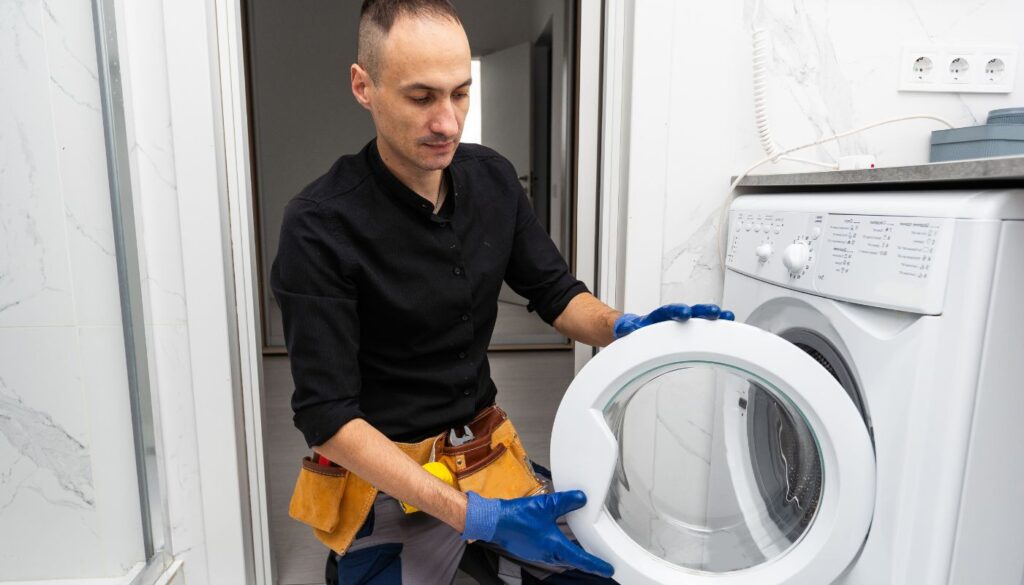

A washing machine that won’t drain is almost always caused by a blockage somewhere in the drainage path, something jammed in the pump impeller, or pump failure. The first step is always to establish whether the pump is running or not – this determines which direction to investigate. Before starting, check whether the machine simply has a blown fuse or faulty wall socket, as this can cause a drain failure with no fault on the machine itself.

If the washing machine has only recently been installed or moved and now won’t drain, the cause is often simpler than a blockage or pump fault. See our guide on washing machine won’t drain after being moved or plumbed in before investigating further.
Step 1: Check the Basics First
If the machine has stopped mid-cycle with water inside and will not respond, check that the fuse has not blown and the wall socket is working correctly before investigating a drainage fault. A dead machine caused by a blown fuse or faulty socket looks identical to a machine with a drainage fault – but resolving the power issue gets the machine running again and pumps the water out without any further work.
Step 2: Drain the Water Manually
Before investigating the drain fault, as much water as possible needs to be removed from the machine. Attempting to access the pump filter or move the machine with a full drum is messy and risky.
See our full guide on how to manually drain water from a washing machine. Return here once the water has been drained to identify the cause.
Step 3: Establish Whether the Pump Is Running
This is the key diagnostic question. The answer determines which cause to investigate.
 Pump IS running but not draining
If the pump can be heard running normally but water is not being cleared, suspect a blockage in the drainage path. The pump is working but cannot push water through. Investigate the pump filter, drain hose spigot, and U-bend connection.
 Pump is NOT running
If the pump is not running, suspect a physical jam inside the pump impeller, a failed pump motor, or an electrical fault. Do not investigate blockages – a blocked filter cannot stop the pump from running or making noise.
Some Hotpoint, Whirlpool, and Indesit machines switch the pump off automatically when no water is detected inside the drum. If testing without water in the machine, this may be why the pump does not run – it is not necessarily a fault.
If the Pump Is Not Running
The most common reason a pump does not run is a physical obstruction jamming the impeller. With the machine unplugged and water drained, access the pump and check the impeller by hand:
-
The impeller should rotate fairly freely. It may have a slight magnetic resistance at one consistent point per revolution – this is normal. If it will not turn at all or is loose on the shaft, it is jammed or damaged. -
Listen when the machine attempts to drain. A humming sound instead of the normal pump noise suggests the pump motor is receiving power and is electrically functional but cannot rotate because it is physically jammed. -
If the impeller turns freely and the pump is not jammed, the pump motor needs electrical testing. A continuity test across the pump terminals checks for an open circuit winding – standard washing machine pump windings measure approximately 165 ohms. An open circuit reading confirms pump motor failure. This testing requires a multimeter and knowledge of safe electrical testing – if in doubt, book an engineer.
If the Pump Is Running – Check for Blockages
Work through the drainage path from the simplest and most accessible check to the most involved.
-
Check the drain hose spigot connection at the U-bend.
If the drain hose connects to a plastic spigot screwed into the U-bend under the sink, unscrew the spigot and inspect the opening. Small objects, accumulated lint, or threads can build up here and restrict flow enough to prevent drainage despite the pump running normally. This check requires no tools and does not require moving the machine.
-
Check and clean the pump filter.
Most washing machines have a pump filter accessible at the front base behind a panel or kickplate. Place towels on the floor and slowly unscrew the filter cap – water will escape as it opens. Remove the filter and check for blockages. A sock, large accumulation of lint, or similar object physically blocking the filter could account for the drainage failure. A few coins or buttons alone are unlikely to be the cause – only a substantial obstruction will stop drainage. See our guide on washing machine pump filter location and cleaning.
-
Inspect inside the pump chamber through the filter opening.
With the filter removed, shine a torch into the pump chamber where the impeller is visible. Objects such as coins, hairbands, hair grips, or bra underwires can get drawn through the filter and lodge against or inside the impeller. These make a loud grinding noise when the pump runs. Remove any objects found.
-
If no blockage is found at accessible points – consider an engineer.
If the pump is running, water is not draining, and no blockage is found in the filter, spigot, or U-bend, the blockage may be in a less accessible location – inside the sump hose, the pump chamber itself, or further along the drain hose. If water drained out easily when manually drained through the filter, this suggests no physical blockage in those routes. See our guide on no blockage but still not draining.
Two Variations of Drain Failure
There are two distinct patterns of drain failure with different implications:
| Pattern | Description | Most likely cause |
|---|---|---|
| No water pumped out at all | The drum remains completely full – not one drop has been cleared | Pump not running (jam, failure, or electrical fault), or complete blockage of the drainage path |
| Partial drainage only | Some water clears but a significant amount remains in the drum | Partial blockage somewhere in the drainage path, or an intermittent pump fault. Also consider whether another fault (such as an out-of-balance load preventing full spin) is responsible for residual water |
Testing pump motor windings requires working with electrical components. Ensure the machine is unplugged before accessing any internal components. If unsure about any step in this diagnosis, book a qualified engineer rather than risk electric shock. See our guide on DIY appliance repair safety.
Need Parts or a Repair?
Related Guides
 Washing Machine Pump Filter
Where to find the pump filter, how to access it, and what to look for when checking for blockages.
 No Blockage But Still Not Draining
What to investigate when the pump is running, no blockage is found, but the machine still won’t drain.
 Won’t Drain After Being Moved
Why a recently installed or moved machine may not drain – often a simpler fix than a pump fault.
 All About Washing Machine Pumps
How washing machine drain pumps work, how to test them, and when to replace rather than repair.
Frequently Asked Questions
Why won’t my washing machine drain?
The most common causes are a blockage in the pump filter, drain hose spigot, or U-bend connection; something physically jammed in the pump impeller; or pump motor failure. The first diagnostic step is to establish whether the pump is running or not – this determines which cause to investigate. If the pump is running normally but not clearing water, suspect a blockage. If the pump is not running, suspect a jam or motor failure.
How do I know if the pump is running?
Listen carefully when the machine should be draining. A working pump produces a consistent humming or whirring sound that is clearly audible. If no sound is coming from the pump position (usually bottom-front of the machine), the pump is not running. A humming sound without the normal noise could indicate the pump motor is receiving power but the impeller is physically jammed.
Can I fix a blocked pump filter myself?
Yes – cleaning the pump filter is a routine maintenance task. Place towels on the floor, locate the filter access panel at the front base of the machine, slowly unscrew the filter cap to allow residual water to drain out, then remove and clean the filter. Refit securely before running the machine. See our pump filter guide for specific instructions by machine type.