
Low water pressure and washing machines
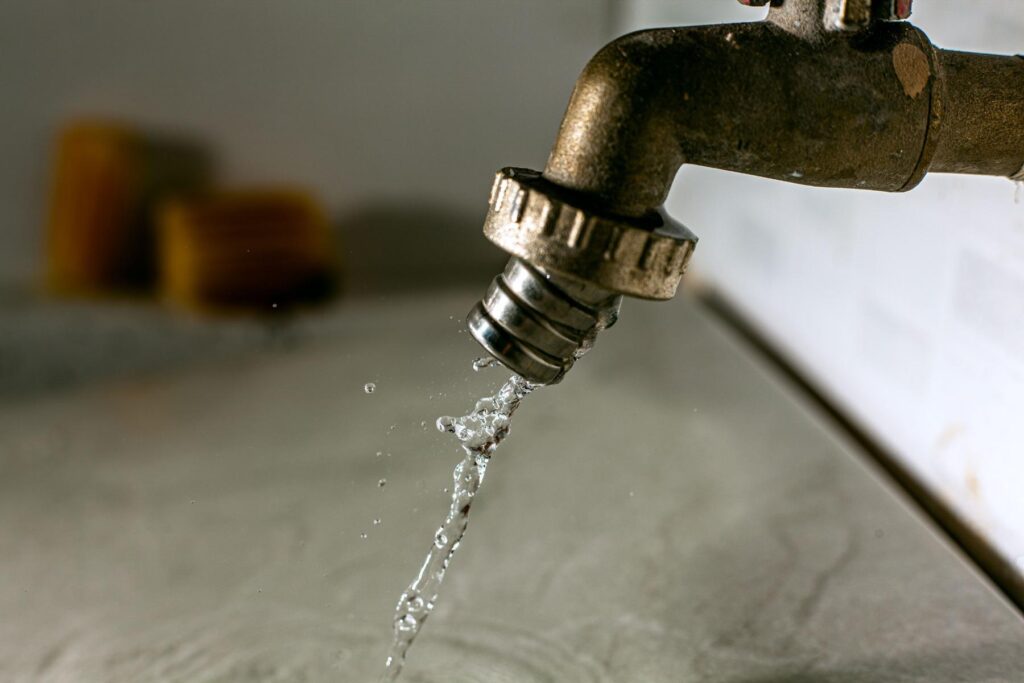

Modern washing machines use software-controlled fill timers rather than the mechanical timers of older machines. If water pressure is too low to fill the drum within the programmed time limit, the machine aborts the cycle and displays an error code. UK water companies are required to supply mains water at a minimum of 1 bar, which should be sufficient for most machines. Problems are most common with unconventional supplies such as bore holes, wells, or header tanks.
Why Modern Washing Machines Are Less Tolerant of Low Pressure
Older washing machines used mechanical programme timers. During filling, the timer motor paused and waited until the pressure system confirmed the correct water level was reached – however long that took. Low water pressure slowed the fill but the machine still completed its cycle.
Modern machines are controlled by software on a PCB. The fill stage runs on a timed basis – the software monitors the water level and if the required level is not reached within a preset time limit, the programme times out. This triggers an error code and aborts the cycle. A washing machine that worked adequately for years on an older machine may cause repeated errors on a new machine drawing water from the same supply, purely because the new machine’s fill timer is less tolerant.
Time-limited fill stages are a safety feature. If a hose bursts or a major leak develops during filling, the machine will detect that the water level is not rising correctly and stop rather than continue pumping water onto the floor. The timeout also triggers if a water valve fails to open. Manufacturers set these limits conservatively, and in some cases slightly too conservatively for very low-pressure supplies.
Minimum Water Pressure Requirements
| Source | Minimum pressure | Notes |
|---|---|---|
| UK mains supply (legal minimum) | 1 bar | Water companies are obliged to supply at this level. Most supplies exceed this |
| Electrolux, AEG, Zanussi machines | 0.5 bar | Maximum fill time of 10 minutes. Below 0.5 bar the inlet valve may not close fully, allowing water to seep in when switched off |
| Miele washing machines | 1 bar | Miele engineers can adjust the fill time allowance on some models to accommodate borderline pressure situations |
| Header tank supply (gravity fed) | Minimum 16.5 feet (approx 5 metres) tank height above machine | If this height cannot be achieved, a pressure-activated pump is required – not a flow-operated pump |

Washing machine inlet valves rely on water pressure to close fully. Below approximately 0.5 bar, the valve may not seal completely, allowing a slow seep of water into the drum even when the machine is switched off. This can also be caused by a faulty tap that does not fully close, reducing the effective pressure at the valve. If a machine is slowly filling overnight, check both the water pressure and the condition of the supply tap.
5 Things to Check if Low Pressure Is Causing Problems
-
Check the supply tap and fill hoses.
Ensure the tap supplying the machine is fully open. Quarter-turn lever taps can appear fully open but be partially seized internally – particularly the common blue-and-red lever type, which can crack or become caked with debris inside. Check that no fill hose is kinked. If uncertain about flow rate, disconnect the fill hose and run it into a bucket to check the flow directly.
-
Check the main stopcock.
If water pressure is low throughout the house, confirm the main stopcock is fully open. If mains pressure is genuinely below 1 bar, contact the water supplier – they are legally required to supply at this minimum level and should investigate.
-
Replace self-tapping saddle clamp taps.
Self-tapping taps that pierce a hole in the copper pipe to create a connection often deliver restricted flow because the pierced hole is small and rarely clean. In borderline pressure situations, replacing these with proper isolating valves fitted by a plumber can make a significant difference to flow rate at the machine.
-
If fed from a header tank, check the tank height.
A gravity-fed supply from a header tank needs the bottom of the tank to be at least approximately 5 metres (16.5 feet) above the top of the washing machine to achieve sufficient pressure. If this height cannot be achieved, a pressure-activated booster pump is the only solution. Note that a flow-operated pump (as used for showers) is not suitable – it must be a pressure-activated type that maintains system pressure even when no water is flowing.
-
Try running the machine at a different time of day.
Mains water pressure can vary depending on overall demand from the local network. In some areas, pressure is noticeably lower during peak periods such as mornings or early evenings. If the problem is borderline, running the machine at an off-peak time may allow it to fill within the time limit.
What Pressure Is “1 Bar”?
1 bar of pressure is equivalent to the force needed to push water to a height of approximately 10 metres. A mains supply at 1 bar can therefore push water up a vertical pipe 10 metres tall and still have water coming out at the top. For most domestic installations this is more than adequate. Properties with very low-lying mains connections or those at the end of long supply runs in rural areas are most likely to experience pressure below the minimum threshold.
Options If the Pressure Cannot Be Increased

Pressure-activated booster pump
A pressure-activated pump pressurises the household water system to 2 to 5 bar even when no water is flowing. This is the correct type for washing machine use. A flow-operated pump (the type used for shower boosters) is not suitable – it only runs when water is flowing and cannot maintain the inlet valve closure pressure needed by the machine.

Ask the manufacturer about fill time adjustment
On some models, the fill time limit can be extended by an engineer. Miele explicitly offers this as a service – their engineers can adjust the programme to allow more time for filling on borderline low-pressure supplies. This is likely to be a chargeable service call. It may be worth asking other manufacturers whether similar adjustment is possible on their machines, though most do not offer this.

Choose a machine with a longer fill timeout
Fill time limits vary between models and manufacturers. Some machines allow more time than others before triggering an error. If purchasing a new machine in a known low-pressure situation, research the fill time tolerance of specific models before buying. Electrolux group machines (AEG, Zanussi, Electrolux) use a 10-minute maximum fill time and work from 0.5 bar – a longer timeout than many competitors.
Related Guides
 Washing Machine Won’t Fill With Water
Full diagnosis for fill faults – pressure, valves, hoses, and pressure chamber issues.
 Washing Machine Filling When Switched Off
Why water enters the drum when the machine is not running – inlet valve and water pressure causes.
Tips for Connecting a Washing MachineCorrect tap types, hose connections, and how to avoid common installation errors.
 Washing Machine Hoses and Plumbing
Fill hoses, drain hoses, and water supply connections – what to check and how.
Frequently Asked Questions
Why does my new washing machine not fill but the old one did?
Older machines used mechanical programme timers that paused during filling until the correct water level was reached, regardless of how long it took. Modern machines use software-controlled fill timers – if the required water level is not reached within a preset time, the programme aborts. The same low water pressure that was tolerated by the old machine’s mechanical system is not tolerated by the new machine’s timed fill stage.
What is the minimum water pressure for a washing machine?
UK water companies are legally required to supply mains water at a minimum of 1 bar. Most machines are designed to work at this level. Electrolux group machines (AEG, Zanussi, Electrolux) will work down to 0.5 bar with a 10-minute fill timeout. Miele machines typically require 1 bar minimum but can be adjusted by their engineers. Below approximately 0.5 bar, inlet valves on most machines cannot close fully, risking slow water ingress when the machine is switched off.
Can a booster pump solve low water pressure for a washing machine?
Yes, if the correct type is used. A pressure-activated booster pump maintains system pressure at 2 to 5 bar even when no water is flowing. This is the type required for washing machine use. A flow-operated pump (as used for shower boosting) is not suitable – it cannot maintain the minimum inlet valve closure pressure the machine needs when idle.
102 Comments
Grouped into 88 comment threads.
2 replies Hello! I am so happy to have found this blog - I was starting to think I was 'doomed' and had some kind of washing machine 'curse'. No kidding. Thanks to Tim (#35. February 14th, 2009, at 4:40 PM.) I have finally been able to confirm that I definitively have low water pressure - just under 5 litres in one minute. However, I am still not sure if that is what is causing my problems, and I hope you, or someone, can help me - I do not live in Europe, and where I am there is no service, nothing professional to say the least. I can only call the store that sold me the machine, but they are not authorised to do repairs. They will only send some poor, abused, underpaid, mistreated and unskilled labourer to fiddle with the machine, and probably make things worse than they are now. Namely, here's the overview of the issues I have been experiencing. First I had an LG front-loading 7kg washer. All was well for about a year - except for the fact that loads would take slightly longer to complete than company predicted time, due to the low water pressure, which we suspected all along. Fine. Then the machine started 'acting up' - instead of a little longer, it would take 5-6 hours to complete a load! At the same time, water started leaking into the drum overnight - even with the tap tightly shut - and at one point flooded the kitchen. After that everything just started 'dying' - the heater stopped working (a 90 degree wash would not even become warm), the loads would just stall for hours in the same spot, then eventually finish up, etc. Deciding the problems were too numerous to even attempt a repair, plus not really having anyone to contact for repair, my husband and I decided to invest into a new machine, one not so computerized - and that is when we went back to Whirlpool, the same model we were using for years at our previous place of residence without a single problem. Except that now, with just a little over a year of use (and so outside of the warranty given by the store) the same 'water filling the machine overnight' issue is back to haunt us! Since we bought it we have occasionally had the issue of 'check water inlet' warning - due to low pressure - but this issue was simply resolved by pressing 'continue' button. Again, maybe the load would take a bit longer to complete, but this is understandable and we were ok with it. We are not ok with the water filling the machine! Why is this happening - even with the tap in the wall turned off? We have removed the hose and we notice a little bit of a drip, a drop here and there, seeping through, but surely this cannot fill the machine overnight? And why now and not before? Is this a plumbing issue? I hope it is because that at least we can attempt to fix with the landlord. Or is this a water inlet valve issue? Could the dripping have affected the valve inside the machine? How can we fix this ourselves, or can we at all? I am sure it is not the drain pump - it is not connected to the sink, but has it's own drain, an it is higher than the drum, like your diagram shows. Also, the water filling the machine is clean. We have checked the pump filter (I've been fairly regular in this since we bought it), there is nothing blocking it, the pump spins easily. Please, please help. I realize that this is not a 'repair' discussion, and that you are probably overwhelmed with requests, but I just don't know who else to turn to. If we cannot resolve this issue, I feel it will turn into the LG, and things will just 'die'. We cannot afford to buy a new washing machine every year, and I cannot begin to describe the frustration and desperation we are feeling due to our lack of knowledge and utter helplessness. Thank you.
1 reply Spoke to a couple of people who had the following models Siemens WM07A160ME with the overhead tank 20 feet above. Bosch WAG14060IN with tank just 9 feet above. Manuals for both state minimum 1 bar pressure. The owners have had no problems in operation with either at all. The Bosch was a real surprise, you'd never expect it to work but it does. I asked them to measure flow rates but they were not forthcoming. There is no way either gets anywhere close to 1 bar pressure. The common point with both these two machines is they have no display. So no way for the machine to display any 2 letter error codes. Just because it worked for those models does not mean it will work with others. I notice those two models have been discontinued and even the basic models for either brand these days have displays.
Spoke to a couple of people who had the following models
Siemens WM07A160ME with the overhead tank 20 feet above.
Bosch WAG14060IN with tank just 9 feet above.
Manuals for both state minimum 1 bar pressure. The owners have had no problems in operation with either at all. The Bosch was a real surprise, you’d never expect it to work but it does. I asked them to measure flow rates but they were not forthcoming. There is no way either gets anywhere close to 1 bar pressure.
The common point with both these two machines is they have no display. So no way for the machine to display any 2 letter error codes.
Just because it worked for those models does not mean it will work with others. I notice those two models have been discontinued and even the basic models for either brand these days have displays.
1 reply Excellent blog with lots of useful information. I am planning to build a new one and a half storey house and incorporate rainwater harvesting which will feed a toilet and washing machine from a header tank, but the maximum fall between the bottom of the tank and the top of the washing machine will only be about 3.5M, so am I right in thinking that equates to only 0.35 bar? We will be needing a new washer soon anyway so we now have some research to do for a suitable model.
Excellent blog with lots of useful information. I am planning to build a new one and a half storey house and incorporate rainwater harvesting which will feed a toilet and washing machine from a header tank, but the maximum fall between the bottom of the tank and the top of the washing machine will only be about 3.5M, so am I right in thinking that equates to only 0.35 bar? We will be needing a new washer soon anyway so we now have some research to do for a suitable model.
Likely replying to Ken Octon
Thanks Ken.-.. in order to obtain the minimum pressure, there should be a minimum vertical distance of 16.5 feet from the bottom of the tank to the top of washing machine..”
It looks like it might be about 5 feet too short so you may have problems. It depends on your washing machine, some might cope with lower pressure but many won’
t. If not you may need a small booster pump.
1 reply We bought a Zanussi ZWF 16581W a year ago. Gravity filled from cold tank in loft in bungalow. Head thus barely 3 metres. Works fine! And it's a great machine, so I recommend Zanussi.
We bought a Zanussi ZWF 16581W a year ago.
Gravity filled from cold tank in loft in bungalow. Head thus barely 3 metres.
Works fine! And it’s a great machine, so I recommend Zanussi.
Likely replying to andy murray
Hello Andy and Thanks Michael for your comment, it helps to understand the pressure at my place must be just about 0.5 bar – roughly, since litres per min and psi are different units.
Andy, thank you for making me notice that the problem will be same with Top loading and Front Loading, I believe it must be that gravity and vertical construction in top loading may be helping in lower pressure? I am not sure just a guess. But top loading suggestion has been given by two different sales person at different malls when I expressed low pressure concern in these showrooms.
Also thanks for the suggestion, will surely look at electrolux, although other two brands are not available in my country, Siemens is available. I really liked this Panasonic model so let me get a response from the technical guys at Panasonic.
Will post my proceedings here, thanks for building this community. More suggestions are most welcome.
Dev
1 reply No problem, this article helped me a lot, appreciated. The Panasonic machines seem to be an unknown entity but there branding is hopefully enough . . . time will tell.
No problem, this article helped me a lot, appreciated.
The Panasonic machines seem to be an unknown entity but there branding is hopefully enough . . . time will tell.
Likely replying to Tim Reynolds
Thanks Tim: Funnily enough I wrote an article about Panasonic washing machines last week Pansonic washing machines It’s not so much an authoritative piece, just my thoughts.
1 reply Hi this is a great page. As I sit and read I can hear my washing machine beeping due to low water pressure!1 I have only had it for 2 weeks and have the same problem that cant return it now as its been used. Our water is pumped from a stream to a header tank in the roof. Have just waisted my money ah?? Mine is a Haier machine and I think that the company who sold it should have more knowledge and let poeple know.
Hi this is a great page. As I sit and read I can hear my washing machine beeping due to low water pressure!1 I have only had it for 2 weeks and have the same problem that cant return it now as its been used. Our water is pumped from a stream to a header tank in the roof. Have just waisted my money ah?? Mine is a Haier machine and I think that the company who sold it should have more knowledge and let poeple know.
Likely replying to Anonymous
Thanks Anonymous: You may need to get your header tank raised if possible otherwise you will have this problem with almost any washing machine. If not possible you would need to fit a booster pump.
If washing machine is supplied by a header tank then it needs to be high enough. However, raising it may not make enough difference unless you can raise it enough. Here’s what Electrolux’s technical spokesman told me, “.. in order to obtain the minimum pressure, there should be a minimum vertical distance of 16.5 feet from the bottom of the tank to the top of washing machine, if this is not possible i.e. a bungalow or flat, then the only other option would be to fit a pump, but this must be a pressure activated type i.e. pressurises the house water system to approximately 2 -5 Bar (depending on pump used) even when off. You cannot use the flow operated type (as used for shower pumps)”
1 reply All John Lewis own brand laundrey cooling dishwashing and finally built in products have a 3 year parts and labour guarentee. Top end JLP OWN BRAND WASHING MACHINES HAVE A FLOW METER Also AEG 7 AND 8 SERIES washing machines. Finally ZANUSSI JETSYSTEM PLUS washing machines
All John Lewis own brand laundrey cooling dishwashing
and finally built in products have a 3 year parts and labour guarentee.
Top end JLP OWN BRAND WASHING MACHINES HAVE A FLOW METER
Also AEG 7 AND 8 SERIES washing machines.
Finally ZANUSSI JETSYSTEM PLUS washing machines
1 reply Very interesting article thanks. With regard to measuring water pressure, there is a useful statement in our Bosch machine's manual (which frequently times out on fills presumably due to not being on mains but fed at too low pressure from a low header tank in our flat) which says that the 1bar minimum pressure required should produce a flow rate of 8 litres per minute. Sure enough we disconnected the input hose, pointed it into a bucket and found we were only getting 5 litres/minute. We'll be looking to replacing it with one of the makes you mention supports 0.5 bar.
Very interesting article thanks.
With regard to measuring water pressure, there is a useful statement in our Bosch machine’s manual (which frequently times out on fills presumably due to not being on mains but fed at too low pressure from a low header tank in our flat) which says that the 1bar minimum pressure required should produce a flow rate of 8 litres per minute. Sure enough we disconnected the input hose, pointed it into a bucket and found we were only getting 5 litres/minute.
We’ll be looking to replacing it with one of the makes you mention supports 0.5 bar.
1 reply Our house is fed by a spring which gives pressure of 0.2 bar at the kitchen tap. It's excellent water and never fails, and we're too far from the mains to receive mains water. Our 15 year old AEG washing machine, now sadly defunct, coped with the low pressure by having an internal reservoir which filled at its leisure. Thanks for the info about modern washing machines, all of which seem to require a minimum pressure of 0.5 bar. The remedy recommended by Zanussi as above is to pressurise the entire system rather than use a flow activated pump specifically for the machine. We don't want to do this as it might find joins in the plumbing that are tight for 0.2 bar, but no more. Why is an individual flow activated pump not suitable?
Our house is fed by a spring which gives pressure of 0.2 bar at the kitchen tap. It’s excellent water and never fails, and we’re too far from the mains to receive mains water. Our 15 year old AEG washing machine, now sadly defunct, coped with the low pressure by having an internal reservoir which filled at its leisure. Thanks for the info about modern washing machines, all of which seem to require a minimum pressure of 0.5 bar. The remedy recommended by Zanussi as above is to pressurise the entire system rather than use a flow activated pump specifically for the machine. We don’t want to do this as it might find joins in the plumbing that are tight for 0.2 bar, but no more. Why is an individual flow activated pump not suitable?
Likely replying to Chris Ogilvie
Hi Chris: I agree, if you pressurised the whole system you have a chance there could be leaks. I don’t know of any reason why you can’t use a suitable pump designed to boost water pressure to a specific point.
There is no difference between the way your old washer worked and the new one apart from the old one waited until there was enough water in before starting to wash, but the new one times it and panics if it hasn’t filled to a certain level by a set time. New washing machines are run by software like a computer program built into the main pcb. This set time is strict and doesn’t allow for very low water pressure.
Most manufacturers would say 0.2 bars is so weak it can’t shut the water valve properly and you could get seepage of water into the washing machine when not in use if the taps are left on. This is why they impose a strict time limit. If a washing machine hasn’t filled by their set time then the water pressure must be too low and in their opinion not safe to operate.
1 reply Very useful - in fact the article confirmed the resolution of the 'problem' we had with an AEG we bought second hand recently. It was in mint condition and had had one year of light use, but it kept hanging at the rinse fill stage showing a C1 fault. We were running it, as we had our previous machine, a WhirlpooI, from the cold tank in the loft. I'd checked the inlet filter was clear, removed the mains pressure restrictor, replaced the 3-way inlet valve, the analogic sensor and the 2-level water sensor, all to no avail. In desperation I got an chappie from Swift Appliance Services to call who confirmed that I'd done everything - except check the water pressure. It was only then - having spent £100 on parts and a visit - that I found the article above. I rigged up a temporary mains feed and...bingo! ...no C1 fault and no hanging. Hindsight is such a gift, no? KevinF.
Very useful – in fact the article confirmed the resolution of the ‘problem’ we had with an AEG we bought second hand recently. It was in mint condition and had had one year of light use, but it kept hanging at the rinse fill stage showing a C1 fault. We were running it, as we had our previous machine, a WhirlpooI, from the cold tank in the loft. I’d checked the inlet filter was clear, removed the mains pressure restrictor, replaced the 3-way inlet valve, the analogic sensor and the 2-level water sensor, all to no avail. In desperation I got an chappie from Swift Appliance Services to call who confirmed that I’d done everything – except check the water pressure. It was only then – having spent £100 on parts and a visit – that I found the article above. I rigged up a temporary mains feed and…bingo! …no C1 fault and no hanging.
Hindsight is such a gift, no?
KevinF.
Likely replying to Kevin Fiske
Thanks Kevin: It’s very easily done something like that. When diagnosing a fault it’s common to assume the cause is more complex than it really is. Many people trying to sort out a dead appliance for example fail to check the wall socket, which should be the very first thing to check.
Your example was similar, although if your previous washing machine worked OK it’s not surprising you didn’t suspect the water pressure. That’s why I wrote the article because no one would suspect the water pressure if it hadn’t changed and their previous washing machine worked OK.
1 reply I have a Bosch Exxcel WAE24467GB washer. I live in a top floor flat with storage tank fed cold water supply. The machine works ok but has posted a few low pressure error codes (4-5 times) but on the whole works ok. I'm guessing my water pressure is borderline. Will I make things drastically worse, do you think, if I use the cold water supply to feed a coffee machine that needs plumbed in. I propose to split the supply with a T-joint and use 3/8" tubing to connect the two appliances. The length of connections is very short. I just bought a water pressure gauge but I see that you have to measure flow to accurate predict whether the flow will be enough for the machine. I don't want to purchase an expensive coffee machine, plumb it in, and find that the washing machine is affected! Any advice would be much appreciated! Steve
I have a Bosch Exxcel WAE24467GB washer. I live in a top floor flat with storage tank fed cold water supply. The machine works ok but has posted a few low pressure error codes (4-5 times) but on the whole works ok. I’m guessing my water pressure is borderline. Will I make things drastically worse, do you think, if I use the cold water supply to feed a coffee machine that needs plumbed in. I propose to split the supply with a T-joint and use 3/8″ tubing to connect the two appliances. The length of connections is very short. I just bought a water pressure gauge but I see that you have to measure flow to accurate predict whether the flow will be enough for the machine. I don’t want to purchase an expensive coffee machine, plumb it in, and find that the washing machine is affected! Any advice would be much appreciated!
Steve
Likely replying to Steve Leung
Hello Steve: I can’t claim to be an expert on plumbing but this is how I see it –
I don’t think splitting the supply would affect the water pressure to the washing machine as the supply to the washer would presumably be the same as it is now. If you just split the supply to run off a short distance to another appliance then only when that appliance is taking water should the pressure to the washing machine be affected.
When the other appliance isn’t drawing water, then the water would just run up to the appliance and reach a dead end. I would expect as it’s not drawing any water it couldn’t be diverting any water pressure from the washing machine.
That’s how my logic sees it. I hope it’s right.
1 reply We have low water pressure. The system is gravity fed from a holding tank fed by water pumped up from a spring. By the time it gets to the kitchen taps water pressure in the hot and cold taps is about the same, the hot tank outlet being maybe 2.5m above the taps. There is a header tank about 1m above the hot water tank. The washing machine inlet is about another 1m lower than the kitchen taps. Is this sort of pressure likely to be sufficient to run a modern washing machine, as our old one an Indesit 1063W has about had it? Presumably I could measure the water pressure at the washing machine inlet by attaching a hose and seeing to what height the water rises? I seem to remember 1 bar being 10m head of water?
We have low water pressure. The system is gravity fed from a holding tank fed by water pumped up from a spring. By the time it gets to the kitchen taps water pressure in the hot and cold taps is about the same, the hot tank outlet being maybe 2.5m above the taps. There is a header tank about 1m above the hot water tank. The washing machine inlet is about another 1m lower than the kitchen taps. Is this sort of pressure likely to be sufficient to run a modern washing machine, as our old one an Indesit 1063W has about had it?
Presumably I could measure the water pressure at the washing machine inlet by attaching a hose and seeing to what height the water rises? I seem to remember 1 bar being 10m head of water?
Likely replying to John Moore
Hello John:
I’ve added an update to the bottom of the original article (scroll back up to it), which you may find helpful. I would go for an Electrolux washing machine to be on the safe side as they say they only need half a bar water pressure. That I presume means 5 feet of pressure instead of 10.
If still having problems you would need to try doing something about it as mentioned in the quote from the Electrolux spokesman. Electrolux are one of the best makes in the mid price range.
1 reply Your article expalined the mystery as to why my 4 month old GE washer keeps overflowing. Twice the water that oveflowed was minimal and easily cleaned up with a towel. The third time it flooded 3 rooms. GE tech came out and found nothing. I mentioned your article as to the problem coming from low water pressure suplied by the water well. He said it was not possible. Have you done any additional research on this problem and is there anything I can do other than stand next to the washer while washing? I was not at home the last time it overflowed but from the amount of water (oveerflowed over the outside porch) I doubt a pan under the machine would have been able to contain the water. Do they still make washing machines using the old method of checking the water level? May be cheaper to buy a new washing machine with the old technology than having to replace hardwood floors and sub floors.
Your article expalined the mystery as to why my 4 month old GE washer keeps overflowing. Twice the water that oveflowed was minimal and easily cleaned up with a towel. The third time it flooded 3 rooms. GE tech came out and found nothing. I mentioned your article as to the problem coming from low water pressure suplied by the water well. He said it was not possible. Have you done any additional research on this problem and is there anything I can do other than stand next to the washer while washing? I was not at home the last time it overflowed but from the amount of water (oveerflowed over the outside porch) I doubt a pan under the machine would have been able to contain the water. Do they still make washing machines using the old method of checking the water level? May be cheaper to buy a new washing machine with the old technology than having to replace hardwood floors and sub floors.
Likely replying to Joe Frannino
Hello Joe: As far as I know all washing machines in the UK now use software built into a control pcb to run programmes as opposed to the mechanical clockwork- timers of the past.
The only way your low water pressure could be associated with a leak is if it is too low to shut off the water valve properly. This could allow water to slowly seep into the soap dispenser where water goes into the machine. It’s less likely to cause problems whilst the washer is running apart from the aborting problem due to timing out on fill.
If a washer connected to very low water pressure isn’t shutting off the valve properly then a washer could start to fill up with water inside the drum overnight and eventually run out of the dispenser drawer or other places.
Anyone concerned about this should turn off the taps each time they finish washing. However, I would speculate that if anyone’s water pressure was so low as to allow this, then the modern washing machine should probably not work properly as described in this blog article. This is precisely why manufacturers introduced time limits for fill. Turning off taps when the washing machine is not in use is definitely wise, and advised by all manufacturers.
In other words, manufactures are deciding that if your washing machine doesn’t supply a certain amount of water in a set time they don’t think your water pressure is high enough and may have problems closing the valve off properly, so they refuse to work.
If low water pressure is the cause of your flooding you should be able to see a slow dripping of water in the soap dispenser with the drawer taken out and you should be able to see that water is filling up inside the drum when not in use. (NOTE: another cause for water running into the washing machine when not on use is siphoning from an incorrectly fitted drain hose connected to the u-bend – Washing machine fills with water overnight or when not in use)
The problems raised with the blog article are that it’s often a bit of an arbitrary decision because the time allowed is clearly set too low with some washing machines. This accusation is valid because some people have used a washing machine without any problems for many years, but when they replace it with a software controlled one it keeps aborting on fill and will not work. However, a washing machine obviously will work OK because their old one did.
0 replies True but it just goes to show how counter intuitive this low pressure business is. You'd never guess the model would work going by what the manual states and never know these models could actually work in a low pressure setting without asking. So much so that the owner told me he was glad he was unaware otherwise he'd have concluded that a front loader with an overhead tank just 9 feet above would disqualify him from ever owning a front loader. His Bosch model was still on sale as late as last year in India while stock was available. The Bosch model i quoted earlier where the owner had to reset the play button has a 2 digit display. Same drum capacity as the basic model with little more features and one unwanted drawback.
True but it just goes to show how counter intuitive this low pressure business is. You’d never guess the model would work going by what the manual states and never know these models could actually work in a low pressure setting without asking. So much so that the owner told me he was glad he was unaware otherwise he’d have concluded that a front loader with an overhead tank just 9 feet above would disqualify him from ever owning a front loader.
His Bosch model was still on sale as late as last year in India while stock was available. The Bosch model i quoted earlier where the owner had to reset the play button has a 2 digit display. Same drum capacity as the basic model with little more features and one unwanted drawback.
0 replies To me they are the same. It's like comparing how much energy someone puts into a run using the scientific measuring system of joules with how far he actually runs. So you might say an athlete uses 1000 joules or the 1000 joules enable him to run 500 metres. If you know an athlete can run 500 metres on 1000 joules you could use the distance as a crude way of describing using 1000 joules. (That's a very crude analogy but hopefully it works :) ) Unless I'm totally misunderstanding something that's what the flow rate is being advised for. The manufacturers know most people can't measure water pressure so they say if water pressure is 1 bar it should fill up x amount of litre jugs? My article quotes a source which says, "1 bar is a pressure that’s capable of supplying water 10 metres high. So if water was fed to a pipe at ground level that was 10 metres tall there should be enough water pressure for the water to come out at the top of it." This is just another variation on the filling 3 litres of water in 15 seconds test for between 0.5 and 0.8 MPa I would expect that the flow rate is defined exactly by the water pressure. :) The old system by the way, when they just waited until the right amount of water went into the machine. Even if it took 10 minutes it would still work. I used to go to washing machines which took an extra 15 minutes to complete a wash cycle but still worked perfectly OK. The only reason they should be worried about very low water pressure though is if it's so low the valve doesn't shut off properly and water seeps in. This did used to happen, but rarely. I can only assume they introduced these time limits of fill to detect water pressure being so low the valve won't shut off.
To me they are the same. It’s like comparing how much energy someone puts into a run using the scientific measuring system of joules with how far he actually runs. So you might say an athlete uses 1000 joules or the 1000 joules enable him to run 500 metres. If you know an athlete can run 500 metres on 1000 joules you could use the distance as a crude way of describing using 1000 joules. (That’s a very crude analogy but hopefully it works :) )
Unless I’m totally misunderstanding something that’s what the flow rate is being advised for. The manufacturers know most people can’t measure water pressure so they say if water pressure is 1 bar it should fill up x amount of litre jugs?
My article quotes a source which says, “1 bar is a pressure that’s capable of supplying water 10 metres high. So if water was fed to a pipe at ground level that was 10 metres tall there should be enough water pressure for the water to come out at the top of it.” This is just another variation on the filling 3 litres of water in 15 seconds test for between 0.5 and 0.8 MPa
I would expect that the flow rate is defined exactly by the water pressure. :)
The old system by the way, when they just waited until the right amount of water went into the machine. Even if it took 10 minutes it would still work. I used to go to washing machines which took an extra 15 minutes to complete a wash cycle but still worked perfectly OK. The only reason they should be worried about very low water pressure though is if it’s so low the valve doesn’t shut off properly and water seeps in. This did used to happen, but rarely. I can only assume they introduced these time limits of fill to detect water pressure being so low the valve won’t shut off.
0 replies No, flow rate and pressure are not equivalent in the sense there is no way to derive one from the other. Flow rates are provided i would assume so that there is some easy way to measure whether enough water arrives to satisfy the timer. My tank is at a height of little over 6 metres (20 feet) and i get a flow rate of around 6.5 litres/min. Rough correlation there between height in metres to flow rate. The variance in flow rates stated in the panasonic & gorenje manuals is noticeable, former says 5 latter says 12 L/min with bosch/siemens falling in the middle with 8 L/min. All 3 spec a minimum incoming pressure of 1 bar. So Panasonic's timer is little more forgiving than the germans and so on compared to Gorenje. But you said in the article that incoming water pressure is required to close the inlet valve. I've not understood how, if the timer were reset one time to allow more water to fill that the valve closes eventually at all if the pressure stays low. If the valve does indeed close eventually then its the machine that closes the valve at some point irrespective of the water pressure. Update my mistake gorenje stated 0.5 bar to 8 bar. still the flow rate of 12L/min does not correspond to 0.5 bar in my opinion. The gorenje timer will time out and give errors.
No, flow rate and pressure are not equivalent in the sense there is no way to derive one from the other. Flow rates are provided i would assume so that there is some easy way to measure whether enough water arrives to satisfy the timer.
My tank is at a height of little over 6 metres (20 feet) and i get a flow rate of around 6.5 litres/min. Rough correlation there between height in metres to flow rate.
The variance in flow rates stated in the panasonic & gorenje manuals is noticeable, former says 5 latter says 12 L/min with bosch/siemens falling in the middle with 8 L/min. All 3 spec a minimum incoming pressure of 1 bar.
So Panasonic’s timer is little more forgiving than the germans and so on compared to Gorenje.
But you said in the article that incoming water pressure is required to close the inlet valve. I’ve not understood how, if the timer were reset one time to allow more water to fill that the valve closes eventually at all if the pressure stays low. If the valve does indeed close eventually then its the machine that closes the valve at some point irrespective of the water pressure.
Update
my mistake gorenje stated 0.5 bar to 8 bar. still the flow rate of 12L/min does not correspond to 0.5 bar in my opinion. The gorenje timer will time out and give errors.
0 replies I would have thought the flow rate is just a crude method of measuring the water pressure, they are one and the same?
I would have thought the flow rate is just a crude method of measuring the water pressure, they are one and the same?
0 replies More low pressure revelations, this time from Panasonic (generic model#s NA-107VC4 & NA-127VB3) "Optimum mains water pressure is 0.1 - 1.0 MPa. If the water pressure exceeds this value, install a pressure reducing valve. Water-flow from the tap should be more than 5 L/min." which corresponds to 1-10 bar pressure. However the 5 litres per minute requirement is odd. A 1 bar minimum pressure means roughly at least 10 litres per minute. Yet the Panasonic manual states it can handle half that amount. So the timer is not going to trip if the water pressure slows down to that rate so long as the flow stays above. But what about the inlet valves. If they're spec'd for 1 bar minimum then a low pressure most of the time may not work out too well. What isn't clear is whether it wants a 1 bar minimum pressure most of the time and can handle pressure as low that amounts to 5 litres/min or Whether it will function at all if the flow rate is little over 5 litres per minute but less than 1 bar. A crucial distinction. It makes me wonder which is the more important parameter to take into consideration. The incoming water pressure or the flow rate ?
More low pressure revelations, this time from Panasonic (generic model#s NA-107VC4 & NA-127VB3)
“Optimum mains water pressure is 0.1 – 1.0 MPa. If the water pressure exceeds this value, install a pressure reducing valve.
Water-flow from the tap should be more than 5 L/min.”
which corresponds to 1-10 bar pressure. However the 5 litres per minute requirement is odd. A 1 bar minimum pressure means roughly at least 10 litres per minute. Yet the Panasonic manual states it can handle half that amount. So the timer is not going to trip if the water pressure slows down to that rate so long as the flow stays above. But what about the inlet valves. If they’re spec’d for 1 bar minimum then a low pressure most of the time may not work out too well.
What isn’t clear is whether it wants a 1 bar minimum pressure most of the time and can handle pressure as low that amounts to 5 litres/min or
Whether it will function at all if the flow rate is little over 5 litres per minute but less than 1 bar. A crucial distinction.
It makes me wonder which is the more important parameter to take into consideration. The incoming water pressure or the flow rate ?
0 replies The Gorenje 3 litres of water in 15 seconds test for between 0.5 and 0.8 MPa is useful.
The Gorenje 3 litres of water in 15 seconds test for between 0.5 and 0.8 MPa is useful.
0 replies Another possibility is that a lot of the initial water gets soaked up by the dry laundry when it first fills. Also, it's more critical on wash because if there isn't enough water in the heater may not be covered, which would be very bad.
Another possibility is that a lot of the initial water gets soaked up by the dry laundry when it first fills. Also, it’s more critical on wash because if there isn’t enough water in the heater may not be covered, which would be very bad.
0 replies Gorenje manual, states the following.. "To ensure correct operation of the appliance, water pressure inlet must be between 0,05 and 0,8 MPa. Minimum water pressure can be established by measuring the quantity of poured out water. 3 litres of water must be poured out from completely opened tap in 15 seconds." Gorenje wants a minimum flow rate of 12 litres per minute compared to 8 litres for bosch/siemens. Even though the minimum incoming water pressure is 0.5 bar, the flow rate or what the machine expects also matters.
Gorenje manual, states the following..
“To ensure correct operation of the appliance, water pressure inlet must be between 0,05 and 0,8 MPa. Minimum water pressure can be established by measuring the quantity of poured out water. 3 litres of water must be poured out from completely opened tap in 15 seconds.”
Gorenje wants a minimum flow rate of 12 litres per minute compared to 8 litres for bosch/siemens.
Even though the minimum incoming water pressure is 0.5 bar, the flow rate or what the machine expects also matters.
0 replies The rinse cycles should still be affected by the time out. If it hasn't reached set levels before a certain time the machine decides there must be a filling fault. It may be the time limit is slightly more generous for rinses for some reason.
The rinse cycles should still be affected by the time out. If it hasn’t reached set levels before a certain time the machine decides there must be a filling fault. It may be the time limit is slightly more generous for rinses for some reason.
0 replies Why the rinse cycles are not affected by low pressure ? The time out only applies at the beginning of the wash cycle. So a simple press of the play button resets it. There is no time out for the rinse cycles. It seems odd to enforce the time out at the beginning and not for other water filling cycles as well but this is what can be deduced empirically.
Why the rinse cycles are not affected by low pressure ?
The time out only applies at the beginning of the wash cycle. So a simple press of the play button resets it. There is no time out for the rinse cycles.
It seems odd to enforce the time out at the beginning and not for other water filling cycles as well but this is what can be deduced empirically.
0 replies So i spoke to someone that owns a 5.5 kg Bosch (manual states total wash consumption is around 40 litres) with an overhead tank around 22 feet (little over 6 metres) above. Clearly not high enough for the 1 bar pressure or the minimum that Bosch states in the manual . He said he frequently got these low pressure errors and the work around was to open & close the tap and hit the play button and it worked fine thereafter. Presumably the play button resets the timer so more water can fill and the machine sensing it had enough water would be ready to go. The opening & closing of the tap possibly serves to trick the inlet vale into re-opening again with a momentary fall and resumption in pressure. That he hasn't pursued getting a booster pump leads me to think the problem whilst an inconvenience isn't any more that that. There is no possibility of doing a delayed wash and it requires that the main water tap to be easily accessible. Reading faith's post, given that the pressure was low to begin with that it would be mandatory to close the tap after the wash was done to prevent the machine filling up slowly when not in use. Andy can you please explain the following.. - why this problem does not present itself during the rinse cycles where presumably the machine would also have to let in water like at the beginning. He said he only noticed the problem at the beginning. - The inlet valve from what i can understand requires sufficient water pressure to close. If the pressure isn't enough then how does it close once the machine senses it has enough water to start a wash or a rinse cycle. Or does the machine shut the inlet valve once it times out.
So i spoke to someone that owns a 5.5 kg Bosch (manual states total wash consumption is around 40 litres) with an overhead tank around 22 feet (little over 6 metres) above. Clearly not high enough for the 1 bar pressure or the minimum that Bosch states in the manual .
He said he frequently got these low pressure errors and the work around was to open & close the tap and hit the play button and it worked fine thereafter. Presumably the play button resets the timer so more water can fill and the machine sensing it had enough water would be ready to go. The opening & closing of the tap possibly serves to trick the inlet vale into re-opening again with a momentary fall and resumption in pressure.
That he hasn’t pursued getting a booster pump leads me to think the problem whilst an inconvenience isn’t any more that that. There is no possibility of doing a delayed wash and it requires that the main water tap to be easily accessible. Reading faith’s post, given that the pressure was low to begin with that it would be mandatory to close the tap after the wash was done to prevent the machine filling up slowly when not in use.
Andy can you please explain the following..
– why this problem does not present itself during the rinse cycles where presumably the machine would also have to let in water like at the beginning. He said he only noticed the problem at the beginning.
– The inlet valve from what i can understand requires sufficient water pressure to close. If the pressure isn’t enough then how does it close once the machine senses it has enough water to start a wash or a rinse cycle. Or does the machine shut the inlet valve once it times out.
0 replies So this article was a real eye opener and am glad i found it before purchasing a washer. people were complaining about Bosch & Siemens by extension requiring a minimum of 1 bar. Well, here we are in 2014 and their specs still want 1 bar. I tested my water flow rate and its 6 litres/min or under their 8 litres/min limit. Yep, i have an overhead tank. Samsung specifies 0.5 bar so tank 5 metres above instead of 10. LG only needs 0.3 bar. Bear in mind that LG's washer dryers want 1 bar but the plain washer only models can work with 0.3 bar and as one of the posters mentioned was already the case back in 2008 (!) if the Koreans can do it i don't know why Germans cannot.
So this article was a real eye opener and am glad i found it before purchasing a washer.
people were complaining about Bosch & Siemens by extension requiring a minimum of 1 bar. Well, here we are in 2014 and their specs still want 1 bar. I tested my water flow rate and its 6 litres/min or under their 8 litres/min limit. Yep, i have an overhead tank.
Samsung specifies 0.5 bar so tank 5 metres above instead of 10.
LG only needs 0.3 bar. Bear in mind that LG’s washer dryers want 1 bar but the plain washer only models can work with 0.3 bar and as one of the posters mentioned was already the case back in 2008 (!)
if the Koreans can do it i don’t know why Germans cannot.
0 replies michael says: January 29, 2014 at 10:34 am repeated here 1st April 2014 After exhaustive online researching, we bought a Hotpoint AQ113L297, specified for min 0.5 bar. Our pressure from the loft-tank is a little lower, but it works just fine. This is worth checking so as to avoid the additional cost and hassle of installing a booster pump. As a rough guide, a flow of 8 litres per minute approximates to 1 bar. Michael
michael says:
January 29, 2014 at 10:34 am
repeated here 1st April 2014
After exhaustive online researching, we bought a Hotpoint AQ113L297,
specified for min 0.5 bar. Our pressure from the loft-tank is a little lower,
but it works just fine. This is worth checking so as to avoid the
additional cost and hassle of installing a booster pump. As a rough
guide, a flow of 8 litres per minute approximates to 1 bar.
Michael
0 replies Michael hotpoint is also not a brand available in my country. but thanks for the mention.
Michael hotpoint is also not a brand available in my country. but thanks for the mention.
0 replies Thanks for your comment Michael
Thanks for your comment Michael
0 replies Dev: Not sure why they suggest top loading washing machines unless they have personal experience as they tend to use a lot more water - up to 60% more. I don't know if they are any more forgiving but they are likely to have the same time out protection which could potentially be worse because they need more water. Front loader or top loader? Check the specifications on the Panasonic, most washing machines need 1Bar. However, Zanussi, Electroluc and AEG (all same company) usually require only .5 bar so you may be better off with one of those.
Dev: Not sure why they suggest top loading washing machines unless they have personal experience as they tend to use a lot more water – up to 60% more. I don’t know if they are any more forgiving but they are likely to have the same time out protection which could potentially be worse because they need more water. Front loader or top loader?
Check the specifications on the Panasonic, most washing machines need 1Bar. However, Zanussi, Electroluc and AEG (all same company) usually require only .5 bar so you may be better off with one of those.
0 replies After exhaustive online researching, we bought a Hotpoint AQ113L297, specified for min 0.5 bar. Our pressure from the loft-tank is a little lower, but it works just fine. This is worth checking so as to avoid the additional cost and hassle of installing a booster pump. As a rough guide, a flow of 8 litres per minute approximates to 1 bar. Michael
After exhaustive online researching, we bought a Hotpoint AQ113L297,
specified for min 0.5 bar. Our pressure from the loft-tank is a little lower,
but it works just fine. This is worth checking so as to avoid the
additional cost and hassle of installing a booster pump. As a rough
guide, a flow of 8 litres per minute approximates to 1 bar.
Michael
0 replies I am planning to buy a Panasonic Front Loading Machine, NA-127VB3W01. We stay at 10th floor and I just checked the flow rate is very very bad. Sales people do not know much technically but they suggest top load machines generally. I really want to buy a front load but am unaware if this particular machine will take the low flow rate. Some stats if it helps, (since I understand a pressure guage will be required to check) if this helps at all.. 1 litre took 20 seconds to fill up with a 0.5 inch dia pipe. i.e 3 to 4 litres of water in a minute. any help or direction would help, since a decision needs to be taken between front and top loading machines. thanks
I am planning to buy a Panasonic Front Loading Machine,
NA-127VB3W01. We stay at 10th floor and I just checked the flow rate is very very bad. Sales people do not know much technically but they suggest top load machines generally. I really want to buy a front load but am unaware if this particular machine will take the low flow rate.
Some stats if it helps, (since I understand a pressure guage will be required to check) if this helps at all..
1 litre took 20 seconds to fill up with a 0.5 inch dia pipe. i.e 3 to 4 litres of water in a minute.
any help or direction would help, since a decision needs to be taken between front and top loading machines.
thanks
0 replies I don't think anything's changed, the manufacturers tend to stick with that sort of thing indefinitely though unfortunately I can't guarantee it. You'd need to check the specs if this is important.
I don’t think anything’s changed, the manufacturers tend to stick with that sort of thing indefinitely though unfortunately I can’t guarantee it. You’d need to check the specs if this is important.
0 replies Last entry here was Jan 2012. Are there any more recent recommendations for machines working on 0.5 bar or less?
Last entry here was Jan 2012.
Are there any more recent recommendations for machines working on 0.5 bar or less?
0 replies Thanks for putting up this article..... Our sanyo washing machine automatically halts the process when water level isnt filled after sometime...... luckily we can fix the problem by pressing start again :) anyway I've planned to try pressure pump method or even moving the washing machine downstairs to main water supply :)
Thanks for putting up this article….. Our sanyo washing machine automatically halts the process when water level isnt filled after sometime…… luckily we can fix the problem by pressing start again :)
anyway I’ve planned to try pressure pump method or even moving the washing machine downstairs to main water supply :)
0 replies Thank you so much for this article, was about to phone a plumber about my machine, turns out, my next-door neighbours had a new fence built last week and the workers cracked the water pipes leaving me with really low water pressure. The washing machine was filling up slowly til it gushed out of the machine door. Workmen are due tomorrow to fix water pressure so have turned off water to the machine. Many thanks, looking here saved me more than a few quid!
Thank you so much for this article, was about to phone a plumber about my machine, turns out, my next-door neighbours had a new fence built last week and the workers cracked the water pipes leaving me with really low water pressure. The washing machine was filling up slowly til it gushed out of the machine door. Workmen are due tomorrow to fix water pressure so have turned off water to the machine. Many thanks, looking here saved me more than a few quid!
0 replies As far as I know Stephen, the air gap you refer to is only to prevent dirty water flowing back into the water supply system and not to do with water pressure. I've never heard of a domestic washing machine with an internal pump to boost the water pressure.
As far as I know Stephen, the air gap you refer to is only to prevent dirty water flowing back into the water supply system and not to do with water pressure. I’ve never heard of a domestic washing machine with an internal pump to boost the water pressure.
0 replies Is pressure so critical if a Washing Machine has a Class A airgap on supply? Am I correct in saying a Washing Machine that has a Class A airgap, will have an internal pump to boost the pressure?
Is pressure so critical if a Washing Machine has a Class A airgap on supply?
Am I correct in saying a Washing Machine that has a Class A airgap, will have an internal pump to boost the pressure?
0 replies I've had the same problem with my Hoover Nextra washing machine. It would start to fill really slowly and then, after about five minutes, shut down. I've just pulled the machine out and taken off the inlet water pipe. I noticed that there seemed to be some sediment blocking the filter inlet to the machine. I scraped most of it away with a small screwdriver, the put my mouth to the inlet and sucked the rest out, spitting it into a handy bowl. I then flushed the pipe out with the tap in the sink. I've just reconnected it, put in a wash, pressed the start button, and It filled up in seconds! It's now chugging away quite happily. ..... fingers crossed.
I’ve had the same problem with my Hoover Nextra washing machine. It would start to fill really slowly and then, after about five minutes, shut down. I’ve just pulled the machine out and taken off the inlet water pipe. I noticed that there seemed to be some sediment blocking the filter inlet to the machine. I scraped most of it away with a small screwdriver, the put my mouth to the inlet and sucked the rest out, spitting it into a handy bowl. I then flushed the pipe out with the tap in the sink. I’ve just reconnected it, put in a wash, pressed the start button, and It filled up in seconds! It’s now chugging away quite happily. ….. fingers crossed.
0 replies Hello again :) Just wanted to let you know I am still reading the comments here and that the machine is still not leaking, but shutting the valve off properly, thank goodness. Also, I wanted to write again so that I can agree with Washerhelp - how much simpler it would be if the valve simply shut off on its own! Once again, thank you for helping me figure out where the problem was, couldn't have done it without reading the useful information posted here.
Hello again :)
Just wanted to let you know I am still reading the comments here and that the machine is still not leaking, but shutting the valve off properly, thank goodness. Also, I wanted to write again so that I can agree with Washerhelp – how much simpler it would be if the valve simply shut off on its own!
Once again, thank you for helping me figure out where the problem was, couldn’t have done it without reading the useful information posted here.
0 replies It might be time for them to redesign the water valve. It's always seemed bizarre to me that a water valve needs a certain amount of water pressure to stay closed. Why can't a water valve solenoid properly shut off on its own without needing assistance from water pressure, which clearly isn't reliable enough?
It might be time for them to redesign the water valve. It’s always seemed bizarre to me that a water valve needs a certain amount of water pressure to stay closed. Why can’t a water valve solenoid properly shut off on its own without needing assistance from water pressure, which clearly isn’t reliable enough?
0 replies I think there are many model of washers that can do work at water pressure less than 0.5 bar. Mine one is LG direct driver inverter plus model, claims to be working at only 0.3 bar. I connected it to the pipes coming from under the water tank (2 m from above the ground) and it did worked fine. Just to be on the safe side, before washing I refill to the top the water tank so that natural water pressure would be the highest available.
I think there are many model of washers that can do work at water pressure less than 0.5 bar. Mine one is LG direct driver inverter plus model, claims to be working at only 0.3 bar. I connected it to the pipes coming from under the water tank (2 m from above the ground) and it did worked fine.
Just to be on the safe side, before washing I refill to the top the water tank so that natural water pressure would be the highest available.
0 replies Thanks so much for this article and this incredibly useful comment thread. This is almost the only resource on the internet, that I could find, that talks about this issue. I am just adding my 2c of research to the general body of information, out of gratitude to everyone else above. I have an internal storage tank in a loft that gives me a flow rate of approx 5-6 liters per min. As per Tim's comment above (1 bar ~ 8 lpm )then mine would work out to a pressure head of about 0.625 bar. (I think, this is assuming a flow through a standard 1in tap??) I am not sure how pressure head correlates to flow out of a tap of specified diameter. Please correct me if I am wrong. It seems to me there are 2 independent factors to consider: 1. flow rate: to ensure that the machine fills up in a specified (pre-programmed) amount of time. 2. pressure head: to ensure that the inlet solenoid valve can be turned off and on. Now most manufactures (in fact almost all) specify only factor #2 in their manual. Whereas it seems to me that factor one is almost as important as well. I could throttle a small flow rate using a narrow tap and generate enough pressure to satisfy #2 but that will still not get the machine to work as planned. A siemens rep told me their machines need a flow rate of 8-10 lpm to work. Some LG machines I found could work on a pressure head of 0.3 bar, but no one had any idea about the flow rate needed. This data would probably be available with the machine DESIGNER, but in this globalised era, finding that one person halfway around the globe seems impossible. With a lot of these firms, there is no way to get reliable technical information out of the system. I did not find any machine that could reliably work with my restrictive parameters (0.6 bar, 6lpm) as per the incomplete data that I got from the manufactureres (LG, smasung, whirlpool, siemens, Bosch) so I finally went for a very old school and bought a twin tub semi automatic machine, which works just fine. Of course it means some more labor, but I definitely did not want to go thru the hell of a booster pump, (more things to potentially fail), and I did not want to risk spending money on a machine that may not have worked. SO this is the tradeoff that I made. Apart from the grunt work involved in the semi-auto,. I am very pleased with its wash, it takes less time and water too. thanks and regards.
Thanks so much for this article and this incredibly useful comment thread. This is almost the only resource on the internet, that I could find, that talks about this issue. I am just adding my 2c of research to the general body of information, out of gratitude to everyone else above.
I have an internal storage tank in a loft that gives me a flow rate of approx 5-6 liters per min. As per Tim’s comment above (1 bar ~ 8 lpm )then mine would work out to a pressure head of about 0.625 bar. (I think, this is assuming a flow through a standard 1in tap??) I am not sure how pressure head correlates to flow out of a tap of specified diameter. Please correct me if I am wrong.
It seems to me there are 2 independent factors to consider:
1. flow rate: to ensure that the machine fills up in a specified (pre-programmed) amount of time.
2. pressure head: to ensure that the inlet solenoid valve can be turned off and on.
Now most manufactures (in fact almost all) specify only factor #2 in their manual. Whereas it seems to me that factor one is almost as important as well. I could throttle a small flow rate using a narrow tap and generate enough pressure to satisfy #2 but that will still not get the machine to work as planned.
A siemens rep told me their machines need a flow rate of 8-10 lpm to work. Some LG machines I found could work on a pressure head of 0.3 bar, but no one had any idea about the flow rate needed.
This data would probably be available with the machine DESIGNER, but in this globalised era, finding that one person halfway around the globe seems impossible. With a lot of these firms, there is no way to get reliable technical information out of the system.
I did not find any machine that could reliably work with my restrictive parameters (0.6 bar, 6lpm) as per the incomplete data that I got from the manufactureres (LG, smasung, whirlpool, siemens, Bosch) so I finally went for a very old school and bought a twin tub semi automatic machine, which works just fine.
Of course it means some more labor, but I definitely did not want to go thru the hell of a booster pump, (more things to potentially fail), and I did not want to risk spending money on a machine that may not have worked.
SO this is the tradeoff that I made. Apart from the grunt work involved in the semi-auto,. I am very pleased with its wash, it takes less time and water too.
thanks and regards.
0 replies BTW thanks Faith, I've added a link to your comment at the bottom of my article.
BTW thanks Faith, I’ve added a link to your comment at the bottom of my article.
0 replies Sorry, no idea, I'm not a plumber... I do know a cottage which gets water from an adjacent stream with little pressure and has a pump with a compression chamber with a rubber diaphragm in it which keeps the water pressure up after the pump has stopped running (a bigger version of your linked pump, I think)... supposedly it's more like having "proper" water pressure and is supposed to generally work better than simply having an on-demand pump in the circuit. There's no modern washing machine there (just an ancient twin-tub!) so I can't comment on whether it'd help you though :^)
Sorry, no idea, I’m not a plumber… I do know a cottage which gets water from an adjacent stream with little pressure and has a pump with a compression chamber with a rubber diaphragm in it which keeps the water pressure up after the pump has stopped running (a bigger version of your linked pump, I think)… supposedly it’s more like having “proper” water pressure and is supposed to generally work better than simply having an on-demand pump in the circuit. There’s no modern washing machine there (just an ancient twin-tub!) so I can’t comment on whether it’d help you though :^)
0 replies One pump experience story for you: we specced a fancy mixer tap on the sink in our new kitchen. But as it turns out, the inlet pipes to these things are really thin! Flow from our mains pressure cold is fine; but the hot was a lousy trickle due to low pressure from the low header tank in our flat. Probably we should have replaced the sink with something with two separate taps with decent size inlets (which is what everyone else in the block with the same problem has, we realised later), but instead we just put one of these pumps into the hot pipe under the sink: (just one side of it used, despite the instructions warning you both sides should be plumbed. It was cheaper than any similar single-pump device though). Now we have gushing hot water at the cost of some under-sink noise while it's running. We're on the second one in ~9 years. Not sure if we were just unlucky with the first one, or we're basically abusing it and it broke prematurely. We did briefly consider also trying such a pump as a solution to the washing machine fill-timeout problem (which takes its cold from a header tank, not mains unfortunately) and which originally led me to discover this forum, but something put us off (maybe something above on this page even?) and made us think this wouldn't work well (some bad interaction with the intake valve on the gadget or something like that). Seems to be fine for boosting tap pressure though, and the thing is obviously designed for showers. Tim
One pump experience story for you:
we specced a fancy mixer tap on the sink in our new kitchen. But as it turns out, the inlet pipes to these things are really thin! Flow from our mains pressure cold is fine; but the hot was a lousy trickle due to low pressure from the low header tank in our flat. Probably we should have replaced the sink with something with two separate taps with decent size inlets (which is what everyone else in the block with the same problem has, we realised later), but instead we just put one of these pumps into the hot pipe under the sink:
(just one side of it used, despite the instructions warning you both sides should be plumbed. It was cheaper than any similar single-pump device though). Now we have gushing hot water at the cost of some under-sink noise while it’s running. We’re on the second one in ~9 years. Not sure if we were just unlucky with the first one, or we’re basically abusing it and it broke prematurely.
We did briefly consider also trying such a pump as a solution to the washing machine fill-timeout problem (which takes its cold from a header tank, not mains unfortunately) and which originally led me to discover this forum, but something put us off (maybe something above on this page even?) and made us think this wouldn’t work well (some bad interaction with the intake valve on the gadget or something like that). Seems to be fine for boosting tap pressure though, and the thing is obviously designed for showers.
Tim
0 replies registoni: I don't have any experience with these pumps at all I'm afraid.
registoni: I don’t have any experience with these pumps at all I’m afraid.
0 replies just want to explain my situation: I use a simple water pump to pump it from a private well from 20m depth up to the water tanks situated 2-3 meters above the ground in the attic. Right now, the water pressure is not so high from the water tanks. I purchased a new LG washer with requirement 0.3 bar but I still want to boost the pressure of cold water supply from the tank (not from the well). What is the eficcient low cost water pressure booster pump to do this ? (I need only 1 bar pressure which I assume is sufficient for showering, dishwashing, etc)
just want to explain my situation: I use a simple water pump to pump it from a private well from 20m depth up to the water tanks situated 2-3 meters above the ground in the attic. Right now, the water pressure is not so high from the water tanks.
I purchased a new LG washer with requirement 0.3 bar but I still want to boost the pressure of cold water supply from the tank (not from the well).
What is the eficcient low cost water pressure booster pump to do this ? (I need only 1 bar pressure which I assume is sufficient for showering, dishwashing, etc)
0 replies Hello again :) Thank you both Washerhelp and Neil for your comments, they're much appreciated. Finally, after several months, I think the "problem" is solved and want to share my joy with you, hehe! First, I tested the tap like you suggested, Washerhelp, closed the tap and disconnected the hose to see what was up. We don't have the blue tap, but this green knob that turns in a circle to open and shut - and sure enough, while it wasn't pouring there was a steady drip coming from the tap even when it was shut off. The solution presented itself quite by accident - I was running around busy one day, and completely forgot to shut off the valve when the machine completed the cycle and the clothes were out! Lo and behold, NO water seeped into the machine. This only occurred to me several days after the fact, and I belatedly decided to shut off the tap just to be on the "safe" side. What happened? There was water in the machine the next morning. I drained it, but it just kept coming back. So I opened the tap fully, to test, and just left it like that - it's been almost a month, and there has not been one instance of water filling the machine overnight! It seems to me (and this is only a guess of course), that my previous washer had the problem with our low water pressure when the tap was left open - because the pressure was too low the valve didn't close properly, and water would seep into the machine. As a result, I got into the habit of shutting off the tap. When that washer went crazy with a bunch of (non-related) problems we replaced it. This new washer seems to be fine with the fact that our water pressure is relatively low - as the valve actually doesn't have a problem shutting off when the tap is actually left open, and the cycles complete around the "scheduled" time. Thus, I conclude, the problem with this new washer arose not from low water pressure, but from my previously developed habit of shutting off the tap (that never actually fully turned off). The steady drip of water from the faulty tap was definitively not enough to shut off the valve and kept seeping into the washer. I am ecstatic about this discovery, and I sincerely thank Washerhelp once again, for both the answer and the wealth of information provided on this site, which helped me rule out numerous possibilities that only baffled an amateur like myself - as well as helped me learn quite a bit about my favourite home appliance. :)
Hello again :)
Thank you both Washerhelp and Neil for your comments, they’re much appreciated.
Finally, after several months, I think the “problem” is solved and want to share my joy with you, hehe!
First, I tested the tap like you suggested, Washerhelp, closed the tap and disconnected the hose to see what was up. We don’t have the blue tap, but this green knob that turns in a circle to open and shut – and sure enough, while it wasn’t pouring there was a steady drip coming from the tap even when it was shut off.
The solution presented itself quite by accident – I was running around busy one day, and completely forgot to shut off the valve when the machine completed the cycle and the clothes were out! Lo and behold, NO water seeped into the machine. This only occurred to me several days after the fact, and I belatedly decided to shut off the tap just to be on the “safe” side. What happened? There was water in the machine the next morning. I drained it, but it just kept coming back. So I opened the tap fully, to test, and just left it like that – it’s been almost a month, and there has not been one instance of water filling the machine overnight!
It seems to me (and this is only a guess of course), that my previous washer had the problem with our low water pressure when the tap was left open – because the pressure was too low the valve didn’t close properly, and water would seep into the machine. As a result, I got into the habit of shutting off the tap. When that washer went crazy with a bunch of (non-related) problems we replaced it. This new washer seems to be fine with the fact that our water pressure is relatively low – as the valve actually doesn’t have a problem shutting off when the tap is actually left open, and the cycles complete around the “scheduled” time.
Thus, I conclude, the problem with this new washer arose not from low water pressure, but from my previously developed habit of shutting off the tap (that never actually fully turned off). The steady drip of water from the faulty tap was definitively not enough to shut off the valve and kept seeping into the washer.
I am ecstatic about this discovery, and I sincerely thank Washerhelp once again, for both the answer and the wealth of information provided on this site, which helped me rule out numerous possibilities that only baffled an amateur like myself – as well as helped me learn quite a bit about my favourite home appliance. :)
0 replies I can still confirm the Panasonic goes down to 0.3 bar for me and we are very happy with its performance and noise :o))))
I can still confirm the Panasonic goes down to 0.3 bar for me and we are very happy with its performance and noise :o))))
0 replies Like many others, I am delighted to have found this article. I was particularly interested in Tim Reynolds' contribution on 5th October 2010, which may well influence my purchase, but I think there may be an error. The Panasonic manual states 0.03 MPa - 1 MPa. The units are megapascals and 1 bar equals 0.1 MPa. Therefore the acceptable pressure range is 0.3 bar - 10 bar, not 1 bar as stated. I hope I've got this right, as I am no scientist (thanks wikipedia!).
Like many others, I am delighted to have found this article. I was particularly interested in Tim Reynolds’ contribution on 5th October 2010, which may well influence my purchase, but I think there may be an error. The Panasonic manual states 0.03 MPa – 1 MPa. The units are megapascals and 1 bar equals 0.1 MPa. Therefore the acceptable pressure range is 0.3 bar – 10 bar, not 1 bar as stated. I hope I’ve got this right, as I am no scientist (thanks wikipedia!).
0 replies Hi: I read your report on Panasonic machines, helped me to decide to buy one, thanks. Also forgot to mention, the Panasonic machines are rated down to 0.3 bar in their manuals, which can be downloaded on line, so the risk is minimal. Max 1.0 bar which means they need pressure restrictors in a lot of circumstances, nice to have it my way for a change. I got a 4 year warranty when purchased through John Lewis via redemption.
Hi: I read your report on Panasonic machines, helped me to decide to buy one, thanks.
Also forgot to mention, the Panasonic machines are rated down to 0.3 bar in their manuals, which can be downloaded on line, so the risk is minimal. Max 1.0 bar which means they need pressure restrictors in a lot of circumstances, nice to have it my way for a change. I got a 4 year warranty when purchased through John Lewis via redemption.
0 replies Thanks for your contribution Tim: I will point to your experience and the Pansonic washing machine from my main article. I think the Panasonic is similar quality to LG and AEG though should as you say be better than an Indesit. Regarding the Miele adjustment. It's most probably true that they can't adjust one to work OK with less than half a bar, but they can adjust them to take longer to fill without timing out so on borderline cases (over .5 a bar) it could help stop one aborting on fill.
Thanks for your contribution Tim: I will point to your experience and the Pansonic washing machine from my main article. I think the Panasonic is similar quality to LG and AEG though should as you say be better than an Indesit.
Regarding the Miele adjustment. It’s most probably true that they can’t adjust one to work OK with less than half a bar, but they can adjust them to take longer to fill without timing out so on borderline cases (over .5 a bar) it could help stop one aborting on fill.
0 replies Oh and one other comment. I spoke at length to Miele who had discussed with German technical department. They said there was no adjustment to there machines, as quoted in forum above. They work to around the 0.4 bar mark "out of the box", and the issue is whether there is enough pressure to shut the inlet valve. That was what I was told.
Oh and one other comment.
I spoke at length to Miele who had discussed with German technical department. They said there was no adjustment to there machines, as quoted in forum above. They work to around the 0.4 bar mark “out of the box”, and the issue is whether there is enough pressure to shut the inlet valve. That was what I was told.
0 replies Thanks for this it was very helpful, so thought I would feedback my experience. I have a bore hole, and header tanks in loft of a bungalow. I measured the drop at around 12 feet, although you should be able to take into account the tanks being full or half full really, giving further drop. I didn't want a pump. So searched and emailed all over. Miele were very helpful but said I was borderline. Most other manufacturers were borderline, such as the AEG I considered, 0.5 bar is not the 0.4ish I have. A new player to the market is the answer! The Panasonic NA-147VB2WG requires 0.3 to 1.0 bar! Received it yesterday and first wash went fine. Looks very good build quality compared to my Indesit rubbish before. And Panasonic being a premium brand, I suspect to enter the market they will be selling at a very competitive price to get penetration.... well maybe So another suggestion for all out there Thanks Tim
Thanks for this it was very helpful, so thought I would feedback my experience.
I have a bore hole, and header tanks in loft of a bungalow. I measured the drop at around 12 feet, although you should be able to take into account the tanks being full or half full really, giving further drop.
I didn’t want a pump. So searched and emailed all over. Miele were very helpful but said I was borderline. Most other manufacturers were borderline, such as the AEG I considered, 0.5 bar is not the 0.4ish I have.
A new player to the market is the answer! The Panasonic NA-147VB2WG requires 0.3 to 1.0 bar!
Received it yesterday and first wash went fine. Looks very good build quality compared to my Indesit rubbish before. And Panasonic being a premium brand, I suspect to enter the market they will be selling at a very competitive price to get penetration…. well maybe
So another suggestion for all out there
Thanks
Tim
0 replies Sorry I missed your question Gilly although I do say in my article that AEG, Electrolux washing machines work with just 0.5 bar. Thanks for your input EVE: I thought I'd mentioned that in my article but it might have been in a comment instead. I've added the information to my article now.
Sorry I missed your question Gilly although I do say in my article that AEG, Electrolux washing machines work with just 0.5 bar.
Thanks for your input EVE: I thought I’d mentioned that in my article but it might have been in a comment instead. I’ve added the information to my article now.
0 replies A technician from Miele can program any Miele washing machines (produced from 1997 up to today) when low water pressure.
A technician from Miele can program any Miele washing machines (produced from 1997 up to today) when low water pressure.
0 replies brilliant blog, just what I need. Our water runs off the hill into tanks so we have low water pressure. I want a washer and now know I need to look for one that operates at less than 1 bar. only problem I have found is that while looking online a various machines I cant find what any of them operate at, Can you advise me where to look for this information or do you know of any machines currently on the market that have a 0.5 bar operational pressure (not quite sure how to write that !! hope you know what I mean!)
brilliant blog, just what I need. Our water runs off the hill into tanks so we have low water pressure. I want a washer and now know I need to look for one that operates at less than 1 bar. only problem I have found is that while looking online a various machines I cant find what any of them operate at, Can you advise me where to look for this information or do you know of any machines currently on the market that have a 0.5 bar operational pressure (not quite sure how to write that !! hope you know what I mean!)
0 replies Anyone looking for a pump to increase their mains water pressure should try this Google search Search Google for pump increase water pressure
Anyone looking for a pump to increase their mains water pressure should try this Google search Search Google for pump increase water pressure
0 replies Thanks for that Rod. I suspect the only people affected by this issue are likely to be people with non conventional water supplies to their washing machines.
Thanks for that Rod. I suspect the only people affected by this issue are likely to be people with non conventional water supplies to their washing machines.
0 replies The minimum supply pressure in the water supply conditions GSS ,the standard set by OFWAT ,has been 0.7bar since April 2008.
The minimum supply pressure in the water supply conditions GSS ,the standard set by OFWAT ,has been 0.7bar since April 2008.
0 replies Hello Jo. If it's the ISE 10 you are interested in here's a quote from the ISE10 instruction book - Connection to water supply. Water pressure should be 0.1 1MPa (approx. 1 - 10kp/cm2 ; 10-100N/cm2) Unfortunately it's not in Bars, but a quick check on Google reveals MPA's are "millipascal" and 0.1-1MPa is equal to 1 Bar.
Hello Jo. If it’s the ISE 10 you are interested in here’s a quote from the ISE10 instruction book –
Connection to water supply. Water pressure should be 0.1 1MPa (approx. 1 – 10kp/cm2 ; 10-100N/cm2)
Unfortunately it’s not in Bars, but a quick check on Google reveals MPA’s are “millipascal” and 0.1-1MPa is equal to 1 Bar.
0 replies Hi there, do you know what the minimum pressure is for the ISE washing machines? I can't find it on the ISE website but am strongly considering buying one and need to check first. (Our water supply is shared between three terraced houses, so pressure can be very low at times.) Many thanks.
Hi there, do you know what the minimum pressure is for the ISE washing machines? I can’t find it on the ISE website but am strongly considering buying one and need to check first. (Our water supply is shared between three terraced houses, so pressure can be very low at times.) Many thanks.
0 replies Thanks for your contribution Andy: Finally if an old Solenoid closes at 0.2 bar why do they specify 1 bar to keep it closed?" They would need to build in a safety buffer. If they allowed water pressure that was just strong enough to work ok then any drop in pressure caused by other appliances or taps drawing water at the same time or maybe even partial blockages or kinks in pipework etc would cause the valve not to close. By specifying at least twice the pressure actually required it allows for it to drop by half and still be safe. ..and if the machine is left powered on but in standby, why can't the water level be monitored and automatically pumped out if it rises, giving a warning that a fault occurred, without flooding the kitchen?" I remember Hoover washing machines used to activate the water pump if the water level rose dangerously high even if the washing machine was not operating as long as it was left plugged in. Many people turn off their machines after use so any such method couldn't be relied on but it would be a good idea for machines to detect water rising inside the machine even when not operating and operate the water pump and produce a warning.
Thanks for your contribution Andy:
Finally if an old Solenoid closes at 0.2 bar why do they specify 1 bar to keep it closed?”
They would need to build in a safety buffer. If they allowed water pressure that was just strong enough to work ok then any drop in pressure caused by other appliances or taps drawing water at the same time or maybe even partial blockages or kinks in pipework etc would cause the valve not to close. By specifying at least twice the pressure actually required it allows for it to drop by half and still be safe.
..and if the machine is left powered on but in standby, why can’t the water level be monitored and automatically pumped out if it rises, giving a warning that a fault occurred, without flooding the kitchen?”
I remember Hoover washing machines used to activate the water pump if the water level rose dangerously high even if the washing machine was not operating as long as it was left plugged in. Many people turn off their machines after use so any such method couldn’t be relied on but it would be a good idea for machines to detect water rising inside the machine even when not operating and operate the water pump and produce a warning.
0 replies 5 years ago I replaced my washing machine (H+C fill) for a Miele washing machine (Cold fill) and returned it within a week, due to low pressure error. As this was the first time I experience this type of problem I did a little research and came to the same conclusion as yourself, regarding H+C verses Cold only fill machines, and Mechanical verses Software driven systems. I have a standard 4 bedroom House with a Tank fed Hot + Cold water system which is approx. 5m high, which by my calculations gives me about 0.5 bar -the Miele Washing machine required 1 Bar minimum, hence my problem at the time. Luckily, 5 years ago there were still some H+C Machines available. I bought a Hotpoint WF860 with Electronic controller and H+C fill, which incredibly only needed a minimum of 3 psi or 0.2 bar!! and never had any issues with low pressure errors. Due to heavy use I am looking at replacing my washer, but finding it almost impossible to find any H+C machines now. As mentioned by Robert (comment #34) some makes will still run at 0.5 bar. I am looking at a Hotpoint AQ9D69 which is cold fill with Electronic Control which should run at 0.5 bar. Hotpoints reply to my enquiry about Tank fed systems was "Generally our appliances are set up to operate on mains pressure between 0.5bar - 10bar, however water from a tank presumably gravity fed may cause a problem if it falls below the minimum valve operating parameter. Unfortunately its not set in stone and you need to be made aware the appliance may not operate correctly." I have talked to my neighbours (similar House and water system) to enquire what machines they are using and the minimum pressure specified -theirs work OK with a spec. of 0.5bar. Those with a similar situation might also consider talking to their neighbours -most people like to be helpful. Finally if an old Solenoid closes at 0.2 bar why do they specify 1 bar to keep it closed?, and if the machine is left powered on but in standby, why can't the water level be monitored and automatically pumped out if it rises, giving a warning that a fault occured, without flooding the kitchen. -one for the manufacturers
5 years ago I replaced my washing machine (H+C fill) for a Miele washing machine (Cold fill) and returned it within a week, due to low pressure error. As this was the first time I experience this type of problem I did a little research and came to the same conclusion as yourself, regarding H+C verses Cold only fill machines, and Mechanical verses Software driven systems.
I have a standard 4 bedroom House with a Tank fed Hot + Cold water system which is approx. 5m high, which by my calculations gives me about 0.5 bar -the Miele Washing machine required 1 Bar minimum, hence my problem at the time.
Luckily, 5 years ago there were still some H+C Machines available. I bought a Hotpoint WF860 with Electronic controller and H+C fill, which incredibly only needed a minimum of 3 psi or 0.2 bar!! and never had any issues with low pressure errors. Due to heavy use I am looking at replacing my washer, but finding it almost impossible to find any H+C machines now. As mentioned by Robert (comment #34) some makes will still run at 0.5 bar.
I am looking at a Hotpoint AQ9D69 which is cold fill with Electronic Control which should run at 0.5 bar. Hotpoints reply to my enquiry about Tank fed systems was “Generally our appliances are set up to operate on mains pressure between 0.5bar – 10bar, however water from a tank presumably gravity fed may cause a problem if it falls below the minimum valve operating parameter.
Unfortunately its not set in stone and you need to be made aware the appliance may not operate correctly.”
I have talked to my neighbours (similar House and water system) to enquire what machines they are using and the minimum pressure specified -theirs work OK with a spec. of 0.5bar. Those with a similar situation might also consider talking to their neighbours -most people like to be helpful.
Finally if an old Solenoid closes at 0.2 bar why do they specify 1 bar to keep it closed?, and if the machine is left powered on but in standby, why can’t the water level be monitored and automatically pumped out if it rises, giving a warning that a fault occured, without flooding the kitchen. -one for the manufacturers
0 replies Our Hotpoint Top loader of 16 years faithful service as now stopped due to a water seal that is no longer available. We live in a remote farmhouse bordering the Yorkshire Moors with a spring water supply which is fed via a pump to the Header Tank in the roof space. The tank supplies both the cold taps and hot water cylinder, therefore the pressures are equal. The height from the washing machine inlet to bottom of the header tank in the roof space is 4 metres .We measured the water flow rate from the tap adjacent the washing machine, using an empty 4 pint bottle of milk, It took 15 seconds to fill this to overflowing. We found that new washing machines do not like low water pressure and have created problems that were not there before. Fortunately your articles have endorsed this so we did a little research and discovered:- Most new washing machines have cold supply only and the owners manuals gives the following water pressures as permissible operating minimum pressure:- Indesit, Zanussi, Hotpoint, Samsung and AEG = 0.5 Bar pressure. Bosch, Mele, Whirlpool and (LG Steam only) = 1 Bar minimum pressure. Some LG and Haier = 0.3 Bar pressure. But, The LG. Conventional Washing machines i.e. WM16336 and WM14336 are still available with hot and cold supply and only require 0.3 Bar minimum pressure. This applies to some of there cold supply machines also. So we now have a LG WM 16336 from CURRIES with a hot and cold feed and it works fine, thankfully we did not have to fit a water pump, and also our hot water cylinder supplies the machine, so we do not have to wait for it to heat up, it starts washing immediately I put some figures together in the table below to simplify things, for example in my case we have 4metres head of water which = 0.4 Bar which =40kPa which = 0.04Mpa The LG machine only required 0.3 Bar so we were well within the limits. Machine manufactures seem to use these units of pressure i.e. Bar, kPa and MPa . So you can see the relationship that 1Bar = 10 metres head of water therefore 0.1Bar = 1metre Head of water .Look at the manufactures Handbook in the shop or ask the sales assistant and you will find the minimum pressure required for that machine WATER PRESSURE (Approximate Equivalents) Bar Pressure Metres head of water Feet Head of water PSI pressure kPa pressurer MPa pressure 0.3 3 9.84 4.27 30 0.03 0.4 4 13.12 5.68 40 0.04 0.5 5 16.41 7.11 50 0.05 1 10 32.81 14.22 100 0.1 2 20 65.62 28.44 200 0.2 [Edit by Washerhelp] These figures kindly provided by Robert. The left column shows Bar pressure and the second and third columns show the equivalent height water should be forced through a pipe (although pipes with different bores may produce different results - I'm presuming a garden hose pipe would be accurate enough) Example: If you check 1 bar in the left column you can see this pressure should cause water to be pumped to a height of 10 metres or 32.81 feet.
Our Hotpoint Top loader of 16 years faithful service as now stopped due to a water seal that is no longer available. We live in a remote farmhouse bordering the Yorkshire Moors with a spring water supply which is fed via a pump to the Header Tank in the roof space. The tank supplies both the cold taps and hot water cylinder, therefore the pressures are equal. The height from the washing machine inlet to bottom of the header tank in the roof space is 4 metres .We measured the water flow rate from the tap adjacent the washing machine, using an empty 4 pint bottle of milk, It took 15 seconds to fill this to overflowing.
We found that new washing machines do not like low water pressure and have created problems that were not there before. Fortunately your articles have endorsed this so we did a little research and discovered:-
Most new washing machines have cold supply only and the owners manuals gives the following water pressures as permissible operating minimum pressure:-
Indesit, Zanussi, Hotpoint, Samsung and AEG = 0.5 Bar pressure.
Bosch, Mele, Whirlpool and (LG Steam only) = 1 Bar minimum pressure.
Some LG and Haier = 0.3 Bar pressure.
But,
The LG. Conventional Washing machines i.e. WM16336 and WM14336 are still available with hot and cold supply and only require 0.3 Bar minimum pressure. This applies to some of there cold supply machines also.
So we now have a LG WM 16336 from CURRIES with a hot and cold feed and it works fine, thankfully we did not have to fit a water pump, and also our hot water cylinder supplies the machine, so we do not have to wait for it to heat up, it starts washing immediately
I put some figures together in the table below to simplify things, for example in my case we have 4metres head of water which = 0.4 Bar which =40kPa which = 0.04Mpa
The LG machine only required 0.3 Bar so we were well within the limits.
Machine manufactures seem to use these units of pressure i.e. Bar, kPa and MPa . So you can see the relationship that 1Bar = 10 metres head of water therefore 0.1Bar = 1metre Head of water .Look at the manufactures Handbook in the shop or ask the sales assistant and you will find the minimum pressure required for that machine
| Bar Pressure | Metres head of water | Feet Head of water | PSI pressure | kPa pressurer | MPa pressure |
|---|---|---|---|---|---|
| 0.3 | 3 | 9.84 | 4.27 | 30 | 0.03 |
| 0.4 | 4 | 13.12 | 5.68 | 40 | 0.04 |
| 0.5 | 5 | 16.41 | 7.11 | 50 | 0.05 |
| 1 | 10 | 32.81 | 14.22 | 100 | 0.1 |
| 2 | 20 | 65.62 | 28.44 | 200 | 0.2 |
[Edit by Washerhelp]
These figures kindly provided by Robert.
The left column shows Bar pressure and the second and third columns show the equivalent height water should be forced through a pipe (although pipes with different bores may produce different results – I’m presuming a garden hose pipe would be accurate enough)
Example:
If you check 1 bar in the left column you can see this pressure should cause water to be pumped to a height of 10 metres or 32.81 feet.
0 replies Hi, Andy: Thank you for your helpful comments. We decided to go for a normal modest range washing machine, leaving ourselves with the following options: 1) hope it works! 2) fit individual booster pump as you suggested 3) build special storage reservoir higher up hill and pump water up when required. Luckily, we seem to have got away with option 1, although, as I said before, our water pressure is nowhere near the recommended minimum of 0.5 bar. The machine we bought is an Indesit WIXL 163 and seems to be coping very well, although so far we have been careful not to use other facilities eg showers, toilets, etc; at the same time as the washing programme is running. We spent a couple of nights in a B & B last month where they had a similar problem and were successfully using a 5 year old Hotpoint machine, currently out of production. Will let you know if any problems crop up. Chris.
Hi, Andy: Thank you for your helpful comments. We decided to go for a normal modest range washing machine, leaving ourselves with the following options: 1) hope it works! 2) fit individual booster pump as you suggested 3) build special storage reservoir higher up hill and pump water up when required. Luckily, we seem to have got away with option 1, although, as I said before, our water pressure is nowhere near the recommended minimum of 0.5 bar. The machine we bought is an Indesit WIXL 163 and seems to be coping very well, although so far we have been careful not to use other facilities eg showers, toilets, etc; at the same time as the washing programme is running. We spent a couple of nights in a B & B last month where they had a similar problem and were successfully using a 5 year old Hotpoint machine, currently out of production. Will let you know if any problems crop up. Chris.
0 replies Excellent Lindsey: Thanks for the feedback.
Excellent Lindsey: Thanks for the feedback.
0 replies Thanks for advise faulty valve, now fixed. Thanks again.
Thanks for advise faulty valve, now fixed. Thanks again.
0 replies Lindsey: You need to make sure the water supply is still there by checking the tap is on full and that the hose hasn't got kinked. It's also possible that even if the tap looks on, if it's the type with a plastic lever they are known for sometimes going faulty so they appear to turn on but don't fully. Sometimes this is caused by the plastic lever cracking so it rides over the metal valve it's supposed to be turning. The best way to check is to turn the tap off, disconnect the hose from the washing machine and then hold it over the sink or into a bucket whilst turning the tap back on. Check that there is full water pressure. If you can't see anything wrong but the water pressure is low then you may just not have enough pressure to run most modern washing machines as described in my article. If your cold water supply is from an unconventional source such as a well or a tank something needs doing to sort it. If your washer is connected to the mains water supply and stop tap is on full and you have a low water pressure you may need to ask your water company to check you are getting the required minimum water pressure or call in a plumber to have it checked. Find your local water authority (please report if this link no longer goes to the right page as they keep moving it. Use the "contact" link at the top of this page - Many thanks)
Lindsey: You need to make sure the water supply is still there by checking the tap is on full and that the hose hasn’t got kinked.
It’s also possible that even if the tap looks on, if it’s the type with a plastic lever they are known for sometimes going faulty so they appear to turn on but don’t fully. Sometimes this is caused by the plastic lever cracking so it rides over the metal valve it’s supposed to be turning.
The best way to check is to turn the tap off, disconnect the hose from the washing machine and then hold it over the sink or into a bucket whilst turning the tap back on. Check that there is full water pressure.
If you can’t see anything wrong but the water pressure is low then you may just not have enough pressure to run most modern washing machines as described in my article. If your cold water supply is from an unconventional source such as a well or a tank something needs doing to sort it.
If your washer is connected to the mains water supply and stop tap is on full and you have a low water pressure you may need to ask your water company to check you are getting the required minimum water pressure or call in a plumber to have it checked.
Find your local water authority (please report if this link no longer goes to the right page as they keep moving it. Use the “contact” link at the top of this page – Many thanks)
0 replies Hi i bought a bosch28363, a couple of days ago, ahd it all connected up, but wont work it keeps giving me the error code for low water pressure. My old hoover machine worked marvellously for a few years. I am connected to the mains supply. What can i do..
Hi i bought a bosch28363, a couple of days ago, ahd it all connected up, but wont work it keeps giving me the error code for low water pressure. My old hoover machine worked marvellously for a few years. I am connected to the mains supply. What can i do..
0 replies The supply pipes from the mains in the road are metal and only about 1" diam. The furring is part corrosion, part deposits. Sounds like a recipe for disaster if the corrosion causes a leak. The new spare machine works fine but, like the old one, doesn't take up the fabric conditioner. I think my only remedy is to ask the water co. to install a new supply to the back of the house where my existing stop-cock is.(The back wall is on the boundary of the property) This would entail the new supply going about 15mtrs under a footpath.
The supply pipes from the mains in the road are metal and only
about 1″ diam. The furring is part corrosion, part deposits. Sounds
like a recipe for disaster if the corrosion causes a leak.
The new spare machine works fine but, like the old one, doesn’t take up the fabric conditioner. I think my only remedy is to ask
the water co. to install a new supply to the back of the house
where my existing stop-cock is.(The back wall is on the boundary
of the property) This would entail the new supply going about 15mtrs under a footpath.
0 replies Please do Barry: I wonder why the pipes are only furring up from your boundary onwards? Have they said what they blame for the furring? Unless the bore of the pipes to your boundary is much bigger than the ones taking the water into your house it doesn't make sense why only your pipes are furring.
Please do Barry: I wonder why the pipes are only furring up from your boundary onwards? Have they said what they blame for the furring?
Unless the bore of the pipes to your boundary is much bigger than the ones taking the water into your house it doesn’t make sense why only your pipes are furring.
0 replies Thanks Andy. I'm pretty sure the water co's responsibility ends at the property boundary; hence the scary junk mail from utility co's offering insurance against leaks in supply pipes underground though a trawl of the small print reveals my furry pipes aren't covered. I'm going to try an old Indesit machine I have which is ok down to 0.5 bar, according to the instruction booklet. I'll let you know in a week or so.
Thanks Andy. I’m pretty sure the water co’s responsibility ends at
the property boundary; hence the scary junk mail from utility co’s
offering insurance against leaks in supply pipes underground
though a trawl of the small print reveals my furry pipes aren’t
covered.
I’m going to try an old Indesit machine I have which is ok down to
0.5 bar, according to the instruction booklet. I’ll let you know in a
week or so.
0 replies Barry: I understand they are obliged to supply a minimum of 1 bar pressure to your house. It depends where their delivery point officially starts though logically it should be at your main kitchen tap. However, there is a difference between water pressure and water flow so they may well be supplying sufficient pressure but if the water flow is reduced by furring of pipes that's possibly another matter.
Barry: I understand they are obliged to supply a minimum of 1 bar pressure to your house. It depends where their delivery point officially starts though logically it should be at your main kitchen tap.
However, there is a difference between water pressure and water flow so they may well be supplying sufficient pressure but if the water flow is reduced by furring of pipes that’s possibly another matter.
0 replies Very interesting! I'm about to order a Bosch WAE24467 washer but I'm worried about our low water pressure which is caused by furring up of the metal supply pipe running from the road under the garden and the house to the rear of the property. It can only worsen over time but is apparently my responsibility. Our existing Bosch washer has refused to take powder and conditioner from the tray for quite a while now but using wash tablets in a bag in the drum has overcome that problem. Items needing fabric conditioner have to be rinsed in the sink and spun again---very time-consuming.So the question is; can the water co. be pressured (forgive the pun) into putting this right?
Very interesting! I’m about to order a Bosch WAE24467 washer
but I’m worried about our low water pressure which is caused by furring up of the metal supply pipe running from the road under
the garden and the house to the rear of the property. It can only
worsen over time but is apparently my responsibility. Our existing
Bosch washer has refused to take powder and conditioner from
the tray for quite a while now but using wash tablets in a bag in the drum has overcome that problem. Items needing fabric conditioner have to be rinsed in the sink and spun again—very
time-consuming.So the question is; can the water co. be pressured
(forgive the pun) into putting this right?
0 replies Great news John. It's unfortunate that it took so long. I don't know how you managed. If the adjustment could be made available it would be much better. However, unless the code or special button combination to get into the configuration only affects the time taken to fill they wouldn't want people to have access to it.
Great news John. It’s unfortunate that it took so long. I don’t know how you managed.
If the adjustment could be made available it would be much better. However, unless the code or special button combination to get into the configuration only affects the time taken to fill they wouldn’t want people to have access to it.
0 replies Yes Andy, it's sorted. A Miele engineer finally came and in 1 minute adjusted the time it takes to fill, and it works fine. He couldn't understand why there was nothing in the manual about it, because he says it is possible to do it yourself manually! I think he is absolutely right, and it should be included in the spec for the machine etc as well, and retailers should know how to deal with the problem. I was thinking of writing a complaint to Miele, but some one suggested it might be better to ask Which? to do it - as you know the problem must be quite common. Anyway, thanks for all your help on this.
Yes Andy, it’s sorted. A Miele engineer finally came and in 1 minute adjusted the time it takes to fill, and it works fine. He couldn’t understand why there was nothing in the manual about it, because he says it is possible to do it yourself manually! I think he is absolutely right, and it should be included in the spec for the machine etc as well, and retailers should know how to deal with the problem. I was thinking of writing a complaint to Miele, but some one suggested it might be better to ask Which? to do it – as you know the problem must be quite common. Anyway, thanks for all your help on this.
0 replies Thanks for the update John. I spoke to the guy in charge of the technical side at Miele and he said they would have a look for you but I didn't receive a reply when I followed it up by email. Please keep us informed. I hope it can be resolved asap.
Thanks for the update John. I spoke to the guy in charge of the technical side at Miele and he said they would have a look for you but I didn’t receive a reply when I followed it up by email.
Please keep us informed. I hope it can be resolved asap.
0 replies Thanks to your latest advice and the plumber's measurements of pressure in my system, I have now made more phone calls and made some progress. Whereas first time, Miele Customer Service told me there was nothing I could do, I have now been told they will come out and adjust the settings to take a lower pressure - for free! I cannot believe we have had so much hassle when they could have suggested this earlier. Thanks again for your help.
Thanks to your latest advice and the plumber’s measurements of pressure in my system, I have now made more phone calls and made some progress. Whereas first time, Miele Customer Service told me there was nothing I could do, I have now been told they will come out and adjust the settings to take a lower pressure – for free!
I cannot believe we have had so much hassle when they could have suggested this earlier. Thanks again for your help.
0 replies John: I've refreshed the main article adding more information although nothing approaching a cure-all I'm afraid. I've been in touch with the Miele technical guy and still trying to clarify whether they are able to adjust anything I'm afraid. I will post further info asap. Miele told me that their machines should work with as little as about 0.6 bar.
John:
I’ve refreshed the main article adding more information although nothing approaching a cure-all I’m afraid. I’ve been in touch with the Miele technical guy and still trying to clarify whether they are able to adjust anything I’m afraid. I will post further info asap.
Miele told me that their machines should work with as little as about 0.6 bar.
0 replies Brilliant, thanks
Brilliant, thanks
0 replies John: The enquiries I made lead to a company who make booster pumps and they suggested "if noise is not a problem I would put these two products together.." Unfortunately the two products cost nearly £200, would probably need fitting by a plumber and looked bulky and by their own admission noisy. I decided it wasn't an ideal solution at all. If you are getting 0.95 of a bar I will contact Miele and ask their technical guy if it's possible to adjust the time somehow to make it work. It's a long shot but I will let you know what he says.
John:
The enquiries I made lead to a company who make booster pumps and they suggested “if noise is not a problem I would put these two products together..”
Unfortunately the two products cost nearly £200, would probably need fitting by a plumber and looked bulky and by their own admission noisy. I decided it wasn’t an ideal solution at all.
If you are getting 0.95 of a bar I will contact Miele and ask their technical guy if it’s possible to adjust the time somehow to make it work. It’s a long shot but I will let you know what he says.
0 replies Thank you ever so much for this - I have only just realised you replied. I have talked to CAB & Trading Standards and all agree with you that no one can be blamed. I am still trying to come up with ideas as all the plumber can suggest costs many hundreds of pounds in his labour. He has meanwhile fitted a flexible hose from our outside mains tap. If you can find a suitable booster pump that would be great. He has measured the pressure as 0.95 of a bar but that still isn't enough for the machine.
Thank you ever so much for this – I have only just realised you replied.
I have talked to CAB & Trading Standards and all agree with you that no one can be blamed. I am still trying to come up with ideas as all the plumber can suggest costs many hundreds of pounds in his labour. He has meanwhile fitted a flexible hose from our outside mains tap. If you can find a suitable booster pump that would be great. He has measured the pressure as 0.95 of a bar but that still isn’t enough for the machine.
0 replies John: This is a very awkward problem because it's hard to find someone to blame. In reality most homes have much more than 1 bar of water pressure. The problem seems to occur mostly when someone (like yourself) has connected their washing machine up to a non-conventional water supply such as a bore hole, well, or a gravity fed storage tank. Most washing machine manufacturers design their machines to work on at least 1 bar. As I mentioned in my main article Electrolux (who also make AEG and Zanussi) are particularly generous with the time allowed for fill, and their technical spokesman says they will work on just half a bar. Miele (amongst other manufactures) have made a decision to play it safer and insist on at least 1 bar. Their machines should work with any mains plumbing*, which is available in the overwhelming majority of cases. They say that less than that could adversely affect the water valve's ability to shut off properly. However, I expect there is a margin built in. Let's say a washing machine has just 1 bar of pressure but whilst the washer is filling there is a drop in pressure due to peak demand or someone drawing off water elsewhere. The pressure could drop below the required amount. You could argue that's what the program software is supposed to protect against though, and it should be sufficient to produce an error in such an instance and abort the programme. The counter argument to this is that if starting off with only half a bar, if pressure dropped enough to stop the valve shutting off then aborting would be futile. This is because the valve would simply not be able to shut off unless enough water pressure returned. (Water valves in washing machines need the pressure of the water to shut off properly. It sounds bizarre but it's always been so) Who's to blame? The dilemma is in deciding who's fault it is that your new washing machine won't work and therefore who should bear the cost of it being replaced. It's hard to blame Miele as they are designing to work on mains water pressure in a safe manner as they always have done. It's hard to blame the retailer because they didn't know you would be connecting it up to such low water pressure. Sales staff would be as unaware of this issue as the public and it may only be one in many thousands of customers that aren't connecting the washer to the mains water supply. That only leaves you, and you aren't to blame either. How could you possibly know the Miele wouldn't work? Especially if your previous washing machine did work. If I was forced to blame someone, I wouldn't be able to although it's the seller you have the argument with in UK consumer law. You could always ask what Citizens advice think. The most desirable option would be if possible to keep the Miele and connect up a booster pump. This would solve the problem for all future washing machines too. I've made enquiries about if such a booster pump is available and will let you know if they are fruitful. *All water authorities are legally obliged to supply water at a minimum of 1 bar in the UK. Therefore any washing machine sold in the UK needs to work on a minimum of 1 bar. If a washing machine connected to the mains water supply does not work because of low water pressure and you know you have the stop tap adjusted correctly then the local water authority should be obliged to ensure you are supplied at a minimum of 1 bar of pressure.)
John:
This is a very awkward problem because it’s hard to find someone to blame. In reality most homes have much more than 1 bar of water pressure. The problem seems to occur mostly when someone (like yourself) has connected their washing machine up to a non-conventional water supply such as a bore hole, well, or a gravity fed storage tank.
Most washing machine manufacturers design their machines to work on at least 1 bar. As I mentioned in my main article Electrolux (who also make AEG and Zanussi) are particularly generous with the time allowed for fill, and their technical spokesman says they will work on just half a bar.
Miele (amongst other manufactures) have made a decision to play it safer and insist on at least 1 bar. Their machines should work with any mains plumbing*, which is available in the overwhelming majority of cases. They say that less than that could adversely affect the water valve’s ability to shut off properly. However, I expect there is a margin built in. Let’s say a washing machine has just 1 bar of pressure but whilst the washer is filling there is a drop in pressure due to peak demand or someone drawing off water elsewhere. The pressure could drop below the required amount.
You could argue that’s what the program software is supposed to protect against though, and it should be sufficient to produce an error in such an instance and abort the programme. The counter argument to this is that if starting off with only half a bar, if pressure dropped enough to stop the valve shutting off then aborting would be futile. This is because the valve would simply not be able to shut off unless enough water pressure returned. (Water valves in washing machines need the pressure of the water to shut off properly. It sounds bizarre but it’s always been so)
Who’s to blame?
The dilemma is in deciding who’s fault it is that your new washing machine won’t work and therefore who should bear the cost of it being replaced. It’s hard to blame Miele as they are designing to work on mains water pressure in a safe manner as they always have done. It’s hard to blame the retailer because they didn’t know you would be connecting it up to such low water pressure. Sales staff would be as unaware of this issue as the public and it may only be one in many thousands of customers that aren’t connecting the washer to the mains water supply. That only leaves you, and you aren’t to blame either. How could you possibly know the Miele wouldn’t work? Especially if your previous washing machine did work.
If I was forced to blame someone, I wouldn’t be able to although it’s the seller you have the argument with in UK consumer law. You could always ask what Citizens advice think.
The most desirable option would be if possible to keep the Miele and connect up a booster pump. This would solve the problem for all future washing machines too. I’ve made enquiries about if such a booster pump is available and will let you know if they are fruitful.
*All water authorities are legally obliged to supply water at a minimum of 1 bar in the UK. Therefore any washing machine sold in the UK needs to work on a minimum of 1 bar. If a washing machine connected to the mains water supply does not work because of low water pressure and you know you have the stop tap adjusted correctly then the local water authority should be obliged to ensure you are supplied at a minimum of 1 bar of pressure.)
0 replies A really useful article, thank you, but can you suggest a way out in my situation? I have bought a new Miele machine - expensive but with a free 5 year guarantee! - and did not discover it requires 1 bar of water pressure until getting to the technical spec at the back of the manual (buried deep inside the packaging). I only have about 6m of fall from my cold water tank to the machine, which aborts every time I try to wash with it, with the Check Inlet light flashing all the time. To connect the mains to the machine will be an expensive process as it is an old rambling house where lots of bits and pieces have been added on by everyone who has lived there. And I could have bought a Zanussi and saved myself the trouble. Miele say they have no responsibility as there is no fault with the machine; they won't take it back because I have started to use it; and the retailer disclaim any responsibility too. Surely suppliers should make this kind of thing clear before you buy? Have you any suggestions on getting round this, or comments on what my rights are?
A really useful article, thank you, but can you suggest a way out in my situation? I have bought a new Miele machine – expensive but with a free 5 year guarantee! – and did not discover it requires 1 bar of water pressure until getting to the technical spec at the back of the manual (buried deep inside the packaging). I only have about 6m of fall from my cold water tank to the machine, which aborts every time I try to wash with it, with the Check Inlet light flashing all the time. To connect the mains to the machine will be an expensive process as it is an old rambling house where lots of bits and pieces have been added on by everyone who has lived there. And I could have bought a Zanussi and saved myself the trouble.
Miele say they have no responsibility as there is no fault with the machine; they won’t take it back because I have started to use it; and the retailer disclaim any responsibility too. Surely suppliers should make this kind of thing clear before you buy?
Have you any suggestions on getting round this, or comments on what my rights are?
0 replies To follow up my experience with the John Lewis washing machine - two engineers' visits resulted in the conclusion that the water flow was too low. However each time the error message was something like 'Check hose and connector'. I realized that neither engineer had really done anything about this this as they were so convinced it was low pressure. So as a last-ditch attempt to sort the problem, I removed the hose which incidentally has a fail-safe valve built-in, reversed it and flushed it through via the tap. Nothing came out but - -touch wood on reattaching the hose correctly the problem seems to have disappeared for the time being!
To follow up my experience with the John Lewis washing machine – two engineers’ visits resulted in the conclusion that the water flow was too low. However each time the error message was something like ‘Check hose and connector’. I realized that neither engineer had really done anything about this this as they were so convinced it was low pressure. So as a last-ditch attempt to sort the problem, I removed the hose which incidentally has a fail-safe valve built-in, reversed it and flushed it through via the tap. Nothing came out but – -touch wood on reattaching the hose correctly the problem seems to have disappeared for the time being!
0 replies There are pumps designed to pump water from basements to supply a washing machine by companies like saniflow. They can bring water pressure up to the required level. You'd need to research if this is appropriate for your circumstances and how you would connect one.
There are pumps designed to pump water from basements to supply a washing machine by companies like saniflow. They can bring water pressure up to the required level. You’d need to research if this is appropriate for your circumstances and how you would connect one.
0 replies This has been a really useful article as we have just been told that problems with our new John Lewis washing machine are down to low water pressure. Our water is drawn by pump from a well. What is the best method of increasing the pressure?
This has been a really useful article as we have just been told that
problems with our new John Lewis washing machine are down to low water pressure. Our water is drawn by pump from a well. What is the best method of increasing the pressure?
Hello! I am so happy to have found this blog – I was starting to think I was ‘doomed’ and had some kind of washing machine ‘curse’. No kidding.
Thanks to Tim (#35. February 14th, 2009, at 4:40 PM.) I have finally been able to confirm that I definitively have low water pressure – just under 5 litres in one minute. However, I am still not sure if that is what is causing my problems, and I hope you, or someone, can help me – I do not live in Europe, and where I am there is no service, nothing professional to say the least. I can only call the store that sold me the machine, but they are not authorised to do repairs. They will only send some poor, abused, underpaid, mistreated and unskilled labourer to fiddle with the machine, and probably make things worse than they are now.
Namely, here’s the overview of the issues I have been experiencing. First I had an LG front-loading 7kg washer. All was well for about a year – except for the fact that loads would take slightly longer to complete than company predicted time, due to the low water pressure, which we suspected all along. Fine. Then the machine started ‘acting up’ – instead of a little longer, it would take 5-6 hours to complete a load! At the same time, water started leaking into the drum overnight – even with the tap tightly shut – and at one point flooded the kitchen. After that everything just started ‘dying’ – the heater stopped working (a 90 degree wash would not even become warm), the loads would just stall for hours in the same spot, then eventually finish up, etc.
Deciding the problems were too numerous to even attempt a repair, plus not really having anyone to contact for repair, my husband and I decided to invest into a new machine, one not so computerized – and that is when we went back to Whirlpool, the same model we were using for years at our previous place of residence without a single problem.
Except that now, with just a little over a year of use (and so outside of the warranty given by the store) the same ‘water filling the machine overnight’ issue is back to haunt us! Since we bought it we have occasionally had the issue of ‘check water inlet’ warning – due to low pressure – but this issue was simply resolved by pressing ‘continue’ button. Again, maybe the load would take a bit longer to complete, but this is understandable and we were ok with it.
We are not ok with the water filling the machine! Why is this happening – even with the tap in the wall turned off? We have removed the hose and we notice a little bit of a drip, a drop here and there, seeping through, but surely this cannot fill the machine overnight? And why now and not before?
Is this a plumbing issue? I hope it is because that at least we can attempt to fix with the landlord. Or is this a water inlet valve issue? Could the dripping have affected the valve inside the machine? How can we fix this ourselves, or can we at all?
I am sure it is not the drain pump – it is not connected to the sink, but has it’s own drain, an it is higher than the drum, like your diagram shows. Also, the water filling the machine is clean. We have checked the pump filter (I’ve been fairly regular in this since we bought it), there is nothing blocking it, the pump spins easily.
Please, please help. I realize that this is not a ‘repair’ discussion, and that you are probably overwhelmed with requests, but I just don’t know who else to turn to. If we cannot resolve this issue, I feel it will turn into the LG, and things will just ‘die’. We cannot afford to buy a new washing machine every year, and I cannot begin to describe the frustration and desperation we are feeling due to our lack of knowledge and utter helplessness.
Thank you.
Likely replying to Faith
Hello Faith: Low water pressure could explain your faults but not really why they would only appear after a year both times.
Low water pressure can also be too low to shut the valve off and allow water to drip through into the machine. It can’t possibly come into the machine if the tap is turned off though, so if it isn’t coming in from the drain hose as described in my Washing machine fills with water overnight or when switched off article – and you say it isn’t even connected to the u-bend so it can’t be – then the only logical explanation is that the tap isn’t actually turning off the water when you think it is.
If you have one of the ubiquitous taps with a blue plastic lever to turn off the tap they are notorious for not turning off the time sometimes even when you think you have. This can easily be tested by disconnecting the hose from the washing machine with the tap turned off and seeing if any water still comes though.
Likely replying to Faith
Hi Faith,
I had your exact problem of the washing machine filling up and flooding the kitchen when not in use.
The cause was my water softener seal breaking down and putting tiny plastic beads into the water which jammed the valve open at little bit in the washing machine, and caused the machine to eventually flood.
To test, get a very clean large bowl, quater fill it with water, and very gently swill the bowl round to create a circular vortex in the bowl. This action will cause the beads to come to the middle of the bowl and you can see them as tiny black dots.
Do a sanity check, and bypass the softener and you should see that the beads are not there when the water does not come through the water softener.
I hope this has helped.